Thoughts on Gaming Disorder

I just read an interesting article in the latest print issue of Clinical Psychiatry News, Vol. 51, No. 5, May 2023: “Gaming Disorder: New insights into a growing problem.”

This is news to me. The Diagnostic and Statistical Manual lists it as an addiction associated with the internet primarily. It can cause social and occupational dysfunction, and was added to the DSM-5-TR in 2013 according to my search of the web. I’m not sure why I never heard of it. Or maybe I did and just failed to pay much attention to it.

There are studies about treatment of the disorder, although most of them are not founded in the concept of recovery. The research focus seems be on deficits. One commenter, David Greenfield, MD, founder and medical director of the Connecticut-based Center for Internet and Technology Addiction, said that thirty years ago, there was almost no research on the disorder. His remark about the lack of focus on recovery was simple but enlightening, “Recovery means meaningful life away from the screen.”

Amen to that.

That reminded me about the digital entertainment available thirty years ago. In 1993, the PC game Myst was released. Sena and I played it and were mesmerized by this simple, point and click adventure game with intricate puzzles.

Of course, that was prior to the gradual evolution of computer gaming into massive multiplayer online role-playing and first-person shooters and the like. It sounds like betting is a feature of some of these games, which tends to increase the addictive potential.

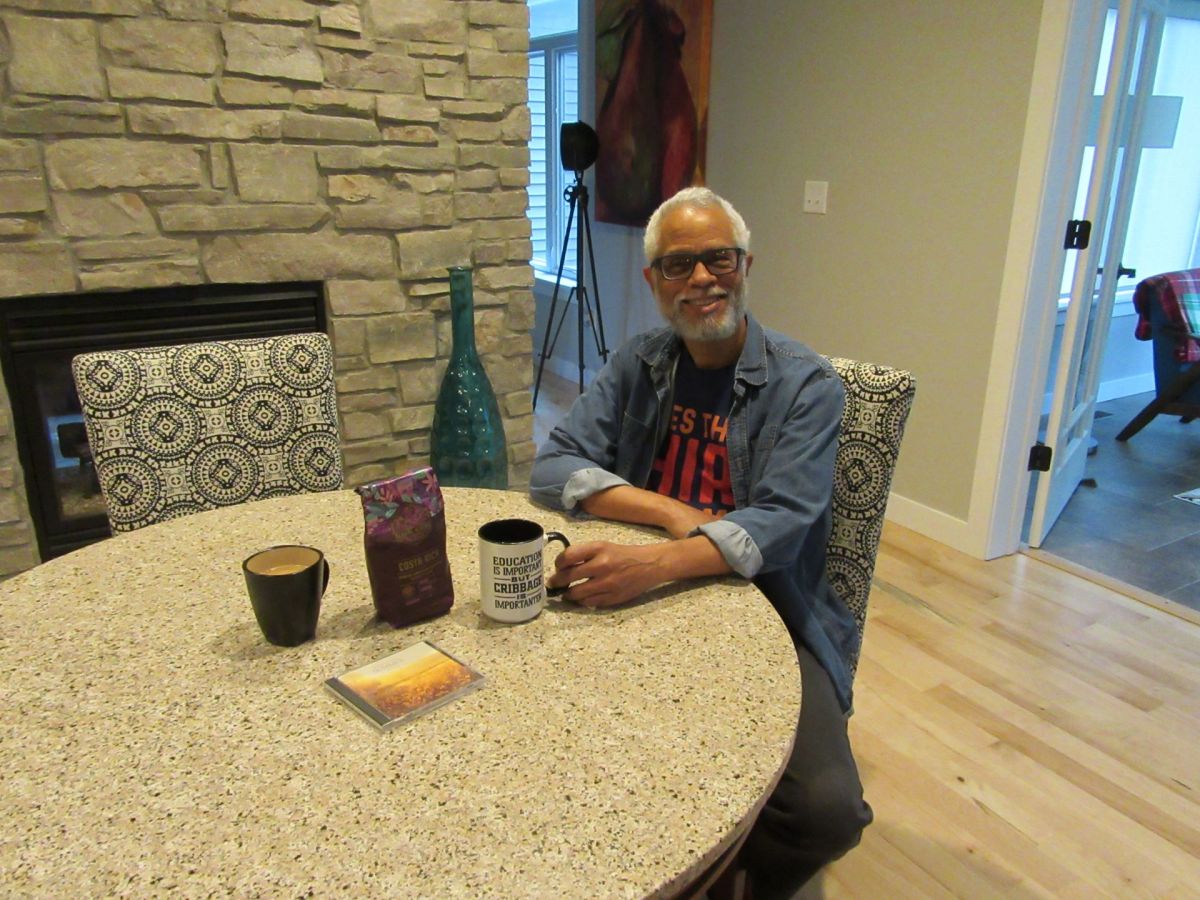
Sena plays an old time Scrabble game on her PC and other almost vintage age games. I have a cribbage game I could play on my PC, but I never do. I much prefer playing real cribbage with Sena on a board with pegs and a deck of cards. We also have a real Scrabble game and we enjoy it a lot. She wins most of the time.

This is in contrast to what I did many years ago. I had a PlayStation and spent a lot of time on it. But I lost interest in it after a while. I don’t play online games of any kind. I’m a little like Agent K on Men in Black II when Agent J was unsuccessfully trying to teach him how to navigate a space ship by using a thing which resembled a PlayStation controller:

Agent J: Didn’t your mother ever give you a Game Boy?

Agent K: WHAT is a Game Boy?

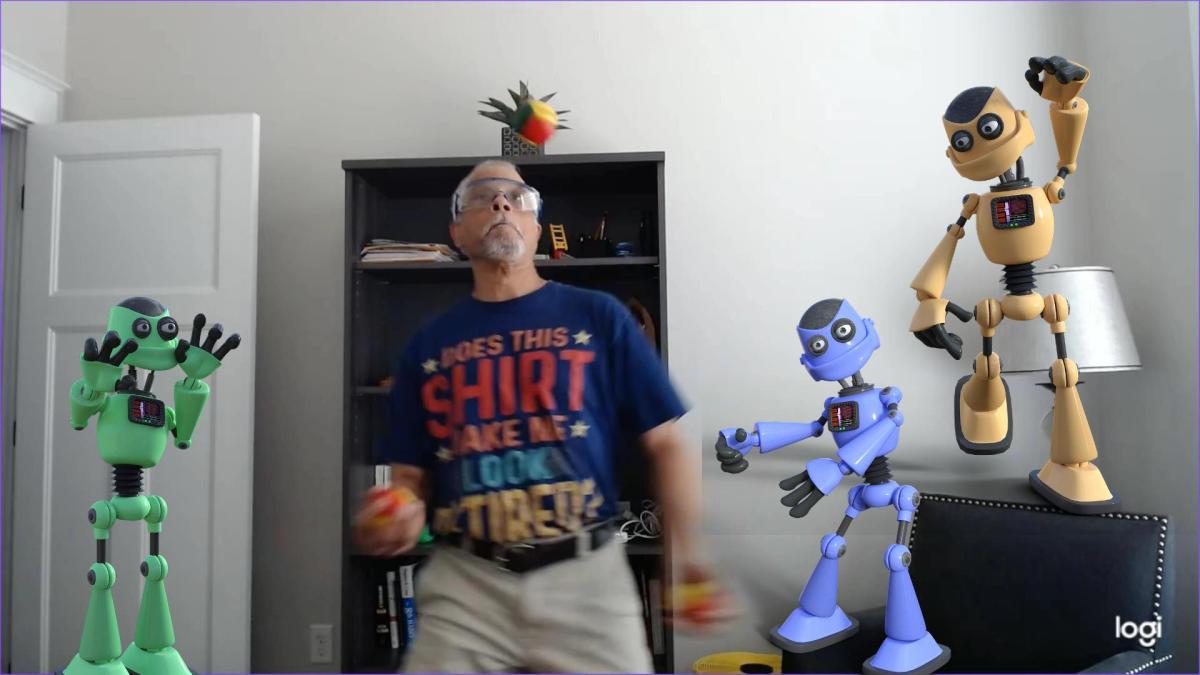
Nowadays, I get a big kick out of learning to juggle. You can’t do that on the web. I like to pick up the balls, clown around, and toss them high, which occasionally leads to knocking my eyeglasses off my head. I usually catch them.

Juggling is a lot more fun than playing Myst. I would prefer it to any massive multiplayer online game. I never had a Game Boy.

Celebrate Teacher Appreciation Week!

Teacher Appreciation Week this year started on May 8, 2023. I found my old report cards from Lincoln Elementary School in Mason City, Iowa. Lincoln was torn down many years ago to make room for expanding the Post Office. But I have my memories. I rediscovered reasons to celebrate the dedication of teachers. I don’t know how many people keep their grade school report cards. My mother kept mine along with old elementary school photos, including class pictures.

Jimmy!

Brief remarks on my grade cards remind me how supportive my teachers were—and how they expected me to buckle down. I was kind of a handful and there are indications that I had difficulty focusing my attention. My fifth-grade teacher, Mrs. Cole, was instrumental in identifying my near sightedness, which helped me to get my first pair of eyeglasses.

It wasn’t a bed of roses. My third-grade teacher, Mrs. Myrton (who always smelled like cigarettes), once slapped me so hard it made my nose bleed because I bumped into her when I was running around the classroom. I don’t remember why I was doing that. She was really sorry for slapping me.

And there was the time me and another kid got caught throwing snowballs on the playground (I can’t remember what grade I was in), which led to the usual penalty levied by the school Principal, Esther Ahrens. We each had to draw really small circles (signifying snowballs) to fill a sheet of paper.

We (meaning the kids) thought Ms. Ahrens was a witch. On the other hand, on a really hot day shortly before summer break, my 4th grade teacher, Ms. Hrubes, started acting really strange and was sort of wobbling at the open window in the classroom. There was no air conditioning in the school. Ms. Ahrens happened to be walking by the room and rushed into the room just in time to catch Ms. Hrubes as she was falling backward in a dead faint from heat exhaustion.

But other than that, along with the usual physical and psychological cuts and scrapes of elementary school, I remember those years as instrumental in turning me and other kids into smarter, nicer people and better citizens. We also learned how to make really tasty homemade ice cream the old-fashioned way, using nested containers, the larger of which had a mixture of salt an ice and a hand crank.

The notes and letters with my report cards often had illuminating comments:

“Jimmy has done well in Physical Education class. He has excellent aim and can hit a moving car’s windshield with a rock (yelling ‘bombs away’) with fair accuracy.”

“During this quarter, I was able to dissuade Jimmy from trying to fly like superman from the second-floor window of the classroom.”

“Jimmy reads well. He could apply himself more carefully in science. We were finally able to remove all the exploded paint from the gymnasium. It took only a few weeks this quarter.”

“Jimmy’s command of spatial relationships has improved a great deal! He can figure out how to fill his emptied milk carton with spinach in seconds, often without attracting the attention of the lunchroom monitors.”

I’m giving a great big thank you to all the teachers! You deserve it!

Racial Affinity Group Caucusing Separate But Not Equal to Segregation

I read the New England Journal of Medicine perspective article “Racial Affinity Group Caucusing in Medical Education—A Key Supplement to Antiracism Curricula.”

I did not see the word “segregation” anywhere in the paper, although the Daily Mail news item used it frequently in a manner that I suspect was intended to incite indignation over separating White and Black, Indigenous, People of Color (BIPOC) medical students into Racial Affinity Group Caucuses (RAGC). This was for the purpose of ultimately integrating them with the goal of defeating racism.

Words matter. The word “segregation” used in the way some news reporters did is bound to conjure up 1960s images of the effect of Jim Crow laws and remind those old to remember it the speech of Alabama governor George Wallace pledging “Segregation now, segregation tomorrow, segregation forever.”

Separating people into groups for the purpose of working out a solution to racism can be called segregation only in the strictest sense of the definition. If you can separate denotation from connotation, I think you have to question the use of the word in the news article, which was heavily freighted with negative connotations.

When I was a student at Huston-Tillotson College (now H-T University, one of the Historically Black Colleges and Universities) in the 1970s, the Greek fraternity and sorority pledges were segregated from those who chose not to pledge, including me. I was really happy to be segregated when I witnessed the hazing of the pledges.

The women and men students at H-TU who lived on campus were segregated into male and female dormitories. This did not stop certain activities like dances and fraternity events.

I recall reading news stories a year or two ago about some black college students wanting to be segregated into different dormitories at predominantly white college campuses. I don’t agree with the idea, but it sounded like some black students preferred it.

I like my socks segregated from my dress shirts. But that’s just me.

May is Mental Health Month

May is Mental Health Month. This would be a good month for me to practice giving myself and others grace. Here’s a link to a very nice article about grace. It’s really about giving each other a break from slamming one another and letting go—sort of like what you need to do in juggling. The author of the article on grace suggests a short list of ways to practice grace. They’re just the guidance I welcome for Mental Health Month and any other month for that matter.

The one about compassion and forgiving myself and others is difficult to do. I should do it anyway.

Buttoning my lip before criticizing, complaining, or venting other harsh utterances is a nice way to avoid the slamming mode I see in the news every day.

It’s tough not to expect the worst from others, especially when you read the news. Hey, let’s stop reading the news.

I don’t get much recognition, and that’s actually a good thing. Sometimes the last thing I need is attention.

I can think of many persons who have probably gently and silently helped me over the years.

While it may feel good to get my digs in on people I don’t agree with, it’s not satisfying for very long. People do remember how you made them feel.

Let’s give each other grace. We all need a break.

Gardening Works as Mindfulness Meditation

When I think of Sena learning to juggle and find her juggling balls on the floor where she drops them after a 2- or 3-minute practice, I now think of her gardening.

Pick up your toys, please!

I wondered if gardening could be a form of meditation and did a web search like I did yesterday for juggling. It turns out many people think of gardening as a kind of mindfulness meditation. It’s another one of those moving meditations, kind of like the walking dead meditation as I and some of my peers described it at a mindfulness retreat 9 years ago.

Sena has been gardening for a long time. I remember she turned our back yard into a park many years ago.

Sena Park

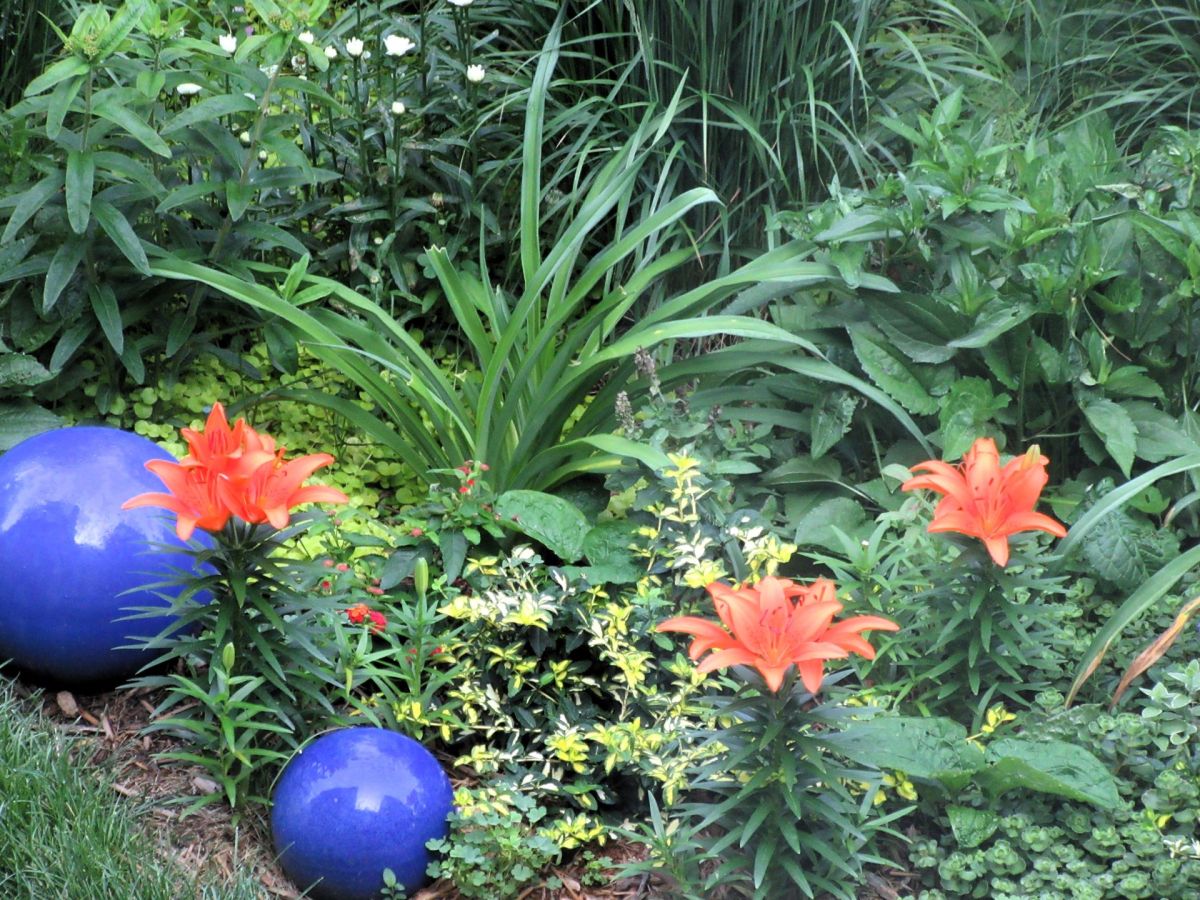
She is always on the lookout for something new to plant. I don’t always remember the exact names of them, but they’re very pretty. And the Amaryllis house plant stem is 22 inches tall!

I found one article on Headspace, “How to practice mindful gardening” which laid it all out about the subject. The key takeaways about mindful gardening:

  • Being fully present in the garden can help improve mood
  • In this setting, we might also become more aware and accepting of change
  • Check in with your senses before getting your hands dirty

Sena can work in the garden all day, sometimes in 100 degree plus heat—which I don’t recommend. On the other hand, she really gets a charge out of digging holes in the yard, pulling up turn to make room for more flowers and shrubs, and tilling the soil. She has kept the Amaryllis stalk thriving; it’s 22 inches tall! She’s not sure what to do yet with the Easter Lily plant, but she’ll figure something out.

I still do sitting meditation, which is what I learned from the Mindfulness Based Stress Reduction (MBSR) class. And I now have begun to think of juggling as a kind of moving mindfulness meditation.

On the other hand, I’m not keen on gardening in any sense, including mindfulness. Partly, it’s because a fair amount of dirt is involved.

I think it would be difficult for me to do gardening all day like Sena does. I could stick it out for about as long as she practices juggling—about two or three minutes. I would put my tools away, though.

I’m beginning to think of juggling practice as a kind of meditation, especially since I started to learn the shower juggling pattern. Doing that for more than 15-20 minutes at a time usually doesn’t result in much improvement—at the time. But I think I sprout more brain connections as I’m doing it because I notice gradually smoother timing and coordination.

In sitting meditation, counting your breaths is generally frowned upon. On the other hand, counting my throws (especially out loud) during juggling actually helps me focus my attention. I see each throw as sort of like a single breath. I still have to consciously adjust my posture so that the “horizontal” pass doesn’t end up being more like an underhand throw. And when I modify the throws so they stay in the so-called jugglespace (not so close the balls bounce off my head, not so far out front I have to lunge for them), and space the balls out just right, I find it’s easier to get more throws in.

I don’t think Sena counts the number of dirt clods she tosses aside.

Can Juggling and Mindfulness Meditation Complement Each Other?

I read this article about mindfulness today and it got me thinking about how juggling might be two different aspects of the same activity.

I think they both help focus the attention. There a number of articles on the web which essentially say that juggling can be a sort of meditation.

I know hardly anything about the default mode network (DMN) in the brain, but from what little I know, I suspect that both juggling and mindfulness meditation could disrupt the DMN. There’s a published study showing that meditation tends to reduce DMN activity. That would be a good thing. The DMN has been described as a brain network which may tend to lead to mind wandering and self-related thinking. That may not be the healthiest way to use your time.

I’ve been doing mindfulness meditation for about 9 years now. I still sometimes wonder whether I’m “doing it right.” On the other hand, when I miss more than a day or two of mindfulness practice, I notice that I feel more edgy and out of sorts. When I return to mindfulness practice daily, I notice less of that scattered and nervous mental state.

I took up juggling last October and I notice that it does something similar to mindfulness. I have to pay close attention to what I’m doing while I’m juggling. Otherwise, I just drop balls constantly.

Just searching the web with the question “Is there a juggling meditation?” turns up quite a lot of articles. Some suggest that juggling is a kind of “moving meditation.” That reminds me of the walking meditation, which I’ve referred to as the “walking dead meditation,” based on my Mindfulness Based Stress Reduction (MBSR) course in 2014. At the retreat toward the close of the course, we did this walking meditation thing, which for all the world seemed to more than a few learners as resembling the way zombies walk.

I think I’d have a tough time trying to juggle like a zombie walks. You can’t be herky-jerky when you juggle, you know. I guess that’s why you never see a zombie juggle. Zombies don’t meditate either, probably because they’re too busy looking for brains to munch on.

Now I get the urge to juggle when I feel the need to clear my head. It’s reinforcing for learning new juggling tricks. Sena is learning juggling now and her efforts remind me of the challenges I had. One of them is learning how to let go of the damn ball in a pattern like the three-ball cascade. You get stuck at certain stages. I hit several walls learning the cascade. And then there came a day when I just started doing the pattern right, often because I just let go.

That reminds me of a quote by Juggleman about juggling, “Doing it wrong makes you an artist.”

I’m probably doing mindfulness the way I ought to be “doing” it. Nowadays, the way I judge that is by noticing I feel better when I stick to it.

Beating My Head on The Shower Wall

I’ve been practicing the shower juggling pattern. I’m combining at least a couple of different methods, which may or may not be helping me improve.

I’m using JuggleMan’s advice about trying to get some extra space in between the balls so I feel less rushed. I’m also trying to use Taylor Glenn’s method of combining the vertical and horizontal tosses.

Using both looks pretty ugly. So, what else is new? My horizontal transfers look snappier but are lopsided according to some experts. I consciously try to hold my dominant slapping hand up higher to avoid the gradual sloping up to a half shower flip up. That up slope often causes mid-air collisions between balls on one side. And I’m getting a little extra space in between the throws, so I’m starting to get one or two extra throws.

I’ve been learning to juggle since last October. It’s fun but definitely not easy. All the stuff about machine learning and artificial intelligence in the news lately got me wondering whether AI can learn to juggle.

It turns out that people have been working on this for years. I gather it takes a while to teach a robot how to juggle. Making a robot able to teach juggling would probably take a very long time. I don’t think it’s as fun to watch a robot juggle as it is watching a person juggle.

Juggling isn’t a very practical skill, although if you’re a really talented juggler you can make a little spare change busking with juggling. A machine doesn’t need spare change and doesn’t appreciate admiration.

By the way; John Henry was a steel-driving man. He beat the steam powered drill, a machine—and sacrificed his own life doing it. Machines don’t understand sacrifice.

Earth Day 2023: Water What We Want to Grow

Happy Earth Day! Yesterday, Sena worked pretty hard out in the garden spaces. She has planted ten river birch trees. I did my usual spring lawn edging, which followed the first mow of the season a couple of days before by the lawn mowing service.

The vinca is coming up in the garden circle in our back yard. It reminds me of a time many years ago when I chopped a bunch of vinca out of a substantial portion of the back yard of a previous house. This became Sena’s first big garden. We’ve moved several times since then and there have been a number of other gardens.

True, vinca is invasive and I think it’s also called creeping myrtle or periwinkle. I found out later after I chopped out a few bushels of it that the plant has organic compounds called alkaloids which inhibit the growth of certain cancers. Vincristine and vinblastine are approved for use in the United States.

The reason I’m mentioning vinca is that way back early in my career as a consultation-liaison (C-L) psychiatrist at The University of Iowa Hospitals & Clinics, I dimly recall giving a short acceptance speech for winning a Leonard Tow Humanism in Medicine award from the Arnold P. Gold Foundation in 2006. I was nominated for it by one of the psychiatry residents and another faculty member.

Getting the Leonard Tow Humanism in Medicine pin

In my speech I mentioned cutting out all of the vinca (which I thought was a weed) in the back yard. I was pretty proud of getting that job done—until Sena got home and found out. She was less than thrilled about my accomplishment and explained that vinca was not a weed. In fact, she wanted it to grow.

Vinca

I still have the speech and one of the points I made was, “…we water what we want to grow.” The speech is below:

Good morning distinguished guests including graduating medical students, Dean______.

Today we gather to reward a sort of irony.  We reward this quality of humanism by giving special recognition to those who might wonder why we make this special effort. Those we honor in this fashion are often abashed and puzzled. They often don’t appear to be making any special effort at being compassionate, respectful, honest, and empathic. And rewards in society are frequently reserved for those who appear to be intensely competitive, even driven.

There is an irony inherent in giving special recognition to those who are not seeking self-aggrandizement. For these, altruism is its own reward. This is often learned only after many years—but our honorees are young. They learned the reward of giving, of service, of sacrifice. The irony is that after one has given up the self in order to give back to others (family, patients, society), after all the ultimate reward—some duty for one to accept thanks in a tangible way remains.

One may ask, why do this? One answer might be that we water what we want to grow. We say to the honorees that we know that what we cherish and respect here today—was not natural for you. You are always giving up something to gain and regain this measure of equanimity, altruism, trust. You mourn the loss privately and no one can deny that to grieve is to suffer.

But what others see is how well you choose.

I didn’t write down the anecdote about the vinca. I think I was also trying to make the point that vinca can be thought of as an invasive “weed” as well as a pretty garden plant. Furthermore, while the vinca alkaloid (for example, vinblastine) can be an effective treatment for some cancers, it can also cause neuropsychiatric side effects, which can mimic depression. That’s where a C-L psychiatrist could be helpful, showing how medicine and psychiatry can integrate to move humanism in medicine forward.

Anyway, ever since then, vinca has often been a part of Sena’s garden, including the one where we live now. And, whenever we walk on any of the trails in Iowa City or Coralville, we always notice it carpeting the woods.

We can probably apply the little law “we water what we want to grow” to many things in life. We can choose to apply it to the world in which we live by creating a safe home to shelter a happy family, doing useful work in the garden while practicing kindness, gratitude, and patience.

We can start by planting an idea like a tree.

Thoughts on Gullibility and Artificial Intelligence

I watched an episode of Mysteries at the Museum the other night and attributed a clever prank that fooled thousands of people to a comedian named Buck Henry who persuaded thousands of people into believing that naked animals were destroying the morality of Americans. The show’s host rightly claimed that Buck Henry posed as a man named G. Clifford Prout, a man on a mission to save morality by creating a bogus identity and organization called The Society for Indecency to Naked Animals (SINA). In 1959, Buck Henry fooled about 50,000 people into joining the organization.

However, last night I found out that the real mastermind of the ruse was a guy named Alan Abel, a genius prankster and satirist whose complicated and hilarious hoaxes were so outlandish, I can’t imagine why I had never heard of him.

Abel was brilliant at skewering the gullibility of people. This is where I reveal my own opinion of the passing off of Artificial Intelligence (AI) as the solution to all of society’s problems. I have seen for myself that the Google Bard AI is not even very smart, failing basic geography. I pointed out its errors in a few posts earlier this month. Then, I read a news item in which a prominent tech company CEO mentioned that Bard is a simple version of AI and that waiting in the wings is a much more powerful model. Did the CEO write this because many users are finding out that Bard is dumb?

Or is the situation more complicated than that? Is the incompetent and comical Bard being passed off to the general public in an effort to throw business competitors off the scent? Are there powerful organizations manipulating our gullibility—and not for laughs?

My wife, Sena, and I are both skeptical about what to believe in the news. In fact, I think many of the news stories might even be made by AI writers. I didn’t suspect this when I wrote the post “Viral Story Rabbit Holes on the Web” in December of 2022. After trying to converse with Bard, it makes more sense that some of the news stories on the web may be written by AI. In fact, when I googled the idea, several articles popped up which seemed to verify that it has been going on, probably for a long time.

All of this reminds me of an X-Files episode, “Ghost in the Machine” The main idea is that an evil AI has started killing humans in order to protect itself from being shut down. The AI is called the Central Operating System. The episode got poor reviews, partly because it wasn’t funny and partly because it too closely resembled 2001: A Space Odyssey.

But the fear of AI is obvious. The idea of weaponizing it in a drive to rule the world probably underlies the anxiety expressed by many.

And we still can’t get rid of the Bing Chatbot.

Palm Sunday

Today is Palm Sunday, the beginning of Jesus’ last week on earth. The palm tree reminds me of the time we spent in Hawaii. We saw a lot of coconut palms. The featured image is from 1997, when we were there.

I remember seeing a picture in a storybook of Jesus riding into Jerusalem on a donkey. The road was strewn with palm leaves. I was just a child.

Palm Sunday is a day to get along with others.

The Easter Lily is already beginning to open.