Talk About Talk Therapy

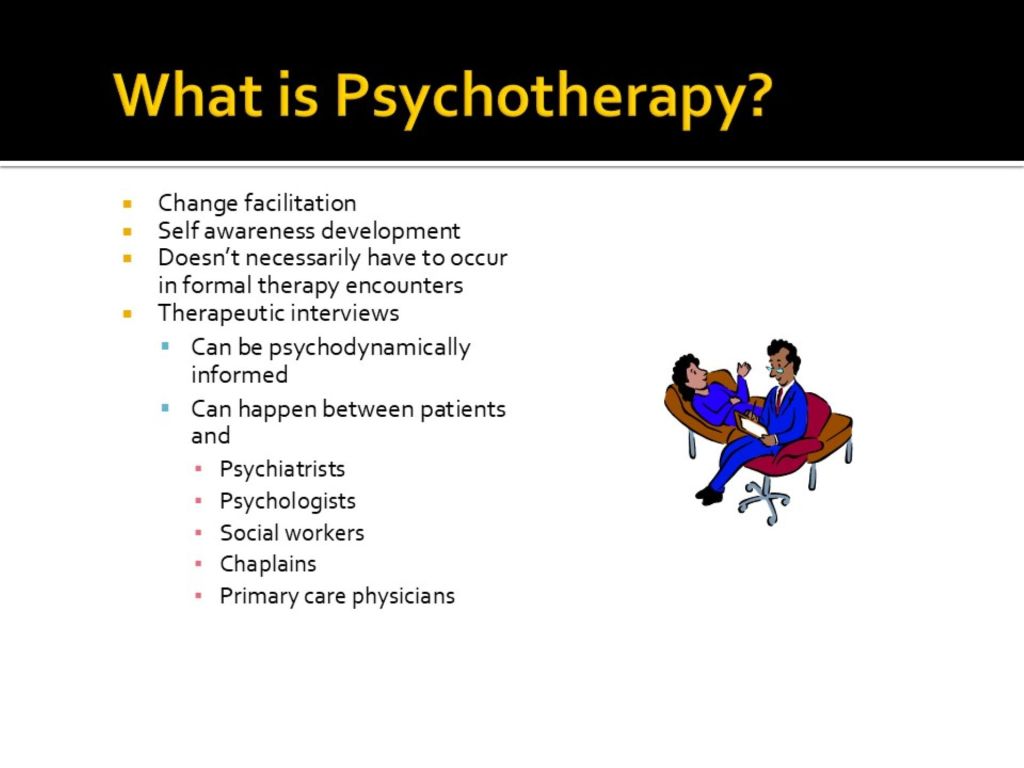
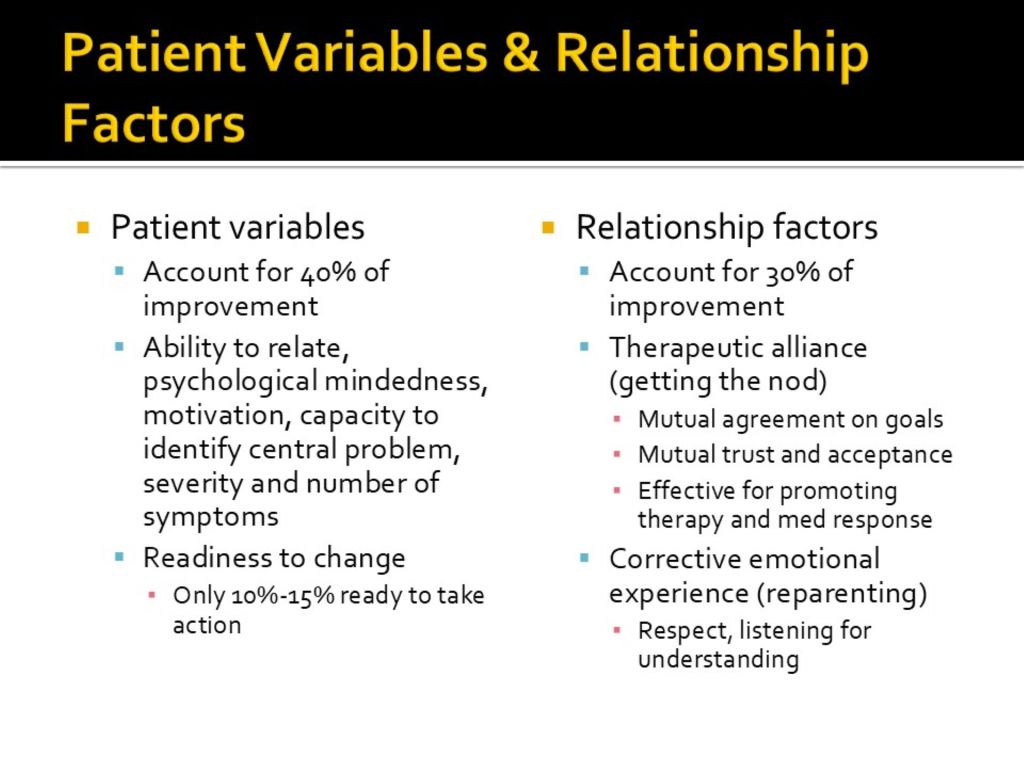
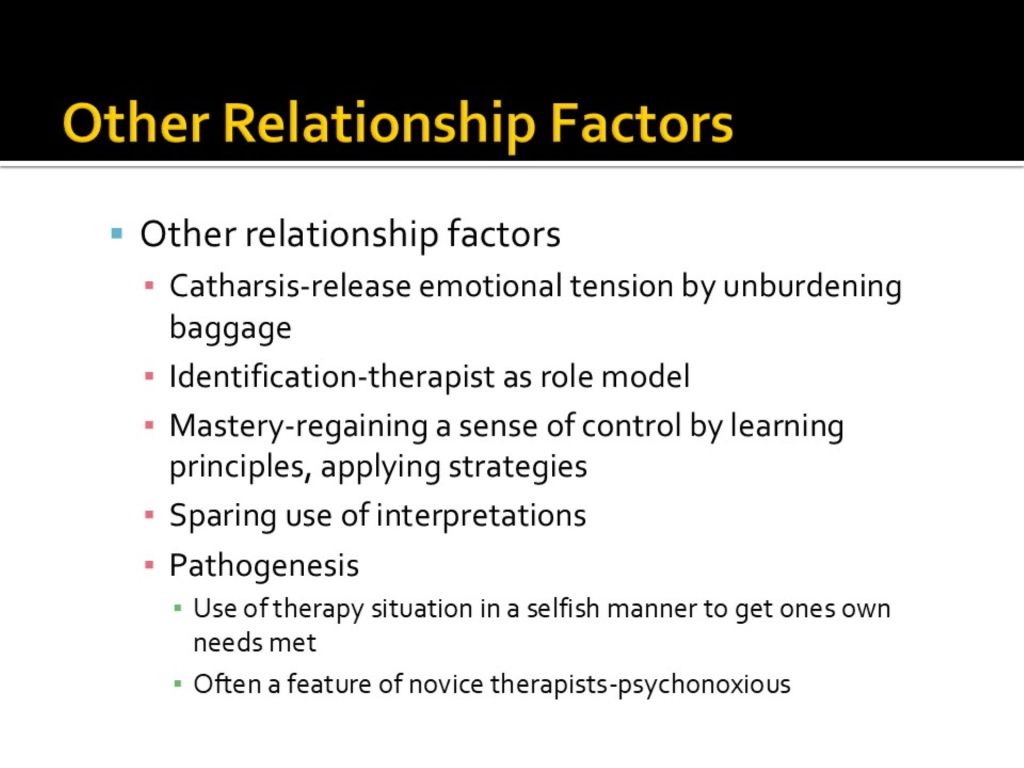
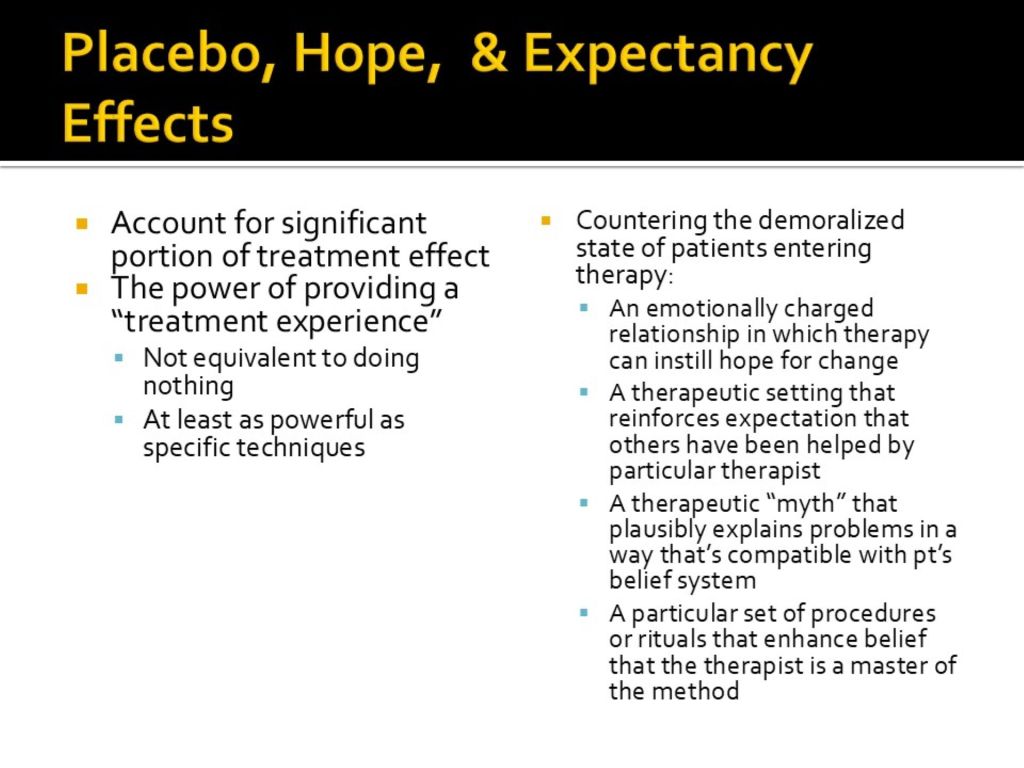
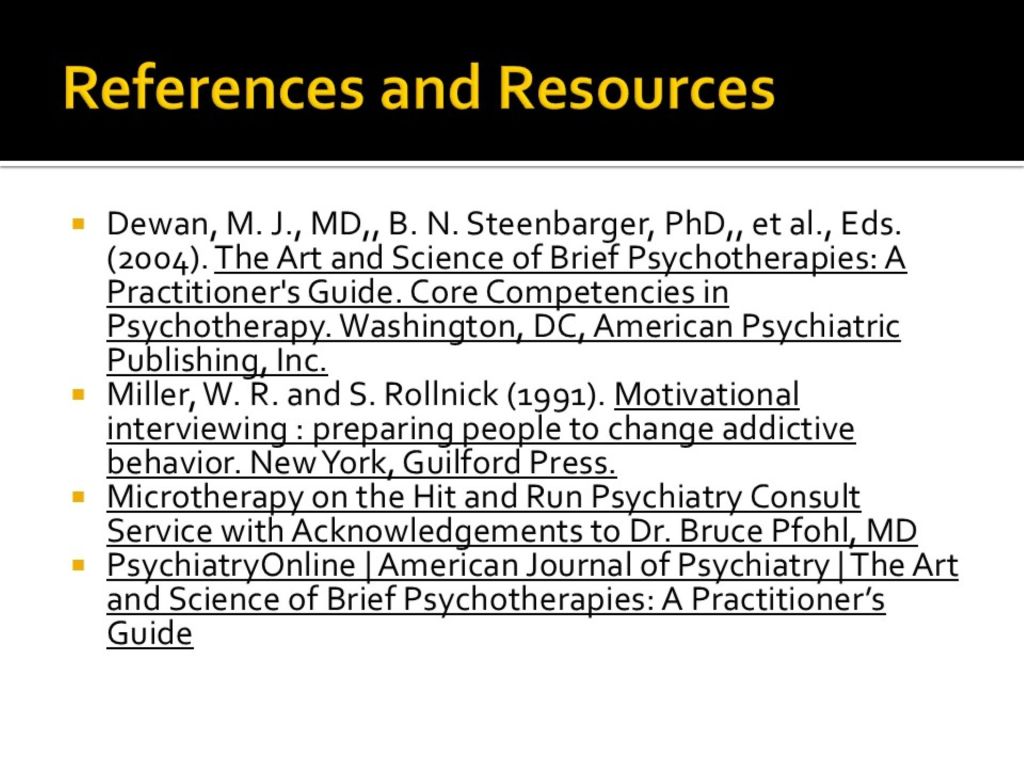
I saw this great blog post about psychotherapy by Dr. George Dawson a couple of days ago and it reminded me of an academic research rounds presentation made about 15 years ago by University of Iowa Health Care Dept of Psychiatry faculty member, Dr. Bruce Pfohl, MD Professor Emeritus.

The title of his talk was “The Accidental Psychotherapist” and it was a great way to teach colleagues and learners about how to conduct psychotherapy in any context, especially on the inpatient psychiatric wards. This often felt rushed on morning rounds on the wards because the patients tended to be out and about everywhere but in their rooms.

A few words are in order about the odd-sounding title, “The Accidental Psychotherapist.” He got that from a film I never saw (and I never read the novel it was based on) that was released in 1988, “The Accidental Tourist.” Dr. Pfohl explained why he chose the title for his presentation, but I’m still not clear on it. I’m pretty sure it’s not that psychotherapy feels like it’s an accident when it’s effective.

But I did find a quote from the movie that might fit. William Hurt plays Macon Leary, who writes travel books for people who hate traveling. He advises them on how to avoid human contact, which is something I got from Roger Ebert’s review of the film, which he loved. Macon’s son gets murdered, and this makes him even more neurotic and closed off than he already was before the tragedy. I saw a quote from Macon on the IMDb movie web site:

“I’m beginning to think that maybe it’s not just how much you love someone. Maybe what matters is who you are when you’re with them.”

And maybe one of the things that matters in psychotherapy is how much space you give patients, allowing them to be who they are while, at the same time, trying to understand what makes them who they are.

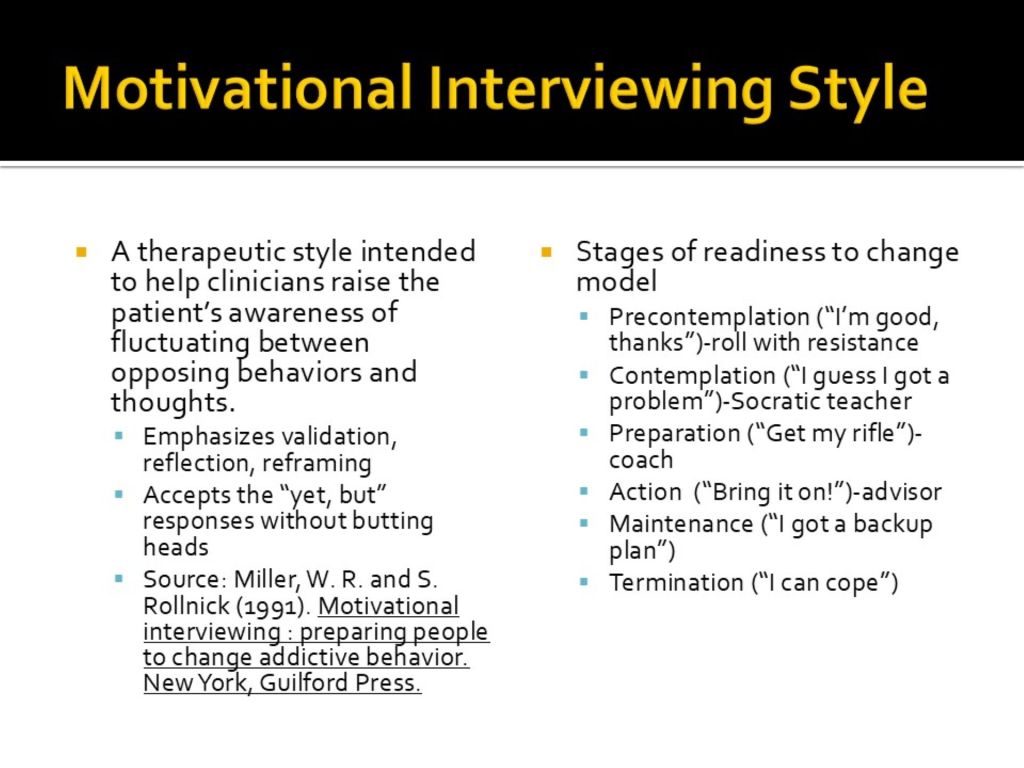
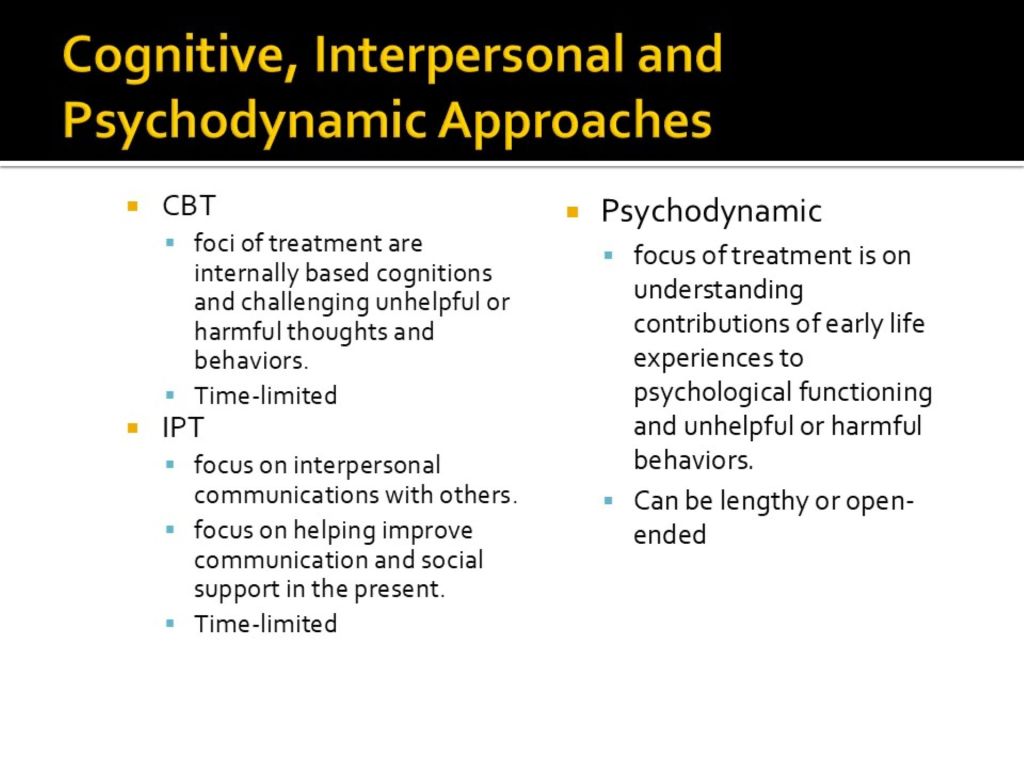
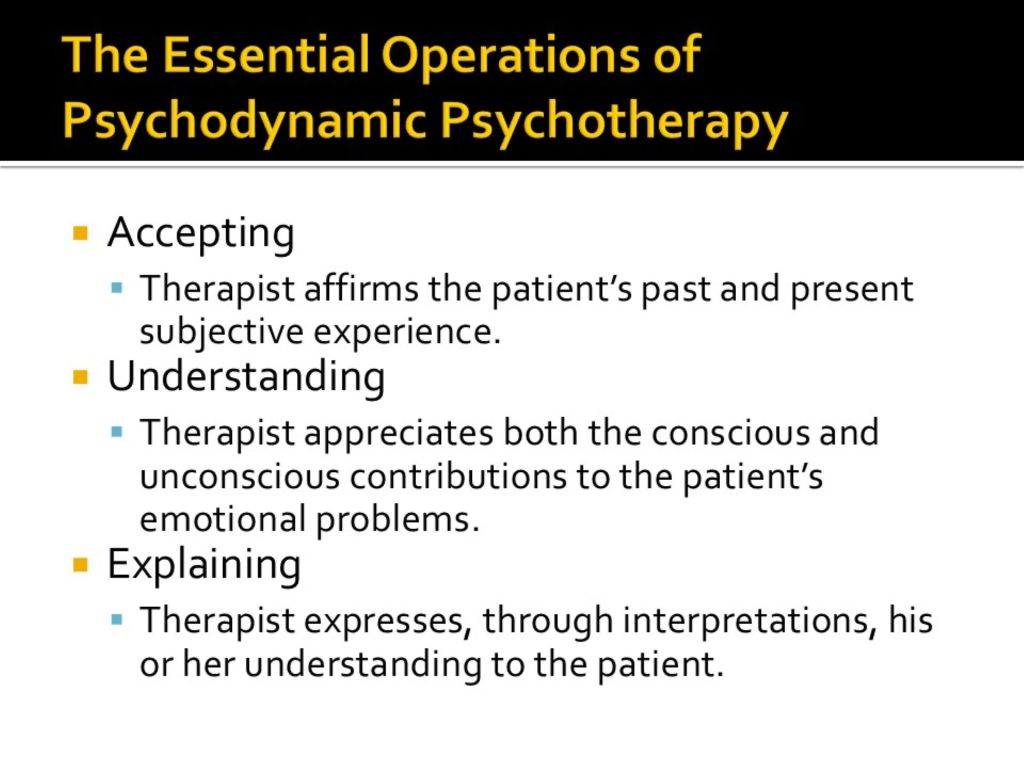
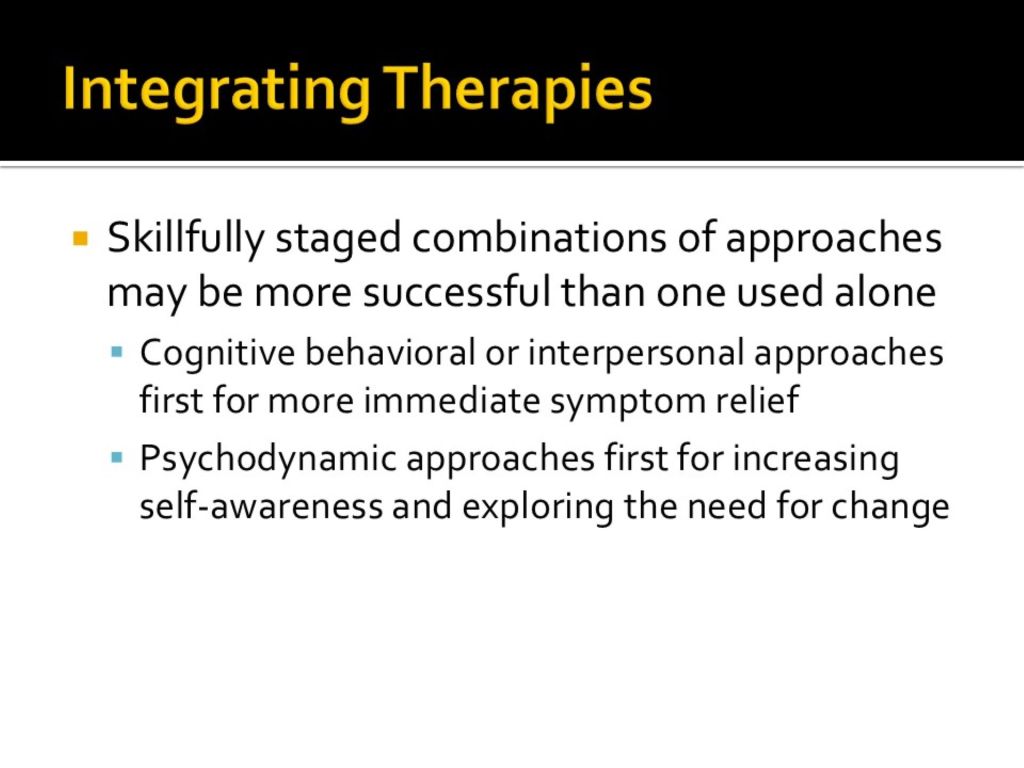
Dr. Pfohl had 31 PowerPoint slides and that’s a little big. I made a lot of what I called Dirty Dozen PowerPoint presentations on mainly consultation-liaison psychiatry and I tried to sum up in a quick and dirty way some of the main points in different kinds of psychotherapy. I included a slide on what he called the six Microtherapy Rules. An important point to remember is that “psychotherapy always begins before it begins.” This can happen even on a busy inpatient psychiatric unit when patients might prefer staying out in the dayroom for doctors’ rounds rather than heading back to their rooms. It also works pretty well on the med-surg wards.
Mental Health Affirmations for May 6, 2026

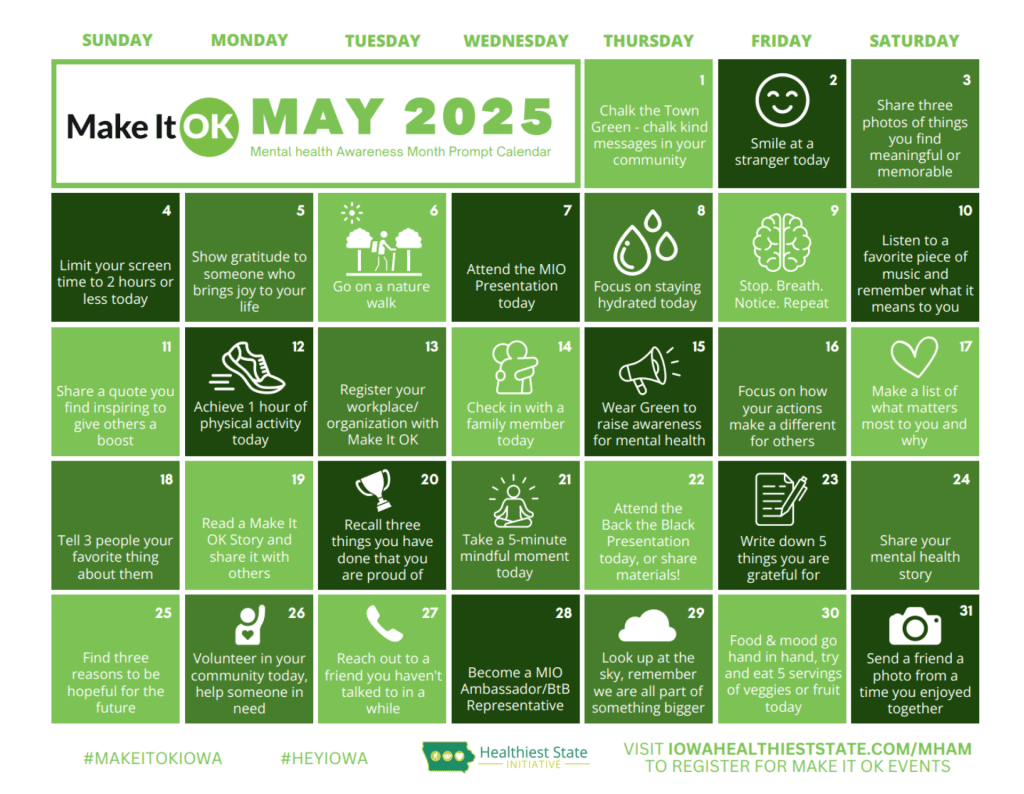
Today is May 6, 2026 and the Mental Health Awareness affirmation for today (from the Mental Health Awareness calendar) is about Affirmations:

“Affirmations can improve people’s overall well-being, help them feel better about themselves, and reduce anxiety. Pick a supportive phrase and repeat it today.”

I picked one from the list of suggested affirmations:

“I have the power to practice daily routines that nourish my physical and mental health. As I do so, I won’t forget that rest, connection, and stillness are pivotal pieces of those routines.”

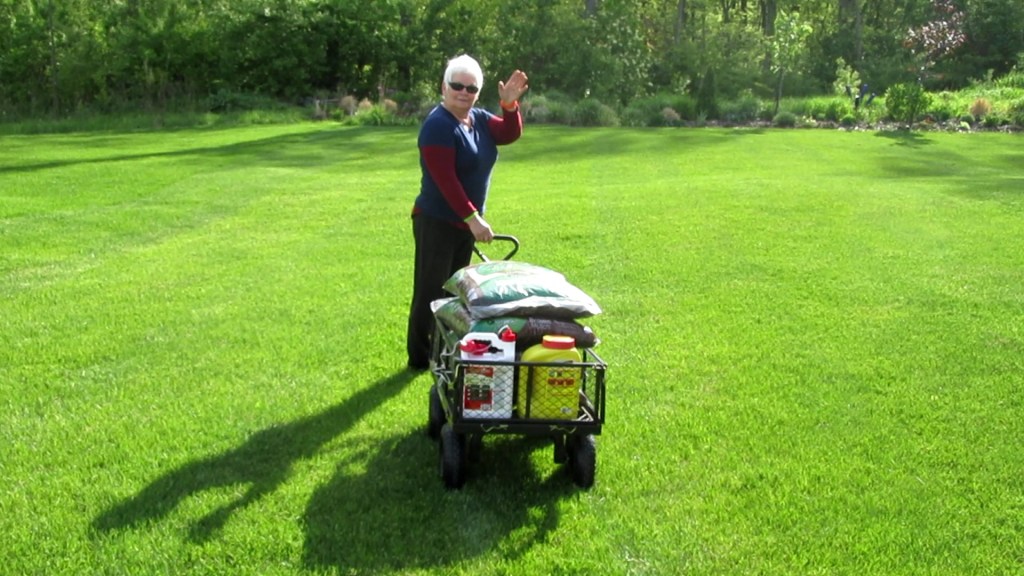
Every now and then, I get off my exercise routine. However, for the last month, I’ve been doing better. One incentive was finding out I’ve gained a fair amount of weight since I retired in 2019. I realized that climbing six to 8 flights of stairs a day probably was pretty good exercise—but I don’t get to do that anymore. Sena is an avid gardener. I have a set exercise routine, which I’m recently more regular about doing.

Being still and connected means mindfulness meditation for me, which I first learned around 12 years ago. My essay for the Gold Foundation is dated in some respects, but it’s still relevant.

Happy Mental Health Awareness Month!

May is Mental Health Month!

May is Mental Health Month and I’ve been going through my blog to find posts on psychotherapy. One of the reasons I did this is because I read the commentary by Dr. Allen Frances on psychotherapy and Artificial Intelligence (AI chatbots) the other day, “Psychotherapies Can No Longer Afford to Compete With Each Other.”

Dr. Frances’ article is right on time. He reminds me of all the psychotherapy modalities I had to learn about as a resident and then later made blog posts and YouTube videos highlighting the basics. You can type “psychotherapy” in the search box and find them.

And speaking about mental health, Dr. George Dawson has an excellent post pertinent to the topic.

The blue bunting is a symbol of wisdom, self-mastery, resilience, and spiritual realization. We should keep that in mind when it comes to psychotherapy and mental health.

Success of Johnson County Civil Mental Health Court in its First Year

I’ve been looking for other ways that Iowa addresses mental illness and its impact on homelessness and other adverse outcomes since my last post on the issue.

It turns out that, despite Iowa ranking 51st out of all U.S. states for the low number of psychiatric beds according to the Treatment Advocacy Center statistics (in 2023, it had just two beds per 100,000 patients in need), a new mental health court established in in May of 2023 has made substantial progress in reducing the number of crisis contacts, psychiatric hospitalizations, and days in the hospital. Arrests, jailings, and days in jail were also reduced.

Participants in the new program include the University of Iowa Health Care, Iowa City VA Hospital, the Abbe Center, Guidelink Center, National Alliance for the Mentally Ill (NAMI), Shelter House, and several other mental health service agencies in Johnson County.

The Johnson Mental Health Court continues to operate since June of this year when the pilot program’s funding from the East Central Iowa Mental Health Region was supposed to have ended on June 30, 2025, due to the change in mental health regions. This is a program for patients under involuntary mental health commitment that avoids incarceration and placement in a state psychiatric hospital.

This civil mental health program didn’t exist until well after I retired and I hope for its continued success.

Luett, T. (2024, April 24). Civil Mental Health Court in Johnson County finds success in first year. The Daily Iowan. https://dailyiowan.com/2024/04/24/civil-mental-health-court-in-johnson-county-finds-success-in-first-year/ Accessed July 30, 2025

Mehaffey, T. (2024, April 14). News Track: ‘Challenging, rewarding’ first year of Johnson County mental health court. The Gazette – Local Iowa News, Sports, Obituaries, and Headlines – Cedar Rapids, Iowa City. https://www.thegazette.com/crime-courts/news-track-challenging-rewarding-first-year-of-johnson-county-mental-health-court/ Accessed July 30, 2025.

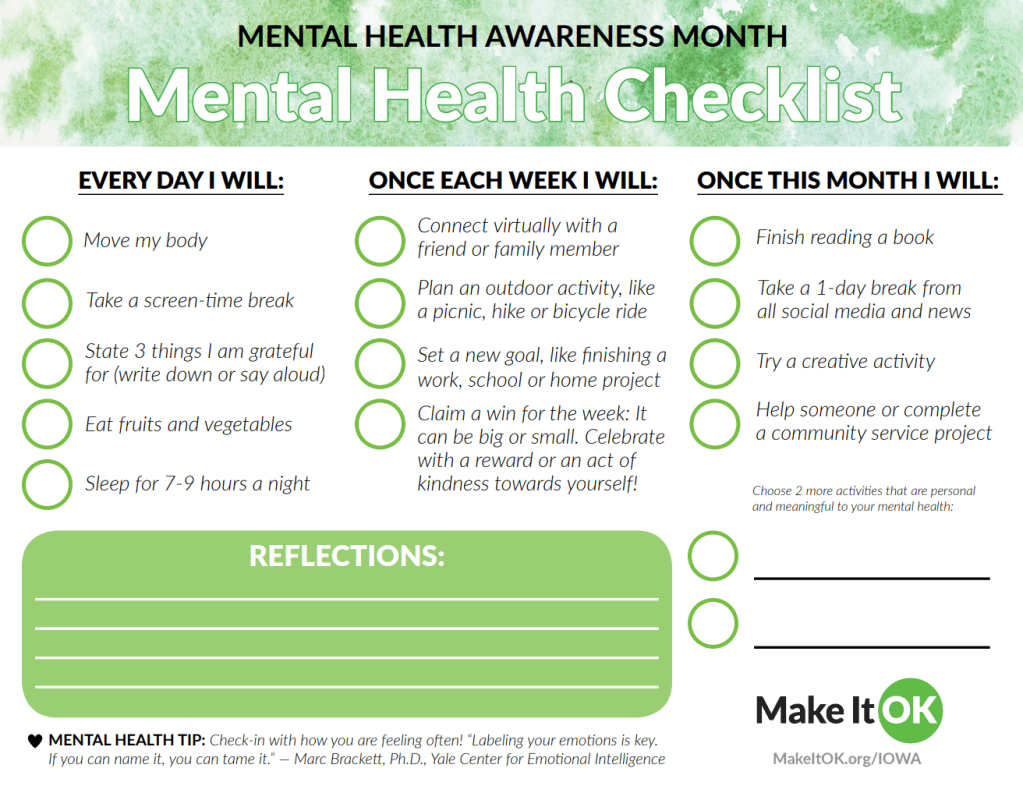
May Mental Health Awareness Month Calendar and Checklist (look below this sticky post for other new posts)

May is Mental Health Awareness Month!

This is May and it’s Mental Health Awareness Month. I just found out about something exciting and it’s the Iowa Healthiest State Initiative.

See the Calendar of Events and the Checklist.

Members of the Human Club

I just read Dr. Moffic’s column, “Join This Club for Mental Health” in which he described the Clubhouse movement which got started in the 1940s to help those with mental health challenges to cope with their illness and, more importantly, to recover, grow, and achieve success in life.

It made wonder if there are any chapters of the Clubhouse model in Iowa. It turns out there is and it’s Carol House in Davenport, Iowa. It’s connected with the Vera French Mental Health Center. Its namesake is Carol Lujack, who was a member when the center was called “The Frontier Community Outreach Program” in the 1980s in downtown Davenport.

I was looking at the Carol Center website where you can find many interesting features of the people and activities that go on there. The April newsletter is fascinating and funny. You can find out in the April Newsletter about a few of the current members, April holidays (there’s a slew of them), and famous quotes. One of the quotes is familiar and it’s by F. Scott Fitzgerald,

“Vitality shows not only in the ability to persist, but in the ability to start over,” The quote is worded in various ways, but I remember it because I used it as an inspirational quote when The University of Iowa honored me and several of my colleagues with a Feather in Your Cap award back in 2011.

This was shortly after I returned to Iowa after an unsuccessful stab at trying private practice psychiatry in Wisconsin. And it was the second time I did that—the first time was in Illinois.

Did you know that April is National Humor Month? And have you heard the joke “What kind of candy is never on time?” Choco-Late.

One April holiday is not mentioned and that’s Arbor Day, which varies according to what part of the world you’re in as planting times differ. Sena planted a couple of new trees in the back yard.

Starting new chapters of Clubhouse is a little like planting new trees. They need watering.

Noteworthy Black Psychiatrists on the Last Day of Black History Month

I wanted to give a shout-out to Dr. H. Steven Moffic, MD for his article highlighting the career of a notable black psychiatrist, Dr. Alvin F. Poussaint, MD, who sadly died on February 24, 2025. I’m mortified that I hadn’t heard of him before now.

It reminded me of the time I mentioned another black psychiatrist I had never heard of either, Dr. Chester Middlebrook Pierce, MD, in a post about the book “Our Hidden Conversations” about a year ago.

I wondered if Dr. Pierce and Dr. Poussaint ever met. I looked this up but couldn’t find a definite link.

Dr. Moffic’s essay, in which he mentions antisemitism. also reminded me of an essay also published in Psychiatric Times in 2020 by Dr. Robert M. Kaplan, MD. The title is “Alois Maria Ott: I was Hitler’s Psychologist.”

It gives even more texture to Dr. Poussaint’s views on whether or when extreme racism should or should not be classified as a mental illness. My own residency training experience was marked by being assigned to a patient said to have schizophrenia—who angrily shouted when he saw me, “I don’t want no nigger doctor!” My faculty supervisor didn’t think I should be reassigned to an alternate patient, a decision I’m still ambivalent about.

FDA Approves Antipsychotic with New Mechanism of Action for Treatment of Schizophrenia

I just noticed the FDA announcment of the approval of an antipsychotic with a new mechanism of action for the treatment of schizophrenia.

The drug is Cobenfy and it interacts with cholinergic rather than dopaminergic receptors. It has a number of side effects which are anticholinergic. This could lead to psychotic symptoms that consultation-liaison psychiatrists might get called to evaluate due to the anticholinergic delirium that could occur, which can mimic psychosis.

It’s easy to get alarmed about the Cobenfy side effects. I just remember all of the side effects of the one antipsychotic that has sometimes been the only effective treatment for patients with treatment resistant schizophrenia-clozapine.

Clozapine has been associated with agranulocytosis, seizures, bowel obstruction, prolonged cardiac conduction time leading to arrhythmias, liver toxicity and more. In fact, clinicians are required to enroll in a Risk Evaluation and Mitigation Strategy (REMS) program to prescribe it.

Patients who have schizophrenia and take clozapine are often admitted to general hospitals for treatment of medical problems which may or may not be directly related to clozapine itself. This requires close collaboration of internists and surgeons with consultation-liaison psychiatrists.

What do you do for patients who don’t respond to clozapine but are willing to take oral medication? There are augmenting strategies, some of which can be helpful although they could add to the side effect burden.

What do you do for a patient with treatment-resistant schizophrenia who refuses to take oral psychotropic medication? In some cases, it may be necessary to use injections of medications which also can have uncomfortable and even potentially life-threatening side effects. This difficult situation is complicated further by the lack of insight some patients have about their illness and the need for court orders to administer antipsychotics against their wishes.

I hope Cobenfy is a step forward for patients and their families.