
John Heim aka Big Mo Retiring from the Big Mo Blues Show

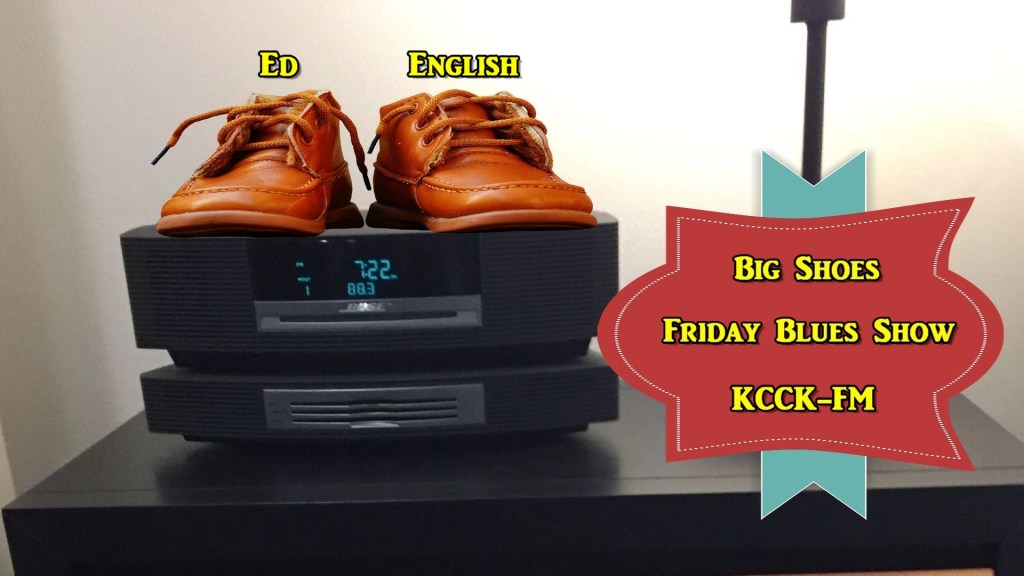
We were listening to the KCCK radio Big Mo Blues Show last night when John Heim aka Big Mo announced he’s retiring as of May 15, 2026. Iowa musician Ed English (Uncle Ed of the Beaker Brothers band) was also in the studio and remarked that he’ll be taking over the show sometime after that. The Beaker Brothers Band will also be retiring around the same time frame. It was a surprise to us.

I’ve been listening to the Friday night blues show off and on probably for about 18 years. And here’s a shout-out to Bobby DeForest who first started “da Blues” back in 1992 (Little Village news story). After that John Heim (aka Big Mo) came on. Bob DeForest still has a blues music show on Saturday night.

I don’t remember who was doing the Friday blues show during the times when I was listening (although Sena says it was Big Mo) which probably started back in the mid-1990s or so—but I do remember that Iowa blues star and member of the Iowa Blues Hall of Fame Kevin Burt substituted for a couple of weeks sometime between 2005 and 2011. Despite my faulty memory for some things, I’m pretty sure about that. There’s no mistaking Kevin Burt’s voice.

Ed and his band will be retiring sometime this summer. They have several gigs planned in June. Ed mentioned he might record some of the Friday night blues shows after May 15th. By the way, I’ve got a blog post from last August about my post from April 14, 2024 entitled “KCCK Big Mo News and More.”

Ed left a comment on it: “Always available on the web and the KCCK App, too… ;0).”

The first part is clear, although the emoticon puzzled me. I looked it up but couldn’t find anything about it except that it might mean amazement. It looks like wink.

Other than the music, I like Big Mo’s sense of humor, which he often displayed in little comedy bits which are about “Sponsors de faux.” The main one is MayRee’s Hand-Battered Catfish. There are a few others like Shorty’s Adult Diapers (they’re ready when you aren’t) and Big Furry Shaving Products. There was a podcast about those.  And I can’t swear to it but I think he tried to start another one about “fish psychics” back in October 2025. But I can’t swear to it and I’ve not heard it since.

I have suggested that KCCK make a tee-shirt with a MayRee’s hand-battered catfish logo on it, but apparently that’s a non-starter.

Anyway, we wish Big Mo all the luck in the world after his retirement and hope he enjoys it as much as he can. I retired from psychiatry 6 years ago and look how well I turned out! That reminds me, I always like to pretend that, during the shout-out part of his show, when he mentions “Jim the Shrink” he means me.

“Life is Beautiful”

We heard the song “Life is Beautiful” by Keb’ Mo’ last night on the Big Mo Blues Show. It was released 20 years ago. Big Mo said it helped him get through a difficult time. We think the song is beautiful and so do hundreds of other people on the YouTube video posted 16 years ago.

Keb’ Mo’ also did a very fine cover of Bill Withers’ song “Lean on Me” a few years ago in tribute to Withers who was his friend and mentor.

It’s not worth debating whether this song is classifiable as Blues—it doesn’t matter. I think it’s notable that of the many songs I heard on the KCCK Big Mo Blues Show last night, the list of the songs he posted early this morning after the broadcast was very short. He posted only a few, and we’re glad he listed this one.

Most would agree that “Life is Beautiful” is a fine example of contemporary acoustic blues. Compared to what we might usually hear in music labeled as the blues you might think it’s the opposite—almost “too happy” and soul-soothing to be the blues. Blues isn’t always about badness in life.

Notable Song “Magnolia Road” on Big Mo Blues Show Last Night

The Big Mo Blues Show was recorded last night. I’ve got a shout-out for a song I’ve heard a couple of times now in the last few weeks. It’s “Magnolia Road” by the Allman Betts Band. I have a couple of interesting observations about it. I don’t know anything really about the Allman brothers, except what I quickly read through on Wikipedia. I know that sounds incredible. But I like this song.

The song is on an album called The Allman Betts Band: Bless Your Heart. It was released in 2020. Although I’m prone to mondegreens, I can understand most of the lyrics. I wish I could find the lyrics, but I can’t find them on the web. What comes up is a song with the same title but it’s by a different artist and, which I can find lyrics for that song, it doesn’t match the lyrics I hear by the Allman Betts Band.

One of the songs with the same name is by Ben Haggard. He’s the son of Merle Haggard. The lyrics don’t match at all, of course.

I like the feeling I get from the song. It reminds me of the 1960s-1970s era, the time of outdoor rock concerts, and being laid back. The official music video gives you a sense of that.

Maybe I’ll just ask Big Mo about how to find the lyrics.

The Big Mo Blues Show Highlights Women Singers

Last night the Big Mo Blues Show focused on women vocalists, partly because he said he got phone calls urging him to play more music from female performers. It was an exceptionally good show and I can mention 3 of the women singers who really impressed me.

Early in the show, he played a song called “This Train” by Sister Rosetta Tharpe. I can’t remember hearing her recordings on his show before, but then my memory is not what it used to be. This song was first recorded in the 1930s and Big Mo played a version from the 1950s with her accompanying herself on an electric guitar. It was fun to listen to.

She led an interesting life according to biographies I found on line. She was black and queer and while it must have made her life really challenging (especially during the time of the Jim Crow laws in the 1940s), she was a great success. She was inducted into the Rock and Roll Hall of Fame in 2017.

I can pick out a couple of other songs by female artists that were memorable. One of them was “Let the Tears Roll Down” by Marcia Ball. It was haunting.

And I thought the guitar riffs were stunning on Samantha Fish’s “Highway’s Holding Me Now.” The hairs on the back of my neck always stand up when I hear her song “She Don’t Live Around Here Anymore.” She has that kind of voice.

Iowa Legislature Offering Cheese and Crackers on the Bill of Fare

I heard a song entitled “Cheese and Crackers” on the Big Mo Blues Show last night. I’ve heard a few times over the years, but I never looked up what it meant until today.

The song was originally written by a rockabilly singer named Hayden Thompson, although I’ve only heard it sung by blues artist Roscoe Gordon. According to a Reddit social media thread, “Cheese and Crackers” was the B side of a record by Thompson and the A side was “Shoobie Oobie.” Thompson couldn’t find anyone to arrange the “Cheese and Crackers” lyrics at a recording studio and left in a huff, leaving the lyrics on the piano.

Roscoe found it and put it in an R&B arrangement. Billboard magazine called it the strangest new release of the week. The song is about a guy repeatedly being offered cheese and crackers although he doesn’t like or want them. According to a Wikipedia article, the term “cheese and crackers” is a kind of mild swear word chilled down from “Jesus Christ.”

That’s funny, because that’s how I feel about all the anti-vaccine bills coming out of the Iowa Legislature this year. One of them is SF 2095, which seeks to penalize private postsecondary colleges and universities if they don’t accommodate students who want to be exempt from all vaccines for any reason and to find clinical training programs who will accept them. An excerpt from the bill:

“A postsecondary school offering a degree requiring a clinical rotation shall, upon request of a student enrolled in the degree program, identify a clinical rotation placement where the student will be permitted an exemption from any vaccination requirements imposed by the placement location during the duration of the student’s clinical rotation.

A postsecondary school not in compliance shall not qualify as an eligible institution for the purposes of Iowa tuition grant.”

The other punishment could be a fine. Unless I’m looking on the web in the wrong place, I don’t find any such facility anywhere in Iowa. That would mean the postsecondary private school would be punished for something it can’t control. I’m pretty sure that would be called unjust—or maybe tricky if the goal is to coerce clinical training program leaders to loosen up their vaccine exemption policies. Right now, the only exemptions are religion or medical.

This sounds like the Iowa legislature is offering us cheese and crackers. No thank you.

Connections Between Psychiatry, Artificiality and Blues Music?

I heard a song on the KCCK Big Mo Blues Show that I first heard in June of 2025. The song is “Artificial” by Walter Trout.

At first blush, I agree with what I think is the point of the song, which is basically a protest against artificiality which could manifest in a range of ways from superficiality and dishonesty in communications, attitudes, style of clothing, relationships, and all the way to Artificial Intelligence (AI).

The other connection I make is to the artist himself. Walter Trout developed Hepatitis C (eventually leading to liver transplant) according to a Wikipedia article which connected his lifestyle to contracting the disease. In my role as a consultation-liaison psychiatrist, I saw many patients with Hepatitis C who were referred to psychiatry from gastroenterology.

I was the main psychiatrist who evaluated them for treatment with Interferon-alpha. At the time it was the only treatment for Hepatitis C and was frequently associated with many side effects including depression. I was also one of the psychiatrists consulted as part of liver transplant evaluations.

Trout got very sick from Hepatitis C and made a remarkable (even miraculous) recovery after his liver transplant. Interferon is no longer used to treat Hepatitis C. It has been replaced by direct-acting antiviral (DAA) agents. They’re much better-tolerated and more effective.

The other aspect relevant to Trout’s song is ironic. The newest scientific literature supports the idea that AI can be helpful for diagnosing Hepatitis C, predicting its progression and response to treatment.

That doesn’t mean I’m completely sold on AI.

Aside from that, there’s interesting research suggesting that there may be a link between schizophrenia and bipolar disorder and Hepatitis C infection (which could be hiding deep in the brain’s choroid plexus lining the cerebral ventricles). In other words, some people might have mental illness because of the liver disease itself.

If you think about the dictionary definition of the word “artificial,” you can hardly dismiss this kind of research as insincere.

Big Mo Blues Show and The Elvis Connection

The Big Mo Blues Show was really interesting last night. I’m just going to highlight a number done by John Hiatt called “Riding with the King.” The lore about this that I picked up from the internet is that Hiatt originally wrote and sang the song for the 1983 album Riding with the King. It was a tribute to a king known as Elvis Presley. The short story is that the song was inspired by a weird dream that the album’s producer, Scott Matthews, had about flying with Elvis Presley.

Years later, in 2000, the song was covered in an album by Eric Clapton, and the other king, B.B. King. The album was also called Riding with the King. Some reviewers thought the product was too slick, although to be frank about it, Hiatt’s production didn’t chart in the U.S.

The first time I heard Hiatt, I think it was on the Big Mo Blues Show. He sang “Gone,” which was on the album Crossing Muddy Waters, produced in 2000, the same year Clapton and King made the album which had the cover of Hiatt’s original song “Riding with the King.” I liked “Gone” because it was funny. I’m partial to humor in just about any context.

That reminds me of the Elvis Presley connection here about “Riding with the King.” About 8 years ago Sena and I made peanut butter and banana sandwiches, which Presley made famous. I blogged about it but I can’t find that post anymore. We didn’t really like the sandwich, although I wonder if the guy who had the dream that inspired the song “Riding with the King” had a PB & Banana sandwich just before bedtime. I kept the pictures but the post is—Gone!

Big Mo Blues Show Christmas Music Featuring Peter Green

Last night was the second time John Heim (aka Big Mo) introduced the song “Silent Night” by Peter Green and the Men in Blue using the title in German, “Stille Nacht.” He also played it last Friday night, saying “Stille Nacht, Heilige Nacht” in what sounded like perfect German. I immediately liked this version.

I might be remembering this wrong, but when I was a kid, I think I somehow got assigned to sing “Silent Night” when I went out caroling (in a horse-drawn sleigh, no less!) with the members of our church. It’s a good thing smartphones weren’t around to record that.

I remember last week trying to find it on the Big Mo Blues Show playlist but I couldn’t. Then I tried to find it by searching the title in German. I forgot or didn’t hear the name of the band. I gave up looking for it and I wondered why he said the title in German.

So, after I heard it again last night and looked for it on the playlist, I found it right away on the web.

I have never heard of Peter Green, so I looked him up and found a Wikipedia article about him. His original name was Peter Allen Greenbaum. I found out that Greenbaum is a German surname (originally Grünbaum which means greenery or green tree. As an aside, Heim is also a German name. It means “home.” For many people (just listen to his Shout-Outs list!) the Big Mo Blues Show is home.

Those are just observations I find interesting and maybe point to a clue why Big Mo pronounced the title of the song “Silent Night” in German.

Anyway, the Wikipedia article doesn’t say anything about Peter Green’s ancestry. He was born in 1946 in London and died in his sleep at the age of 73 on Canvey Island, Essex.

He was a gifted blues rock guitarist and singer-songwriter and was founder and original leader of the band Fleetwood Mac. He was a very influential figure in the British blues movement. Some thought he was greater than the other often-mentioned blues guitarist, Eric Clapton.

Peter got some coaching early in life from his older brother but was essentially self-taught by the age of 11. In the mid to late 1960’s people were calling him “The Green God” which was similar to what many were calling Eric Clapton (“God’).

Around 1969(70) Peter started to develop signs of mental illness and during the 1970s he also used LSD several times. Eventually he was diagnosed with schizophrenia. Like other people who develop psychiatric illness, it was probably difficult to settle the chicken/egg question of which came first. He attributed much of his mental health issues to his use of LSD. He was hospitalized and treated with electroconvulsive therapy (ECT) in the mid-1970s.

However, by the 1980s, he returned to the music scene. He was inducted into the Rock and Roll Hall of Fame in 1998. He was described as being more interested in expressing emotion in music rather than displaying dazzling technical skill. He influenced many musicians.

Merry Christmas!

Florida Man News!

We saw the news story about the Florida Man who recently got busted by the cops in Ormond, Florida after he stole a BMW and when he was stopped for going 130 mph (about 5 mph over the local speed limit), he thanked the police for saving him from the extraterrestrials who evidently had teleported him into the BMW. Well, that explains everything!

This is just further evidence on top of what has already been thoroughly documented by Dave Barry in his 2016 documentary book, “Best State Ever; A Florida Man Defends His Homeland.”

Did you hear about the blackout in Florida?

People were stuck on the escalators for 4 hours.

I used to have a ton of Dave Barry books. I got hooked on his humor shortly after I graduated from Iowa State University back in the 1980s. I was in a post graduate program in Medical Technology in a Des Moines hospital and back then you could always find a newspaper on some tables in the cafeteria.

Over the years, I lost many of his books during moves. Sena would ask me something like “Do you really still want all these Dave Barry books?” I knew better than to say “These are very important examples of timeless prose exemplifying humor literature that will be excavated in the distant future by archaeologists who will preserve them in hermetically sealed glass bookcases so people can admire the covers.”

I just threw them out. Please don’t tell Dave.

Anyway, I have managed to preserve a photo of Florida Woman, taken in Miami many years ago. Let this be a lesson to you: never call your wife “Florida Woman” unless you want to live the rest of your life in a refrigerator packing box—although you can use duct tape to seal off those cracks to keep the wind and snow out.

Did you know there’s a song titled “Florida Man”? Believe it or not I heard it a couple of years ago on the Big Mo Blues Show on KCCK radio. It’s by Selwyn Birchwood who is from—that’s right, Tampa, Florida. The song was released by—you guessed it, Alligator Records.

And here’s Iowa Man:

Big Mo Pod Show: “California Bluesin”

Well, I listened to the Big Mod Pod Show today and I have a couple of thoughts. Big Mod mentioned something about some kind of an AI assistant maybe selecting some records on the KCCK Facebook site. He didn’t sound all that pleased with the choices the AI makes, specifically with the John Lee Hooker tune, “Mr. Lucky.”

I may have the wrong understanding about the “AI guy blues buddy” on the Big Mo Facebook page but if it’s the AI guy like CoPilot or Gemini, then it would be great if you could deactivate it somehow. I know I get pretty annoyed with AI when I search the web (not always, but sometimes it’s annoying).

I just happen to have the 1995 CD called “The Very Best of John Lee Hooker.” Far be it from me to be the judge of what’s the best for any blues artist, but I think the CD is pretty good, though I haven’t listened to it in a while. The other thing I have to admit is that I’ve found differences of opinion on is whether “Hobo Blues” is a 12-bar blues type number or not.

If Big Mo says he can’t understand why Hooker would confine himself to a constraining 12-bar blues song, then I’ll have to agree with him.

Then, of course, I ran into something else I don’t know about and that’s something called “trance blues.” Supposedly, John Lee Hooker did trance blues. How I find out about things I don’t know anything about is to peck around the internet and I found this link that defines it as something that has “a strong electronic component.”

I don’t know about “electronic” and I noticed some authors describe trance blues as “repetitive and hypnotic.” Does that mean that 12-bar blues is not trance blues?

So, here’s the thing. I’ve got my own pesky AI assistant Gemini that I never ask for any advice from, but it never misses a chance to make a point about some query I have for the internet—like trance blues.

Gemini says Hooker’s “Boogie Chillen” is an example of trance blues and also mentions that “Hobo Blues” is another example of it.

I don’t know if I can get this straight. Is 12-bar blues an example of a chord progression pattern and is trance blues a genre of blues which has a repetitive, hypnotic rhythm? It’s over my head.