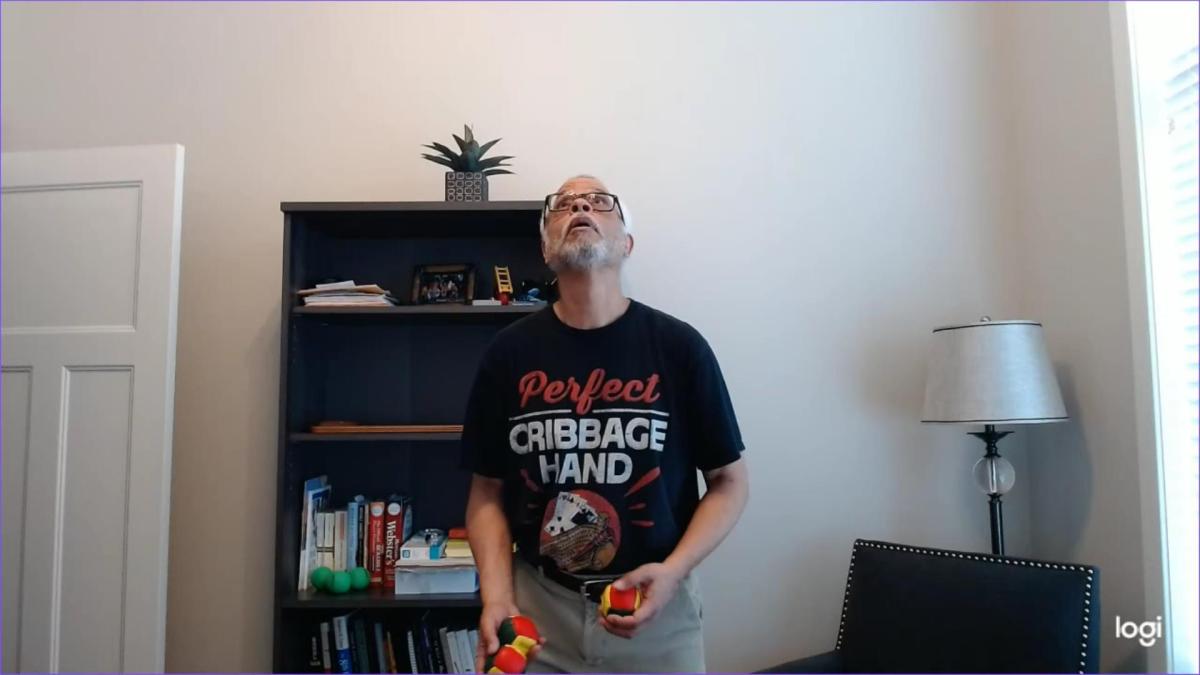
“Stink, Stank, Stunk!”

I’m just puzzled lately over what seems like a contradiction between two ideas I’ve seen in the news and in TV commercials. It’s all about body odor.

There is this study that was recently published about stinky armpit odor possibly making the practice of mindfulness meditation more effective.

This contrasts with the usual meaning of body odor, which is that it’s to be avoided and prevented at all costs. And, the newest total body odor eliminator product is getting heavy rotation in TV commercials and its name rhymes, (possibly fittingly) with “looney.” I’m just going to frankly admit that I can’t stand watching the commercial.

There is this old timer product called Ex-Odor that was marketed in the early 1900s by a company called Gordon Gordon, Ltd. The label said it “Removes All Body Odors.” It was touted as “safe, sure, lasting” and it cost only ten cents. The original label actually did italicize the word “All.” On the other hand, Looney is a lot more expensive—just sayin’.

The armpit odor study and Looney definitely send opposite messages about body odor.

In fact, there is a psychiatric disorder marked by an intense preoccupation with smelling bad. I think it’s still called Olfactory Reference Disorder (ORD). Almost any part of the body could stink and could lead to showering several times a day or visits to ENT doctors to get “infected” and therefore smelly tonsils removed. The disorder not uncommonly gets requests for consultation-liaison psychiatrists to get involved.

Olfactory Reference Disorder can lead to severe, even disabling, social anxiety. It can lead to beliefs that have delusional intensity.

Often, those with ORD firmly believe they emit a foul odor, often from armpits, or inguinal, anal, and oral areas. Some seek surgical treatment. There are many other disorders which consultation-liaison psychiatrists need to remember in order to distinguish ORD from them. Combined cognitive behavioral therapy, possibly along with medication can be recommended as treatment.

Suggested screening questions include:

  • “Are you very worried or concerned about your body odor in any way?
  • Do you believe that other people are also aware of the way you smell (your body odor) and take special notice of it (e.g., make comments about the smell)?
  • Is there anything you feel an urge to do often and repeatedly in order to lessen your worries about your body odor? (e.g., repeatedly brush your teeth, wash or change clothes frequently, smell self or ask others for reassurance)
  • Do you avoid any situations or activities (e.g., sport/dating) because of this body odor?
  • Do these worries about the way you smell negatively affect your mood (e.g., cause shame, depression, anxiety, suicidal thoughts) or your daily life (e.g., relationships, work, school, social)?”

I’m not trying to make any value judgments about either the study or the Looney product. Well, maybe a little. It does remind me of a few lines from the Grinch song:

You’re a foul one, Mr. Grinch,
You’re a nasty wasty skunk,
Your heart is full of unwashed socks,
Your soul is full of gunk, Mr. Grinch.

The three words that best describe you are, and I quote, “Stink, stank, stunk”!

References:

  • Thomas, E., et al. (2015). “Olfactory Reference Disorder: Diagnosis, Epidemiology and Management.” CNS Drugs 29(12): 999-1007.
  • Lim, L. and Y. M. Wan (2015). “Jikoshu-kyofu in Singapore.” Australasian Psychiatry 23(3): 300-302.
  • McKenna, P. J. (1984). “Disorders with overvalued ideas.” Br J Psychiatry145: 579-585.
  • Santin, J. M. and F. M. Galvez (2011). “Overvalued ideas: psychopathologic issues.” Actas Esp Psiquiatr 39(1): 70-74.
  • Mullen, R. and R. J. Linscott (2010). “A comparison of delusions and overvalued ideas.” J Nerv Ment Dis 198(1): 35-38.
  • Miranda-Sivelo, A., et al. (2013). “Unnecessary surgical treatment in a case of olfactory reference syndrome.” General Hospital Psychiatry 35(6): 683.e683-683.e684.


Stuck in Two Ball Shower Juggling Practice

I get stuck at certain stages in juggling. It’s uglier than usual with learning the Shower. I’m struggling with the two-ball practice. I’ve looked at the YouTube videos of several experts and their demos vary.

I found out from a Wikipedia article that the two ball Shower is a thing. But it’s not juggling. I’ve been stuck in ugly juggling learning stages before. I’m thinking I’ll get through it.

Sena is still learning to juggle. She’s eager to try the three ball Cascade. We’re both dropping balls all over the place.

Juggling in Living Color!

Sena got me a spectacular gift—glowing juggling balls! They’re not like any of the juggling balls we have. You plug them into a wall socket and they light up.

They are not much bigger than the other juggling balls we have, so not much of a learning curve. In a way, they’re kind of like stage balls, only not as big as most of those are. And the light show is fantastic, especially in the dark. There are several colors, they can be bright or dim and programmable to change colors as you juggle.

And they’re solid, not filled with millet. When you charge them up, they sort of “breathe” red color (meaning they wax and wane with brightness). And when charged (takes about and hour and a half), they “breathe” green.

Hello, I’m Dr. James Caramel Brown

I read Dr. Moffic’s article, “The United States Psychiatric Association: Social Psychiatric Prediction #4”. I think the rationale for renaming the American Psychiatric Association makes sense.

However, it also got me thinking about the names of other associations connected to the APA (here meaning American Psychiatric Association). One of them is the Black Psychiatrists of America, Inc. We make up about 2% of psychiatrists in the United States.

It also reminded me to once again do a web search for the term “Black psychiatrists in Iowa.” It turns out the results would lead to a repeat of my previous post “Black Psychiatrists in Iowa” on May 7, 2019. Nothing has changed. My colleague Dr. Donald Black, MD is still coming up in the search. Just as a reminder, he’s not black.

It probably comes as no surprise to readers of my blog that this also reminds me of a couple of Men in Black scenes.

Video of Men in Black scene, Dr. Black and Dr. White quotes.

And my post still appears high up in the list of web sites. There has also not been published a more recent edition of the Greater Iowa African American Resource Guide than the one in 2019. You can still find my name and that of Dr. Rodney J. Dean listed in the 2019 edition as the only black psychiatrists in Iowa.

In case you haven’t noticed, I’m retired. I have never considered changing my name and title to Dr. James Caramel Brown. If you noticed that the “Caramel Brown” part is from Men in Black 3 (Agent J talking about what Agent K should say about his skin color in his eulogy for him), give yourself a pat on the back.

Agent J: Can you promise me something, if I go first, you’ll do better than that at my funeral? Yeah, something like, uh: “J was a friend. Now there’s a big part of me that’s gone. Oh, J, all the things I should have said, except I was too old and craggy and surly and just tight. I was too tight. Now, I’m gonna just miss your caramel-brown skin.”

Agent K: I’ll wing something.

Anyway, I’m not sure what to do about renaming the American Psychiatric Association. But I think whoever is in charge of google search results for the term “black psychiatrists in Iowa” could improve on the current situation.

Feisty and So On

There’s this dialogue in Men in Black II between Serleena and Zed:

Serleena: Zed, look at you, 25 years and you’re still just such a looker.

Zed: Cut out the meat dairy. And you, still a pile of squirmy crap in a different wrapper.

Serleena: So feisty.

I’m becoming more aware of the use of the word “feisty” in reference to so-called “older” persons. That’s because I’m getting older.

I noticed an article on the use of patronizing words for older persons. A couple of other such words are “spry” and “sharp.”

“Sharp” as in sharp as a tack (for his age, of course). Also, as in sharp enough to know today’s date.

“Spry” as in he is spry enough to get into and out of a chair.

I’m also spry enough on most days to do under the leg and behind the back juggling tricks.

I’m still sharp enough to know the difference between respectful and patronizing.

I guess that makes me feisty.

Do Not Lie to Me!

In about an hour (a galactic standard week), I plan to watch yet another rerun of Men in Black. That’s the first one of the trilogy. I nearly always can find a connection with some quotes from the MIB movies and current events. I don’t care to specify the current events because they’re depressing.

The title of this post is actually part of quote from MIB 3, “…do not lie to me!” I can apply this one to just about every news story.

Another quote is often applicable in the daily news, and it’s from Men in Black:

Agent K: “We do not discharge our weapons in view of the public!”

Agent J: “We don’t got time for this cover-up bullshit! Look, I don’t know if you forgot, but there’s an Arquillian Battle…”

Agent K: “There’s always an Arquillian Battle Cruiser, or a Korilian Death Ray, or an intergalactic plague that is about to wipe out all life on this miserable planet. Agent K: “There’s always an Arquillian Battle Cruiser, or a Korilian Death Ray, or an intergalactic plague that is about to wipe out all life on this miserable planet. The only way these people can get on with their happy lives is that—they do not know about it!”

Unless there is something we can do about it, I do not want to know about the Arquillian Battle Cruiser.

Random Connections

Today, I read Dr. George Dawson’s blog post, “How I ended up in a high-risk pancreatic cancer risk screening clinic.” As usual I was impressed with his erudition, scientific literacy, and rigorous objectivity, even as it pertained to a deadly disease which runs in his family genetic history. I couldn’t help admiring his courage.

And, whether this is a random connection or not, this somehow led to my remembering Dr. George Winokur, a giant in the scientific study (including genetics) of psychiatric diseases, especially mood disorders. He died of pancreatic cancer shortly after he was diagnosed with it in the spring of 1996.

Dr. Winokur was chair of the University of Iowa Department of Psychiatry from 1971 to 1990. He remained on faculty, actively involved in research and teaching up until the day of his death in October of 1996.

I was a resident in psychiatry at University of Iowa from 1992-1996 and I have a clear recollection of meeting with Dr. Winokur in his office during my last year, when I was preparing for job interviews. I knew he had been diagnosed with pancreatic cancer.

He had been actively recruiting me to accept a position in the department and did so even as we spoke briefly. I remember noticing that he gripped an electrical conduit on the wall next to his desk so tightly that I wondered if he were in pain.

He was the main reason I stayed in Iowa. He had a great sense of humor. All of us residents loved him. There was even a list of his “commandments” all new residents received when they began their residencies at Iowa.

Winokur’s 10 Commandments

  1. Thou shalt not sleep with any UI Psychiatry Hospital patient unless it be thy spouse.
  2. Thou shalt not accept recompense for patient care in this center outside thy salary.
  3. Thou shalt be on time for conferences and meetings.
  4. Thou shalt act toward the staff attending with courtesy.
  5. Thou shalt write progress notes even if no progress has been made.
  6. Thou shalt be prompt and on time with thy letters, admissions and discharge notes.
  7. Thou shalt not moonlight without permission under threat of excommunication.
  8. Data is thy God. No graven images will be accepted in its place.
  9. Thou shalt speak thy mind.
  10. Thou shalt comport thyself with modesty, not omniscience.

I never got the impression that George Winokur recruited me because I was black, although it was pretty obvious to me that I would be the first black University of Iowa psychiatry department faculty member. He had too much class to make that an issue.

I’ve known a few classy psychiatrists. Maybe the connection is not so random.

Exactly When Were the Good Old Days?

I just saw a short web article about Baby Boomers and their opinion of what’s going on these days and comparing it to the “good old days.”

There were the usual complaints about bad music, lack of teamwork, no effort to maintain social bonds, and the like.

I’m not sure I can identify any such good old days. I can think of good and bad times. I tend to think of them as being a byproduct of good experiences with people you enjoy being with—which don’t always fit with the times.

I grew up in the 1960s during the Civil Rights struggle, and I would be hard-pressed to call it the good old days. I can recall my mother trying her best to straighten out the curls of the hair of my younger brother and me with a lot of hair oil. It was almost painful as she tried to press the evidence of our mixed white and black parentage out of our hair.

I think the perception of what the good old days were might depend on your place in society at the time.

There’s this old Twilight Zone episode about a guy trying to make it in the tough business world and he wasn’t doing too well.

Spoiler Alert: I reveal what happens in the ending, just in case you want to try to find a YouTube.

On the train home from the office, he would dream of a place called Willoughby. It was a place years before his time. It was sunny. People were friendly, enjoyed picnics, went fishing and it was always summertime. He longed for it. His boss was a tyrant and his wife pretty much called him a failure. He got off the train at the Willoughby stop a few times and really enjoyed the good old days feel to the place. But he always got back on the train.

One day, he had that “last straw” moment. His boss was tyrannical; his wife belittled him and called him a loser. He got off the train at Willoughby, determined to stay in the good old days.

OK, this is the spoiler:

Willoughby turns out to be the name of the undertakers who pick him up where he jumped off the train and died.

Anyway, this “train” of thought led to Sena and I reminiscing about the trip to Hawaii we made way back in the day. The flight was long and excruciating. My ears were plugged most of the way there. We were both exhausted, but the tour group we traveled with were raring to go after we got to the hotel in Waikiki. They were mostly 3 decades older than us. I can’t remember if one of them or somebody else at the airport made a disparaging comment about Waikiki, something like: “I don’t know why anybody thinks Waikiki is anything special; what the hell, it’s just like Des Moines!”

While we camped out in our hotel room, the older folks went out to see Don Ho perform. When they got back, they said Don was drunk, they had a few drinks, and we just marveled at their energy.

We developed a friendship with a married couple in the tour group named Leota (Lee for short) and Norman. Lee took exception to Norman having a beer with the rest of us on some outing. I think it was about a health problem he had. He grumbled a little and we toasted the event anyway. Norman, who had been in the military, shed a few tears at the Pearl Harbor monument.

We traded Christmas cards with Lee and Norman until their children sent us a card telling us that Lee had died. Norman died several years later. We still have a photo of Sena with Lee and Norman taken while we were having a great time in Hawaii.

I guess you call those the good old days. Maybe you could even find a reason to call the present times the good old days after a while—if you were as drunk as Don Ho during the whole era.

Happy St. Patrick’s Day!

This is St. Patrick’s Day and, although I didn’t wear green today, Sena got me some Irish beer. It’s Guinness Extra Stout. The back label extols the virtues:

“Intense characterful and bold, Guinness Extra Stout is the pure expression of our brewing legacy. Bittersweet, with subtle hints of hops, dark fruits and caramel, this stout is a testament to great brewing.”

That dark fruit better not be dates or prunes. It’s brewed in Ireland.

This being Friday night, I wonder if John Heim (aka Big Mo) will mention anything about St. Patrick’s Day tonight on the KCCK Big Mo Blues Show, radio station 88.3 in Cedar Rapids or 106.9 in Iowa City.

Maybe he’ll mention May Ree and her hand-battered catfish. It’s better because it’s battered. Maybe the recipe includes a couple of bottles of Guinness Extra Stout, with notes of dark fruits and caramel. Dark fruits which are not dates, I hope. Allowable notes can be sharp or flat, blue, high, or low—but not dates.

Happy St. Patrick’s Day!

Ugly Juggling Hits the Shower

OK, I’ve found out that there’s more than one way to hit the shower pertaining to the juggling trick called “The Shower.”

As usual, my form is ugly because I’m in the early practice phase of trying to learn the shower. But then, even when I think I’ve got a trick down—it’s always ugly.

Anyway, different experts have different instructions for the shower trick. A couple of them tell you to throw the two balls in your dominant hand one right after the other. “Go for it” the guy says, who wrote the Learn to Juggle manual I still use. A YouTuber also tells you to just throw the two balls up there. Another expert doesn’t suggest that—but I can’t do it at all unless I toss two balls up sequentially.

I keep my two hands two close together and too high for the “slap” part of the pattern, which is tossing a ball straight across from my nondominant hand to my dominant hand. I also throw a ball too far out from the pane of glass (which is a pain in the ass!).

As usual, you can see all my mistakes in my ugly juggling on my own YouTube video, which you should not use as an example of anything but the wrong way to learn the shower.

By the way, Sena is making progress learning to juggle!