More On Taming the Juggling Balls

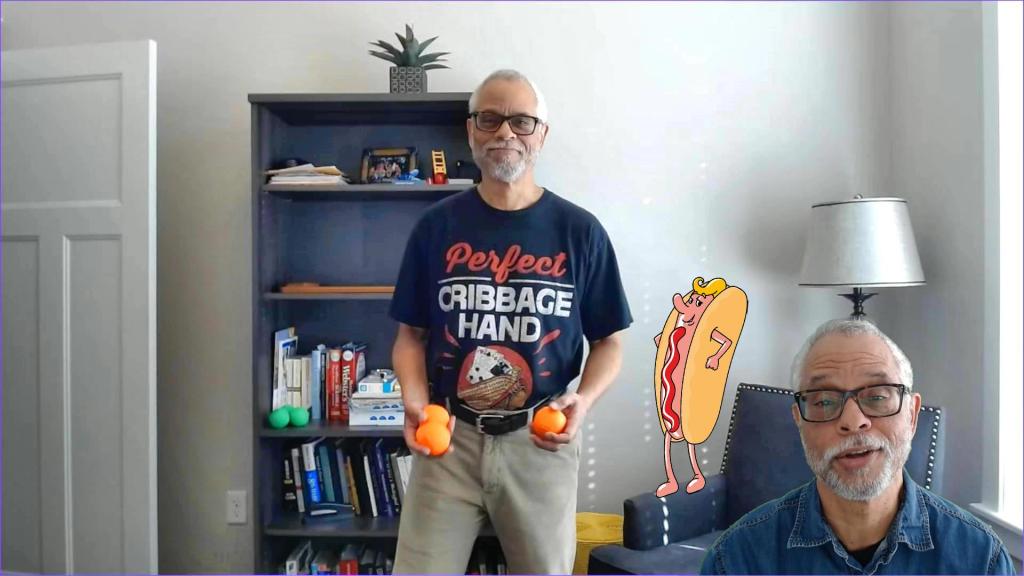
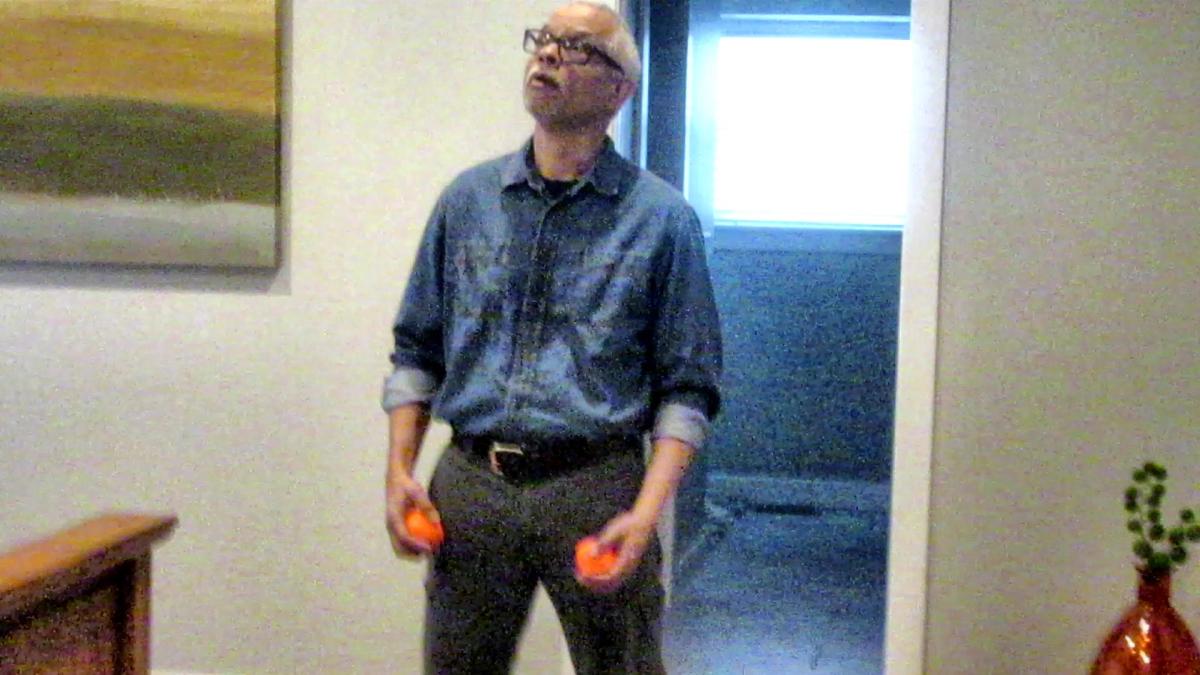
I’ve been juggling for about 5 months now and reflecting on my progress. I think I’m doing OK for a geezer. Sena would call me a hot dog although I would still call it ugly juggling by any standard.

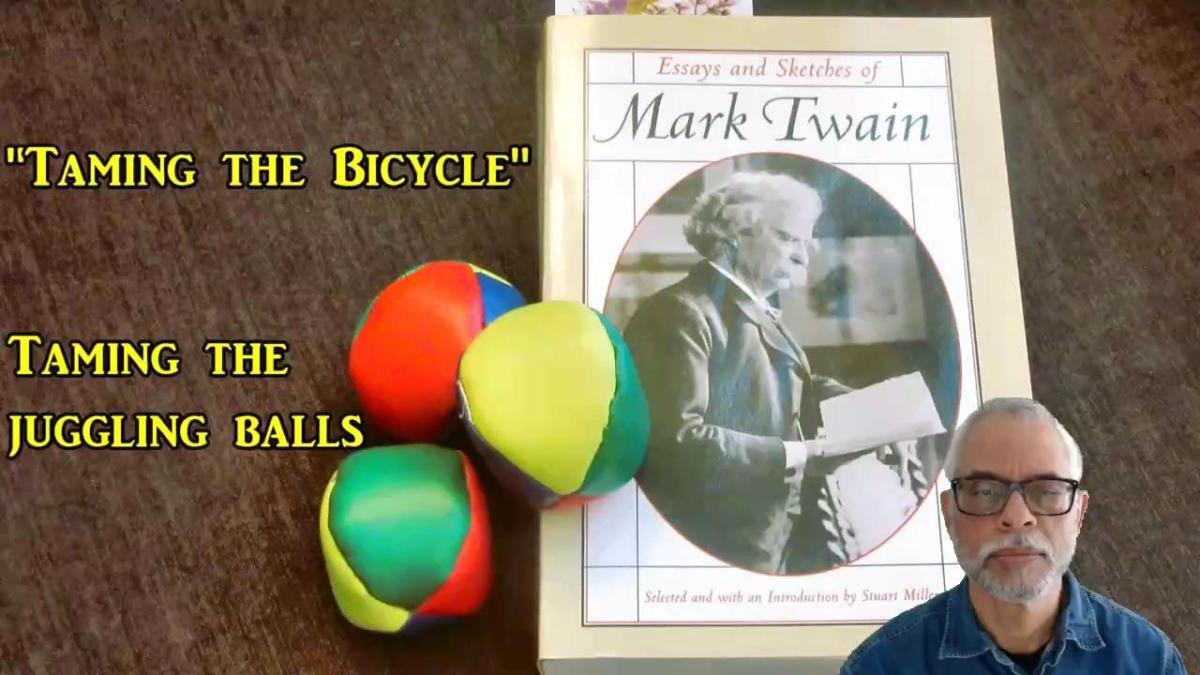
What’s striking, at least to me, is the little bit of science I can find on the web about juggling. I hear the term “muscle memory” when it comes to learning juggling. Actually, there’s some truth to that. There are different kinds of memory. For example, most of us know about declarative memory, which about memorizing facts, because we use it to prepare for exams. Those of us who went to medical school remember the agony of taking tests for the basic sciences.

But so-called muscle memory, or the memory for learning new skills like juggling, takes place in the brain. There was a study published in 2009 which found changes in both gray and white matter of subjects before and after learning to juggle (Scholz J, Klein MC, Behrens TE, Johansen-Berg H. Training induces changes in white-matter architecture. Nat Neurosci. 2009;12(11):1370-1371. doi:10.1038/nn.2412).

The study about correlation of the inability to stand on one leg for 10 seconds with higher mortality in older patients, which I relate to the ability to do the under the leg juggling trick, was published last year (Araujo CG, de Souza e Silva CG, Laukkanen JA, et al. Successful 10-second one-legged stance performance predicts survival in middle-aged and older individuals. British Journal of Sports Medicine 2022; 56:975-980.)

I talk a lot about juggling as though I’m a teacher. I’m not a juggling instructor by any means. You can find better juggling teachers on the web. But my approach to talking about juggling in terms of it being a hobby for me is really not different from how I talked about consultation-liaison psychiatry before and after I retired. I’m still a teacher—just evolving in retirement.

However, you can find much better resources for learning how to juggle at the following websites:

https://www.renegadejuggling.com/

Have fun!

Teaching an Old Dog New Tricks

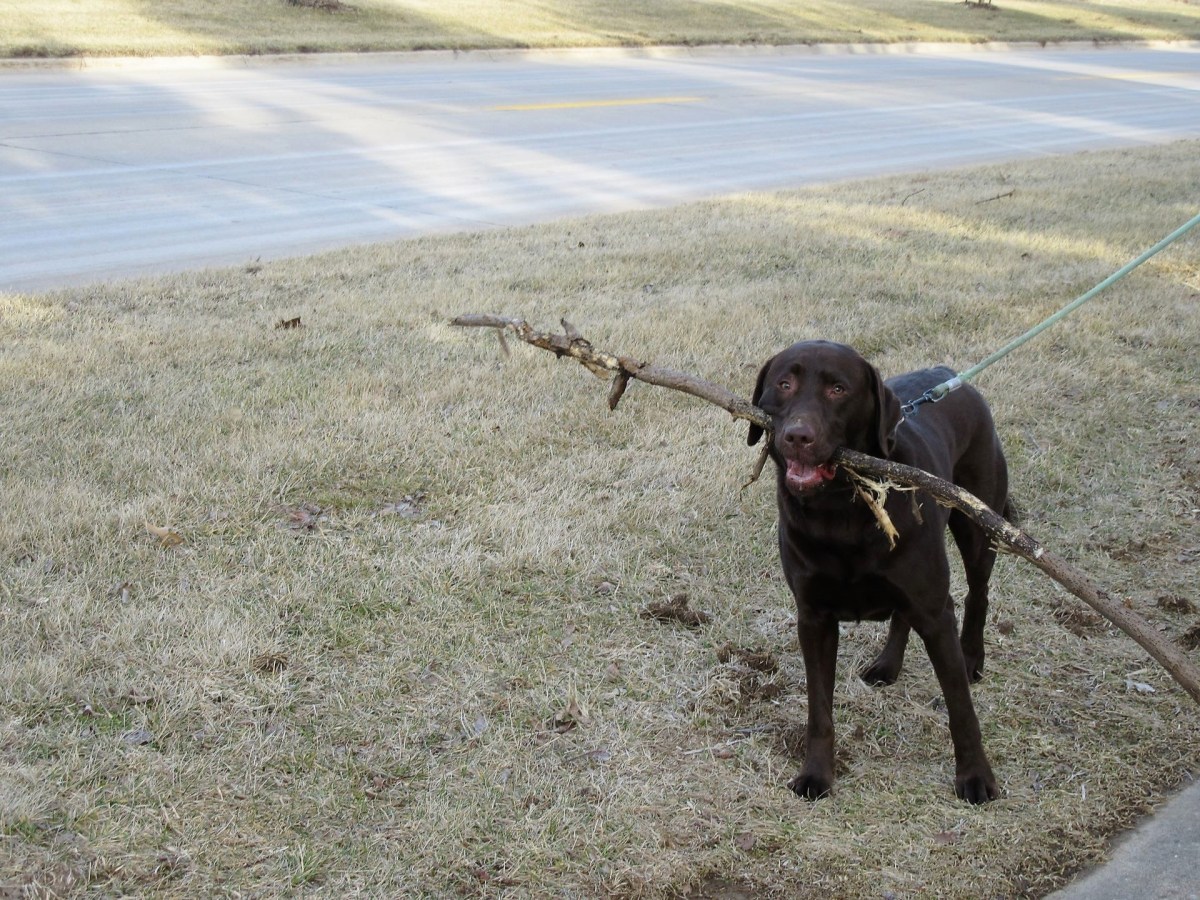
While we were out for a walk yesterday, we ran into someone walking her chocolate Labrador retriever. His name is Hunter and he had a tree branch longer than him in his jaws. He looked like he was having a great time gnawing on it and swinging it around.

I didn’t envy his owner when it came time to going home and taking it away from him.

Mostly younger dogs like to chew on old sticks and some say it might be a good idea to bring a chew toy along with you when you take a dog outside for a walk. It can be tough to persuade a dog to just let the stick go.

As a retired consultation-liaison psychiatrist, I sometimes compare myself to a dog who latches on to a stick and is reluctant to let it go. I’m an old dog that way and, as I’ve mentioned before, it’s a little hard to teach an old dog new tricks.

There are examples of this issue. I rarely go grocery shopping and I still have a lot to learn. I was not good about grocery shopping and other non-work-related chores when I was a doctor for about 28 years, counting residency. Medical school kept me pretty busy too.

Anyway, I went grocery shopping yesterday and I thought I did OK although I had to wander around quite a bit to find everything on my list. Sena doesn’t need a list. She pointed out that I got the unsalted butter—which she never buys. I wondered how I managed to pick up unsalted butter. I thought I was doing good to get the Great Value brand rather than the more expensive brand.

The package was blue instead of red. You mean I have to read the package?

I got a package of chicken breasts and congratulated myself on that. Sena said they were really thin and noticed that they included rib meat—which she normally doesn’t buy. That slipped by me.

I bought a lot of items that we needed; you know, things like milk, eggs, bread, nuclear weapons, etc. But I really didn’t get anything that you could actually make a bona fide meal out of in the sense of cooking something.

Well, I did get a couple of frozen pizzas. This brought the total of frozen pizzas in our freezer to a number I’m not willing to divulge at this time.

I had to maneuver around several shoppers who were filling orders for customers who ordered their groceries on line. I tried that a very few times and it’s more difficult than I thought.

When I got up to the cashier, I just stood there while she rang up my purchases, bagged them—and then she started to put the bags in my cart. She didn’t say anything but a tiny bell in my brain rang somewhere and it occurred to me that I was supposed to put the bags in the cart. I apologized and got to work right away when I noticed. I recalled that it was probably just that mistake that led to my leaving an item at the store the last time I shopped.

Sena went to the grocery store after I got home and returned with items that could be used in menus. I think that is called meal planning.

But I did make dinner last night, meaning I reheated left-over chili and chopped up some vegetables for salads. Oh, and I got the saltines out for the bread group.

Sena is still trying to coax me to let go of the stick.

About Those Stages of Retirement

We got our new wall clock on the wall the other day. It got me to thinking about how I view time and other matters now that I’ve been retired for about two and a half years.

I actually tried to ease into retirement by getting a 3-year phased retirement contract. I thought that might help me get adjusted to not being a fire fighter as a consultation-liaison psychiatrist. I don’t know how helpful that was.

So, I looked up the stages of retirement on the web. There are slightly different versions but most of them have 5 stages:

  • Realization
  • Honeymoon
  • Disenchantment
  • Reorientation
  • Stability

I guess I’m somewhere at the tail end of disenchantment and the beginning of reorientation. I have to point out a few things about me and the clock on the wall to help get my point across.

When I was running around the hospital, I used to pay a lot of attention to the clock. One example is how I helped medical nurses and doctors diagnose and manage catatonia. That’s a complicated and potentially life-threatening condition linked to a lot of medical and psychiatric disorders. It can make people afflicted with it look like they have a primary mental illness and they can look and act spooky.

Most people with catatonia are mute and immobile. They could also have wild, purposeless agitation but the mute and immobile type is more common. I would recommend administering injectable medicine in the class of benzodiazepines, often lorazepam.

Often the catatonic person would wake up and start answering questions after being like a statue only minutes before the injection. I watched the clock very closely, and the nurse and I watched the vital signs even more closely.

The recovery from a catatonic state looks like a miracle, which often made me look like a hero—despite the fact I could not explain exactly the mechanism of how catatonic states begin or how injectable benzodiazepines work to reverse the state. In most situations, on the general medical and surgery wards, the cause was not infrequently a medical emergency.

That made retirement difficult. I often didn’t notice time passing when I was working. In fact, my job as a C-L psychiatrist was marked by a series of emergencies, hence the fire fighter feel the job held for me.

Somehow, interrupting my schedule (if you can call firefighting a schedule), didn’t help me very much in my adjustment to retirement.

Right from the start, I noticed I missed being a hero. By the time I got to the first stage, Realization, I was already part of the way into the Disenchantment stage. I don’t really recall the Honeymoon stage.

Time passed slowly after full retirement for me. Not even the phased retirement schedule prepared me for it. It was excruciating. I have never slept very well, but my insomnia got worse after retirement.

I had fleeting thoughts about returning to work, and that’s the surprising thing. You’d think I would have just dropped the whole retirement thing and get right back in the fire truck.

But I didn’t. Part of me knew that the job consumed me and burnout was a consequence. My focus on work did not help me be a good husband. On the other hand, retirement by itself didn’t help either.

It’s still hard, but not as difficult as it was at first. I would say that I’m somewhere between the latter part of Disenchantment and the beginning of Reorientation. I’m not anywhere near Stability.

I have replaced my schedule to some degree. Most days, I exercise and practice mindfulness meditation. I have also recently taken up juggling, as many of my readers know.

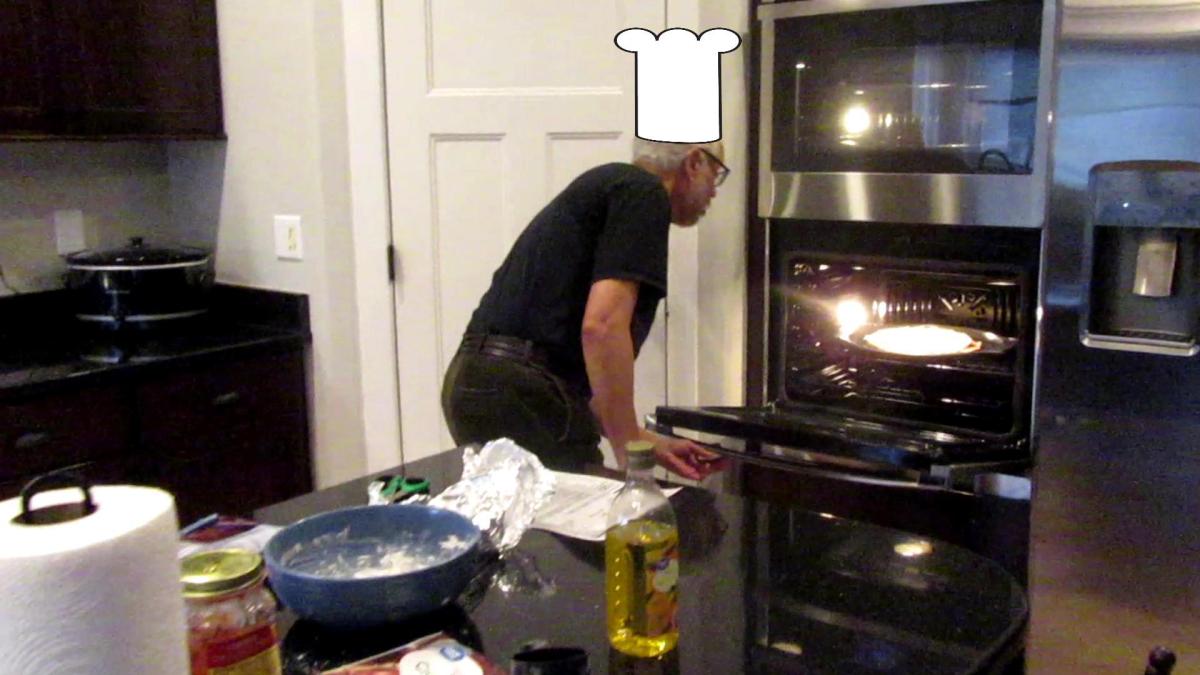
But any YouTube videos of me “cooking” are bogus. Sena takes video of me messing around making pizza and whatnot as if I know what I’m doing—but she’s giving me cues every step of the way. I’m allergic to kitchens and I probably always will be.

Anyway, I have a different relationship with the clock nowadays. I’m still hoping that I’ll evolve into somebody who knows how to manage not just retirement better, but a whole lot of things in a more adaptive way.

I sure hope so. According to some statistics, at my age I’ve got a limited time to improve. So, I need to get busy.

Thoughts on Regrets

I’ve been thinking about Dr. Moffic’s article on regret, posted on February 16, 2023 in Psychiatric Times.

I’ve dwelt on it long enough that I feel compelled to inject humor into the subject. It’s one of my many defenses.

There’s a quote from Men in Black 3 involving a short telephone conversation between Agent K and Agent J:

Agent K: Do you know the most destructive force in the universe?

Agent J: Sugar?

Agent K: Regret.

You could probably sense that joke coming. Whenever there is talk of regrets, I always recall maybe one or two remarkable episodes which led to lifelong regret. Because regret is pretty corrosive, as noted by Agent K, I need something to counter it.

My trouble is that I have many regrets. Am I so different in that regard?

Sometime in mid-career, a very important leader told me, frankly and calmly, “You’ll never be a scientist.”

Well, by then it was far too late for me to change life course. It was true; I’ve always been the rodeo clown, never the matador.

On the other hand, I know one thing I’ve never regretted and that’s my retirement. At least I think I haven’t regretted it. I have this recurring dream. It’s not every night, but often enough to make me wonder what I should do about it.

In the dream, I’m late for an exam or class and I fear I’m going to flunk. I look for the building where the exam is going to be held. I can never find it. Hallways appear and look vaguely familiar, but as I wander about looking for the bookstore or classroom or exam room, I feel like I’m in a maze, climbing stairs, almost like an Escher drawing.

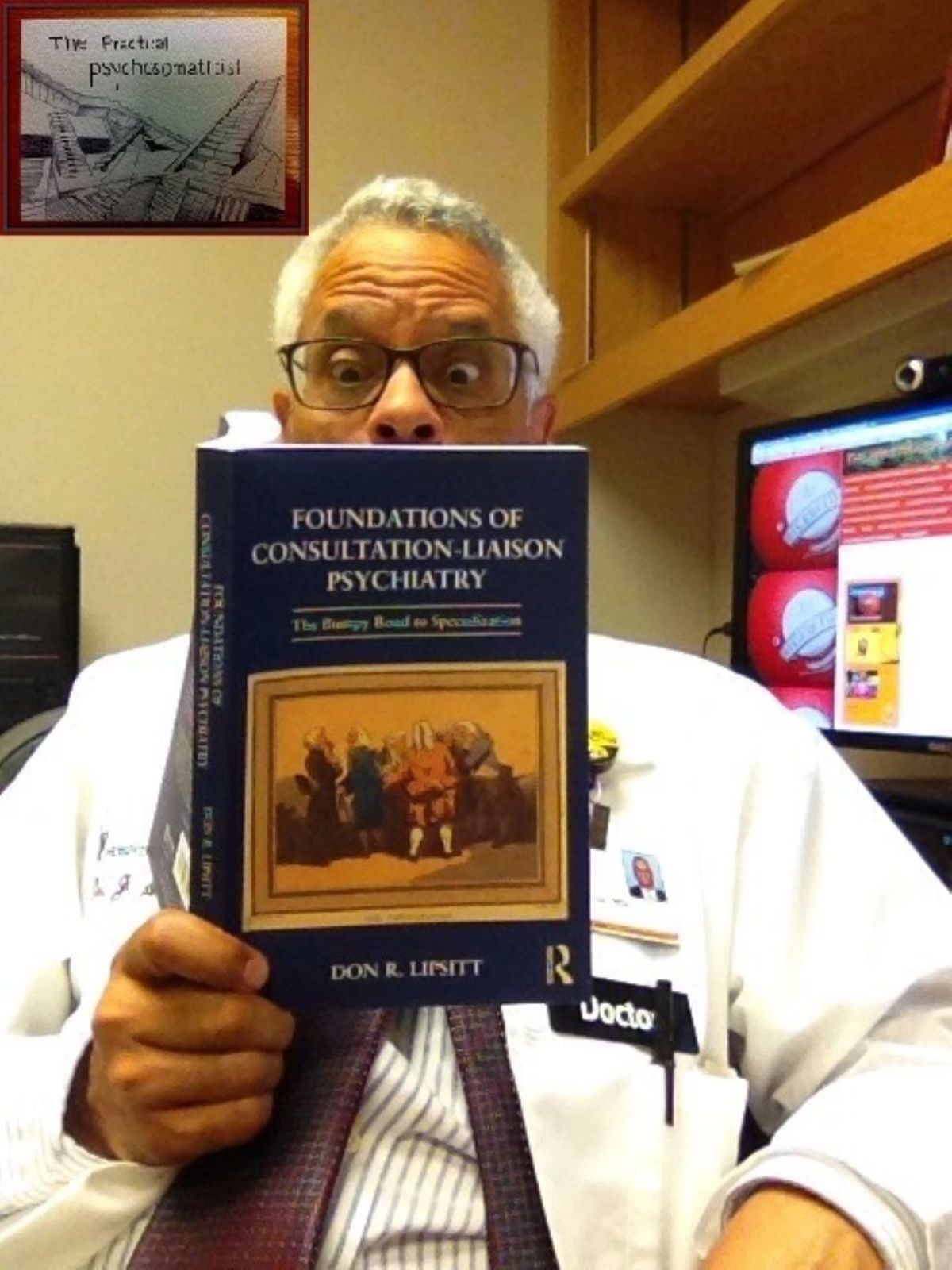
That reminds me. Incidentally, several years ago, one of the medical students rotating on the psychiatry consult service drew a picture entitled “The Practical Psychosomaticist” which contained images of stairs running in different directions similar to an Escher drawing (see the featured image). It was really just her expression of how I got around the hospital. I avoided elevators and always took the stairs.

Anyway, I’m carrying several notebooks and loose papers keep falling out. I get lost in this jumble of halls and stairways, never finding my destination.

The dream is probably just me telling myself I’m failing at something in my waking life. It’s not like I need a dream to notify me.

This is a long way of saying I have many regrets, and that I may not know exactly how many. Some of them are less important than others. Take the “I’ll never be a scientist” theme. I’m not terribly broken up about it.

After all, rodeo clowns do pretty important things.

Snowstorm Today Perfect for Deer Zoomies and Snowball Juggling!

Today we got a fair amount of snow dumped on us. It gave the deer the zoomies. They ran around in it like they were having a lot of fun.

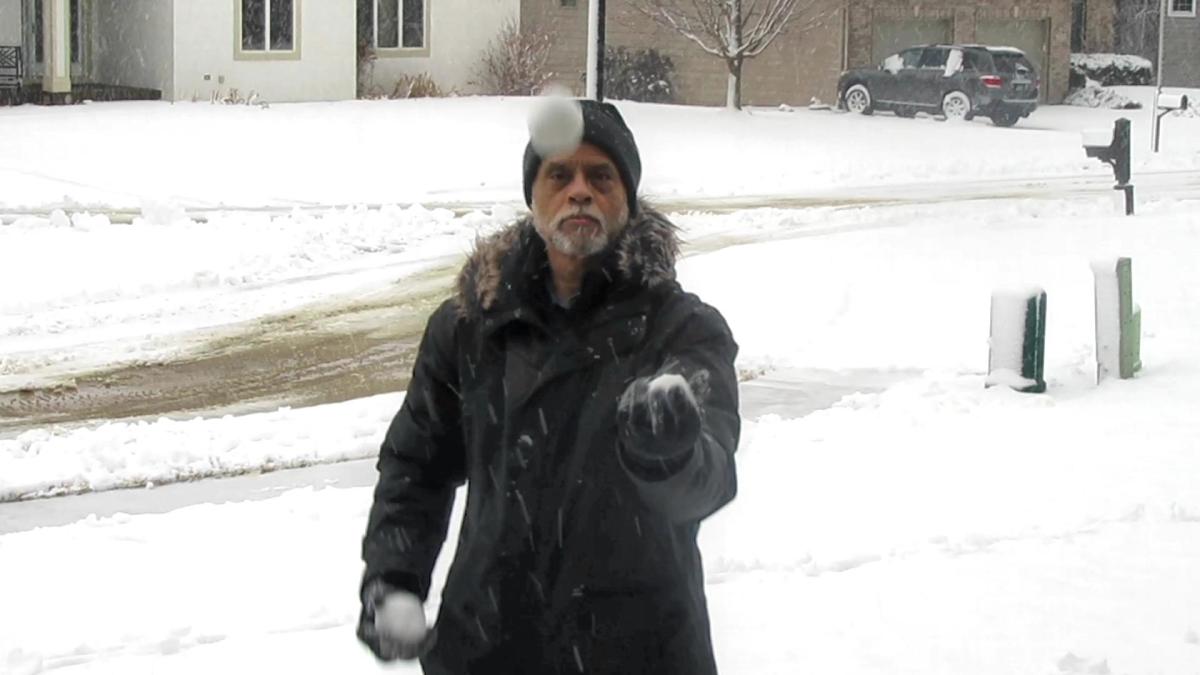
It was a heavy, wet snow. So, we took some time out from shoveling so I could make some snowballs and try juggling them. It didn’t work so well about a month ago when the snow was in brittle clumps. Today it worked pretty well, after I got the hang of shaping the snowballs.

We made videos. Enjoy!

I Got The Greatest Shout Out Today

I just got the greatest shout out from one of my heroes, Dr. H. Steven Moffic, MD. The link to one of his regular Psychiatric Times web (PT) articles, mainly on what’s in the daily news that impacts psychiatry or vice versa, is on the menu of my home page.

The title of the PT article in which I get a shout out  is “A Tale of 3 Retirements: Football Star Tom Brady, Black Psychiatrist James Amos, and Me.” He got my retirement date wrong by 20 years, but what the heck; no big deal. He did his homework otherwise just fine.

In fact, I didn’t know that Dr. Moffic even noticed that I had a blog. I have written articles for PT in the past. You can still find them by searching my name on the web site. One was on stress and the psychiatrist and another was on how consulting psychiatrists can be helpful in recognizing and managing delirium.

And today, Psychiatric Times (PT) contacted me to make a video about my juggling hobby. I gather it’s a regular series about what psychiatrists do outside of their work/practice. Imagine that; PT wants to see ugly juggling! How did PT know about that? Dr. Moffic mentioned my name.

In return, I’d like to give a big shout out right back to Dr. Moffic and also to other psychiatrists. One is Dr. George Dawson, who writes the blog Real Psychiatry. Another is TheGoodEnough Psychiatrist. These are featured on the main menu on my blog. I can name another who also writes for PT and this is Dr. Ronald Pies.

Chef Jim Makes Pizza!

It had been around 3 years since I actually made a pizza (see YouTube video “The Path to Pizza.”)  rather than just sticking a frozen one into the oven. Yesterday, Sena and I put together a video of me (with more than a little coaching from the boss) making a whopper pizza.

Sena bought a new pizza pan for the occasion. In fact, she got a few new cooking pans, saying firmly it was high time for a change. We used to call the old pizza pan “well-seasoned.” But it was out with the old and in with the new.

Because I’m a guy, it was safer to let me use a ready-made pizza crust mix. I was sort of used to that, anyway. It’s a Great Value brand and it was pretty good—after Sena jazzed it up with a few things like a little sugar, sea salt, garlic powder, and Himalayan Pink Salt preferred by all the Yeti chefs.

We used Classico Spicy Tomato & Basil spaghetti sauce, which I understand is legal.The spices we used were garlic powder, basil, fennel, red pepper flakes, salt and pepper, along with a couple dozen other things. You use what you like.

Sena also “suggested” different kinds of cheeses (“I woke up feeling the cheesiest!”) There was a shredded Italian variety made up of 3 different cheeses including parmesan, mozzarella, provolone, romano, and asiago. and we topped that with a different brand of provolone. Sena really likes added provolone.

MLK Week Redux for the New University of Iowa Psychiatry Fellows

I discovered the University of Iowa Dept of Psychiatry had a very successful match, filling key residency slots in Child Psychiatry, Addiction Medicine, and Consultation-Liaison fellowships. Congratulations! That’s a big reason to celebrate.

This reminds me of my role as a teacher. I retired from the department two and a half years ago. But I’ll always remember how hard the residents and fellows worked.

And that’s why I’m reposting my blog “Remembering My Calling.”:

Back when I had the blog The Practical C-L Psychiatrist, I wrote a post about the Martin Luther King Jr. Day observation in 2015. It was published in the Iowa City Press-Citizen on January 19, 2015 under the title “Remembering our calling: MLK Day 2015.”  I have a small legacy as a teacher. As I approach retirement next year, I reflect on that. When I entered medical school, I had no idea what I was in for. I struggled, lost faith–almost quit. I’m glad I didn’t because I’ve been privileged to learn from the next generation of doctors.

Faith is taking the first step, even when you don’t see the whole staircase.”

Martin Luther King, Jr.

As the 2015 Martin Luther King Jr. Day approached, I wondered: What’s the best way for the average person to contribute to lifting this nation to a higher destiny? What’s my role and how do I respond to that call?

I find myself reflecting more about my role as a teacher to our residents and medical students. I wonder every day how I can improve as a role model and, at the same time, let trainees practice both what I preach and listen to their own inner calling. After all, they are the next generation of doctors.

But for now they are under my tutelage. What do I hope for them?

I hope medicine doesn’t destroy itself with empty and dishonest calls for “competence” and “quality,” when excellence is called for.

I hope that when they are on call, they’ll mindfully acknowledge their fatigue and frustration…and sit down when they go and listen to the patient.

I hope they listen inwardly as well, and learn to know the difference between a call for action, and a cautionary whisper to wait and see.

I hope they won’t be paralyzed by doubt when their patients are not able to speak for themselves, and that they’ll call the families who have a stake in whatever doctors do for their loved ones.

And most of all I hope leaders in medicine and psychiatry remember that we chose medicine because we thought it was a calling. Let’s try to keep it that way.

You know, I’m on call at the hospital today and I tried to give my trainees the day off. They came in anyway.

Giving Credit Where Credit is Due

Here’s another vintage post from around a decade ago after my former Psychiatry Dept chairperson, Dr. Robert G. Robinson and I published our book, Psychosomatic Medicine: An Introduction to Consultation-Liaison Psychiatry” in 2010.

Blog: Who Gets The Credit?

When I think about peak moments, I remember this guy back in junior high school who decided to try to break the Guinness Book of World Records for skipping rope. I don’t remember his name but the school principal and his teachers all agreed to let him do it during class hours. They marked out a little space for him in our home room. He was at it all day. And he was never alone because there was always a class in the room throughout the day. We didn’t get much work done because we couldn’t keep our eyes off him. It was mesmerizing. The longer he jumped, the more we hoped. We were very careful about how we encouraged him. We didn’t want to distract him and make him miss a jump. And so, we watched him with hope in our hearts. It was palpable.  As he neared the goal, we were all crowded around him, teachers and students cheering. He was exhausted and could barely swing the rope over his head and lift his knees. When he made the time mark, we lifted him high above our heads and you could have heard us yelling our fool heads off for miles. Time stood still. He was a hero and we were his adoring fans. It didn’t occur to us to be jealous. His achievement belonged to all of us.

Another peak moment occurred more recently, when my colleagues and I published a book this summer. It’s my first book. It’s a handbook about consultation-liaison psychiatry which my department chairman and I edited, and the link is available on this page. This time, the effort was collaborative with over 40 contributors. The work took over 2 years and often, being an editor felt like herding cats. But we worked on it together. Many of the contributors were trainees working with seasoned psychiatrists who had much weightier research and writing projects on their minds, I’m sure. Like any first book, it was a labor of love. The goal was to teach fundamental concepts and pass along a few pearls about psychosomatic medicine to medical student, residents, and fellows. The book grew slowly, chapter by chapter. And when it was finally complete, this time the achievement was ours and again it belonged to all of us.

I made a lot of long-distance friends on the book project and occasionally get encouragement to do something else we could work together on. I suppose one thing everyone could do is to propose some kind of delirium early detection and prevention project at their own hospitals and chronicle that in a blog to raise awareness about delirium—sort of like what I’ve been trying to do here. We could share peak moments like:

  1. Getting the Sharepoint intranet site up and going so that group members can talk to each other about in discussion groups about how to hammer out a proposal, which delirium rating scale to use, or which management guidelines to use—and avoid the email storms.
  2. Being invited to give a talk about delirium at a grand rounds conference or regional meeting.
  3. Talking with someone who is interested in funding your delirium project (always a big hit).

That way if one of us falters, we always know that someone else is in there pitching. Copyrighting ideas and tools are fine. Hey, everybody has a right to protect their creative property. I’m mainly talking about sharing the idea of a movement to teach health care professionals, and patients about delirium, to help us all understand what causes it, what it is and what it is not, and how to prevent it from stealing our loved ones and our resources.

“It is amazing what you can accomplish if you do not care who gets the credit”-Harry Truman, Kansas Legislature member John Solbach, Ronald Reagan, Charles E. Montague, Benjamin Jowett, a Jesuit Father, a wise man, Edward T. Cook, Edward Everett Hale, a Jesuit Priest named Father Strickland.

Slow Progress with Juggle Behind the Back Trick

About a month ago, I made a YouTube video showing my miserable performance trying to do the throw behind the back juggling trick.

I have been practicing nearly every day since. I’m still not able to do the trick and integrate it into the 3-ball cascade. On the other, I’ve gone from zero percent to “maybe I can do this” when I try the 2-ball practice trick.

My latest video on the 2-ball practice trick alone still shows me chasing after dropped balls, obviously. But I catch at least one and sometimes both more often than I did last month.

The 2-ball practice throw behind the back trick has two components. They’re parts of the full trick which incorporates the trick into juggling a 3-ball cascade. I inferred this from the little manual I got with the Learn to Juggle kit I bought back in mid-October.

In one component, I throw the ball behind my back first with my right hand (the trick ball), then quickly throw the second ball up and—drop both on the floor. No, wait, the idea is to catch them both. This was easier a month ago then it is now because I quit practicing it to do what was harder.

The harder 2-ball practice component was to throw one ball up with my left hand first, then throw the trick ball behind my back. The object is to catch both, which I was unable to do at all until the last few days. It was a coin toss whether I would catch either ball or both. Most of the time, I dropped both.

I was amazed because it seemed like I went from being completely unable to do this to being marginally competent (luckier?) practically overnight.

I have watched demo videos of jugglers who can do the behind the back throw trick and it’s pretty impressive. At first, I thought I would be able to do this without as much effort as I put into doing the throw under the leg trick. They incorporate the same general moves, which includes throwing one ball a little higher than usual in order to make time for doing the trick throw and catching the next ball.

But the stickler for me is having to look behind me for the ball coming from behind my back—which means I have to take my eyes off the balls in front. When I do the under the leg trick, I’m looking at everything happening in front of me.

For a while, it seemed easier to throw the one ball before the trick a little lower rather than higher than usual. That doesn’t make sense, when I think about the timing, and yesterday it didn’t seem to matter exactly how high I tossed it. But I’m pretty sure that throwing it higher makes the trick easier.

Also, early on I thought you had to throw the balls perfectly to get the trick right. I do anything but that, which is why I’m good at ugly juggling. It’ll be a while before I incorporate this into a 3-ball cascade.