
Coffee Talk

We got a new coffee maker the other day and it’s a Black and Decker. That brand name threw me for a loop just by itself. I’m used to hearing about Black and Decker power tools. But believe it or not, I’m not sure I’ve ever heard of Black and Decker coffee makers.

I looked this up on the web. In fact, the Black and Decker company didn’t start marketing coffee makers until the 1980s, I think. It was called the Spacemaker Coffee Maker because it would fit under kitchen cabinets.

Sena tells me we had a Black and Decker coffee maker a long time ago, but I don’t remember it. Then we went with Hamilton Beach, then Mr. Coffee. We also had a Keurig, but the coffee pods were really expensive. This Black and Decker replaced an old Mr. Coffee. The clock didn’t work on it, a problem that I think got started after the derecho a couple of years ago.

Anyway, the Black and Decker is a 12-cup thermal programmable. The number of cups we get out of it is 8, and I think that happens with every coffee maker we ever had which bills itself as a 12-cup. I wonder how big they think most coffee cups are?

It has a smart-looking stainless steel thermal carafe and something with an interesting name, “VortexTM Showerhead.” It sounds like something out of a science fiction movie, but it’s a gadget that looks like a red showerhead that’s designed to provide even saturation of the coffee grounds for “optimal water flow for maximum flavor.”

It has a digital LCD clock, like most coffee makers have, but it’s not backlit. You can see the clock but you have to squint at it. You almost have to use a magnifying glass to see the word “STRONG” which appears when you press the button for strong coffee, which we like.

The user manual suggests (in bold face type) to fill the carafe with hot tap water and empty it before brewing. This is an extra step which is supposed to warm up the carafe and help keep coffee hot. It takes extra time and we don’t think it makes a bit of difference.

We’ve been drinking coffee a long time. It’s actually good for you. Some claim it can even reduce the risk of depression, but I would take this with a grain of salt. If you took that sentence literally, then coffee might not do much of anything for you. You can get too much caffeine, but other than that, it’s good for your health.

I guess you can use it to dye your gray hair, which is funny. You just brew some coffee, rub it into your hair, and right away your hair is much more alert.

I Got Skunked in Cribbage!

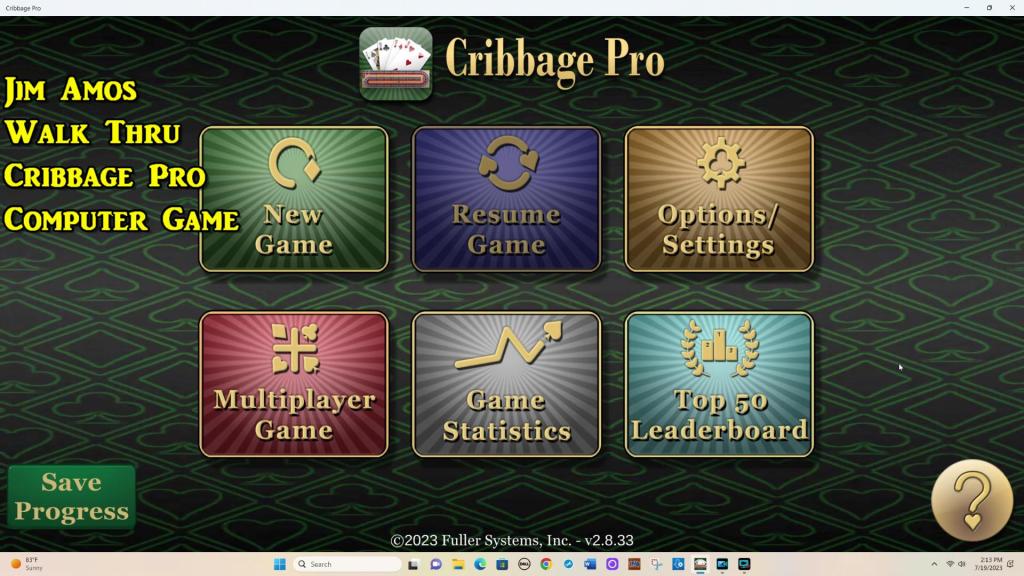
It’s not common to get skunked in cribbage—but it happened to me yesterday. Sena has a way of getting very high scoring hands and this led to her winning the first of three games in a big way.

I was stuck well behind the skunk line. This led to some questions by both of us as to what exactly happens in a tournament when a player gets stuck behind the 91-hole on the peg board after the opponent reaches the winning 121 hole.

The American Cribbage Congress (ACC) website says the winner gets 2 points. I think that’s because the scoring in tournaments is done by points.

Other references say that the winner gets 2 games. That means something if you’re playing the best out of, say, 3 games and the like.

There is such a thing as a double skunk, which is getting stuck behind the 61-hole after the opponent reaches 121. Then the winning opponent wins 3 games.

Many cribbage boards will not mark where the skunk and double skunk holes are. Tournament board makers often don’t mark them—but will if you ask them to do so.

We have a so-called tournament V-tournament board which marks both skunk and double skunk lines. You can see the V-shaped track on it, which is supposed to help players avoid pegging errors.

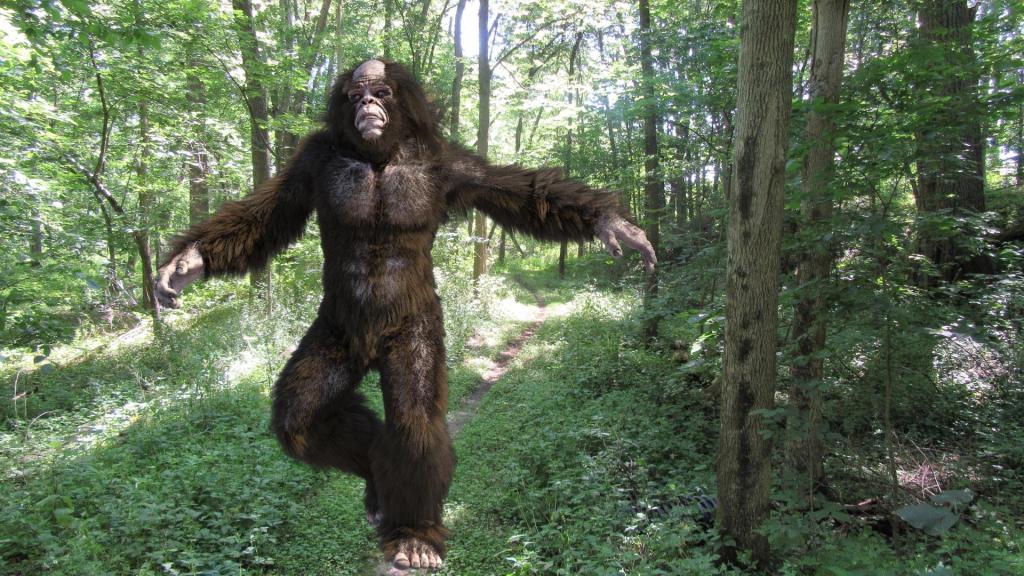
This reminds me to mention the brand-new Sasquatch cribbage board we just ordered. It’ll be a hand-carved walnut board in a circular shape. Sasquatch will be carved in a deep 3-D relief. We are very excited about it. We hope it arrives around Christmas time. There will be no skunk lines.

By the way, I ended up winning two of three games because we typically ignore the skunk rule.

Going for the Juggler Gold Trophy!

I’ve been working on my juggling form—and it’s only somewhat improved, but I’m getting 30 throws (good for the personal Gold Trophy milestone) without dropping more consistently just since yesterday.

I’ve got about a dozen video clips with me getting at least 30 throws, one with 36 although I’m weaving, lunging, rearing, rocking and rolling all over the room, nearly crashing into the computer. You can read my lips to see I’m counting in the video.

I’m hoping that getting to my Juggling Gold Trophy milestone will help make it easier to do tricks.

Taming the Juggling Balls

As of November 7, 2022 it has been 22 days since I purchased the Learn to Juggle kit from Barnes and Noble. So far, my learning experience reminds me of a story by Mark Twain, “Taming the Bicycle,” which was published posthumously—obviously after he succumbed from his injuries in the attempt to ride the high-wheeled bicycle in the early 1880s.

Just kidding of course, about his death from the bicycle riding adventure. He did mention using about a barrel of something called Pond’s Extract, which was a liniment for scrapes and other wounds.

Twain was writing about learning something new—a thing all of us are called on to do many times in our lives. He didn’t try to learn to ride the bicycle until he was over 50 years old.

I didn’t try to learn how to juggle until was well past my mid-sixties. How do you account for decisions to embark on new hobbies, adventures, and other nonsense at an age when most people would be content vegetating on the porch or in front of the TV?

I just answered the question, in case you didn’t notice.

Anyway, I am making some progress as juggling, although it’s uneven. It’s hard to believe, but sometimes I think I juggle better as I wander around. I think it might be because there is a natural tendency to throw the balls away from you. That way, I look more adept simply because I’m making a frequently observed beginner’s mistake. But I seem to be steadier even when I walk backward a few paces.

 When I stand firmly in one place and attempt to juggle, I can often barely make it past half a dozen throws. Wandering a little, I have made thirty throws.

But then, randomly, the opposite occurs and the theory fails.

Counting the number of each throw seems to help—occasionally. I also notice that unscheduled, short practice episodes for 10 minutes or less work better than struggling along for a half hour or so at set times.

I don’t dread the practice sessions; in fact, I have a sort of itch to juggle at various times during the day. Sometimes I believe I do it to help me collect my thoughts, to keep my hands occupied, or just to pass the time.

I remember learning to ride the bicycle for the first time when I was a kid. I fell down a lot, just like Twain did—until I got the hang of it. Maybe juggling will turn out to be the same.

But I won’t need Pond’s Extract for juggling mistakes—as long as I don’t try juggling while climbing or descending stairs.

Total Lunar Eclipse Blood Moon This Freezing Morning!

I took my very first selfie ever with my smartphone, which I’ve had for about 7 years. The occasion is the 2nd total lunar eclipse blood moon I’ve ever seen, which started at about 2:00 AM this morning.

It was so cold outside I had to wear a sweater and my winter coat with hat and gloves. I could see my breath for crying out loud. Temperatures were in the mid-30s out there but the wind made it feel even colder, close to freezing.

I hope my photos turn out. If they don’t, I’m going to be very disappointed.

Get Your Tin Foil Hats Out for the Total Lunar Eclipse Tomorrow

I just found out this morning that there’s a total lunar eclipse that will be visible starting tomorrow morning. We saw the one in May this year, and we’re excited—about getting up early in the morning around 4:00 AM.

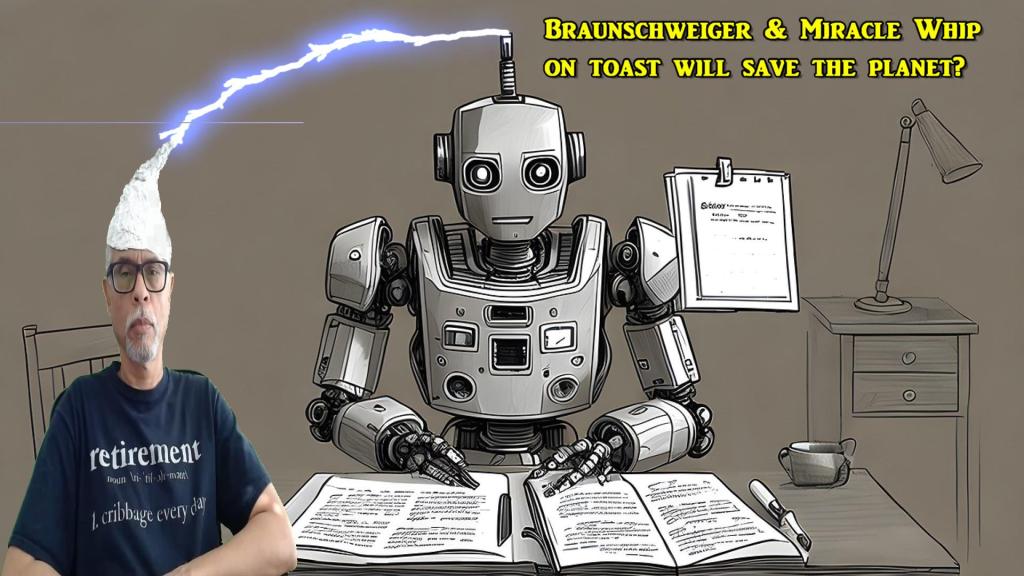
Although you don’t need to wear special eye protection for a lunar eclipse, you will need to get your tin foil hats on. This is to protect you from the extraterrestrials who will be looking for hapless earthlings who are distracted by the eclipse, and hypnotize them into cooking Thanksgiving turkey and dressing for them.

Since the event will be in the wee hours of tomorrow morning, we plan on getting up early to try to get some pictures. Good luck!

Old Dogs Can Learn New Juggling Tricks

I have been diligently been working on my juggling form—and of course it’s no better. But I’m having a lot of fun and even learning a few juggling tricks. Some of them are harder to do than others.

I’ve been juggling different objects, like socks and Blobs. The Blob antennae tend to get lodged between my fingers. I can sort of juggle Christmas tree balls. Christmas always comes early at our house. Sena always has a tree or two to put up and decorate.

There’s a tree up in the sun room and one in the lower level, where I juggled Christmas tree balls. Those are the ones we can do without, just in case I break them.

The tricks are not that hard and they won’t break the internet, except for one, maybe.

I guess you can teach an old dog new tricks.

Evolutionary Thoughts

By now, you’ve probably read the digital news article describing how we’re all going to evolve into beings who resemble extraterrestrials (ETs) because of our preoccupation with digital technology.

The authors describe us as eventually developing another eyelid that’ll protect us from the blue light emanating from our gadgets. Our hands will become claw-like and permanently flexed because of the way we’re always gripping our smartphones.

You’ll also develop a third hand that protrudes from your butt so you can catch your cell phone as it slips out of the back pocket of your skinny jeans. Come to think of it, that’ll also give rise to a weird new meaning for the term “butt dialing.”

Of course, the article is a criticism of our preoccupation with our gadgets, but it’s still fascinating as speculation about how creatures, including humans, evolve in response to the pressures in our environment.

This kind of thing makes me wonder whatever happened to Neanderthal. The males were huge, especially their arms, which came from frequent arm wrestling with Sasquatch for the last shred of beef jerky. Neanderthal had a very prominent brow which developed to keep snow and pterodactyl droppings out of his eyes.

And this reminds me of the discovery of the fossil of a giant creature on the Greek island of Crete in 2003 (I think). The skull had a huge nasal opening in the center of the skull. That was probably for a trunk, as in elephant trunk. But paleontologists thought it might have been the explanation for why ancient Greeks came up with stories about the terrifying one-eyed cyclops.

And what about that carp with a human-like face on the top of its head? I saw that one a week ago on the show The Proof is Out There. I thought sure Michael Primeau, the forensic video analyst on the show, would dryly dismiss it (“This video is clearly faked.”). Instead, the other experts thought it was natural. Tony summarized it as an example of the “plastic” evolution, by which I think he meant phenotypic or evolutionary plasticity. These are changes in a creature’s appearance, morphology, or physiology in response to changes in its environment. Regarding the carp, one expert opined that the face would confuse its main predator, the eel, by confusing it.

I still don’t get that one. How would the carp species even begin the evolutionary process? Does the carp just think, “Huh, I think that eel might get confused if I had a face like a human”? I get it that the changes occur at the genetic level, but how exactly does it get started?

Could you google the answer? I couldn’t find anything specific, like x plus y equals human-like face on a fish that many humans would not care to eat.

And how about writing? I wrote this blog post longhand using pen and paper, something I gave up doing years ago but which I am sort of rediscovering gradually. I had an old typewriter for a while, which gave way to something called a word processor, which was a stand-alone device made writing and editing text, and eventually I got a computer—which really messed things up.

The thing is, I can remember getting something called writer’s cramp. If you remember that, then you probably recall how painful it was. Back then, did anyone ever wonder whether that would lead to the evolution of a claw like hand?

Could evolution have consequences pertinent to people who are always looking up at the sky looking for UFOs? Some of them, for some unexplained reason, never seem to have a smartphone with them. Anyway, could their eyes migrate, carp-like, to the top of their foreheads to counter neck strain? And could this lead to the evolution of a third eye in the center of the forehead? It would prevent falling into manholes. There are other consequences from evolving into a cyclops.

We would be adept at forging thunderbolts. We would be very talented at cultivating vineyards and herding sheep and goats. But our tempers would still be pretty bad, even worse. We would abandon courts of law and ignore justice. We would be violent giants, feasting on the flesh of ordinary humans. All this because we kept searching the sky, hoping to see UFOs and see ETs, which we would eventually resemble anyway because of our preoccupation with our devices.

I have a pretty good supply of pens and paper.

Trying to Find the Juggler Space

I’ve been learning to juggle for over a couple of weeks now and I’m having trouble finding the sweet spot in juggling. It’s called the juggle space and I don’t know if there’s any agreement about exactly where it is.

On the other hand, I frequently toss balls too far in front of me or too close to me. I also throw them too high or too low.

The juggling manual I bought with the Learn to Juggle kit says it’s formed by an imaginary pane of glass. The bottom two corners are your two hands at the at your waist and at your sides. The top is a line just above your head.

If you want to know more about the juggling space, you can contact the International Jugglers’ Association.

The secret seems to be in the throw. If I don’t throw that perfect arc, the balls end up on the floor or on my head.

I notice that when I do keep my balls closer to my chest, I can juggle better. Wait, that didn’t sound right.

Anyway, trying to find the “pain” of glass is the challenge for me now. Practice is the key.