I Offered to Make Dinner But…

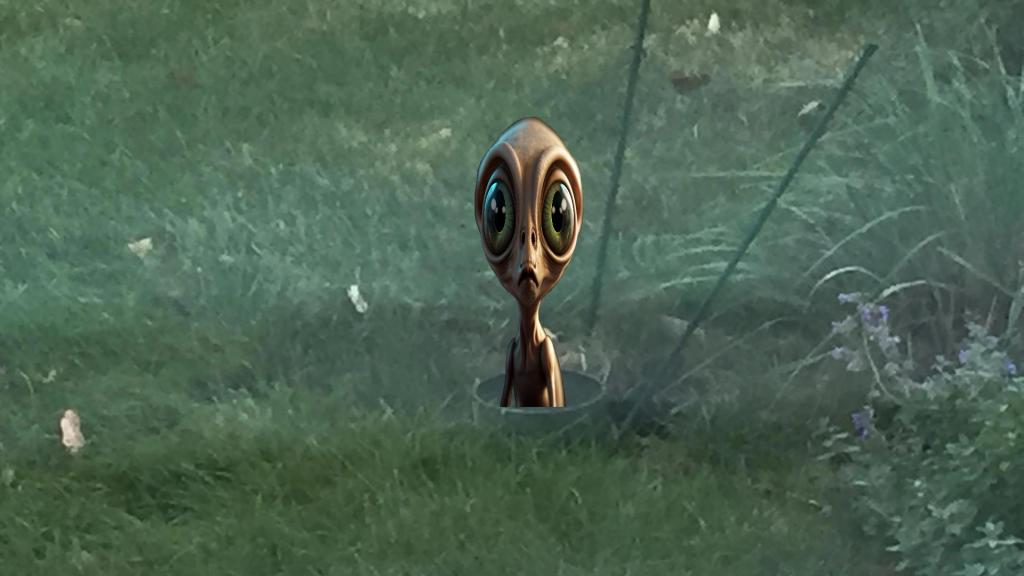
Yesterday I offered to make dinner, but Sena made a counteroffer I couldn’t refuse. She made a special dish of big meatballs (which she did not allow me to juggle) and potatoes. She makes an out-of-this-world sauce that she must have got from Extraterrestrials back in the early 1980s. The image from pixabay doesn’t do it justice, but we ate it too fast for me to get a snapshot.

I can’t remember the last time she made it; it has been years.

As a matter of full disclosure, while I did offer to make dinner, “making dinner” for me is sticking a frozen pizza in the oven. I might throw a light salad into the bargain, but the whole affair is a far cry from actually making the pizza dough and getting my hands dirty. That almost never happens unless the moon splits in two.

I will occasionally add a little extra provolone to a Jack’s Pizza, a brand which tends to be a little light on toppings. My favorites are the Screamin’ Sicilian and Lotzza Motzza. I don’t need to add anything because they’re already loaded. Sena goes around to all the grocery stores in town when they have reduced prices, but restrict you so you can buy only 2 at one store.

Also, I’ll prepare soup—if I can figure out how to open the can.

I can’t give away the recipe without incurring some form of special punishment which might involve sharp objects and a chase across the state. It includes a lot of butter, for which she used creamery butter sculpted in the shape of a Christmas tree. There are unspecified amounts of ketchup, brown sugar, and a variety of spices which are probably not native to this planet. She keeps them in a locked drawer from which loud growls erupt if I get too close.

Even if I knew the recipe, if I tried to make it, the dish would end up tasting a lot like pizza.

Giving Credit Where Credit is Due

Here’s another vintage post from around a decade ago after my former Psychiatry Dept chairperson, Dr. Robert G. Robinson and I published our book, Psychosomatic Medicine: An Introduction to Consultation-Liaison Psychiatry” in 2010.

Blog: Who Gets The Credit?

When I think about peak moments, I remember this guy back in junior high school who decided to try to break the Guinness Book of World Records for skipping rope. I don’t remember his name but the school principal and his teachers all agreed to let him do it during class hours. They marked out a little space for him in our home room. He was at it all day. And he was never alone because there was always a class in the room throughout the day. We didn’t get much work done because we couldn’t keep our eyes off him. It was mesmerizing. The longer he jumped, the more we hoped. We were very careful about how we encouraged him. We didn’t want to distract him and make him miss a jump. And so, we watched him with hope in our hearts. It was palpable.  As he neared the goal, we were all crowded around him, teachers and students cheering. He was exhausted and could barely swing the rope over his head and lift his knees. When he made the time mark, we lifted him high above our heads and you could have heard us yelling our fool heads off for miles. Time stood still. He was a hero and we were his adoring fans. It didn’t occur to us to be jealous. His achievement belonged to all of us.

Another peak moment occurred more recently, when my colleagues and I published a book this summer. It’s my first book. It’s a handbook about consultation-liaison psychiatry which my department chairman and I edited, and the link is available on this page. This time, the effort was collaborative with over 40 contributors. The work took over 2 years and often, being an editor felt like herding cats. But we worked on it together. Many of the contributors were trainees working with seasoned psychiatrists who had much weightier research and writing projects on their minds, I’m sure. Like any first book, it was a labor of love. The goal was to teach fundamental concepts and pass along a few pearls about psychosomatic medicine to medical student, residents, and fellows. The book grew slowly, chapter by chapter. And when it was finally complete, this time the achievement was ours and again it belonged to all of us.

I made a lot of long-distance friends on the book project and occasionally get encouragement to do something else we could work together on. I suppose one thing everyone could do is to propose some kind of delirium early detection and prevention project at their own hospitals and chronicle that in a blog to raise awareness about delirium—sort of like what I’ve been trying to do here. We could share peak moments like:

  1. Getting the Sharepoint intranet site up and going so that group members can talk to each other about in discussion groups about how to hammer out a proposal, which delirium rating scale to use, or which management guidelines to use—and avoid the email storms.
  2. Being invited to give a talk about delirium at a grand rounds conference or regional meeting.
  3. Talking with someone who is interested in funding your delirium project (always a big hit).

That way if one of us falters, we always know that someone else is in there pitching. Copyrighting ideas and tools are fine. Hey, everybody has a right to protect their creative property. I’m mainly talking about sharing the idea of a movement to teach health care professionals, and patients about delirium, to help us all understand what causes it, what it is and what it is not, and how to prevent it from stealing our loved ones and our resources.

“It is amazing what you can accomplish if you do not care who gets the credit”-Harry Truman, Kansas Legislature member John Solbach, Ronald Reagan, Charles E. Montague, Benjamin Jowett, a Jesuit Father, a wise man, Edward T. Cook, Edward Everett Hale, a Jesuit Priest named Father Strickland.

Blast from the Past Blog

I thought I’d re-post something from my previous blog, The Practical Psychosomaticist, which I cancelled several years ago. The title is “Face Time versus Facebook.” I sound really old in it although it appeared in 2011.

I’m a little more comfortable with the concept of social media nowadays and, despite how ignorant I was back then, I later got accounts in Facebook, Twitter, and LinkedIn. I got rid of them several years later, mainly because all I did was copy my blog posts on them.

The Academy of Psychosomatic Medicine (APM) to which there is a link in the old post below, later changed its name to the Academy of Consultation-Liaison Psychiatry (ACLP), which made good sense. I still have the email message exchange in 2016 with Don R. Lipsitt, who wrote the book “Foundations of Consultation-Liaison Psychiatry: The Bumpy Road to Specialization.” It’s an excellent historical account of the process.

Don liked a post I wrote, entitled “The Time Has Come for ‘Ergasiology’ to Replace ‘Psychosomatic Medicine?” It was a humorous piece which mentioned how many different names had been considered in the past for alternative names for Psychosomatic Medicine. I was actually plugging his book. I don’t think ergasiology was ever considered; I made that part up. But it’s a thing. It was Adolph Meyer’s idea to invent the term from a combination of Greek words for “working” and “doing,” in order to illustrate psychobiology. Don thought “…the Board made a big mistake…” naming our organization Psychosomatic Medicine. He much preferred the term “consultation-liaison psychiatry.” We didn’t use emoticons in our messages.

The Don R. Lipsitt Award for Achievement in Integrated and Collaborative Care was created in 2014 to recognize individuals who demonstrate “excellence and innovation in the integration of mental health with other medical care…”

I don’t think the ACLP uses Facebook anymore, but they do have a Twitter account.

I also included in the old post a link to the Neuroleptic Malignant Information Service (NMSIS). I used to call the NMSIS service early in my career as a consultation-liaison psychiatrist. I often was able to get sound advice from Dr. Stanley Caroff.

Blog:  Face Time versus Facebook

You know, I’m astounded by the electronic compensations we’ve made over the years for our increasingly busy schedules which often make it impossible to meet face to face.  Frankly, I’ve not kept up. I still think of twittering as something birds do. If you don’t get that little joke, you’re probably not getting mail from the AARP.

The requests for psychiatric consultations are mediated over the electronic medical record and text paging. Technically the medical team that has primary responsibility for a patient’s medical care contacts me with a question about the psychiatric management issues. But it’s not unusual for consultation requests to be mediated by another consultant’s remarks in their note. The primary team simply passes the consultant’s opinion along in a request. They may not even be interested in my opinion.

I sometimes get emails from people who are right across the hall from me. I find it difficult to share the humor in a text message emoticon. And I get more out of face-to-face encounters with real people in the room when a difficult case comes my way and I need to tap into group wisdom to help a patient. These often involve cases of delirium, an acute confusional episode brought on by medical problems that often goes unrecognized or is misidentified as one of the many primary psychiatric issues it typically mimics.

The modern practice of medicine challenges practitioners and patients alike to integrate electronic communication methods into our care systems. And these methods can facilitate education in both directions.  When professionals are separated geographically, whether by distances that span a single hospital complex or across continents, electronic communication can connect them.

But I can’t help thinking there are some messages we simply can’t convey with emoticons. By nature, humans communicate largely by nonverbal cues, especially in emotionally charged situations. And I can tell you, emotions get involved when physicians and nurses cue me that someone who has delirium is just another “psych patient” who needs to be transferred to a locked psychiatric unit (although such transfers are sometimes necessary for the patient’s safety).

So, when do we choose between Face Time and Facebook? Do we have to make that choice? Can we do both? When we as medical professionals are trying to resolve amongst ourselves what the next step should be in the assessment and treatment of a delirious patient who could die from an occult medical emergency, how should we communicate about that?

As a purely hypothetical example (though these types of cases do occur), say we suspect a patient has delirium which we think could be part of a rare and dangerous medical condition known as neuroleptic malignant syndrome (NMS). NMS is a complex neuropsychiatric disorder which can be marked by delirium, high fever, and severe muscular rigidity among other symptoms and signs. It can be caused very rarely by exposure to antipsychotic drugs such as Haloperidol or the newer atypical antipsychotics. The delirium can present with another uncommon psychiatric disorder called catatonia, and many experts consider NMS to be a drug-induced form of catatonia. Patients suffering from catatonia can display a variety of behaviors and physiologic abnormalities though they are often mute, immobile, and may display bizarre behaviors such as parroting what other people say to them, assuming very uncomfortable postures for extended periods of time (called waxy flexibility), and very rapid heart rate, sweating, and fever. The treatment of choice is electroconvulsive therapy (ECT) which can be life-saving.

Since NMS is rare, many consulting psychiatrists are often not confident about their ability to diagnose the condition. There may not be any colleagues in their hospital to turn to for advice. One option is to check the internet for a website devoted to educating clinicians about NMS, the Neuroleptic Malignant Syndrome Information Service at www.nmsis.org.  The site is run by dedicated physicians who are ready to help clinicians diagnose and treat NMS. Physicians can reach them by telephone or email and there are educational materials on the website as well. I’ve used this service a couple of times and found it helpful. The next two electronic methods I have no experience with at all, but I find them intriguing.

One might be a social network like Facebook. In fact, the Academy of Psychosomatic Medicine (APM) has a Facebook link on their website, www.apm.org. Psychosomaticists can communicate with each other about issues broached at our annual conferences, but probably not discuss cases. Truth to tell, the Facebook site doesn’t look like it’s had many visitors. There are 3 posts which look like they’ve been there for a few months:

Message 1: We have been thinking about using Facebook as a way to continue discussions at the APM conference beyond the lectures themselves. Would anyone be interested in having discussions with the presenters from the APM conference in a forum such as this?

Message 2: This sounds great!

Message 3: I think it’s a very good idea

 It’s not exactly scintillating.

Another service could be something called LinkedIn, which I gather is a social network designed for work-at-home professionals to stay connected with colleagues in the outside world. Maybe they should just get out more?

Email is probably the main way many professionals stay connected with each other across the country and around the world. The trouble is you have to wait for your colleague to check email. And there’s text messaging. I just have a little trouble purposely misspelling words to get enough of my message in the tiny text box. And I suppose one could tweet, whatever that is. You should probably just make sure your tweet is not the mating call for an ostrich. Those birds are heavy and can kick you into the middle of next week.

But there’s something about face time that demands the interpersonal communication skills, courtesy, and cooperation needed to solve problems that can’t be reduced to an emoticon.

Take a Hike, You Diphthong!

Yesterday we were listening to the Mike Waters morning radio program on one of Iowa’s great radio stations, KOKZ. It’s called the Waters Wake-Up Call. He always has something funny to ask listeners about and encourages them to call in with an opinion.

We heard him say he wanted listener feedback on the word “diphthong.” I wasn’t sure whether he wanted legitimate comments on maybe the definition of the word or suggestions on how to use the word differently.

Sena thought she heard Mike say he is a former schoolteacher, and that would make sense for his mentioning the word “diphthong.” She might be right, although I can’t find anything on the KOKZ website which verifies or even mentions that.

We switched stations before we heard anything more from listeners about diphthongs.

But it made me curious about the whole diphthong thing, so I googled the definition. I knew it had something to do with two vowel sounds in words. I don’t remember Mike saying what the definition is. Anyway, Merriam-Webster and other sources on the web define it as the sound formed by the combination of two vowels in a single syllable. The best example is the word “toy.” The vowel combination of “oy” makes you say o which glides into e. There are several diphthongs in English, but other languages have them as well, such as Spanish.

You can read about the conventional definition if you want. After checking out the web for something maybe more humorous or weird about diphthongs, I discovered that it’s sometimes used as an insult, “Get lost, you diphthong!”

There’s this web site called Language Log that I’ve linked to on my blog a while ago about another word, “splooting,” which refers to an animal (like a squirrel) lying flat on the ground with its limbs splayed out in order to cool off on hot days.

It turns out Language Log also has a lot of comments about “diphthong.” It’s a word that does sound like an insult. One guy wrote a column on the web about it, entitled “Oy, You Diphthong!

The Urban Dictionary defines it as a vowel combination combining a weak vowel with a strong one, and also says, “It is more commonly used as an insult, seeing as it is a legitimately funny word.”

I wonder if that was what Mike Waters was fishing for?

It does sound funny. If you substitute it for certain lyrics in a song, like, for example, “You Are My Sunshine,” you get,

“You are my diphthong, my only diphthong…You’ll never know, dear, how much I love you, please don’t take my diphthong away.”

Or maybe “Camptown Races,”

“Gwine to run all night, gwine to run all day, I bet my money on a diphthong nag, somebody bet on the bay.”

The Grinch song?

“You’re a diphthong, Mr. Grinch.”

The expletive possibilities are probably endless:

“Are you diphthonging me?”

“Get diphthonged!”

“I don’t give a diphthong what you say!”

Have we done enough diphthonging language skills discussion for today?

You’re welcome.

Slow Progress with Juggle Behind the Back Trick

About a month ago, I made a YouTube video showing my miserable performance trying to do the throw behind the back juggling trick.

I have been practicing nearly every day since. I’m still not able to do the trick and integrate it into the 3-ball cascade. On the other, I’ve gone from zero percent to “maybe I can do this” when I try the 2-ball practice trick.

My latest video on the 2-ball practice trick alone still shows me chasing after dropped balls, obviously. But I catch at least one and sometimes both more often than I did last month.

The 2-ball practice throw behind the back trick has two components. They’re parts of the full trick which incorporates the trick into juggling a 3-ball cascade. I inferred this from the little manual I got with the Learn to Juggle kit I bought back in mid-October.

In one component, I throw the ball behind my back first with my right hand (the trick ball), then quickly throw the second ball up and—drop both on the floor. No, wait, the idea is to catch them both. This was easier a month ago then it is now because I quit practicing it to do what was harder.

The harder 2-ball practice component was to throw one ball up with my left hand first, then throw the trick ball behind my back. The object is to catch both, which I was unable to do at all until the last few days. It was a coin toss whether I would catch either ball or both. Most of the time, I dropped both.

I was amazed because it seemed like I went from being completely unable to do this to being marginally competent (luckier?) practically overnight.

I have watched demo videos of jugglers who can do the behind the back throw trick and it’s pretty impressive. At first, I thought I would be able to do this without as much effort as I put into doing the throw under the leg trick. They incorporate the same general moves, which includes throwing one ball a little higher than usual in order to make time for doing the trick throw and catching the next ball.

But the stickler for me is having to look behind me for the ball coming from behind my back—which means I have to take my eyes off the balls in front. When I do the under the leg trick, I’m looking at everything happening in front of me.

For a while, it seemed easier to throw the one ball before the trick a little lower rather than higher than usual. That doesn’t make sense, when I think about the timing, and yesterday it didn’t seem to matter exactly how high I tossed it. But I’m pretty sure that throwing it higher makes the trick easier.

Also, early on I thought you had to throw the balls perfectly to get the trick right. I do anything but that, which is why I’m good at ugly juggling. It’ll be a while before I incorporate this into a 3-ball cascade.

Congratulations to Paul Thisayakorn, MD!

I got a wonderful holiday greeting from one of my favorite past residents, Paul Thisayakorn, MD. He’s running a top-notch Consultation-Liaison Psychiatry (CL-P) Service and a brand-new C-L Fellowship in Thailand. I could not be more excited for him and his family. His wife, Bow, runs the Palliative Care Service.

He and Bow answered our holiday greeting to them. In it I remarked about my brief episode of mild delirium immediately following my eye surgery for a detached retina and mentioned a nurse administering the CAM-ICU delirium screening test. One of the questions was “Will a stone float on water?” I answered it correctly, but joked in the greeting message that I said “Yes, but only if it really believes.”

His remark was priceless: “We actually did a CAM-ICU in the morning when I received this email from you. I told my fellow and residents about you and what you taught me how to be a practical psychosomaticist. They also learned about how stone floats on the water.”

Paul made an awesome contribution to the Academy of C-L Psychiatry knowledge base during the height of the Covid-19 Pandemic. Things were tough there for a long time. Paul tells me they are still practicing some elements of the Covid protocol. Thailand is gradually opening back up.

This is the second year for his C-L Psychiatry fellowship program at the Chulalongkorn Psychiatry Department. They graduated their first C-L fellow and there are now two other fellows in training.

Under Paul’s strong leadership, they’ve gathered a group of interested Thai psychiatrists and founded the Society of Thai Consultation-Liaison Psychiatry just this past October.

And he was given an assistant professor position at the university. Paul and his team are in the featured image at the top of this post. Paul’s the guy wearing glasses in the middle.

He’s not all work and no play, which is a wonderful thing. He jogs and meditates and he has the most beautiful family, two great kids growing fast and a wife who is both a devoted partner and the leader of the Palliative Care service.

As a teacher, I couldn’t ask for a better legacy. I still have the necktie with white elephants that he gave me as a gift. In Thai culture, the white elephant is a symbol of good fortune (among other things), which is what Paul was wishing for me. Of course, the feeling is mutual.

I wish Paul well in the coming new year. And to all those who read my blog, have a happy new year.

Viral Story Rabbit Holes on the Web

Sena told me about the viral story on the web entitled “A Woman Removes Painting Varnish and Uncovers Husband’s 50 Year Old Secret.” It’s dated December 27, 2022. The story is written in slide show format, which has a rabbit hole feel to it, especially after I try to verify the details.

You’ve probably seen this or a slightly different version of it. The basic stem is somebody finds out her spouse has a longstanding secret life that she learns of only after he dies, leaves her a painting which is apparently worthless but underneath a lot of paint or varnish lies a note or some other object which leads to the discovery that he led a secret life and left her a vast fortune. Sometimes the story changes even this detail.

I found other similar versions which differ mainly in small details, none of which I can verify—not even the identity of the author of the story. For example, who is Lindsey Charleston? I can’t find out, even though I can find the web site “History All Day” where supposedly this author is listed among others, who are also anonymous. No biographical data is discoverable about the writers.

The pictures in the story are taken from web sites offering free images, such as pixabay. I’ve used images from sites like that. One of them features a video which is a slide show, featuring a photo of a woman who looks shocked and the picture is marked as copyrighted and being from “YouTube PBS.” It appears to be from PBS Antiques Roadshow, and it’s just a slide, like all the rest of the images. There’s no actual video with this particular woman in a green blouse. One of the slides shows a picture of Fiona Bruce, the hostess of the BBC version of Antiques Roadshow. After this last picture, there’s an ad by Amazon. In fact, the slide show has several interrupting ad photos.

However, the YouTube PBS picture is linked to another version of this story which is a video and it’s dated February 3, 2021. It looks like there are many different versions of this video. The names of the people involved, even the nationalities, are all apparently different. Yet the thread of the story is similar to the one published 3 days ago. One striking similarity is the photo of Fiona Bruce! Moreover, the narrator reveals that the art work was featured on the British TV show, “Fake or Fortune,” a show hosted by Fiona Bruce.

And the narrator of this video sounds robotic, like one of those non-human digital recordings because occasionally the accent falls on the wrong syllables. Near the end of the video while it is still in progress, another video is superimposed showing a fisherman and 3 bear cubs, entitled “Fisherman noticed the three bear cubs sneaking up on him late, what happened next is breathtaking! This is a familiar type of advertisement lure I’ve noticed many times on the web.

There are many different versions of the story showing different characters who are of different nationalities, names, and the identities, like those of the authors of the stories, are all either unknown or impossibly difficult to track down—like going down a rabbit hole.

The stories are identified as “Viral Stories” which seems to be a web site advertised on the PBS video, but is probably not. I should say I found a web site with that name but it doesn’t list this story or its permutations.

OK, many of you probably already knew this, but I think these are cleverly disguised rabbit hole stories designed to lure the reader into advertisement traps. Many of them are tagged with the short word “Ad” somewhere on the photo link—but some are not.

Incidentally, the featured image for this post is an obvious plug for my book. I don’t have to use cute bear cubs to get you to buy it—do I?

Rag Time and Classical Music Fusion

The other night I heard something pretty interesting on the Music Choice channel. I was listening to the Light Classical stuff because, let’s face it, I’m a real lightweight when it comes to knowing anything about music, much less the classical genre.

It reminded me of a time long ago when my mother tried to teach me how to play our old upright piano. She always complained that it was out of tune, always promised that she would get it tuned and never did. It didn’t matter. I never learned a thing but the middle C note, which I poked with my right thumb.

And then I heard a selection that sounded like the composer was poking fun at classical music. The piece was titled “A Symphonic Nightmare: Desecration Rag No. 2.” Somebody said it was actually “An Operatic Nightmare: Desecration Rag No. 2.” I don’t know that it makes a difference what you call it. I thought it was comical and I had fun listening to it.

In order to confuse me further, I found listed on the Library of Congress a recording entitled, “An operatic nightmare.” And, I found a piece called Desecration (Rag-Humoreske). They all sound different, but all of the pieces are by a composer named Felix Arndt.

Further, Wikipedia says Arndt is best known for his composition “Nola,” which he wrote for his fiancée Nola Locke (later his wife.” It’s sometimes thought to be the first example of the novelty ragtime genre. Classical music does have a funny bone.

Snowball Juggling!

Yesterday after we shoveled our sidewalks and driveway (again!) we went for a walk. Yes, we finally lost our minds. In fact, the temperature was a balmy 14 degrees. We almost put on shorts.

It was a little breezy. The city plows had not been out. It was their day off. Because of that, there were plenty of chunks of snow, a few of which were about the size of—yep, you guessed it—juggling balls.

We couldn’t get them formed exactly round, like they did in that TV commercial for cold medicine. That’s where I got the harebrained idea to try juggling snowballs in the first place.

You don’t want to try juggling snowballs barehanded. I can’t stop you from trying, just saying that my hands did smart when I tried it.

Next time, I’ll make sure the snowballs are round.

Christmas Day 2022 Antics!

Christmas Day at our house was a lot of fun. I got a coffee mug that specifies the importance of cribbage. Sena got a throw that sort of complements the throw she got me on our anniversary.

Those throws add a lot to the ambience in the room. And the coffee mug really speaks to the “importanter feature” of cribbage in our life nowadays.

This was the one of the best Christmases ever. We’re up to our ears in gratitude. And that’s the most importantest thing of all.