How Does Sponge Bob Get Involved with Wendy’s Pineapple Frosty?

So, today we tried the new Wendy’s Pineapple Mango Frosty. Right off the top, I’ll tell you I couldn’t taste the pineapple mango flavor. It’s an OK vanilla. There are no bits of pineapple, mango, or Sponge Bob SquarePants in it.

That’s right, I said Sponge Bob SquarePants as in the cartoon guy who lives in a pineapple-shaped house—I guess.

I’ve never watched Sponge Bob and I don’t know anything about his pineapple house under the sea. I can tell you that the brown swirl in the bottom of the cup of the Frosty doesn’t taste like pineapple or mango. It’s vanilla with a brown swirl.

That doesn’t mean it’s bad. It just means I like vanilla. It’s how I feel about other ice cream flavors. If Sena doesn’t get vanilla for me, she gets Kemp’s Caribou Coffee flavored vanilla. Occasionally, I go crazy and eat French Vanilla.

There’s a meal you can get that follows the same Sponge Bob theme. It’s the Krabby Patty Kollab Burger, which comes with fries and a Pineapple Mango Frosty. I think the sandwich is a cheeseburger with Kollab, a top-secret sauce—likely thousand island. We skipped that. I’m still not sure why it’s called Kollab sauce, but the main ingredients are mayo and ketchup. If anybody knows what Kollab means, shout it out. All I can find is that it’s a store which makes picnic paraphernalia, like mats and maybe ants.

If Wendy’s ever makes a Kollab Frosty, look closely at it for anything that looks like little ants.

I like the Vanilla Frosty. I’m OK with Wendy’s Chocolate Frosty. But I’m going to hang on for the upcoming Salted Caramel Frosty in November.
Unsticking the Sticking Drawer

We had a sticking kitchen cabinet drawer. The past tense gives away the ending of the story. But the path to it is what’s interesting

The drawer is one of those slow close affairs, which are slick when they work just right. This one drawer would not close with a simple push. It got stuck about halfway and then we had to give it another shove. Then it glided the rest of the way. There’s another drawer just underneath it that glides shut just fine.

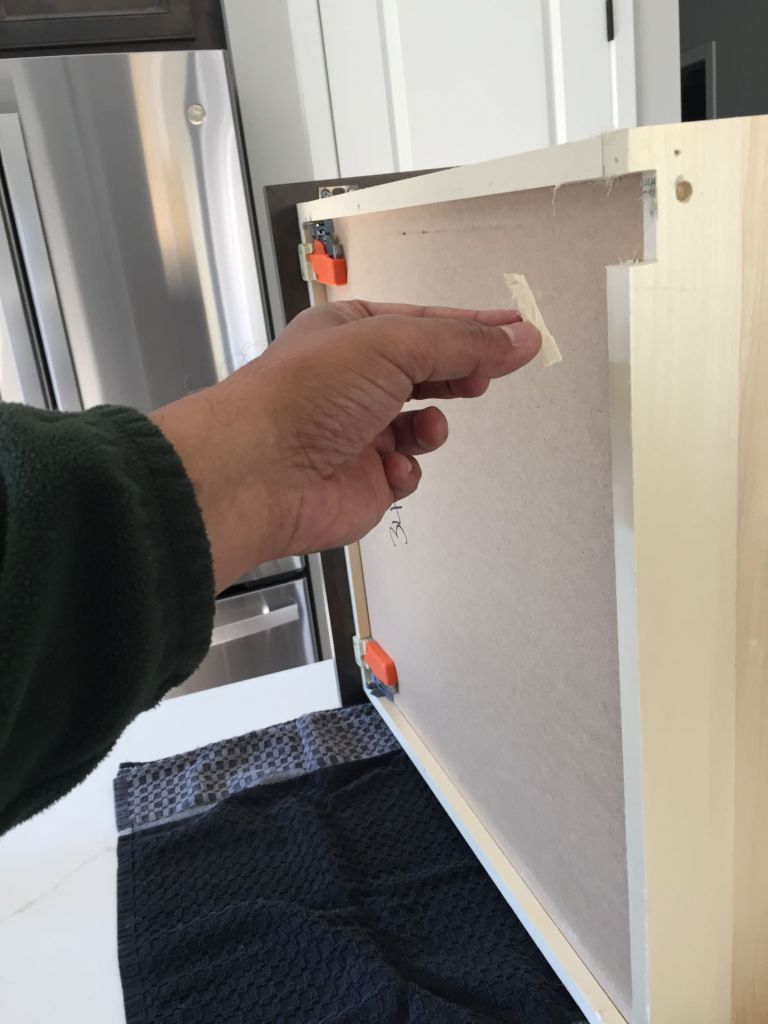
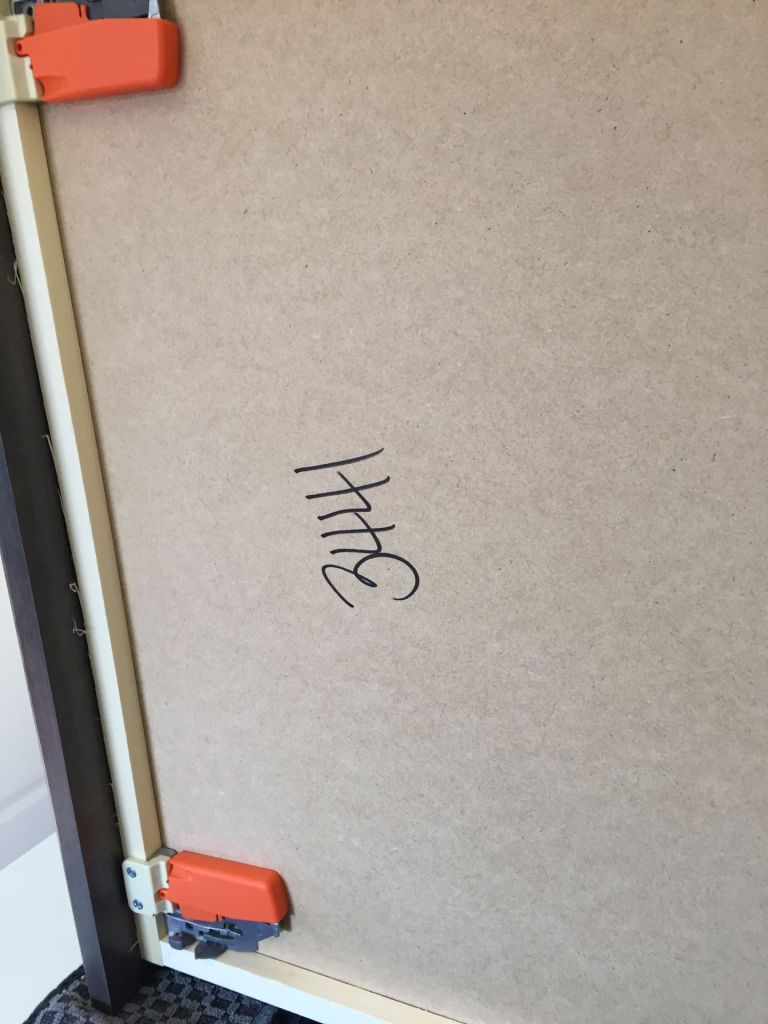
I finally took the sticky drawer off the gliders and had a look at the underside. I don’t do things like that every day, of course. I avoid them whenever I can. I looked at a YouTube about it and there are orange clips under the drawer that the gliders connect with. You press the clips in on both sides and the drawer just lifts out. I’ve seen this kind of drawer before in a different house, even down to the orange clips.

That tells you this is not exactly my first rodeo with sticky drawers. This time it’s a different brand; it’s made by Blum.

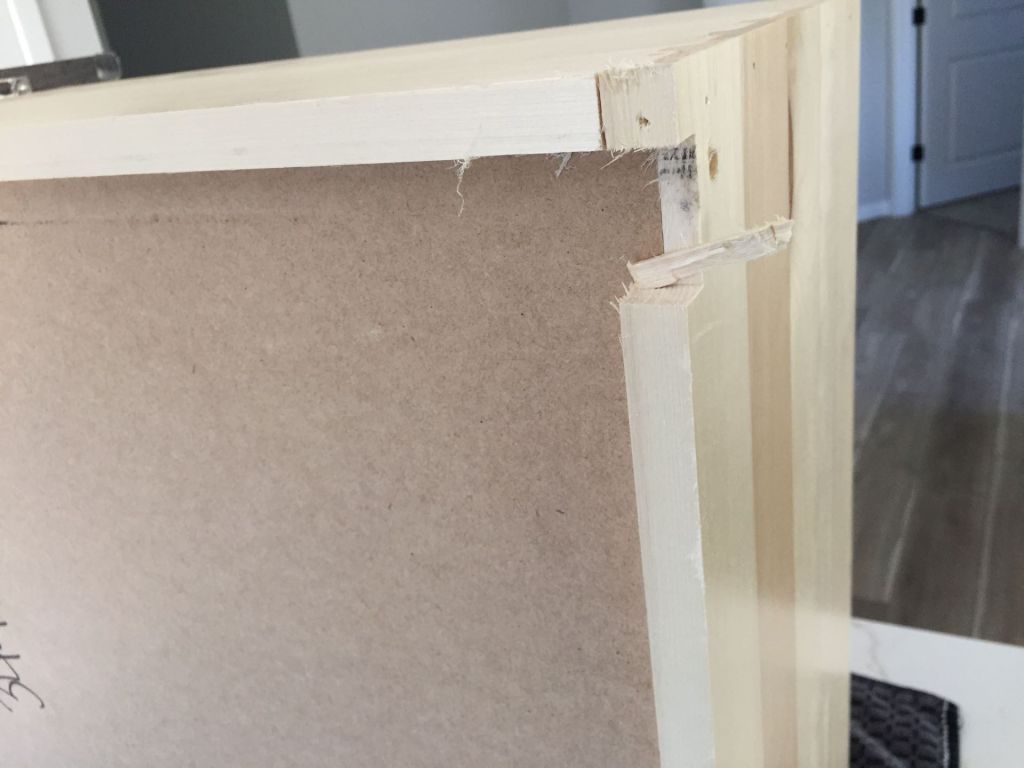
Anyway, I thought I might have had the problem licked when I saw the splinter of wood jutting out from one of the sides. It turns out this was a symptom, not the disease. Removing the splinter didn’t remove the stickiness.

The gliders seemed OK. I thought it was the drawer itself (warped?). Maybe it was one or more of the fine-tune adjustments you could make with the slow close mechanism. I hoped not because I didn’t want to get caught up in an endless loop of move-it-one-way-a-little-and-then-move-it-back. I figured that could take half a day and end with more frustration than what I started with.

Then Sena came along and after she woke up from fainting after seeing I had actually tried to do something about the issue—she suggested I switch the top drawer with the bottom one.

That worked. Don’t ask me why. The sticky drawer is still a little sticky, but it closes a lot more smoothly. No more double shove.

So, if you get caught in a sticky drawer problem try swapping drawers—as long as they’re the same size.

AI Does Your Laundry

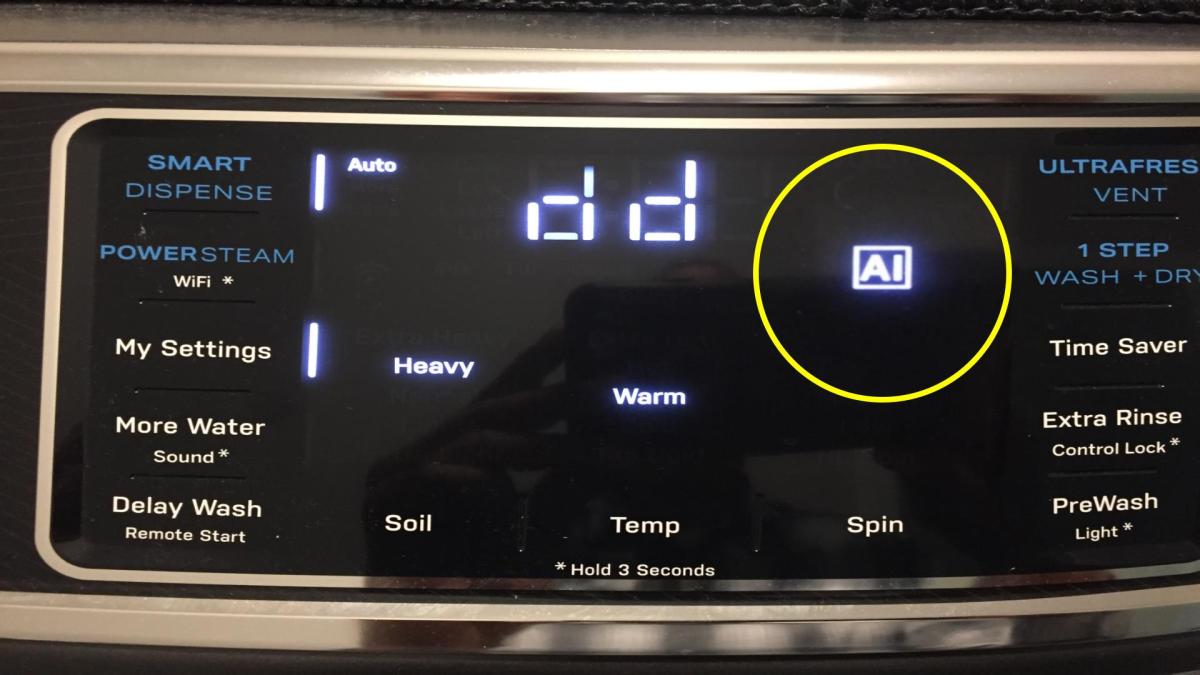
Recently we had somebody from the appliance store check our brand-new washing machine. The tech said “the noises are normal”—and then told us that many of the functions of the washer are run by Artificial Intelligence (AI). That was a new one on us.

Don’t get me wrong. The washer works. What sticks in the craw a little is that many of the settings we took for granted as being under our control are basically run by AI nowadays. I guess that means you can override some of the AI assist settings (which may be adjusted based on grime level, type of fabrics and the relative humidity in Botswana)—at least the ones not mandated by the EPA.

Incidentally, I tried to find some free images to use as featured images for this post. The problem is, many free pictures on the web are generated by AI these days, which is why I used the non-AI part of the Microsoft Paint app to make a crude drawing of an AI controlled washing machine.

I realize I’ll have to give up and accept the inevitable takeover of much of human society by AI. On the other hand, the prospect reminds me of the scene in an X-Files episode, “Ghost in the Machine.” A guy gets exterminated by something called the Central Operating System (COS).

Use extra detergent and add more water at your own risk.

Reading My Old Book in a New Light

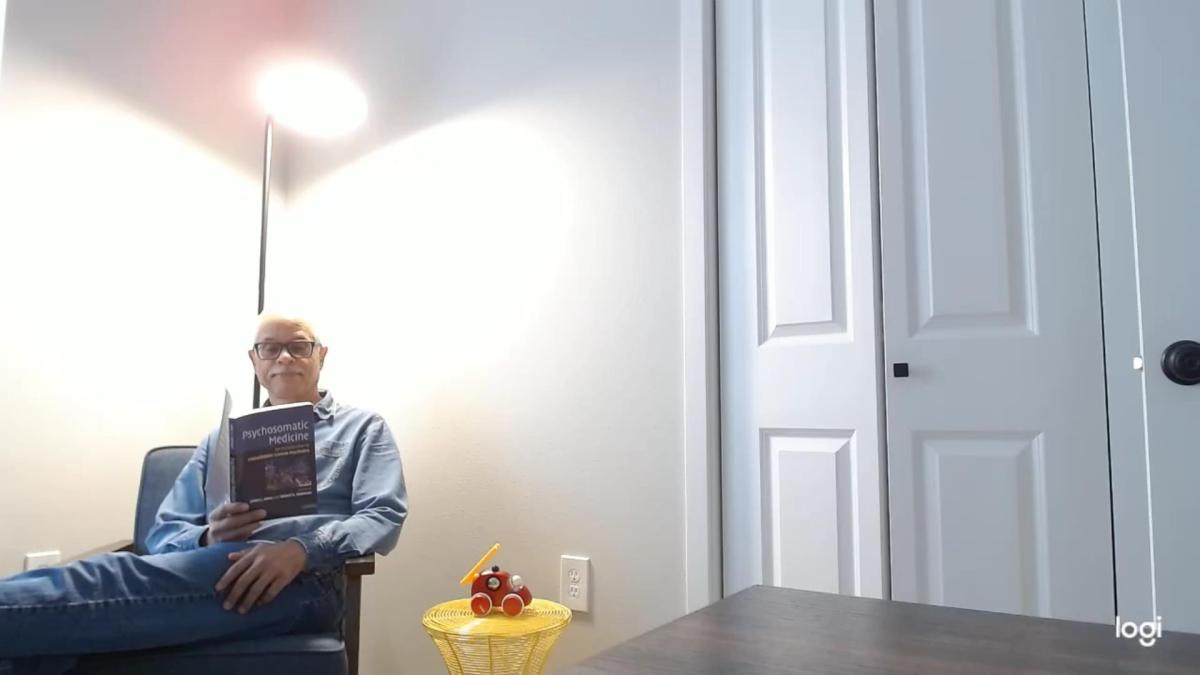
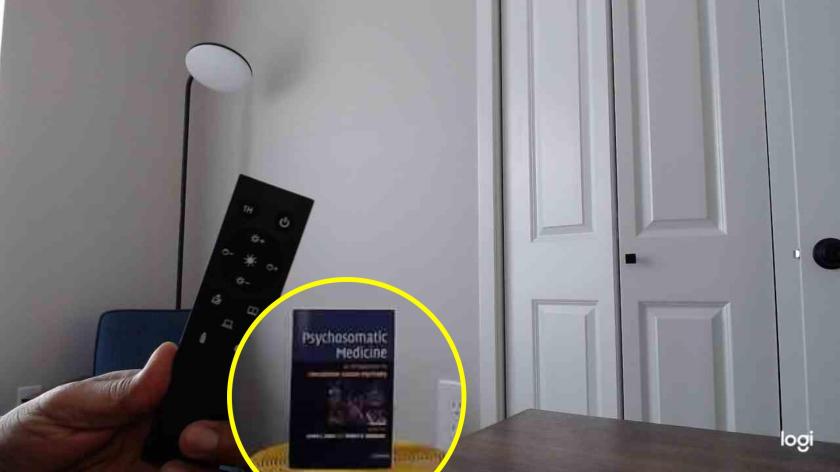
Sena bought me a wonderful new lamp to read by and it improves on the ceiling fan light I wrote about the other day (And Then a Light Bulb Went Off).”

The new lamp even has a nifty remote control with which you can choose the ambient feel. There are several selections, one of which is called “breastfeed mode,” a new one on me. There’s a light for that?

The lamp arrived at about the same time I got a notice from my publisher for my one and only book, “Psychosomatic Medicine: An Introduction to Consultation-Liaison Psychiatry,” that people are still buying—after 14 years! My co-editor was my former psychiatry department chair, Dr. Robert G. Robinson. As far as I know, Bob has dropped off the face of the earth. I hope he’s well.

Consultation-Liaison Psychiatry is probably about the same as I left it when I retired 4 years ago. I walked all over the hospital trying to help my colleagues in medicine provide the best possible care for their patients. I put in several miles and stair steps a day. I saw myself as a fireman of sorts, putting out fires all over the hospital. I got a gift of a toy fire engine from a psychiatrist blogger in New York a long time ago.

Now I walk several miles on the Clear Creek Trail, like I did yesterday and the day before that. I have shin splints today, which tells me something—probably overdid it.

So, I’m taking a break from walking and reading an old book in a new light.

Because I Wanted a Hurts Donut…

I got an urge for a Hurts Donut so I walked on the Clear Creek Trail to Coralville get to the little hole in the wall shop. You can easily walk to several places in Coralville on the trail. Actually, I wanted to also check out the Coralville Public Library and see S.T. Morrison Park. I’ve never been to that park so it was a novelty all by itself.

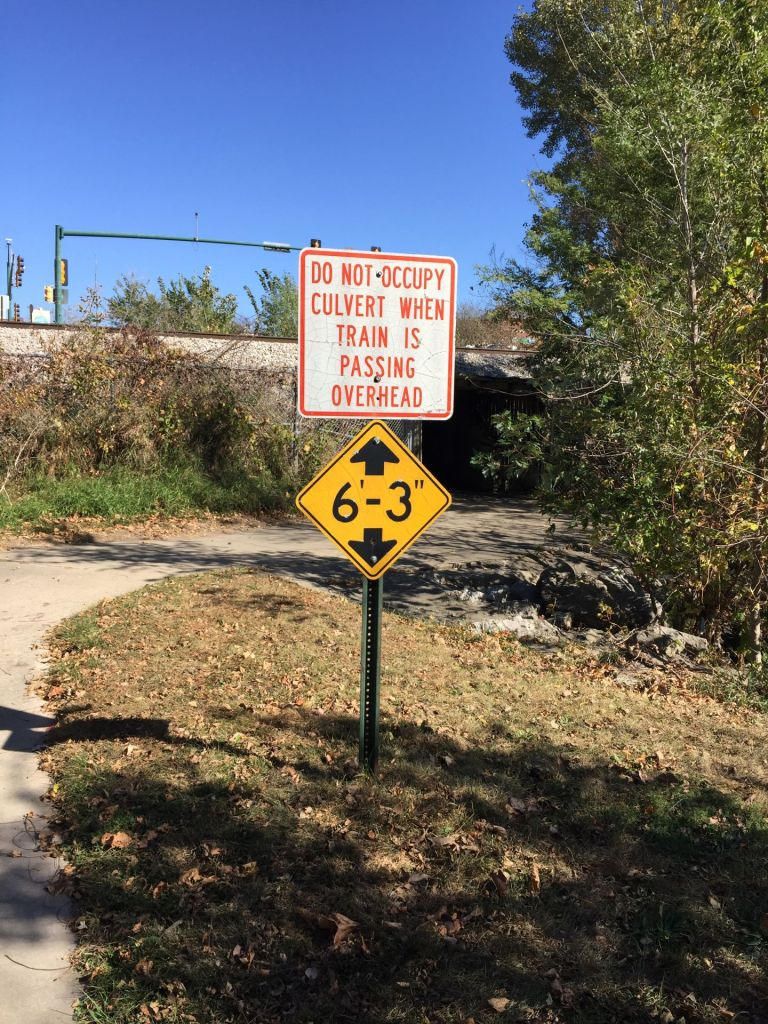
It took about 45 minutes to walk to that part of town. It’s great exercise and beats the traffic. You have to walk under some railroad tracks and there’s a sign warning you not to stand in the culvert below while the train is passing over the top. I can see why.

There are funny signs in the rustic Hurts Donut shop. You can see the corny “Wanna hurts donut?” jokes on the walls. There’s another sign saying “School is important but donuts are importanter,” which reminds me of my coffee mug which says sort of the same thing about cribbage: “Education is important but cribbage is importanter.”

The Old-Fashioned donuts there are so good, but so bad for you. I had two.

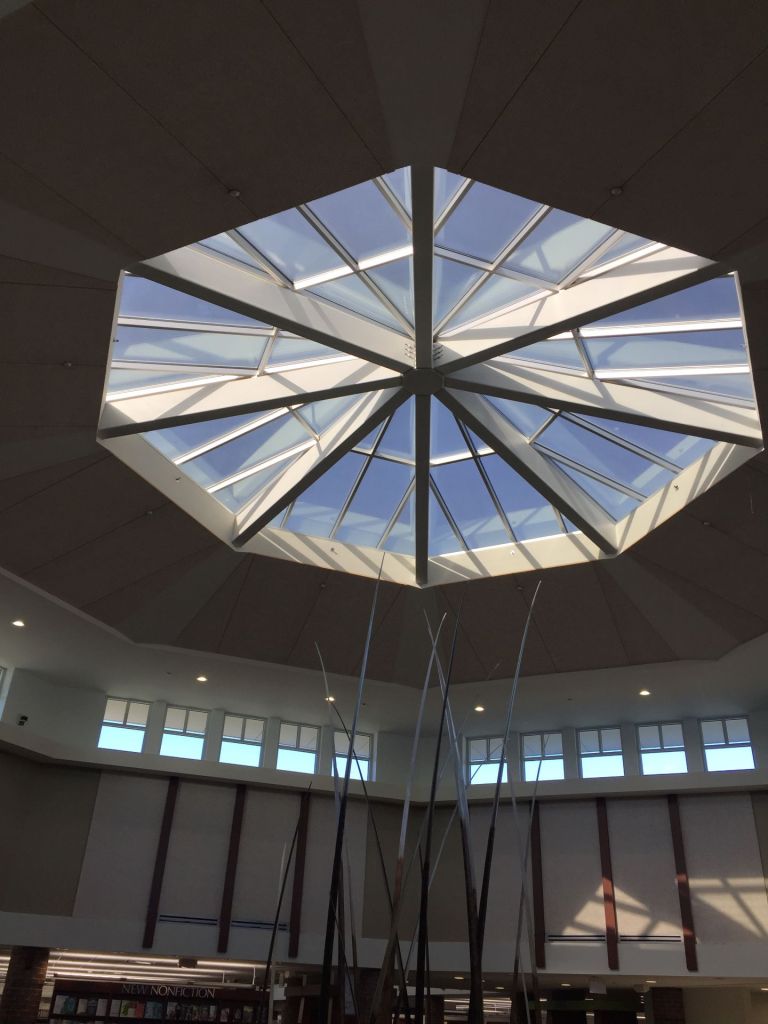
The Coralville Public Library has a beautiful skylight. I haven’t been in a public library for ages and so it was fascinating to see that libraries haven’t changed much.

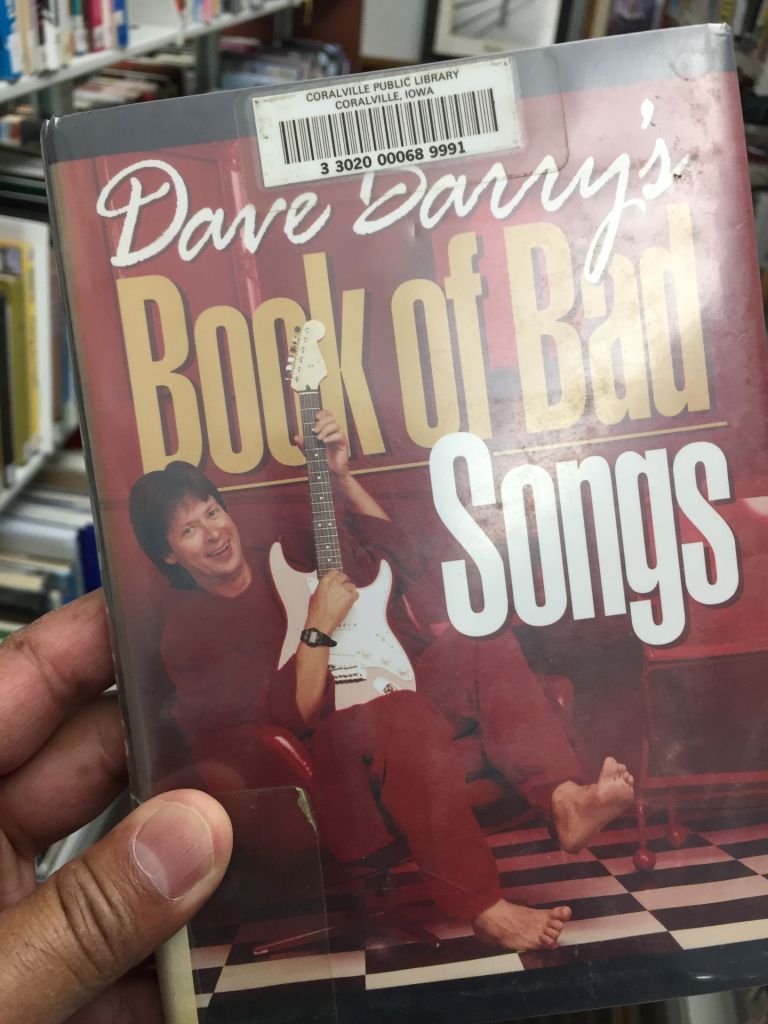
In fact, after I found one of Dave Barry’s books, “Dave Barry Book of Bad Songs,” (published in 1997; I had a copy but it got lost in a move) I asked one of the librarians about the old rule I learned as a kid. You might remember it too if you’re old enough. When you pick a book off the shelf and go to a reading room to look it over—can you just put it back on the shelf where you found it or do you have to give it the librarian who will reshelve it?

If you guessed that you have to give it to a librarian, you’re right and you’ve probably dated yourself. The librarian joked that some things never change. Sometimes that’s a good thing.

Among the things that never change are the difficult to understand lyrics in some songs. Dave Barry wrote a whole chapter about it in the Book of Bad Songs, “Songs People Get Wrong.” He mentions one of them, which I always got wrong but never told anyone about it because it was embarrassing. It’s a lyric in the song “Blinded by the Light” that Barry said was done by Bruce Springsteen, but which I didn’t hear until Manfred Mann’s Earth Band covered it.

So, here’s my deal with that lyric. I always heard “wrapped up like a douche” instead of “revved up like a deuce.” Barry notes that many people made the same mistake. Funny thing, Barry never mentions what that common mistake is called and it’s a mondegreen (a misunderstood or misinterpreted word or phrase resulting from mishearing the lyrics of a song). Music is important but mondegreens are importanter.

I finally saw Morrison Park and it’s a very restful place. You can contemplate the sculpture which is placed in the center of a pond. Ducks paddle around it. It’s called “Silver Lilly” and it was made by Professor Hu Hung-shu. Art is important.

Saying Goodbye to Zem the Mattress

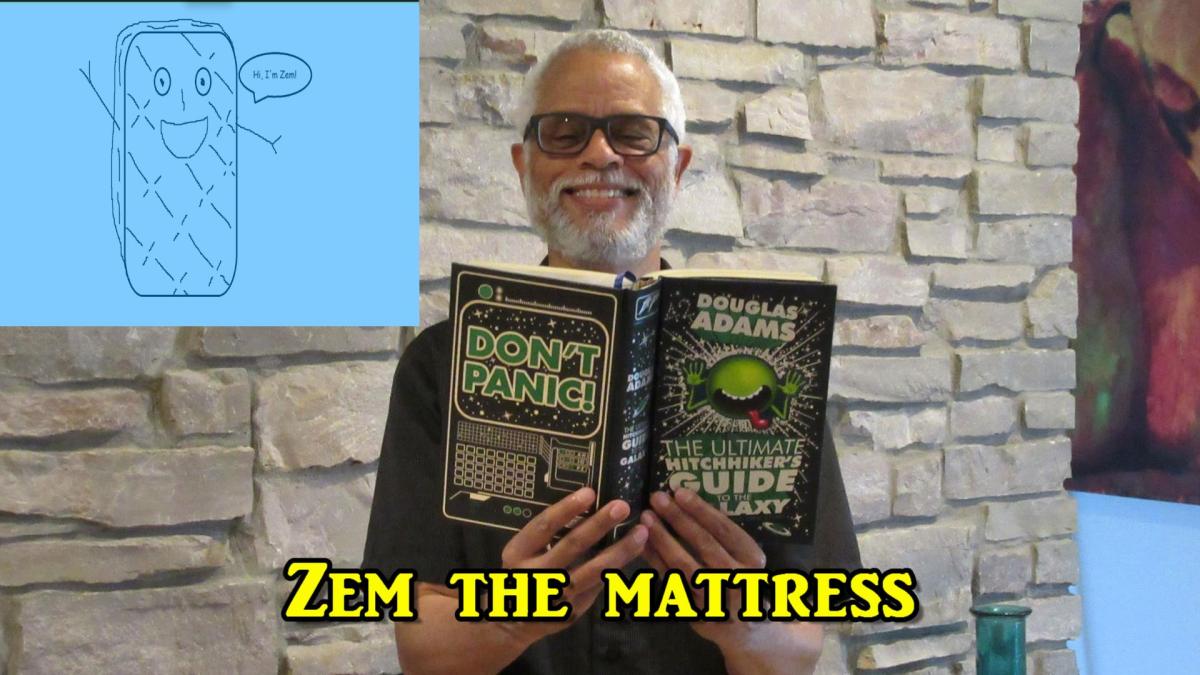
We’re saying goodbye to Zem the mattress. This raises important questions. Who the heck is Zem? Why does a mattress have a name? If you’ve ever read Douglas Adams’ book “The Ultimate Hitchhiker’s Guide to the Galaxy: Five Novels and One Story,” you’d probably wonder why anyone should ask.

The name Zem is given to every mattress that exists. According to the Guide, mattresses were once living beings who were slaughtered (not clear who slaughters them) and sold throughout the Universe. They are friendly, talkative, and originate on Sqornshellous Zeta, a swampy planet on which Zem the mattress has a long, idiotic conversation with a depressed robot named Marvin. It’s true, at least in Adams’ book. Find it in Chapter 7 of “Life, The Universe and Everything.”

This raises the issue of how to replace a mattress. It’s a difficult thing and it’s likely there are exceptions to the rule that all mattresses have to go to the junkyard.

I should say that the crude drawing of our Zem is an original work by me, using Microsoft Paint. It’s definitely not made by something called Image Creator. Recently, Windows 11 added Image Creator to Paint, which claims to be able to create drawings just by clicking on the AI icon—which appears almost everywhere nowadays.

It’s getting harder to ignore, but I did. That explains why my drawing of Zem looks like it was made by a 4-year-old child. It’s a form of protest against AI. I’m not sure how long I can hold out. I suspect that AI will eventually learn to disguise itself as something completely innocent without formally introducing itself as AI.

Anyway, like most people, it was challenging to find a new home other than the landfill for Zem. It turns out there is an informal underground railroad leading to new homes for Zem. Zem can be recycled, or at least some parts of it can be repurposed, which don’t include going back into mattress production.

And, there are places like Salvation Army, Goodwill, and homeless shelters which may publicly refuse to take Zem—but then not always stick to the rules on the signs. The websites may say they won’t adopt Zem, even if it doesn’t have a port wine stain on its face. On the other hand, there are circuitous, by word of mouth only code talkers who guide you (sometimes from half-closed doors) to what “could” be a new home for Zem, but you didn’t hear it from them. That rhyme was unintentional, but it worked.

The process is a little like the old TV show “Hogan’s Heroes,” in which Stalag 13 outwardly looked like a prison camp, but contained cleverly disguised nooks, crannies, and tunnels which allowed trips to the Dairy Queen if inmates were so inclined.

It turns out Zem might have a new home—but you didn’t hear it from me.

Pooboo: Our New Exercise Bike

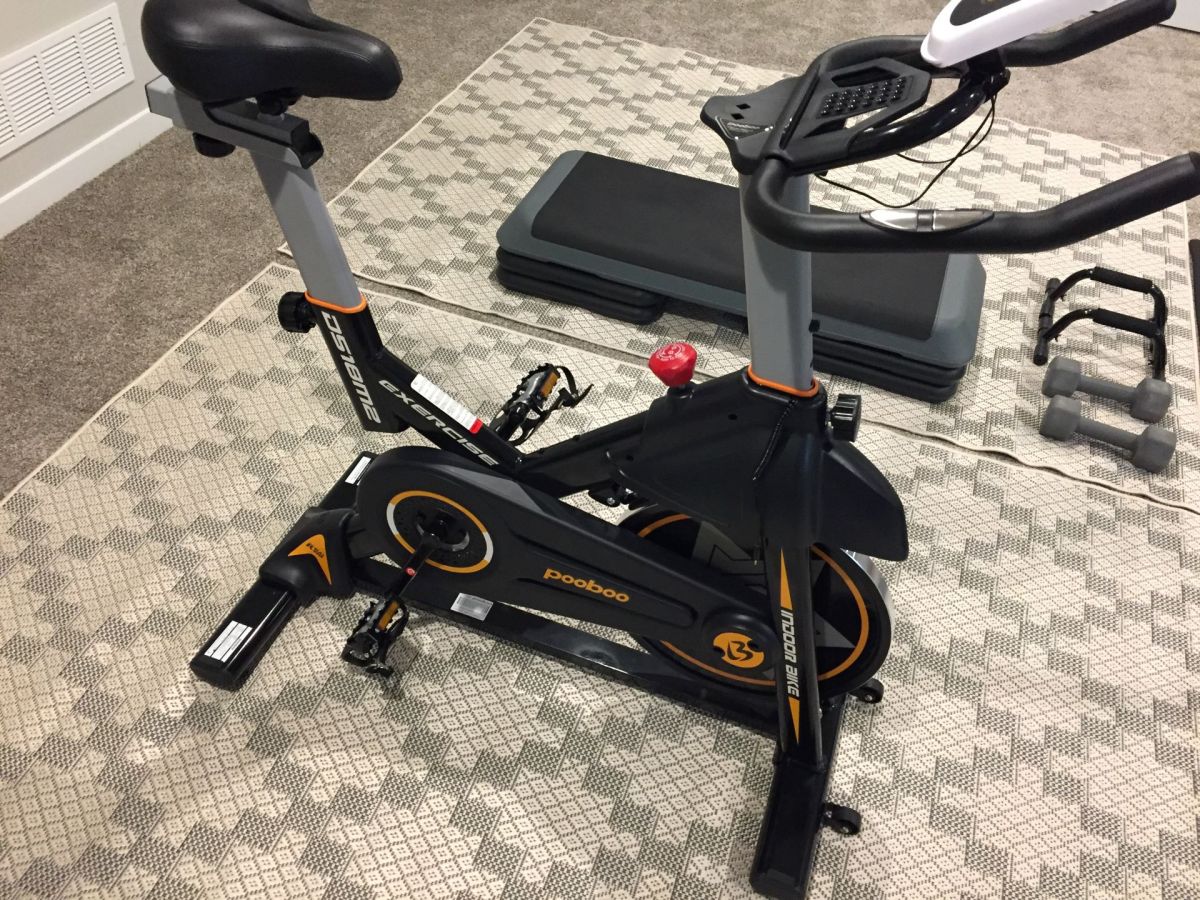
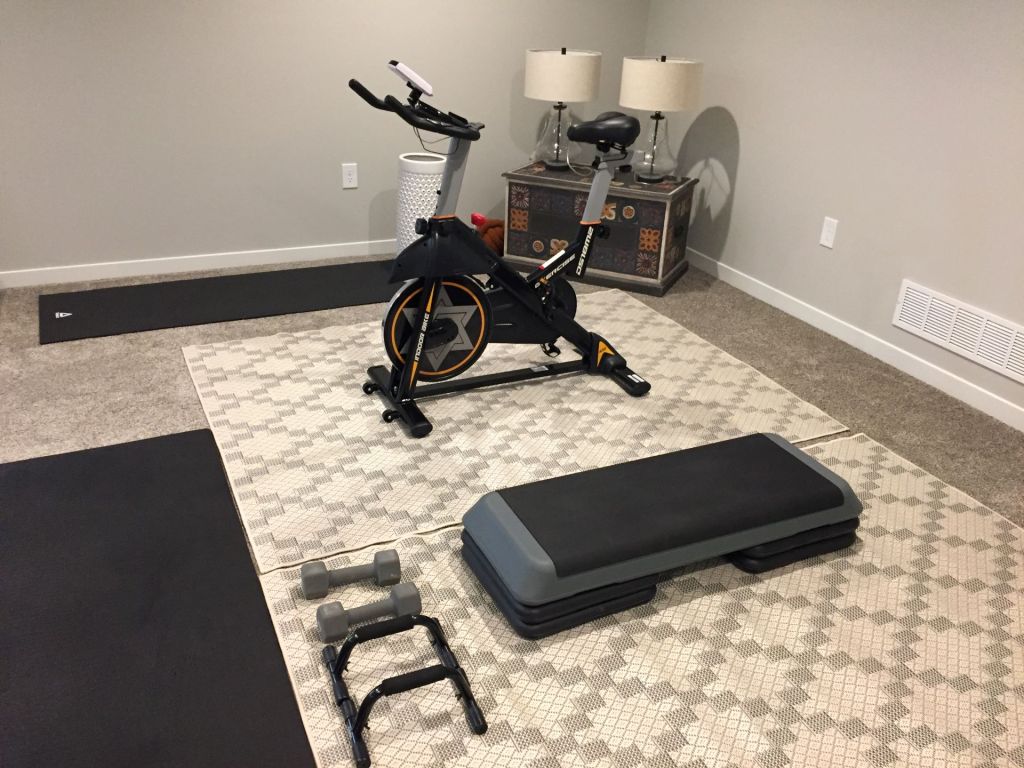
We just got our new Pooboo exercise bike, model D518M. I don’t know why it’s called “Pooboo.” It replaces our old exercise bike, which I’ve called the Anti-Peloton in a previous post.

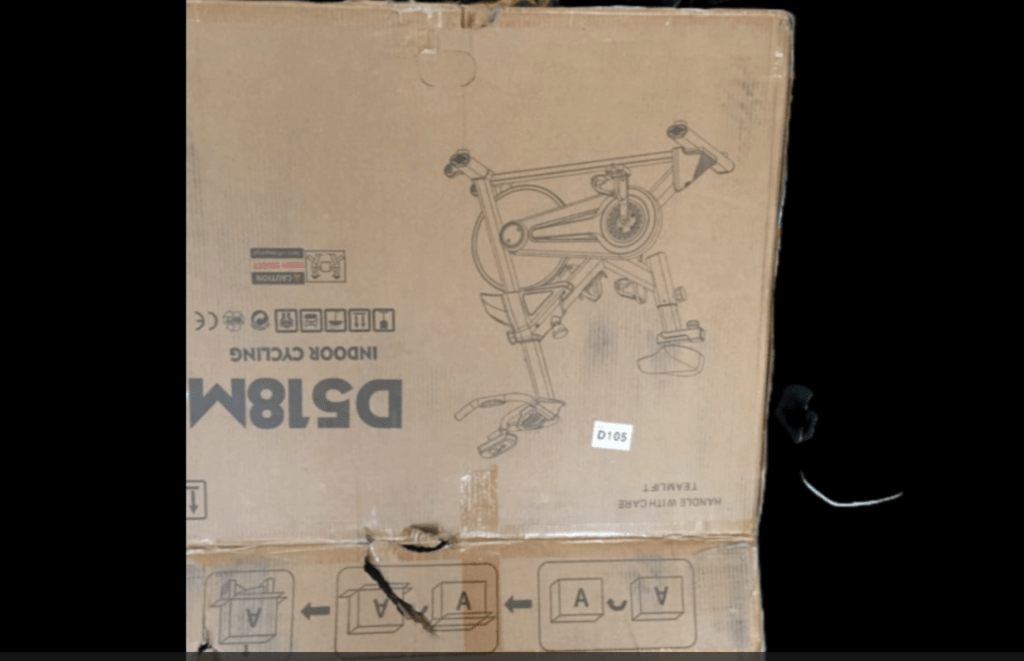
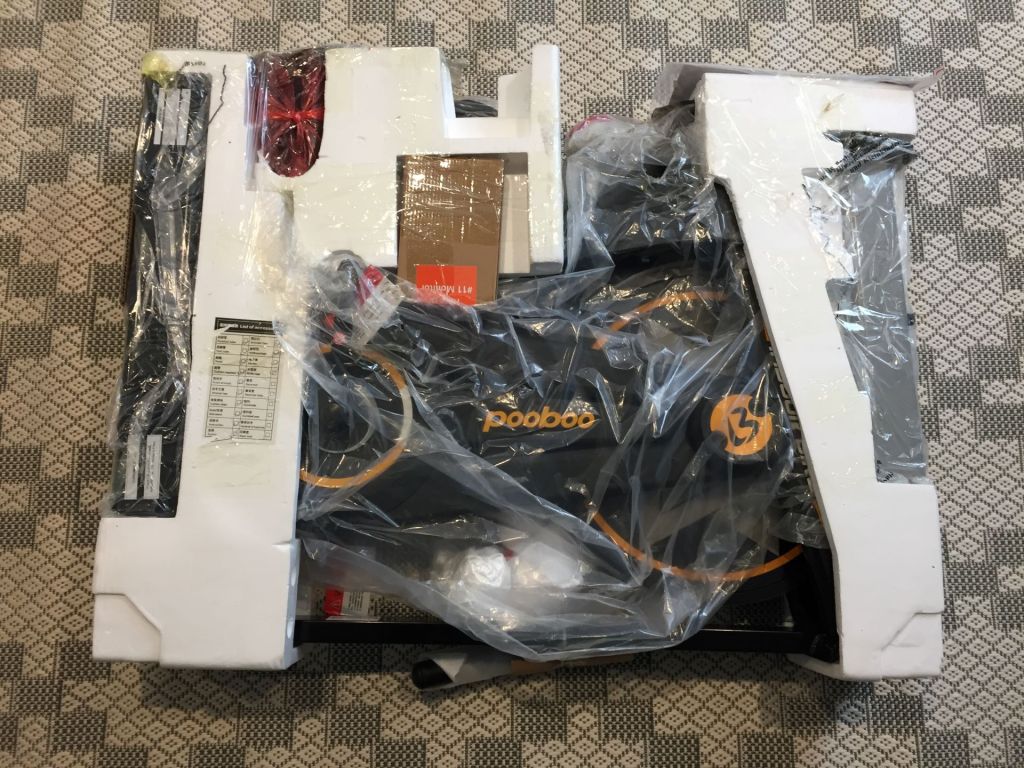
The Pooboo came in a big box, and it’s worthwhile to figure out how to turn it upside down. That way you can easily slip the box up and away from the bike.

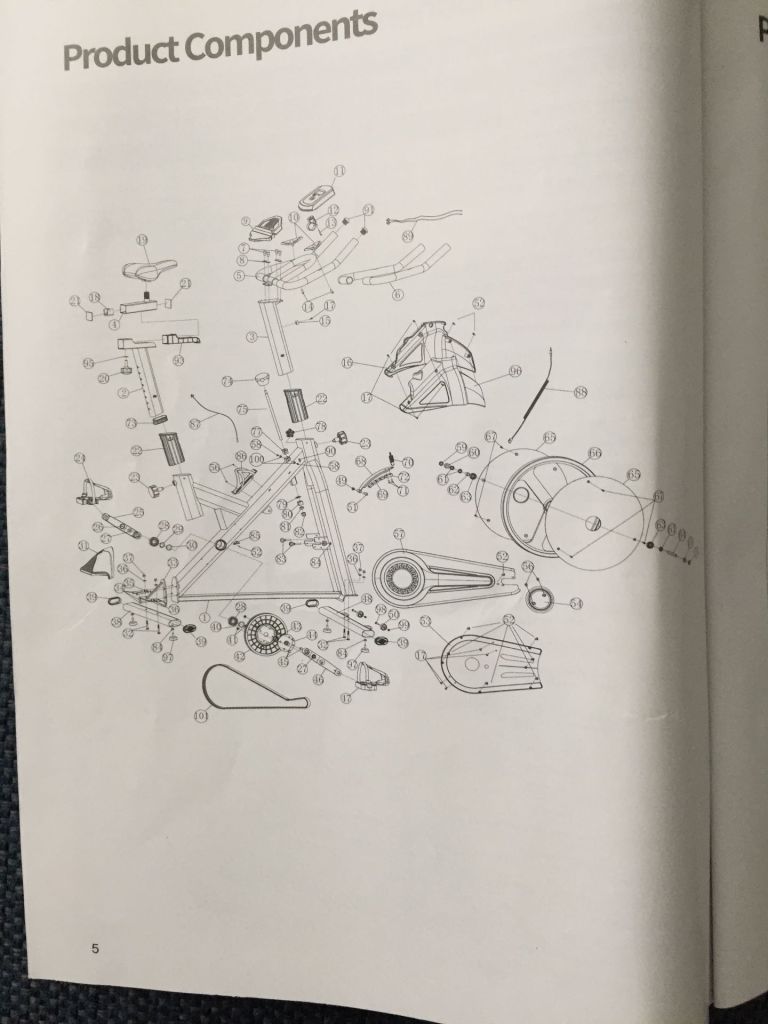
The owner’s manual starts with a scary diagram of the parts, which made me think it would be difficult to assemble. Although there are only 5 pages for assembly, it took me 3 hours to put it together. But that’s just me.

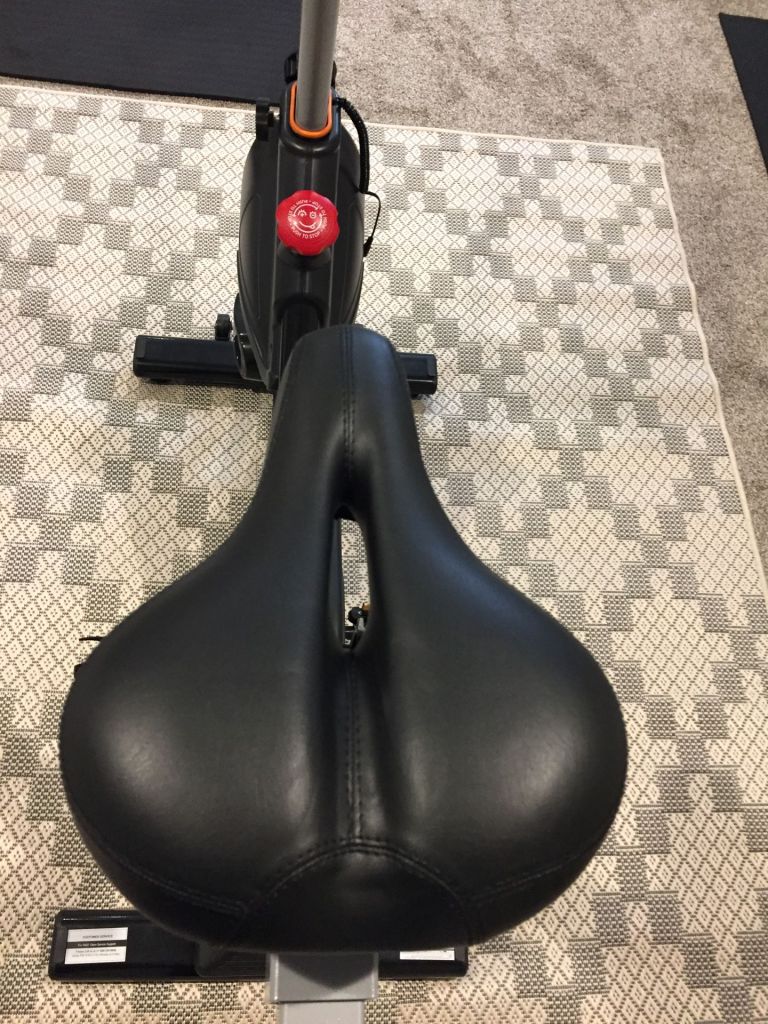
The bike got mostly positive reviews, although there were a fair number of questions about why the seat has a hole in it. Although it’s a fair question, all I can tell you is that none of my important anatomy got stuck.

We could have done without the fancy harnesses on the pedals, but they’re easy to adjust to get them out of the way.

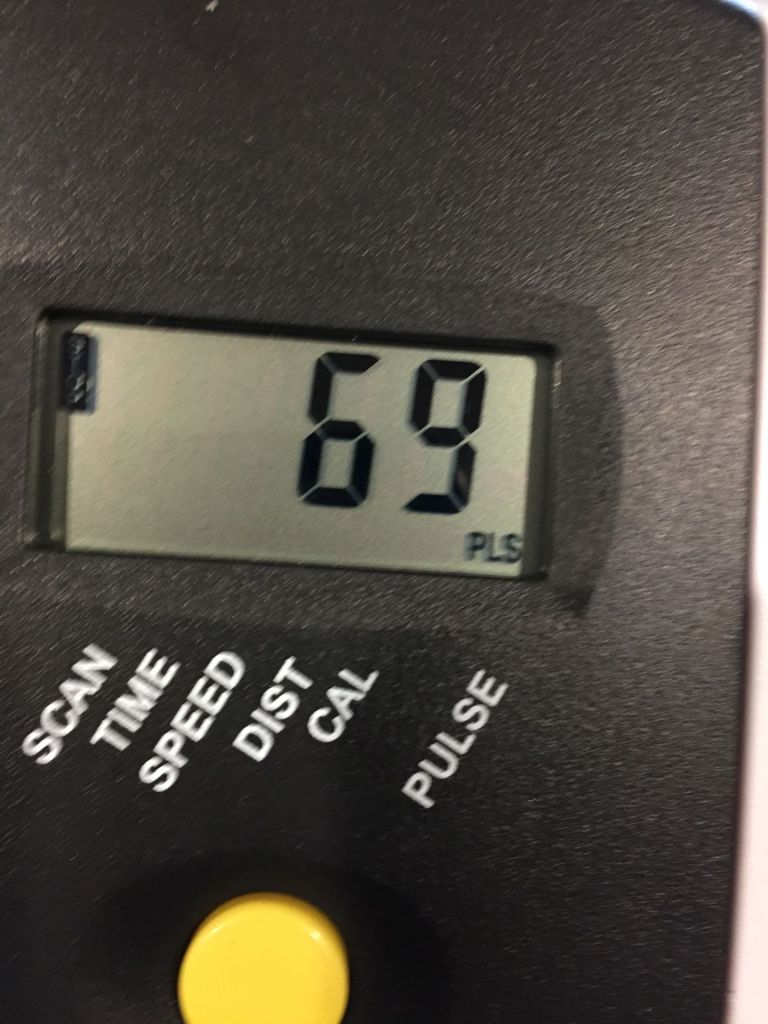
And the pulse monitor (called the “electronic watch”) works fine. There’s also a water bottle (called a “kettle holder” in the manual), but I couldn’t find the screws to install it—nor could I find a good reason to install it because I think it’s good exercise to take the stairs and get a bottle of water from the fridge.

We’re going to give the Pooboo a good workout to decide whether the purchase was a Booboo. And if you find out why it’s named Pooboo, let me hear from you.

People Remember Hurricane Edna

The hurricane season this year continues to be deadly, and they are not named after women anymore. That stopped in 1979; how and why it stopped is quite a story in itself. The latest one is named Milton, which is a benign sounding name, but the storm is anything but that.

I was reminded of the custom of naming hurricanes after women last night when I reread E.B. White’s essay, “The Eye of Edna.” The essay is subtitled with place and date: Allen Cove, September 15, 1954. It was published in a collection “Essays of E.B. White in 1977 by HarperCollins. It was published originally in the New Yorker, according to an online quote from his essay.

I’m too young to remember Edna. When I did a web search of the term “The Eye of Edna,” I got many hits for both the essay and the hurricane. Reading White’s essay is a treat because he makes fun of how radio news reporters and the people in Maine who were listening to the radio reacted to the weather reports about Edna. Radio reporters often seemed disappointed about the lack of heavy rain and high winds.

I found the abstract of an article published a 1958 issue of the Journal of Meteorological Sciences which the driest summary of Hurricane Edna I could possibly imagine:

“Kessler, E., 1958: EYE REGION OF HURRICANE EDNA, 1954. J. Atmos. Sci.15, 264–270, https://doi.org/10.1175/1520-0469(1958)015<0264:EROHE>2.0.CO;2.

Abstract

The eye region of Hurricane Edna (1954) is studied with the principal aid of radar and dropsonde data. Vertical sections show that over the eye there was a thick layer derived from the wall cloud which bounded the eye on the northeast. Precipitation fell from this upper layer into drier air beneath. A reasonable mechanism is thereby suggested by which large moisture values can become associated with air in the eye without producing the wet bulb potential temperatures or high winds characteristic of the rain-filled masses outside the eye.

Radar data giving the height of the “bright band” or melting level show that the warm core structure of Edna was most pronounced within the radius if maximum surface winds. The result is qualitatively confirmed by soundings and by comparison of surface winds and the speeds of radar weather elements in various portions of the storm. The radar photographs also show that heavy precipitation near the eye of Edna was bounded sharply in the western semicircle along an east-west line through the center of the storm. This boundary must be associated with a rather large change of vertical air speeds and therefore has special dynamic significance.”

If you read it the citation too quickly, you might misread the journal’s abbreviated name as my own. It’s actually J. Atmos—not J. Amos.

There is a much more vividly emotional account of Hurricane Edna in the Vineyard Gazette’s 2014 online story, along with a video.

The bottom line is hurricanes are deadly storms, no matter what people name them. Everybody, including E.B. White, would agree on that.

Progress on the Single Leg Sit to Stand Exercise

Well, it has been since late July since I first tried the single leg sit to stand exercise. Recall the videos of that effort? I couldn’t really do much except collapse in the chair.

I’m doing better lately but it’s hard to figure why. I haven’t really been practicing that much. You’ll notice that I’m using a throw to give myself a little extra height to make it less arduous.

A Game of Darts in Frankenstein Movies

I just saw the 1939 film “Son of Frankenstein” on Svengoolie last night. There was a double feature, but I didn’t see the second movie.

I’m anything but a movie reviewer and all I’m going to do is point out a parody of the dart throwing scene between Wolf Frankenstein and Inspector Krogh in “Son of Frankenstein” of the scene in the 1974 movie, “Young Frankenstein” starring Gene Wilder as the son of Frankenstein.

The dart throwing scenes are similar enough in both films to make me laugh. The comedic effect in “Young Frankenstein” of Inspector Kemp (played by Kenneth Mars) slapping his wooden arm around and sticking the darts into it is immediately obvious. While somewhat overshadowed by the “Son of Frankenstein,” melodrama, I couldn’t help but notice the similar behavior of Inspector Krogh (played by Lionel Atwill) goofing around with his wooden arm as well.

You can compare the YouTube dart throwing scene (see below) in “Young Frankenstein” with that of the last few minutes of the “Son of Frankenstein” in the scene starting about 1 hour 32 minutes in the Vimeo video of the full movie (see below).

I’m only sorry that I’m not up to the task of comparing either film to the original novel on which all the Frankenstein movies were more or less based: “Frankenstein; or, the Modern Prometheus,” written by Mary Shelley. I never read it. I skimmed the Wikipedia article about it. The section about the novel’s reception finishes with the idea that the novel asks fundamental questions about why we’re here and what our purpose is. Has anyone ever answered them?

A game of darts, anyone? The link to the Vimeo video, Son of Frankenstein:

YouTube of Young Frankenstein version of the game of darts: