
Artificial Intelligence in Managing Messages from Patients

I ran across another interesting article in the JAMA Network about Artificial Intelligence (AI) with respect to health care organization managing messages from patients to doctors and nurse. The shorthand for this in the article is “in-basket burden.” Health care workers respond to a large number of patients’ questions and it can lead to burnout. Some organizations are trying to test AI by letting it make draft replies to patients. The results of the quality improvement study were published in a paper:

English E, Laughlin J, Sippel J, DeCamp M, Lin C. Utility of Artificial Intelligence–Generative Draft Replies to Patient Messages. JAMA Netw Open. 2024;7(10):e2438573. doi:10.1001/jamanetworkopen.2024.38573

One of the fascinating things about this is the trouble we have naming the problems with misinformation that AI has. We tend to use a couple of terms interchangeably: hallucinations and confabulation. Whatever you call it, the problem interferes with communication between health care workers and patients.

Dr. English describes the interference as a “whack-a-mole” issue, meaning every time they think they got the hallucination/confabulation problem licked, the AI comes up with another case of miscommunication.

Just for fun, I did a web search trying to find out whether “hallucination” or “confabulation” fit the AI behavior best. Computer experts tend to use the term “hallucination” and neuropsychologists seem to prefer “confabulation.” I think this community chat site gives a pretty even-handed discussion of the distinction. I prefer the term “confabulation.”

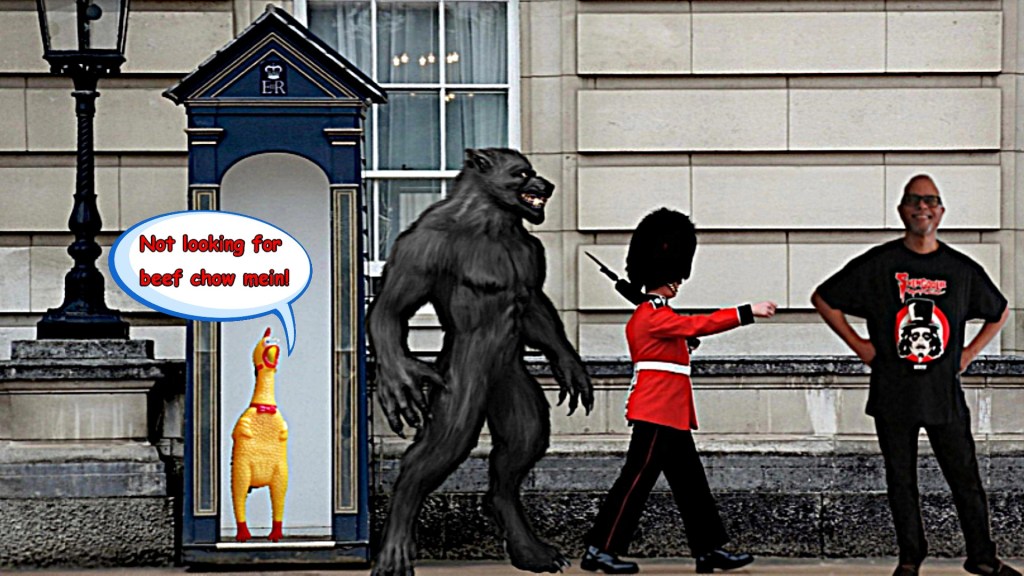
Anyway, there are other substantive issues with how using AI drafts for patient messaging affects communication. I think it’s interesting that patients tend to think AI is more empathetic than medical practitioners. As Dr. English puts it: “This GPT is nicer than most of us,” and “And ChatGPT, or any LLM, isn’t busy. It doesn’t get bored. It doesn’t get tired.” The way that’s worded made me think of a scene from a movie:

OK, so I’m kidding—a little. I think it’s important to move carefully down the path of idealizing AI. I think back to the recent news article about humans teaching AI how to lie and scheme. I remember that I searched the web with the question “Can AI lie?” and getting a reply from Gemini because I have no choice on whether or not it gives me its two cents. I’m paraphrasing but it said essentially, “Yes, AI can lie and we’re getting better with practice.”

I like Dr. English’s last statement, in which she warns us that AI can be a fun tool which clinicians need to have a healthy skepticism about. It may say things you might be tempted to gloss over or even ignore, like:

“I’ll be back.”

Update on the Cribbage Go Rule and More!

I just discovered a little more about the Go Rule in Cribbage. It turns out that it’s easy to over think it. I found a few websites that state it more clearly than what I have recently found and posted about last Friday, January 17th.

Probably the simplest explanation is a pdf document of rules for cribbage available for free.

“A player who cannot play without exceeding 31 does not play a card but says Go, leaving his opponent to continue if possible, pegging for any further combinations made…. Bringing the total to exactly 31 pegs 2, but if the total is 30 or less and neither player can lay a card without going over 31, then the last player to lay a card pegs one for the go or one for last.”

There are a couple of YouTube videos with clear instructions about how to play cribbage. Both are less than 30 minutes long and entertaining. One of them is called “How to Play Cribbage Properly”. The video is well done, in my opinion. The only mistake he made was pointed out by a viewer who noticed he made a minor goof on demonstrating how to peg between two imaginary players “Attenborough” and Bowie.” He just switched the names of the players. It really doesn’t affect the actual demonstration of pegging points.

The other YouTube is also well done and demonstrates the rules of cribbage in a game between a guy and his father, titled “A Game of Cribbage.” Only once is the word “Go” mentioned although they played it according to the rule above.

Testing the New Snow Removal Tools!

We finally got enough snow to test the new shovels today. Recall we have a cordless electric snow shovel and a snow pusher plow shovel with a 36-inch blade. The battery-powered model is a 48V 16-inch Voltask.

I was a little surprised to learn how powerful the electric shovel is. It comes with two batteries. It has a safety button which you have to press at the same time you pull the trigger. It comes with lights so if you ever want to clear snow after dark, you could do that. Of course, there’s no heavy lifting and it’s easy to push. It can throw snow a long way and you can also direct it left or right. It’s like a vacuum in reverse.

Sena selected the Voltask and save a lot of money. There were other models that were priced in the 400–500-dollar range which didn’t have the features the Voltask has.

The snow plow of course, is a simple tool—just the way I like them. The narrow 36-inch blade makes snow clearing quick and there is also no heavy lifting. Spraying a little snow and ice repellent on the blade cuts down on buildup as you work.

I still prefer a shovel.

Is Edinburgh Manor in Iowa Haunted?

I have no idea whether an old former county home in Jones County is one of the most haunted places in the Midwest or Iowa or the USA. And I wouldn’t be saying that if Sena and I had not watched a TV show called “Mysteries of the Abandoned” (broadcast on the Science Channel) which aired a 20-minute segment about Edinburgh Manor the other night.

Supposedly, Edinburgh Manor started off as a county poor farm back in the 1800s, which didn’t do well and then quickly declined into an asylum for the mentally ill. When a couple bought the old place after it closed sometime between 2010 and 2012, they started to report having paranormal experiences and it was then off to the races for the place to become a haunted attraction, for which you can buy tickets for day passes and overnight stays.

There’s a 10-minute video by a newspaper reporter who interviews the wife and which shows many video shots of the house. I can’t see any evidence that it’s on the National Register of Historic Places.

What this made me think of was the Johnson County Historic Poor Farm here in Iowa City, which is on the National Register of Historic Places. We’ve never visited the site, but you don’t pay admission and the tone and content of the information I found on the website is nothing like what’s all over the web about Edinburgh Manor. There are no ghosts tickling anybody at the Johnson County Historic Poor Farm.

There’s a lot of education out there about the history of county poor farms in general. In Johnson County, Chatham Oaks is a facility that houses patients with chronic mental illness and it used to be affiliated with the county home. It’s now privatized. The University of Iowa department of psychiatry used to round on the patients and that used to be part of the residents training program (including mine).

I found an hour-long video on the Iowa Culture YouTube site about the history of Iowa’s county poor farms. It was very enlightening. The presenter mentioned a few poor farms including the Johnson County site—but didn’t say anything about Edinburgh Manor.

Fifty Degrees in Iowa City Yesterday!

It was fifty degrees in Iowa City yesterday so we went for a walk on the Terry Trueblood trail yesterday. Other people got the same idea. One guy was jogging in shorts! Yeah, it’s fifty degrees, but there’s still snow on the ground (in places) and there’s ice on Sand Lake.

About that ice on Sand Lake. It looked thin in places and we could see cracks in it everywhere. But that didn’t stop ice fisherman and others from going out on the lake.

We even saw an American Kestrel! That’s the first time in over 4 years. In 2020, we were out on the Trueblood trail and another walker pointed out an American Kestrel. I couldn’t get a clear shot of it then, but I did this time. I think it’s a female because of the black bands on the tail.

The balmy weather won’t last. We’ll be in the deep freeze next week.

The Go Rule in Cribbage

Sena and I have been playing cribbage for a number of years but only recently have we begun to question the “Go rule.” I’ve looked on the web for clarification about how to use the Go, and found conflicting guidance. Incidentally, we’ve posted YouTube videos of some of our games, many of them probably showing we had an imperfect understanding of the Go rule. It occurs to me that if I had not turned off the comment section on these YouTube videos, I might have been alerted to what we’d probably been doing wrong over the years. But then I’d have had to deal with many inappropriate comments.

We have gradually realized that our use of the Go has probably been flawed, raising a couple of questions:

Do you score the one point for Go automatically just because your opponent says “Go” when she/he can’t play any cards without going over 31?

What do you do about the double Go sequence when neither of you can play without going over 31?

I looked for answers on the web.

One thing I’ll say is that the automatic pop-up Artificial Intelligence (AI) guidance is wrong. For example, AI says that the player who says “Go” gets the point for Go, which is clearly incorrect.

I also looked this up on the American Cribbage Congress (ACC) website and still couldn’t understand it. Then I found a couple of websites that seemed helpful. It’s notable that both were question/answer threads that went on for years about this one issue with the Go rule. Apparently, a lot of people don’t understand it, so I didn’t feel so bad.

The first site was a Cribbage Corner thread. At the beginning, it gave several helpful examples of the right way to use the Go rule—but then followed years of comments back and forth about it that eventually became difficult to follow. There was a question about the Stink Hole which, suffice it to say, triggered an annoyed reply which advised the questioner to quit using “kitchen table cribbage” rules.

The second one was a Stack Exchange thread. When I looked at it, it started with a question a player had in which he and his friend argued about the Go, and his friend (as it turned out) seemed to be on the right track:

“His rationale, is that when scoring 31, you are getting one point for hitting 31 exactly and 1 bonus point representing your partners’ inability to play an additional card (his “go”). He says “whether a “go” is said or not, the go is implied when you place the last card at the end of the round to make 31….thus giving you two points when you reach 31 even when a “go” is communicated”.”

The thread overall was more helpful and one commenter cited the ACC rule section (to which there’s a link), which clarified the question about reaching 31 which gives the player 2 points. The two points means: one point for the Go and one bonus point for getting the special score of 31.

There was also some clarification about the double Go, which is that if neither player can play a card that won’t take the total count over 31, neither player gets the 1 point for Go.

That has happened to us. I think this is right: If player A is the first to say “Go” and player B also says “Go,” then the count resets to zero and player A leads to the new sequence. If that’s wrong, don’t hesitate to tell me in the comment section—which I assure you will not extend for years going forward.

Update: See my update on this Go issue in the post “Update on the Cribbage Go Rule”, post dated January 23, 2025. Actually, this rule is clarified at this link.

New Snow Shovels!

The new shovels were delivered today. Both required some assembly. I’m the least handy person when it comes to that. I did OK with the snow plow but Sena had to come to the rescue when it came to the cordless snow shovel. The handle was tricky for some reason.

The batteries for the electric shovel needed minimal charging and it roared to life. It doesn’t sound like a toy.

Now all we need is snow. I can wait.

Did You Know They Won’t Be Making Yardsticks Any Longer?

Anecdote alert! Sena just got back from shopping and had a priceless little story about shopping for a yardstick for measuring window film to apply on a door window. I suppose I should say that the title of this post is a dad joke that some people might not get.

Sena asked a Menards worker where to find a yardstick. She said the guy looked like he was in his thirties. His English was probably a little rough. He looked puzzled and directed her to the lawn and garden center. She clarified that a yardstick was something like a ruler. He replied that they didn’t carry school supplies.

Another worker was in the same aisle and chuckled. He directed her to where the yardsticks were.

You know, I haven’t seen a yardstick in a long time. We don’t own a ruler although we have a tape measure. Just to let younger people know, a yardstick is typically a piece of wood 36 inches long (which is 3 feet), marked off into inches, and used for measuring things.

The worker who didn’t know what a yardstick was could probably relate to football games because the length of the field is still divided into yards—but only if he’s a football fan, I guess. But you don’t measure distances to a first down on a football field with a yardstick. . Incredibly, they measure it with a chain between two sticks. None of your lasers for the officials.

We had a yardstick in the house where my brother and I grew up. You could also use it to reach stuff that rolled under tables. You could make comparisons by saying “By any yardstick, blah blah.”

And you can make dad jokes about yardsticks. By the way, the company that makes yardsticks won’t be making them any shorter either.

Don’t Shovel Your Heart Out

We’re waiting for the next snowfall. We’ve had a couple of light ones so far and we used shovels to clear our driveway and sidewalk. They didn’t amount to much, but we’ll get a heavy snow here pretty soon.

We’ve been using shovels for years. I’m aware of the risks for heart attacks in certain people, especially sedentary middle age and older men with pre-existing cardiac risk factors. I’m not keen on snowblowers, mostly because I like to shovel.

I’ve been using an ergonomic shovel for years, although the wrong way until about 4 years ago. I used to throw snow over my shoulder while twisting my back. Now I push snow with a shovel that has a smaller bucket or with a snow pusher with a shallow, narrow blade. I lift by keeping my back straight and bending at the knees, flipping the small load out. I take my time.

I don’t know how high my heart rate gets while I shovel. I exercise 3-4 days a week. I warm up by juggling. I do floor yoga with bending and stretching, bodyweight squats, one leg sit to stand, use the step platform, dumbbells and planks. When I’m on the exercise bike, I keep my heart rate around 140 bpm, and below the maximum rate for my age, which is 150 bpm.

I’m aware of the recommendations to avoid shoveling snow based on the relevant studies. I realize I’m way past the age when experts recommend giving the snow shovel to someone else.

The question is who would that be? There aren’t any kids in the neighborhood offering to clear snow. Maybe they’re too busy dumb scrolling. I’m also aware of the city ordinance on clearing your driveway after a big snow. They’re very clear, at least in Whereon, Iowa.

“The city of Whereon requires every homeowner to clear snow from sidewalks within 24 hours after a snowfall. This means you. If you fail in your civic duty to clear snow and ice from your walkway within the allotted time of 10 minutes, the city will lawfully slap you with a fine of $3,000,000 and throw your dusty butt in jail for an indeterminant time that likely will extend beyond the winter season and could be for the rest of your natural life and even beyond, your corpse rotting in your cell, which will not bother the guards one iota because of the new state law mandating removal of their olfactory organs. Hahahahaha!!”

In light of the strict laws, Sena ordered a couple of new snow removal tools. Neither one of them is a snow blower. I think it’s fair to point out that some cardiologists have reservations even about snowblowers:

 There are even studies that show an increased risk for heart attacks among people using automatic snow blowers. Similar to the extra exertion of pushing shovel, pushing a snow blower can raise heart rate and blood pressure quickly–from “Snow Shoveling can be hazardous to your health” article above.

One of them is a simple snow pusher with a 36-inch narrow blade. That’s for me. The other is a cordless, battery powered snow shovel that looks like a toy for Sena. The ad for that tool includes a short video of an attractive woman wearing skinny jeans and her stylish coat open revealing her svelte figure while demonstrating how the electric shovel works. It appears to remove bread slice sized pieces of snow from the top of a layer which stubbornly sticks to the pavement. Call the Whereon snow police.

We should be getting both tools before the next big snow.

Should We Trust Artificial Intelligence?

I‘ve read a couple of articles recently about Artificial Intelligence (AI) lately and I’m struck by how readily one can get the idea that AI tends to “lie” or “confabulate” and sometimes the word “hallucinate” is used. The term “hallucinate” doesn’t seem to fit as much as “confabulate,” which I’ll mention later.

One of the articles is an essay by Dr. Ronald Pies, “How ‘Real’ Are Psychiatric Disorders? AI Has Its Say.” It was published in the online version of Psychiatric Times. Dr. Pies obviously does a superb job of talking with AI and I had as much fun reading the lightly edited summaries of his conversation with Microsoft CoPilot as I had reading the published summary of his conversations with Google Bard about a year or so ago.

I think Dr. Pies is an outstanding teacher and I get the sense that his questions to AI do as much to teach it how to converse with humans as it does to shed light on how well it seems to handle the questions he raised during conversations. He points out that many of us (including me) tend to react with fear when the topic of AI in medical practice arises.

The other article I want to briefly discuss is one I read in JAMA Network, “An AI Chatbot Outperformed Physicians and Physicians Plus AI in a Trial—What Does That Mean?” (Accessed January 6, 2025).

Hswen Y, Rubin R. An AI Chatbot Outperformed Physicians and Physicians Plus AI in a Trial—What Does That Mean? JAMA. Published online December 27, 2024. doi:10.1001/jama.2024.23860 (accessed January 6, 2024).

I think the conversation amongst the authors was refreshing. Just because the title of the article suggested that AI might take the place of physicians in the consulting room doesn’t mean that was the prevailing opinion of the authors. In fact, they made it clear that it wasn’t recommended.

I liked Dr. Chen’s comment about confabulation and hallucinations of AI:

“A key topic I talk about is confabulation and hallucination. These things are remarkably robust, and only getting better, but they also just make stuff up. The problem isn’t that they’re wrong sometimes. Lab tests are wrong sometimes. Humans are definitely wrong sometimes. The problem is they sound so convincing, they confabulate so well. “Your patient has an alcohol problem, Wernicke-Korsakoff syndrome.” It’s only if you double check, you’ll realize, “Wait a minute, that wasn’t actually true. That didn’t make sense.” As long as you’re vigilant about that and understand what they can and can’t do, I think they’re remarkably powerful tools that everyone in the world needs to learn how to use.”

What’s interesting about this comment is the reference to Wernicke-Korsakoff syndrome, which can be marked by confabulation. Clinically, it’s really not clear how this comes about in AI although thiamine deficiency is the main cause in WKS. In both, it involves inventing information, which is technically not the same as lying.

Unfortunately, this contrasts sharply with the recent fact checking Snopes article I wrote about recently, which suggests that humans are teaching AI to lie and scheme.

In any case, it’s prudent to regard AI productions with skepticism. My conversations with Google Bard clearly elicited confabulation. Also, it didn’t get humor, so I wouldn’t use it as a conversational tool, given that I’m prone to kidding around. As far as trusting AI, I probably wouldn’t trust it as far as I could throw it.