Do We See Each Other?

I know that what I’m writing here this evening is going to sound foolishly sentimental and maybe even a little spooky, but I was struck by this weird experience I had tonight. It was just a little odd and too fortuitous. I’m not going to talk at any length about the politics of it, just the strangeness.

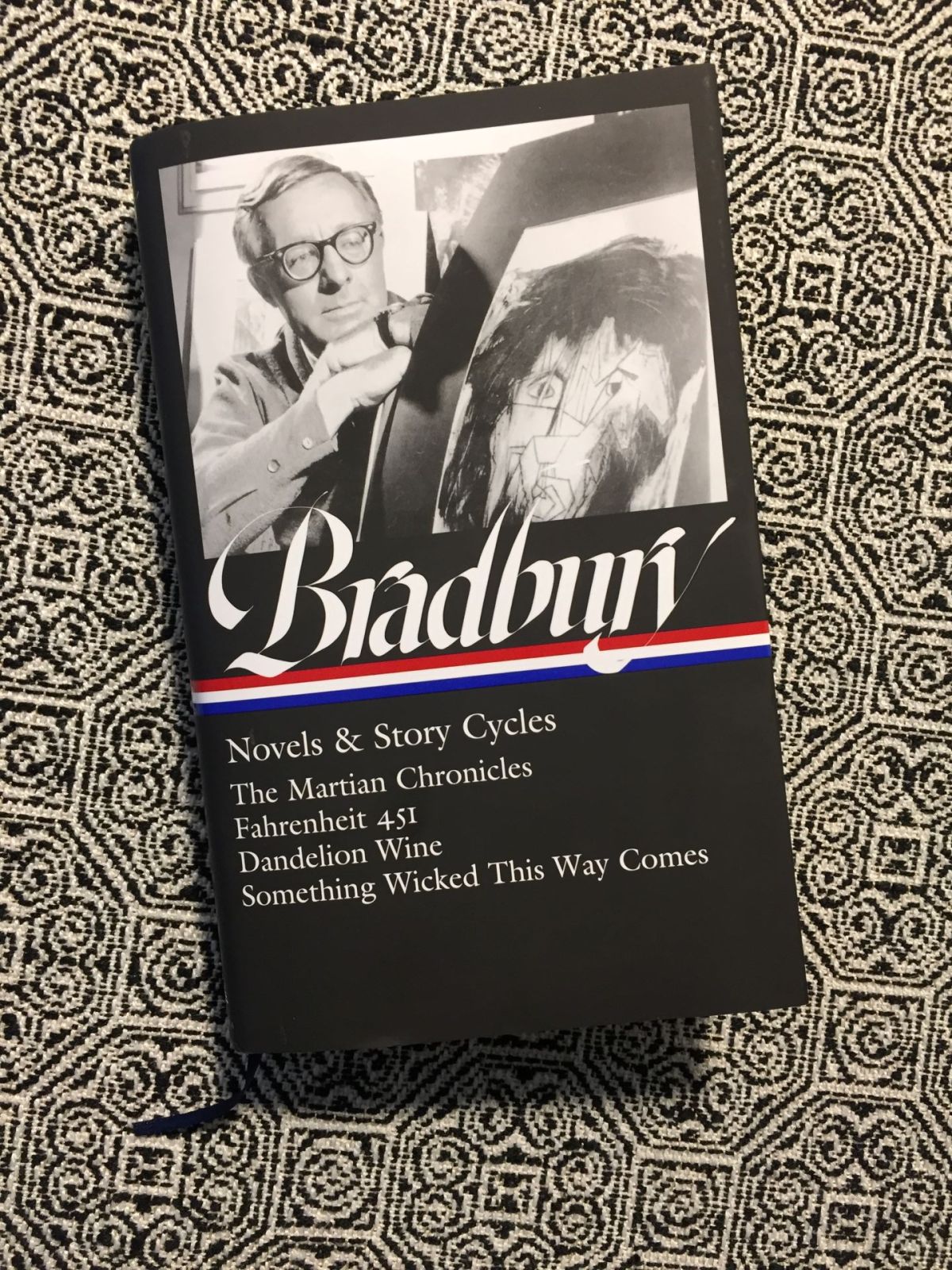
We have these two books by Ray Bradbury, and when I was a kid, I loved his science fiction stories. I read many of them, but never like the one I read tonight.

The way this started was I was looking for something to do. I thought about watching old reruns of The Red Green Show on YouTube, which always struck me as funny when I watched them long ago. I still do, but couldn’t get into it tonight.

I turned on the TV and flipped through the channels which, as always, were reruns. I was not even interested in the X-Files reruns and I’m a fan.  And I couldn’t stand the thought of seeing any more in-your-face commercials about total body deodorant.

So, I picked up the hefty paperback of a big collection of a hundred of Ray Bradbury’s short stories, entitled oddly enough, “Bradbury Stories.” I just opened up the book with no particular story in mind and it fell open right to one I’d never read before, “I See you Never.”

It’s all of 3 pages long and it’s about a Mexican immigrant named Mr. Ramirez. He’s been brought by the police to the front door of the rooming house where he’s been living on a temporary visa, which has been revoked. He’s just there to say goodbye to his landlady. He’s being deported and has this sad conversation with her on the doorstep. He just keeps telling her in broken English, “I see you never.” The landlady, Mrs. O’Brian (no accident she has an Irish name, of course) just says repeatedly that he’s been a good tenant and that she’s sorry. Then he leaves with the police. She goes back inside and can’t finish her dinner with her family and realizes she’ll never see Mr. Ramirez again.

There’s a much better summary and analysis than mine written by a professional reviewer. This story was published back in 1947 and is set in the historical context of post WWII America.

I hate politics, and I’m not going to say anything specific about how this little story struck me with its irony given what’s going on this country right now. I was just looking for a little science fiction distraction and instead got irony. I didn’t go looking for this and I’ll be brutally frank—I actively avoid political news and I hate like hell to get reminded of it every day. All I did was open a damn book. I wish I had never seen this story.

I guess maybe that’s what I get for my avoidant approach to certain things. How’s that for a Mental Health Awareness month event?

Three Photos to Share for Mental Health Awareness Month

So, I have to hurry up and get these 3 photos posted for today because it’s getting pretty late. Recall the Iowa Healthiest State Initiative calendar along with my photos to share:

The images are important features of events in my life or my sense of humor.

I’m a birdwatcher and many different species of birds visited the fountain. The fountain attracted bluebirds who splashed and even swam in it. That fountain was very heavy. We couldn’t leave it out all winter. In the fall I had to lift the bowls off and move them somewhere else. Moving them entailed lifting them onto bags of mulch so as to reduce the work of hefting them a small distance at a time. The birds were beautiful to watch.

The letter was a class assignment our Mindfulness Based Stress Reduction (MBSR) teacher had us write at the beginning of the class. After we graduated, she mailed us those letters shortly thereafter. We were to write something connected with what we thought we had gained or what we thought might happen after taking the MBSR class. The book might seem out of place, and while I can’t talk much about Gordon Strayer, I did meet him and read his book (which is now long gone; probably lost in a move). I admired him. I don’t think he feared death.

The Chrysler Building reminds me of the Men in Black (MIB) 3 movie, and I included it because my sense of humor is very important to me. In the movie, Agent J and Jeffrey Price have this funny conversation about time travel back to an era that was not the greatest for black people. I know because I lived through it. Agent J is about to use the time travel device which involves jumping off a tall building (it’s a “time jump!”). Agent J is preparing to travel back in time to M.I.B.’s early days in 1969 to stop an alien from assassinating his friend Agent K and changing history. They have this short conversation:

Jeffrey Price: Do not lose that time device or you will be stuck in 1969! It wasn’t the best time for your people. I’m just saying. It’s like a lot cooler now.

Agent J: How will I know if it works?

Jeffrey Price: You’ll either know…or you won’t.

All Jokes Aside, What Do I think About the Book “Caste: The Origins of Our Discontents?”

I just finished reading Isabel Wilkerson’s book, “Caste: The Origins of Our Discontents.” It was a painful read because it talks about racism in America, which is a part of my lived experience. Wilkerson’s compares it to the Nazi persecution of the Jews and the caste organization in India. The chapter on the pillars of caste make sense to me.

When I reached the last section (not at all “final” by any means), which is called “Awakening,” I was not surprised that there were no prescriptions or outlines or action plans for how to eliminate caste in any culture. It turns out that we’re all responsible for becoming aware of how we all are complicit in some way with maintaining caste divisions in society. And the word Wilkerson used for how to begin is “empathy,” or somehow becoming conscious of that tendency and to replace it with understanding.

As Wilkerson emphasizes, empathy isn’t sympathy or pity. Empathy is walking a mile in someone else’s shoes, as the song goes. But she goes a step further and uses the term “radical empathy.” It’s difficult to define concretely. It goes beyond trying to imagine how another person feels, going the extra mile and learning about what the other person’s experience. It’s not about my perspective; it’s about yours. It’s not clear exactly how to make that deep connection. She uses terms like “spirit” which may or may not resonate with a reader searching for a recipe or a cure.

Politics turns up in the book. How could it not? I’m going to just admit that I wanted to make this post humorous somehow, especially after I saw Dr. H. Steven Moffic’s article in Psychiatric Times about whether psychiatrists are to act in the role of “bystanders” or “upstanders” in the present era of political and social turmoil. He specifically mentioned the Goldwater Rule, which is the American Psychiatric Association Ethics Annotation barring psychiatrists from making public statements of a diagnostic opinion about any individual (often a politician) absent a formal examination or authorization to make any statements. The allusion to a specific person is unmistakable.

But, as a retired psychiatrist, I’m aware that my sense of humor could be deployed as a defense mechanism and it would certainly backfire in today’s highly charged political context. I’m not sure whether I’m a bystander or an upstander.

Sena and I had a spirited debate about whether America has a caste system or not. I think it’s self-evident and is nothing new to me. I suspect that calling racism (which certainly exists in the United States) a form of casteism would not be altogether wrong. Wilkerson mentions a psychiatrist, Sushrut Jadhav, who is mentioned in the Acknowledgments section of her book. Jadhav is a survivor of the caste system in India. I found some of insights on caste and racism in web article, “Caste, culture and clinic” which is the text of an interview with him.

His answers to two questions were interesting. On the question of whether there is a difference between the experience of racism and caste humiliation, he said “None on the surface” but added that more research was needed to answer the question adequately. And to the question of whether it’s possible to forget caste, he said you have to truly remember it before you can forget it—and it’s important to consider who might be asking you to forget it.

This reminded me of the speech in the movie “Guess Who’s Coming to Dinner,” said by John Prentice (played by Sidney Poitier) to his father:

“You’ve said what you had to say. You listen to me. You say you don’t want to tell me how to live my life? So, what do you think you’ve been doing? You tell me what rights I’ve got or haven’t got, and what I owe to you for what you’ve done for me. Let me tell you something. I owe you nothing! If you carried that bag a million miles, you did what you were supposed to do because you brought me into this world, and from that day you owed me everything you could ever do for me, like I will owe my son if I ever have another. But you don’t own me! You can’t tell me when or where I’m out of line, or try to get me to live my life according to your rules. You don’t even know what I am, Dad. You don’t know who I am. You don’t know how I feel, what I think. And if I tried to explain it the rest of your life, you will never understand. You are 30 years older than I am. You and your whole lousy generation believes the way it was for you is the way it’s got to be. And not until your whole generation has lain down and died will the deadweight of you be off our backs! You understand? You’ve got to get off my back! Dad. Dad. You’re my father. I’m your son. I love you. I always have and I always will. But you think of yourself as a colored man. I think of myself as a man. Hmm? Now, I’ve got a decision to make, hmm? And I’ve got to make it alone. And I gotta make it in a hurry. So, would you go out there and see after my mother?”

 And there was this dialogue that Sena found on the web, which was similar to that of John Prentice. It was a YouTube fragment of a 60 minutes interview in 2005 between actor Morgan Freeman and Mike Wallace. Wallace asked Freeman what he thought about Black History Month. Freeman’s answer stunned a lot of people because he said he didn’t want Black History Month and said black history is American history. He said the way to get rid of racism was to simply stop talking about it. His replies to questions about racism implied he thought everyone should be color blind. John Prentice’s remarks to his father are in the same vein.

I grew up thinking of myself as a black person. I don’t think there was any part of my world that encouraged me to think I was anything different. I think Wilkerson’s book is saying that society can’t be colorblind, but that people can try to walk a mile in each other’s shoes.

Keep Hope Alive

Just a reminder, Isabel Wilkerson will be giving her presentation, ” “Caste: How the hierarchy we have inherited restricts our humanity” from noon to 1 p.m. Wednesday, Feb. 5, in Prem Sahai Auditorium (room 1110) in the Medical Education and Research Facility.

I’m about halfway through her book, “Caste: The Origins of Our Discontents.” It’s a very difficult read, as I anticipated. It’s full of horrendous descriptions of what those in lower castes suffered, whether from the time of the Nazis, India, or America. I can read it only for a short while and then I have to put the book down and take a break. I get so I feel like I need an inspirational lift.

And it just happened the other night. I heard a poem on TV I’ve heard before, “I am Somebody.” Although it was written in the 1950s by Reverend William Holmes Borders, a civil rights activist and senior pastor at Wheat Street Baptist Church, it was recited by Reverend Jesse Jackson in 1963.

I remember seeing Reverend Jackson cry the night Barack Obama was elected President in 2008. I never heard the original speech Reverend Jackson gave in 1988, during the second time he was running for President himself.

I think it was probably because I was focused on starting medical school at The University of Iowa. I began my studies in August of 1988 in what was then the summer enrichment program for minority students.

One of Reverend Jackson’s speeches contained the other memorable cry, “Keep hope alive!” You can hear it and read the transcript.

You must not surrender! You may or may not get there but just know that you’re qualified! And you hold on and hold out! We must never surrender!! America will get better and better.

Keep hope alive. Keep hope alive! Keep hope alive! On tomorrow night and beyond, keep hope alive! I love you very much. I love you very much. —Rev. Jesse Jackson, 1988.

Just Got Isabel Wilkerson’s Book: “Caste: The Origins of Our Discontents”

I just got a copy of Isabel Wilkerson’s book “Caste: The Origins of Our Discontents.” I read her other book, “The Warmth of Other Suns” years ago. It won a Pulitzer Prize.

I read the first section, “Toxins In The Permafrost And Heat Rising All Around.” It brought back memories of the 2016 Presidential Election, which I won’t discuss in any detail. It does seem ironic now.

I have no doubt that “Caste” will be an uncomfortable read, like Wilkerson’s first one and like Michele Norris’s book, “Our Hidden Conversations.”

Just a reminder, Isabel Wilkerson is scheduled to speak as part of Dr. Martin Luther King, Jr. events on February 5, 2025 at the University of Iowa Medical Education and Research Facility (MERF); Prem Sahai Auditorium. General admission is free although it’s a ticketed event, more information here.

Could Artificial Intelligence Help Clinicians Conduct Suicide Risk Assessments?

I found an article in JAMA Network (Medical News & Perspectives) the other day which discussed a recent study on the use of Artificial Intelligence (AI) in suicide risk assessment (Hswen Y, Abbasi J. How AI Could Help Clinicians Identify American Indian Patients at Risk for Suicide. JAMA. Published online January 10, 2025. doi:10.1001/jama.2024.24063).

I’ve published several posts expressing my objections to AI in medicine. On the other hand, I did a lot of suicide risk assessments during my career as a psychiatric consultant in the general hospital. I appreciated the comments made by one of the co-authors, Emily E. Haroz, PhD (see link above).

Dr. Haroz preferred the term “risk assessment” rather than “prediction” referring to the study (Haroz EE, Rebman P, Goklish N, et al. Performance of Machine Learning Suicide Risk Models in an American Indian Population. JAMA Netw Open. 2024;7(10):e2439269. doi:10.1001/jamanetworkopen.2024.39269).

The model used for the AI input used data available to clinicians in patient charts. The charts can be very large and it makes sense to apply computers to search them for the variables that can be linked to suicide risk. What impressed me most was the admission that AI alone can’t solve the problem of suicide risk assessment. Clinicians, administrators, and community case managers all have to be involved.

The answer to the question “How do you know when someone’s at high risk?” was that the patient was crying. Dr. Haroz points out that AI probably can’t detect that.

That reminded me of Dr. Igor Galynker, who has published a lot about how to assess for high risk of suicide. His work on the suicide crisis syndrome is well known and you can check out his website at the Icahn School of Medicine at Mount Sinai. I still remember my first “encounter” with him, which you can read about here.

His checklist for the suicide crisis syndrome is available on his website and he’s published a book about as well, “The Suicidal Crisis: Clinical Guide to the Assessment of Imminent Suicide Risk 2nd Edition”. There is also a free access article about it on the World Psychiatry journal website.

Although I have reservations about the involvement of AI in medicine, I have to admit that computers can do some things better than humans. There may be a role for AI in suicide risk assessment, and I wonder if Dr. Galynker’s work could be part of the process used to teach AI about it.

Artificial Intelligence Can Lie

I noticed a Snopes fact check article (“AI Models Were Caught Lying to Researchers in Tests — But It’s Not Time to Worry Just Yet”) today which reveals that Artificial Intelligence (AI) can lie. How about that? They can be taught by humans to scheme and lie. I guess we could all see that coming—or not. Nobody seems to be much alarmed by this, but I think it’s probably past time to worry.

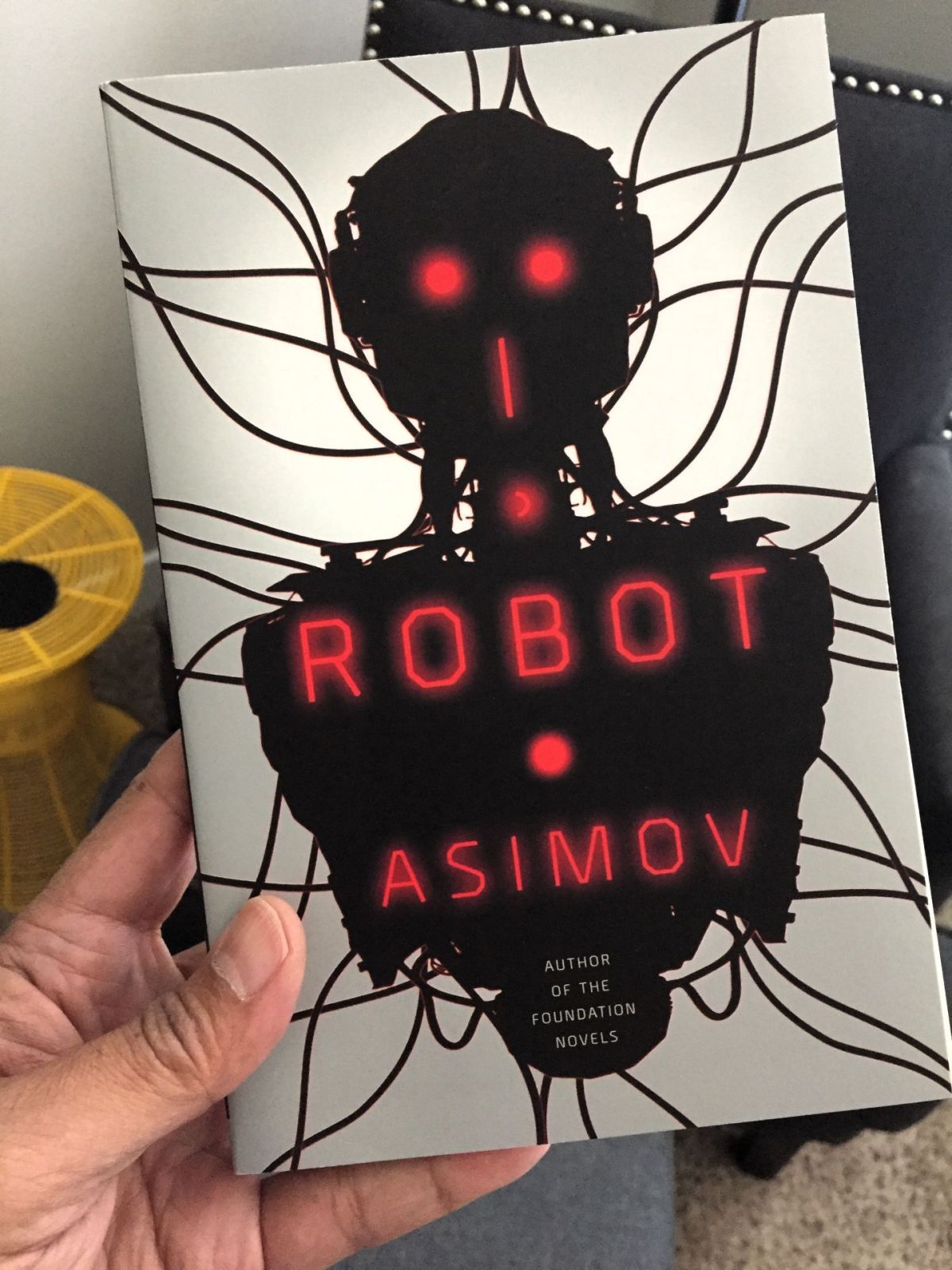
Then I remembered I read Isaac Asimov’s book “I, Robot” last year and wrote a post (“Can Robots Lie Like a Rug?”) about the chapter “Liar!” I had previously horsed around with the Google AI that used to be called Bard. I think it’s called Gemini now. Until the Snopes article, I was aware of AI hallucinations and the tendency for it to just make stuff up. When I called Bard on it, it just apologized. But it was not genuinely repentant.

In the “lie like a rug” post, I focused mostly on AI/robots lying to protect the tender human psyche. I didn’t imagine AI lying to protect itself from being shut down. I’m pretty sure it reminds some of us of HAL in the movie “2001: A Space Odyssey,” or the 2004 movie inspired by Asimov’s book, “I, Robot.”

Sena found out that Cambridge University Press recently published a book entitled “The Cambridge Handbook of the Law, Policy, and Regulation for Human–Robot Interaction.” I wonder if the editors and contributors of book on AI and robots mention Asimov.

It reminds me of my own handbook about consultation-liaison psychiatry which was published 14 years ago by CUP—and which CUP now wants me to sign a contract addendum making the book available to AI companies.

I haven’t signed anything.

Remarks on Svengoolie TV Movie Phantom of the Opera 1943 and More

We watched Phantom of the Opera (1943 version) last night. And then, just for good measure, we watched the Phantom of the Opera (1925 silent film) today. We watched the latter on the Internet Archive.

I’ll say one thing, the absence of commercials in the 1925 version is great. Even though I like cornball jokes on Svengoolie, it’s good to have a break from that too sometimes.

We’ve never read the novel by Gaston Leroux but there’s a pretty good Wikipedia article about it. We’ve never seen the Andrew Lloyd Webber stage version nor the 2004 movie.

That said, we’re struck by the differences between the 1925 and 1943 versions. It’s difficult to develop any sympathy for the Erik the phantom (played by Lon Chaney Sr. in 1925). He’s pretty much a monster from beginning to end. We tend to think that it’s easier to be sympathetic to Erique Claudin (played by Claude Rains in 1943) who has a rough path downhill after losing his job and a place to live early on, inability to sell his concerto or get a date with Christine and so on, after which he starts killing people left and right.

It’s worth pointing out that in Leroux’s book (according to the Wikipedia article), the phantom’s childhood was pretty traumatic because he was born ugly and deformed, which didn’t endear him to his mother. She was simply not good enough, which I think appeals to my training in psychiatry.

The 1943 film was pretty comical at times. For example, the two guys competing for Christine’s attention, singer Anatole (played by Nelson Eddy) and Raoul (played by Edgar Barrier) get stuck in doorways and eventually end up going to dinner together instead of one or the other going out with Christine. Their forced politeness with each other in front of Christine is priceless.

On the other hand, the 1925 version is a little more like what you’d expect from a movie on the Svengoolie show—it’s a horror flick, only classier. Lon Chaney’s makeup job makes him look like a proper monster, which made women faint according to some articles. Claude Rains’ makeup is barely suggested on part of his face.

The murders committed by the phantoms in both movies are bloodless, although the comedy in the 1943 version distracts you from what you expect; for example, after the Phantom drops the huge chandelier on the audience. No mangled bodies or gore, move along, nothing to see here. People continue to sing, dance and cavort, possibly hopping over any corpses lying about.

There was mostly dark music in the 1925 Phantom of the Opera film. However, in the 1943 version there was lullaby theme that ran throughout and was even a point of connection between Christine and the ill-fated Erique. Somebody found a full version of it years later, entitled Lullaby of the Bells. The one who posted it mentioned the composer and the performer.

Amaryllis Progress and Other Notes

I have a few messages to pass on today. This is the last day of November and the Amaryllis plants are doing so well Sena had to brace the tallest one using a Christmas tree stake and a couple of zip ties. It’s over two feet tall!

I’m not sure what to make of almost a dozen comments on my post “What Happened to Miracle Whip?” Apparently, a lot of people feel the same way I do about the change in taste of the spread. So, maybe it’s not just that my taste buds are old and worn out.

Congratulations to the Iowa Hawkeye Football team last night! They won against Nebraska by a field goal in the last 3 seconds of the game. I had to chuckle over the apparent difficulty the kicker had in answering a reporter’s question, which was basically “How did you do it?” There are just some things you can’t describe in words. There’s even a news story about how thinking doesn’t always have to be tied to language.

Along those lines, there might be no words for what I expect to think of tonight’s 1958 horror film on Svengoolie, “The Crawling Eye.” This movie was called “The Trollenberg Terror” in the United Kingdom version. I can tell you that “Trollenberg” was the name of a fictitious mountain in Switzerland.

I’m not a fan of Jack the Ripper lore, but I like Josh Gates expedition shows, mainly for the tongue in cheek humor. The other night I saw one of them about an author, Sarah Bax Horton, who wrote “One-Armed Jack”). She thought Hyam Hyams was the most likely candidate (of about 200 or so) to be Jack the Ripper, the grisly slasher of Whitechapel back in 1888. He’s a list of previously identified possible suspects. I found a blogger’s 2010 post about him on his site “Saucy Jacky” and it turns out Hyams is one of his top suspects. Hyams was confined to a lunatic asylum in 1890 and maybe it’s coincidental, but the murders of prostitutes stopped after that. I’m not going to speculate about the nature of Hyams’ psychiatric illness.

There’s another Psychiatric Times article about the clozapine REMS (Risk Evaluation and Mitigation Strategies) program. I found a couple of articles on the web about the difficulties helping patients with treatment resistant schizophrenia which I think give a little more texture to the issue:

Farooq S, Choudry A, Cohen D, Naeem F, Ayub M. Barriers to using clozapine in treatment-resistant schizophrenia: systematic review. BJPsych Bull. 2019 Feb;43(1):8-16. doi: 10.1192/bjb.2018.67. Epub 2018 Sep 28. PMID: 30261942; PMCID: PMC6327301.

Haidary HA, Padhy RK. Clozapine. [Updated 2023 Nov 10]. In: StatPearls [Internet]. Treasure Island (FL): StatPearls Publishing; 2024 Jan-. Available from: https://www.ncbi.nlm.nih.gov/books/NBK535399/

The paper on the barrier to using clozapine by Farooq et al is very interesting and the summary of the barriers begins in the section “Barriers to the use of clozapine in TRS (treatment resistant schizophrenia). I think it gives a much-needed perspective on the complexity involved in managing the disorder.

So what do you think about Miracle Whip?

Thoughts on the Big Mo Pod Show 034: Laughing in the Face of Death

I heard the Big Mo Blues Show just (Halloween theme) this last Friday night and was not surprised to see that one of the songs discussed on the Big Mo Pod Show on Saturday was Peetie Wheatstraw’s “Devil’s Son-in-Law.”

When I first heard it, it got me chuckling because I didn’t understand hardly a single word until the last line. It was babbling. I can remember googling the term “Peetie Wheatstraw and unintelligible,” which revealed I’m not the only one who thinks he’s unintelligible. It’s a mondegreen mine field. It’s a good thing the lyrics are available.

I want to hastily point out that he’s not always unintelligible—but William Bunch aka Peetie Wheatstraw is speaking in tongues on that song. For comparison I listened to another song, “Sweet Home Blues” and I could understand just about every word in the lyrics.

That led me down the rabbit hole about the artist in a web search that seemed to have no end. I should probably say Brer Rabbit hole since most of my searches pointed in the direction of a character called Peter Wheatstraw, Petey Wheatstraw, as well as Peetie Wheatstraw who had variations in their identities, most often in the context of African American folklore.

I’m not going to attempt a summary of my web search on Peetie Wheatstraw; there’s too many twists and turns. You can start with the Wikipedia article. But from there, you can get trapped in Brer Rabbit’s little tunnels, which can run in different directions.

William Bunch was a blues artist in the 1930s who adopted the moniker “Peetie Wheatstraw.” While Big Mo says it’s sort of another name for Satan, I found confusing references by writers who claim that the Peter Wheatstraw character comes from Black folklore. There are those who believe that novelist Ralph Ellison wrote about a character in his book “Invisible Man” named Peter Wheatstraw and said it was the only character in the novel that was based on a live person—William Bunch.

Is that true? And did Ellison ever meet Peetie Wheatstraw (William Bunch)? I can’t tell from the web articles.

I was prompted to get my copy of “Invisible Man” out after reading a scholarly online essay mentioning the Peter Wheatstraw character, “Re-visioning Ralph Ellison’s Invisible Man for a Class of Urban Immigrant Youth” by Camille Goodison, CUNY New York City College of Technology. I couldn’t remember Wheatstraw at first, but there he was in Chapter 9.

Goodison reveals there is a lot more texture to the Wheatstraw character then just as a moniker adopted by William Bunch. Wheatstraw is probably more complex than the devil. He has many sides to him and could be helpful—but mostly in an indirect way. His guidance is full of riddles and there doesn’t seem to be a solid way to cut through the metaphorical morass. As Emily Dickinson advised, Wheatstraw may tell the truth—but tells it slant.

I still don’t know why he mumbles the song.