Wandering Thoughts on Talents and Traits in “To Kill a Mockingbird”

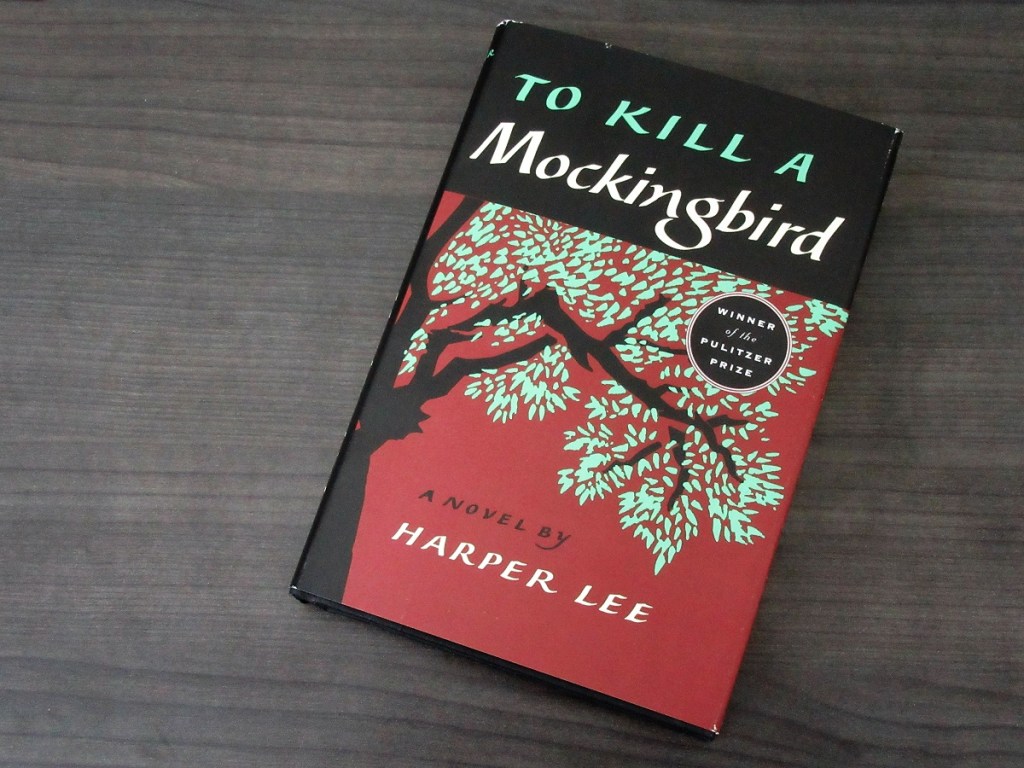
I’ve been reading To Kill a Mockingbird and thinking over something a character named Miss Maudie said in Chapter 10: “People in their right minds never take pride in their talents.” It seems to run counter to popular opinion. Why wouldn’t you take pride in your talents?

I got a lot of hits on my google search for this quote, by the way.

Miss Maudie’s statement was soon after Atticus shot a rabid dog with a marksman’s skill. Jem and Scout had been grousing about how they couldn’t find anything to be proud of in their old man. Atticus had never told his children about his skill as a marksman. He gave his kids guns but declined to teach them how to shoot.

I try to make sense of Miss Maudie’s comment by thinking about marksmanship as a skill, which is often distinguished from a talent, usually because the latter is thought to be a trait you’re born with. On the other hand, it’s hard to think of modesty (which is what keeps you from bragging or “taking pride”) as a talent. Some might say it’s more like a character trait.

Can you can develop a talent by practice? Can you improve your modesty by working at it and how would you do that, deadlifting your inner barbells? I tend to think you either have it or you don’t. And why does it take being in your right mind to refuse to take pride in or brag about your talent?

I often hear athletes (think Super Bowl) bragging non-stop about their talents. But I stop well short of admiring them for doing it. It’s annoying, but often preferable to the half-time show. Why do they grab their crotches?

Maybe it doesn’t make sense to brag about a talent you’re born with. I’m not sure if modesty is also something you’re born with. Babies seem very immodest, especially when they’re pooping, based on my extensive research of TV commercials and anecdotes.

On the other hand, a talent is also often said to be something which can be honed to perfection. In fact, Miss Maudie said that Atticus’s skill with a gun was a gift from God, a talent—which he perfected by practice. This might contradict the definition of talent as a thing you’re just born with. She goes on to say that Atticus thought this particular gift from God gave him an unfair advantage, so he gave it up. It would be unseemly to take pride in such a thing, and why would it even occur to someone with a talent to minimize it? The religious reference “pride goeth before a fall” is obvious, but religion doesn’t always seem to play a big role.

Maybe both talent and traits like modesty can be honed as well. What if they’re sort of like lifting just one of your eyebrows to make you look haughtily bemused? You can cultivate it, or at least some people say you can. There’s even a WikiHow for it. But it seems like you have to find your dominant eyebrow, which means there’s something inborn that makes it easier.

Can you develop modesty as though it’s a skill, assuming that it’s also a trait which is malleable? Is there a modesty cortex? Then, you could say some people have a talent for modesty. And how about those splinter talents or skills (like suddenly playing the piano like a virtuoso) which can appear abruptly after brain injuries? Can modesty be like that, a nascent itch in the body waiting to be scratched? That kind of makes you want to drop a piano on the guy at the cocktail party who brags about his golf game, doesn’t it?

I suppose some would take pride in being modest, although it sounds paradoxical—until I remember all the people I’ve seen who can feign desirable traits.

So, is there a Gold’s Gym for character traits where we can go and develop talents like modesty, patience, respect, kindness, and mercy?

Not exactly, but we can give ourselves a kick start by checking out some resources that aren’t that hard to find. Those would be different from what you can pick up from “To Kill a Mockingbird,” although it’s obvious that’s how I got steered to this topic in the first place. Remind me again, why is this book be taken off required reading lists?

Our Impressions of University of Iowa Free Webinar Yesterday: The Stories That Define Us”

We were overall delighted with yesterday’s presentation, University of Iowa Free Webinar: “Breaking Barriers: Arts, Athletics, and Medicine (1898-1947).” It’s one in a series of 4 virtual seminars with two more scheduled this month, which you can register for at this link.

February 15: Endless Innovation: An R1 Research Institution (1948–1997)

February 22: The Next Chapter: Blazing New Trails (1998–2047)

The moderator was university archivist and storyteller, David McCartney.

Presenters include:

Yesterday’s presentation was recorded and will be uploaded to The University of Iowa Center for Advancement YouTube site at a later date.

McCartney did an excellent job as moderator, although got stumped from a question from a viewer about who was the first African American faculty member in the College of Medicine. He’s still working on tracking that down. It wasn’t me. I’m not that old and I am not risen from the dead, as far as I can tell; but to be absolutely clear, you should ask my wife, Sena. I was able to google who was the first African American graduate of the University of Iowa law school: Alexander Clark, Jr. McCartney thinks he might have been the first University of Iowa alumnus, although he couldn’t confirm that.

On the other hand, I could have been the first African American consulting psychiatrist (maybe the only African American psychiatrist ever) in the Department of Psychiatry at UIHC—but I can’t confirm that. Maybe McCartney could work on that, too.

 There are a few words about me in the department’s own history book, “Psychiatry at Iowa: The Shaping of a Discipline: A History of Service, Science, and Education by James Bass: Chapter 5, The New Path of George Winokur, 1971-1990:

“If in Iowa’s Department of Psychiatry there is an essential example of the consultation-liaison psychiatrist, it would be Dr. James Amos. A true in-the-trenches clinician and teacher, Amos’s potential was first spotted by George Winokur and then cultivated by Winokur’s successor, Bob Robinson. Robinson initially sought a research gene in Amos, but, as Amos would be the first to state, clinical work—not research—would be Amos’s true calling. With Russell Noyes, before Noyes’ retirement in 2002, Amos ran the UIHC psychiatry consultation service and then continued on, heroically serving an 811-bed hospital. In 2010 he would edit a book with Robinson entitled Psychosomatic Medicine: An Introduction to Consultation-Liaison Psychiatry.” (Bass, J. (2019). Psychiatry at Iowa: A History of Service, Science, and Education. Iowa City, Iowa, The University of Iowa Department of Psychiatry).”

And in Chapter 6 (Robert G. Robinson and the Widening of Basic Science, 1990-2011), Bass mentions my name in the context of being one of the first clinical track faculty (as distinguished from research track) in the department. In some ways, breaking ground as a clinical track faculty was probably harder than being the only African American faculty member in the department.

I had questions for Lan Samantha Chang and for Dr. Patricia Winokur (who co-staffed the UIHC Medical-Psychiatry Unit with me more years ago than I want to count.

I asked Dr. Chang what role did James Alan McPherson play in the Iowa Writers Workshop. She was finishing her presentation and had not mentioned him, so I thought I’d better bring him up. She had very warm memories of him being her teacher, the first African American to win a Pulitzer Prize for fiction, and a long-time faculty member at the Workshop.

She didn’t mention whether McPherson had ever been a director of the Workshop, though she went through the list of directors from 1897 to when she assumed leadership in 2006. You can read this on the Workshop’s History web page. I have so far read two sources (with Wikipedia repeating the Ploughshares article item) on the web indicating McPherson had been acting director between 2005-2007 after the death of Frank Conroy. One source for this was on Black Past published in 2016 shortly after his death, and the other was a Ploughshares article published in 2008. I sent an email request for clarification to the organizers of the zoom webinar to pass along to Lan Samantha Chang.

I asked Dr. Winokur about George Winokur’s contribution to the science of psychiatric medicine. Dr. George Winokur was her father and he was the Chair of the UIHC Psychiatry Department while I was there. She mentioned his focus on research in schizophrenia and other accomplishments. I’ll quote the last paragraph from Bass’s history on the George Winokur era:

“Winokur, in terms of research, was a prototype of the new empirical psychiatrist. Though his own research was primarily in the clinical realm, he was guided by the new neurobiological paradigm (perhaps in an overbalanced way) that was solidifying psychiatry with comparative quickness. New techniques in imaging and revelations of the possibilities in genetic study and neuropsychopharmacology lay ahead. George Winokur had helped the University of Iowa’s Department of Psychiatry—and American psychiatry as a whole—turn a corner away from subjectivity and irregularity of Freudian-based therapies. And once that corner had been turned there was no going back.”

George Winokur was the department chair at University of Iowa Hospitals and Clinics from 1971 to 1990 and had a unique and memorable style. George also had a rough sense of humor. He had a rolling, gravelly laugh. He had strict guidelines for how residents should behave, only slightly tongue-in-cheek. They were written in the form of 10 commandments. Who knows, maybe there are stone tablets somewhere:

Winokur’s 10 Commandments

  1. Thou shalt not sleep with any UI Psychiatry Hospital patient unless it be thy spouse.
  2. Thou shalt not accept recompense for patient care in this center outside thy salary.
  3. Thou shalt be on time for conferences and meetings.
  4. Thou shalt act toward the staff attending with courtesy.
  5. Thou shalt write progress notes even if no progress has been made.
  6. Thou shalt be prompt and on time with thy letters, admissions and discharge notes.
  7. Thou shalt not moonlight without permission under threat of excommunication.
  8. Data is thy God. No graven images will be accepted in its place.
  9. Thou shalt speak thy mind.
  10. Thou shalt comport thyself with modesty, not omniscience.

Quinn Early has a lot of energy and puts it to good use. His documentary of the sacrifices of African American sports pioneers, including “On the Shoulders of Giants” (Frank Kinney Holbrook) is impressive.

There was a good discussion of the importance of the book “Invisible Hawkeyes: African Americans at the University of Iowa during the Long Civil Rights Era”, edited by former UI faculty, Lena and Michael Hill.

Sena and I thought yesterday’s presentation was excellent. We plan to attend the two upcoming webinars as well. We encourage others to join.

University of Iowa Free Webinar Tonight: The Stories That Define Us”

We just found out that the University of Iowa is presenting a free webinar this evening from 4:30—5:30 PM. It’s a zoom meeting and the title is “Breaking Barriers: Arts, Athletics, and Medicine (1898-1947)”. It’s part of a 4-part series that started February 1, 2022, “Uncovering Hawkeye History: The Stories That Define Us.”

Presenters include:

  • Lan Samantha Chang (93MFA), Iowa Writers’ Workshop director and acclaimed author
  • Quinn Early (87BA), Hawkeye football star and film producer
  • Patricia Winokur (88R, 91F), professor of internal medicine–infectious diseases

We discovered this presentation after a long, spirited conversation about race relations generally this morning over breakfast. Authors mentioned included Ralph Ellison, author of “Invisible Man” and James Alan McPherson, long time faculty and director of the Iowa Writers Workshop, author of first African American to win a Pulitzer Prize winner for fiction with his collection “Elbow Room.”

There were several cross threads in our conversation. One of them was my memory of a visiting professor (whose name, however, I can’t remember) who gave a presentation about being Black in America at Huston-Tillotson College (now Huston-Tillotson University; one of the HBCUs in America) in Austin, Texas. He said something I’ll never forget. I mentioned this in a book review published over 20 years ago in the American Journal of Psychiatry:

A guest lecturer (who, as I recall, had also written a book about being black in America) told us that the white man would never allow a black man to be a man in America. He had only three choices: he could be a clown, an athlete, or a noble savage. These corresponded to the prominent and often stereotyped roles that blacks typically held in entertainment, sports, and black churches. It begged the question of what on earth could we hope to accomplish— JAMES J. AMOS, M.D., Iowa City, Iowa (2000). “Being Black in America Today: A Multiperspective Review of the Problem.” American Journal of Psychiatry 157(5): 845-846.

This is related to another memory, that of the quasi-character Rinehart in Ellison’s “Invisible Man.” The name refers to the multiple perspectives from which a black person (or any person, really) can look himself. You can look at the word itself as compound, containing two words, “rind” and “heart.” Understood as metaphors, you can readily see how it could apply to anyone. We can have a surface personality socially, and we can have an inner core, a heart that is hidden and which can truly define who we are. We’re always changing, inside and out, backwards and forwards.

On the subject of hidden stories, I am also reminded of the book “Invisible Hawkeyes: African Americans at the University of Iowa during the Long Civil Rights Era”, edited by former UI faculty, Lena and Michael Hill. The book describes the mixed reactions of African Americans to the interracial climate in Iowa City and at the University of Iowa during that era. Not all felt welcome, although James Alan McPherson did. Indeed, the Hills often highlight the fluidity of the interactions, which makes me think of Rinehart.

David McCartney, the university archivist, is joining the presentation. He led the drive to rename Johnson County in Iowa for Dr. Lulu Merle Johnson, an accomplished University of Iowa alumna, by putting up an on-line petition which gathered 1,000 signatures. We’re looking forward to this evening’s presentation.

Thoughts So Far on “To Kill a Mockingbird”

I am just getting started reading “To Kill a Mockingbird” by Harper Lee. As I said in a previous post, I can’t remember ever reading it, but I saw the movie (or most of it). I have seen news reports that some schoolteachers are opposed to keeping the title on required reading lists.

I just finished the 3rd chapter, the one that contains an oft quoted line from Atticus:

“You never really understand a person until you consider things from his point of view…until you climb into his skin and walk around in it.”

 I found dozens of hits on the web about this quote. There are likely a lot more. I don’t have to explain it to anyone, least of all to schoolteachers.

I can see my bookshelf from my chair where I’m reading Lee’s novel. I see my copy of a book by James Thurber, “The Thurber Carnival.” I occasionally re-read a story in it entitled “Bateman Comes Home.” I think it’s hilarious. There’s a short message ahead of the main text:

“Written after reading several recent novels about the deep south and confusing them a little—as the novelists themselves do—with “Tobacco Road” and “God’s Little Acre.”

And then I searched the web and found a web site, The Library dot org, and on a web page entitled Kids Booklists, there was the message, “If you liked ‘To Kill a Mockingbird’,” you might also enjoy…” Beneath it was a list of books, including “God’s Little Acre” by Erskine Caldwell.  

I noticed the resemblance. I’ll keep you posted.