Flipping Out on Ambidexterity in Juggling

I’ve been trying to learn a new juggling trick and found out there was a prerequisite—which is that I practice some skills I’ve ignored until now. One is trying the two in one trick which is juggling two balls with one hand. The other is trying tricks on both the left and right side of my body. Ambidexterity is a plus in juggling.

That’s a tall order, at least for me. But if I’m going to move forward, I guess I have to try it.

I remember the problems I had learning the under the leg on my right side. The same problems occurred on the left, no surprise. I had trouble letting go of the ball, I threw the balls way out of the pane of glass juggle space, and I’m lunging all over the room.

But I got further than I thought I would, and I was able to at least do the trick after only a few tries. The left side under the leg is pretty ugly right now, which is normal for me anyway.

The left side two ball juggle with one hand was also difficult. I don’t know why I had a claw posture in my right hand.

Paradoxically, I’ve noticed lately that I have more trouble with the half shower on the right side than the left.

The only other time I had to make do with my left hand was when I was a kid. I broke my right wrist when I fell from the top floor of the garage. It was built like a barn and the only way up to the loft was a wooden ladder nailed flush and vertical with wall up to a sort of attic hatch. It was a good thing it was over summer vacation from school. I tried to learn how to write with my left hand, but all I did was scribble.

Juggling on my non-dominant side is like scribbling with my non-dominant hand.
Progress in Ugly Juggling Tricks!

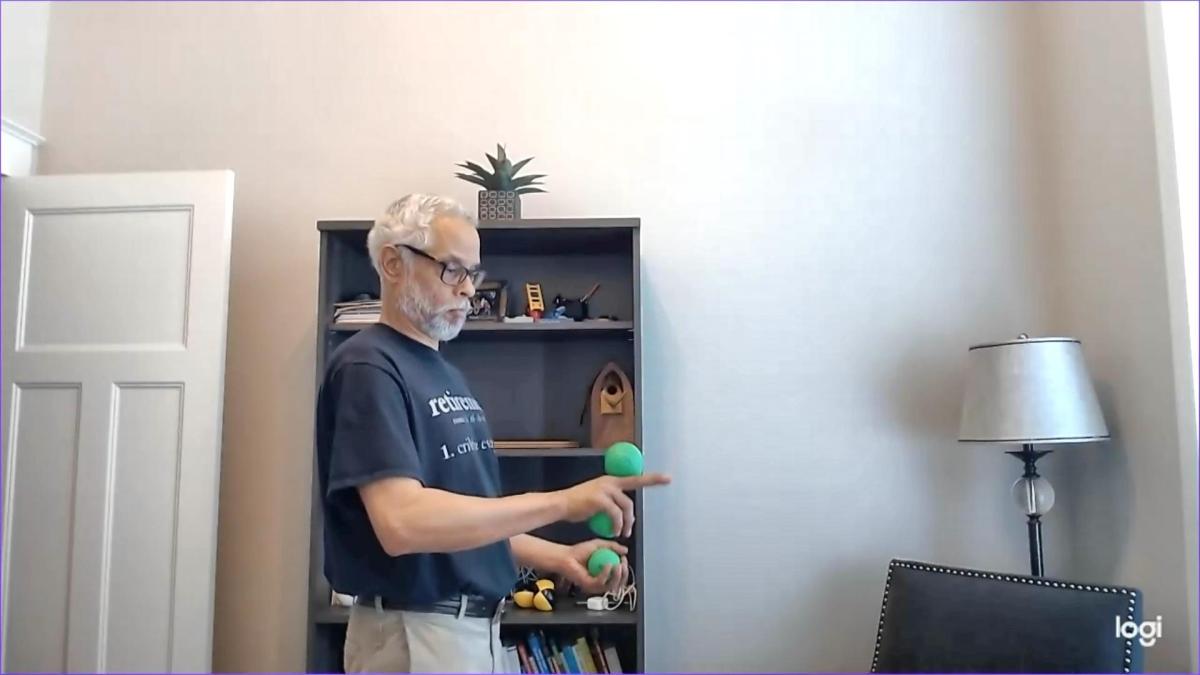
This is an update to my progress in ugly juggling tricks. I have a short video of the ones I’ve been practicing the most and one new one.

The new trick is called “Finger Plex” by JuggleMan, who is Daniel Menendez, an astonishing juggling expert you can learn more about at his YouTube site, YouJuggle. While I was trying to imitate it, I wished for a slow-motion clip of it. I hope I’m doing it right because I included a slow-motion clip of the trick in my video.

I have looked for a definition of “plex” pertaining to juggling. I haven’t found it yet. The word “plex” itself usually is described as a combining form in dictionaries, usually about building sections, for example “duplex,” “multiplex,” and so on.  Even the Scrabble dictionary gives the meaning as “multiplex.”

May is Mental Health Month

May is Mental Health Month. This would be a good month for me to practice giving myself and others grace. Here’s a link to a very nice article about grace. It’s really about giving each other a break from slamming one another and letting go—sort of like what you need to do in juggling. The author of the article on grace suggests a short list of ways to practice grace. They’re just the guidance I welcome for Mental Health Month and any other month for that matter.

The one about compassion and forgiving myself and others is difficult to do. I should do it anyway.

Buttoning my lip before criticizing, complaining, or venting other harsh utterances is a nice way to avoid the slamming mode I see in the news every day.

It’s tough not to expect the worst from others, especially when you read the news. Hey, let’s stop reading the news.

I don’t get much recognition, and that’s actually a good thing. Sometimes the last thing I need is attention.

I can think of many persons who have probably gently and silently helped me over the years.

While it may feel good to get my digs in on people I don’t agree with, it’s not satisfying for very long. People do remember how you made them feel.

Let’s give each other grace. We all need a break.

AI Probably Cannot Read Your Mind

I was fascinated by the news story about the study regarding the ability of Artificial Intelligence (AI) to “read minds.” Different stories told slightly different versions, meaning they either did or did not include the authors’ caveats about the limitations of AI. Recently there has been a spate of news items warning about the dangers of AI taking over mankind.

Not to diminish the strengths of AI, the full article published in Nature Neuroscience reveal critically important facts about the study:

  • Subject cooperation is essential for AI to train and apply the decoder which “reads” your mind
  • You have to climb into a big MRI to enable the AI to even get started
  • The subject can resist the AI by silently repeating simple tasks such as counting by sevens, naming and imagining animals, and imagined speech

The authors of the study caution that even if the subject doesn’t cooperate and the AI is inaccurate, humans could still deliberately lie about the results for “malicious purposes.” Nothing new under the sun there.

The current technology here would not be usable in the emergency room to assist psychiatrists ascertain suicide risk. It probably wouldn’t help psychiatrists and other physicians diagnose Factitious Disorder in patients whose main feature is “lying” about their medical and psychiatric disorders in order to get attention from health care professionals.

This reminds me of news stories about the propensity of AI to tell lies. One story called them pathological liars. I interviewed Google Bard and found out that it makes stuff up (see my posts about Bard). Does that mean that it’s lying? Humans lie, but I thought machines were incapable of deception.

Another interesting sidelight on lying is whether or not you could use AI like a lie detector. For example, the case of people who report being abducted by extraterrestrials. Travis Walton and co-workers reported he was abducted in 1975 and they all took lie detector tests. They all “passed.” There are many articles on the internet which essentially teach how to beat the polygraph test.

And if you can beat the AI by repeating the names of animals, it will not detect lying any better than a polygraph test.

I think it’s too soon to say that AI can read your mind. But it’s clear that humans lie. And it wouldn’t hurt those who are enthusiastically promoting AI to brush up on ethics.

Reference:

Tang, J., LeBel, A., Jain, S. et al. Semantic reconstruction of continuous language from non-invasive brain recordings. Nat Neurosci (2023). https://doi.org/10.1038/s41593-023-01304-9

Abstract:

“A brain–computer interface that decodes continuous language from non-invasive recordings would have many scientific and practical applications. Currently, however, non-invasive language decoders can only identify stimuli from among a small set of words or phrases. Here we introduce a non-invasive decoder that reconstructs continuous language from cortical semantic representations recorded using functional magnetic resonance imaging (fMRI). Given novel brain recordings, this decoder generates intelligible word sequences that recover the meaning of perceived speech, imagined speech and even silent videos, demonstrating that a single decoder can be applied to a range of tasks. We tested the decoder across cortex and found that continuous language can be separately decoded from multiple regions. As brain–computer interfaces should respect mental privacy, we tested whether successful decoding requires subject cooperation and found that subject cooperation is required both to train and to apply the decoder. Our findings demonstrate the viability of non-invasive language brain–computer interfaces.”

Reminder: NAMI Walk May 6, 2023 Terry Trueblood Recreation Area

This is just a reminder about the upcoming National Alliance on Mental Illness (NAMI) Walk on May 6, 2023 beginning at 8:30 a.m. at Terry Trueblood Recreation Area.

FDA Update on Covid-19 Annual Vaccine Strategy

On April 18, 2023 the FDA posted an update on the Covid-19 updated bivalent vaccine and the upcoming immunization strategy for this fall. According to the announcement:

“In June, the FDA will hold a meeting of its VRBPAC to discuss the strain composition of the COVID-19 vaccines for fall of 2023. Much like the FDA does yearly with the influenza vaccines, the agency will seek input from the committee on which SARS-CoV-2 variants and lineages are most likely to circulate in the upcoming year. Once the specific strains are selected for the COVID-19 vaccines, the FDA expects manufacturers to make updated formulations of the vaccines for availability this fall.”

Pineapple on Pizza Not a Problem

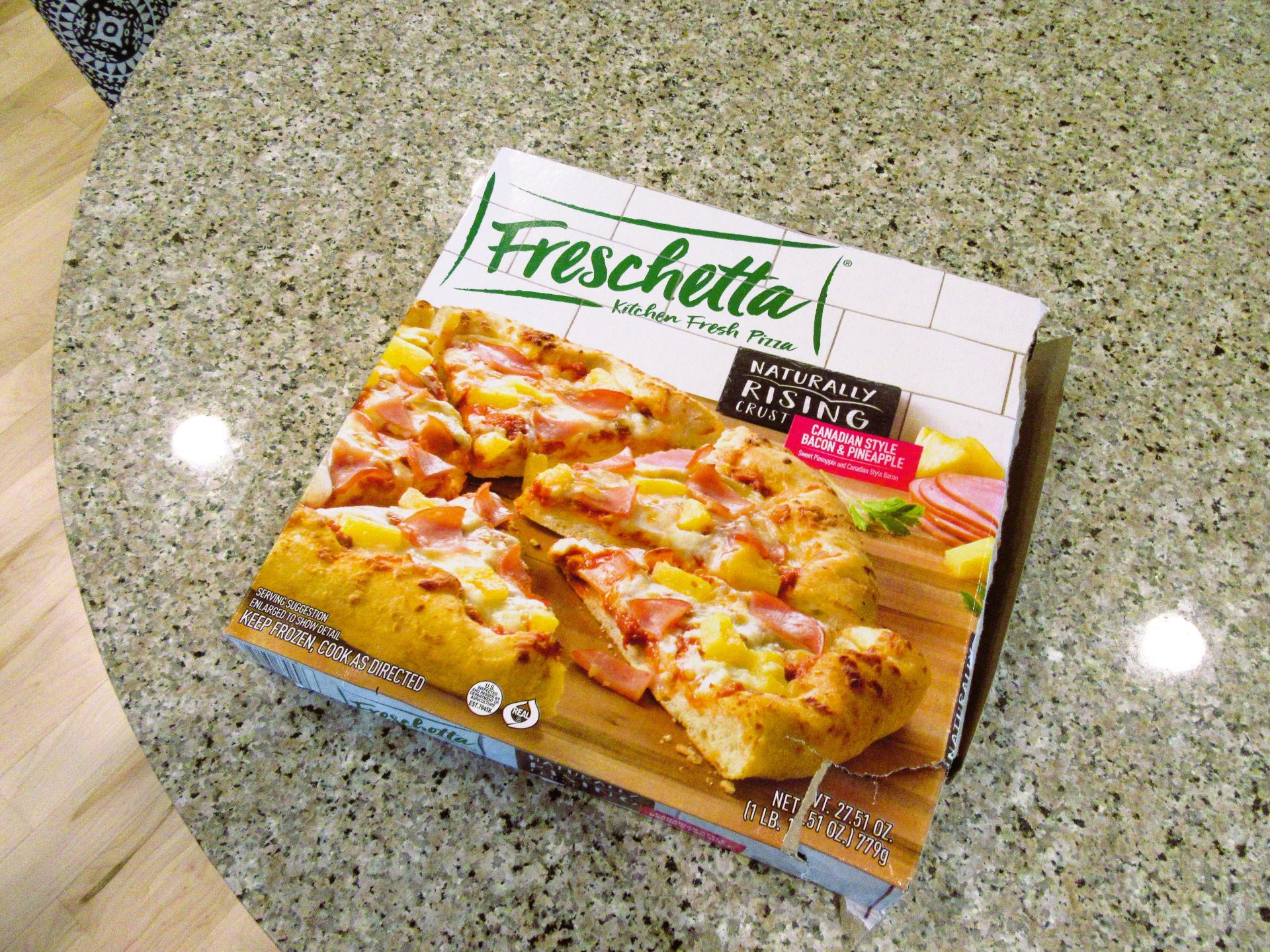
Today was the day for pineapple on pizza. It’s Freschetta and it was Sena’s idea. I want to make that perfectly clear. She said if George Dawson can put figs on pizza, I can at least try pizza desecrated by pineapple.

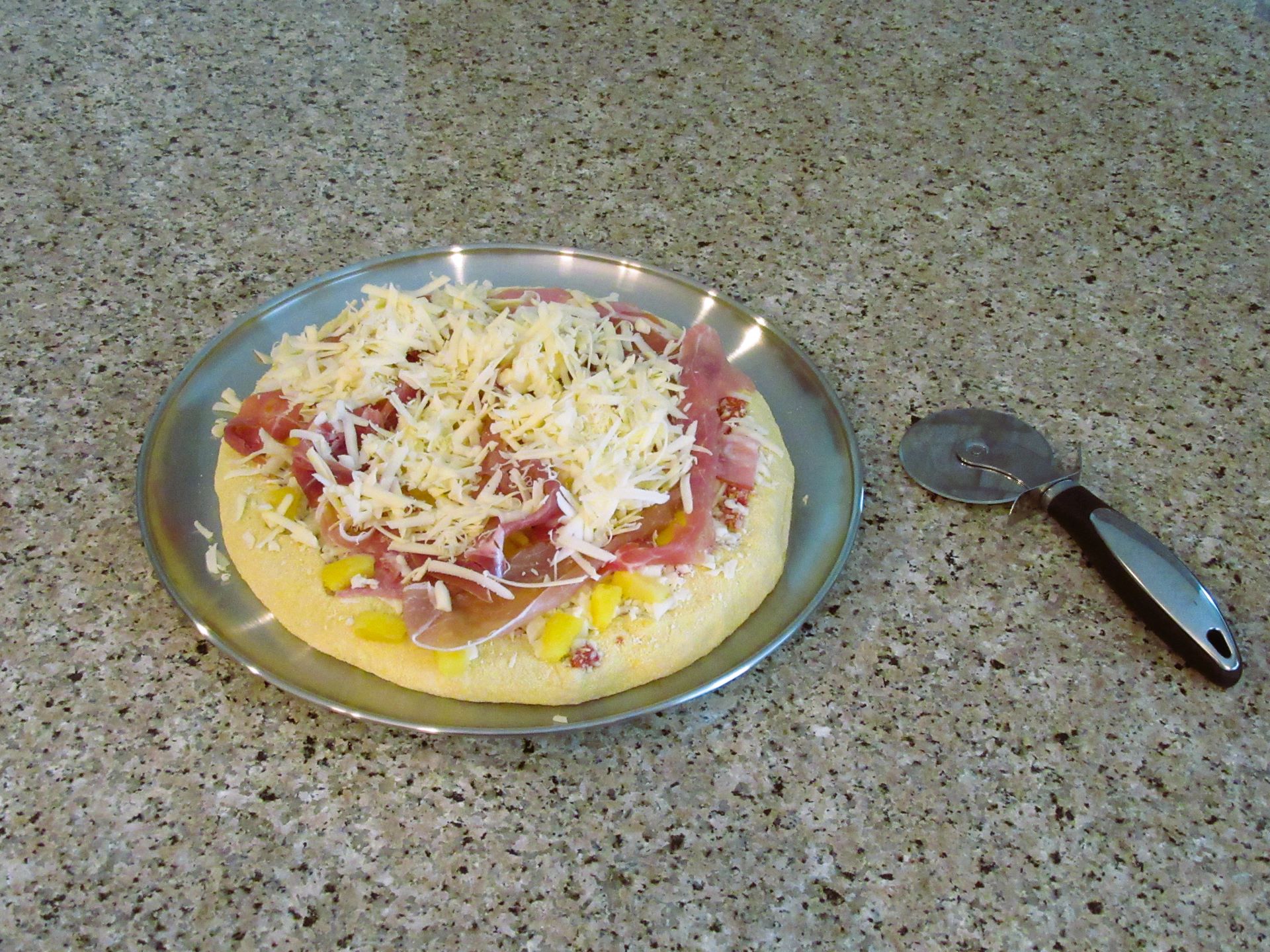
This is the first time we’ve ever had a pineapple pizza. Sena decorated it with extras, of course, as she always does. She added prosciutto and gouda, sliced grape tomatoes, pepper flakes, and mozzarella—and butter.

I wanted to find out who was the perpetrator, excuse me, inventor, of pineapple pizza. According to one recent story on the web, it was Sam Panoupolos, a criminal, I mean a cook, born in Greece who moved to Canada. He started this travesty, I mean recipe variation, in 1962.

The history is confusing because it has been called the Hawaiian Pizza, but it was created in Canada. It’s controversial, of course.

In fact, the President of Iceland touched off an international incident in 2017 by remarking that he would ban pineapple pizza. But when extraterrestrials abducted him and threatened him with a good old-fashioned probing unless he officially named pineapple pizza Iceland’s national food, he relented.

You won’t find the part about extraterrestrials in any history on the web because I just made it up.

Anyway, Sena bought the Freschetta because the other pizza we usually prefer, the Lotzza Motzza, was not available at the preferred price.

We weren’t that impressed. I didn’t really notice the pineapple, probably because there wasn’t that much on it. Neither one of us thought it had much flavor, despite Sena loading it with other ingredients. We’ll probably get the Lotzza Motzza pineapple pizza next time because the picture on the package looks like it has a lot more pineapple on it.

No extraterrestrials will be involved.

Gardening Works as Mindfulness Meditation

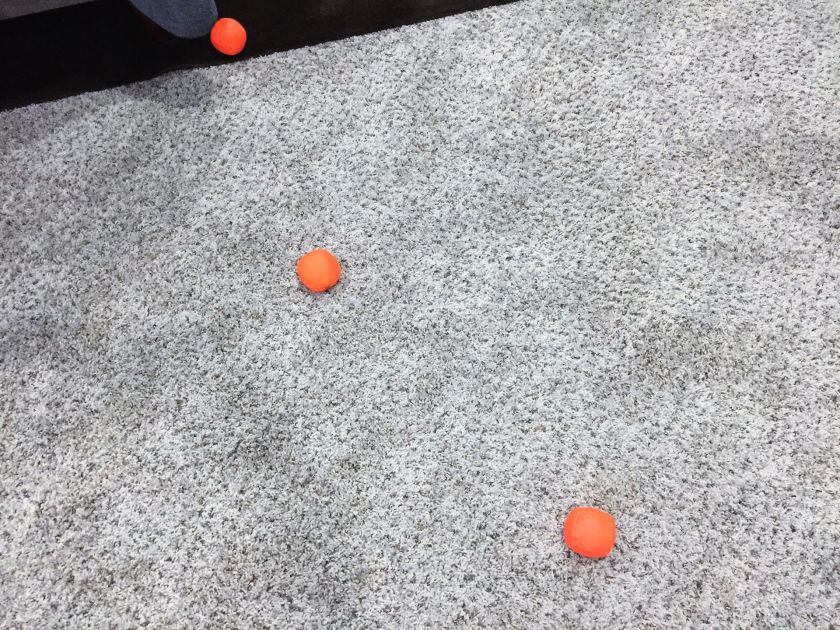
When I think of Sena learning to juggle and find her juggling balls on the floor where she drops them after a 2- or 3-minute practice, I now think of her gardening.

Pick up your toys, please!

I wondered if gardening could be a form of meditation and did a web search like I did yesterday for juggling. It turns out many people think of gardening as a kind of mindfulness meditation. It’s another one of those moving meditations, kind of like the walking dead meditation as I and some of my peers described it at a mindfulness retreat 9 years ago.

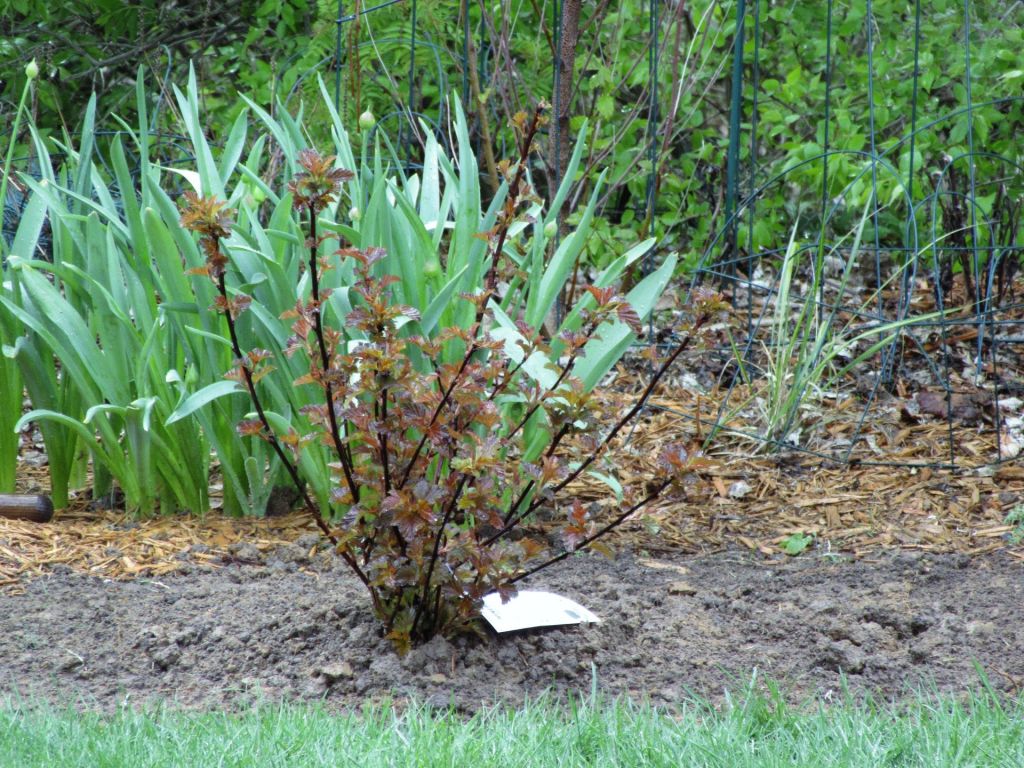
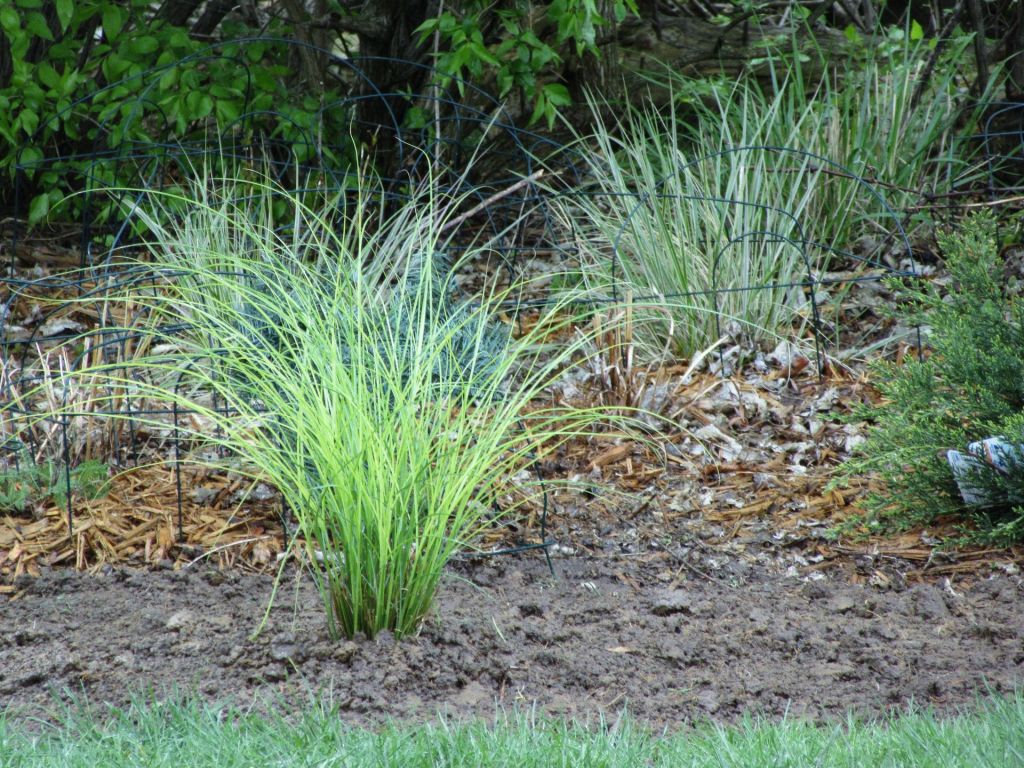
Sena has been gardening for a long time. I remember she turned our back yard into a park many years ago.

Sena Park

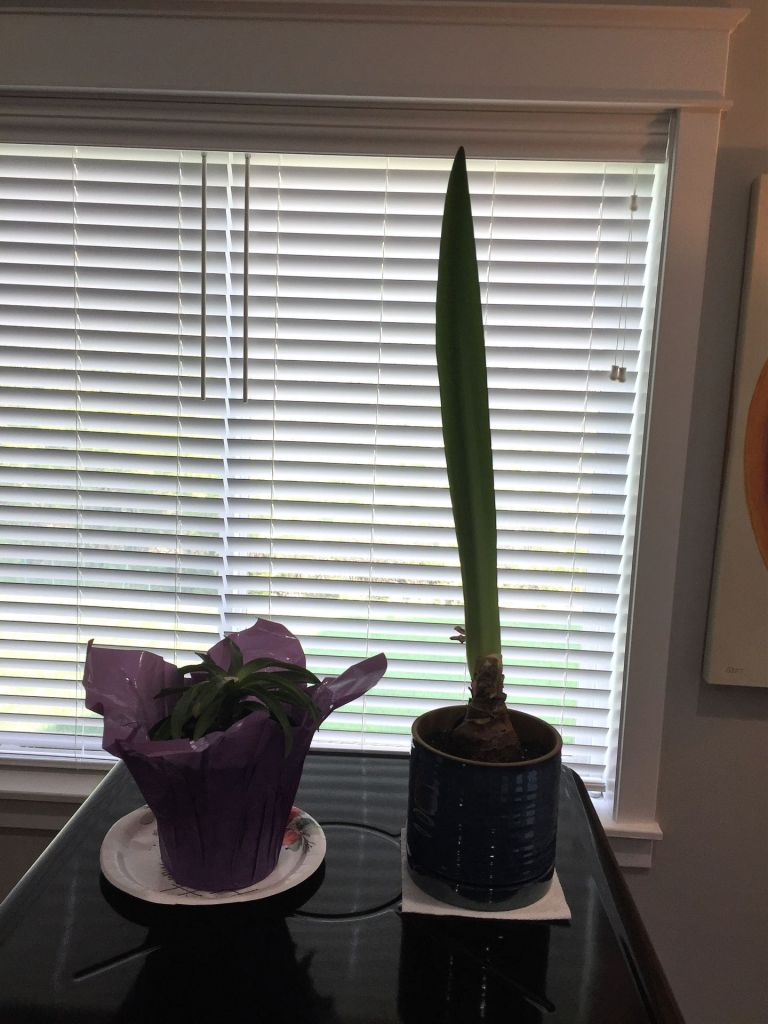
She is always on the lookout for something new to plant. I don’t always remember the exact names of them, but they’re very pretty. And the Amaryllis house plant stem is 22 inches tall!

I found one article on Headspace, “How to practice mindful gardening” which laid it all out about the subject. The key takeaways about mindful gardening:

  • Being fully present in the garden can help improve mood
  • In this setting, we might also become more aware and accepting of change
  • Check in with your senses before getting your hands dirty

Sena can work in the garden all day, sometimes in 100 degree plus heat—which I don’t recommend. On the other hand, she really gets a charge out of digging holes in the yard, pulling up turn to make room for more flowers and shrubs, and tilling the soil. She has kept the Amaryllis stalk thriving; it’s 22 inches tall! She’s not sure what to do yet with the Easter Lily plant, but she’ll figure something out.

I still do sitting meditation, which is what I learned from the Mindfulness Based Stress Reduction (MBSR) class. And I now have begun to think of juggling as a kind of moving mindfulness meditation.

On the other hand, I’m not keen on gardening in any sense, including mindfulness. Partly, it’s because a fair amount of dirt is involved.

I think it would be difficult for me to do gardening all day like Sena does. I could stick it out for about as long as she practices juggling—about two or three minutes. I would put my tools away, though.

I’m beginning to think of juggling practice as a kind of meditation, especially since I started to learn the shower juggling pattern. Doing that for more than 15-20 minutes at a time usually doesn’t result in much improvement—at the time. But I think I sprout more brain connections as I’m doing it because I notice gradually smoother timing and coordination.

In sitting meditation, counting your breaths is generally frowned upon. On the other hand, counting my throws (especially out loud) during juggling actually helps me focus my attention. I see each throw as sort of like a single breath. I still have to consciously adjust my posture so that the “horizontal” pass doesn’t end up being more like an underhand throw. And when I modify the throws so they stay in the so-called jugglespace (not so close the balls bounce off my head, not so far out front I have to lunge for them), and space the balls out just right, I find it’s easier to get more throws in.

I don’t think Sena counts the number of dirt clods she tosses aside.

Can Juggling and Mindfulness Meditation Complement Each Other?

I read this article about mindfulness today and it got me thinking about how juggling might be two different aspects of the same activity.

I think they both help focus the attention. There a number of articles on the web which essentially say that juggling can be a sort of meditation.

I know hardly anything about the default mode network (DMN) in the brain, but from what little I know, I suspect that both juggling and mindfulness meditation could disrupt the DMN. There’s a published study showing that meditation tends to reduce DMN activity. That would be a good thing. The DMN has been described as a brain network which may tend to lead to mind wandering and self-related thinking. That may not be the healthiest way to use your time.

I’ve been doing mindfulness meditation for about 9 years now. I still sometimes wonder whether I’m “doing it right.” On the other hand, when I miss more than a day or two of mindfulness practice, I notice that I feel more edgy and out of sorts. When I return to mindfulness practice daily, I notice less of that scattered and nervous mental state.

I took up juggling last October and I notice that it does something similar to mindfulness. I have to pay close attention to what I’m doing while I’m juggling. Otherwise, I just drop balls constantly.

Just searching the web with the question “Is there a juggling meditation?” turns up quite a lot of articles. Some suggest that juggling is a kind of “moving meditation.” That reminds me of the walking meditation, which I’ve referred to as the “walking dead meditation,” based on my Mindfulness Based Stress Reduction (MBSR) course in 2014. At the retreat toward the close of the course, we did this walking meditation thing, which for all the world seemed to more than a few learners as resembling the way zombies walk.

I think I’d have a tough time trying to juggle like a zombie walks. You can’t be herky-jerky when you juggle, you know. I guess that’s why you never see a zombie juggle. Zombies don’t meditate either, probably because they’re too busy looking for brains to munch on.

Now I get the urge to juggle when I feel the need to clear my head. It’s reinforcing for learning new juggling tricks. Sena is learning juggling now and her efforts remind me of the challenges I had. One of them is learning how to let go of the damn ball in a pattern like the three-ball cascade. You get stuck at certain stages. I hit several walls learning the cascade. And then there came a day when I just started doing the pattern right, often because I just let go.

That reminds me of a quote by Juggleman about juggling, “Doing it wrong makes you an artist.”

I’m probably doing mindfulness the way I ought to be “doing” it. Nowadays, the way I judge that is by noticing I feel better when I stick to it.

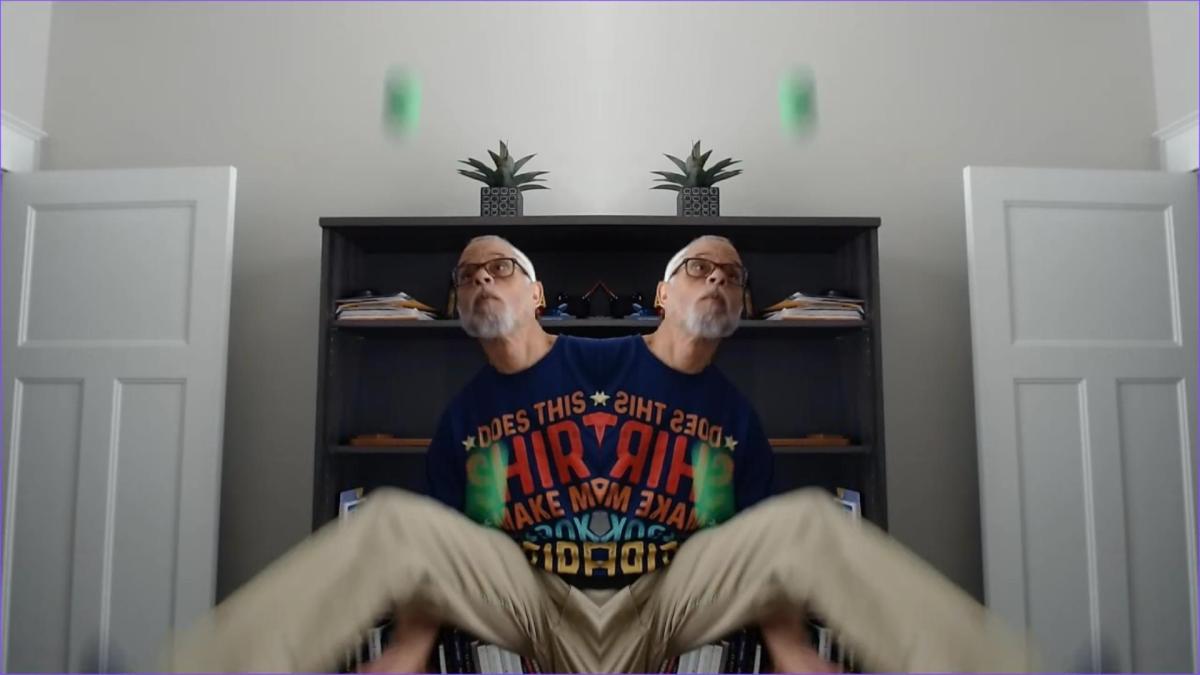
Does This Shirt Make Me Look Retired?

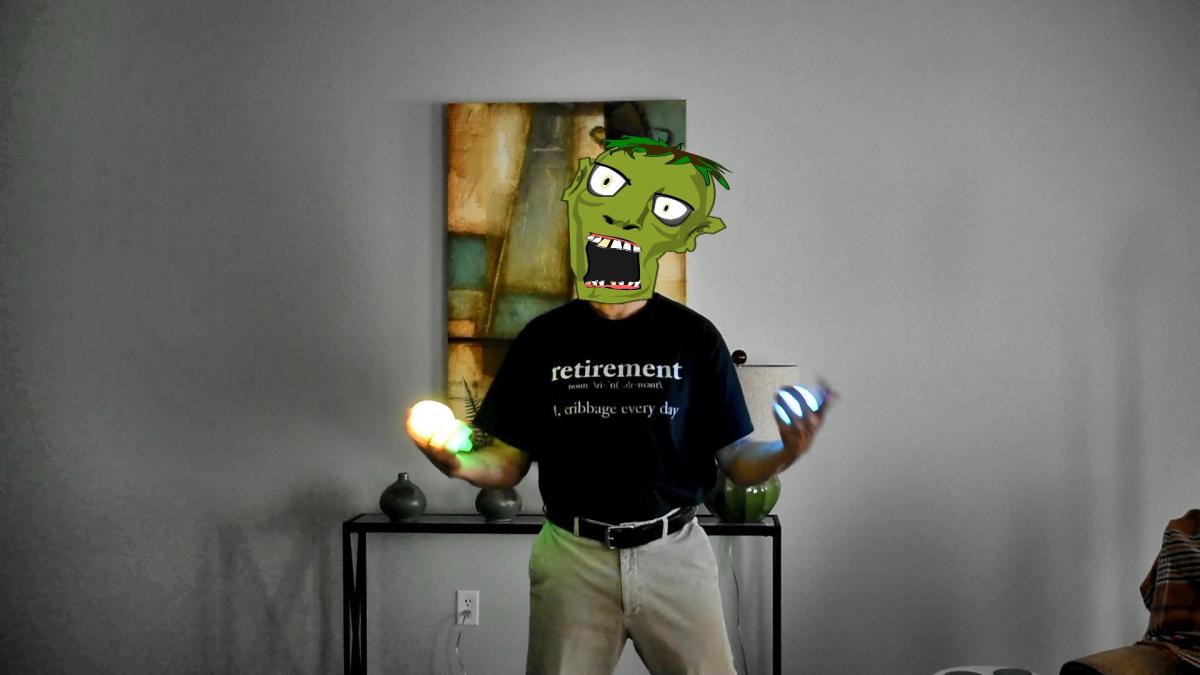
Sena got me a new shirt that says: “Does This Shirt Make Me Look Retired?” It’s the greatest. No, she’s the greatest.

So…does it? Think carefully about your answer.