The Flag of Honor at Fire Department No. 4

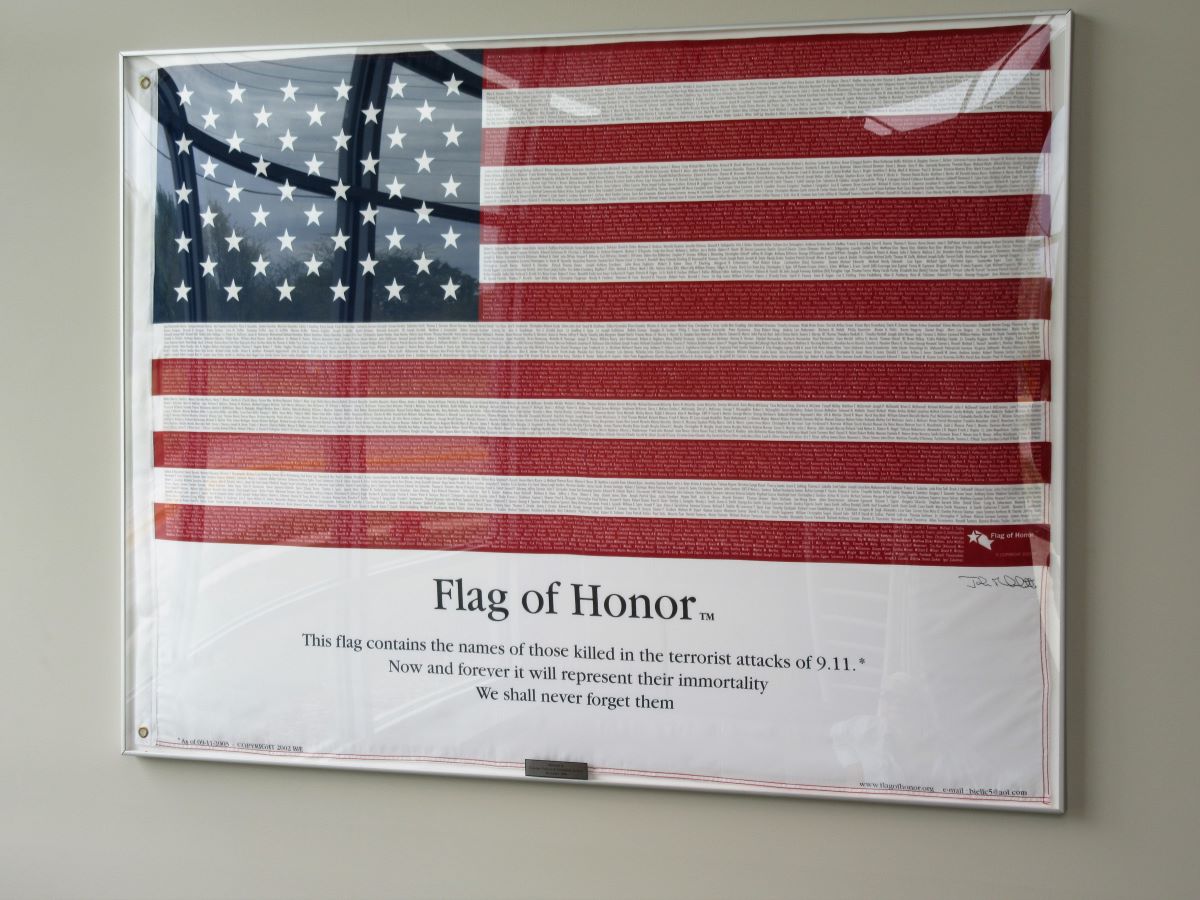
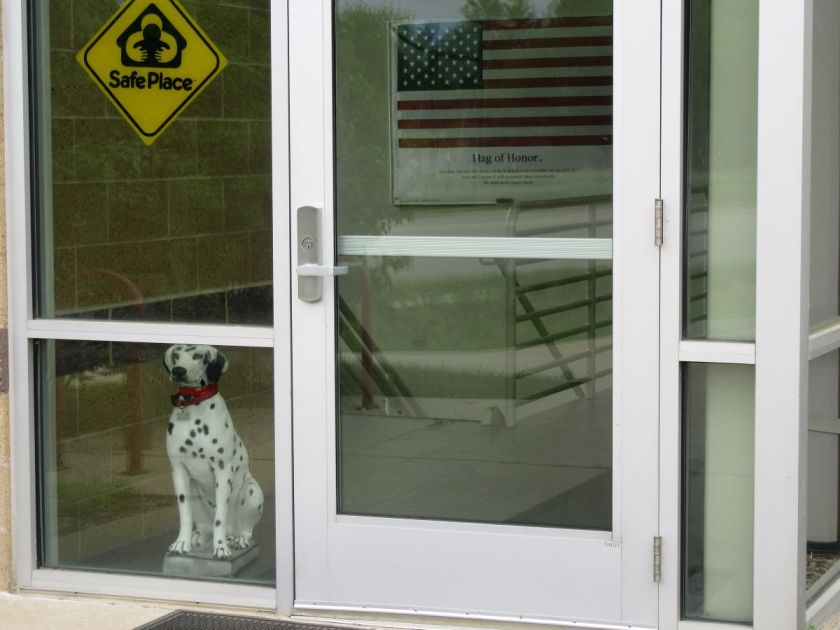
We took a walk this weekend on Scott Boulevard and eventually found our way to Fire Station No. 4. At first, we were struck by what looked like a real Dalmatian apparently sitting just inside the door. It was a pretty good sculpture. Just behind it was a large American Flag hanging on the wall. Below it was the title “Flag of Honor.”
One of the firefighters noticed us and welcomed us inside. He talked a long time about the Iowa City Fire Department and what they did. They responded to a lot of medical calls. In fact, those were the most frequent calls, fires not so much. He graciously answered our questions, including the one about The Flag of Honor on the wall. It’s to honor the victims and the heroes of the September 11, 2001 attack on America.

Later, I found out more on the web about the Flag of Honor. Over 800,000 Flags have been distributed across America. They’re in many places: public buildings, private homes, police and EMS stations, and firehouses.

I remember where I was on September 11, 2001. I was running up the stairs from the lower level to the first floor. I think I had just finished a psychiatric consultation and I was probably on my way to another one, or to my office. It was my usual routine. Like most general hospital psychiatric consultants, I was a lot like a firefighter, going from one urgent consultation to another, to the critical care unit, the emergency room, and others. My pager was like a fire alarm and off I would go.

 I was on the stair landing just going up to the first floor. The stairs overlooked a lobby and the television on the wall was showing a video of one of New York City’s Twin Towers on fire, smoke all around it.

I stopped in my tracks and watched, not comprehending the scene. I can’t remember if the volume was high enough for me to hear the reporter. I don’t think it was. I just saw the fire and the smoke and at that moment I didn’t know what happened. That news I wouldn’t hear until later.

And then much later, in the summer of 2017, Sena and I took a vacation in New York City. Like many tourists, we saw the reflecting pools and Sena took a snapshot of me by the Callery Pear—the Survivor Tree.

The firefighter finally had to excuse himself, because there was somewhere he had to go, something he had to do.

He had probably been busy when we showed up, remarking on the Dalmatian which looked so lifelike, taking pictures of the Flag of Honor, asking questions about what Fire Station No. 4 does, listening to his answers, admiring his patience, his sense of humor, his sense of duty—and thanking him for all of it.

The Written Word is Blurred

I ran across this quote the other day: littera scripta manet. The English translation is, I think, “the written word endures.”

Not to dwell too much on the prosaic side of the issue which is that, for me, often the word has been blurred because of problems with my vision. I just had retinal detachment surgery a little over a month ago and I’m making a good recovery. But early on I had a lot of trouble with blurry vision, tearing, and light sensitivity.

Just the other night though, I was able to read a section of a book without having as much blurred vision as I did before the surgery when I looked up from the page at something distant. I’ve been wearing progressive lenses for many years and it probably got worse because of the detached retina, which was chronic or maybe acute on chronic.

Now to get beyond trivialities, I saw the quote above in an issue of the University of Iowa publication, Iowa Magazine. It was in the last Old Gold column of University Archivist, David McCartney. He retired in March of this year. The title was “Old Gold: The Enduring Power of the Written Word.”

He notes the Latin expression is on the seal of the U.S. National Archives and Records Administration. McCartney’s point is that technology can undermine as well as strengthen the power of the written word. He identities Horace as the originator of the expression, “the written word endures.”

I went pecking around the internet and found out that a lot of people think an educator named Neil Postman was the originator of this quote. What makes me doubt this is that the original is in Latin, which suggests a much older origin. He was born in 1931 and died in 2003. Interestingly, Postman criticized the effect of technology on thought and culture.

A website that seems dedicated to explaining English translations of Latin indicates that the quote comes from a longer expression: Vox audita perit, littera scripta manet, which translates to “the spoken word perishes, but the written word remains.” One contributor says the originator was Horace. Another insists that “littera” does not mean word at all, although concedes that the proposed translation is correct, nevertheless.

Further, there is a Wikipedia entry which cites the Latin expression differently, “verba volant, scripta manent,” which in English is “spoken words fly away, written words remain.” The author says the proverb originated from a speech of senator Caius Titus to the Roman Senate.

Anyway, McCartney points out that the world is becoming increasingly digitized and that the average website lasts only a little over two and a half years. Some important digital records have been lost, unreadable (blurred?) because of improper management.

My previous blog survived about 7 years but is lost. Maybe that’s not such a bad thing. My current blog is a little over 3 years old. So far, I’m beating the odds as far as typical longevity, but is it worthwhile?

Both written and digital records have strengths and weaknesses in terms of durability. And deciding what to preserve and how is essential to any society. We need good stewards to help us decide.

Good luck in your retirement, David McCartney. I’m sure the University of Iowa treasures your stewardship. Let the written word endure unblurred.

Walking the Clear Creek Trail—Looking for a Hamburger

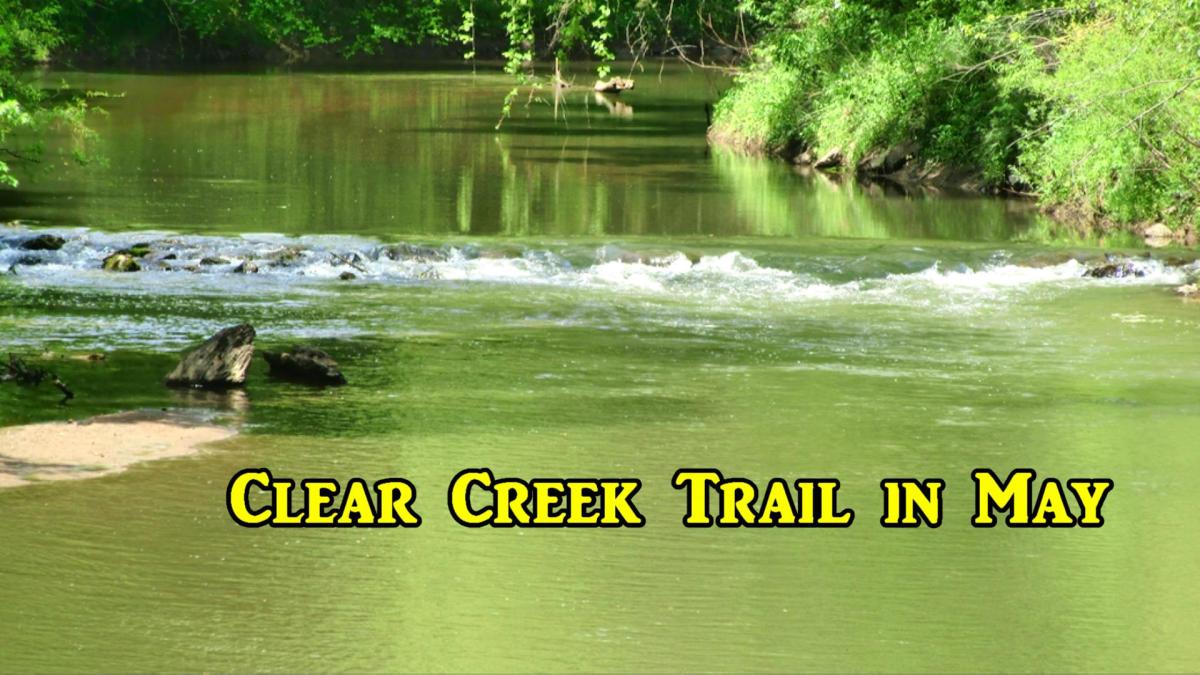
Recently, we took a walk on the Clear Creek Trail in Coralville. There are always a lot of birds out and they all have different songs. We hear more birds than we see because the trail is crowded with trees.

On the other hand, the highlight of the afternoon was stopping for lunch at the Wendy’s drive-thru. They’re selling that $5 Biggie Bag. We ordered a couple of those and the cashier who took the order asked what we kind of burgers we wanted. She rattled off the choices so fast.

I guess we weren’t listening. I think you get 3 choices for burgers (although I cheated for this post by googling it): junior bacon cheeseburger, crispy chicken BLT, or a double stack. You also get chicken nuggets, fries, and a drink.

Sena said, “I want a vegetable hamburger, two of them.” I had to laugh when the clerk was silent for a long moment—and repeated “vegetable hamburger” in a puzzled-sounding voice. But I give her credit; she made a quick recovery and said “Oh, do you mean you want the junior bacon cheeseburger?”

Sena just said, “Oh yeah!”

I’m pretty sure the cashier was having a moment about the “vegetable hamburger” bit. It’s likely a dated term and many younger people might think it means a meatless sandwich.

In fact, when I did a quick internet search asking “does anybody know what a vegetable hamburger is these days?” I got all kind of hits for plant-based burgers. No hits for a real meat hamburger with tomatoes, lettuce, onion, and pickles. A veggie burger nowadays is defined as a “burger patty that does not contain meat.”

And that reminded me of the Wendy’s 1980s ad campaign with the “Where’s the beef!” lady starring in the commercials, which I’m pretty sure nobody but baby boomers remember either.

And then there’s the Wendy’s new Biggie Bag commercial. It’s the one where a bunch of Wendy’s workers are singing about the Biggie Bag and a customer asks, “Is that a real song?”

I couldn’t understand the lyrics in the jingle and had to google the YouTube video. Only one of the commenters almost nailed it, but I think it’s:

“You got that bag; you got a biggie bag.”

People really want that jingle to be a real song.

Okay, so that’s a long way from the walk on the Clear Creek Trail. So be it.

Jumping Worms are Making Iowans Jumpy

Well, the jumping worms are making Iowans jumpy lately, even though the critters have been reported around here since at least 2018 by the Iowa Department of Agriculture & Land Stewardship. All of a sudden, they’re alien invaders, slithering like snakes and jumping into your gardens.

Iowa State University wants us to take pictures of every jumping worm we see, so you have your cameras ready. They’re as popular as aliens from distant galaxies, but said to be far more destructive of the land, gorging themselves on leaf litter, and according to the Iowa Department of Agriculture,“…exposing the land to compaction, increased water runoff, erosion, and clears the way for invasive plants to take root on the newly cleared soil. This results in less diversity of native plants, and thus less diversity of animals.”

They thrash around and look pretty mad. There’s even a YouTube video of them whipping around in a frenzy.

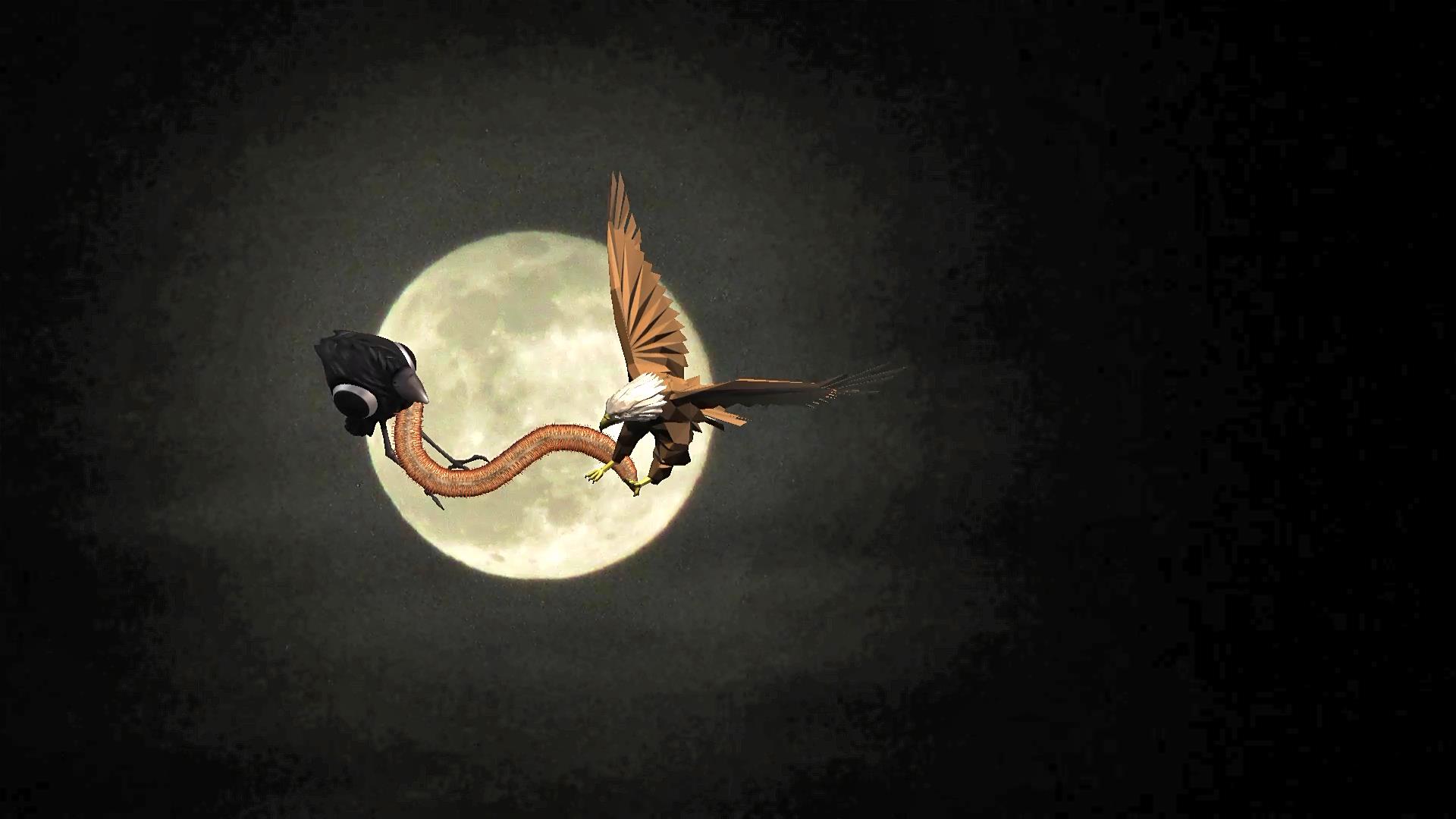
I wonder if we could control them with Canadian Geese. They eat earthworms. I don’t know for sure if they eat jumping worms, but I don’t see why not.

There are a couple of problems with using geese, though. They hiss like snakes when you get too close to their young. Their long necks even remind me of snakes. And they like to spread their poop all over sidewalks and driveways.  

Maybe the jumping worms would be great for fishing. They’d whip around in the water so wildly they’d be sure to attract any hungry fish.

Here’s something ironic. Maybe we could use the jumping worms to catch snakehead fish, which is another invasive species. Catch the snakehead with snake worms and serve the snakeheads for dinner. Yum. I’ll have an egg salad sandwich, please.

Heads Up from University of Iowa Health Care: Why Vaccinated People Still Catch Covid-19

Some people still get Covid-19 symptoms despite being vaccinated. University of Iowa Health Care infectious disease expert, Dr. Dan Diekema, MD, MS, explains why.

Bigfoot on Blood Moon May 2022!

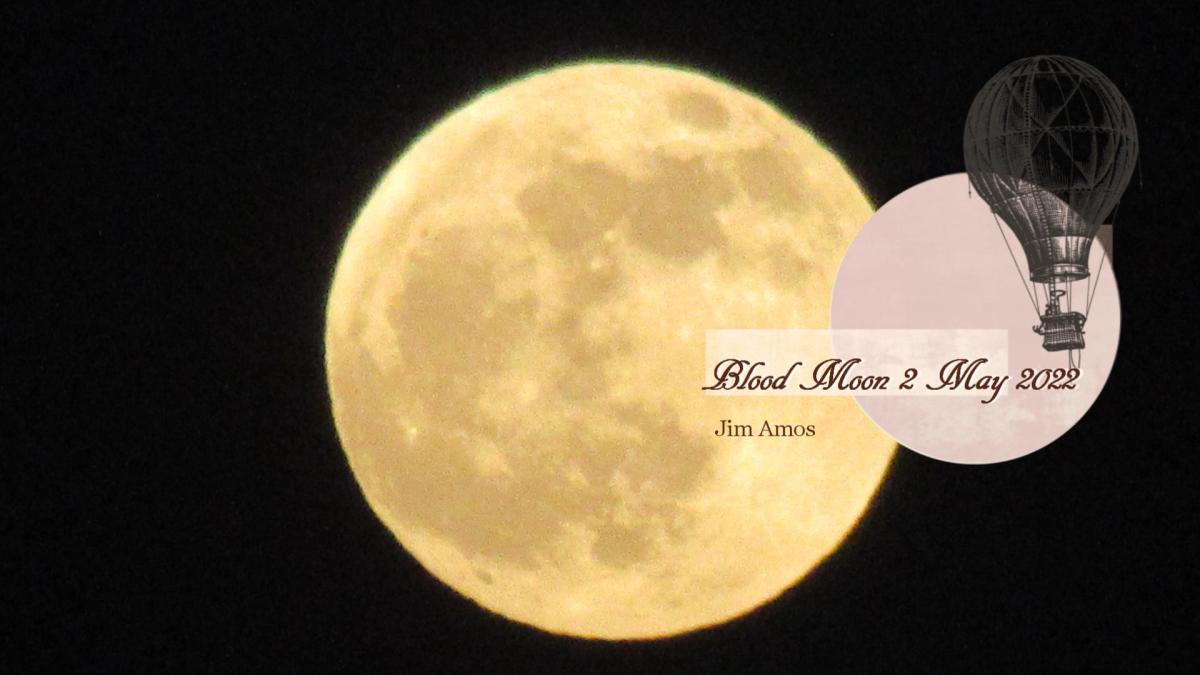
For the first time we watched a total lunar eclipse on the night of May 15, 2022. It was a cool night. I used two cameras in an effort to make the most of my first effort in getting pictures of the event. I’m a novice and I’m sure it shows, of course. We had a lot of fun.

I used a point and shoot Canon Powershot SX610 HS, a small camera we’ve had for years. And I used a Nikon D3400 on a tripod. I started taking pictures shortly after 8:30 PM.

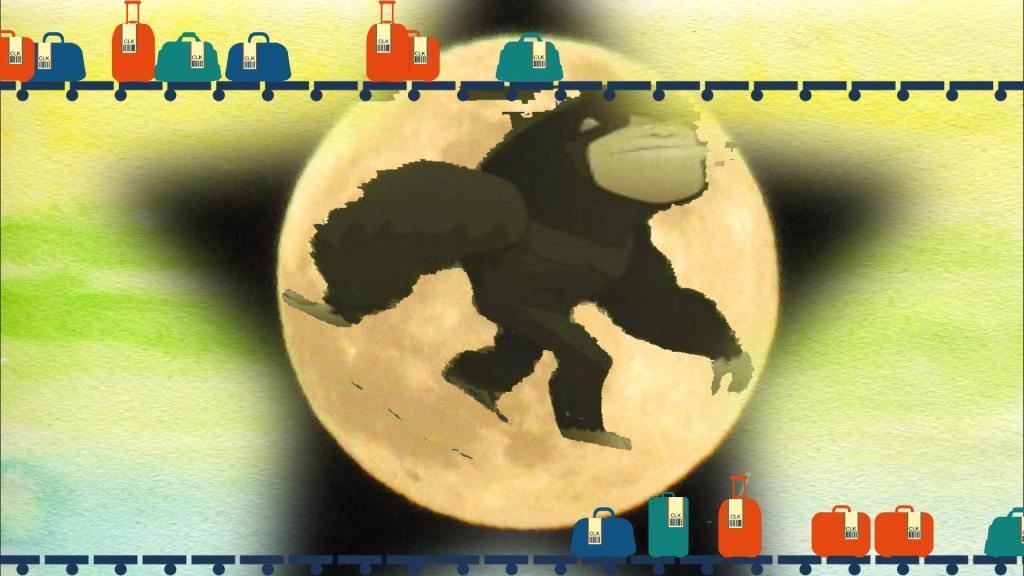
I’m not used to the night noises outside and could not make out what sounded likely raspy growling. At first, I thought it was Bigfoot and actually thought I got a shot of it stalking across the moon where it teleported along with its luggage. Bigfoot is actually an interdimensional critter. And they don’t travel light.

Bigfoot on the moon before the eclipse

On the other hand, Sena thought the noises were made by White Tail deer and she was right. I found a YouTube that showed them making exactly the same noises we heard. Later I heard a Barred Owl hooting.

Blood Moon shot with a Nikon D3400 on a tripod
Blood Moon shot with a Canon PowerShot

Short History of C-L Psychiatry Fellowship at Iowa

I read a short article, “The case for pursuing a consultation-liaison psychiatry fellowship” by Samuel P. Greenstein, MD in Current Psychiatry (Vol. 1, No. 5, May 2022). After 3 years as an attending, he found his calling as a C-L psychiatrist, especially after getting teaching awards from trainees. But when he applied to academic institutions for position as a C-L academic psychiatrist, people kept advising him to complete a fellowship training program in the subspecialty first. He gave it careful thought and did so, even he called it going “backwards” in his career.

On the other hand, he believes C-L fellowships will help meet the challenges of addressing rising health care costs and improving access to what most people see as the critically important goal of providing access to integrated mental health and medical care.

I’ve been retired from consultation-liaison psychiatry for two years now. I get an enormous sense of achievement on the rare occasions when I hear from former trainees who say things like “For me you were…one of the most outstanding attendings I had at my time at Iowa.” And “I can at least take comfort that University of Iowa is still at the forefront of psychiatry.”

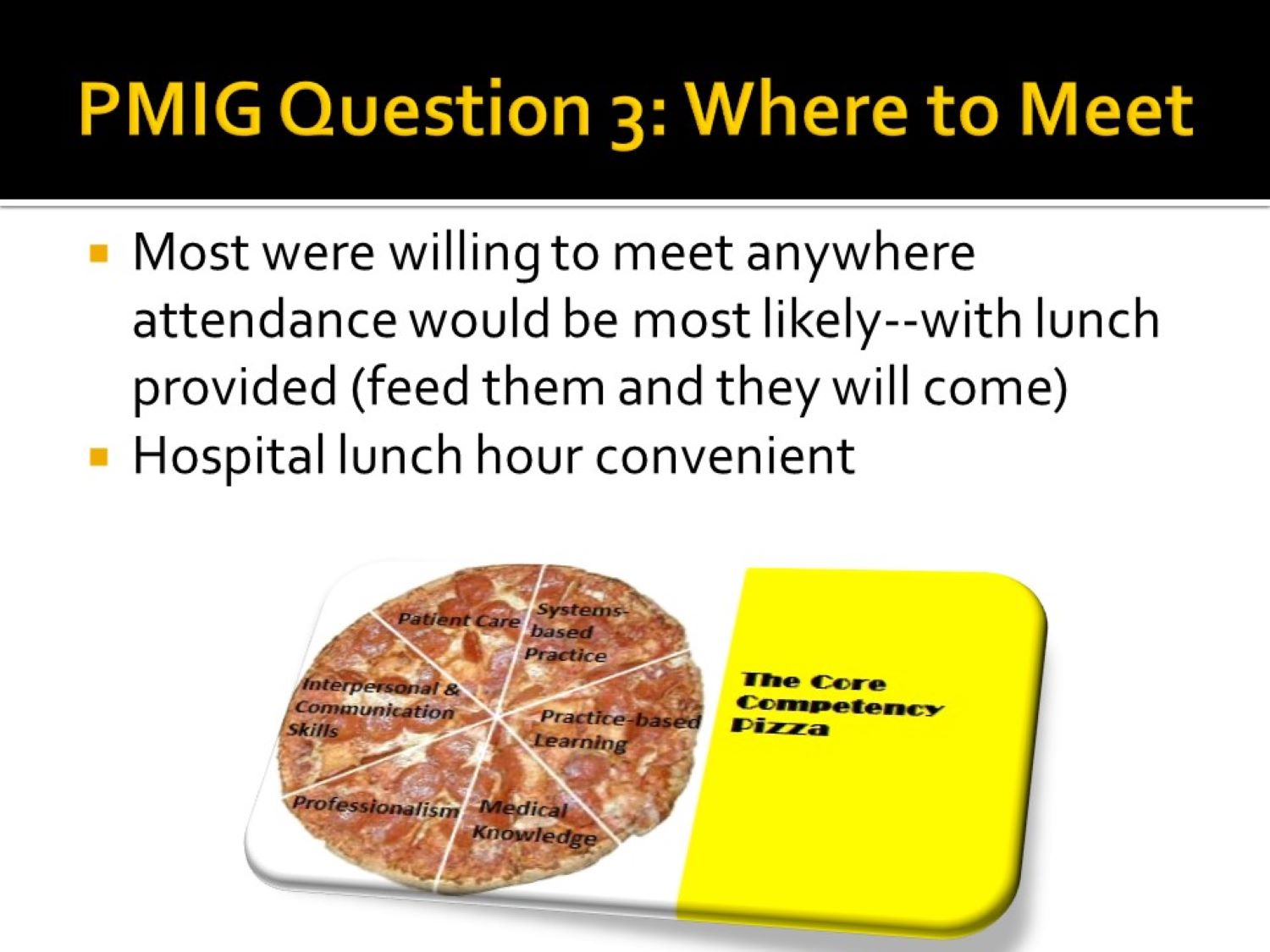
Several years ago, one of the residents suggested starting a Psychosomatic Medicine Interest Group (PMIG). This was before the name of the subspecialty was formally changed to Consultation-Liaison Psychiatry in 2018. I know many of us were very pleased about that.

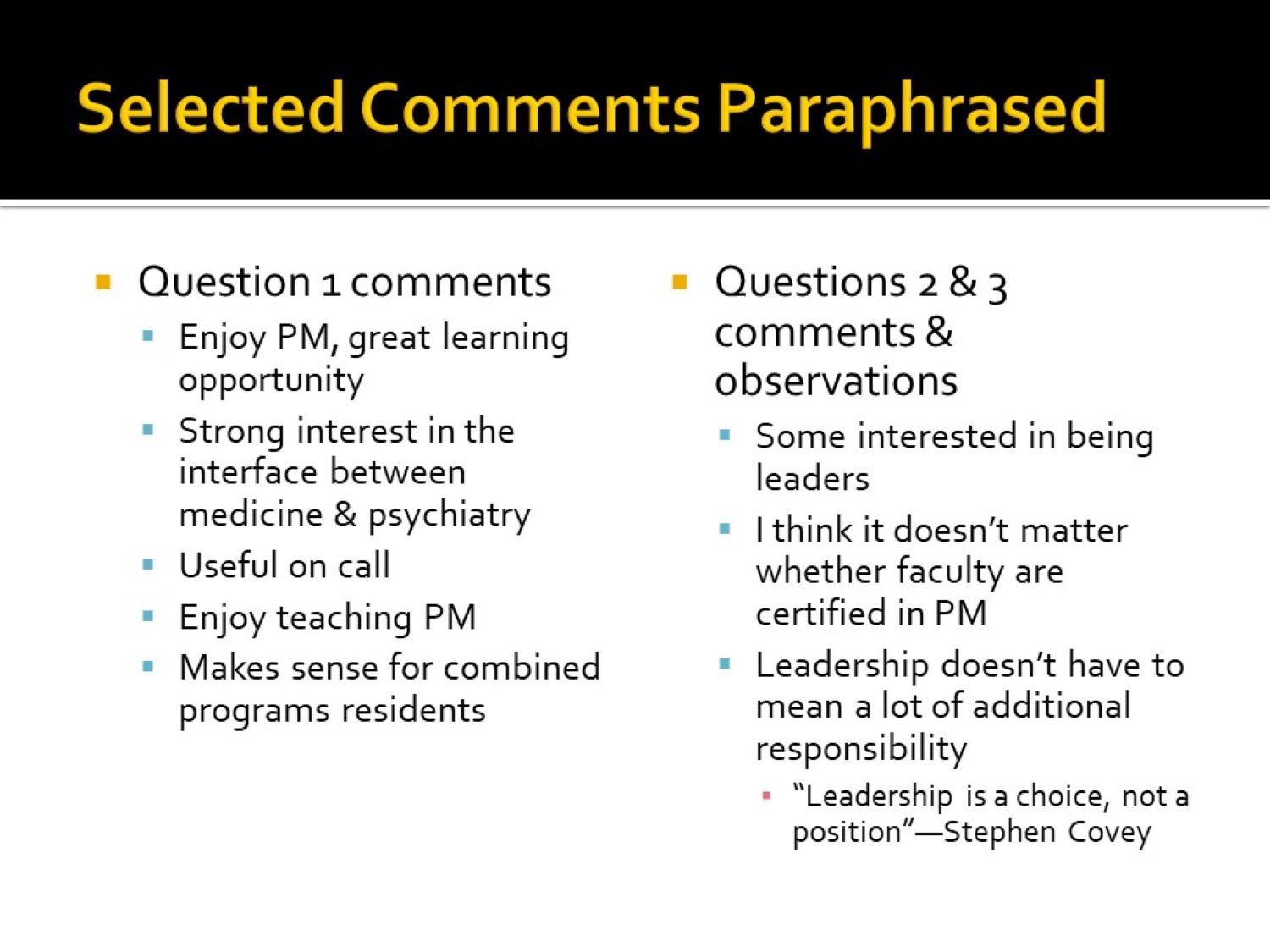
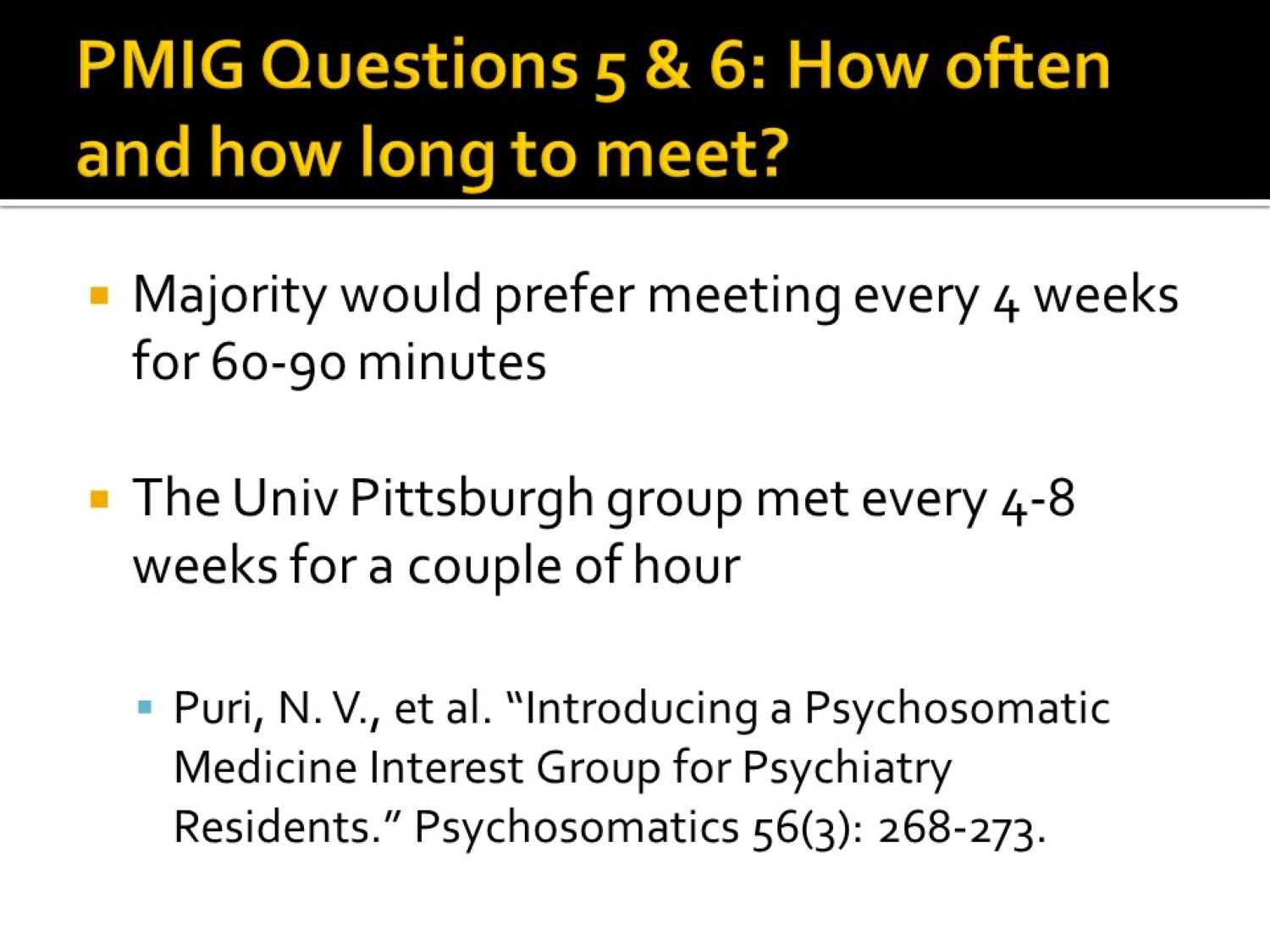
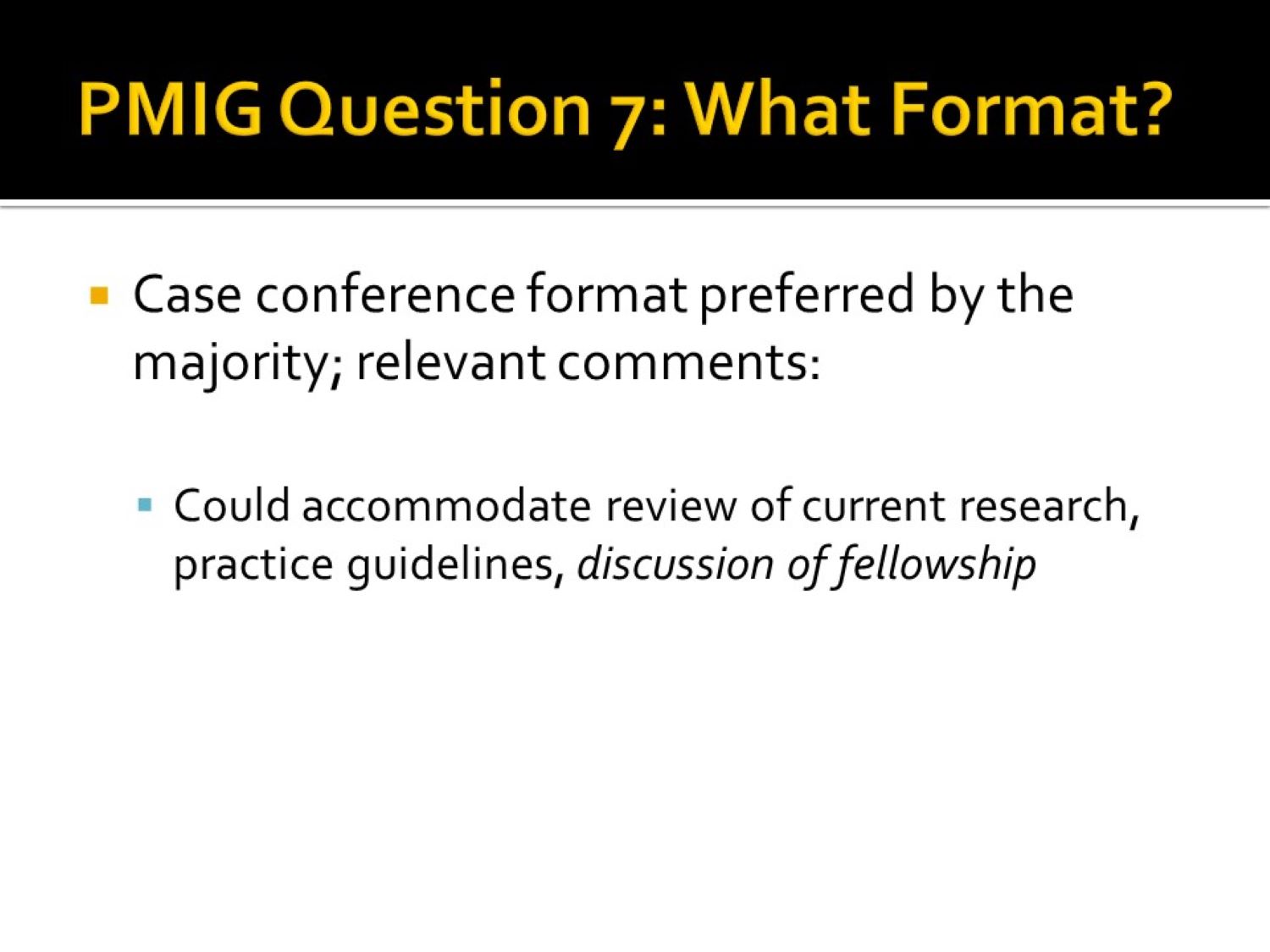
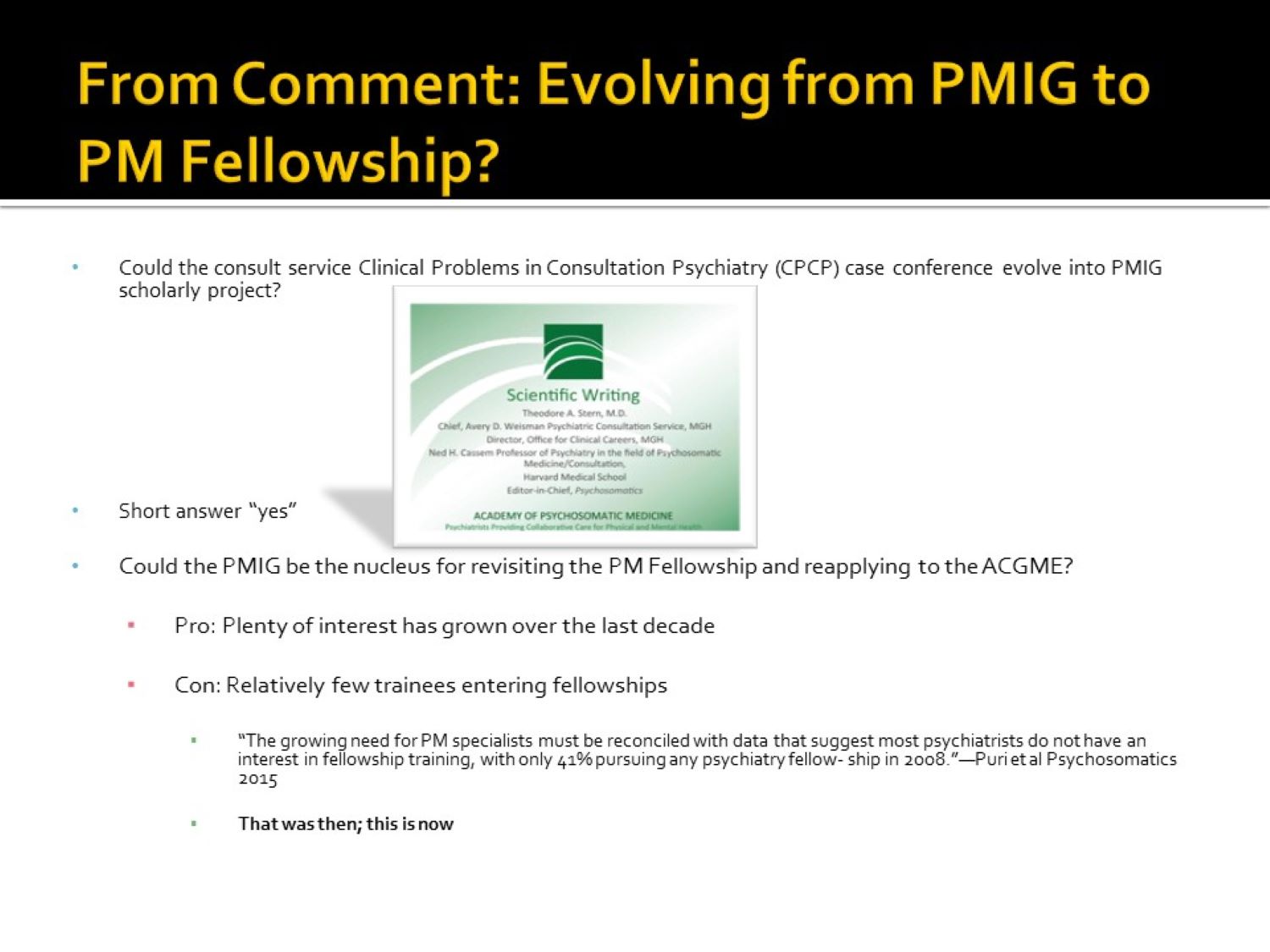
I sent a short survey (see the gallery below the slide show) to the faculty and residents in an effort gauge support for the idea and readiness to participate. I used a paper published at the time to guide the effort, (Puri NV, Azzam P, Gopalan P. Introducing a psychosomatic medicine interest group for psychiatry residents. Psychosomatics. 2015 May-Jun;56(3):268-73. doi: 10.1016/j.psym.2013.08.010. Epub 2013 Dec 18. PMID: 25886971.).

You’ll notice on slide 4 one faculty member’s comment, “I think it doesn’t matter whether faculty are certified in PM.” As Dr. Greenstein discovered, it probably does matter, at least if you want to be board certified.

I was initially certified by the American Board of Psychiatry & Neurology (ABPN), but I objected to the whole Maintenance of Certification (MOC) program, as did many other psychiatrists. I eventually declined to continue participating in the MOC process. However, I notice that the Delirium Clinical Module that I and a resident put together is still accessible on the ABPN website.

Although response numbers were low, there was clearly an interest in starting the interest group. There was also an incentive to reapply to the ACGME for approval of a Psychosomatic Medicine (Consultation-Liaison Psychiatry now) fellowship.

My attempt years earlier had been frustrating. While it was approved, I couldn’t attract any fellows, forcing me to withdraw it without prejudice (meaning another application for approval could be attempted). Fortunately, that situation changed later. The Psychiatry Department at The University of Iowa now has an early career C-L psychiatrist who graduated from the reinstated C-L fellowship.

As the saying goes, “What goes around comes around.” Although the origin of that saying might have originated in the 1970s, at least one person thought his grandmother had her own version in the 1950s: “You get what you give.”

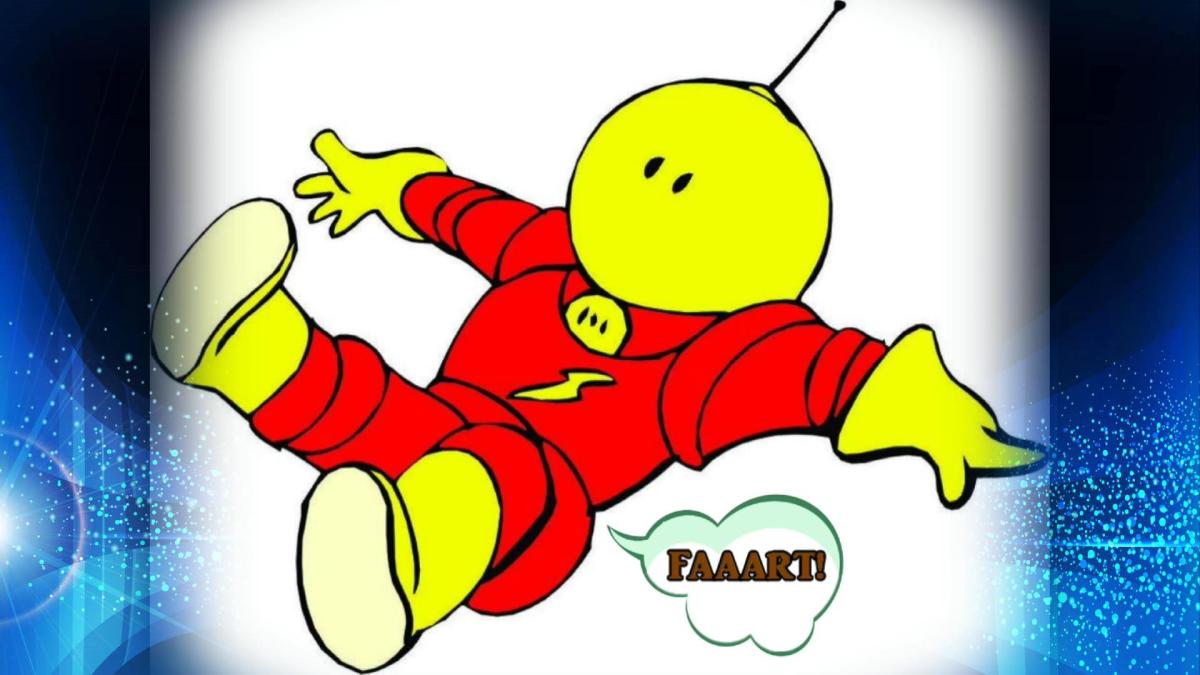
Do Blood Moons Make Aliens Fart?

I have a couple of questions about the total lunar eclipse that’s occurring tonight. First, where’s the best place to observe it? If you consult the best advice on how to watch it, you learn that the first phase (which in Iowa City, Iowa happens at 8:32 PM) is visible in the Southeastern part of the sky and at 3.4 degrees altitude.

Great, it sounds like I need to be where there are no trees or buildings and lying on my belly. The next phase is at 9:27 PM, which is not much better because the altitude is only 11.4 degrees, at 129 degrees azimuth. I’m still learning this jargon, but again, do I need to be able to fly above the tree line to see the first couple of phases?

Should we climb up on our roof to see the lunar eclipse?

Any suggestions are welcome. The next question involves the well-known strangeness that happens during eclipses. Insects and other animals can get goofy about their diurnal cycles and, oh yeah, aliens get really gassy and develop uncontrolled farting.

The Alien Flatulence Syndrome (AFS) is well-described in the scientific literature. No, I’m not going to have a list of references at the end of this post, and it’s for the same reason Beetlejuice won’t tell Lydia his name:

“Because if I tell you, you’ll tell your friends, your friends are callin’ me on the horn all the time, I gotta show up at shopping centers for openings and sign autographs and shit like that and it makes my life a *hell*. Okay? A living hell.”

You can ask anyone on the Ancient Aliens crew for all the evidence you want that Blood Moons cause aliens to fart, then the bowel gas eruptions levitate them to the Blood Moon—where they open used flying saucer dealerships. And that’s the reason why you see so many UFOs.

Which leads us to the explanation for aliens shape-shifting into humans in order to live among us, and do things like play baseball like Exley in the historically accurate X-Files documentary “The Unnatural.” The real reason is they want to be able to buy Beano without being mobbed and forced to show up at shopping centers for openings, sign autographs and so on. Aliens hate lunar eclipses.

I may have to update this post as the lunar eclipse drama approaches tonight—if I can stay awake. This thing gets pretty close to our bedtime.

Just to update us on the total lunar eclipse Blood Mood tonight, we can see the livestream on timeanddate if we’re yawning around the time it starts. Or you can wait for my snapshots, similar in quality to my previous shots of the Worm Moon and Snow Mood in 2021 (I’m just kidding, don’t do it!):

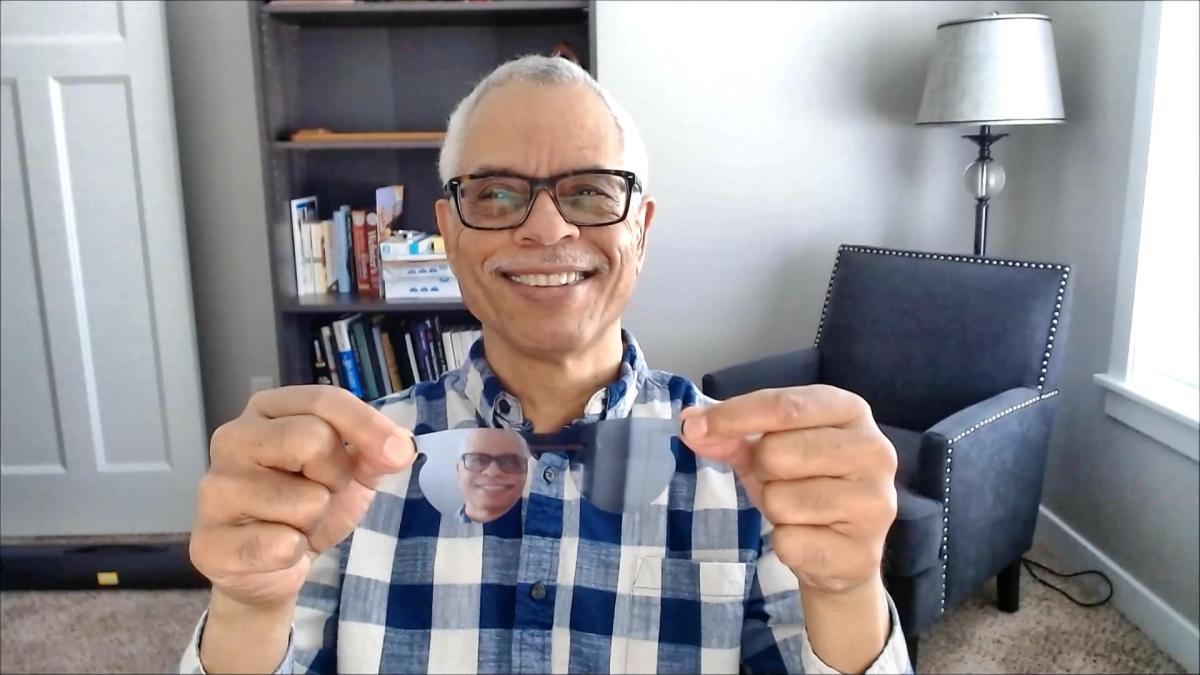
Jim Goes Hollywood with Post-Dilation Glasses

I got a nice surprise recently after my one-month follow-up postop clinic visit following my retinal detachment surgery. The scheduling desk clerk gave me a pair of post-dilation sunglasses.  That was the first time in years that I’ve been offered them after getting mydriatic drops for eye clinic exams.

The last time I got mydriatic drops, I didn’t get a pair of post-dilation sunglasses and I had to drive myself home. It was pretty uncomfortable and I almost stopped along the way to just park somewhere. I was really light sensitive and I don’t have a regular pair of sunglasses. My eyes were tearing and I had a strong urge to squint so tight, I’d have been driving blind.

That experience was the inspiration for my blog post “Mydriatic Madness” on March 16, 2022.

The eye clinics I’ve been to in past years always used to hand out post-dilation glasses after eye exams in which pupillary dilation was done. It was automatic.

However, in recent years it seems this practice has been abandoned—until just a couple of days ago. The scheduling clerk offered me a pair, for which I was grateful.

Ironically this was after she gave me a form to evaluate whether any of the nurses and doctors had washed their hands before examining me. For the life of me I couldn’t recall if any of them had! I felt embarrassed for them because the rating form was a yes/no format. Essentially, I had to say “no” across the board.

And yet the pair of dilation glasses was the first such courtesy I’ve encountered in years after an eye examination. It’s really more than a courtesy. It could be a safety issue if you’re driving after the exam. And it was the scheduling clerk’s responsibility, evidently. The glasses are kept in a little slot and if you’re not standing in just the right place, you wouldn’t even see them.

I’m not sure if the scheduling clerk ought to be the one offering the glasses. Wouldn’t it be more appropriate for a health care professional to do that? I guess I’m quibbling in a situation where nobody offers them.

Maybe the patients should learn to just ask for post-dilation glasses. They’re even a little stylish. Mine look like what you can buy on Amazon (Scheaffer-Vicron Slip-in) for about $16 for a pack of 25. That’s about 64 cents each so it’s not breaking any eye clinic budget to offer them for free.

And hand-washing should be automatic—or at least noticing when it’s done in front of you.