Members of the Human Club

I just read Dr. Moffic’s column, “Join This Club for Mental Health” in which he described the Clubhouse movement which got started in the 1940s to help those with mental health challenges to cope with their illness and, more importantly, to recover, grow, and achieve success in life.

It made wonder if there are any chapters of the Clubhouse model in Iowa. It turns out there is and it’s Carol House in Davenport, Iowa. It’s connected with the Vera French Mental Health Center. Its namesake is Carol Lujack, who was a member when the center was called “The Frontier Community Outreach Program” in the 1980s in downtown Davenport.

I was looking at the Carol Center website where you can find many interesting features of the people and activities that go on there. The April newsletter is fascinating and funny. You can find out in the April Newsletter about a few of the current members, April holidays (there’s a slew of them), and famous quotes. One of the quotes is familiar and it’s by F. Scott Fitzgerald,

“Vitality shows not only in the ability to persist, but in the ability to start over,” The quote is worded in various ways, but I remember it because I used it as an inspirational quote when The University of Iowa honored me and several of my colleagues with a Feather in Your Cap award back in 2011.

This was shortly after I returned to Iowa after an unsuccessful stab at trying private practice psychiatry in Wisconsin. And it was the second time I did that—the first time was in Illinois.

Did you know that April is National Humor Month? And have you heard the joke “What kind of candy is never on time?” Choco-Late.

One April holiday is not mentioned and that’s Arbor Day, which varies according to what part of the world you’re in as planting times differ. Sena planted a couple of new trees in the back yard.

Starting new chapters of Clubhouse is a little like planting new trees. They need watering.

Are There Clear and Consistent Racial Differences in Immunity?

So, the short answer is “Probably not.” I did a little digging on this because I heard the recently confirmed HHS Secretary Robert F. Kennedy Jr (RFK Jr) cite studies which he says did indicate there are differences in humoral immunity between Caucasians and African Americans.

Now remember, I’m a retired general hospital psychiatric consultant and my immunology background consists of the standard immunology lecture in medical school. The class I remember most vividly was the one in which the lecturer stopped her lecture abruptly, sighed deeply and looked defeated, probably because she saw the look of confusion on our faces.

Now that you know my credentials, let me just review what I found in a far from exhaustive review of the scientific literature on the topic of whether or not African Americans have, as RFK Jr. remarked, a “better” immune system than Caucasians.

On my own, I found what RFK Jr referred to variously (depending what social media web source you use) as the “Poland” or “pollen” studies as the scientific source of information supporting his view. I suspect it’s this, in which the last author in the citation is GA Poland:

Haralambieva IH, Salk HM, Lambert ND, Ovsyannikova IG, Kennedy RB, Warner ND, Pankratz VS, Poland GA. Associations between race, sex and immune response variations to rubella vaccination in two independent cohorts. Vaccine. 2014 Apr 7;32(17):1946-53. doi: 10.1016/j.vaccine.2014.01.090. Epub 2014 Feb 13. PMID: 24530932; PMCID: PMC3980440.

It was later in the day that I finally also found the NPR news story, the author of which pointed out the same article.

I also found a couple of other articles which tend to contradict the findings of the Poland et al study. One of them was published in eClinicalMedicine in 2023:

Martin CA, Nazareth J, Jarkhi A, Pan D, Das M, Logan N, Scott S, Bryant L, Abeywickrama N, Adeoye O, Ahmed A, Asif A, Bandi S, George N, Gohar M, Gray LJ, Kaszuba R, Mangwani J, Martin M, Moorthy A, Renals V, Teece L, Vail D, Khunti K, Moss P, Tattersall A, Hallis B, Otter AD, Rowe C, Willett BJ, Haldar P, Cooper A, Pareek M. Ethnic differences in cellular and humoral immune responses to SARS-CoV-2 vaccination in UK healthcare workers: a cross-sectional analysis. EClinicalMedicine. 2023 Apr;58:101926. doi: 10.1016/j.eclinm.2023.101926. Epub 2023 Apr 4. PMID: 37034357; PMCID: PMC10071048.

The list of references include the Poland study (reference 27) cited above. The bottom line is the African American immune response to Covid is not “better” than that of white health care workers but the Asian immune response was stronger. I thought it was interesting that in the section “Evidence before this study,” the authors point out that in one previous study, African Americans had lower antibody responses to vaccination than Whites.

I looked at only one other study, published in Clinical Microbiology Review in 2019;

Zimmermann P, Curtis N2019.Factors That Influence the Immune Response to Vaccination. Clin Microbiol Rev 32:10.1128/cmr.00084-18.https://doi.org/10.1128/cmr.00084-18

OK, so I didn’t hunt through all 582 references, but I thought it was enough to note that the authors didn’t mention race as even being relevant anywhere in the body of the paper.

That said, I suspect the more important fact to focus on is racial disparity regarding African Americans even getting vaccines, especially the Covid vaccine. Vaccine hesitancy is common in this population and probably more important to address rather than whether or not there are significant racial differences in immunogenicity. The major challenge is providing accurate information about vaccines in general and Covid vaccines in particular.

The CDC Advisory Committee includes African American members who attend each meeting and emphasize the importance of including black people in vaccination campaigns. OK, so why was the meeting this month cancelled, postponed, or whatever?

Hey, I’m just an old psychiatrist, so don’t take my word for it about anything here. Ask an immunologist. If the immunologist gives you a blank look, you could try a Ouija Board.

Rounding@Iowa Podcast: “Challenges in Transitioning Seriously Ill Patients from Pediatric to Adult Systems of Care”

I listened to the Rounding@Iowa podcast of February 11, 2025, “Challenges in Transitioning Seriously Ill Patients from Pediatric to Adult Systems of Care.”

86: Cancer Rates in Iowa Rounding@IOWA

Iowa's cancer rates are among the highest in the country, and they are rising. In this episode of Rounding@Iowa, Dr. Gerry Clancy and guest experts Dr. Mary Charlton and Dr. Mark Burkard discuss the data, risk factors, and prevention strategies clinicians can use to make a difference. CME Credit Available:  https://uiowa.cloud-cme.com/course/courseoverview?P=0&EID=81274  Host: Gerard Clancy, MD Senior Associate Dean for External Affairs Professor of Psychiatry and Emergency Medicine University of Iowa Carver College of Medicine Guests: Mark E. Burkard, MD, PhD Professor of Internal Medicine-Hematology, Oncology, and Blood and Marrow Transplantation University of Iowa Carver College of Medicine Director, University of Iowa Health Care Holden Comprehensive Cancer Center Mary Charlton, PhD Professor of Epidemiology Director, Iowa Cancer Registry Iowa College of Public Health Financial Disclosures:  Dr. Clancy, Dr. Burkard, Dr. Charlton, and Rounding@IOWA planning committee members have disclosed no relevant financial relationships. Nurse: The University of Iowa Roy J. and Lucille A. Carver College of Medicine designates this activity for a maximum of 0.75 ANCC contact hour. Pharmacist and Pharmacy Tech: The University of Iowa Roy J. and Lucille A. Carver College of Medicine designates this knowledge-based activity for a maximum of 0.75 ACPE contact hours. Credit will be uploaded to the NABP CPE Monitor within 60 days after the activity completion. Pharmacists must provide their NABP ID and DOB (MMDD) to receive credit. UAN: JA0000310-0000-25-090-H99 Physician: The University of Iowa Roy J. and Lucille A. Carver College of Medicine designates this enduring material for a maximum of 0.75 AMA PRA Category 1 CreditTM. Physicians should claim only the credit commensurate with the extent of their participation in the activity. Other Health Care Providers: A certificate of completion will be available after successful completion of the course. (It is the responsibility of licensees to determine if this continuing education activity meets the requirements of their professional licensure board.) References/Resources:  Iowa Cancer Plan  
  1. 86: Cancer Rates in Iowa
  2. 85: Solutions for Rural Health Workforce Shortages
  3. 84: When to Suspect Atypical Recreational Substances
  4. 83: Hidradenitis Suppurativa
  5. 82: End-of-Life Doulas

This was a very interesting presentation about the challenges of helping persons with life-limiting conditions (for example, hemophilia, cystic fibrosis, sickle cell anemia and more) transition from pediatric to adult systems of care. Most of the discussion was about the difficulty in finding doctors who would be willing and able to assume care of patients who had survived to adulthood who had been previously seen in pediatrics throughout childhood.

I listened very carefully to the whole podcast, waiting to hear about what the role of mental health care professionals would be in this kind of transition. There was no mention of it, not even after one of the presenters described a patient who was starting to have hallucinations.

My role as a consulting psychiatrist in a general hospital was mainly to see those with chronic diseases who were being treated by colleagues during a bout of cystic fibrosis or sickle cell crisis. I remember they were young adults, struggling with emotional distress and disruptive behavior.

I was surprised at the lack of discussion about the role of mental health assessments, diagnoses, and treatment including psychotherapy during transitions from pediatric to adult health care. Not that I would have had much to offer other than questions about how mental health professionals could be helpful regarding transitions—but I think they would have not been out of place.

I took a quick look at the resources provided. One of them was a University of Iowa website, the Iowa Center for Disabilities and Development: Transition to Adulthood Clinic For Teens and Young Adult Ages 14-30. Even here, the role of a psychologist was to evaluate learning problems.

One of the discussants mentioned a program called Got Transition, which has a very comprehensive website. There was a section for Special Populations and a list of resources and research when I searched the site using the term “mental health.” It was hard to find a section specific to the population under discussion in the podcast. On the other hand, it was very comprehensive.

In this podcast, discussants talked about the importance of a team approach to transitions. I wonder if there’s a place on the team for psychiatry.

All Jokes Aside, What Do I think About the Book “Caste: The Origins of Our Discontents?”

I just finished reading Isabel Wilkerson’s book, “Caste: The Origins of Our Discontents.” It was a painful read because it talks about racism in America, which is a part of my lived experience. Wilkerson’s compares it to the Nazi persecution of the Jews and the caste organization in India. The chapter on the pillars of caste make sense to me.

When I reached the last section (not at all “final” by any means), which is called “Awakening,” I was not surprised that there were no prescriptions or outlines or action plans for how to eliminate caste in any culture. It turns out that we’re all responsible for becoming aware of how we all are complicit in some way with maintaining caste divisions in society. And the word Wilkerson used for how to begin is “empathy,” or somehow becoming conscious of that tendency and to replace it with understanding.

As Wilkerson emphasizes, empathy isn’t sympathy or pity. Empathy is walking a mile in someone else’s shoes, as the song goes. But she goes a step further and uses the term “radical empathy.” It’s difficult to define concretely. It goes beyond trying to imagine how another person feels, going the extra mile and learning about what the other person’s experience. It’s not about my perspective; it’s about yours. It’s not clear exactly how to make that deep connection. She uses terms like “spirit” which may or may not resonate with a reader searching for a recipe or a cure.

Politics turns up in the book. How could it not? I’m going to just admit that I wanted to make this post humorous somehow, especially after I saw Dr. H. Steven Moffic’s article in Psychiatric Times about whether psychiatrists are to act in the role of “bystanders” or “upstanders” in the present era of political and social turmoil. He specifically mentioned the Goldwater Rule, which is the American Psychiatric Association Ethics Annotation barring psychiatrists from making public statements of a diagnostic opinion about any individual (often a politician) absent a formal examination or authorization to make any statements. The allusion to a specific person is unmistakable.

But, as a retired psychiatrist, I’m aware that my sense of humor could be deployed as a defense mechanism and it would certainly backfire in today’s highly charged political context. I’m not sure whether I’m a bystander or an upstander.

Sena and I had a spirited debate about whether America has a caste system or not. I think it’s self-evident and is nothing new to me. I suspect that calling racism (which certainly exists in the United States) a form of casteism would not be altogether wrong. Wilkerson mentions a psychiatrist, Sushrut Jadhav, who is mentioned in the Acknowledgments section of her book. Jadhav is a survivor of the caste system in India. I found some of insights on caste and racism in web article, “Caste, culture and clinic” which is the text of an interview with him.

His answers to two questions were interesting. On the question of whether there is a difference between the experience of racism and caste humiliation, he said “None on the surface” but added that more research was needed to answer the question adequately. And to the question of whether it’s possible to forget caste, he said you have to truly remember it before you can forget it—and it’s important to consider who might be asking you to forget it.

This reminded me of the speech in the movie “Guess Who’s Coming to Dinner,” said by John Prentice (played by Sidney Poitier) to his father:

“You’ve said what you had to say. You listen to me. You say you don’t want to tell me how to live my life? So, what do you think you’ve been doing? You tell me what rights I’ve got or haven’t got, and what I owe to you for what you’ve done for me. Let me tell you something. I owe you nothing! If you carried that bag a million miles, you did what you were supposed to do because you brought me into this world, and from that day you owed me everything you could ever do for me, like I will owe my son if I ever have another. But you don’t own me! You can’t tell me when or where I’m out of line, or try to get me to live my life according to your rules. You don’t even know what I am, Dad. You don’t know who I am. You don’t know how I feel, what I think. And if I tried to explain it the rest of your life, you will never understand. You are 30 years older than I am. You and your whole lousy generation believes the way it was for you is the way it’s got to be. And not until your whole generation has lain down and died will the deadweight of you be off our backs! You understand? You’ve got to get off my back! Dad. Dad. You’re my father. I’m your son. I love you. I always have and I always will. But you think of yourself as a colored man. I think of myself as a man. Hmm? Now, I’ve got a decision to make, hmm? And I’ve got to make it alone. And I gotta make it in a hurry. So, would you go out there and see after my mother?”

 And there was this dialogue that Sena found on the web, which was similar to that of John Prentice. It was a YouTube fragment of a 60 minutes interview in 2005 between actor Morgan Freeman and Mike Wallace. Wallace asked Freeman what he thought about Black History Month. Freeman’s answer stunned a lot of people because he said he didn’t want Black History Month and said black history is American history. He said the way to get rid of racism was to simply stop talking about it. His replies to questions about racism implied he thought everyone should be color blind. John Prentice’s remarks to his father are in the same vein.

I grew up thinking of myself as a black person. I don’t think there was any part of my world that encouraged me to think I was anything different. I think Wilkerson’s book is saying that society can’t be colorblind, but that people can try to walk a mile in each other’s shoes.

Notes on the Blues and Rivers of Whiskey

I listened to the Big Mo Blues Show last night on KCCK radio (88.3 on your dial) as I usually do on Friday nights. It runs from 6:00 pm to 9:00 pm and you can learn a lot from Big Mo (aka John Heim) about the blues.

He also has a podcast called the Big Mo Pod Show, which is based on his blues show. He gets quizzed about some of the songs he played on Friday night by Producer Noah (as Big Mo calls him). Last night he was on target for all 5 of the songs he played and why he played them.

One of the songs I’ve never heard before but it was done by Taj Mahal and Keb Mo, artists I’m familiar with just from listening to Big Mo’s show. The title was “Diving Duck Blues. The chorus goes “If the river was whiskey and I was a diving duck, I’d dive to the bottom and I’d never come up.”

That led to a discussion of how alcoholism was sometimes (maybe more than sometimes) a part of the life of blues musicians. In fact, the lead off song last night was “Big Road Blues,” sung by Tommy Johnson. His last name just happens to be the same as Robert Johnson who made the song “Crossroads” famous because he claimed he sold his soul to the devil in order to become a great blues musician. Several blues artists made the claim, which Big Mo debunked as a ruse to get fans to pay more money to hear them perform.

But Tommy Johnson struggled with alcoholism and, according to Big Mo, was driven to the point of drinking Sterno, which was poisonous because it contained methyl alcohol.

This can lead you to think that maybe all blues music is gritty, played by alcoholics, and even depressing as declared by the lead character, Navin Johnson, played by Steve Martin in the movie “The Jerk” (a white guy raised by a black family).

Incidentally, this reminds me that a recent study showing that digital cognitive behavioral therapy is effective for those suffering from alcohol use disorder.

Anyway, blues musicians don’t always play sad, gritty music and die from drinking Sterno. One that is actually funny is “You Left the Water Running” by Otis Redding. You can look up the lyrics or listen to anyone who covers the song and it would be difficult not to laugh out loud.

And speaking of covering a song, Bill Withers originally wrote and sang “Lean on Me” back in 1972 which Keb Mo covered recently. I think it’s one of those uplifting examples of blues music which won’t send you diving to the bottom of any whiskey rivers.

Thoughts on the Homeless Mentally Ill

The homeless man who lives on the sidewalk outside our hotel reminds me of a couple of things. One is Dr. Gerard Clancy, MD who is University of Iowa Health Care Professor of Psychiatry, Professor of Emergency Medicine, and Senior Associate Dean of External Affairs.

I remember Gerry, who was in the department of psychiatry when I was a resident. I saw his picture in the newspaper and hearing about him riding a bicycle around Iowa City doing a sort of outreach to the homeless mentally ill.

I found an archived article mentioning him published in 1995 in the Daily Iowan. The story starts on the bottom of the front page, entitled “I.C. opens new doors for area’s mentally ill.” It continues on page 9A.

The story mentions Dr. Clancy and what was called then the Clinical Outreach Services and the Emergency Housing Program (EHP). The challenges then sound a lot like what they are now: long waiting lists for psychiatric evaluation and treatment, a lack of funding for the treatment of mental illness, and a lack of preventive care. The most common mental illnesses in the homeless mentally ill are chronic schizophrenia, schizoaffective disorder, and bipolar disorder. The idea of reaching out to them “on their own turf” as Clancy was quoted, was to help them feel more comfortable talking about their mental illness.

The housing situation for this population of those struggling with mental illness was dismal then and it’s still dismal.

The homeless guy I’ve been calling Bob lives on the sidewalk next to a busy street. It’s just my opinion that he’s mentally ill based on my observations of his behavior. I’ve never tried to talk to him. However, Bob gets visits from people who obviously have differing views about the way he lives.

Some of them do talk to him and, although I can’t hear their conversations, the actions tell me important things. Some bring him what I call “care packages,” often food, water, and other items. They may start by acting kind, although may get impatient with him. Others try to clean up his sidewalk, and may criticize him. The police occasionally visit and have so far not taken him into custody.

It looks like things have not changed much since 1995 regarding the homeless mentally ill based on what I write here about my observations. In fact, it’s easy to find current news stories that say things are getting worse.

At the beginning of this post, I said I found a couple of things. The other thing was a very thorough teaching presentation about the current state of formal outreach to this population. It’s available on the web as a power point presentation by another University of Iowa faculty, Dr. Victoria Tann, MD, entitled “Assertive Community Treatment 101.”

Dr. Tann is currently an IMPACT Team psychiatrist. It’s an excellent source of background on the history of this effort at outreach to the homeless mentally ill. It also summarizes what’s happening with the program now.

What About Bob?

The homeless guy camped next to the busy street just outside of our hotel is still here. I’m going to call him Bob because it’s awkward to keep calling him “the homeless guy.” I haven’t met Bob yet, but Sena got him some water. She had to give it to the hotel resident who so far is the only one who has been able to communicate with him.

Sena and I talked about what might be done for Bob. She noticed that his face was sunburned bad enough to cause the skin to peel off. Could a case be made for his being a danger to himself?

Of course, you could guess this issue would come up because I’m a retired psychiatrist. As an aside, I found an article published in the Daily Iowan early this year. The author interviewed several residents of a homeless camp who were displaced after a fire and subsequently the owners of the land closed the camp.

The homeless people at the camp were articulate and open to interview. Some of them were clearly choosing to be homeless and able to state how and why they did.

Bob might not be articulate enough to do that. He spends most of his time lying on the pavement with his blanket over him. It’s sometimes hard to tell if he’s out there until he moves. When he’s up, he usually stands up and waves his arms back and forth or sits on the grass. Occasionally, he moves in ways suggesting he’s acting out some kind of conversation with an invisible person.

A police officer stopped by, spoke briefly with Bob, and left. A woman stopped by and tried to help him clean up his room, so to speak. She picked up some of his trash and put it in a bag. She tried to get him to help, but he didn’t seem to understand.

What about Bob? Is he a danger to himself or others? Is he incapable of taking care of his basic self-care needs? Sooner or later, this would come up because the mental health laws would come into play. There are many homeless people out there living under bridges and camps. We’ve seen them when we go out for walks. Not all of them are definable as mentally ill.

There is guidance on the web about how to pursue a court-ordered psychiatric evaluation. I’m a retired psychiatrist and often was involved in those circumstances.

One way it works is that two people who are acquainted with the person go to the courthouse and complete paperwork to have someone ordered by a judge to be taken to the hospital for a mental health evaluation. If the judge signs an order, then typically the police would pick the person up and take them to the local emergency room. There aren’t vans with mental health professionals roaming the city looking for potential patients.

A psychiatrist performs a comprehensive mental health evaluation and later presents the report and testifies at a scheduled hearing. Attorneys are involved and give testimony for and against civil commitment. The patient also can speak. If the patient is court-ordered to inpatient treatment, that treatment is provided in the hospital usually. Periodic reports must be submitted to the court. Some people who are the objects of these interventions get better. Others don’t.

What’s missing here? You must at least know his real name to file for legal hold order. Although Sena says she saw Bob take out a cell phone, it’s not clear he knows how to use it or whether it even works. The only people who interact with him are those who are driving by and who show sympathy by buying food and water and other items for him. He usually tosses the empty water bottles in the parking lot where he sleeps. The police evidently didn’t think he needed an intervention from their perspective.

We don’t even know his real name. I haven’t tried to talk to him. I’ve never seen him act in a threatening way to anyone. Bob takes up one parking space and keeps his belongings within it. He usually lies under a blanket, often for several hours at a time. Bob doesn’t panhandle and I doubt he’s capable of that.

Am I Bob’s keeper?

Rounding at Iowa: New Treatments for Alzheimer’s Disease

This is one of the latest Rounding@Iowa podcasts and it’s about new treatments for Azheimer’s Disease, with one specific agent called Lecanemab.

I’m an old psychiatrist, and I remember my clinical impresson of the previous medications for Alzheimer’s Disease, one of which was Donepezil. The scientific literature seemed to suggest that patients and families were more impressed with Donepezil than clinicians were.

According to Dr. Shim, one of the participants in the podcast, it’s been 20 years since there has been a new treatment for Alzheimer’s Disease-and the long term effectiveness of Lecanemab is uncertain.

In addition, there are significant risks associated with the agent as well. As you can guess, it’s very expensive, and while Medicare pays for some of the cost, the podcast participants mentioned that it was difficult to get some treatment monitoring imaging studies covered.

Patients and their physicians need to have a full discussion of the risks and benefits of treatments for Alzheimer’s Disease. It’s just as important to avoid the use of certain drugs that are known to worsen cognitive function, such as benzodiazepines and anticholinergics.

86: Cancer Rates in Iowa Rounding@IOWA

Iowa's cancer rates are among the highest in the country, and they are rising. In this episode of Rounding@Iowa, Dr. Gerry Clancy and guest experts Dr. Mary Charlton and Dr. Mark Burkard discuss the data, risk factors, and prevention strategies clinicians can use to make a difference. CME Credit Available:  https://uiowa.cloud-cme.com/course/courseoverview?P=0&EID=81274  Host: Gerard Clancy, MD Senior Associate Dean for External Affairs Professor of Psychiatry and Emergency Medicine University of Iowa Carver College of Medicine Guests: Mark E. Burkard, MD, PhD Professor of Internal Medicine-Hematology, Oncology, and Blood and Marrow Transplantation University of Iowa Carver College of Medicine Director, University of Iowa Health Care Holden Comprehensive Cancer Center Mary Charlton, PhD Professor of Epidemiology Director, Iowa Cancer Registry Iowa College of Public Health Financial Disclosures:  Dr. Clancy, Dr. Burkard, Dr. Charlton, and Rounding@IOWA planning committee members have disclosed no relevant financial relationships. Nurse: The University of Iowa Roy J. and Lucille A. Carver College of Medicine designates this activity for a maximum of 0.75 ANCC contact hour. Pharmacist and Pharmacy Tech: The University of Iowa Roy J. and Lucille A. Carver College of Medicine designates this knowledge-based activity for a maximum of 0.75 ACPE contact hours. Credit will be uploaded to the NABP CPE Monitor within 60 days after the activity completion. Pharmacists must provide their NABP ID and DOB (MMDD) to receive credit. UAN: JA0000310-0000-25-090-H99 Physician: The University of Iowa Roy J. and Lucille A. Carver College of Medicine designates this enduring material for a maximum of 0.75 AMA PRA Category 1 CreditTM. Physicians should claim only the credit commensurate with the extent of their participation in the activity. Other Health Care Providers: A certificate of completion will be available after successful completion of the course. (It is the responsibility of licensees to determine if this continuing education activity meets the requirements of their professional licensure board.) References/Resources:  Iowa Cancer Plan  
  1. 86: Cancer Rates in Iowa
  2. 85: Solutions for Rural Health Workforce Shortages
  3. 84: When to Suspect Atypical Recreational Substances
  4. 83: Hidradenitis Suppurativa
  5. 82: End-of-Life Doulas

Great Rounding@Iowa Podcast on Preventing & Managing Heat-Related Illness

The Rounding@Iowa podcast has many fascinating and helpful episodes, not the least of which is this one on heat-related illness. The days are getting hotter and we need to pay close attention to what happens in our bodies when exposed to excessive heat.

86: Cancer Rates in Iowa Rounding@IOWA

Iowa's cancer rates are among the highest in the country, and they are rising. In this episode of Rounding@Iowa, Dr. Gerry Clancy and guest experts Dr. Mary Charlton and Dr. Mark Burkard discuss the data, risk factors, and prevention strategies clinicians can use to make a difference. CME Credit Available:  https://uiowa.cloud-cme.com/course/courseoverview?P=0&EID=81274  Host: Gerard Clancy, MD Senior Associate Dean for External Affairs Professor of Psychiatry and Emergency Medicine University of Iowa Carver College of Medicine Guests: Mark E. Burkard, MD, PhD Professor of Internal Medicine-Hematology, Oncology, and Blood and Marrow Transplantation University of Iowa Carver College of Medicine Director, University of Iowa Health Care Holden Comprehensive Cancer Center Mary Charlton, PhD Professor of Epidemiology Director, Iowa Cancer Registry Iowa College of Public Health Financial Disclosures:  Dr. Clancy, Dr. Burkard, Dr. Charlton, and Rounding@IOWA planning committee members have disclosed no relevant financial relationships. Nurse: The University of Iowa Roy J. and Lucille A. Carver College of Medicine designates this activity for a maximum of 0.75 ANCC contact hour. Pharmacist and Pharmacy Tech: The University of Iowa Roy J. and Lucille A. Carver College of Medicine designates this knowledge-based activity for a maximum of 0.75 ACPE contact hours. Credit will be uploaded to the NABP CPE Monitor within 60 days after the activity completion. Pharmacists must provide their NABP ID and DOB (MMDD) to receive credit. UAN: JA0000310-0000-25-090-H99 Physician: The University of Iowa Roy J. and Lucille A. Carver College of Medicine designates this enduring material for a maximum of 0.75 AMA PRA Category 1 CreditTM. Physicians should claim only the credit commensurate with the extent of their participation in the activity. Other Health Care Providers: A certificate of completion will be available after successful completion of the course. (It is the responsibility of licensees to determine if this continuing education activity meets the requirements of their professional licensure board.) References/Resources:  Iowa Cancer Plan  
  1. 86: Cancer Rates in Iowa
  2. 85: Solutions for Rural Health Workforce Shortages
  3. 84: When to Suspect Atypical Recreational Substances
  4. 83: Hidradenitis Suppurativa
  5. 82: End-of-Life Doulas

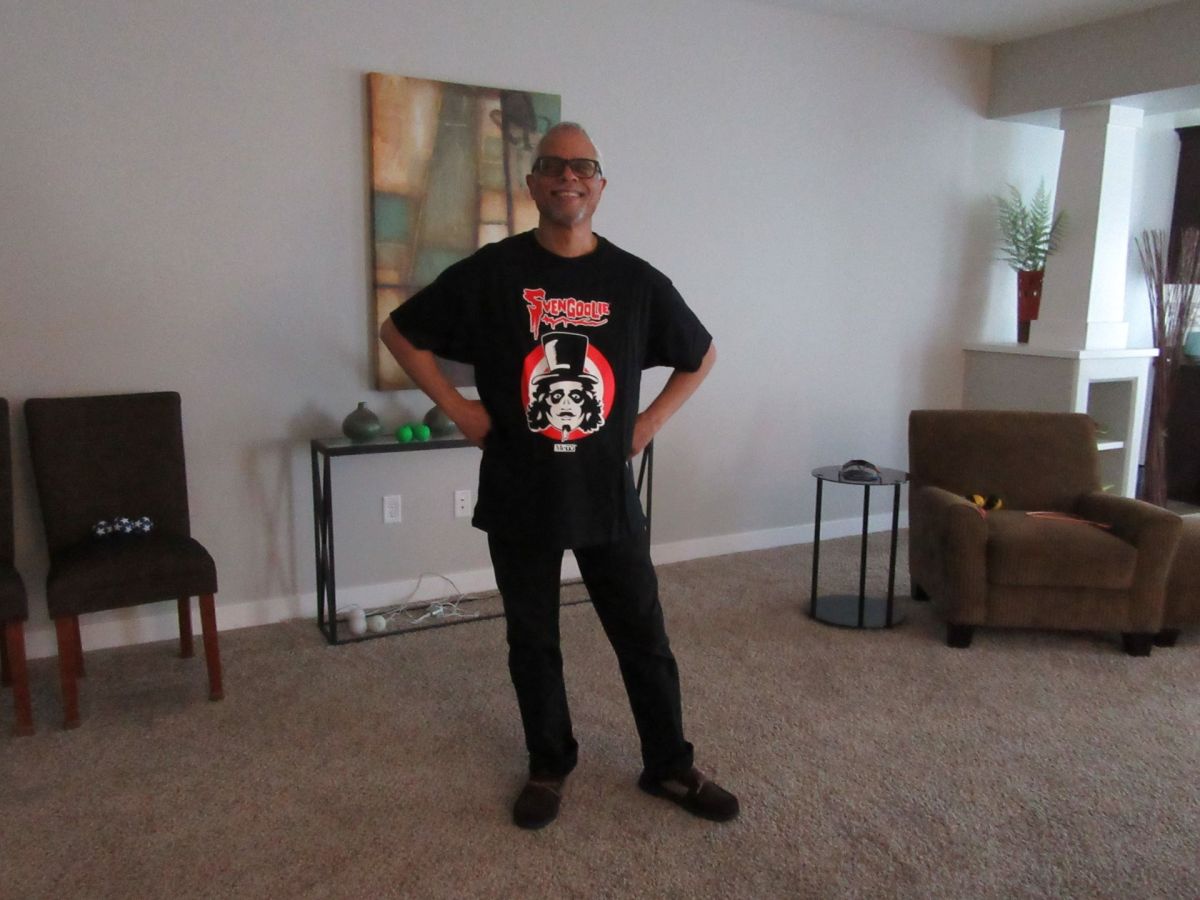
Svengoolie Movie: The Tingler!”

We saw the 1959 movie “The Tingler” starring Vincent Price on the Svengoolie show last Saturday. Price plays a prison pathologist, Dr. Warren Chapin, who’s trying to scientifically study a parasitic creature called the tingler (tingles up and down your spine means you’re scared right out of your mind!).

It sits on your spine and feeds on fear by clamping down on it, eventually breaking it unless you scream. Then it’ll just let go. However, if you’re mute, scared speechless, or it grabs you by the throat—you’re done. So, the tingler lives on fear, although if you express fear vocally by screaming, you escape it.

OK, so I’m going to spoil the opening scene, which shows a prisoner being dragged to the electric chair, screaming all the way until the executioner throws the switch. When Dr. Chapin does an autopsy, he finds the prisoner’s spine is cracked. He says it wasn’t caused by the electrocution, but by the tingler.

Huh? But the prisoner screamed bloody murder (murder was why he got the death penalty by the way) hardly stopping to take a breath. Shouldn’t that have weakened or killed the tingler? You can find examples of inconsistencies like this in any cheesy movie, but where’s the fun in that?

One web article says the tingler creature was modeled after the velvet worm, which looks pretty creepy. In reality, the velvet worm is harmless to humans, but is a predator of many invertebrates. Just keep telling yourself, “I’m a vertebrate.”

You can watch the full movie on the Internet Archive. The most interesting part of it for me was the use of what was called “acid,” (meaning the hallucinogen LSD) by Dr. Chapin. He wanted to experience and record the actual experience of being scared by the tingler, just to see what it’s like apparently. He mainlines himself with a fairly stiff dose of LSD although I can’t remember how much.

Incidentally, an article in JAMA notes, “Doses of 20μg/kg of body weight are known to have been taken without a lethal outcome.” (Materson BJ, Barrett-Connor E. LSD “Mainlining”: A New Hazard to Health. JAMA. 1967;200(12):1126–1127. doi:10.1001/jama.1967.03120250160025). I don’t know how much Dr. Chapin weighs.

This was about the same time as a lot of people in the U.S. were experimenting with the hallucinogen in various ways, including mainlining it. There are web references to psychiatrists using LSD recreationally (this was when it was legal). Bad trips were and still are common, although there is a growing body of clinical studies that involve using the psychedelics as adjuncts in psychotherapy. It’s not for everybody, although tinglers might have a different opinion.

Anyway, Dr. Chapin has a bad trip, gets really scared of hallucinations and screams. Web articles say that killed his tingler, but I didn’t see it flop out of his mouth.

There you have it. Another really cheesy and fun Svengoolie movie. I’m a vertebrate.