About That Artificial Intelligence…

I’ve got a couple of things to get off my chest about Artificial Intelligence (AI). By now, everyone knows about AI telling people to put hot glue on pizza and whatnot. Sena and I talked to a guy at an electronics store who had nothing but good things to say about AI. I mentioned the hot glue thing and pizza and it didn’t faze him.

I noticed the Psychiatric Times article, “AI in Psychiatry: Things Are Moving Fast.” They mention the tendency for AI to hallucinate and expressed appropriate reservations about its limitations.

And then I found something very interesting about AI and Cribbage. How much does AI know about the game? Turns out not much. Any questions? Don’t expect AI to answer them accurately.

In Memory of L. Jay Stein

I was thinking of one of the Johnson County judicial mental health referees I often worked with years ago. L. Jay Stein died in 2014. I looked up his obituary the other day and was a little surprised to find I had written a remembrance for him. I’d forgotten it.

“I will always remember my first encounters with Judge Stein. I was a first-year resident in psychiatry at The University of Iowa Hospitals & Clinics. He often presided at mental health commitment hearings at which I was often the nervous trainee providing “expert testimony” as the treating physician. Jay taught me and countless other psychiatry residents about the importance of procedure. His knowledge was prodigious. But it was his compassion, his fairness, and his inimitable sense of humor I will always treasure.”

Judge Stein’s vocabulary was impressive. Even his recorded telephone automatic replies sounded amusingly erudite. Occasionally, when I had a question about legal procedures in mental health I would call him but get his answering machine. These out of office replies were entertaining and sounded very much like the way he did during commitment hearings. I can’t remember all of it, but it began with something like, “Once again, your request has been denied…” It made me think of what I might hear at a parole hearing—not mine of course.

L. Jay Stein was wise and funny.

Svengoolie Movie: The Tingler!”

We saw the 1959 movie “The Tingler” starring Vincent Price on the Svengoolie show last Saturday. Price plays a prison pathologist, Dr. Warren Chapin, who’s trying to scientifically study a parasitic creature called the tingler (tingles up and down your spine means you’re scared right out of your mind!).

It sits on your spine and feeds on fear by clamping down on it, eventually breaking it unless you scream. Then it’ll just let go. However, if you’re mute, scared speechless, or it grabs you by the throat—you’re done. So, the tingler lives on fear, although if you express fear vocally by screaming, you escape it.

OK, so I’m going to spoil the opening scene, which shows a prisoner being dragged to the electric chair, screaming all the way until the executioner throws the switch. When Dr. Chapin does an autopsy, he finds the prisoner’s spine is cracked. He says it wasn’t caused by the electrocution, but by the tingler.

Huh? But the prisoner screamed bloody murder (murder was why he got the death penalty by the way) hardly stopping to take a breath. Shouldn’t that have weakened or killed the tingler? You can find examples of inconsistencies like this in any cheesy movie, but where’s the fun in that?

One web article says the tingler creature was modeled after the velvet worm, which looks pretty creepy. In reality, the velvet worm is harmless to humans, but is a predator of many invertebrates. Just keep telling yourself, “I’m a vertebrate.”

You can watch the full movie on the Internet Archive. The most interesting part of it for me was the use of what was called “acid,” (meaning the hallucinogen LSD) by Dr. Chapin. He wanted to experience and record the actual experience of being scared by the tingler, just to see what it’s like apparently. He mainlines himself with a fairly stiff dose of LSD although I can’t remember how much.

Incidentally, an article in JAMA notes, “Doses of 20μg/kg of body weight are known to have been taken without a lethal outcome.” (Materson BJ, Barrett-Connor E. LSD “Mainlining”: A New Hazard to Health. JAMA. 1967;200(12):1126–1127. doi:10.1001/jama.1967.03120250160025). I don’t know how much Dr. Chapin weighs.

This was about the same time as a lot of people in the U.S. were experimenting with the hallucinogen in various ways, including mainlining it. There are web references to psychiatrists using LSD recreationally (this was when it was legal). Bad trips were and still are common, although there is a growing body of clinical studies that involve using the psychedelics as adjuncts in psychotherapy. It’s not for everybody, although tinglers might have a different opinion.

Anyway, Dr. Chapin has a bad trip, gets really scared of hallucinations and screams. Web articles say that killed his tingler, but I didn’t see it flop out of his mouth.

There you have it. Another really cheesy and fun Svengoolie movie. I’m a vertebrate.

What Kind of Mailbox Does the USPS Really Want from Us?

I just saw the latest headline about the United States Postal Service (USPS) new recommendation that we all get a nice, big mailbox. Huh?

I gather one reason for the suggestion is to cut down on mail theft. I don’t think I’m allowed to put a lock on a mailbox, no matter how big it is.

In fact, the only way I’ve seen to reduce (notice I said reduce, not eliminate) mail theft are those big mailbox clusters you see everywhere in neighborhoods nowadays. Those are the neighborhoods with Homeowners Associations (HOAs), which require you to paint your window trim with beige (not taupe, read my lips!) or face lawsuits.

You know about those clusters, they’re a block away from your house. And you know how small your mailbox is there, yet the postal service is also big on recommending that you use them, probably because it makes their job easier. Which is it? Big mailbox with no lock or big locked mailbox cluster with small boxes?

Is the postal service in charge of maintenance on those mail cluster boxes? Of course not. We’re responsible for clearing away the ice and snow. And is theft not a problem with the cluster boxes? Scan the web for stories about armed bandits who hold up the letter carrier for the key. It happens.

Bigger mailboxes are not the answer to the postal service problems. They can attract the Halloween pranksters showing off their Hank Aaron batting skills (look him up!) and sadistic city snowplow drivers who like dragging your mailbox into the next county after plugging your driveway.

I can remember when the letter carrier walked the delivery route pushing a cart filled with mail. He stopped at every house in the neighborhood to put your mail in the mailbox, which was attached to the front of your house, or to drop it in the mail slot in your front door.

I’m not saying mail theft was not a problem in those days, but I don’t recall hearing about it on the news broadcasts or reading about it in the newspaper—which I hand delivered, sometimes risking injury from big dogs. The only theft I recall was by customers who avoided paying when I tried to collect:

“Do you have change for a hundred-dollar bill, sonny?”

“I’m a paperboy, not a banker!”

“Come back next week.”

Here’s an idea. What if some scientist invented a mailbox which contained a device which would trip only after your mail was delivered? This device would spray concentrated poison ivy resin all over the inside of the mailbox, teaching thieves a lesson. Of course you would have to wear gloves to collect your mail.

Another idea is to make your own mailbox, which would be big enough for a Ninja warrior to hide inside. That would surprise the crooks! I think you can get a Ninja for a fair price on eBay.

Thoughts on the Big Mo Pod Show: Theme “Music Changes Context”

I heard the Big Mo Pod Show, which relates to the quiz about 5 songs he played on the Big Mo Blues Show last Friday night. He got all the artists right, just missed 3 song titles!

I had a couple of thoughts about the song lineup related to the theme “Music Changes Context.” Actually, the point was that one of the songs had what might have made some people mad. It was “Funky B***h.” The idea was that some words might be offensive if you say them, but when words are sung, that might make them not offensive, in a way. It’s a matter of opinion.

How that happens is not clear. Big Mo’s example of it was in a historical context related to slavery. Slaves could not say certain words while they were working in the fields. But the overseer would let them get away with if they used the words in a song.

I heard one song that was not part of the Big Mo Pod show that might put a different spin on the idea of how music changes context. It’s about brotherly love, in a manner of speaking—or in a manner of singing, I should say.

The Most Interesting Thing About the Svengoolie Movie House of Frankenstein

We saw the movie House of Frankenstein last Saturday night and, spoiler alert, everybody dies!

Anyway, the main impulse we had when listening to Boris Karloff (who played Dr. Gustav Niemann) was to think of something I’m not even sure I can say on this blog due to the strict copyright laws governing even the utterance what I’m going to call NAME. I’m using only the word NAME because I’m afraid Dr. Sues Enterprises will track me down and sue me for copyright infringement if I actually say NAME.

Yes, Dr. Sues Enterprises is intentionally spelled that way because I’m not even sure I can say their name without getting slapped with a lawsuit.

No kidding (and this is no joke by the way), I read a lot of scary stuff on line about how NAME is not in the public domain and what can happen to you if you even say it out loud.

I think I can get away with saying that Boris Karloff was 79 years old when he voiced NAME in the movie which I guess will have to remain nameless.

There are people who get away with it, though. Maybe it’s because they pay for the privilege of uttering NAME.

Here’s an interesting thing. Pixabay has a lot of pictures that are royalty-free. You want to guess what I found there? Pictures of NAME! I don’t know how they get away with it. OK, so maybe it’s because they don’t charge a fee for use.

On the other hand, there’s this guy who wrote in to some kind of ask-a-lawyer website that he sells a tee shirt that has NAME printed on it. He got a copyright infringement notice and asks why he can’t get away with it. All the lawyers who answered said he can’t sell shirts with NAME on it because Dr. Sues Enterprises has a federal trademark registration on NAME.

Anyway, that’s the most interesting part about the movie House of Frankenstein.

Guys and Gals Birds

The other day we went birding on the Terry Trueblood Trail. You couldn’t ask for better weather. We saw a lot of birds paired off and checking into the nest boxes or building from scratch.

I don’t know how we got so lucky. We saw male and female red-wing blackbirds, tree swallows, sparrows, and goldfinches.

The difference between the guys and gals is that the female birds tend to be drab. It’s mainly for protection. The females don’t want to attract attention from predators. The males tend to be flamboyant, as if you didn’t know that from your own experience with humans.

The red-wing blackbird male has stunning red and yellow epaulets on its wings. The female is mostly brown.

The tree swallow male is startling bright greenish-blue. The female is a bit duller.

The goldfinch male is a loud yellow while the female is kind of drab olive.

And so on.

Ahm a Fan of the Svengoolie Movie The Land That Time Forgot

We watched the Svengoolie movie, The Land That Time Forgot last Saturday night. Doug McClure stars as Bowen Tyler. He and others passengers of a ship are taken prisoner by the crew of a German U-Boat (World War I era) which torpedoed the ship.  Officers of the torpedoed ship and Tyler overpower the U-Boat crew. They all end up on the island of Caprona somewhere in the South Atlantic.

The island is crawling with thunder lizards of every kind including diplodocus. The dinosaurs are evolving alongside primitive humans who evolve by migrating north on the island “…instead of by natural selection” according to Wikipedia). Various humans both primitive and modern are casually slain and eaten and the rapidly evolving primitive humans pick off the moderns at random.

Only one primitive doesn’t seem to evolve beyond being a goofy guy named Ahm, who has trouble operating a handsaw and who refers to himself in the third person:

“Ahm out of breath!”

“Ahm goin’ back down

To Kansas soon

Bring back the second cousin

Little Johnny Coocheroo

Ahm a man

Spelled M-A-N

Man

Ohoh, ah-oh…” and so Ahm and so forth.

Ahm is very loyal to the moderns, even after he supposedly evolves to the status of the Galoo, who hate the moderns and try to kill them at every opportunity. But Ahm saves Tyler from being snatched up by a pterodactyl—sacrificing his own life, yelling “Ahm a loser and Ahm not what Ahm appear to be,” waving his arms and legs helplessly in the pterodactyl’s bill as it flies off into the great blue yonder.

I couldn’t remember what actor played the evil German who ultimately was responsible for getting the U-Boat destroyed at the end during a volcanic catastrophe. But he was the same guy who was the 4th actor to play the role of Doctor Who’s major archenemy, The Master. Svengoolie revealed that the actor’s name was Anthony Ainley and he played Major Dietz in The Land That Time Forgot.

The reason I bring that up is not just because he looked vaguely familiar to me because I used to watch Doctor Who. I searched the web for his name and the first answer that appeared at the top of the page was the Artificial Intelligence, now called Gemini, (not Google Assistant as Gemini claims), the artist formerly known as Bard), which is crazy wrong: “Doug McClure, an actor known for his cowboy roles, plays one of Dr. Who’s greatest enemies in the 1974 film The Land That Time Forgot.”

This is why you should be skeptical of almost everything AI says.

How evolution is affected by migratory patterns is not well explicated in The Land That Time Forgot although it probably does play a role. When somebody invents a time machine, we could just go back and ask Darwin.

House Finches Moved On

Today was Day 17 for the house finch nest with eggs-which did not hatch. I suspect the female moved on, probably because of too many intrusions. I removed the nest and eggs.

You’d think they’d know better than to build a nest in a fake Christmas tree in the first place.

It has been said:

You cannot keep birds from flying over your head but you can keep them from building a nest in your hair.

Martin Luther

But you can’t keep birds from nesting in your artificial Christmas tree on your front porch.

Thoughts on Copyright Issues Related to Consultation Psychiatry and Dad Jokes

I want to gas; I mean talk about copyright as it relates to consultation psychiatry or telling dad jokes. By the way, those aren’t the same.

 I used to teach medical students and residents how to do certain quick bedside cognitive tests for delirium and dementia. Over the years the instructions about how to administer them (and the restrictions over using them at all) have changed slightly. The major point to make is that they have been copyrighted, which usually means you have to pay to play.

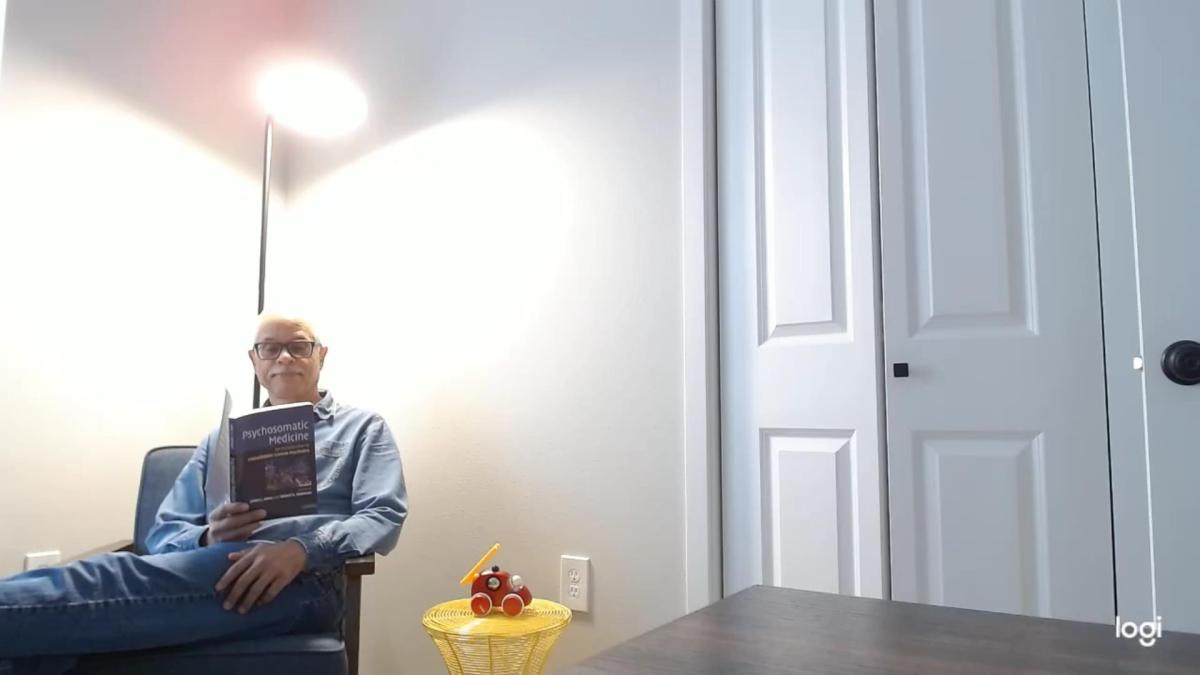
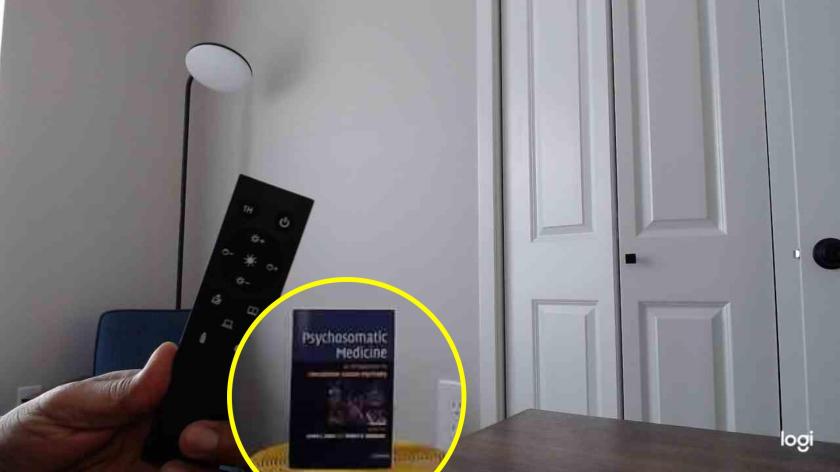
One of them, the Mini Cog, despite being copyrighted, does not require you to pay for the privilege of using it. The video below shows part of it. I didn’t do a comedy bit about the short term recall of 3 objects. The video also flickers when I show the delirium order set; just pause it to stop the flickering.

There used to be a cognitive assessment called the Sweet 16, which started off being non-copyrighted, but then became copyrighted. At first the Sweet 16 mysteriously just disappeared from the internet. You can now download it from the internet, but it’s clearly marked as copyrighted.

The reason the Sweet 16 became unavailable is because a company called Psychological Assessments Resource (PAR) acquired the copyright and then started enforcing it. I found out about this when I could not obtain the PAR version of a cognitive assessment very similar to the Sweet 16 called the Mini Mental State Exam (MMSE) unless I forked over at least $100.

I then started teaching trainees how to use the Montreal Cognitive Assessment (MoCA) because it was free to use without any strings attached. Then it also was copyrighted although you can use it under certain conditions.

Moving right along to telling dad jokes, I found out that dad jokes (and indeed, any joke) can be copyrighted, at least in theory. In fact, it’s hard to enforce the copyright on jokes, even when you can prove originality. Here’s an example of a dad joke I think I made up:

What do you get when you cross marijuana with a Mexican jumping bean? A grasshopper.

Note: this joke may become more important now that the DEA, according to news agencies, plans to reclassify marijuana from Schedule I to III in the near future.

Sena thought it was funny (the joke, not the DEA), which probably means it’s not, technically, a dad joke. That’s according to the authority about dad jokes, Dad-joke University of Humour, (DUH). I’m far from a joke teller at all, as Sena (and anyone else who knows me) would assert. On the other hand, I did graduate from DUH and have a diploma to prove it. You can now give me money.

Furthermore, I also investigated whether something called anti-jokes can be copyrighted. According to the internet, the answer seems to be no. Here’s my attempt of the anti-joke:

Knock, knock.

Who’s there?

The doorbell salesman.

See what I did there? In case you didn’t know, experts say that Knock-Knock jokes are among the hardest to copyright for reasons I suggest you look up later. If you also frame the Knock-Knock joke as an anti-joke (stay with me here), the literalness and mundanity of the so-called punch line makes it virtually impossible to copyright. And, like the dad joke, it’s usually not funny—although there can be exceptions.

Just for the sake of incompleteness, I’ll mention the concept of copyleft, which is not the same as open-source. Although this is usually applicable to computer software, you could broaden it to include dad jokes—I think. Copyleft could mean you can use or modify a dad joke (or anti-joke), spread it freely at parties and whatnot as long as it’s bound by some condition. This includes paying me (no personal checks, please).

What pet do inventors have a love-hate relationship with? A copycat.

You’re welcome.