An Anecdote About “Supportive” Psychotherapy

I just read Dr. George Dawson’s excellent blog post on supportive psychotherapy (“Supportive Psychotherapy—The Clinical Language of Psychiatry.” If you’re looking for an erudite and humanistic explanation of supportive psychotherapy, I think you’re unlikely to find anything superior to Dr. Dawson’s essay.

Now, about my take on “supportive” psychotherapy—there’s a reason why the word supportive is wrapped in quotes. It’s because I have a sort of tongue in cheek anecdote about it based on my experience with a staff neurologist in the hospital. It was long enough ago that I’m not sure what level of training I was in exactly. I was either a senior medical student or a resident doing a rotation on an inpatient neurology unit.

Dr. X was staffing the neurology inpatient service and I happened to overhear a brief conversation he had with the psychiatry consultants about what approach to adopt with a patient who he believed had a gait problem due to a psychological conflict. He wanted a psychological approach, preferring something on the psychodynamic side. I remember the psychiatric consultant said flatly, “We’re pretty biological.” I can’t remember what their recommendation was, but he disagreed. Later in the day, Dr. X gathered all of the trainees and we rounded on the patient in his hospital room.

We all crowded into the room with the patient, who had a severe problem walking due to what seemed to be unexplained hemiparesis. This is where the “supportive” element of Dr. X’s approach to psychological treatment came in.

Whether due to a deformity or past injury (I can’t recall which), Dr. X walked with a pronounced limp. He asked the patient if he would be willing to try walking vigorously with him across his room. Dr. X promised to assist him up and made it very clear that, despite his own limp, he was going to walk with the patient as normally as possible, together using both their legs.

The patient was very hesitant. Dr. X offered a lot of reassurance and encouragement—and then hoisted him up out of bed and marched with him across the room, ensuring that the only way this could happen was if he used both legs. The scene was comical, Dr. X limping but strongly moving in one direction while hauling the patient along with him.

The patient did it—twice and with increasing speed while obviously using both legs, never collapsing to the floor while Dr. X effusively praised him. He looked embarrassed and also seemed genuinely grateful for this miraculous cure. I was impressed.

I’m calling this a form of supportive psychotherapy partly in jest, but also to make a point about what support can mean, both literally and figuratively speaking, under certain circumstances according to how differently trained health care professionals might define psychiatric help.

Later in my career as a psychiatric consultant in the general hospital, I often found that many medical generalists and specialists preferred patients with these kinds of afflictions be transferred to psychiatric wards.

I don’t recall Dr. X ever suggesting that.

The personal identities of both doctor and patient were de-identified.

Finally Got Pics of Gray Catbirds!

I finally got pictures of gray catbirds this morning! They’re swooping around our back porch, like a lot of other birds have been doing lately. See my video from yesterday about the sassy robin!

The last time I got photos of them was about a year and a half ago. As Mr. Charles Muntz said in the movie Up: “I’ve spent a lifetime tracking it. Sometimes years go by between sightings. I’ve tried to smoke it out of that deathly labyrinth where it lives. You can’t go in after it.”

OK, so maybe I’m exaggerating a little. On the other hand, catbirds are more often heard than seen. Many times, all you hear is a mewing noise reminiscent of a cat, but raspy and mixed with a lot of other noises it mimics from other birds (which might be one reason why the literature says it’s related to the mockingbird). And while it doesn’t live in “deathly” labyrinths, the catbird can be almost invisible in thick shrubs where it builds its nest.

The catbirds have a rusty color under their tails, which can be hard for amateurs like me to get a snapshot of. But you can find a lot of excellent videos out there, like the one below:

A Robin Attacks Our Windows!

Tonight, a female robin attacked our windows. My guess is that it’s attacking its own reflection. A lot of backyard birds are out, nesting, stealing our herbs, pooping on our deck. Sena saw a Baltimore oriole and we both saw a female goldfinch trying to do the same thing as the robin—bite the screen.

We’ll see what happens over the next couple of weeks.

Big Mo Blues Show Tune

I was all set to hear the Big Mo Blues Show on KCCK 88.3 tonight starting at 6 pm and guess what? I must have fell asleep sitting up in my chair and didn’t wake up until this song “Bye Bye Blues” by Larry McCray came on a little past 6:30 pm. It makes me think of my wife, Sena-until she starts winning too many cribbage games.

You’ve Got to Read the Red-Hot Novel “Fahrenheit 451” by Ray Bradbury!

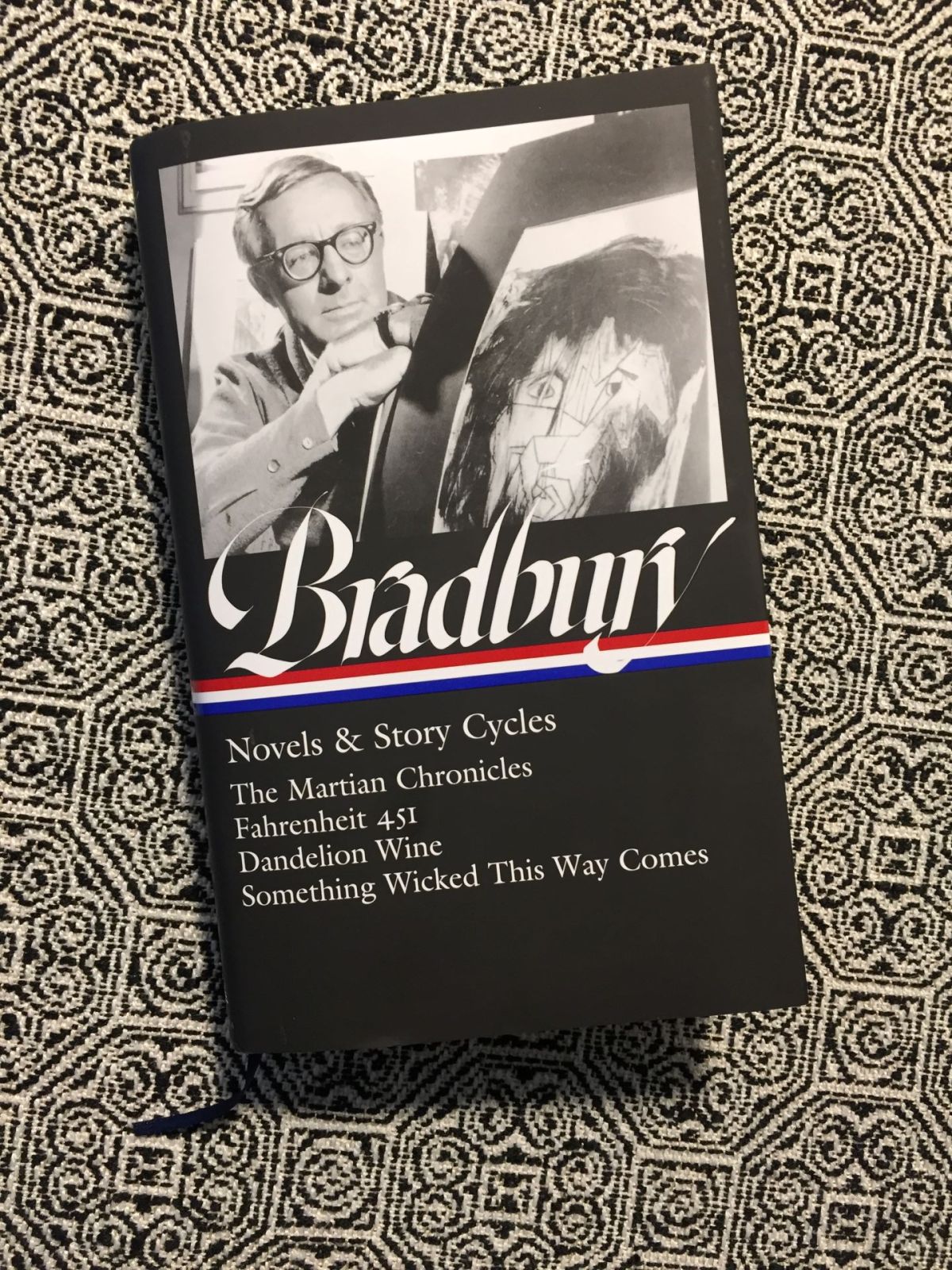
We got new Ray Bradbury’s books and I finally read “Fahrenheit 451,” which was published in 1953. It’s a fascinating book listing 451 ways to remember how to spell the word “Fahrenheit.” Actually, it’s a dystopian novel about society in the future which bans books which firemen burn because the government thinks it’s better for citizens to watch TV than to read.

I remember reading many of his science fiction works when I was a kid. But I never got around to reading “Fahrenheit 451.” My reaction to it was pretty much the same as I had to all of his other books—I found it difficult to put it down.

I started reading it last night. I got through Part 1 and it was late and stormy out so I decided to watch TV. Bad decision. I think the thunderstorm messed with the reception, pixelating and skipping audio along with the usual inane commercials. If I hear the joke one more time about why some snakes procreate only once a year followed by the punch line “That’s because they have e-reptile dysfunction” I’m going to throw my slipper at the screen.

Anyway, I shut the TV off and relaxed, believe it or not, to the thunder and lightening outside. That reminded me of “Fahrenheit 451” because in the novel, people have TV screens the size of the walls of their homes and they watch the same kind of garbage we do nowadays.

The main character, Guy Montag, is a fireman, which means in the dystopian future setting, he and fellow firemen burn any books people are caught hiding in their homes. Then the firemen burn the houses down. I guess that means people with books would have to doomscroll on their various other devices including the smartphones which won’t fit in any pocket of the clothes they wear.

Montag has a “eureka” moment when a 16-year-old girl named Clarisse teaches him there could be other ways to experience the world than by watching how women with swaying breasts in the Blue Chew commercials on the Weather Channel manage to make people really focus on the size of hailstones bombing Boobs Canyon in Utah.

Just like that, Montag reforms and does things that I probably shouldn’t tell you because that would be a major spoiler. Well, I guess I can give you a hint—they involve flame throwers. And have you ever wondered how your supervisor would look wearing a charcoal leisure suit?

Get this book now!

Rambling About the Clear Creek Trail

I put 2.5 miles on the step counter today walking on the Clear Creek Trail, so my feet are complaining a bit more.

Sena didn’t come with me on the walk today because of some gardening she had to do. She deals with foot issues and has been trying shoe inserts lately. Trimming them is an inexact science, but she got it right. The thing was, her feet hurt even worse with the inserts.

That’s because they were upside down. There are raised gel contours around the bottom for extra support, which have to face downwards in the shoe. They were a lot more comfortable for her once they were in right side up.

I didn’t get any shoe inserts because my new shoes fit pretty well. I walked a little further than usual, moving east on the part of the trail which has a fair number of ups and downs. It feels more like a nature walk (which is on the Make It OK Calendar for May Mental Health Awareness Month).

The trail is paved, but the trees and other vegetation are thick and tend to crowd around both sides. The trees sometime bend in archways across the path.

It was tempting to park my butt on the bench, but just sitting might have invited more flying bugs to buzz around my ears—despite applying enough OFF to defend me and a few other people.

We’ve walked this trail many times, but I saw something a little unusual today. There’s a big old dead tree that looks like a tuning fork.

I set a goal to reach a familiar place that’s high enough and cleared of foliage to see the creek from high above. That’s where I saw the 3 ducksateers: mallards in a line swimming up and down the stream in a sort of aimless way, yet determined to make good time.

After I returned to the trailhead, I heard the camera-shy gray catbird I always hear in a tall shrub right next to the trail. I sat in a bench close by with my camera out. It made the typical catbird noises, which sounds like a collection of whistles, creaks, and meows. But it hid in the leaves and when it burst onto the paved trail, it moved too quickly for me to get a shot.

I think the catbird hides in the trees right next to other birds, like robins, just to misdirect you. And that fooled me today–again. I thought I got a video clip of the catbird—but it turned out to be a robin, hamming it up for the camera like robins always do.

So, I included an old picture of a real catbird I took about a year and half ago.

More Bigfoot Encounters on the Clear Creek Trail

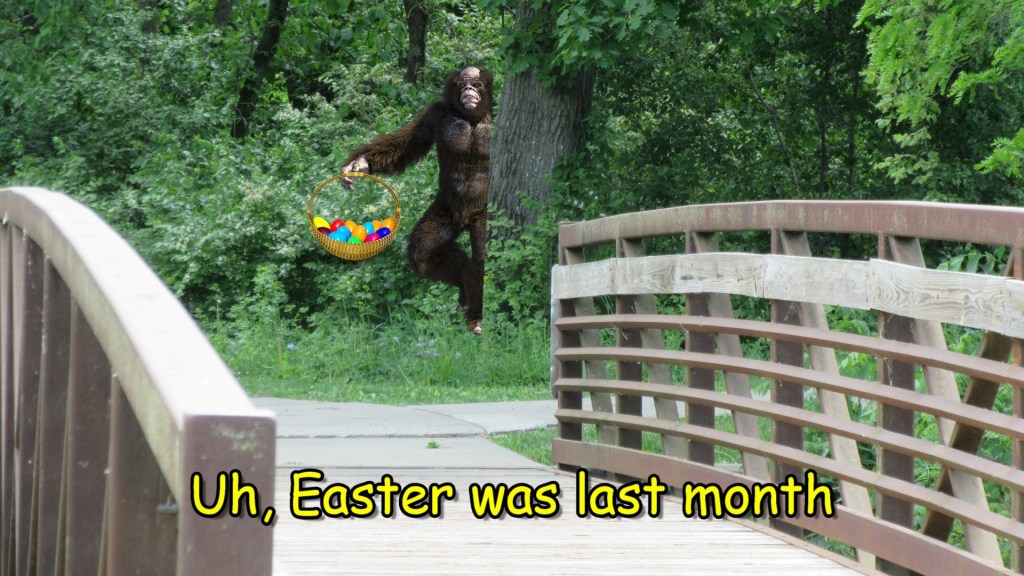
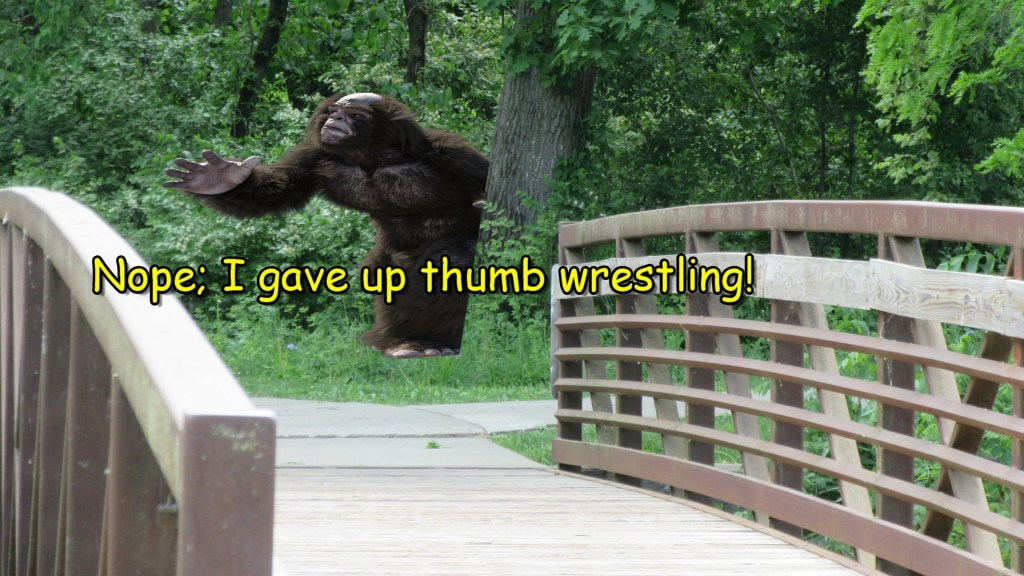
We’ve had encounters with Bigfoot on various walking trails, but most were on the Clear Creek Trail. I guess Bigfoot is one of those interdimensional beings, moving in and out of our world. It takes getting used to.

Avoid getting into thumb wrestling matches with Bigfoot. And moving in and out of various dimensions can get anyone a little mixed up on holiday dates.

It’s Time for an Omelet from the Mister Chef Pizza Maker!

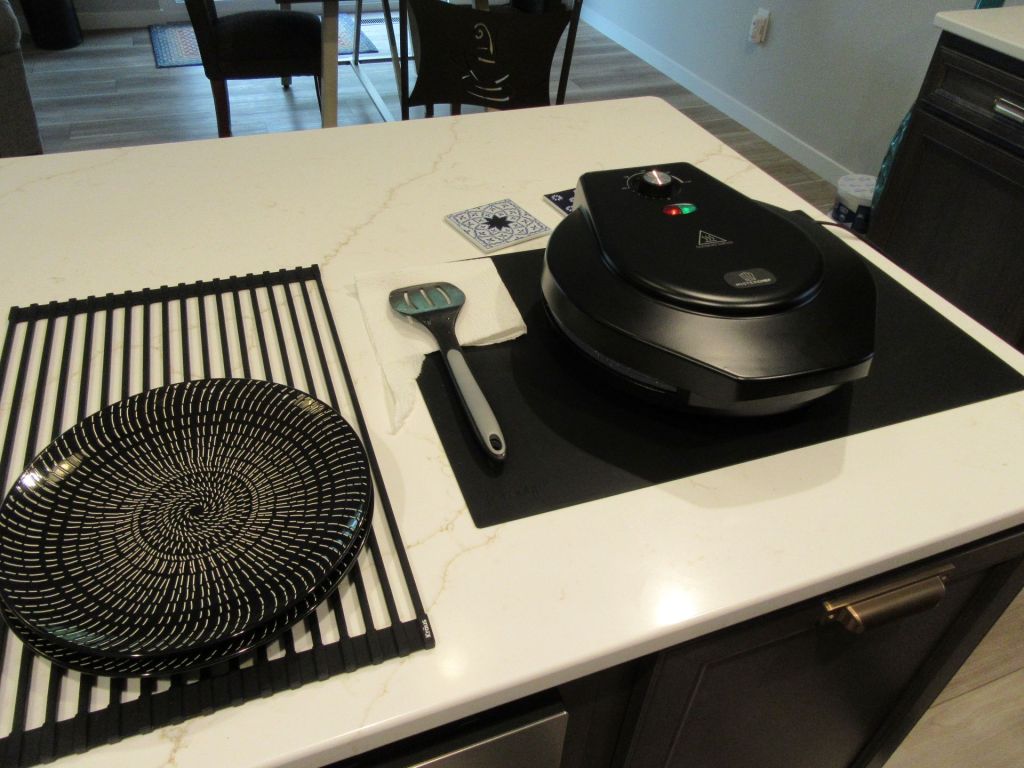
Sena got a Mister Chef pizza oven the other week and it works pretty slick. I’ve cooked a couple of frozen pizzas on it and it’s great for a guy like me—the guy the neighbors alert the fire department about when they get the first whiff of smoke. Some people have no sense of adventure. Hey, if I can operate it, anyone can.

This morning, Sena cooked a ham omelet in about 15 minutes. I guess it just felt like an hour to me because I was hungry.

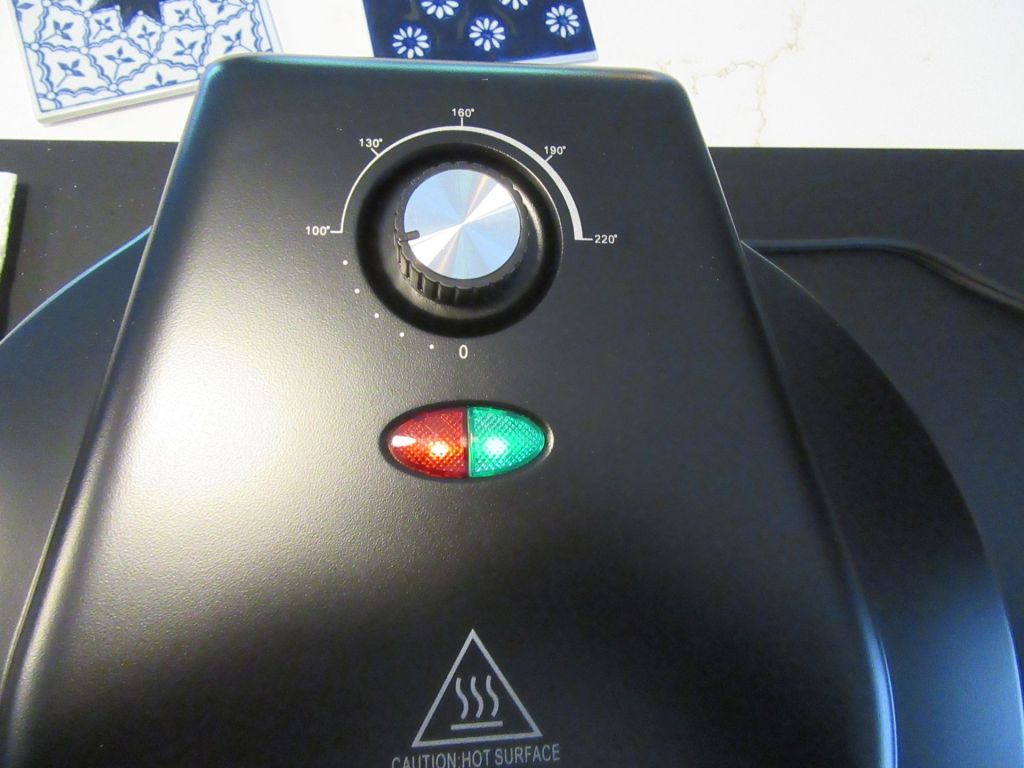
It’s pretty simple. There’s only one knob. It doesn’t correspond to any specific temperature although the instructions call it a “Temperature knob”. You can pretty much crank it to any number although lower numbers mean you have to wait longer for your food.

You just plug it in, turn a temperature knob and wait for the green light to come on, which evidently doesn’t exactly mean you can toss food in it. You have to wait for the red light to come on next. Then you toss the food on the ceramic surface—uh, that’s the bottom surface, not the top, which is the lid. Things just fall down if you put food up there—something to do with gravity.

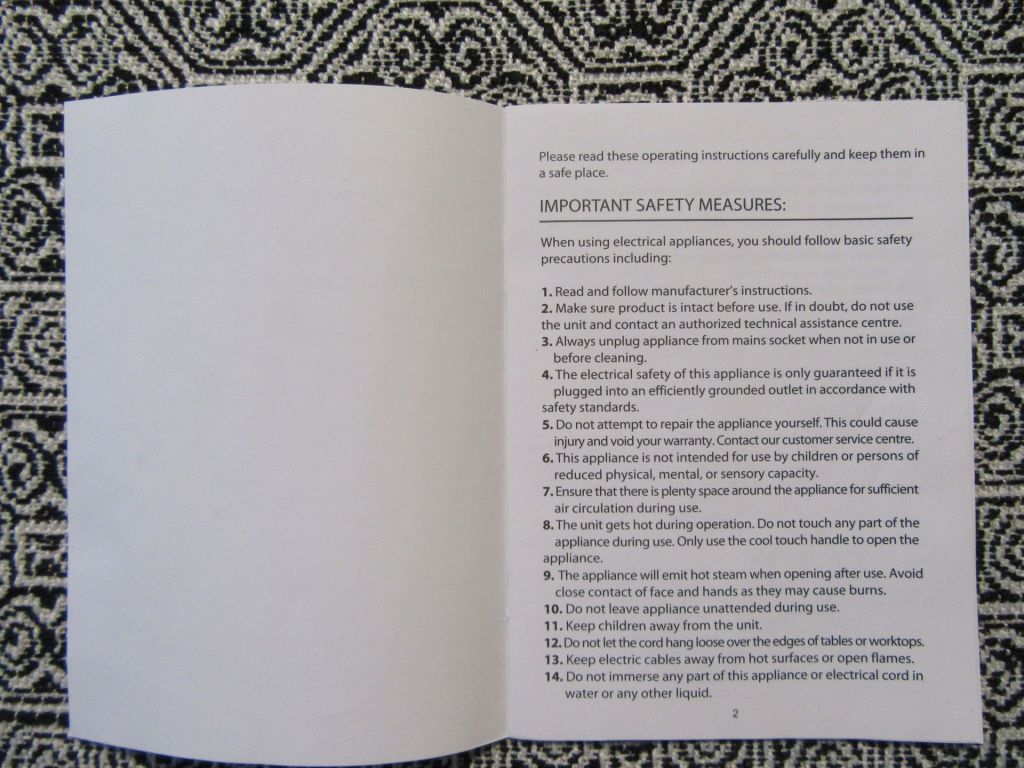
It comes with a little instruction manual. In one place it says you can cook frozen pizza in 15-20 minutes, but then in the cooking time guidance it says it takes 9 minutes. I can tell you; 9 minutes doesn’t melt most of the ice. It also gives you the weight in grams of various foods. I’m not sure how useful it is—we’ve never weighed our frozen pizzas.

Pay attention to the warning about steam release when you open the lid. I guess I have about 4 or 5 outpatient visits to the burn clinic to go—then the skin grafts should hold.

We think the manufacturer must have got wind of me using the Mister Chef because they included a small robot extraterrestrial (ET) assistant to make sure I didn’t do anything rash. It got really nervous when I used it. It tried to calm down the smoke detectors, but I don’t think they could hear it. That’s ok, because I can’t hear the smoke detectors. That happens when you get old.

MisterChef omelet and robot ET assistant (usually not included unless there’s a public safety risk)

The robot ET quit a few days later, something about union benefits not covering incompetent cooks. Wise guy. Anyway, have fun with the Mister Chef and remember what Red Green says; “If the women don’t find you handsome, they should at least find you handy.”

Smile at a Stranger for Make It OK Calendar

So, I’m not strictly following the Make It OK Calendar per day for May Mental Health Awareness Month, at least according to the Iowa Healthiest State Initiative. Sometimes the goals on the calendar may not feel natural on a particular day or the opportunity might not appear.

Today, I’m a few days late on the Smile at a Stranger prompt and I figure better late than never. I was out for a walk to Clear Creek, testing out my other pair of new shoes (they’re black which is the only difference).

I didn’t encounter anyone on the way there, but I did see the geese pair I saw yesterday. I think this is the same pair I’ve seen over the years and they always return to about the same area by the creek where I suspect they nest. They honked raucously as they always do as they flew in from the north before landing on the water. The female walks up the shore a few steps and just stands there while the male floats in the creek close by, protectively. I never get to see exactly where the female enters the tall grass to start building a nest. I wonder if it’s because they both sense some nosy person like me is watching them.

Anyway, on my way back I smiled and greeted 3 people who were strangers to me. One was an old guy like me, out for a walk. We smiled and said hi to each other.

The other two were special. There was a kid on a tricycle, coming in hot down the hill straight for me. There was a big guy I figured was his dad bringing up the rear behind him, murmuring words of warning about the obvious risk of so much hi octane tricycle speed down a hill.

The kid was hurtling down so fast that I thought “Am I going to have to catch him?” It reminds me of an old song written and sung by Bill Withers in 1971, “Grandma’s Hands.” The relevant lyrics:

“Used to issue out a warning
She’d say, Billy don’t you run so fast
Might fall on a piece of glass
Might be snakes there in that grass…”

Then the kid put out both feet and made a long sliding stop just a few yards short of me—and grinned wide.

I grinned back and called out, “Hey, rocket man!” He waved and said “Hi!” And so did his dad, who smiled wide. I said “How you doin’?” and he replied “fine! How are you?” I said “I’m good” or something like that.

Smiles can work that way sometimes.

Further Thoughts on Ray Bradbury’s Short Story, “I See You Never”

This is an update to my post from lasts night on Ray Bradbury’s short story, “I See You Never.” My wife, Sena, happened to mention the naturalization process in the U.S. today.

In fact, we both saw the televised naturalization ceremony at the Iowa State Fair of 2024. During that ceremony, 47 children became citizens. In fact, the U.S. Citizenship and Immigration Services has held a celebratory naturalization ceremony at the Iowa State Fair for at least the last ten years.

There was just such a ceremony last month of 69 immigrants at the University of Northern Iowa.

I had a quick peek at the U.S. citizenship and civics test questions and I’m pretty sure I would have a lot of trouble passing it. I’d probably get shipped back to Mars—which Ray Bradbury wrote a lot about.

The naturalization process isn’t easy. Under federal law, you have to live here in the U.S. at least five years as a lawful permanent resident to be eligible for naturalization, three years if you’re the spouse of a U.S. citizen. You have to learn the language. Many other countries have a similar naturalization process.

There’s no exact number of the USCIS naturalization ceremonies per year, but 818,500 took part in 2024.

Many of those who go through the naturalization process think it’s unfair for others to bypass it by getting into the country by other means.

So, I guess that’s the other side of the short story—the one Ray Bradbury probably didn’t write.