Notes on the Blues and Rivers of Whiskey

I listened to the Big Mo Blues Show last night on KCCK radio (88.3 on your dial) as I usually do on Friday nights. It runs from 6:00 pm to 9:00 pm and you can learn a lot from Big Mo (aka John Heim) about the blues.

He also has a podcast called the Big Mo Pod Show, which is based on his blues show. He gets quizzed about some of the songs he played on Friday night by Producer Noah (as Big Mo calls him). Last night he was on target for all 5 of the songs he played and why he played them.

One of the songs I’ve never heard before but it was done by Taj Mahal and Keb Mo, artists I’m familiar with just from listening to Big Mo’s show. The title was “Diving Duck Blues. The chorus goes “If the river was whiskey and I was a diving duck, I’d dive to the bottom and I’d never come up.”

That led to a discussion of how alcoholism was sometimes (maybe more than sometimes) a part of the life of blues musicians. In fact, the lead off song last night was “Big Road Blues,” sung by Tommy Johnson. His last name just happens to be the same as Robert Johnson who made the song “Crossroads” famous because he claimed he sold his soul to the devil in order to become a great blues musician. Several blues artists made the claim, which Big Mo debunked as a ruse to get fans to pay more money to hear them perform.

But Tommy Johnson struggled with alcoholism and, according to Big Mo, was driven to the point of drinking Sterno, which was poisonous because it contained methyl alcohol.

This can lead you to think that maybe all blues music is gritty, played by alcoholics, and even depressing as declared by the lead character, Navin Johnson, played by Steve Martin in the movie “The Jerk” (a white guy raised by a black family).

Incidentally, this reminds me that a recent study showing that digital cognitive behavioral therapy is effective for those suffering from alcohol use disorder.

Anyway, blues musicians don’t always play sad, gritty music and die from drinking Sterno. One that is actually funny is “You Left the Water Running” by Otis Redding. You can look up the lyrics or listen to anyone who covers the song and it would be difficult not to laugh out loud.

And speaking of covering a song, Bill Withers originally wrote and sang “Lean on Me” back in 1972 which Keb Mo covered recently. I think it’s one of those uplifting examples of blues music which won’t send you diving to the bottom of any whiskey rivers.

Thoughts on X-Files Episode “Sunshine Days”

I saw the X-Files episode “Sunshine Days” again last night. It’s the second time I’ve seen it. It’s about a guy who calls himself Oliver who has telekinetic power and who yearns for a father-son relationship with a paranormal researcher (Dr. Reitz) who studied him when he was a kid named Anthony.  

The set of an old 1970s TV show “The Brady Bunch” was used. It was something Oliver created using the power of his mind. As a child, he used to insist that he and Dr. Reitz watch the show regularly. In his mind, it was the perfect family he always wanted but never had.

Anyway, Oliver (Anthony) endangers his life when he uses his telekinetic powers as an adult. He can’t control them and nearly dies from using them. He ends up near death in the hospital after showing the FBI agents including Scully and Doggett (who replaced Mulder) his miraculous ability. The agents and Dr. Reitz are ecstatic because they think it will change the world and humanity.

But after they realize the life-threatening nature of Oliver’s powers, they all agree, including Dr. Reitz, that Oliver should never use them again. Dr. Reitz even tells Oliver (who now wants to be called Anthony) firmly that he can’t use his power, to which Oliver replies that he can’t be alone. Then, Dr. Reitz tells Oliver that he’ll never have to be alone because he’ll always be with him.

A lot of fans hated it because it was the penultimate episode before the final show of the 9th and final season of the X-Files. It was one of the many Monster-of-the-Week (MOTW) shows that had nothing to do with the extraterrestrial mythology.

I liked the MOTW episodes better the ET/conspiracy shows, and Sunshine Days is one of my favorites. However, I never watched The Brady Bunch and the whole perfectly happy and well-adjusted family idea was ridiculously implausible in my opinion.

I doubt there is such a thing as a perfect family. Mine certainly was not and look how well I turned out. Even in nature, there are examples of savagery that can make you doubt the ultimate wisdom of whoever or whatever is in charge of evolution.

For example, birds can be exquisitely cruel. Cowbirds lay their eggs in the nests of completely different species of birds, where the cowbird chicks bully their weaker nestlings. And surely just about everyone has seen the pitiless pecking of the larger of the two shoebill chicks in which the parents calmly watch as the smaller chick gets stepped on, pushed out of the next and essentially murdered by the bigger chick. This is because the parents know there is not enough water for both.

Even the song “A Boy Named Sue” is based on the natural law of survival of the fittest, which has nothing to do with kindness. Incidentally, that song came out in 1969, the same year that The Brady Bunch show began.

On the other hand, the reconciliation of Anthony with Dr. Rietz always fills me with joy.

Can Artificial Intelligence Learn from My Book?

Recently the publisher of a book co-edited by me and my former psychiatry chair Dr. Robert G. Robinson asked me to sign off on a proposal to involve Artificial Intelligence (AI) in using the work.

The book, “Psychosomatic Medicine: An Introduction to Consultation-Liaison Psychiatry,” is 14 years old now, but is still a practical tool for learners, at least in my opinion.

Interestingly, it looks like the publisher is also trying to contact Dr. Robinson about the proposal through me. I wonder if that means they’re having as much trouble finding him as I have.

I’ve made it clear that I have misgivings about AI, as I’ve indicated in at least one blog post about Google’s AI, which used to be called, Bard which I think has been renamed Gemini. I think AI is prone to spreading misinformation, which has been called “hallucinations” by some writers.

The publisher makes it clear that this proposal regarding AI involvement in our book is an “opt in” choice. I gather that means if I don’t opt in, they’ll continue to bug me about it until I do.

That’s unlikely to happen.

Bathroom Fan Timers are Now Required by Code!

OK, so maybe you already knew that bathroom exhaust fan timers for reducing moisture are required by code.

But we didn’t, which is why we were both a little spooked when the hallway bathroom fan came on all by itself on our first evening in our new house. It has done that a few times, even though we barely use that bathroom. It’s the only bathroom in the house which has a fan timer. I don’t think it’s supposed to come on by itself, so it’s probably haunted.

It’s made by Intermatic and Sena finally flagged down an electrician working in another house under construction on our street who found an instruction manual for our model. He told her it was installed because it’s code.

Imagine if every bathroom in your house had a bathroom fan timer in it. I’m sure some people love the idea. I also realize some people might think it’s crass of me to admit I would love to disable it.

I don’t think I can disable it. The initial setup instructions alone contain 28 steps. Then you get to actually program it, which gets you to 41 steps. If you ever have to edit the programming, you’ll need to develop a serious drinking problem. You have to scan a QR code to get your latitude and longitude. That’s not a joke.

The unit runs partly on batteries. I think the model we have is the ST01 and it takes a single CR2 battery. A newer model takes a different kind of battery and you need two of them. They control the clicking noise and the time and date. You also need strong fingernails or a tiny flat head screw driver to open the battery compartment. See the video below.

If you figure out how to disable it, please comment. Otherwise, I guess you could call the 800 number in the manual to access what might be an automated recorded answering algorithm which ends up recommending mayonnaise or Miracle Whip for your Braunschweiger sandwich.

ADDENDUM 9/10/2024: I pressed the MODE button once and the timer went from AUTO to MAN (manual). We haven’t had it turn on automatically so far after that.

FDA Approves Updated Covid-19 Vaccines to Better Protect Against Currently Circulating Variants

On August 22, 2024, the FDA authorized new Covid-19 vaccines (2024-2025) “to include a monovalent (single) component that corresponds to the Omicron variant KP.2 strain of SARS-CoV-2. The mRNA COVID-19 vaccines have been updated with this formula to more closely target currently circulating variants and provide better protection against serious consequences of COVID-19, including hospitalization and death. Today’s actions relate to updated mRNA COVID-19 vaccines manufactured by ModernaTX Inc. and Pfizer Inc.”

Thoughts on the Homeless Mentally Ill

The homeless man who lives on the sidewalk outside our hotel reminds me of a couple of things. One is Dr. Gerard Clancy, MD who is University of Iowa Health Care Professor of Psychiatry, Professor of Emergency Medicine, and Senior Associate Dean of External Affairs.

I remember Gerry, who was in the department of psychiatry when I was a resident. I saw his picture in the newspaper and hearing about him riding a bicycle around Iowa City doing a sort of outreach to the homeless mentally ill.

I found an archived article mentioning him published in 1995 in the Daily Iowan. The story starts on the bottom of the front page, entitled “I.C. opens new doors for area’s mentally ill.” It continues on page 9A.

The story mentions Dr. Clancy and what was called then the Clinical Outreach Services and the Emergency Housing Program (EHP). The challenges then sound a lot like what they are now: long waiting lists for psychiatric evaluation and treatment, a lack of funding for the treatment of mental illness, and a lack of preventive care. The most common mental illnesses in the homeless mentally ill are chronic schizophrenia, schizoaffective disorder, and bipolar disorder. The idea of reaching out to them “on their own turf” as Clancy was quoted, was to help them feel more comfortable talking about their mental illness.

The housing situation for this population of those struggling with mental illness was dismal then and it’s still dismal.

The homeless guy I’ve been calling Bob lives on the sidewalk next to a busy street. It’s just my opinion that he’s mentally ill based on my observations of his behavior. I’ve never tried to talk to him. However, Bob gets visits from people who obviously have differing views about the way he lives.

Some of them do talk to him and, although I can’t hear their conversations, the actions tell me important things. Some bring him what I call “care packages,” often food, water, and other items. They may start by acting kind, although may get impatient with him. Others try to clean up his sidewalk, and may criticize him. The police occasionally visit and have so far not taken him into custody.

It looks like things have not changed much since 1995 regarding the homeless mentally ill based on what I write here about my observations. In fact, it’s easy to find current news stories that say things are getting worse.

At the beginning of this post, I said I found a couple of things. The other thing was a very thorough teaching presentation about the current state of formal outreach to this population. It’s available on the web as a power point presentation by another University of Iowa faculty, Dr. Victoria Tann, MD, entitled “Assertive Community Treatment 101.”

Dr. Tann is currently an IMPACT Team psychiatrist. It’s an excellent source of background on the history of this effort at outreach to the homeless mentally ill. It also summarizes what’s happening with the program now.

Alcohol is Bad for Old Guys

I took a quick peek at the study published recently in the Journal of the American Medical Association (JAMA) that a few news agencies are reporting on which says alcohol in moderation is bad for older persons. So much for moderation.

Actually, the full abstract is:

Ortolá R, Sotos-Prieto M, García-Esquinas E, Galán I, Rodríguez-Artalejo F. Alcohol Consumption Patterns and Mortality Among Older Adults With Health-Related or Socioeconomic Risk Factors. JAMA Netw Open. 2024;7(8):e2424495. doi:10.1001/jamanetworkopen.2024.24495

“Conclusions and Relevance: In this cohort study of older drinkers from the UK, even low-risk drinking was associated with higher mortality among older adults with health-related or socioeconomic risk factors. The attenuation of mortality observed for wine preference and drinking only during meals requires further investigation, as it may mostly reflect the effect of healthier lifestyles, slower alcohol absorption, or nonalcoholic components of beverages.”

Conclusions: “This cohort study among older drinkers from the UK did not find evidence of a beneficial association between low-risk alcohol consumption and mortality; however, we observed a detrimental association of even low-risk drinking in individuals with socioeconomic or health-related risk factors, especially for cancer deaths. The attenuation of the excess mortality associated with alcohol among individuals who preferred to drink wine or drink only during meals requires further investigation to elucidate the factors that may explain it. Finally, these results have important public health implications because they identify inequalities in the detrimental health outcomes associated with alcohol that should be addressed to reduce the high burden of disease of alcohol use.”

The news stories play a little fast and loose with the headlines, which tend to gloss over the effect of health-related and socioeconomic risk factors. But, there’s no doubt in my mind that most people could do without alcohol.

Personally, I would have a couple of 12-ounce bottles of beers while watching football games or listening to the Big Mo Blues Show on KCCK Blues and Jazz Radio station on Friday nights. I hardly drank at all in terms of the grams per day metric.

But I’ve not imbibed since we got so busy selling our old house and camping out in a hotel while waiting for our new house to be built. Not surprisingly, I don’t miss it. When I was a young guy, I drank more and even smoked cigarettes. That was a long time ago.

In fact, when I look back on those days, I remember the factors that tended to limit my use of those substances. Take cigarettes—to the landfill if you don’t mind. I was what you would call a “sometimey smoker” because after a few days I suffered a sore throat, blunted taste for food, stuffy nose, lower appetite (bad for a baseline skinny guy) and fatigue. I just couldn’t stick with smoking long enough to make it a habit.

I’m going to pick on wine a little because the article alludes to the idea that it might have some health benefit. When I was a kid, I once had a lot too much wine which led to a longstanding inability to even stand the smell of it for years. I still never drink wine.

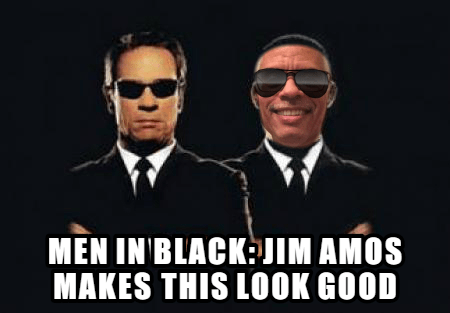
There are many things that can be habit forming. I’m beginning to wonder if watching Men in Black movies might be one of my weaknesses. I don’t watch any other movies as often as I do the MIB trilogy films. I’ve watched them dozens of times and I don’t have a good explanation for it. I think they’re funny and I can always use a good laugh.

Agent K: After neuralyzing Officer James Edwards, he and Agent K are finishing a meal in a café while K is delivering the punchline to a joke, “Honey, this one’s eating my popcorn! Get it?” Agent K laughs uproariously.

Officer James Edwards: Looking dazed from the recent neuralyzer blast, asks “Who are you?”

Agent K: “You see, James, you are a nice young man, but you—need to lay off the sauce.”

The quote is probably not word for word. I didn’t look it up on the web. It’s just as I remember from seeing the movie so often. And that’s partly because, for the most part, I lay off the sauce.

Thoughts About Psychedelic Assisted Psychotherapy

I read the Psychiatric Times article “FDA Issues CRL to Lykos for MDMA-Assisted Therapy.” The short story is that the FDA essentially told the drug company Lykos that their study of the efficacy of MDMA-assisted treatment of PTSD needs more work.

I tried to wade through the on-line documents of the FDA’s meeting on June 4, 2024. There are hundreds of pages and I didn’t go through every page of the transcript. The minutes were succinct and much easier to digest.

I’m going to simply admit that I’m biased against using psychedelics in psychiatry for personal and professional reasons. I’m not a research scientist. I’m a retired consultation-liaison psychiatrist. I saw many patients with a variety of psychiatric diagnoses including PTSD and substance use disorders. I’m not opposed to clinical research in this area, but I’m aware of the difficulty of conducting it.

In that regard, I want to also admit that I’m very susceptible to being influenced by a former colleague’s remarks about the quality of the research in question in the Lykos study. Dr. Jess G. Fiedorowicz, MD, PhD formerly was formerly on staff at University of Iowa Health Care. He’s now the Chief of Mental Health at The Ottawa Hospital where he’s also Professor and Senior Research Chair in Adult Psychiatry, Department of Psychiatry, University of Ottawa, Ontario. His remarks in the transcript are typical for his erudition and expertise as a clinician scientist.

It’s difficult to wade through the pages of the FDA transcript and I couldn’t digest all of it, by any means. But if you’re interested in reading both sides of this issue, it’s a good place to get the best idea of the committee members’ thinking about it. The minutes are much easier to read and provide a succinct summary.

I realize the Psychiatric Times article editor doesn’t agree with the FDA recommendations for further study of psychedelic-assisted psychotherapy for PTSD. It may or may not influence the University of Iowa’s study of psilocybin. In my opinion, the FDA did the right thing.

Verbal De-escalation: University of Colorado School of Medicine Video Series cont. Chapter 5

Simpson, Scott & Sakai, Joseph & Rylander, Melanie. (2019). A Free Online Video Series Teaching Verbal De-escalation for Agitated Patients. Academic Psychiatry. 44. 10.1007/s40596-019-01155-2.