Old and Busted Juggling Balls

As you may know, I started juggling in mid-October. The Learn to Juggle kit came with 3 balls. After practicing for over a month and a half, they are old and busted.

The seams are splitting and the granules are flying out, as they smack my hands or hit the floor, computer, walls, and other objects. I hope I got most of them vacuumed up.

The old and busted juggling balls are retired now. For now, I practice with sticky ornamental balls that are not meant for juggling, but which will serve in a pinch.

University of Iowa Psychiatry Residents Get Shout Outs

Recently, University of Iowa psychiatry residents worked hard enough to get shout outs. One of them was exemplary performance on the consultation and emergency room service. The service was following over two dozen inpatients and received 15 consultation requests in a day. This is a staggering number and the resident on the service did the job without complaints. In addition, the resident was the only trainee on the service at the time. Other residents were working very hard as well.

This high level of performance is outstanding and raises questions about health care system level approaches to supporting it.

I read the abstract of a recently published study about Mindfulness Based Stress Reduction (MBSR) compared to medication in treating anxiety in adults (Hoge EA, Bui E, Mete M, Dutton MA, Baker AW, Simon NM. Mindfulness-Based Stress Reduction vs Escitalopram for the Treatment of Adults With Anxiety Disorders: A Randomized Clinical Trial. JAMA Psychiatry. Published online November 09, 2022. doi:10.1001/jamapsychiatry.2022.3679).

On the day I read the abstract, I saw comments which were cringeworthy. The commenter is an outpatient psychiatrist in private practice who had some criticisms of the study. He thought the report of results at 8 weeks was inadequate because symptoms can recur soon after resolution.

Another problem he mentioned is worth quoting, “A course of treatment that requires as much time as the MBSR course described in the study would be out of the question for most of my patients, most of whom are overworked health care professionals who don’t have enough time to eat or sleep. Telling people who are that overworked they should spend 45 minutes a day meditating is the “Let them eat cake” of psychotherapy.”

That reminded me of a quote:

“You should sit in meditation for twenty minutes every day—unless you’re too busy; then you should sit for an hour.”

Zen Proverb

I know, I know; I should talk—I’m retired. Actually, I took part in an MBSR course about 8 years ago when I noticed that burnout was probably influencing my job performance on the psychiatry consultation service. I thought it was helpful and I still practice it. I was lucky enough to participate in the course after work hours. The hospital supported the course.

The residents who are being recognized for their hard work on extremely busy clinical services may or may not be at high risk for burnout. They are no doubt extra resilient and dedicated.

And the University of Iowa health care system may also be offering a high level of system support for them. I don’t see that University of Iowa Health Care is on the list of the American Medical Association (AMA) Joy in MedicineTM Health System Recognition System, but that doesn’t mean they aren’t doing the kinds of things which would merit formal recognition.

Anyway, they all get my shout out.

What Would Make Psychiatry More Fun?

I just read Dr. George Dawson’s post “Happy Labor Day” published August 31, 2022. As usual, he’s right on the mark about what makes it very difficult to enjoy psychiatric practice.

And then, I looked on the web for anything on Roger Kathol, MD, FACLP. There’s a YouTube video of my old teacher on the Academy of Consultation-Liaison Psychiatry (ACLP) YouTube site. I gave up my membership a few years ago in anticipation of my retirement.

I think one of my best memories about my psychiatric training was the rotation through the Medical-Psychiatry Unit (MPU). I remember at one time he wanted to call it the Complexity Intervention Unit (CIU)—which I resisted but which made perfect sense. Medical, behavioral, social, and other factors all played roles in the patient presentations we commonly encountered with out patients on that unit where we all worked so hard.

Dr. Kathol made work fun. In fact, he used to read selections from a book about Galen, the Greek physician, writer and philosopher while rounding on the MPU. One day, after I had been up all night on call on the unit, I realized I was supposed to give a short presentation on the evaluation of sodium abnormalities.

I think Roger let me off the hook when he saw me nodding off during a reading from the Galen tome.

Dr. Dawson is right about the need to bring back interest, fun and a sense of humor as well as a sense of being a part of what Roger calls the “House of Medicine.” He outlines what that means in the video.

What made medicine interesting to me and other trainees who had the privilege of working with Roger was his background of training in both internal medicine and psychiatry. He also had a great deal of energy, dedication, and knew how to have fun. He is a great teacher and the House of Medicine needs to remember how valuable an asset a great teacher is.

Thoughts on Doctors Going On Strike

I read Dr. H. Steven Moffic’s two articles in Psychiatric Times about the strike by mental health workers at Northern California Kaiser Permanente (August 16 and 26, 2022). So far, no psychiatrists have joined the strike.

However, this piqued my interest in whether psychiatrists or general physicians have ever gone on strike. I have a distant memory of house staff voicing alarm about a plan by University of Iowa Hospital & Clinics to reduce health care insurance cost support many years ago. It led to a big meeting being called by hospital administration to discuss the issue openly with the residents. The decision was to table the issue at least temporarily.

It’s important to point out that the residents didn’t have to strike. I don’t recall that it ever came up. But I think hospital leadership was impressed by the big crowd of physician trainees asking a lot of pointed questions about why they were not involved in any of the discussions leading to the abrupt announcement that support for defraying the cost of house staff health insurance was about to end.

That’s relatively recent history. But I did find an article on MedPage Today written by Milton Packer, MD (published May 18 2022) about what was called the only successful strike by interns and residents in 1975 in New York. I don’t know if it included psychiatric residents; they weren’t specifically mentioned.

In 1957, the Committee of Interns and Residents (CIR) in New York City and voted to unionize to improve appalling working conditions. They won the collective bargaining agreement, the first ever to occur in the U.S. because they went on strike, which hamstrung many of the city’s hospitals. Medical faculty had to pitch in to provide patient care.

After 4 days, the hospitals agreed to the residents’ demands. However, the very next year, the National Labor Relations Board ruled that residents were classifiable as “students,” not employees, which meant they weren’t eligible to engage in collective bargaining. This led to a reversal of the gains made by the strike.

Residents who are unionized voted to strike at three large hospitals in California in June of this year. They reached a tentative contract deal at that time. The news story didn’t mention whether there were any psychiatrists in the union.

There has never been a union of residents at The University of Iowa Hospitals & Clinics. I was a medical student and resident and faculty member for 32 years. I saw changes in call schedules and work loads that were the norm for the exhausting schedules that led to horrors like the Libby Zion case in New York.

Even as a faculty member on our Medical-Psychiatry inpatient unit, the workload was often grueling. I co-attended the unit for years and during the months I was scheduled to work there I shared every other night call with an internist for screening admissions. I was sometimes scheduled for several months at a time because it was difficult to find other psychiatrists willing to tackle the job.

If residents had wanted to unionize and voted to strike then, my internist colleague and I probably could have filled in for them.

But I would never have considered going on strike myself. It would have been next to impossible to find any other psychiatrist to fill in for me. And if other psychiatrists had gone on strike? We might have won a better deal—but only by hurting the patients and families who needed us.

I suspect my attitude is what underlies the impressions shared in Robert G. Harmon’s article, “Intern and Resident Organizations in the United States: 1934-1977,” in the 1978 issue of the Milbank Quarterly.

The house-staff choice of unionization as a formal process has disturbed some health professional leaders. One has pointed out that for a house officer to don another hat, that of striking union member, in addition to those of student, teacher, administrator, investigator, physician, and employee, may be a regrettable complexity that will further erode public confidence in physicians (Hunter, 1976). Others have seriously questioned the ethics and morality of physician strikes (Rosner, 1975). -Milbank Memorial Fund Quarterly/Health and Society, Vol. 56, No. 4, 1978.

When I graduated from medical school, I believed in the cultural view of the physician as a professional. My first allegiance was to the patient and family. I paid dearly for holding that stance. Sena reminds me of the times my head nearly dropped into my soup when I was post call. And I did struggle with burnout.

But I retired because I thought it was time to do so. I don’t think of it as a permanent strike. I hope things turn out all right.

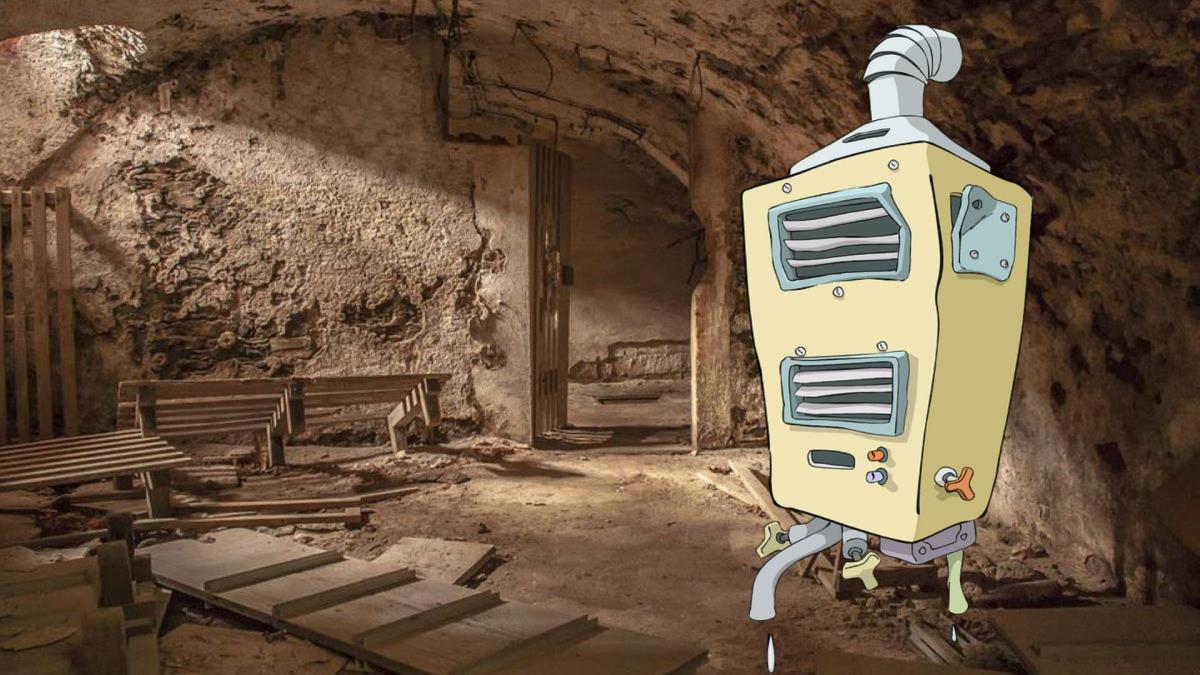
Countdown to Hot Water Heater Replacement

Well, even though our hot water heater was temporarily fixed, there is no guarantee that it won’t fail again between now and later this week. That’s when we’re scheduled to have the new water heater installed

That will cost approximately 10 billion dollars. This item will be the major selling point for our house because we’ll have to sell it immediately in order to move to the poor house.

We have insurance of course. We know what our deductible will be, although we’re not exactly sure how much the insurance company will pay. Maybe they’ll want to know whether we tried to “fix” the water heater first.

Technically, we did that although it could go out again during a shower. That could mean a trip to the emergency room for treatment of rapid hypothermia including surgical removal of icicles from various bodily orifices.

There may be an upside to that. Flash freezing could mean we could preserve ourselves for the future when scientists figure out how to slow down or even stop the aging process.

In fact, that reminds me; Sena saw a news item indicating that there may be a class of medications called “senolytics” that could allow humans to live up to 200 years.

The article doesn’t say what kind of shape you’d be in around that age. What are the implications for retirement age? Would that have to be postponed until you’re over a century old? What would it be like to be that old? Maybe we could ask certain entertainers who are making a living in Branson, Missouri.

How much would senolytics cost at the pharmacy? Probably about 10 billion dollars per pill.

How about extending the working life of water heaters?

Thoughts on the Song “Against the Wind”

A couple of days ago, while we were playing cribbage, Sena asked me who sang the song “Against the Wind.” I offered a name, which later turned out to be wildly wrong. It bugged her so much she got up from the cribbage game and went to the computer to look it up.

Of course, Bob Seger wrote the lyrics and sang it. She asked me what I thought it meant. I wasn’t sure at the time. I hadn’t thought about it for a really long time.

I read about it on the web. I didn’t know what the lyric “8 miles a minute” meant and found a forum message saying that it corresponds roughly to the speed of a cruising airliner which is about a “480 mph.” That’s technically more like 480 knots, which converts to about 550 mph.

Anyway, it’s really fast and might be a way of saying you’re moving through life at breakneck speed. In Seger’s case, it might have had a more concrete meaning, referring to flying all over from concert to concert.

The song was released in 1980, which was about the time we moved to Ames so I could go back to college at Iowa State University (ISU). It was a big change from working as a draftsman and land surveyor’s assistant in my hometown of Mason City.

If you extend the “against the wind” metaphor a little bit, Sena and I were both moving against the wind in terms of our place in society, income level, location and educational attainment. I thought I wanted to be an engineer at the time, mostly because I had worked for years for consulting engineers.

Backing up in time a little, I had done some undergraduate college work previously at an HBCU (historically black college/university), Huston-Tillotson College (now Huston-Tillotson University) in Austin, Texas in the mid-1970s.

That was also a kind of move against the wind. I grew up in Mason City, and often I was the only black kid in grade school. I got used to that, although the racism was more overt back then and it was difficult sometimes to bear up against that kind of wind. On the other hand, I felt like a fish out of water at H-TC. I just felt like I didn’t fit in. It was part of the reason I left Austin.

It was also challenging to fit in at ISU. I figured out quickly that I would never complete the engineering degree program. The math and hard science courses were tough from the beginning and only got harder. I realized I was going against the wind there.

So, I changed my major and settled on medical technology, which led to working in a hospital laboratory. But it took about a year to get a job after graduation. Looking back, It was a frustrating time and that really felt like pushing against a headwind. I don’t know what I would have done without Sena.

I finally got into medical school at the University of Iowa. Biostatistics and Biochemistry were brutal. I was very close to quitting before the 3rd year of clinical rotations. I doubted I was cut out to be a physician. I thought about going back to surveying. But I didn’t.

Many deadlines, commitments, and struggles leading to brief forays from academia into private practice led me to think of myself as more of a fireman or a cowboy than an academician. Yet I spent most of my career at the University of Iowa.

Now I’m retired. Sena is my shelter against the wind. I guess if you look hard enough, just about anybody can relate to Bob Seger’s song. Let the cowboys ride.

Thoughts on the GuideLink Center Incident

The attack a few days ago by what was most likely a mentally ill person on staff at the recently opened GuideLink Center in Iowa City reminded me of what may appear to be disparate views by mental health professionals on the link between mental illness and mass violence perpetrators.

The GuideLink incident involved a person who assaulted GuideLink staff and who also left bags containing incendiary devices at the center and another building in Iowa City. The person is being charged with terrorism and is currently in custody in the Johnson County Jail.

I have not seen information about any injuries sustained by the mental health center staff. There were no explosions or fires at either location where incendiary devices were left. Bomb squad experts removed the devices. It’s not clear whether the perpetrator had been a GuideLink Center client.

The GuideLink Center opened in February 2021 and by all reports is a welcome and very much needed crisis stabilization mental health resource in the community. The staff members are dedicated to their calling.

Dr. H. Steven Moffic, MD, a retired psychiatrist who writes for Psychiatric Times, readily says that the perpetrators sometimes do have mental illness that at least contributes to committing acts of mass violence. Dr. George Dawson, MD, another retired psychiatrist, seems to say that the major reason for mass shootings is the ready availability of guns, a culture of gun extremism, and mental illness accounts for a small proportion of acts of mass violence.

But neither Dr. Moffic nor Dr. Dawson say that it’s only either mental illness or guns (or other instrument of mass violence) that lead to acts of mass violence. Both are important.

I’m a third retired psychiatrist and by now some readers might be asking themselves whether they should listen to any retired psychiatrist. Experience counts.

Speaking for myself, as a general hospital psychiatric consultant I was frequently faced with violent patients in the general hospital. Often, I found it necessary to ask a judge for a court order to involuntarily hospitalize a violent and/or suicidal patient on a locked psychiatric unit by transfer from an open medical or postsurgical unit.

In order to obtain an order in the state of Iowa, I had to be able to state to the judge that the patient in question had a treatable mental disorder and was an acute threat to himself and/others. In most situations, I had an open bed on a locked psychiatric unit available ahead of time.

Even if a Code Green was necessary, I usually had an inpatient resource to which I could move the patient. A Code Green is a show of force or takedown maneuver by a specially trained team to control a violent patient while minimizing injury to everyone involved.

I don’t know if that kind of approach is even possible in a community crisis stabilization setting like the GuideLink Center. I think it’s fortunate that it partners with many other community resources including the Johnson County Sheriff’s Office.

The outcome of the incident at the GuideLink Center was that the overall safety of the staff, the patient, and the community was preserved. More resources like this are needed everywhere. They deserve all the support we can give them.

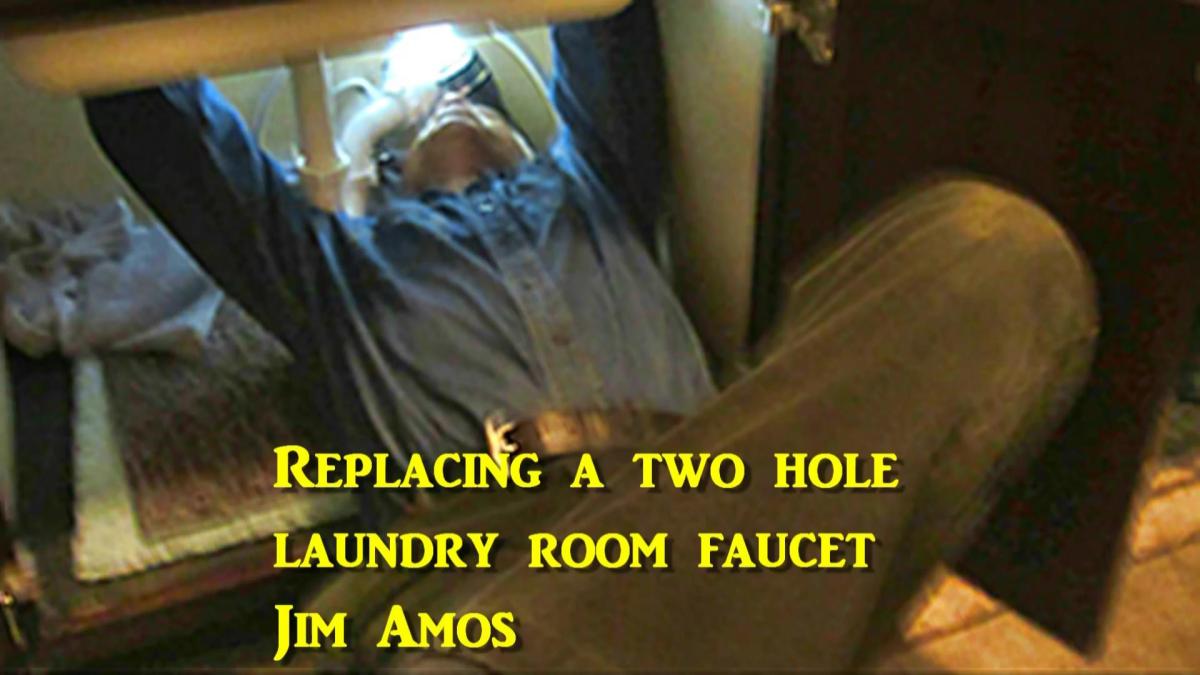
Replacing a Two-Hole Faucet

I’m the least handy person on the planet. If I can replace a two-hole faucet, then even Bigfoot can do it.

Replacing the two-hole faucet is probably one of the easiest DIY jobs you can do. That doesn’t mean I didn’t have a problem or two with it.

When you get to the step in which you flush the water lines before installing the new faucet, turn the water lines back on very slowly. If you turn them back on as fast as you turned them off, the water pressure will blast you like Niagara. Water will go everywhere.

Hey, I’m an expert. And do you know what the definition of an expert is? A retired drip under pressure.

The Written Word is Blurred

I ran across this quote the other day: littera scripta manet. The English translation is, I think, “the written word endures.”

Not to dwell too much on the prosaic side of the issue which is that, for me, often the word has been blurred because of problems with my vision. I just had retinal detachment surgery a little over a month ago and I’m making a good recovery. But early on I had a lot of trouble with blurry vision, tearing, and light sensitivity.

Just the other night though, I was able to read a section of a book without having as much blurred vision as I did before the surgery when I looked up from the page at something distant. I’ve been wearing progressive lenses for many years and it probably got worse because of the detached retina, which was chronic or maybe acute on chronic.

Now to get beyond trivialities, I saw the quote above in an issue of the University of Iowa publication, Iowa Magazine. It was in the last Old Gold column of University Archivist, David McCartney. He retired in March of this year. The title was “Old Gold: The Enduring Power of the Written Word.”

He notes the Latin expression is on the seal of the U.S. National Archives and Records Administration. McCartney’s point is that technology can undermine as well as strengthen the power of the written word. He identities Horace as the originator of the expression, “the written word endures.”

I went pecking around the internet and found out that a lot of people think an educator named Neil Postman was the originator of this quote. What makes me doubt this is that the original is in Latin, which suggests a much older origin. He was born in 1931 and died in 2003. Interestingly, Postman criticized the effect of technology on thought and culture.

A website that seems dedicated to explaining English translations of Latin indicates that the quote comes from a longer expression: Vox audita perit, littera scripta manet, which translates to “the spoken word perishes, but the written word remains.” One contributor says the originator was Horace. Another insists that “littera” does not mean word at all, although concedes that the proposed translation is correct, nevertheless.

Further, there is a Wikipedia entry which cites the Latin expression differently, “verba volant, scripta manent,” which in English is “spoken words fly away, written words remain.” The author says the proverb originated from a speech of senator Caius Titus to the Roman Senate.

Anyway, McCartney points out that the world is becoming increasingly digitized and that the average website lasts only a little over two and a half years. Some important digital records have been lost, unreadable (blurred?) because of improper management.

My previous blog survived about 7 years but is lost. Maybe that’s not such a bad thing. My current blog is a little over 3 years old. So far, I’m beating the odds as far as typical longevity, but is it worthwhile?

Both written and digital records have strengths and weaknesses in terms of durability. And deciding what to preserve and how is essential to any society. We need good stewards to help us decide.

Good luck in your retirement, David McCartney. I’m sure the University of Iowa treasures your stewardship. Let the written word endure unblurred.

Short History of C-L Psychiatry Fellowship at Iowa

I read a short article, “The case for pursuing a consultation-liaison psychiatry fellowship” by Samuel P. Greenstein, MD in Current Psychiatry (Vol. 1, No. 5, May 2022). After 3 years as an attending, he found his calling as a C-L psychiatrist, especially after getting teaching awards from trainees. But when he applied to academic institutions for position as a C-L academic psychiatrist, people kept advising him to complete a fellowship training program in the subspecialty first. He gave it careful thought and did so, even he called it going “backwards” in his career.

On the other hand, he believes C-L fellowships will help meet the challenges of addressing rising health care costs and improving access to what most people see as the critically important goal of providing access to integrated mental health and medical care.

I’ve been retired from consultation-liaison psychiatry for two years now. I get an enormous sense of achievement on the rare occasions when I hear from former trainees who say things like “For me you were…one of the most outstanding attendings I had at my time at Iowa.” And “I can at least take comfort that University of Iowa is still at the forefront of psychiatry.”

Several years ago, one of the residents suggested starting a Psychosomatic Medicine Interest Group (PMIG). This was before the name of the subspecialty was formally changed to Consultation-Liaison Psychiatry in 2018. I know many of us were very pleased about that.

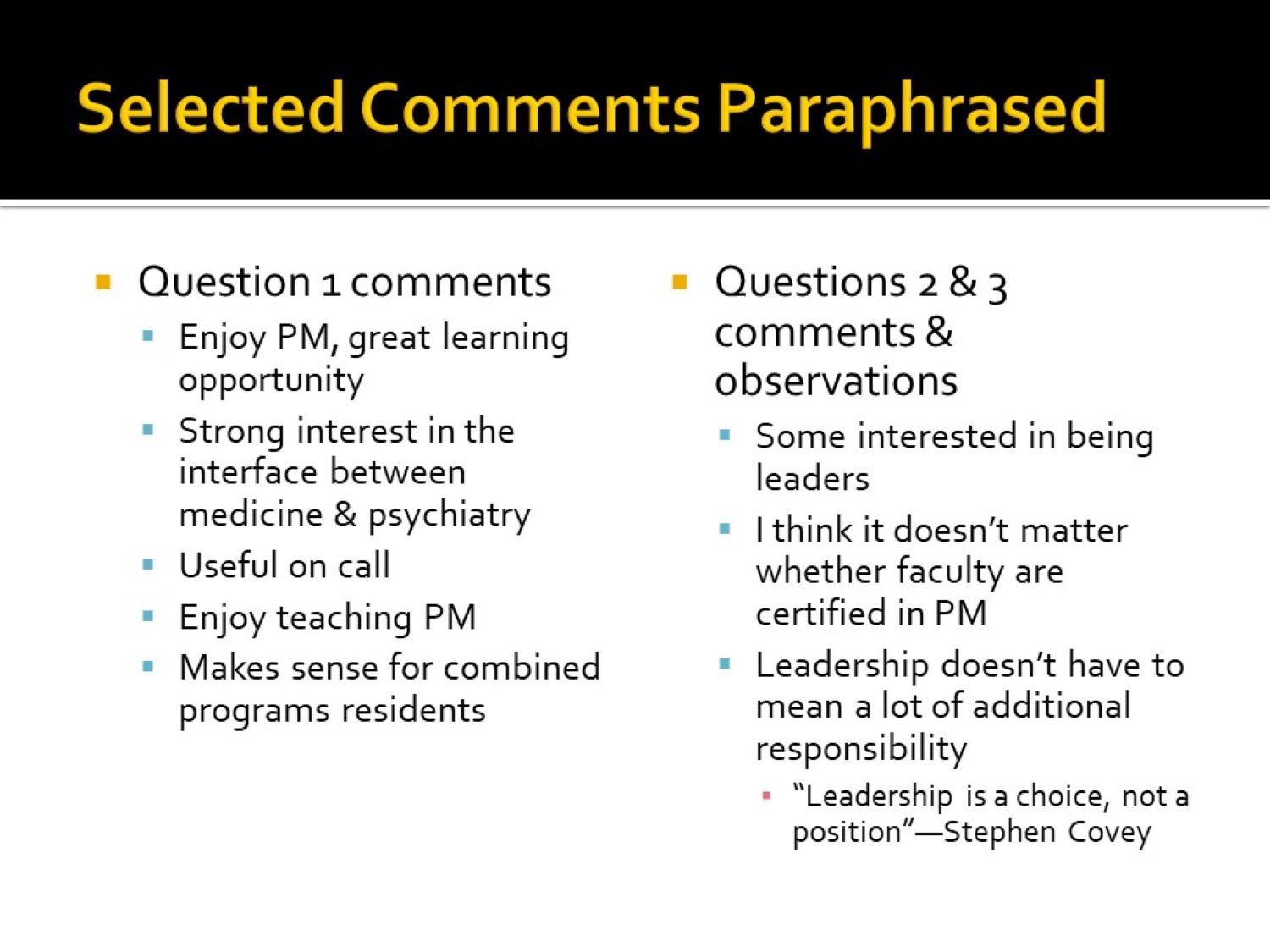
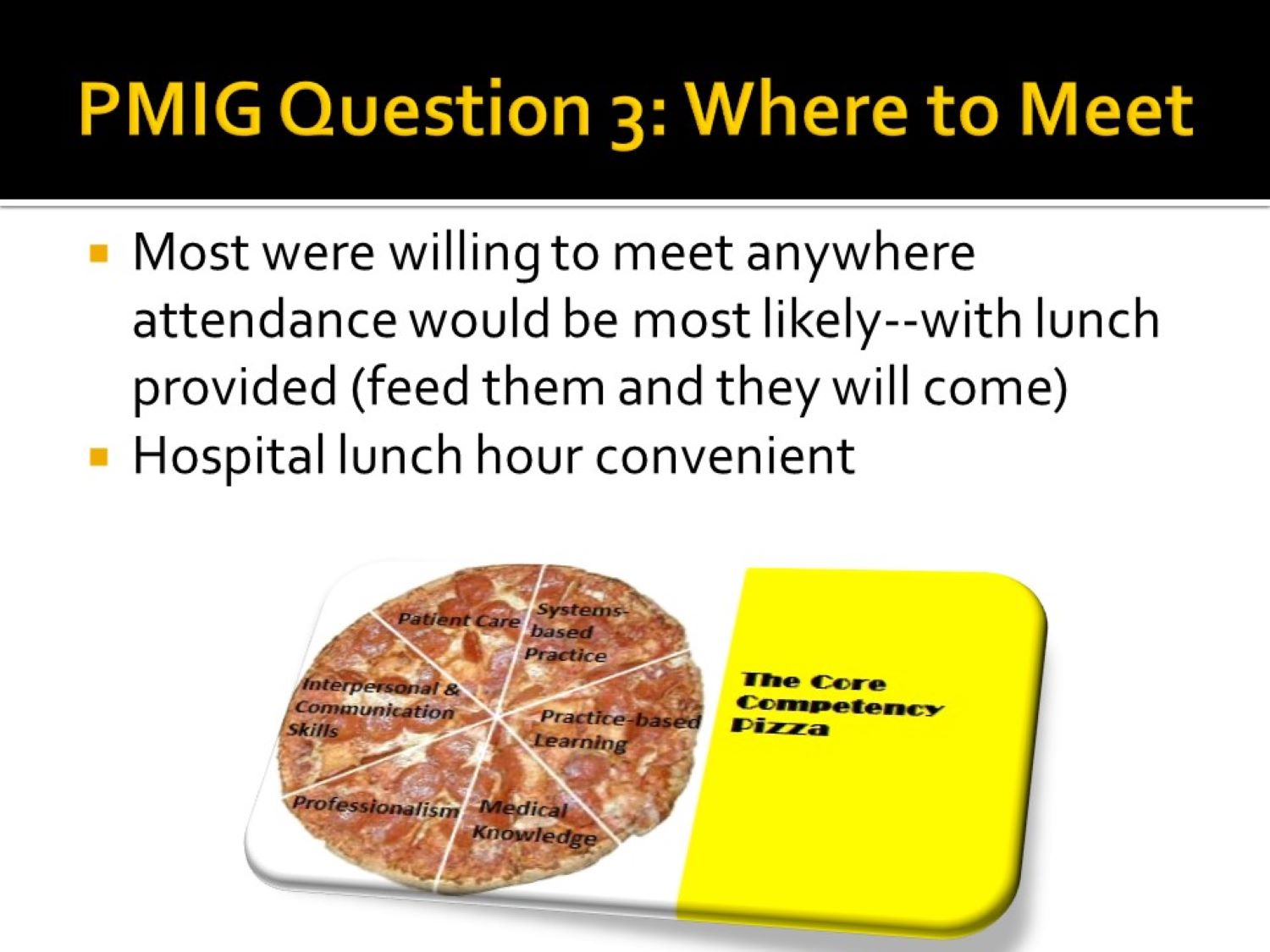
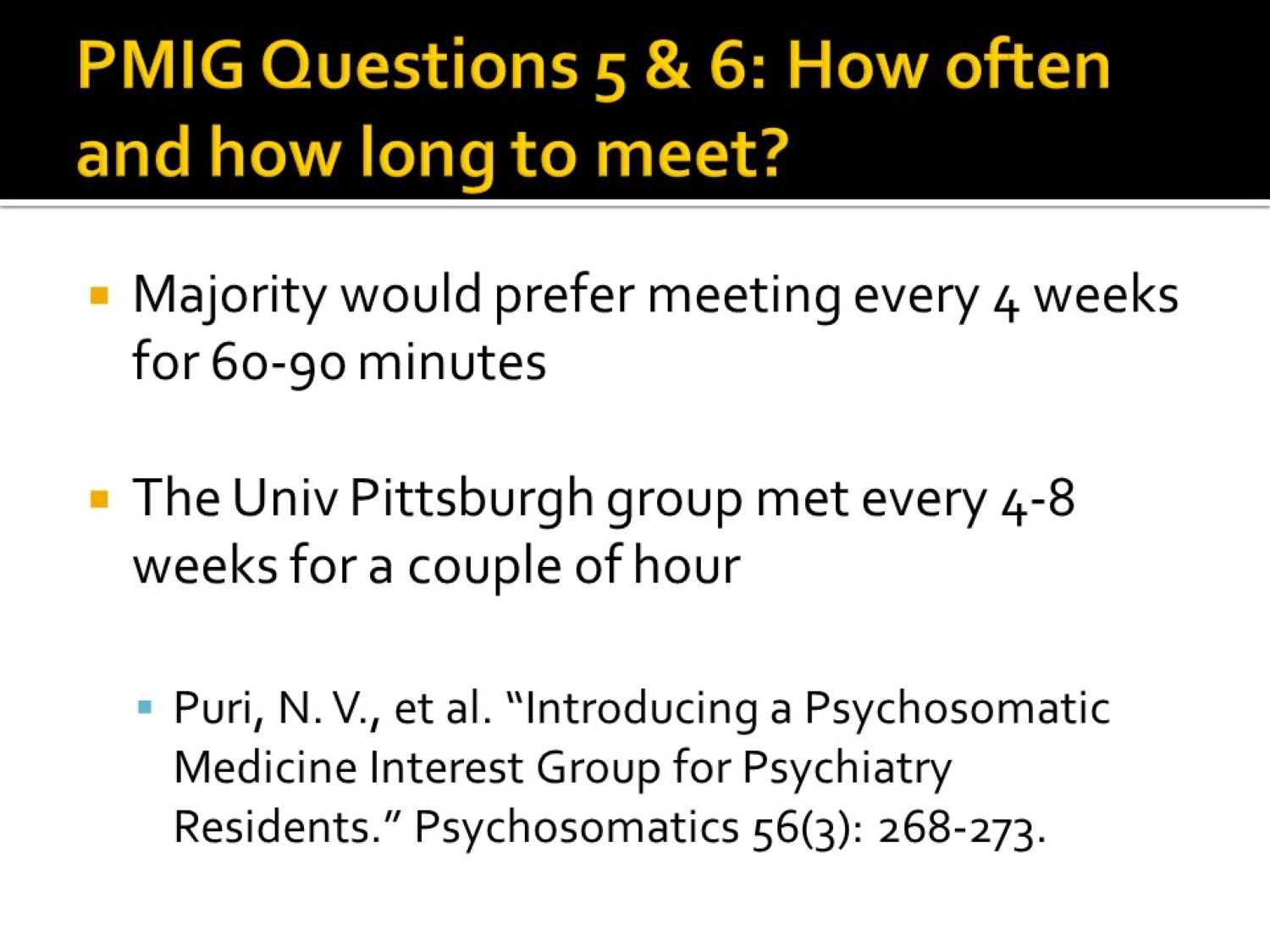
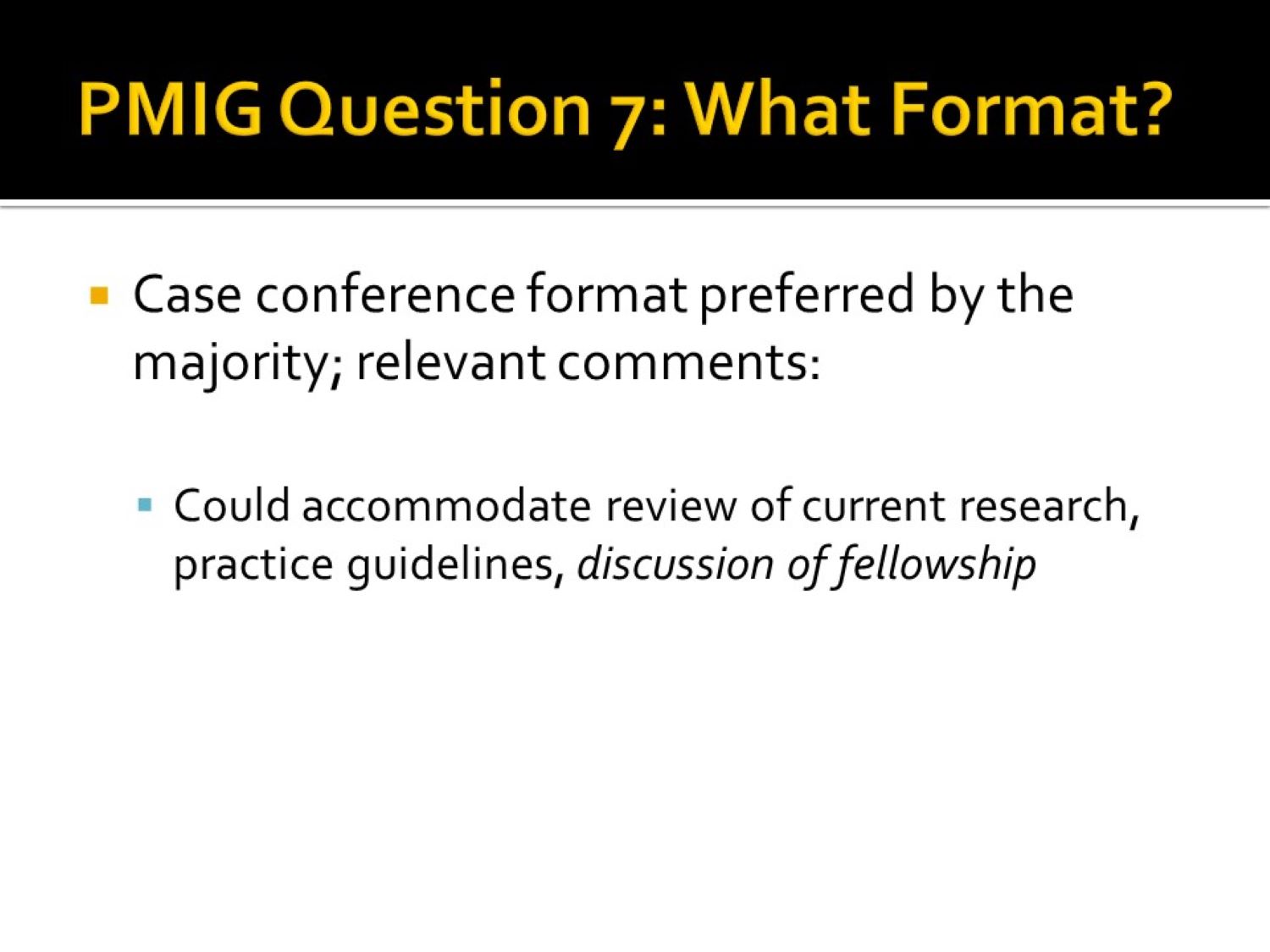
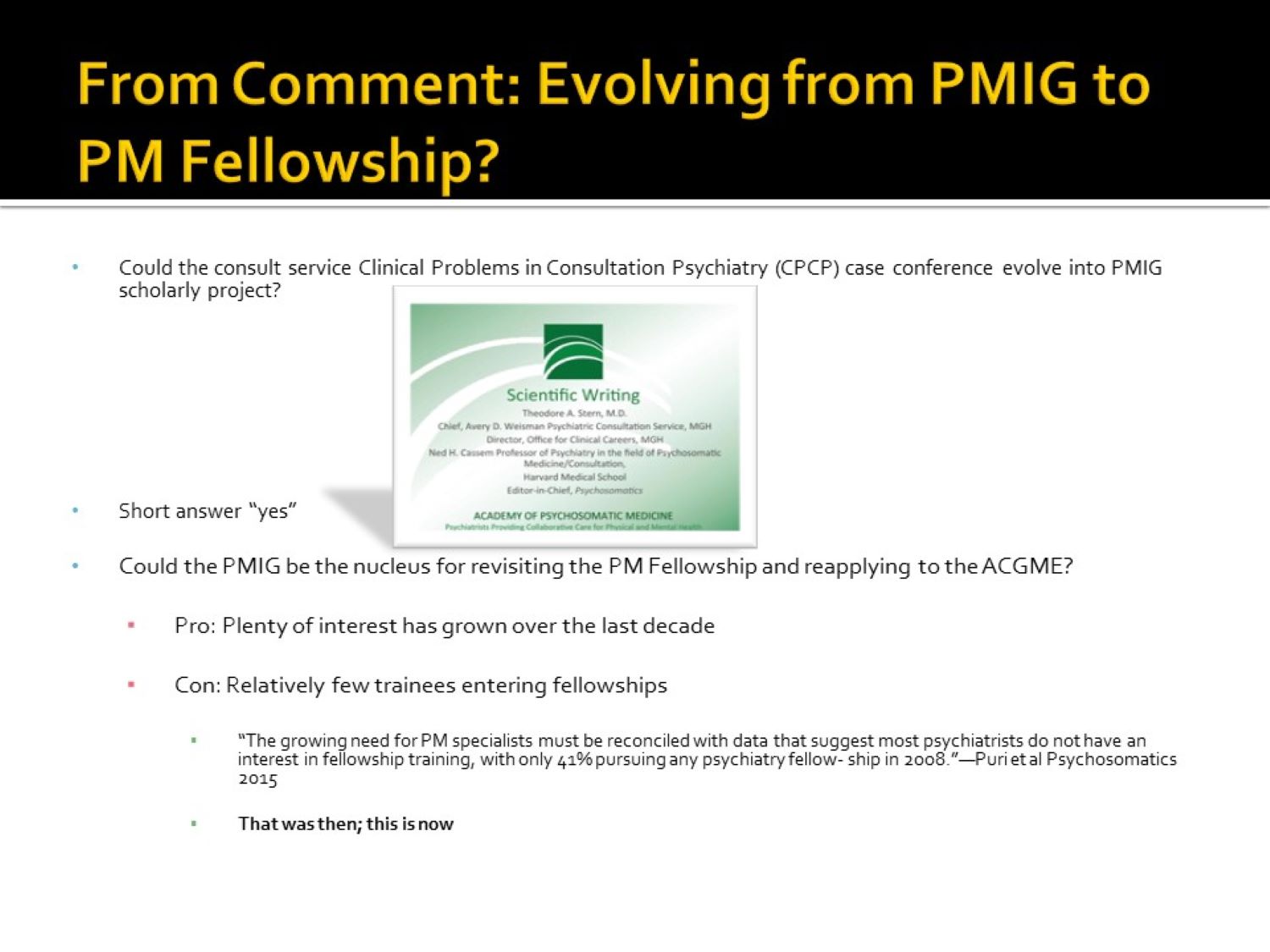
I sent a short survey (see the gallery below the slide show) to the faculty and residents in an effort gauge support for the idea and readiness to participate. I used a paper published at the time to guide the effort, (Puri NV, Azzam P, Gopalan P. Introducing a psychosomatic medicine interest group for psychiatry residents. Psychosomatics. 2015 May-Jun;56(3):268-73. doi: 10.1016/j.psym.2013.08.010. Epub 2013 Dec 18. PMID: 25886971.).

You’ll notice on slide 4 one faculty member’s comment, “I think it doesn’t matter whether faculty are certified in PM.” As Dr. Greenstein discovered, it probably does matter, at least if you want to be board certified.

I was initially certified by the American Board of Psychiatry & Neurology (ABPN), but I objected to the whole Maintenance of Certification (MOC) program, as did many other psychiatrists. I eventually declined to continue participating in the MOC process. However, I notice that the Delirium Clinical Module that I and a resident put together is still accessible on the ABPN website.

Although response numbers were low, there was clearly an interest in starting the interest group. There was also an incentive to reapply to the ACGME for approval of a Psychosomatic Medicine (Consultation-Liaison Psychiatry now) fellowship.

My attempt years earlier had been frustrating. While it was approved, I couldn’t attract any fellows, forcing me to withdraw it without prejudice (meaning another application for approval could be attempted). Fortunately, that situation changed later. The Psychiatry Department at The University of Iowa now has an early career C-L psychiatrist who graduated from the reinstated C-L fellowship.

As the saying goes, “What goes around comes around.” Although the origin of that saying might have originated in the 1970s, at least one person thought his grandmother had her own version in the 1950s: “You get what you give.”