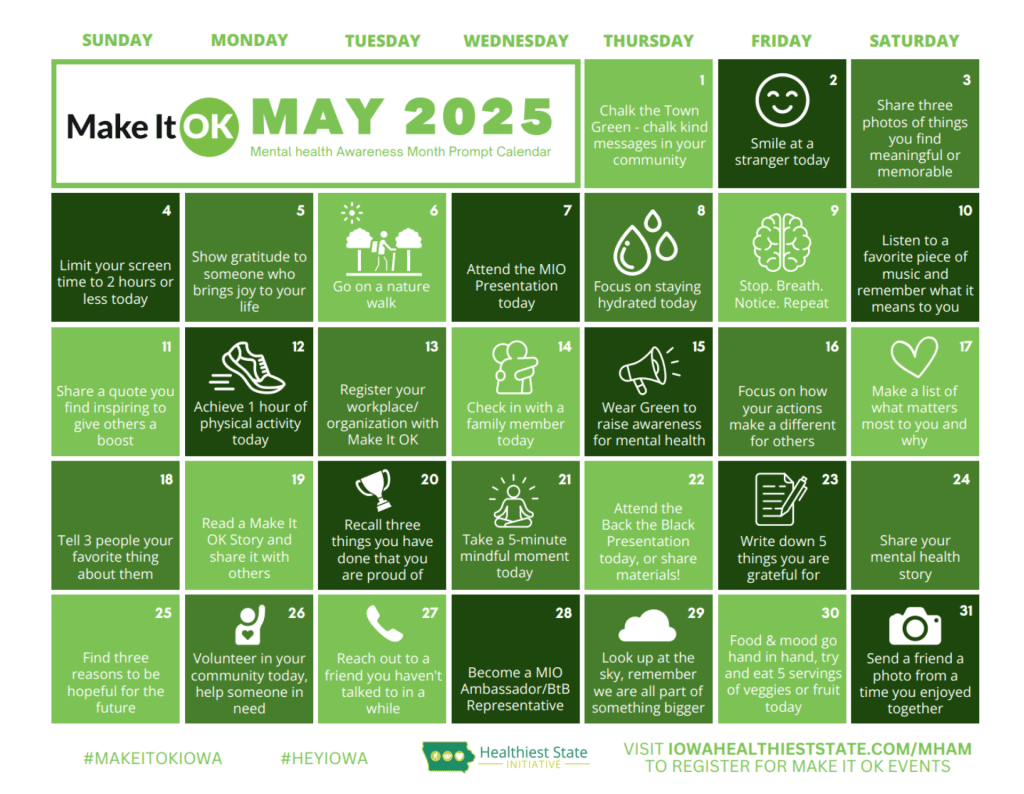
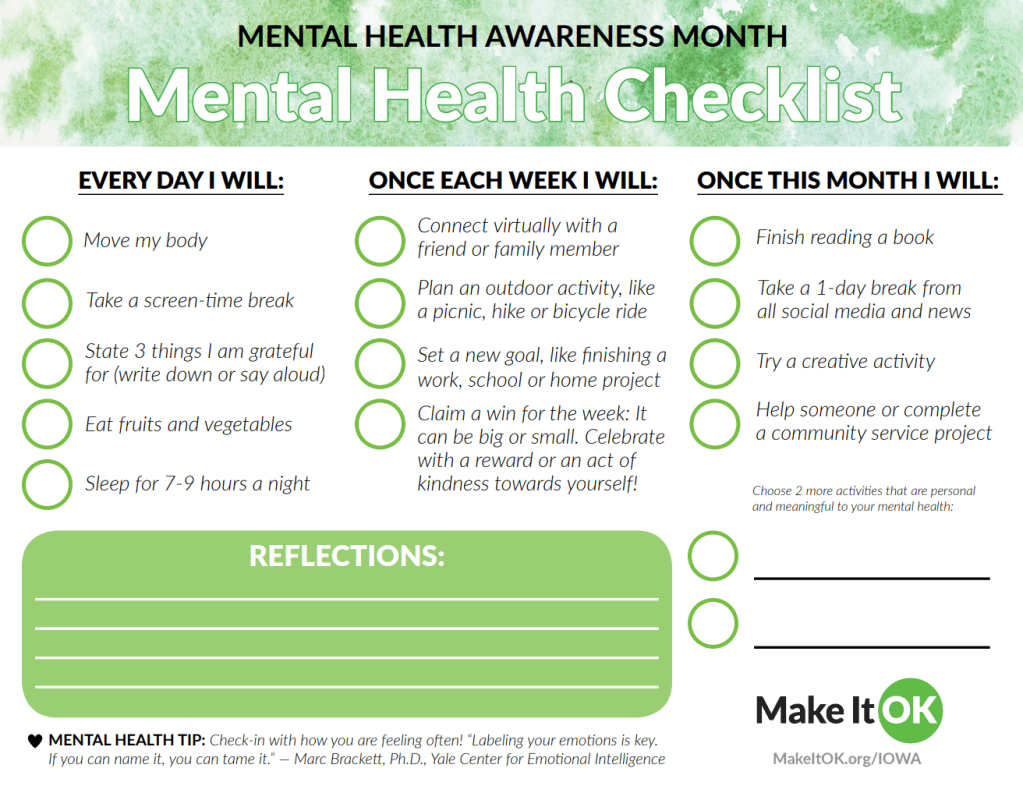
So, I’m not strictly following the Make It OK Calendar per day for May Mental Health Awareness Month, at least according to the Iowa Healthiest State Initiative. Sometimes the goals on the calendar may not feel natural on a particular day or the opportunity might not appear.
Today, I’m a few days late on the Smile at a Stranger prompt and I figure better late than never. I was out for a walk to Clear Creek, testing out my other pair of new shoes (they’re black which is the only difference).
I didn’t encounter anyone on the way there, but I did see the geese pair I saw yesterday. I think this is the same pair I’ve seen over the years and they always return to about the same area by the creek where I suspect they nest. They honked raucously as they always do as they flew in from the north before landing on the water. The female walks up the shore a few steps and just stands there while the male floats in the creek close by, protectively. I never get to see exactly where the female enters the tall grass to start building a nest. I wonder if it’s because they both sense some nosy person like me is watching them.
Anyway, on my way back I smiled and greeted 3 people who were strangers to me. One was an old guy like me, out for a walk. We smiled and said hi to each other.
The other two were special. There was a kid on a tricycle, coming in hot down the hill straight for me. There was a big guy I figured was his dad bringing up the rear behind him, murmuring words of warning about the obvious risk of so much hi octane tricycle speed down a hill.
The kid was hurtling down so fast that I thought “Am I going to have to catch him?” It reminds me of an old song written and sung by Bill Withers in 1971, “Grandma’s Hands.” The relevant lyrics:
“Used to issue out a warning She’d say, Billy don’t you run so fast Might fall on a piece of glass Might be snakes there in that grass…”
Then the kid put out both feet and made a long sliding stop just a few yards short of me—and grinned wide.
I grinned back and called out, “Hey, rocket man!” He waved and said “Hi!” And so did his dad, who smiled wide. I said “How you doin’?” and he replied “fine! How are you?” I said “I’m good” or something like that.
I have to admit that I’ve been mis-hearing some of the lyrics of one of my favorite songs, “Lean on Me” for the past fifty-odd years since Bill Withers wrote it. It stayed on the top of the charts for more than 3 weeks back in 1972. That was a special time in my life; and not an easy one.
Back then, you couldn’t just look up song lyrics or anything else for that matter on the world wide web. It didn’t exist yet. I’ve always been prone to mondegreens and I finally found out that I was hearing something different in the verse:
“Please swallow your pride
if I have things (faith?) you need to borrow
For no one can fill
those of your needs
That you won’t let show”
Just to let you know, I found lyrics in one YouTube that substituted the word “faith” for “things”. Think about that one. I don’t know how to settle it, so if anybody knows which word is right, please comment. Anyway, it’s a little embarrassing and revelatory that I heard “…if I have pain…” instead of “…if I have things (or faith)…” And I never really heard “…That you won’t let show.”
Yet I lived it.
Years later, after I’d finished college, medical school, residency in psychiatry, and had taught residents and medical students at the University of Iowa for a number of years, one of my colleagues, Scott, a brilliant psychologist and writer, stopped by my office one day. This was years ago.
His name is Scott and he suggested that it would be nice to get together sometime soon to catch up. I deferred and I remembered he replied while looking off down the hallway, “I’m 70.” I wonder if he meant he didn’t know how much more time he had left.
Scott and I had taken similar paths in the middle of our careers at Iowa. I wanted to try private practice and left for Madison, Wisconsin. Scott got the same idea and left for a position in Hershey, Pennsylvania. We both regretted it and soon after returned to Iowa. I swallowed my pride and came back because I loved teaching. I think he returned for the same reason. We were both grateful that the UIHC Psychiatry Dept. Chair, Bob Robinson, welcomed both us of back.
Jim’s teaching awardsBooks by Scott and Jim
I touched base with Scott a little while ago. We’re both retired. I was trying to find out how to contact Bob about messages I was getting from the publisher of our consult psychiatry handbook. Neither Scott or I could find out what was going on with Bob, who retired several years ago and moved back East. It turned out he had died. Sometimes we all have sorrow.
Scott is my friend, and I leaned on him a long time ago. I’m unsure if I let it show. I’m 70 and I’m grateful to him.
On that note, I’m finding out that I can’t walk all the way to the mall and back anymore. On the other hand, I can walk about half that distance. It’s about a mile and a half out to the Clear Creek Trail and back. There’s a lot of uphill and downhill stretches along the way. I can manage that.
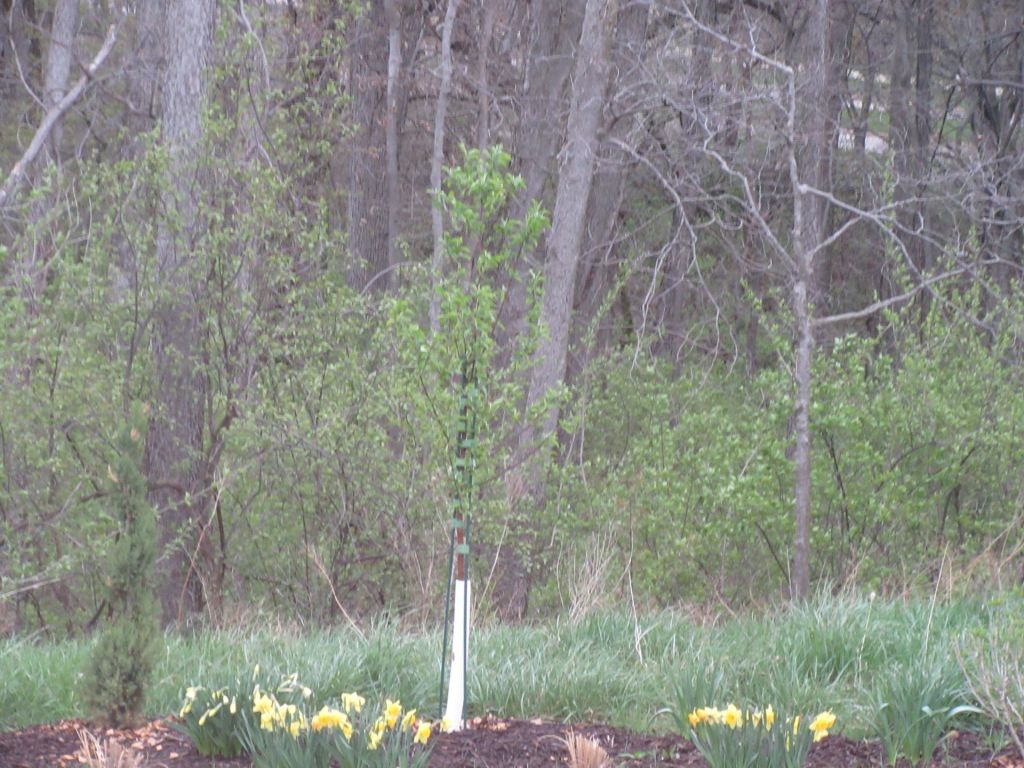
And Sena bought me a couple of pairs of new shoes that I’m breaking in that will probably be easier on my feet and my calves. They’re Skecher slip-ons, not to be confused with the no hands slip-ins. I’m used to slip-ons. I tried one pair out today, in fact. Before I left, I took a few pictures of Sena’s new garden. As usual, she’s planting new flowers. The dogwood tree looks great. She’s even excited about the wild phlox. I can’t keep track of everything else out there. She makes the beauty out there.
And I lean on her for that.
dogwood treewild phloxeven more flowersflowersmore flowersnew shoes1new shoes2
This is an update to my post from lasts night on Ray Bradbury’s short story, “I See You Never.” My wife, Sena, happened to mention the naturalization process in the U.S. today.
In fact, we both saw the televised naturalization ceremony at the Iowa State Fair of 2024. During that ceremony, 47 children became citizens. In fact, the U.S. Citizenship and Immigration Services has held a celebratory naturalization ceremony at the Iowa State Fair for at least the last ten years.
There was just such a ceremony last month of 69 immigrants at the University of Northern Iowa.
I had a quick peek at the U.S. citizenship and civics test questions and I’m pretty sure I would have a lot of trouble passing it. I’d probably get shipped back to Mars—which Ray Bradbury wrote a lot about.
The naturalization process isn’t easy. Under federal law, you have to live here in the U.S. at least five years as a lawful permanent resident to be eligible for naturalization, three years if you’re the spouse of a U.S. citizen. You have to learn the language. Many other countries have a similar naturalization process.
There’s no exact number of the USCIS naturalization ceremonies per year, but 818,500 took part in 2024.
Many of those who go through the naturalization process think it’s unfair for others to bypass it by getting into the country by other means.
So, I guess that’s the other side of the short story—the one Ray Bradbury probably didn’t write.
A couple of days ago we made our usual spring trip out to the Terry Trueblood trail. The phlox and grasses waved in the breeze and we saw quite a few birds.
There was also a swarm of killer midges or gnats that attacked us. They ambushed us when we got close to the trees on the western side of the trail.
We couldn’t really see them so much as feel them dive-bombing our eyes and ears, marching through our hair and looking for blood vessels.
What did we expect? We were walking around Sand Lake close to the trees and that’s where the gnats are. I couldn’t hold a camera still long enough to film anything because I was too busy flailing at the bug swarm. Swatting at gnats is a tricky business if you wear eyeglasses—you’re liable to slap them off your head on to the cement trail. I’ve done that.
We retreated in abject defeat in full rout away from the trees and were ready to surrender, head back to the car and leave. But the further away we fled, the gnats dissipated. We took a new direction, the opposite of the one we usually take around the trail.
This led to an adventure that we might not have otherwise had. We would not have encountered the family of killdeer with their stilt-legged babies crisscrossing the parking lot and other wonders. It reminded me of the Out of the Woods song (“Optimistic Voices”) in The Wizard of Oz:
You’re out of the woods
You’re out of the dark
Away from the flies
Step into the sun
Escaping the gnats dive-bombing your eyes
Keep straight ahead for the least buggiest place
Off your face the crap from swarming flies
Hold onto to your breath
Hold onto your nose
Hold onto your ears
Stop breathing in gnats and run like crazy…
And then the action picked up along the less wooded section of the trail. People were fishing along the lake’s edge, although I don’t understand how they tolerated the bugs unless they bathed in Deet before arriving.
We never got so many video clips; in fact, we ran the camera battery nearly empty. If we hadn’t taken a different path, we’d have missed the show.
The first picture I took was something Sena thought was interesting far out on Sand Lake. I thought it was a rock, but after we got home and looked at the clip closely, it was a group of three turtles jostling for room on top of a small rock. They could have been fighting or mating; it was hard to tell. There’s a moral in there somewhere.
I think some birds like orioles and redwing blackbirds like the sensation of being blown back in the wind while they perch on slender tree branches. They don’t get motion sickness.
There were several birds on a utility wire which were difficult to identify because of the angle of the sun. It would probably remind some of Leonard Cohen’s song “Bird on The Wire.”
One brief highlight was the aerial “dogfight” between two male goldfinches, probably about territory or females. They were little more than a yellow blur on video whaling away on each other in the air.
The comedy act of the day was the killdeer family farting around the parking lot, crossing and recrossing the streets. We made video of it that you can see in a different post.
The tree swallows were doing their usual aerial acrobat routines and there were probably babies in the nest boxes. A brilliant tree swallow appeared. I’m pretty sure it was a male because of the beautiful blue-green feathers. I think I caught a clip of a female as well. The color of the feathers were more muted.
We hit the Terry Trueblood trail yesterday and caught pictures of several birds including a hilarious family of killdeer herding babies around the parking lot. At first, we weren’t sure how many chicks there were because they were difficult to see in the grass.
Eventually we counted 3 chicks. It was a comical show as the parents, aided by other adult birds trying to be helpful, attempted to round up the youngsters.
Crossing and recrossing depended a lot on the traffic flow and other factors including us. We made them nervous following them around with a camera!
I think most drivers got the hint that we were out filming the killdeer in the parking lot as the adults tried to round up the stilt-legged chicks, who would scatter in different directions. Their only guidance were the calls of adult birds—which we couldn’t reconcile into anything sounding like “killdeer” despite what the books say.
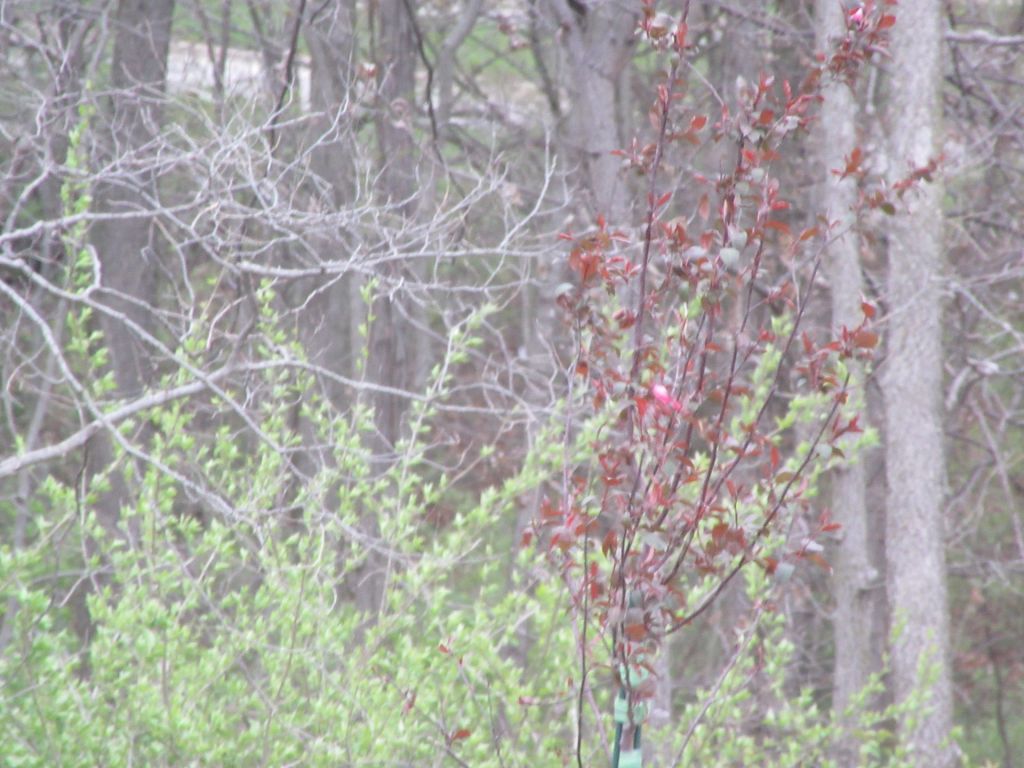
Today is designated Earth Day although there is such a thing as Earth Month. Among the several trees Sena planted in our back yard trees are a few that we hope exemplify the Earth Day theme, which is Our Power, Our Planet.
One of them is a dogwood, which we’re hoping will bloom soon. Dogwoods represent joy and rebirth. There are a couple of crab apple trees, a red jewel and a perfect purple. Crab apple trees represent love and all are very special to Sena and me.
Love, joy, and rebirth. They can all be linked to power, which can be the power of will. The will to respect the planet also implies respecting each other. Practicing humility can be a kind of power.
The power to be still and listen to each other can make us more open to change.
On that note, because I can’t go for long without joking around, I should retell the story about me and the walking dead meditation. About 13 years ago, I had an even more serious case of not listening to others than I do now, if you can believe that. It eventually led to my choosing to take the Mindfulness Based Stress Reduction (MBSR) class ( see this current University of Iowa mindfulness essay). I wrote an essay for the Gold Foundation and it’s still available (I updated the links):
How I left the walking dead for the walking dead meditation (August 13, 2014)
About a year or so later, I bought Jon Kabat-Zinn’s book on Mindfulness-Based Stress Reduction (MBSR), Full Catastrophe Living, because I was dimly aware of the burden of stress weighing on me as a consulting psychiatrist in an academic medical center. I didn’t get much out of Kabat-Zinn’s book on my first read. But then in 2012 I started getting feedback from colleagues and trainees indicating they noticed I was edgy, even angry, and it was time for a change.
Until then, I’d barely noticed the problem. Like most physicians, I had driven on autopilot from medical school onward. I had called myself “passionate” and “direct.” I had argued there were plenty of problems with the “system” that would frustrate any doctor. I had thought to myself that something had to change, but I never thought it was me.
After reflecting on the feedback from my colleagues and students, I enrolled in our university’s 8 week group MBSRprogram. Our teacher debunked myths about mindfulness, one of which is that it involves tuning out stress by relaxing. In reality, mindfulness actually entails tuning in to what hurts as well as what soothes. I was glad to learn that mindfulness is not about passivity.
But I kept thinking of Kabat-Zinn’s book, in which he described a form of meditation called “crazy walking.” It involved class members all walking very quickly, sometimes with their eyes closed, even backwards, and crashing into each other like billiard balls. I hoped our instructor would not make me “crazy walk” because it sounded so—crazy. I dreaded crazy walking so intensely that I considered not attending the 6-hour retreat where it might occur.
We didn’t do crazy walking. Instead, we did what’s called the “walking meditation.” Imagine a very slow and deliberate gait, paying minute attention to each footfall—so much so that we were often off balance, close to crashing into each other like billiard balls.
I prefer to call this exercise the “walking dead meditation” because it bore a strong resemblance to the way zombies move. One member of the class mentioned it when we were finally permitted to speak (except for the last 20 minutes or so, the retreat had to be conducted in utter silence). It turned out we had all noticed the same thing!
Before MBSR, I was like the walking dead. I was on autopilot — going through the motions, resisting inevitable frustrations, avoiding unstoppable feelings, always lost in the story of injustices perpetrated by others and the health care system.
In practicing mindfulness, I began noticing when my brow and my gut were knotted, and why. Just paying attention helped me change from simply reacting to pressures to responding more skillfully, including the systems challenges which contribute to burnout. About halfway through the program, I noticed that the metaphor connecting flexibility in floor yoga to flexibility in solving real life problems worked.
Others noticed the change in me. My professional and personal relationships became less strained. My students learned from my un-mindfulness as well as my mindfulness, a contrast that would not have existed without MBSR.
As my instructor had forewarned, it was easy for me to say I didn’t have time to practice meditation. I had to make the time for it, and I value the practice so much that I’ll keep on making the time. I will probably never again do the walking dead meditation.
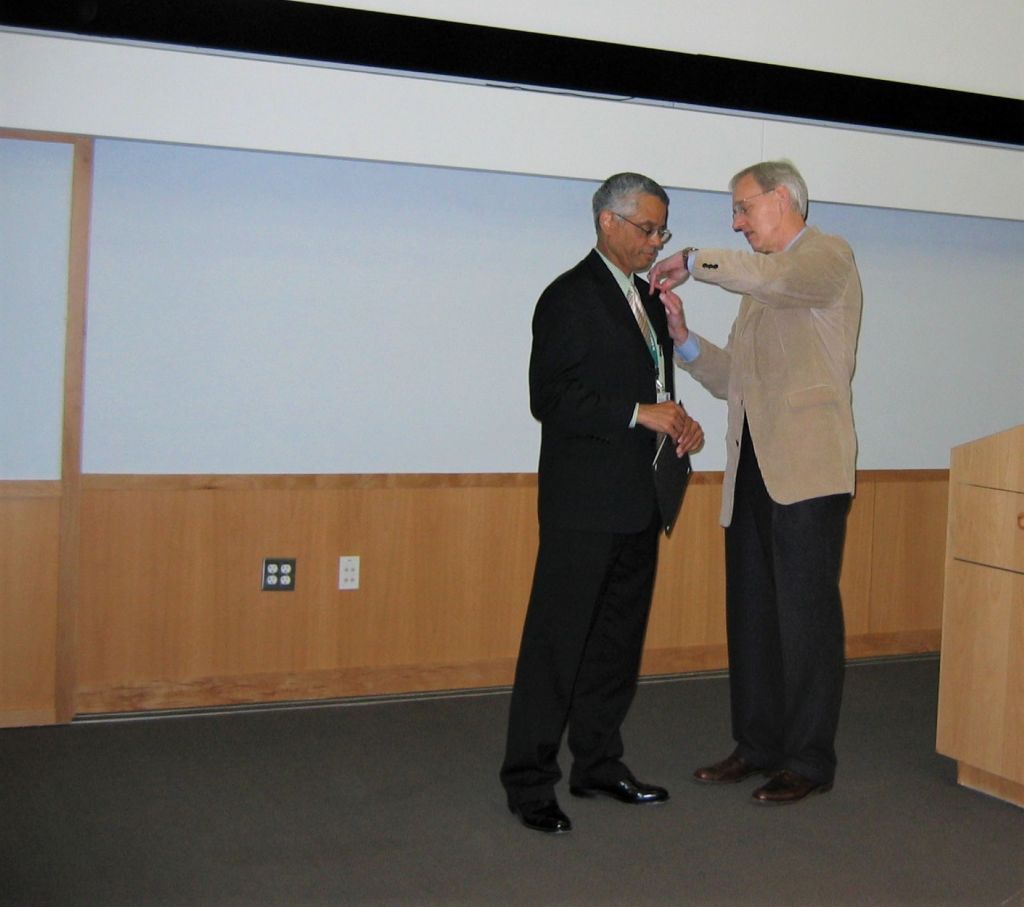
Today we gather to reward a sort of irony. We reward this quality of humanism by giving special recognition to those who might wonder why we make this special effort. Those we honor in this fashion are often abashed and puzzled. They often don’t appear to be making any special effort at being compassionate, respectful, honest, and empathic. And rewards in society are frequently reserved for those who appear to be intensely competitive, even driven.
There is an irony inherent in giving special recognition to those who are not seeking self-aggrandizement. For these, altruism is its own reward. This is often learned only after many years—but our honorees are young. They learned the reward of giving, of service, of sacrifice. The irony is that after one has given up the self in order to give back to others (family, patients, society), after all the ultimate reward—some duty for one to accept thanks in a tangible way remains.
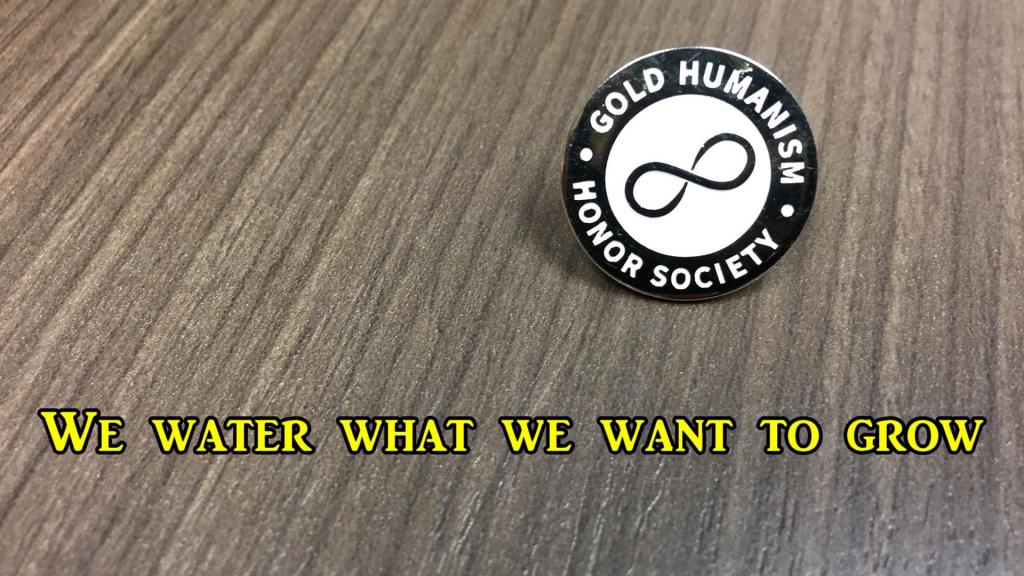
One may ask, why do this? One answer might be that we water what we want to grow. We say to the honorees that we know that what we cherish and respect here today—was not natural for you. You are always giving up something to gain and regain this measure of equanimity, altruism, trust. You mourn the loss privately and no one can deny that to grieve is to suffer.
But what others see is how well you choose.
Leonard Tow awardGetting the pinOn my lapel; in my heart
I’m still practicing mindfulness-more or less. Nobody’s perfect. We hope the dogwood tree blooms soon.
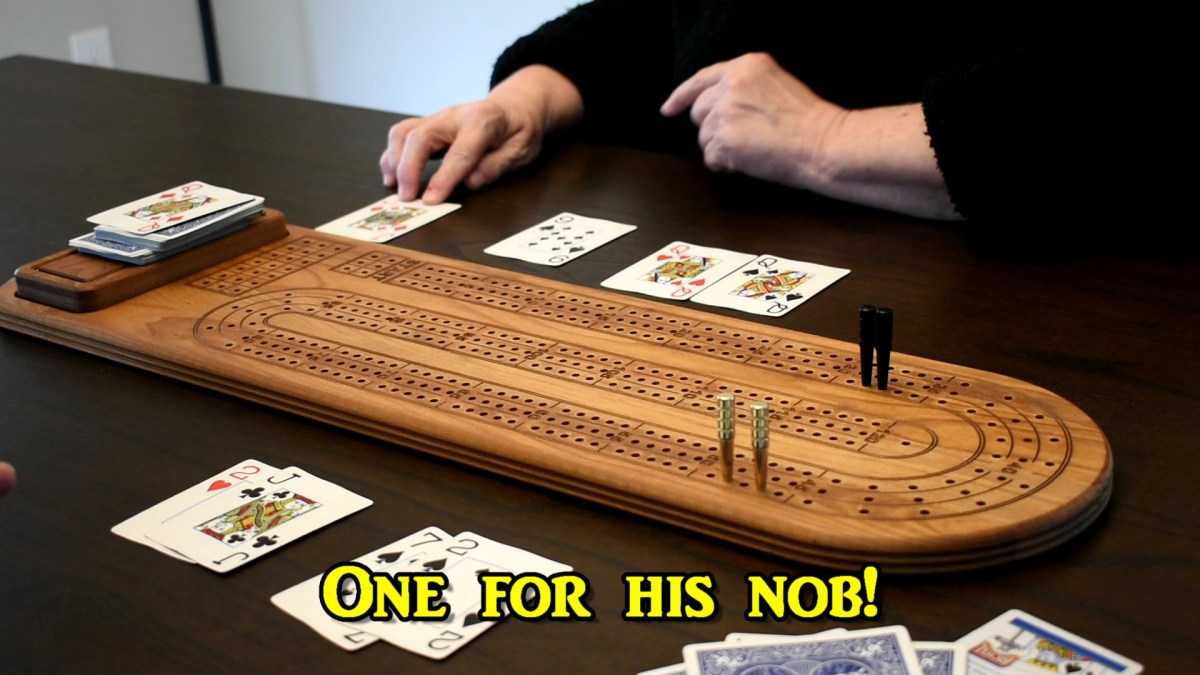
I’ve been looking over the web about learning how and where to play cribbage. It’s a card game for two players usually, but there are variations allowing for 3 to 4 players.
First, out of curiosity, I started searching the web on where to play cribbage in Iowa.
There are about 200 local clubs across the U.S. connected with the American Cribbage Congress (ACC). You can find them by looking in the Club Directory on their web site. So where could you play cribbage outside of the ACC with others in Iowa?
It turns out there’s a cribbage club in Des Moines, called Capital City. Like many ACC clubs, members play 9 games vs 9 opponents and they are two player games. They accept people of all ages, although one of the main reasons to join is if your interested in tournament cribbage games. Like the web page says, they have fun, but they also have to learn how to play a game in 15 minutes because that’s the usual speed you’d have to play in tournaments. I would expect the atmosphere to be fun and also competitive.
There’s another sort of cribbage club in Iowa and it’s in Indianola, which is only about 20 miles south of downtown Des Moines. It doesn’t have a specific name and it isn’t connected to the ACC. They play in a conference room an Activity Center. Interestingly, they allow only those over 50 years of age to participate. This probably isn’t going to help ensure that the younger generation learns to play cribbage and keep the game alive.
There is a photo of 4 guys sitting at a table and you can see the cribbage board in a corner of the table. So, there is the opportunity to learn the 4-player variation of cribbage. The web site also has a link to a set of rules about how to play the game. The rules have a puzzling suggestion, which is to lead with your highest card. That seems like asking for trouble because your opponent could drop a 5 card on your ten card and get fifteen for two points right away.
Either way, Sena and I are not about to drive several hours just to play cribbage. We’ve only been playing for a little over 5 years now, but over 20 years ago we tried to learn it. Which brings me to the point of how you learn it from the web.
There are so many YouTube videos and other written tutorials, all with variable quality. Some have too much detail for beginners and some don’t have enough detail to keep you interested. The teachers who allow comments on their videos often get heartwarming stories from those who remember playing cribbage with someone they loved.
I like a couple of videos from Jonathan Pinyan. I just watched the shortest one, which is only about 15 minutes long but teaches you all the basics while he plays a game with a friend.
And he made a 20-minute video playing a game with his father. Sena and I watched that one and now she calls the nob jack (one for his nob, the jack of the same suit as the cut card) the right jack because that’s what Jonathan calls it. It’s comical because I always feel like I have to correct her, “It’s the nob jack, not the right jack.”
On the other hand, I just found a web reference which asks about the “his knobs.” You’ll see long, comical discussions on the web about the etymology of terms like that in cribbage, often turning out to be differences between British and American cribbage players’ nomenclature. And the “right jack” is related to the card game Euchre, which is where Jonathan Pinyan got it.
There’s a CDC ACIP Meeting scheduled to start at 8:00 AM EST today (caught me off guard). The slides are here.
Noteworthy: Dr. Denise Jamieson, MD, MPH is chair of the CMV Working Group. She is Vice President for Medical Affairs and the Tyrone D. Artz Dean, Roy J. and Lucille A. Carver College of Medicine at University of Iowa. In the Q&A session following the Covid-19 vaccine presentation, Dr. Jamieson expressed a preference for a universal recommendation (citing implementation and uptake challenges, which other attendees mentioned as well) for the Covid-19 vaccine as opposed to a risk-based or permissive recommendation. See slide labeled “Discussion” below:
There was no vote scheduled for today’s meeting on the Covid-19 vaccine.
The presentation by Moderna on the new Covid-19 vaccine, mRNA-1283, was helpful. I gather there will be an FDA meeting about it in June.
We listened to the Big Mo Blues Show last night on KCCK radio 88.3. It was recorded and we noticed that he sounded younger for some reason. Once he remarked that things were difficult because of having to “shelter in place.” The format of the show was different from usual.
That made me wonder if the show was recorded sometime during the Covid pandemic. I’ve been listening to Big Mo for a long time. John Heim, aka Big Mo, been doing the Friday Blues show since about 2005, according to one news story. Another KCCK legend, Bob DeForest, has been doing the Saturday night blues show for over 30 years now.
John Heim, aka Big Mo is still going strong. I think I’ve been listening to his show for about as long as he’s been doing it. He has come back strong since an accidental fall in 2018 in which he sustained a neck injury which led to a long rehab stint. But he’s back.
There have been interesting additions over time, like the Shout-Outs, the Concert Calendar, the Bodega Bay Weather Report, the Big Mo Pod Show in which he and producer Noah on Saturday discuss the music selections he made on Friday. The comedy bits have also been interesting, like MayRee’s hand-battered catfish (It’s better because it’s battered!).
Last night, we heard a couple of songs which we both liked. One of them was “She Don’t Live Around Here” by Samantha Fish. I heard it for the first time on the Big Mo Blues Show and just about every time I hear it, the hair on the back of my neck stands up. I’ve read that music will do that sometimes, although I can’t remember getting that sensation before.
We both liked Delbert McClinton’s rendition of “I’ve Got Dreams to Remember.” He’s had a huge career. Sena asked me if he’s still alive and I foolishly guessed that he died. Nope, he’s 84 years old and evidently still going strong.
I have a personal top ten songs, most of which I’ve heard on the Big Mo Blues Show. They’re not in any particular order. A few of them I like mainly because of the artist’s voice, like Samantha Fish and James Carr.
“She Don’t Live Around Here” Samantha Fish
“The Dark End of the Street” James Carr
“Everyday Will Be Like a Holiday” William Bell or Eric Clapton
“Lean On Me” Bill Withers or Keb Mo
“Mockingbird” Larkin Poe
“I’ve Got Dreams to Remember” Delbert McClinton (written by Otis Redding)
“You Were Never Mine” Delbert McClinton or Janiva Magness
“A Change is Gonna Come” Sam Cooke
“Over The Rainbow and What a Wonderful World” medley Israel Kamakawiwo’ole
“You Can’t Teach An Old Dog New Tricks” Seasick Steve
Lately, Big Mo has played Larkin Poe’s “Mockingbird” a fair number of times. I think one interpretation of it is that people’s sense of their identity tends to evolve over time. At different times in your life, you’ll take on a new voice, so to speak, which fits with the idea of the many songs the imitative Mockingbird sings.
Some songs I like because of the message, like “Lean On Me,” or “A Change is Gonna Come.” And I like the song “You Can’t Teach An Old Dog New Tricks” just because I identify with it. I realized that runs counter to the theme of many songs, which are often about change: people change, the times they are a’changing, and the like. So, my top ten song list will probably change, too.








 Go Retire Psychiatrist