Who Let The Puns Out?

Well, we were out for a walk around Terry Trueblood Trail yesterday and a woman stopped us and excitedly asked, “Do you want to hear a joke about Covid?”

Believe it or not, we didn’t know anybody made jokes about Covid—but we said “Yeah, go ahead.” And then she said it was about dogs, and added that dogs don’t get Covid, as if to reassure us. In fact, it turns out that the CDC says you can’t catch Covid from pets, including dogs. It went like this:

The World Health Organization, or WHO, had feared the dogs could spread Coronavirus and ordered all dogs that were exposed to the virus be held in quarantine. After review, the WHO announced that dogs cannot contract Coronavirus. Dogs previously held in quarantine can now be released.

To be clear: WHO let the dogs out.

Sena and I immediately thought of the Men in Black II scene with Frank the talking Pug, who is actually an alien—and if you don’t like it you can kiss his furry little butt! I exclaimed, sort of singing (God help everyone within earshot) “Who let the dogs out!” I forgot the barking part, but we all had fun.

Incidentally, my mondegreen for the song “Who Let the Dogs Out” used to be “Who left the dog pound?” For the record, the word “mondegreen” means:  a misunderstood or misinterpreted word or phrase resulting from a mishearing of the lyrics of a song. It often totally changes the meaning of a lyric, resulting in something ludicrously comical.

I think Dave Barry wrote about mondegreens in his book, “Dave Barry’s Book of Bad Songs,” a book I used to own but somehow lost in one of our many moves. I’m hoping he’ll find this blog post somehow and send me a free, autographed copy of the book.

If we’d had our new Polk Signa S2 sound bar when I first heard the line, I could have used the remote control Voice Adjust dialogue level to reproduce clearer, crisper dialogue.

For the record, I’ve never heard the full song “Who Let the Dogs Out,” which was performed by a “Bahamian junkanoo” band formed in 1977 and released in 2000. I had to look up “junkanoo” and it’s a Bahamian cultural celebration, a festival of music, dance, and dog pounds.

There are conflicting opinions about what the song means. Some say that it was about men calling women filthy names and women fighting back by shouting “Who let the dogs out?” On the other hand, I also read that the song won a Grammy.

When we got home, I googled Covid jokes and found a lot of them. One of the better hits was RJ Julia Booksellers, advertising a book entitled Coronavirus Humor. The author was just called “Mad Comedy,” which means several “top comics” contributed. It was published in April 2020 by Indy Pub.

The best part? There was a statement saying “A portion of the proceeds of this book benefit the hard-working ‘essential workers’ who are sacrificing so much to help us all during the 2020 epidemic.”

Who let the wags out?

Featured Image picture credit: pixydotorg

Managing Difficult Conversations Without a Neuralyzer

I think I was the last lone ranger Chief Resident in Psychiatry, meaning doing the job solo. After that, there were always at least two senior residents managing that. One of the things I did was to give lectures on various topics that were not strictly related to how to work on the wards and clinics, but how to communicate with other professionals and with patients.

The other big task was fielding outside telephone calls from doctors in other hospitals trying to transfer patients to The University of Iowa Hospital psychiatric units. That’s right, that was a resident’s duty. I had some pretty difficult conversations. I couldn’t just accept every referral.

The hospital didn’t issue neuralyzers, so it was impossible to make difficult conversations go away.

I used a couple of books as guides: “Getting to Yes” by Fisher and Ury, and Difficult Conversations by Stone, Patton, and Heen. I should seriously have reread those books during my entire career and even now. Nobody’s perfect. I encountered racism from patients, so I was no stranger to a variety of difficult conversations in many different situations.

Anyhow those two books are on the short list at the University of Iowa Conflict Management web page. There’s a ton of resources there available for learning about how to manage conflict and recognize what implicit bias is and what it is not.

Implicit bias gets a lot of press. I think it can tend to set people on edge before and during seminars on equity, diversity, and inclusion. Not everybody is a racist. But our brains are wired for implicit biases. I think we all need to get busy, and I mean everybody, including me. A good place to start is understanding implicit bias.

Wandering Thoughts on Talents and Traits in “To Kill a Mockingbird”

I’ve been reading To Kill a Mockingbird and thinking over something a character named Miss Maudie said in Chapter 10: “People in their right minds never take pride in their talents.” It seems to run counter to popular opinion. Why wouldn’t you take pride in your talents?

I got a lot of hits on my google search for this quote, by the way.

Miss Maudie’s statement was soon after Atticus shot a rabid dog with a marksman’s skill. Jem and Scout had been grousing about how they couldn’t find anything to be proud of in their old man. Atticus had never told his children about his skill as a marksman. He gave his kids guns but declined to teach them how to shoot.

I try to make sense of Miss Maudie’s comment by thinking about marksmanship as a skill, which is often distinguished from a talent, usually because the latter is thought to be a trait you’re born with. On the other hand, it’s hard to think of modesty (which is what keeps you from bragging or “taking pride”) as a talent. Some might say it’s more like a character trait.

Can you can develop a talent by practice? Can you improve your modesty by working at it and how would you do that, deadlifting your inner barbells? I tend to think you either have it or you don’t. And why does it take being in your right mind to refuse to take pride in or brag about your talent?

I often hear athletes (think Super Bowl) bragging non-stop about their talents. But I stop well short of admiring them for doing it. It’s annoying, but often preferable to the half-time show. Why do they grab their crotches?

Maybe it doesn’t make sense to brag about a talent you’re born with. I’m not sure if modesty is also something you’re born with. Babies seem very immodest, especially when they’re pooping, based on my extensive research of TV commercials and anecdotes.

On the other hand, a talent is also often said to be something which can be honed to perfection. In fact, Miss Maudie said that Atticus’s skill with a gun was a gift from God, a talent—which he perfected by practice. This might contradict the definition of talent as a thing you’re just born with. She goes on to say that Atticus thought this particular gift from God gave him an unfair advantage, so he gave it up. It would be unseemly to take pride in such a thing, and why would it even occur to someone with a talent to minimize it? The religious reference “pride goeth before a fall” is obvious, but religion doesn’t always seem to play a big role.

Maybe both talent and traits like modesty can be honed as well. What if they’re sort of like lifting just one of your eyebrows to make you look haughtily bemused? You can cultivate it, or at least some people say you can. There’s even a WikiHow for it. But it seems like you have to find your dominant eyebrow, which means there’s something inborn that makes it easier.

Can you develop modesty as though it’s a skill, assuming that it’s also a trait which is malleable? Is there a modesty cortex? Then, you could say some people have a talent for modesty. And how about those splinter talents or skills (like suddenly playing the piano like a virtuoso) which can appear abruptly after brain injuries? Can modesty be like that, a nascent itch in the body waiting to be scratched? That kind of makes you want to drop a piano on the guy at the cocktail party who brags about his golf game, doesn’t it?

I suppose some would take pride in being modest, although it sounds paradoxical—until I remember all the people I’ve seen who can feign desirable traits.

So, is there a Gold’s Gym for character traits where we can go and develop talents like modesty, patience, respect, kindness, and mercy?

Not exactly, but we can give ourselves a kick start by checking out some resources that aren’t that hard to find. Those would be different from what you can pick up from “To Kill a Mockingbird,” although it’s obvious that’s how I got steered to this topic in the first place. Remind me again, why is this book be taken off required reading lists?

Update on “Endless Innovation: An R1 Research Institution (1948-1997)”

Last night’s webinar on Uncovering Hawkeye History, “Endless Innovation: An R1 Research Institution (1948-1997) was fascinating for us.

Dr. Bruce Gantz kicked off the first presentation about his work in cochlear implant surgery. Business picked up for him as far as these procedures in the last year and a half partly because of the pandemic. We were stunned to learn that the demand was driven because so many people were wearing masks—which prevented the deaf from lip-reading.

Kevin Washburn was next up and highlighted the great performance of the UI Law school’s stunning list of 4 student-led law review journals. They rank extremely high in the country, up there in the company of Yale and Harvard. I’m off on a tangent here, but Washburn’s status as a citizen of the Chickasaw Nation (which is based in Oklahoma; there are no Chickasaw tribal members in Iowa despite there being a Chickasaw County, by the way) reminded me of a guy who was a year behind my class in medical school. His name is Orrenzo Snyder and he’s a urologist in Oklahoma. Orrenzo and several other fellow students founded the American Indian Student Association (AISA) in 1989, which was later renamed the Native American Student Association (NASA). The University of Iowa Pow Wow was established in 1990. The 26th Annual Pow Wow is scheduled for April 2, 2022. Give it up for Orrenzo!

Anyway, Washburn mentioned one of the many stars in the UI Boyd Law school: Willard (Sandy) Boyd (for whom the college is named) who became one of the youngest University of Iowa presidents to take office and did so during a rowdy time of student unrest—in 1969. He raised a lot of money for the institution and was an advocate of human rights. He was appointed first chair of the University of Iowa’s Human Rights Committee.

You can also discover other facts, such as in 1839 the Iowa Territorial Supreme Court ruled that Ralph, a slave brought into free territory, must be released from slavery, in 1846; Iowa was admitted to the Union as a “Free State;” and in 1868 In Clark v. Board of Directors the Iowa Supreme Court ruled that the Iowa Constitution guarantees the right to public education to all citizens. The plaintiff parent was Alexander Clark, Sr., who later graduated from the Iowa Law School (possibly the first African American to do so at UI). Justice Chester C. Cole wrote the opinion for the case.

University Archivist David McCartney also mentioned 1969 as a noteworthy year because that was the year of the Apollo 11 moon landing. There’s an Iowa connection to the Apollo 11 mission and that is State University of Iowa professor James A. van Allen in the Department of Physics, who warned of the danger to astronauts of the radiation belts encircling the earth (these were later renamed the Van Allen belts).

And I would add that African American women helped put astronauts on the moon in 1969.

Ed Wasserman expounded on his scientific work with pigeons and humans, comparing them on how they use their brains to solve problems. Are we better than pigeons? Maybe. Wasserman also gave many examples of how trial and error led to some surprising advances and innovations: the Ponseti method for treating clubfoot, the butterfly stroke in swimming, and Field of Dreams. His point is that the 3 Cs: consequence, context, and coincidence, play the larger role in many great achievements.

In other words, just keep pecking away at it.

Next Episode of Uncovering Hawkeye History Today

Get ready for the next episode of The University of Iowa’s virtual event of Uncovering Hawkeye History this evening from 4:30-6:00 PM. The title for this one is “Endless Innovation: An R1 Research Institution (1948–1997).” According to the official announcement, “This event series is designed to highlight notable elements of UI’s 175-year history and includes readings you can do in advance, notable guest speakers during each class, and the opportunity to ask questions each week.” You can register here.

Today’s zoom class again features university archivist David McCarty and 3 of the UI’s most talented innovators:

Bruce Gantz: 68BS, 74MD, 80MS, 80R), otolaryngology professor, the world’s first doctor to perform a robot-assisted cochlear implant surgery

Kevin Washburn: N. William Hines dean, College of Law

Ed Wasserman: experiential psychology professor

Sena and I plan to join the event this evening. I’m looking forward to hearing from Ed Wasserman, who has been studying the origins of innovation for decades. He studies pigeons to find out what really goes on in the ability of humans to come up with new ideas. Wasserman thinks it may have more to do with simple processes like trial and error then eureka type flashes of genius. In other words, we’re a lot like pigeons.

For some reason, this reminds me of an essay by James Thurber, “There’s an Owl in My Room.” It’s published in a book entitled The Thurber Carnival. The essay is all about Thurber’s impatience with a poem about pigeons written by Gertrude Stein. He thought it made pigeons way too complicated. I realized that I had never read the poem, so I went hunting for it on the web. I found a lot of comments about how ridiculous many people think “pigeons on the grass” is:

“Pigeons on the grass, alas. Pigeons on the grass, alas. Short longer grass short longer, longer shorter yellow grass. Pigeons, large pigeons on the shorter longer yellow grass, alas, pigeons on the grass.”—Gertrude Stein.

I had no trouble finding a short excerpt of Thurber’s scathing essay about it on the web.

Thurber’s closing sentence is “No other thing in the world falls so far short being able to do what it cannot do as a pigeon does. Of being unable to do what it can do, too, as far as that goes.”

You can see why some people might be offended by being compared to pigeons. On the other hand, he has written a book about the origin of the notion of creative genius, As If by Design: How Creative Behaviors Really Evolve (2021, Cambridge University Press).

I read an article on the web claiming that, scientifically speaking, there’s no difference between doves and pigeons. Sena and I have observed pigeons/doves with missing toes. That might indicate the trial and error of attempts to make nests with string, which gets wound around their feet, leading to auto-amputation. Some call it stringfoot, although it might just be bad judgment (see my YouTube description).

I can imagine what he might think about Ancient Aliens theories about how humans might come up with innovative inventions. Aliens seem to be particularly prone to crashing their space ships on our planet, making it easier for us to reverse engineer the working parts left strewn all over the ground. There’s something ironical about that. How can they be smart enough to manipulate our DNA and leave us clues about how to create inventions that advance our civilization when they can’t even stop falling out of the sky? On the other hand, maybe we just stole their technology right out from under their very small noses and slapped patents on them. So much for genius.

I’m sure Wasserman thought of all that.

Happy Valentine’s Day!

Happy Valentine’s Day! Boy, are you guys lucky! I woke up yesterday morning with the crazy idea of making a video of me singing “L-O-V-E.” You know, the one Nat King Cole made famous. What do you mean, “No, what are you talking about?”

No kidding, though; I even cleared my throat a couple of times just thinking about it, getting ready to burst into my full-throated, only slightly phlegmy 60ish voice. I let that go after my first cup of coffee, thank goodness. You don’t know how close you came. My singing would kill a cat from a hundred yards.

Anyway, Sena got a kick out of my Valentine’s Day card because it had a scrabble theme. The top line actually is made of 3-dimensional Scrabble tiles. I bought that card before I found the Tile Lock Scrabble game.

By the way, I’m zero for 3 games so far. We really need a Scrabble dictionary. Sena plays the video scrabble game a lot and she played the word “Qi” twice (at right angles to each other) in our second game, claiming it’s a real word. I didn’t argue and without a dictionary, I couldn’t challenge it. But she didn’t know what it meant. “I’ve been meaning to look that up,” she says.

It turns out Qi is a variant spelling of CHI (pronounced like the first syllable of cheapo, a variant of cheapskate, as in a guy who spends the least amount of money possible on a Valentine’s Day gift for his wife). Qi is defined as the energy or life force in everything and it’s the basis of most of Chinese medicine and philosophy. It’s also the single most commonly used word in Scrabble tournaments.

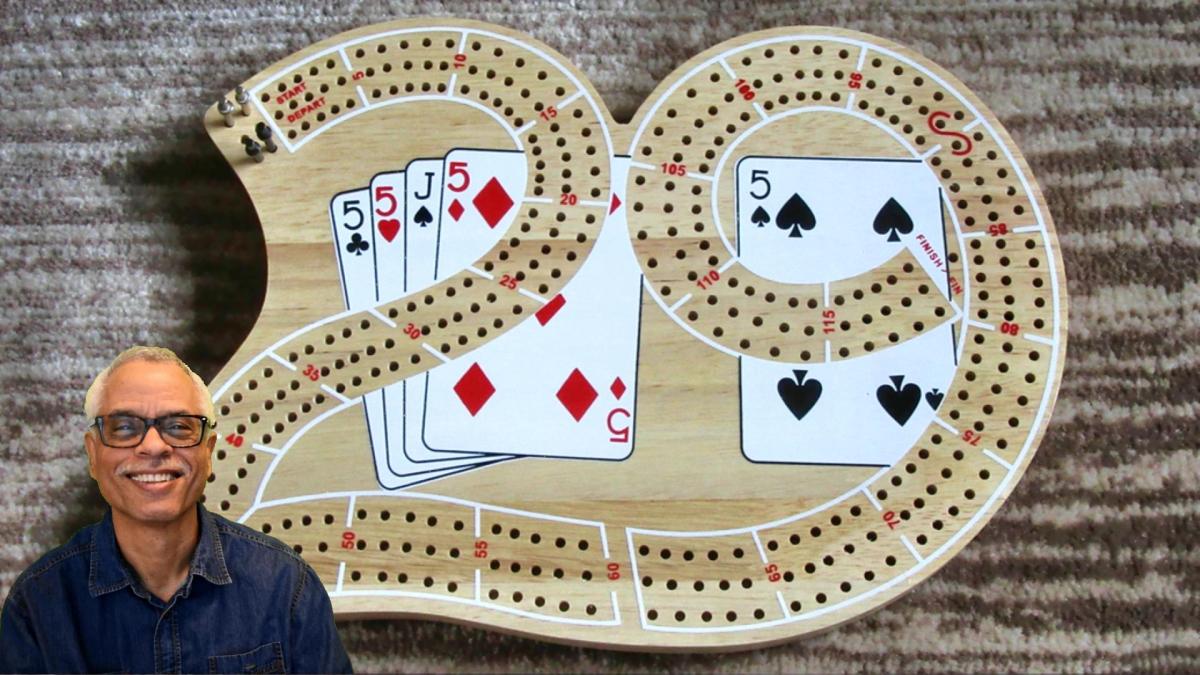
We made this deal a while ago. If we buy a cribbage board in the shape of the state of Iowa with a road map and names of major cities, etc. on it, then I would agree to play Scrabble. We got the Scrabble game first. A deal’s a deal, even if it’s backwards. Sena ordered the Iowa State Map cribbage board yesterday. She wins most of the cribbage games, too. Here’s how she counts her scores: “15 for 2, a run of 3 for 19 (laugh it up you people, these are the jokes; hint, you have to know what scores are impossible in cribbage), and a flush for a total of 29; hey, I win again!”

You guys need to thank for me another thing. At first, Sena allowed me to use just one snapshot of us in this post. It’s of us at Niagara Falls in front of the helicopter we took a ride on to get a fantastic view of the falls. But we got to looking at a ton of pictures. We laughed a lot. We chose more pictures.

Have a great Valentine’s Day!

Zinus Bed in a Box Assembly Notes: Bring on the Liniment

Well, we spent all day Friday the 11th assembling the Zinus Omkaram 48-inch Upholstered Navy Platform Bed, Full. We also ordered the Zinus Support Plus 14-inch Hybrid Mattress, Full to go with the bed. I posted a short slide show in my post Friday. I made the YouTube video yesterday.

The mattress reinflated up to 12 inches overnight after opening it on the bed. We’re not sure if it will reinflate to 14 inches. You’re supposed to let it reinflate over 72 hours.

Zinus provided all parts and tools, although in our case, one of the side rails had a Velcro piece that was factory-installed upside down. I had a smaller size allen wrench on hand, which was lucky. I just flipped it over.

The included small ratchet wrench was useful, although it had a little play in it. It’s a good idea to hand tighten the screws first, and wait until you’ve got all parts assembled before tightening them down. There’s not much give to get the side rails and slats assembled.

Sena saw one reviewer’s claim that he got the thing assembled in a half hour. We don’t believe it. The job took us all day, although to be fair, we stopped for things like breaks, hauling the mattress inside because FedEx just propped it against our garage, lunch, trips to the emergency room, physical therapy, rehab, kidnap by aliens wanting directions to the best rib joint, rescue by Men In Black, subjected to a big-ass neuralyzer, etc. We were sore when it was all done. All things considered, it went OK.

You might be wondering about the meaning of Omkaram. I don’t know what Omkaram means and googling it isn’t much help. Could it actually be a TV serial, a spiritual show that guides you in astrology? Is it a girl’s name in Sanskrit? Does the name mean you’re compassionate, friendly, spiritual, humanitarian, and—a workaholic?

Does that make any sense when it comes to platform beds? Right off hand, I don’t think so, but it probably doesn’t hurt to be a workaholic when it comes to assembling platform beds.

All I Want is a “Big-Ass Neuralyzer”

OK, we gave up on the wedge concept for eliminating or even mitigating the snoring problem. We bought an “extra bed” for those nights when sawing logs gets above the decibel level gets above pain level. We didn’t have to spend thousands of dollars because we got a DIY project. We figure it’ll be far better than trying to get by with the air mattress.

We ordered a Zinus platform bed and mattress and assembled it yesterday. We don’t believe the one reviewer who claimed he finished it in a half hour. It took us all day and I would just as soon forget at least certain parts of that ordeal, including the reason for it. So, the next thing I’m ordering is a “big-ass neuralyzer” from Walmart.

I’ve included a slide show below, and I’m considering a YouTube production about it as well. It was literally a bed in a box—boxes actually; the mattress was sent separate from the platform bed.

Zinus sent the tools—all but one smaller size allen wrench than the 3/16 inch included. It’s a good thing I’ve got a couple of sets. One of the side rails came with the part with the Velcro that holds the wood slats upside down. If you’re interested, have a 5/32 inch on hand, just in case. Sena noticed it first. Lucky all I had to do was flip it around.

Zinus sent a cute little ratchet allen wrench. It’s about as long as your middle finger. It slips a little so snugging the screw finger tight is a good idea before trying the ratchet. Sometimes it’s better to use the regular allen wrench.

If you’re thinking about getting something like this, it might be a good idea to wait before you tighten everything down. There are some pretty skinny tolerances between the side rails and the slats were kind of a tight fit, too.

The mattress came with a warning:

“This mattress knows Kung fu and may unroll itself at lightning speed. Keep small pets and children free from its kick radius. Please be extra careful when cutting it free from its bindings.”

No problem. I got my nosebleed stopped in just minutes. Remember, never tip your head back, pinch your nose, and be patient.

It looks like it’ll be more comfortable than the air mattress. We’re not thrilled about separate beds. The next home improvement project will be working on the laundry.

Unboxing Tile Lock Scrabble

I just wanted to alert you about the unboxing of the Tile Lock Scrabble game (Hasbro). Sena and I used to play scrabble back in the day, but for the past few years, I’ve been reluctant because the typical board can usually be positioned only so one player can see it right side up. The opponent has to view it upside down-usually Sena, who always says she can read the tiles just fine that way. And the tiles slip all over the place if you move the board.

We used to have a scrabble board that sat on sort of a post on which the board rotated, which made it easier for both players to view right side up. I wonder if that got lost in a move between houses. I have not been able to find one like that lately.

We have a couple of old Scrabble video games on CD and she plays those. It’s easy to forget the rules on some video games because the computer makes moves and scores automatically. I sometimes play cribbage video games that way although the most recent one I got actually has a mode that lets you score your own hand, crib, and pegging. I notice I don’t play cribbage as well with Sena after I’ve played the video cribbage game.

I finally found this Tile Lock Scrabble game at Barnes & Noble the other day. It’s an early Valentine’s Day gift. I telephoned Sena from the store and spilled the beans in order to avoid having to return it if she didn’t like it. Just like a guy.

I couldn’t figure out how to get the box open. That’s how I am. I nearly crushed it before I figured out I could use one finger to flip one end out (you can see the dent in one of the pictures). That’s why I included the slide show below.

You can also see the cool feature, which are the tile locks. Little retainers at the 4 corners of each square hold them in place so they don’t slide off. The rules are included in the box. You can also find the rules at the scrabble web site.

Wait’ll she sees the card

Update: Sena wins the first game on the tile lock scrabble, 291 to 266!

Our Impressions of University of Iowa Free Webinar Yesterday: The Stories That Define Us”

We were overall delighted with yesterday’s presentation, University of Iowa Free Webinar: “Breaking Barriers: Arts, Athletics, and Medicine (1898-1947).” It’s one in a series of 4 virtual seminars with two more scheduled this month, which you can register for at this link.

February 15: Endless Innovation: An R1 Research Institution (1948–1997)

February 22: The Next Chapter: Blazing New Trails (1998–2047)

The moderator was university archivist and storyteller, David McCartney.

Presenters include:

Yesterday’s presentation was recorded and will be uploaded to The University of Iowa Center for Advancement YouTube site at a later date.

McCartney did an excellent job as moderator, although got stumped from a question from a viewer about who was the first African American faculty member in the College of Medicine. He’s still working on tracking that down. It wasn’t me. I’m not that old and I am not risen from the dead, as far as I can tell; but to be absolutely clear, you should ask my wife, Sena. I was able to google who was the first African American graduate of the University of Iowa law school: Alexander Clark, Jr. McCartney thinks he might have been the first University of Iowa alumnus, although he couldn’t confirm that.

On the other hand, I could have been the first African American consulting psychiatrist (maybe the only African American psychiatrist ever) in the Department of Psychiatry at UIHC—but I can’t confirm that. Maybe McCartney could work on that, too.

 There are a few words about me in the department’s own history book, “Psychiatry at Iowa: The Shaping of a Discipline: A History of Service, Science, and Education by James Bass: Chapter 5, The New Path of George Winokur, 1971-1990:

“If in Iowa’s Department of Psychiatry there is an essential example of the consultation-liaison psychiatrist, it would be Dr. James Amos. A true in-the-trenches clinician and teacher, Amos’s potential was first spotted by George Winokur and then cultivated by Winokur’s successor, Bob Robinson. Robinson initially sought a research gene in Amos, but, as Amos would be the first to state, clinical work—not research—would be Amos’s true calling. With Russell Noyes, before Noyes’ retirement in 2002, Amos ran the UIHC psychiatry consultation service and then continued on, heroically serving an 811-bed hospital. In 2010 he would edit a book with Robinson entitled Psychosomatic Medicine: An Introduction to Consultation-Liaison Psychiatry.” (Bass, J. (2019). Psychiatry at Iowa: A History of Service, Science, and Education. Iowa City, Iowa, The University of Iowa Department of Psychiatry).”

And in Chapter 6 (Robert G. Robinson and the Widening of Basic Science, 1990-2011), Bass mentions my name in the context of being one of the first clinical track faculty (as distinguished from research track) in the department. In some ways, breaking ground as a clinical track faculty was probably harder than being the only African American faculty member in the department.

I had questions for Lan Samantha Chang and for Dr. Patricia Winokur (who co-staffed the UIHC Medical-Psychiatry Unit with me more years ago than I want to count.

I asked Dr. Chang what role did James Alan McPherson play in the Iowa Writers Workshop. She was finishing her presentation and had not mentioned him, so I thought I’d better bring him up. She had very warm memories of him being her teacher, the first African American to win a Pulitzer Prize for fiction, and a long-time faculty member at the Workshop.

She didn’t mention whether McPherson had ever been a director of the Workshop, though she went through the list of directors from 1897 to when she assumed leadership in 2006. You can read this on the Workshop’s History web page. I have so far read two sources (with Wikipedia repeating the Ploughshares article item) on the web indicating McPherson had been acting director between 2005-2007 after the death of Frank Conroy. One source for this was on Black Past published in 2016 shortly after his death, and the other was a Ploughshares article published in 2008. I sent an email request for clarification to the organizers of the zoom webinar to pass along to Lan Samantha Chang.

I asked Dr. Winokur about George Winokur’s contribution to the science of psychiatric medicine. Dr. George Winokur was her father and he was the Chair of the UIHC Psychiatry Department while I was there. She mentioned his focus on research in schizophrenia and other accomplishments. I’ll quote the last paragraph from Bass’s history on the George Winokur era:

“Winokur, in terms of research, was a prototype of the new empirical psychiatrist. Though his own research was primarily in the clinical realm, he was guided by the new neurobiological paradigm (perhaps in an overbalanced way) that was solidifying psychiatry with comparative quickness. New techniques in imaging and revelations of the possibilities in genetic study and neuropsychopharmacology lay ahead. George Winokur had helped the University of Iowa’s Department of Psychiatry—and American psychiatry as a whole—turn a corner away from subjectivity and irregularity of Freudian-based therapies. And once that corner had been turned there was no going back.”

George Winokur was the department chair at University of Iowa Hospitals and Clinics from 1971 to 1990 and had a unique and memorable style. George also had a rough sense of humor. He had a rolling, gravelly laugh. He had strict guidelines for how residents should behave, only slightly tongue-in-cheek. They were written in the form of 10 commandments. Who knows, maybe there are stone tablets somewhere:

Winokur’s 10 Commandments

  1. Thou shalt not sleep with any UI Psychiatry Hospital patient unless it be thy spouse.
  2. Thou shalt not accept recompense for patient care in this center outside thy salary.
  3. Thou shalt be on time for conferences and meetings.
  4. Thou shalt act toward the staff attending with courtesy.
  5. Thou shalt write progress notes even if no progress has been made.
  6. Thou shalt be prompt and on time with thy letters, admissions and discharge notes.
  7. Thou shalt not moonlight without permission under threat of excommunication.
  8. Data is thy God. No graven images will be accepted in its place.
  9. Thou shalt speak thy mind.
  10. Thou shalt comport thyself with modesty, not omniscience.

Quinn Early has a lot of energy and puts it to good use. His documentary of the sacrifices of African American sports pioneers, including “On the Shoulders of Giants” (Frank Kinney Holbrook) is impressive.

There was a good discussion of the importance of the book “Invisible Hawkeyes: African Americans at the University of Iowa during the Long Civil Rights Era”, edited by former UI faculty, Lena and Michael Hill.

Sena and I thought yesterday’s presentation was excellent. We plan to attend the two upcoming webinars as well. We encourage others to join.