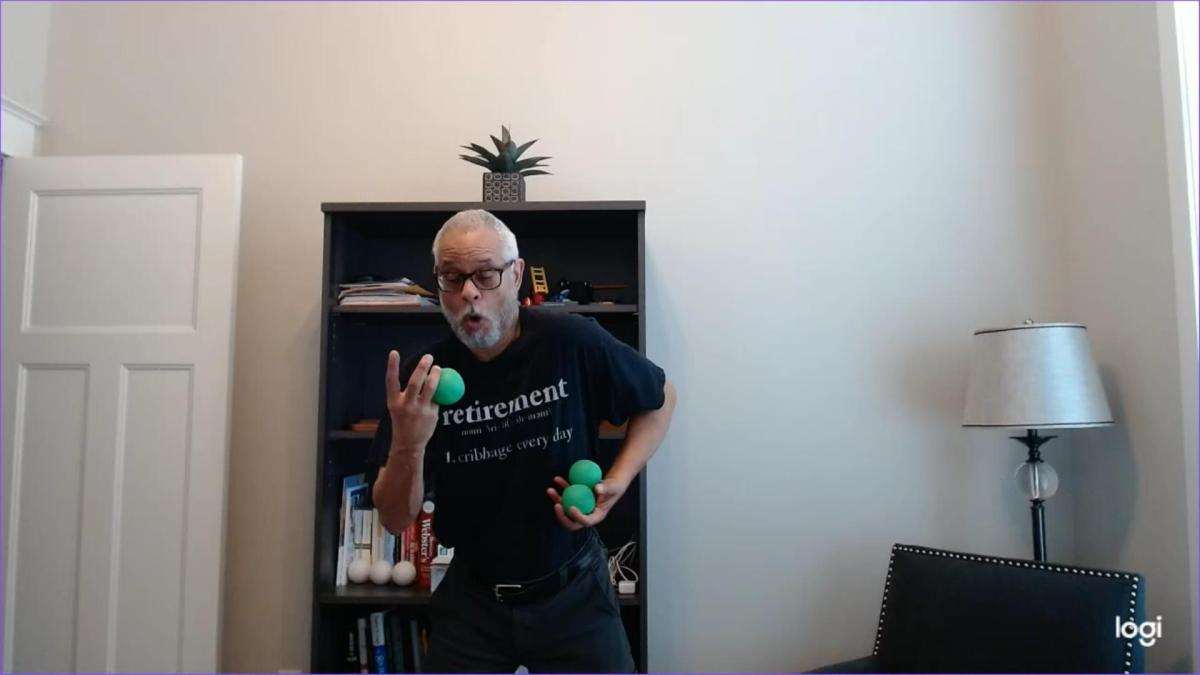
I found another juggling trick I might be able to handle. It’s the claw catch. I saw a number of YouTube demonstrations. As usual, I tend to confuse them.
I slapped the balls down instead of catching them. And I think I’m going to need safety goggles or just quit wearing my eyeglasses when I juggle. I miss a few throws and the ones I do get look pretty wild. That’s how I get my exercise.
The claw catch really does look better if you use both left- and right-hand throws. I hope my left shoulder holds up. Being ambidextrous will help me do continuous right and left claw catches—maybe.
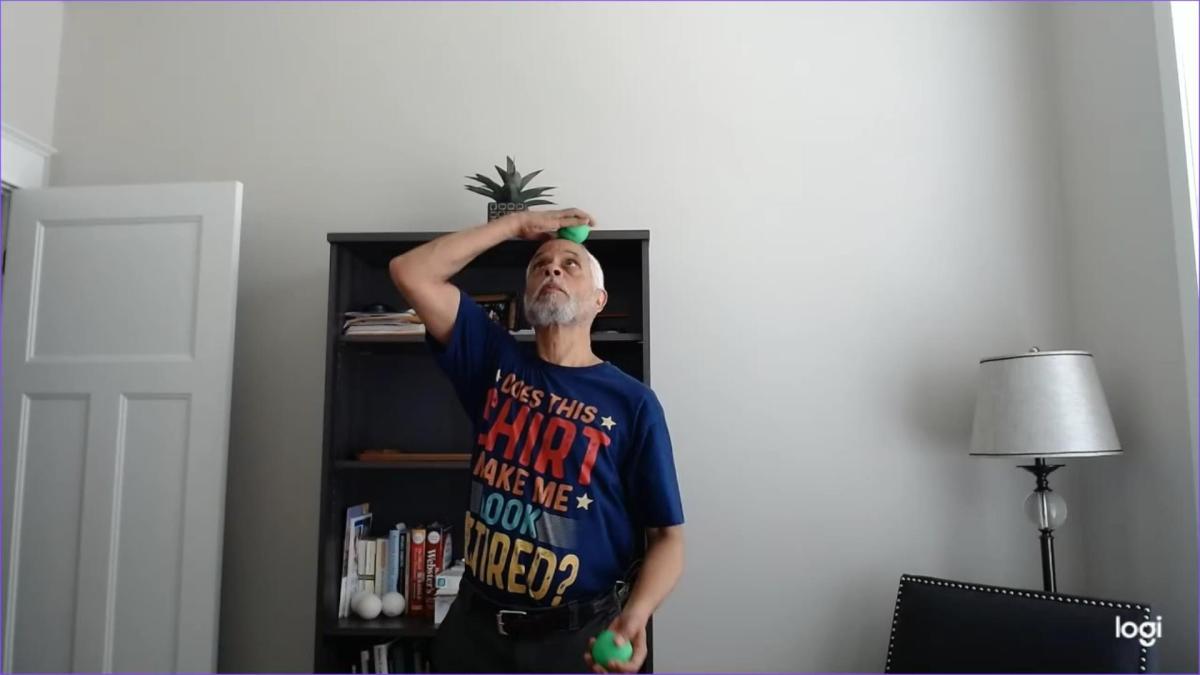
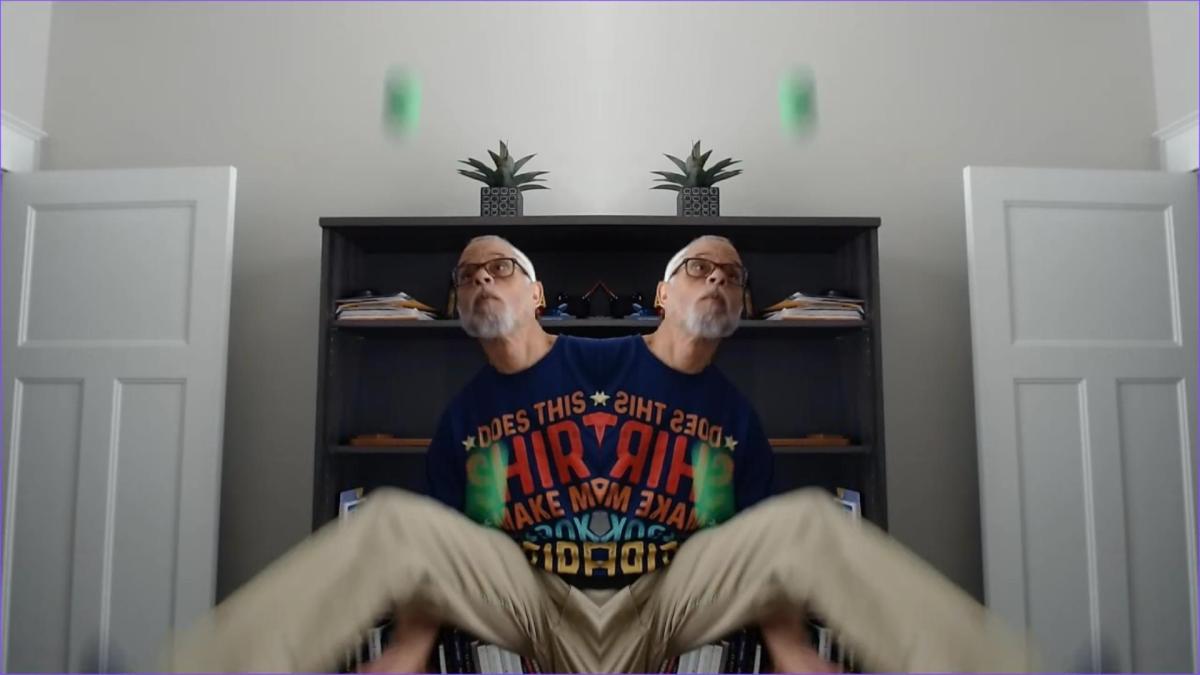
My take on the off the head juggle trick is that I have to do it wrong, otherwise I just drop all the balls. It was Juggle Man who said “Doing it wrong makes you an artist.”
I have to take my eyeglasses off for this trick. I knocked them off my head the other day and they don’t fit well enough to even stay on my head too well.
I think, with more practice, I can mix up the off the head variations to make it interesting, as long as you don’t look too closely.
I can always say I did it my way.
Addendum May 17, 2025: I just noticed that my video is third from the top on a google search of “off the head juggle”. Please ignore my “version” of the head stall juggle (off the head). It’s just wrong!
This is a progress report on Sena’s progress in juggling. She has been dedicated to practicing 2 or 3 minutes every other day. Frankly, she does more than that on some days.
She has been trying to move up to doing a 4-ball toss and catch. She thought she got it yesterday, and for a while so did I, even as I filmed it. The practice routine is to toss the balls 1-2-3-4 and catch. We thought she nailed it.
Then I looked at the video clips in slow motion. She wasn’t getting to 4 but she was getting to 3 more consistently. And part of what fooled us is that she’s now beginning to be ambidextrous. She can start the cascade from both her right and left side now!
Sena suggests I change the title of my YouTube section on juggling. As of yesterday, I changed it from Ugly Juggling to Ordinary Juggling. This distinguishes it from all the jugglers from whose videos I learn so much. They are extraordinary.
I saw the off the head juggling trick on the Juggle Man YouTube. This maneuver is off the wall. I looked at a couple of other videos because I just could not get the hang of it. One juggling teacher says it’s an “easy” trick. After fumbling a couple hundred times, I’m wondering why I’m hitting this wall with it.
I got the pattern wrong to start off—but that was the only way I could do it at all. When I started getting the pattern right, I was even more impressed with the jugglers who can make it look easy.
The two-ball practice I saw on one juggler’s video was painful. If you’re a guy and you’re doing the claw catch as instructed by some teachers, watch out. You can see what I mean in the video, and I’m not acting in that clip!
And once again, I’m having trouble letting go of a key ball that would allow me to finish the trick by smoothly moving back into the cascade.
I’ve been working on my juggle tricks using my non-dominant side and it’s a little easier than I thought it would be. It didn’t take nearly as long to train my left side to handle the right-side tricks compared to the right.
I’m not sure I how to explain that. Those who teach juggling usually advise practicing with your non-dominant side at the same time you train your dominant side. I didn’t start until after about seven months.
A while ago, I tried doing the behind the back trick on the left. I felt a sudden muscle spasm in the left side of my neck. I told myself I was too old to switch sides and left it at that. But then I discovered later there were certain tricks I couldn’t do unless somehow, I got ambidextrous.
It took me less than a day to teach my left side to do the right-side tricks like behind the back, under the leg, and the finger plex.
I still don’t know how the finger plex trick got its name.
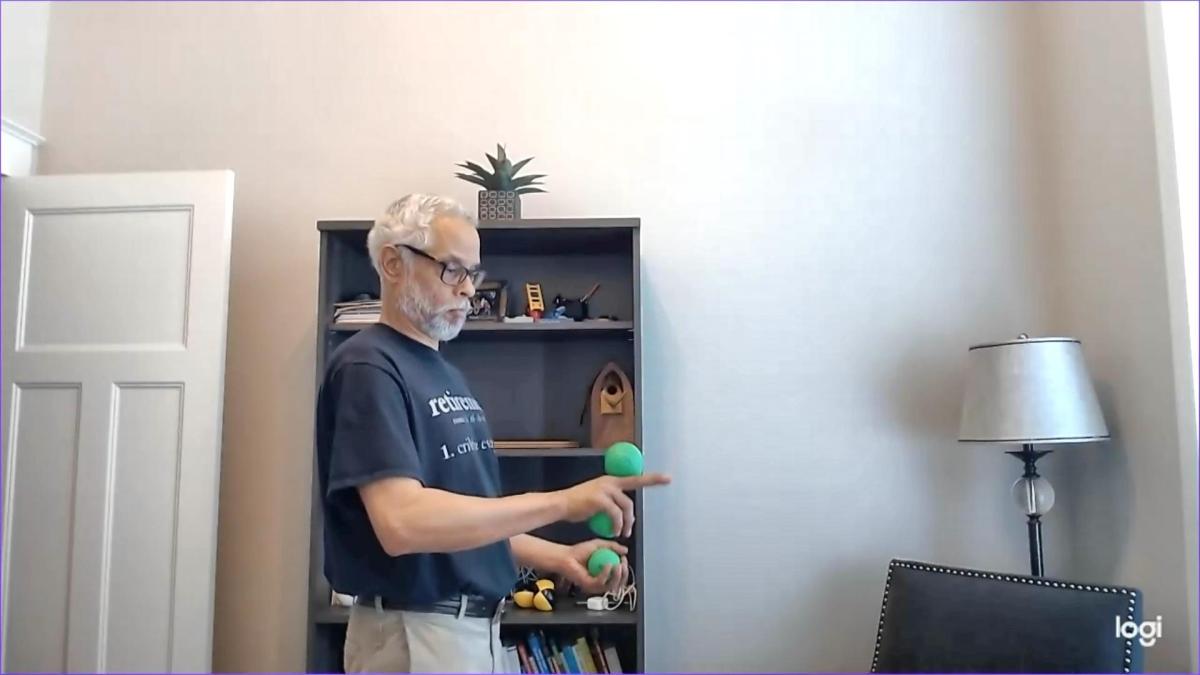
I’ve been trying to learn a new juggling trick and found out there was a prerequisite—which is that I practice some skills I’ve ignored until now. One is trying the two in one trick which is juggling two balls with one hand. The other is trying tricks on both the left and right side of my body. Ambidexterity is a plus in juggling.
That’s a tall order, at least for me. But if I’m going to move forward, I guess I have to try it.
I remember the problems I had learning the under the leg on my right side. The same problems occurred on the left, no surprise. I had trouble letting go of the ball, I threw the balls way out of the pane of glass juggle space, and I’m lunging all over the room.
But I got further than I thought I would, and I was able to at least do the trick after only a few tries. The left side under the leg is pretty ugly right now, which is normal for me anyway.
The left side two ball juggle with one hand was also difficult. I don’t know why I had a claw posture in my right hand.
Paradoxically, I’ve noticed lately that I have more trouble with the half shower on the right side than the left.
The only other time I had to make do with my left hand was when I was a kid. I broke my right wrist when I fell from the top floor of the garage. It was built like a barn and the only way up to the loft was a wooden ladder nailed flush and vertical with wall up to a sort of attic hatch. It was a good thing it was over summer vacation from school. I tried to learn how to write with my left hand, but all I did was scribble.
Juggling on my non-dominant side is like scribbling with my non-dominant hand.
This is an update to my progress in ugly juggling tricks. I have a short video of the ones I’ve been practicing the most and one new one.
The new trick is called “Finger Plex” by JuggleMan, who is Daniel Menendez, an astonishing juggling expert you can learn more about at his YouTube site, YouJuggle. While I was trying to imitate it, I wished for a slow-motion clip of it. I hope I’m doing it right because I included a slow-motion clip of the trick in my video.
I have looked for a definition of “plex” pertaining to juggling. I haven’t found it yet. The word “plex” itself usually is described as a combining form in dictionaries, usually about building sections, for example “duplex,” “multiplex,” and so on. Even the Scrabble dictionary gives the meaning as “multiplex.”
When I think of Sena learning to juggle and find her juggling balls on the floor where she drops them after a 2- or 3-minute practice, I now think of her gardening.
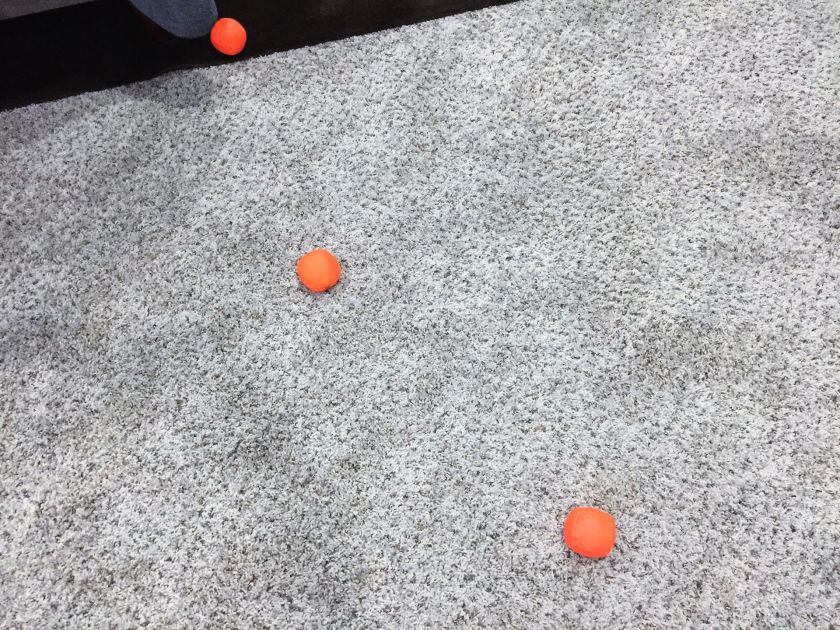
Pick up your toys, please!
I wondered if gardening could be a form of meditation and did a web search like I did yesterday for juggling. It turns out many people think of gardening as a kind of mindfulness meditation. It’s another one of those moving meditations, kind of like the walking dead meditation as I and some of my peers described it at a mindfulness retreat 9 years ago.
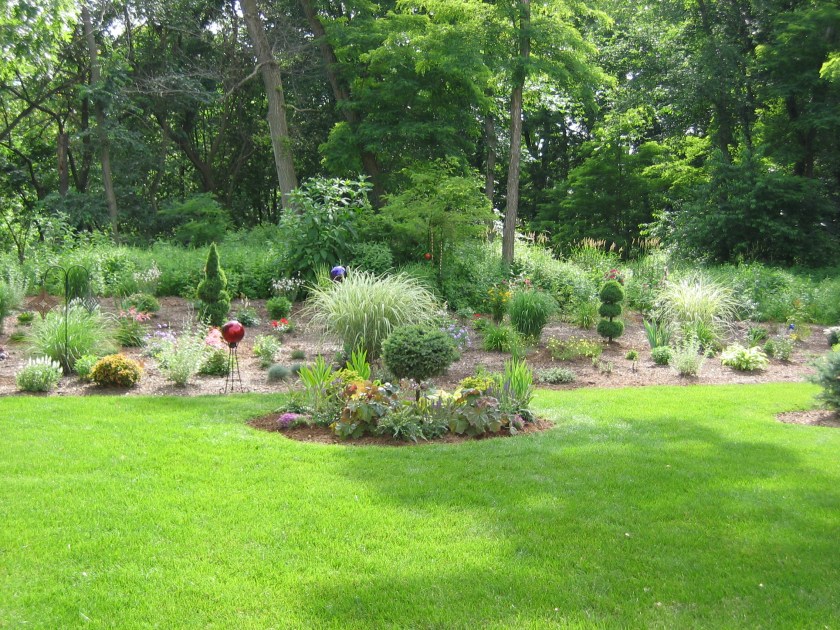
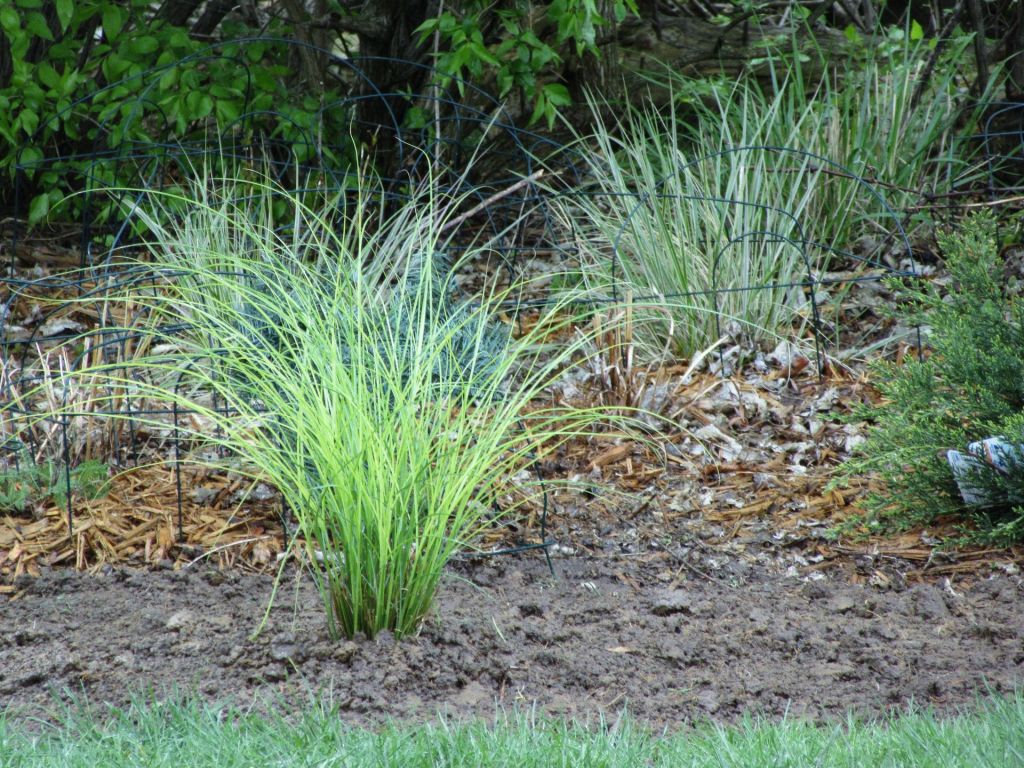
Sena has been gardening for a long time. I remember she turned our back yard into a park many years ago.
Sena Park
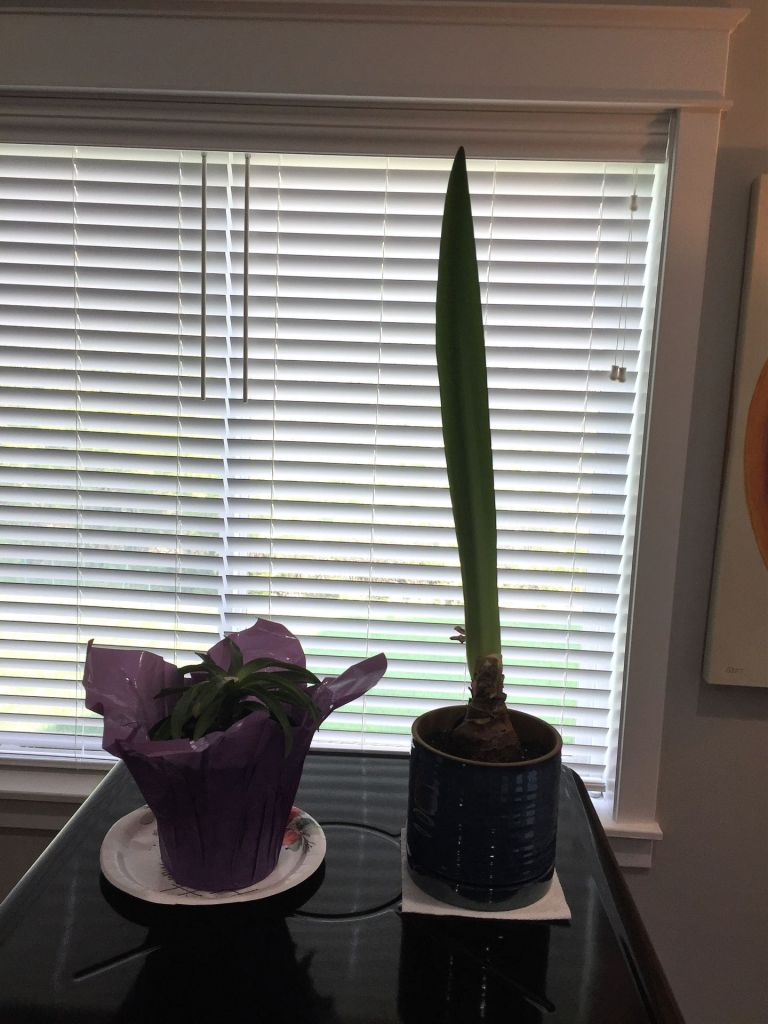
She is always on the lookout for something new to plant. I don’t always remember the exact names of them, but they’re very pretty. And the Amaryllis house plant stem is 22 inches tall!
I found one article on Headspace, “How to practice mindful gardening” which laid it all out about the subject. The key takeaways about mindful gardening:
Being fully present in the garden can help improve mood
In this setting, we might also become more aware and accepting of change
Check in with your senses before getting your hands dirty
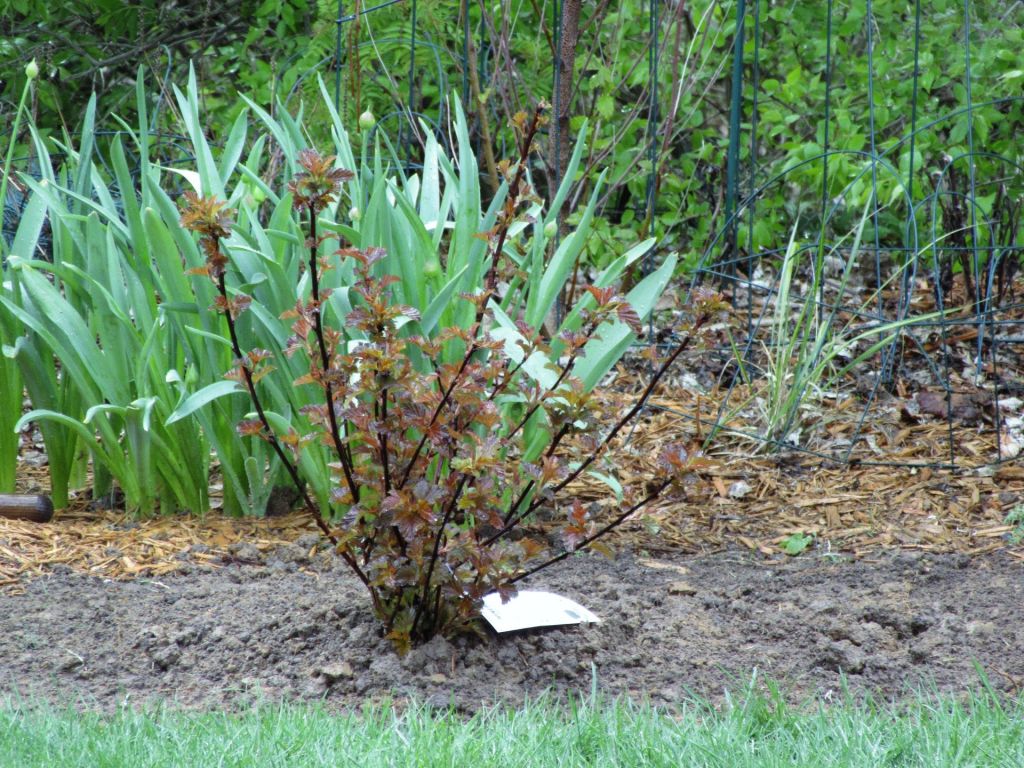
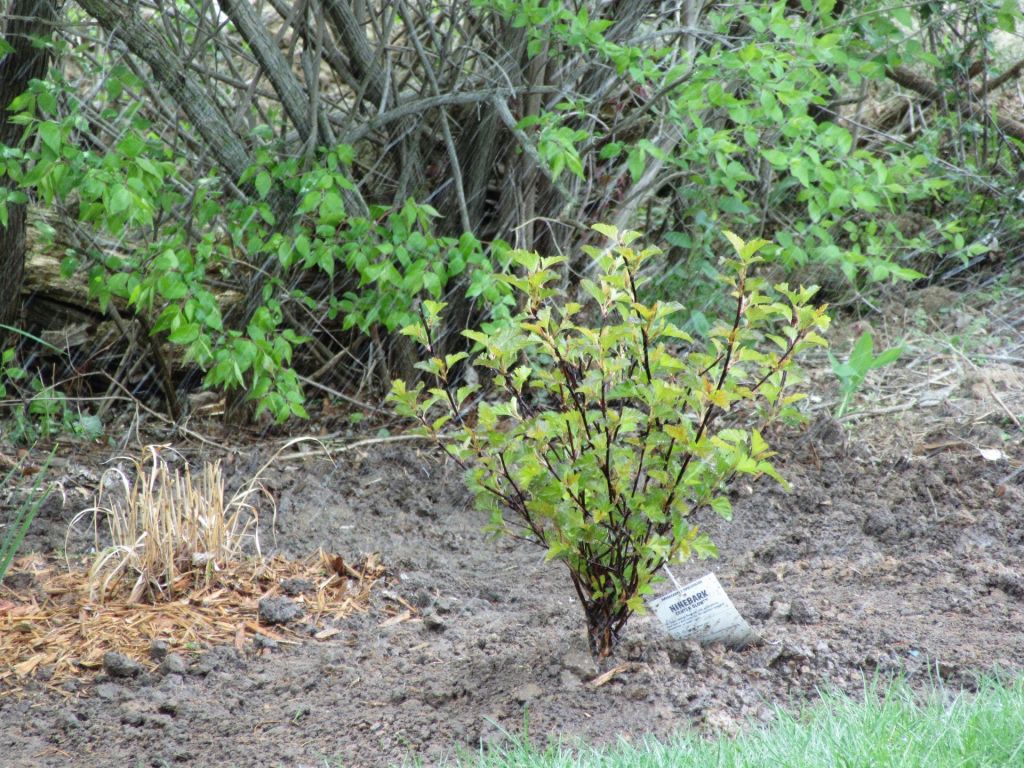
Sena can work in the garden all day, sometimes in 100 degree plus heat—which I don’t recommend. On the other hand, she really gets a charge out of digging holes in the yard, pulling up turn to make room for more flowers and shrubs, and tilling the soil. She has kept the Amaryllis stalk thriving; it’s 22 inches tall! She’s not sure what to do yet with the Easter Lily plant, but she’ll figure something out.
I still do sitting meditation, which is what I learned from the Mindfulness Based Stress Reduction (MBSR) class. And I now have begun to think of juggling as a kind of moving mindfulness meditation.
On the other hand, I’m not keen on gardening in any sense, including mindfulness. Partly, it’s because a fair amount of dirt is involved.
I think it would be difficult for me to do gardening all day like Sena does. I could stick it out for about as long as she practices juggling—about two or three minutes. I would put my tools away, though.
I’m beginning to think of juggling practice as a kind of meditation, especially since I started to learn the shower juggling pattern. Doing that for more than 15-20 minutes at a time usually doesn’t result in much improvement—at the time. But I think I sprout more brain connections as I’m doing it because I notice gradually smoother timing and coordination.
In sitting meditation, counting your breaths is generally frowned upon. On the other hand, counting my throws (especially out loud) during juggling actually helps me focus my attention. I see each throw as sort of like a single breath. I still have to consciously adjust my posture so that the “horizontal” pass doesn’t end up being more like an underhand throw. And when I modify the throws so they stay in the so-called jugglespace (not so close the balls bounce off my head, not so far out front I have to lunge for them), and space the balls out just right, I find it’s easier to get more throws in.
I don’t think Sena counts the number of dirt clods she tosses aside.
I read this article about mindfulness today and it got me thinking about how juggling might be two different aspects of the same activity.
I think they both help focus the attention. There a number of articles on the web which essentially say that juggling can be a sort of meditation.
I know hardly anything about the default mode network (DMN) in the brain, but from what little I know, I suspect that both juggling and mindfulness meditation could disrupt the DMN. There’s a published study showing that meditation tends to reduce DMN activity. That would be a good thing. The DMN has been described as a brain network which may tend to lead to mind wandering and self-related thinking. That may not be the healthiest way to use your time.
I’ve been doing mindfulness meditation for about 9 years now. I still sometimes wonder whether I’m “doing it right.” On the other hand, when I miss more than a day or two of mindfulness practice, I notice that I feel more edgy and out of sorts. When I return to mindfulness practice daily, I notice less of that scattered and nervous mental state.
I took up juggling last October and I notice that it does something similar to mindfulness. I have to pay close attention to what I’m doing while I’m juggling. Otherwise, I just drop balls constantly.
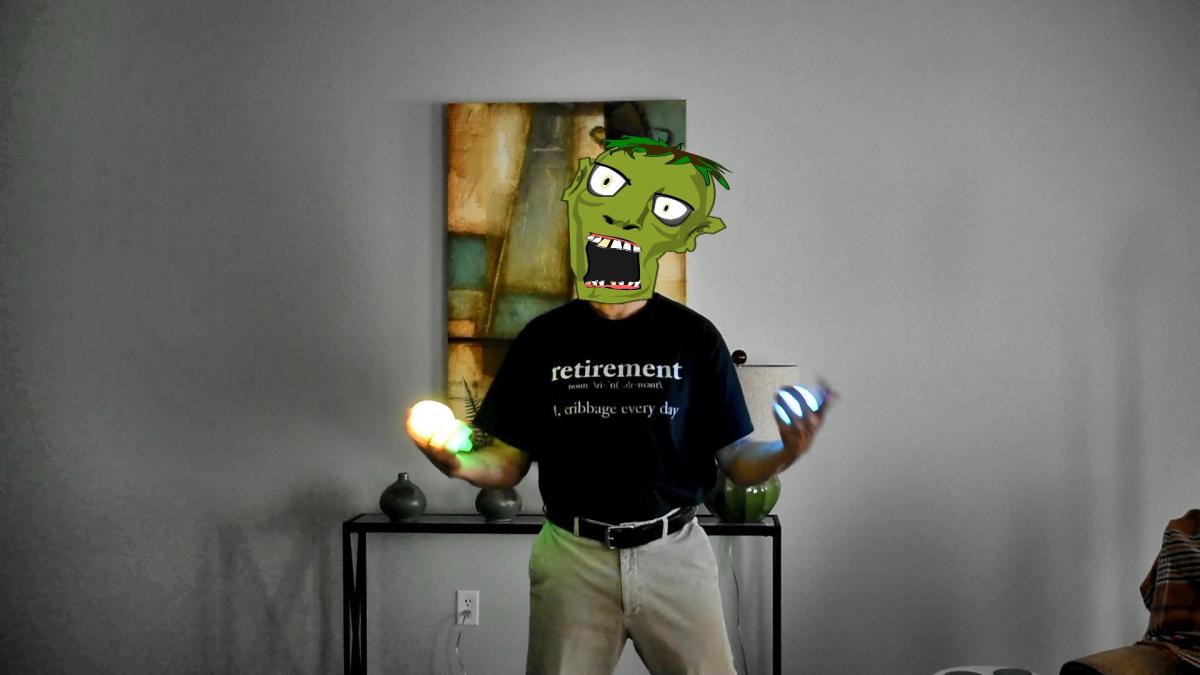
Just searching the web with the question “Is there a juggling meditation?” turns up quite a lot of articles. Some suggest that juggling is a kind of “moving meditation.” That reminds me of the walking meditation, which I’ve referred to as the “walking dead meditation,” based on my Mindfulness Based Stress Reduction (MBSR) course in 2014. At the retreat toward the close of the course, we did this walking meditation thing, which for all the world seemed to more than a few learners as resembling the way zombies walk.
I think I’d have a tough time trying to juggle like a zombie walks. You can’t be herky-jerky when you juggle, you know. I guess that’s why you never see a zombie juggle. Zombies don’t meditate either, probably because they’re too busy looking for brains to munch on.
Now I get the urge to juggle when I feel the need to clear my head. It’s reinforcing for learning new juggling tricks. Sena is learning juggling now and her efforts remind me of the challenges I had. One of them is learning how to let go of the damn ball in a pattern like the three-ball cascade. You get stuck at certain stages. I hit several walls learning the cascade. And then there came a day when I just started doing the pattern right, often because I just let go.
That reminds me of a quote by Juggleman about juggling, “Doing it wrong makes you an artist.”
I’m probably doing mindfulness the way I ought to be “doing” it. Nowadays, the way I judge that is by noticing I feel better when I stick to it.







 Go Retire Psychiatrist