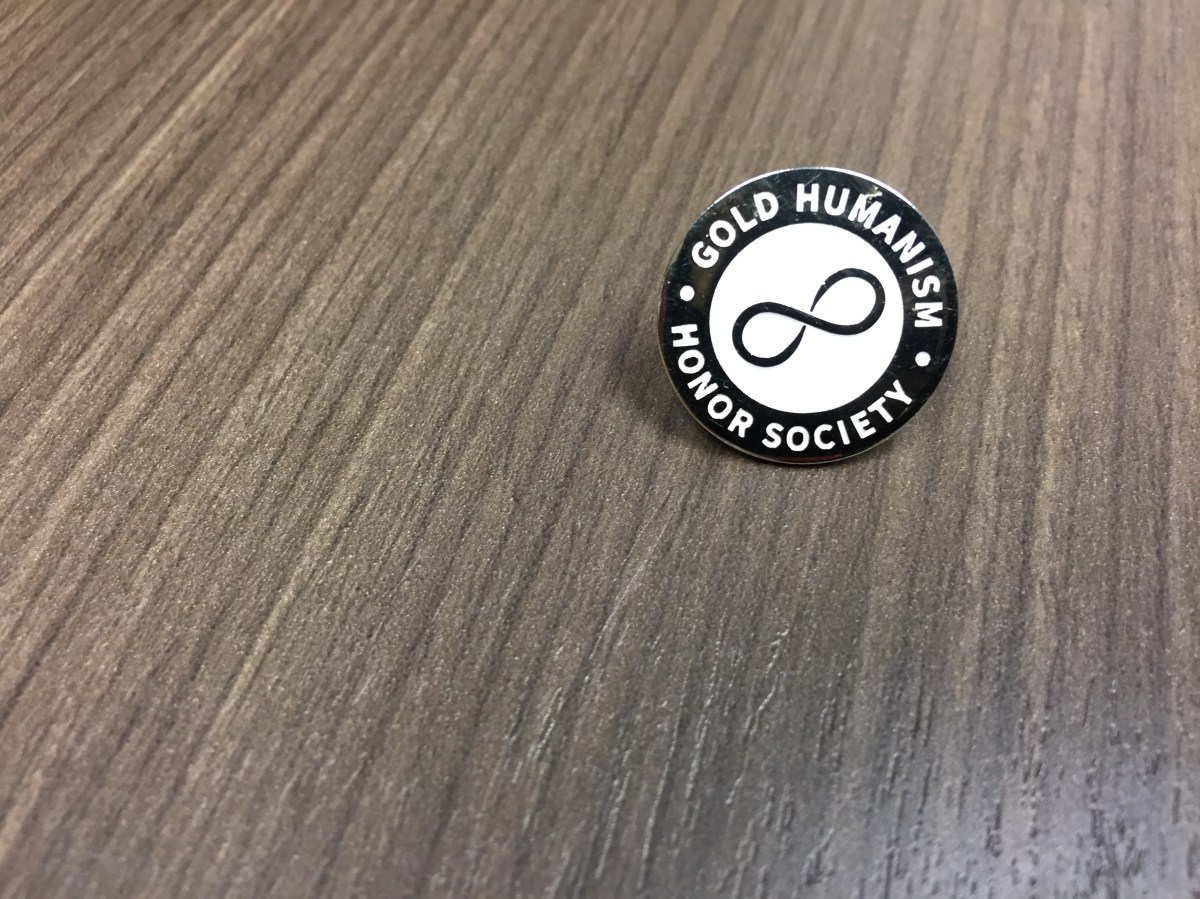
I just found out that Leonard Tow died on August 10, 2025. In humility, I express my gratitude and respect for his creation of the Tow Foundation, a big part of that being the Humanism in Medicine Award, of which I am one of the many recipients over the years. I hope this great tradition goes on forever, a reminder to doctors, patients, and families of the great rewards and greater responsibilities in medicine.
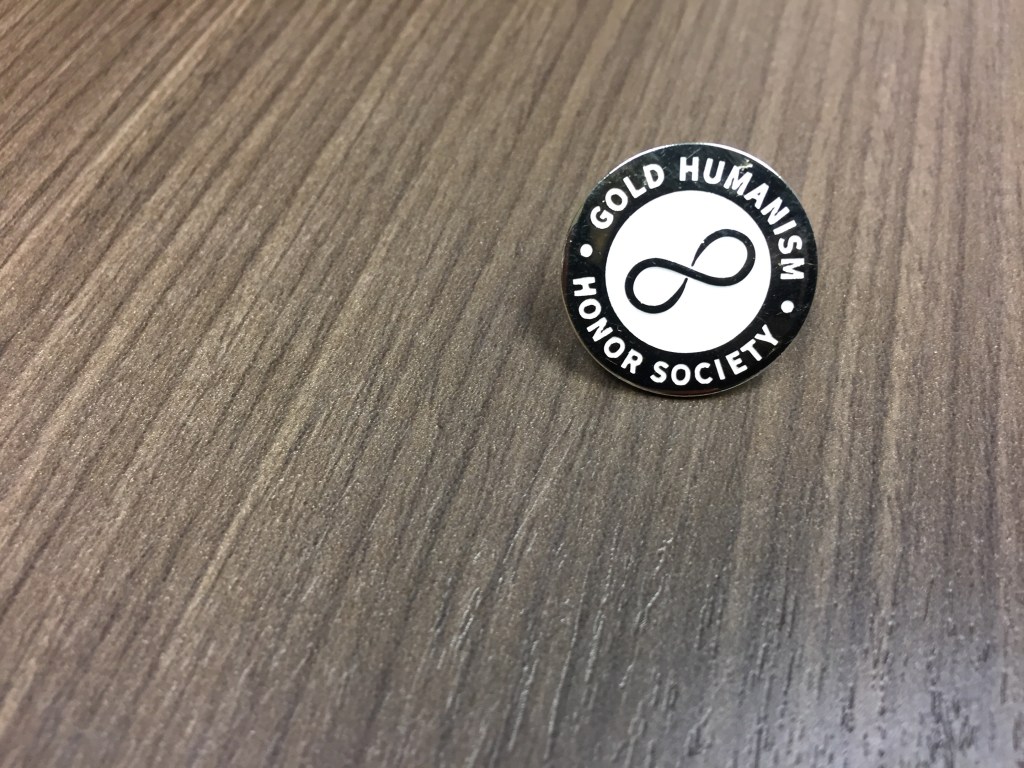
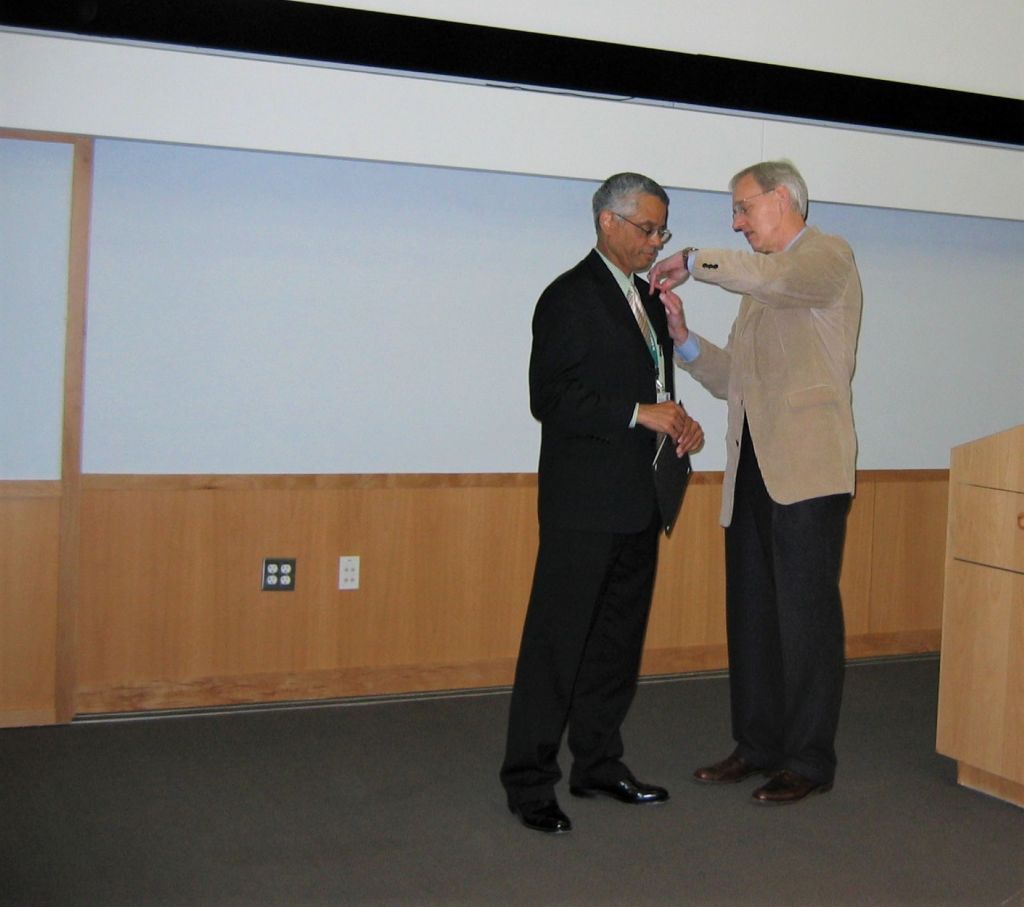
I thank Dr. Jeanne M. Lackamp, now Chair of the Department of Psychiatry, Psychiatrist in Chief for University Hospitals and Director of the University Hospital Behavioral Health Institute for nominating me and Dr. Jerold Woodhead, Professor Emeritus in Pediatrics at University of Iowa Health Care for placing the pin in my lapel. That was in 2007.
Leonard Tow established the Humanism in Medicine award to foster the development of humanistic doctors. They exemplify compassion and respect for others, humility and empathy.
That is how I will remember Leonard Tow.
On my lapel; in my heartLeonard Tow Humanism in Medicine lapel pinGetting the pin
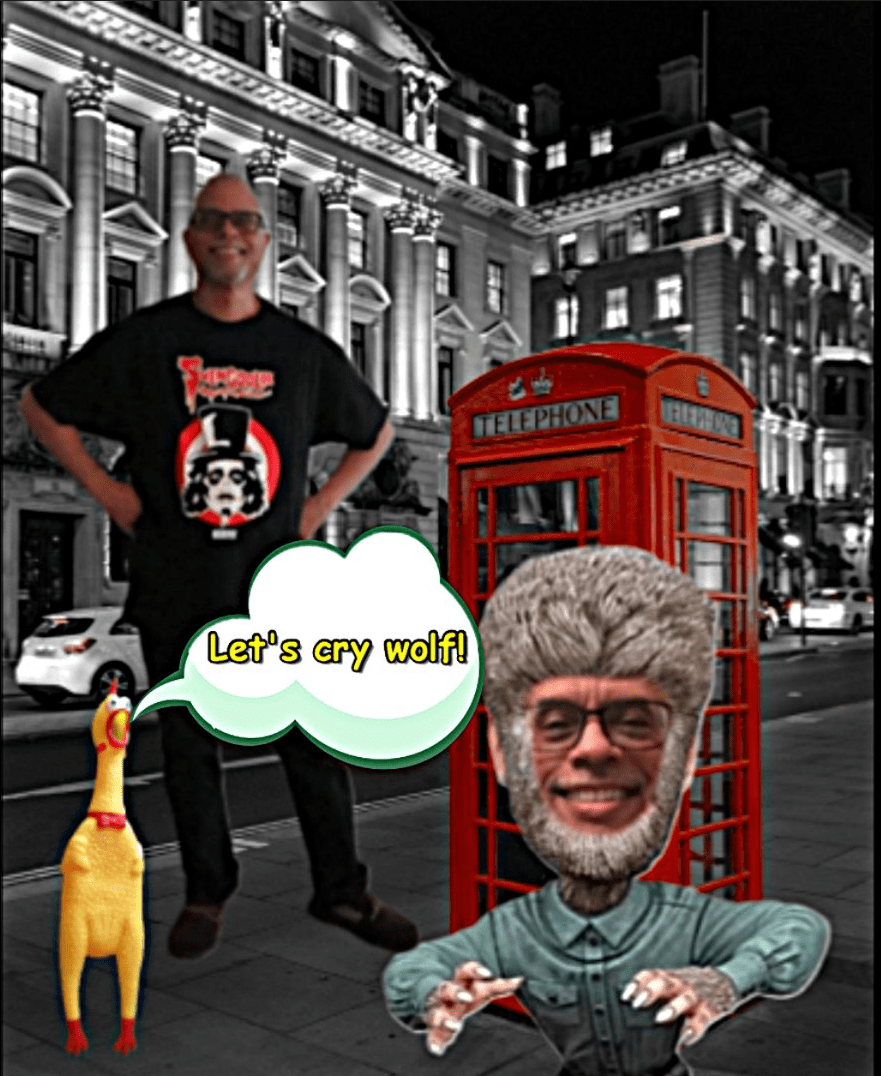
I watched the Svengoolie TV show last night and saw the 1935 Universal Pictures movie “Werewolf of London.” You can watch the movie on the Internet Archive.
This film reminded me of another British movie, “Return of the Vampire” in which there was a comedy sketch between two grave diggers. In Werewolf of London there’s this hilarious scene in which the unfortunate Dr. Wilfred Glendon (Harold Hull) meets with a couple of old women named Mrs. Whack (Ethel Griffies) and Mrs. Moncaster (Zeffie Tilbury).
They were a couple of alcoholic landladies with rooms to let who competed with each other to rent a room to Dr. Glendon, who is trying to prevent his murderous tendencies when he transforms into a werewolf by moving out of his house. The scene is priceless, arguably the highlight of the movie, and begins at about 46.41 minutes into the film. Mrs. Whack and Mrs. Moncaster, even though they seem smitten with Dr. Glendon yet hesitate to offer him a drink, probably because they want most of the booze all to themselves.
Dr. Wilfred Glendon (Henry Hull) who is afflicted with “werewolfery” according to the other werewolf, Dr. Yogami. Warner Oland played Yogami, although he was actually Swedish and had played Charlie Chan in other films. They met briefly under violent circumstances while Glendon was in Tibet looking for the Mariphasa flower—although Glendon doesn’t recall that until later.
The thing about the Mariphasa is that drops from the flower are an antidote for lycanthropy. Or is it lycanthrophobia? Dr. Yogami mentions the latter twice and it shows up twice in print as well during the film. Lycanthrophobia is by definition the fear of turning into a werewolf. Lycanthropy is the process of turning into one—minus the fear factor, presumably. Whatever.
Dr. Glendon prowls around and slaughters a few victims when the moon is full but tries to avoid killing his wife, Lisa (Valerie Hobson) by renting a room above a tavern apparently, and crashes though the window of his room, possibly because of claustrophobia. This of course makes him a victim of multiple phobias and there is no one playing the role of psychiatrist; figure that one out.
Eventually, there’s a showdown between two cops and Glendon which takes the form of a 3-way thumb wrestling match between them, mainly because Glendon has an obvious case of dental caries in his fangs which causes some pain, especially when the vodka-swilling comedy duo of Whack and Moncaster try to get him plastered by pouring liquor down his gullet through a funnel.
You’ll want to watch this when you’re in a good mood and disinclined to watch anything that is consistently horrifying. There is no laugh track.
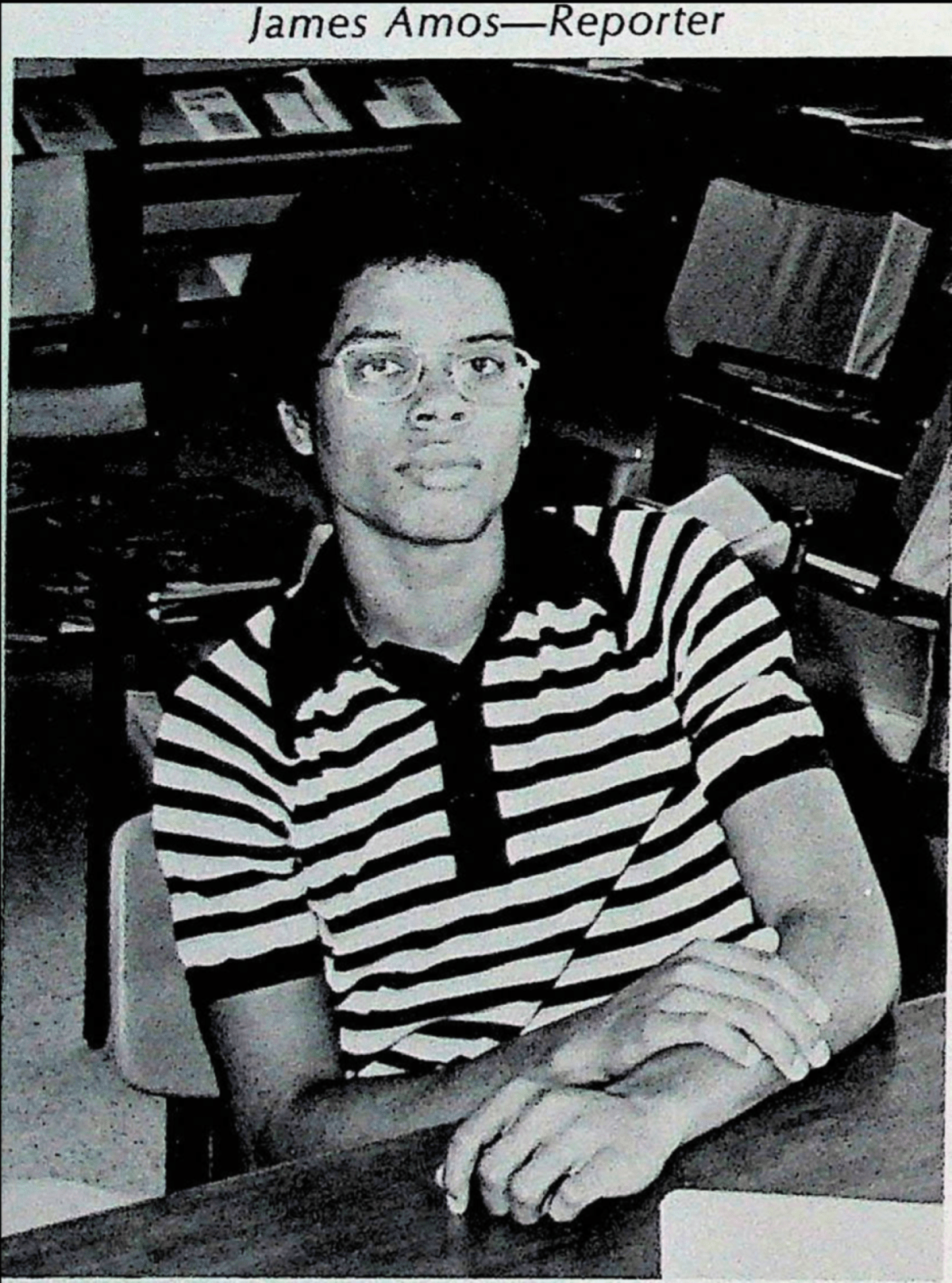
I found a photo of me in the Downs-Jones Library files at Huston-Tillotson University (formerly Huston-Tillotson College) today. It’s the featured image for this post. I was going down memory lane looking at old pictures of former classmates and teachers at H-TU and—there I was. It’s a photo of me in 1975, and it looks like I’m sitting in the Downs-Jones Library on campus posing for the picture. I don’t remember sitting for it. I had hair then and afros were in style.
I was a little worried about copyright issues just downloading or printing the image until I finally noticed the icons for doing both on the web page. I guess they wouldn’t be there if it were prohibited.
What’s also funny is that the caption above my picture says “James Amos—Reporter.” This meant that I was contributing to the college newspaper, The Ramshorn Journal. Funny thing is, I couldn’t remember writing anything for it.
I tried to find copies of the Ramshorn Journal for 1975, but there were only records for issues published in the early to mid-1960s. I guess I’ll never know what I wrote, if anything.
I’m surprised there would be any photos of me at all since I didn’t graduate from H-TU but transferred to Iowa State University and graduated from there in 1985.
I clipped out my photo from a few others. The group included the sponsor of the Ramshorn Journal, the editor, and the typist. That makes it looks I was a part of the staff. I’ll be darned if I remember doing anything for it. If I had written anything, I would think I’d have kept copies. But I have no documents proving it. I don’t have copies of the Ramshorn either. I’m a writer by inclination and habit so this is a mystery.
As I looked through yearbooks, I couldn’t find anyone I could ask about it either. That makes sense because it was 50 years ago. On the other hand, if there are digitized issues of the Ramshorn Journal from the 1960s, there might be some later issues kept somewhere in the library. Maybe there’s something with my byline on it.
If I get curious enough about it, I might ask somebody at the Downs-Jones Library if they could check on it.
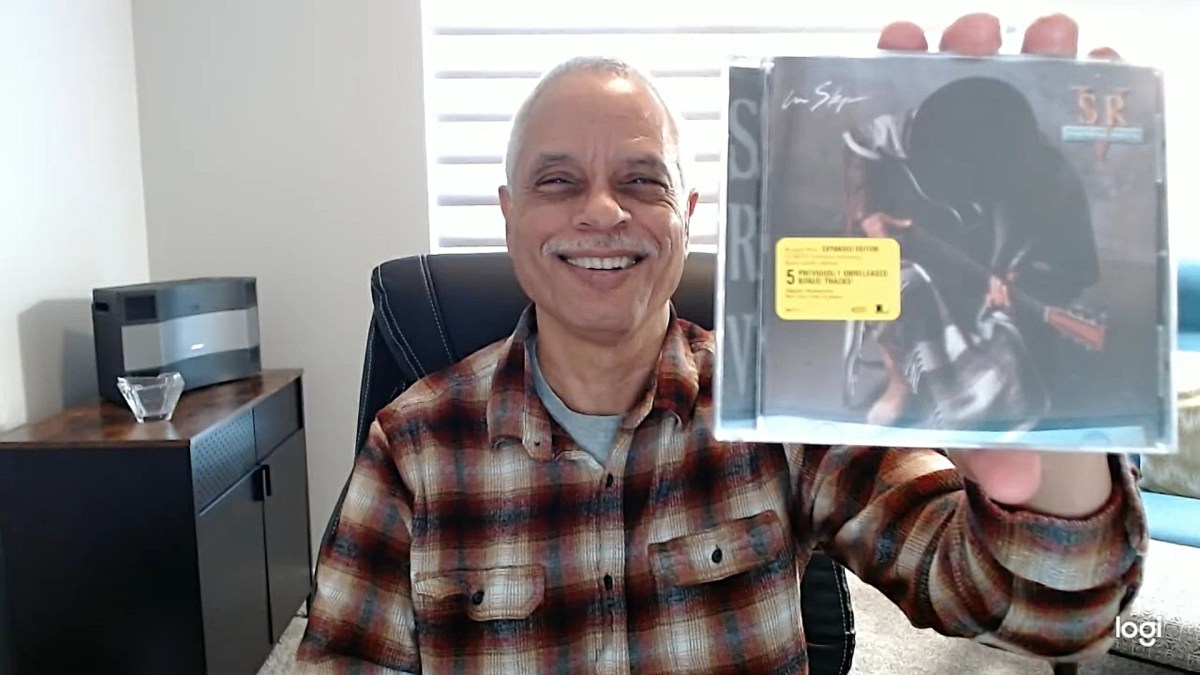
I got off my schedule last week on listening to the Big Mo blues show, but as it turns out, he was gone last Friday. I heard last night’s blues show and heard Stevie Ray Vaughn’s Riviera Paradise.
So, of course that was not on the list of songs for the pod show today, but Big Mo did mention that Riviera Paradise and the name of the collection, which was In Step was related to Stevie Ray Vaughn’s having been successful at staying sober from substance use disorder for a year. The name In Step was evidently related to his going through a 12-step program to achieve sobriety. I learned about Stevie Ray Vaughn early in my residency (if I recall correctly) from a University of Iowa psychiatrist who is now the chair of the psychiatry department.
The name of today’s pod show was “The Yellow Butane Curse” which is about superstition. I’m not sure if this means that blues music enthusiasts are prone to being superstitious, but Big Mo did admit to believing that yellow butane lighters were unlucky for him.
This is probably going to seem like a disconnected transition but I missed last week’s pod show (“He plays what can’t be written down” see below), which was not the usual format of song talk but an interview with a successful local musician, Merrill Miller. I don’t know anything about him except what I learned in the podcast. I got a kick out of listening to a couple of musicians just more or less shooting the breeze about living the musician’s life.
Merrill mentioned playing in places like Strawberry Point, Iowa. I don’t have a musical connection to Strawberry Point, and I never went anywhere there that was connected with music like Merrill did. In fact, the only reason I was in Strawberry Point was because I was part of a survey crew staking Highway 13 between there and Elkader to straighten out some of the many curves in the road. We didn’t have much time to listen to music.
One piece of Iowa history they talked about was the issue of black musicians not being able to find a place to stay in this area because of racism. They had to find somebody they knew who would put them up while they were in town for a gig. Funny where a rambling, relaxed conversation will sometimes lead you.
I had few connections to music while I was growing up. My mother tried to teach my little brother and I how to play piano. It was an old out of tune piano. I managed to learn where the “middle C note” was—and that’s about all I recall about it. I took guitar lessons and got pretty good at making buzzing notes with it. Man, I could make that guitar buzz, although my teacher got a good laugh out of it—and couldn’t get me to break the habit. I could blow into a harmonica (what real musicians like Merrill and Big Mo call a harp), but I couldn’t kidnap any notes out of it. I tried picking notes on a banjo for a short while, had a second stab at the guitar, and got not much more than callouses on my fingers before moving on to non-music making careers.
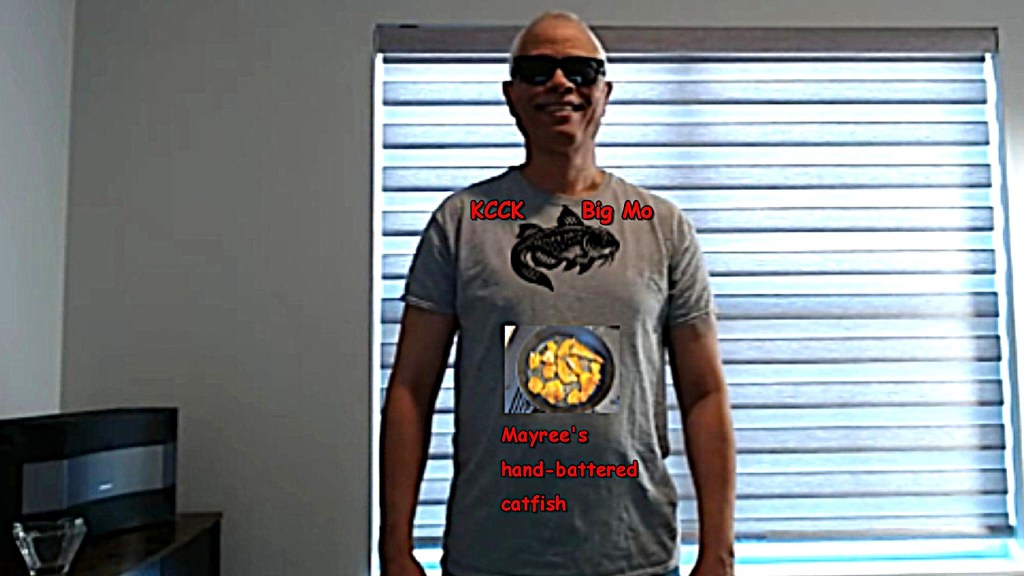
You can be glad about that. Now about that suggestion that I have for a tee shirt design about my favorite faux sponsor created by Big Mo, Mayree of the legendary Mayree’s hand battered catfish; it’s better because it’s battered. I wonder if there’s any movement on that.
After a short break during the Thanksgiving holiday your hosts are back at it again with another episode! This week features the usual mix of blues eras you’ve come to expect along with a few Californian artists, tune in to see which ones! Songs featured in the episode: Solomon Hicks – “Further On Up The … Continue reading
While yesterday’s post on Dr. Melvin P. Sikes was mainly about my personal impressions of him as a teacher, there are a couple of web resources which gives a little more texture about him apart from my imperfect memory and limited experience.
One of them is a formal course outline and evaluations he and another teacher wrote in 1975, which was the year I first encountered him when I was a freshman at Huston-Tillotson College at that time. I know it seems like a tough read, but I was pretty impressed by what teachers said about him in the evaluation part of the document entitled “Report on Teaching in Multi-Cultural/Multi-Ethnic Schools (1974-75).”
The pdf document is 39 pages long, but I suggest focusing on the student teacher evaluations of his course. That starts on page 19. They all praise it, without exception. Many note that he didn’t really just lecture. One of the evaluators called him “supercalifragalisticexpialadoches!” Not sure if that’s spelled just right (it’s on p.33 so you can check it yourselves), but the point is well made—he was viewed as an extraordinarily gifted teacher.
Dr. Sikes’ comments start on pp.35-39 (Attachment D, entitled “Teaching in Multi-Cultural/Multi-Ethnic Schools; EDP F382 -Summer 1975l Professor Melvin Sikes) and I think that’s also worth reading. It’s short and without lofty, academic terminology.
The reading list caught my eye. I looked for Ralph Ellison’s novel “Invisible Man” which had been published in 1952, but it wasn’t on the list. That book has special meaning for me personally, because when I encountered Dr. Sikes in 1975, I was a freshman at one of the Historically Black Colleges and Universities (HBCUs), Huston-Tillotson College as it was then known. I was born and raised in Iowa and had never been in the southern United States. I sort of identified with the unnamed protagonist because the first section of the book deals with his experience at a southern black college.
It was a culture shock. I never saw anyone like Bledsoe. In fact, I never personally met the president of H-TC (now Huston-Tillotson University as of 2005), who was Dr. John Q. Taylor King, Sr. at the time. My main connection was Dr. Hector Grant, who recruited me while he was visiting Mason City, Iowa in connection with support from a local church. I still don’t know what happened to Dr. Grant. It’s like he dropped off the face of the earth.
Anway, I wanted to share another item I pulled off the web about Dr. Sikes. It’s a newspaper article about him published in the West Texas Times issue published May 4,1977. It’s in the collection of the Texas Tech University on line, with the link to the main front page story “Judge Orders Officials to Clean Up the Jail,” interestingly enough. It automatically downloads a pdf of the newspaper issue to your computer when you click the link. I’m just going to try to summarize it and pull some quotes.
The title of the story about Dr. Sikes is down the page, “UT’s Dr. Sikes Helps Students Know Themselves and Others.” The story begins with an anecdote about an interaction Dr. Sikes had with a teacher. It involved a black student coming to her with a complaint that a white student had hit him and he used bad language in describing it. The teacher was going to discipline the kid about his bad language, which Dr. Sikes questioned.
Sikes thought the teacher should have first gotten more information about what the student actually experienced in the encounter. The implication was that if she had listened first, she might not have jumped down his throat about his bad language.
The author of the news article writes that, according to Sikes, “I want my students to be more flexible, to understand that people are first people,” the professor likes to say. “I want them to grow out of looking at a color of a skin and making determinations, good, bad, or indifferent.” He goes on to say,
“I don’t even want them to look at blacks and say, ‘these are great people.’ I just want them to look at blacks and say ‘these are people.’
Quotes from Sikes:
“Before you can deal with another in a meaningful kind of way, you have to find some meaning and purpose in your own life—which means defining yourself….”
About teaching:
“Yes, I was lucky, I was taught by my parents, to some degree. But then I had teachers who taught this to me… And much of whatever I am… is the result of teachers and their concern—black teachers, white teachers.”
About our differences:
“If we’re all the same, we can’t make unique contributions because the contributions would be the same.”
The author of the story points out that Dr. Sikes often took student teachers to Huston-Tillotson College to see predominantly black students. The author also writes that Dr. Sikes mentions something about politics which rings a bell.
“He [Dr. Sikes] talks about the politicalization of education, and says that educating has been taken away from the educator and usurped by the politician.”
On teaching the teachers:
Dr. Sikes says: “People don’t realize how important you are and you don’t realize how important you are. You’re molding and shaping human lives, millions of lives, who will become, depending upon how you mold and help shape or help them become.”
“Now the doctor deals with his patient for a short length of time, and the patient dies and he buries his mistake, or he lives and he’s all right. But we can’t bury our mistakes. They walk around and haunt us and other people…sometimes their living is death. But people never realize that it’s teachers—we are the ones who have power.”
And finally, about Mel Sikes himself, one of his students says,
“Sikes is intense, loquacious and supremely personal. He immediately grabs you and talks on a person-to-person wavelength. He tells his students a lot about himself, his struggles as a black and as a radically caring person. He says he would die if it would help all people relate better. And he would.”
There was a lot more to Melvin Sikes than a lemon-yellow leisure suit.
Today we saw this cool Red-Tailed Hawk on the fence—sort of, in a manner of speaking. This hawk was definitely not on the fence about getting brunch though. It would fly off the fence a few times and we expected it would come up with a mouse or squirrel or something—empty claws.
The woodchucks are too big for the hawk.
The experts say you can distinguish a male from a female Red-Tailed Hawk because the female is “25% larger.” I guess that might work if you saw them together—doing something X-rated.
On the other hand, there was a Red-Tailed Hawk named Pale Male that was famous in the New York City Central Park area. He got his name because his head was white. He took several females as mates during his life. They raised several eyasses, which was a new word for me today; it means young hawks. Mary Tyler Moore (“Oh, Rob”) participated along with other neighbors in protests about anti-pigeon spikes being removed and eventually they were replaced by “cradles.”
If you don’t remember the “Oh, Rob!” quote it was Mary Tyler Moore’s (as Laura Petrie) frequent complaint about husband Rob Petrie (Dick Van Dyke) on the Dick Van Dyke show (sitcom in the 1960s). Give yourself a gold star if you thought of the X-File episode “Arcadia” in which Agents Mulder and Scully took the names of the Petries.
Anyway, the Red-Tail Hawk is an impressive bird. It was just not a lucky day for hunting.
Well, I’m sure you’ll be relieved to know that I am lucky to still be independently mobile today after eating the FULL Panera Bread green goddess chicken cobb salad—as in full stomach.
I’ll admit I didn’t know what I was getting into. You know the salad is big when it comes with a ladder.
It’s supposed to be a healthy salad although there are cautions about the green goddess dressing—don’t worry, it was barely noticeable.
I got it around noon at the mall. It’s a bad time to try to get lunch because half the city is in there and they’re all hungry. You know it’s busy when potential customers are told the wait is 45 minutes. I was lucky; I think I waited around 15 minutes. Tables were hard to find. I ducked into a booth two guys were busy thumb wrestling for.
You need to bring an axe because, of course, you’ll have to slaughter the chicken—after she lays the eggs because they go on the salad. Plan on extra time to pick the tomatoes—in the back; way in the back.
This thing about the eggs in the salad probably began with the story about how the cobb salad got started. I read that it started in the 1930s after the Hollywood Brown Derby restaurant closed for the night and the salad supposedly was invented by the owner, Robert Howard Eggs…no, wait, that’s Cobb.
Cobb was starved around midnight because he’d been working hard all day wondering what the difference was between a bowler hat and a derby hat and why in heck had he not picked the name the brown bowler for his restaurant because of the alliterative effect and so had not eaten all day.
So, Bob Cobb grabbed whatever leftovers were in the kitchen at the time and thought it was terrible. He texted Domino’s and while eating their famous egg pizza had a brainstorm about marketing a salad with eggs in it and naming it after Ty Cobb because he was observed once having bacon and eggs for breakfast.
Remember, this history moment was brought to you by Serutan; that’s Natures spelled backwards.
They had to carry me out of Panera’s in a wheelbarrow.
The Svengoolie TV show movie next Saturday will be “Invaders from Mars” released in 1953 and it triggered some memories. One of them is when I was a little kid. I think I saw parts of it on TV while I was supposed to be down for a nap. I recall seeing these burly guys in green body suits trotting stiff-legged through tunnels. Their gait is something I can’t forget—no matter how hard I try. For a long time, I thought I had just been dreaming. But I’m pretty sure the nightmare was real because when we saw the movie last year on the Svengoolie show, those Martians looked familiar.
The other memory is of a TV public service announcement (PSA) commercial in the early 1970s. I managed to find a YouTube of it that reminded me of the leader of the Martians. He was in a clear globe and the green guys carried him around. He was just a head with tentacles. He was the leader and was very much ahead of his assistants in an evolutionary sense. At least I think that was the idea. He was basically the brains of the extraterrestrial population. He did all the thinking and planning—but he was stuck in this globe.
Anyway, the commercial is from 1971 and it’s a PSA from the President’s Council on Physical Fitness and Sports. The commercial shows how we’d be by the year 2000 if we didn’t shape up, literally. Richard Nixon was President; during his presidency Apollo 11 landed on the moon—and he resigned from office because of the Watergate scandal. Anyway, food for thought for the upcoming film, “Invaders from Mars,” which probably has a message about leadership.
We’ve lived in the Iowa City area for over 37 years and never heard of the Brain Rock until today. I don’t know how we ever missed it. It’s a work of art called Ridge and Furrow created by artist Peter Randall-Page, a world-famous artist from the United Kingdom.
It’s been called the Brain Rock for obvious reasons because the stone has what you might call gyri and sulci all over its surface. It has recently been relocated from the T. Anne Cleary walkway outside the Pomerantz Career Center to the Medical Education and Research Facility (MERF).
As Randall-Page says, if you trace the line from one side of the sculpture you can follow it to its end on the—far side of the rock, I guess you’d call it.
The other interesting thing about the Brain Rock is that a couple of intoxicated college students urinated on it back in November of 2021. No mention of whether they were trying to trace the furrow. Maybe they’d heard of the urinating sculpture and fountain called Piss in Prague.
So, this movie ‘Frankenstein Meets the Space Monster” is high in cheese content and don’t expect to see the Frankenstein made famous by Boris Karloff. It was released in 1965 and directed by Soupy Sales, no wait, it was Robert Gaffney. Marilyn Hanold played the big female lead, Marcuzan, the amazonian leader who looks nothing like the male Martians, one of whom, Dr. Nadir (played by Lou Cotell), reminds me of Yoda.
Seriously this Nadir to take we are? Fits him the name because at the lowest level his quality is! Hmmmm?
In fact, all the male Martians sort of remind me of Yoda. Marcuzan doesn’t resemble any of them. Other cast members include Jim Karen as Dr. Adam Steele, Nancy Marshall as Karen Grant, David Kerman as General Bowers, and Robert Reilly as Col. Frank Saunders, the android astronaut. You can watch the movie on the Internet Archive, but you’ll miss Svengoolie’s cornball jokes and commentary.
The gist of the story is that the Martians (who are never identified as such, by the way) lost an atomic war and somehow all the females on the planet got wiped out. So Marcuzan and Nadir and a bunch of Martians take off for earth to round up new females to repopulate Mars.
At the same time, scientists on earth have built an android named Frank who is test-driving a brand-spanking new NASA space capsule. Nadir boy and the gang shoot it down over Puerto Rico. Frank gets shot in the brain and goes off his nut, which can’t be screwed back on because none of the Martian repairmen know how to use the metric system in order to select the right size socket wrench.
Marcuzan and Nadir and the gang and Frank all cause mayhem in Puerto Rico. It’s kind of like parallel play until the Martians hustle out their hairy monster champion, called Mull, to thumb wrestle Frank and settle the matter. Guess which one is Frankenstein? That’s right—Marcuzan!
Anyway, if you’re looking for production value, you’re barking up the wrong tree. This is about extreme campiness, which is exaggeration and purposeful emphasis on bad taste. Even though the producers wanted a serious science fiction/horror film, according to Svengoolie and one of the original screenwriters who is still teaching at Hollins University in Roanoke, Virgina, the goal was to make a wild parody of the genre. While the producers insisted on the straight version, somehow the screenwriters obviously prevailed.
That explains the obviously botched makeup jobs, the stock footage making up 65% of the scenes, and the comical and jarringly timed soundtrack. One song called “That’s the Way It’s Got to Be,” done by The Poets seems like a sort of anthem for the movie’s real aim. In other words, don’t complain about the lack of production value because it’s a parody, hence (all together now), that’s the way it’s got to be.
The Martians used a weapon that was a popular toy for a short time, the Wham-O Air Blaster. It could shoot air 40 feet and was banned after the blast ruptured a kid’s eardrum.
Early on in the movie, right after Frank the android gets bunged up after being shot down by the Martians, he ends up looking like he’s got a couple of tubes hanging and bouncing around off his chest for the rest of the movie, so I couldn’t help thinking of him by the nickname “Tubular Teats.”
And for some reason this gets connected to the scenes of the bikini-clad women being rounded up for a weird technical assessment (reminiscent of a sliding cat scan table) of their suitability for repopulating the female population back on Mars. The women obligingly assist the Martians who lift them onto the table. This is bizarre considering the fate for some of them.
Anyway, I have to rate “Frankenstein Meets the Space Monster” using a different standard from that which was used by some to rate it as pretty high up on the list of the 50 Worst Movies Ever Made. That’s because I think it’s a parody and therefore not comparable to a serious science fiction/horror flick—because that’s the way it’s got to be!









 Go Retire Psychiatrist