About Those Stages of Retirement

We got our new wall clock on the wall the other day. It got me to thinking about how I view time and other matters now that I’ve been retired for about two and a half years.

I actually tried to ease into retirement by getting a 3-year phased retirement contract. I thought that might help me get adjusted to not being a fire fighter as a consultation-liaison psychiatrist. I don’t know how helpful that was.

So, I looked up the stages of retirement on the web. There are slightly different versions but most of them have 5 stages:

  • Realization
  • Honeymoon
  • Disenchantment
  • Reorientation
  • Stability

I guess I’m somewhere at the tail end of disenchantment and the beginning of reorientation. I have to point out a few things about me and the clock on the wall to help get my point across.

When I was running around the hospital, I used to pay a lot of attention to the clock. One example is how I helped medical nurses and doctors diagnose and manage catatonia. That’s a complicated and potentially life-threatening condition linked to a lot of medical and psychiatric disorders. It can make people afflicted with it look like they have a primary mental illness and they can look and act spooky.

Most people with catatonia are mute and immobile. They could also have wild, purposeless agitation but the mute and immobile type is more common. I would recommend administering injectable medicine in the class of benzodiazepines, often lorazepam.

Often the catatonic person would wake up and start answering questions after being like a statue only minutes before the injection. I watched the clock very closely, and the nurse and I watched the vital signs even more closely.

The recovery from a catatonic state looks like a miracle, which often made me look like a hero—despite the fact I could not explain exactly the mechanism of how catatonic states begin or how injectable benzodiazepines work to reverse the state. In most situations, on the general medical and surgery wards, the cause was not infrequently a medical emergency.

That made retirement difficult. I often didn’t notice time passing when I was working. In fact, my job as a C-L psychiatrist was marked by a series of emergencies, hence the fire fighter feel the job held for me.

Somehow, interrupting my schedule (if you can call firefighting a schedule), didn’t help me very much in my adjustment to retirement.

Right from the start, I noticed I missed being a hero. By the time I got to the first stage, Realization, I was already part of the way into the Disenchantment stage. I don’t really recall the Honeymoon stage.

Time passed slowly after full retirement for me. Not even the phased retirement schedule prepared me for it. It was excruciating. I have never slept very well, but my insomnia got worse after retirement.

I had fleeting thoughts about returning to work, and that’s the surprising thing. You’d think I would have just dropped the whole retirement thing and get right back in the fire truck.

But I didn’t. Part of me knew that the job consumed me and burnout was a consequence. My focus on work did not help me be a good husband. On the other hand, retirement by itself didn’t help either.

It’s still hard, but not as difficult as it was at first. I would say that I’m somewhere between the latter part of Disenchantment and the beginning of Reorientation. I’m not anywhere near Stability.

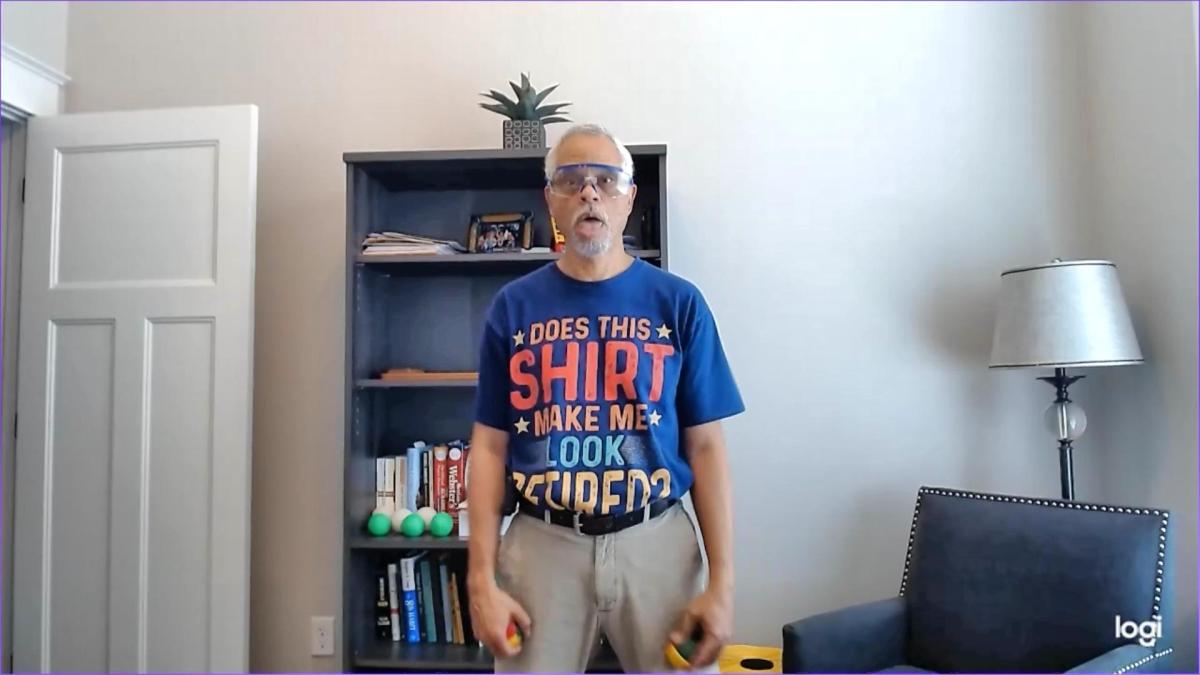
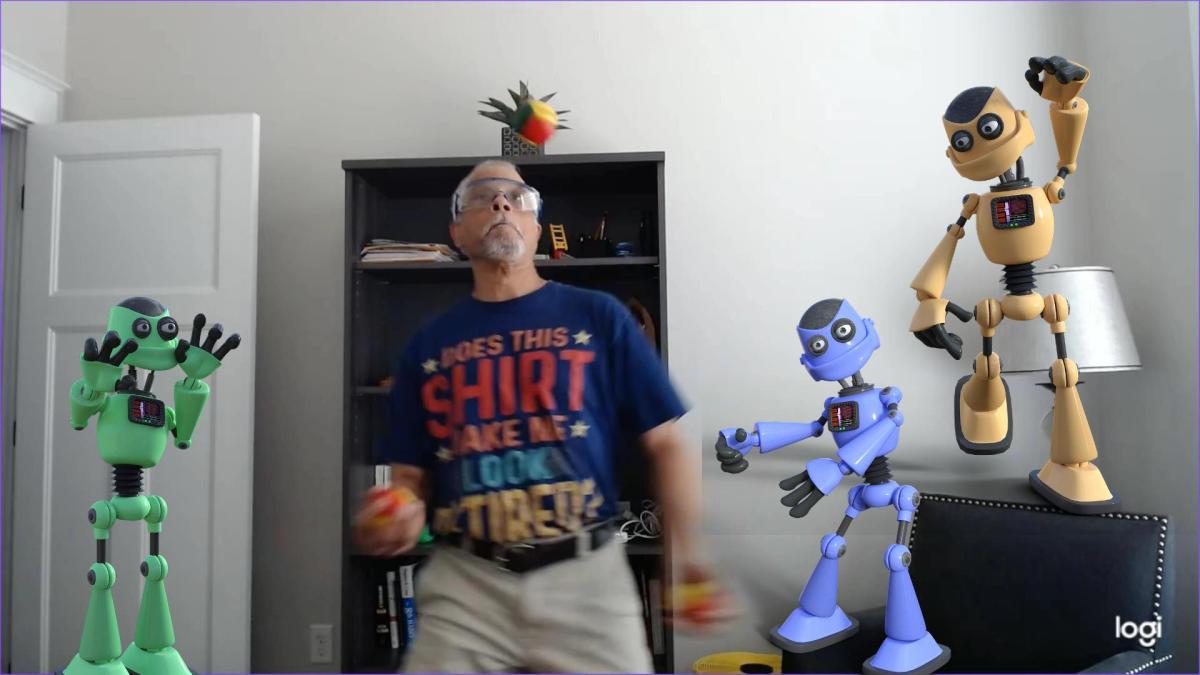
I have replaced my schedule to some degree. Most days, I exercise and practice mindfulness meditation. I have also recently taken up juggling, as many of my readers know.

But any YouTube videos of me “cooking” are bogus. Sena takes video of me messing around making pizza and whatnot as if I know what I’m doing—but she’s giving me cues every step of the way. I’m allergic to kitchens and I probably always will be.

Anyway, I have a different relationship with the clock nowadays. I’m still hoping that I’ll evolve into somebody who knows how to manage not just retirement better, but a whole lot of things in a more adaptive way.

I sure hope so. According to some statistics, at my age I’ve got a limited time to improve. So, I need to get busy.

Lost Juggling Ball Found!

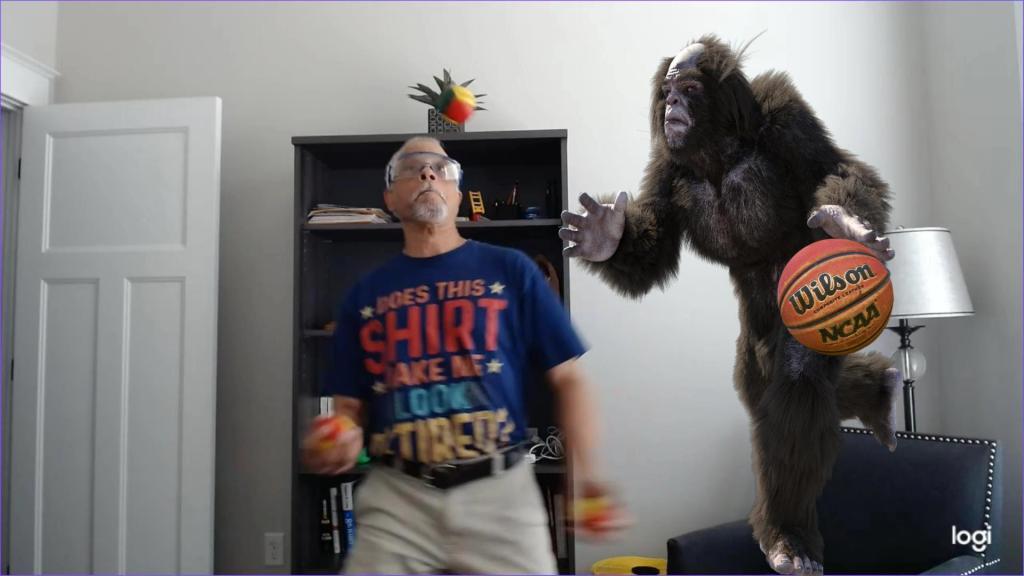
I lost one of my new juggling balls temporarily this morning while trying the behind the back throw. OK, so I dramatized the video a little. That’s because I got interrupted in the search to help Sena hang our new wall clock.

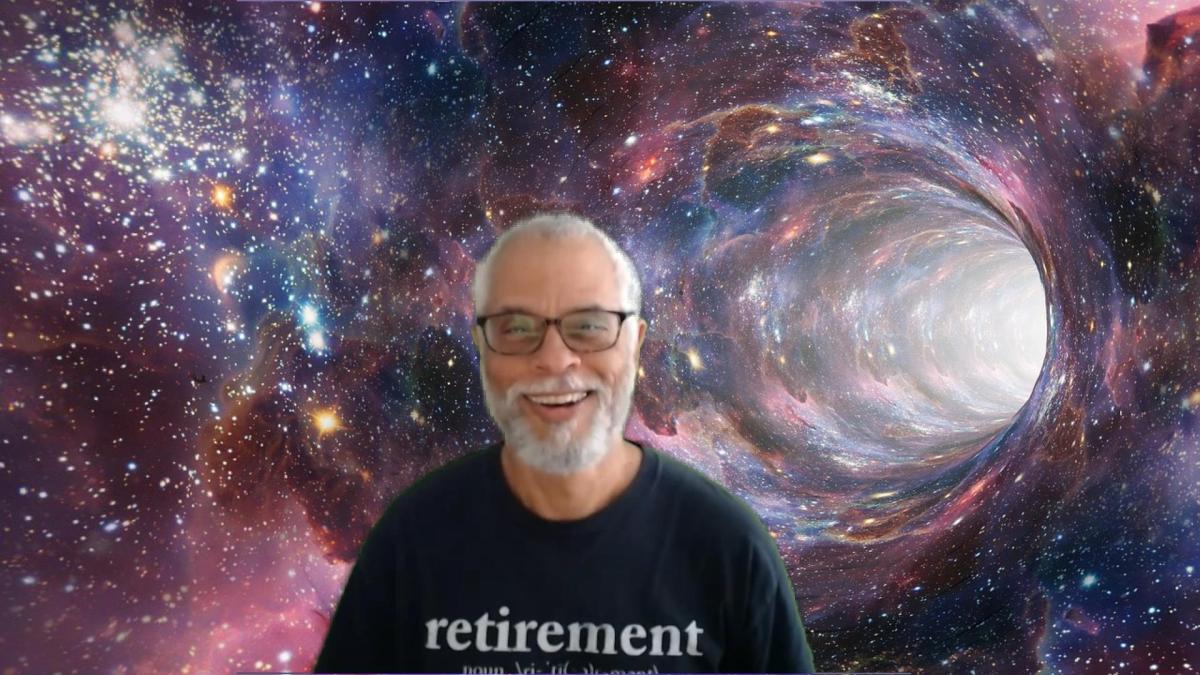
I had no idea where that ball was. I even considered a wormhole vortex opened up in my office—briefly.

But the place I finally found it was just where I’ve dropped juggling balls before—on one of my bookshelves.

Thoughts on Regrets

I’ve been thinking about Dr. Moffic’s article on regret, posted on February 16, 2023 in Psychiatric Times.

I’ve dwelt on it long enough that I feel compelled to inject humor into the subject. It’s one of my many defenses.

There’s a quote from Men in Black 3 involving a short telephone conversation between Agent K and Agent J:

Agent K: Do you know the most destructive force in the universe?

Agent J: Sugar?

Agent K: Regret.

You could probably sense that joke coming. Whenever there is talk of regrets, I always recall maybe one or two remarkable episodes which led to lifelong regret. Because regret is pretty corrosive, as noted by Agent K, I need something to counter it.

My trouble is that I have many regrets. Am I so different in that regard?

Sometime in mid-career, a very important leader told me, frankly and calmly, “You’ll never be a scientist.”

Well, by then it was far too late for me to change life course. It was true; I’ve always been the rodeo clown, never the matador.

On the other hand, I know one thing I’ve never regretted and that’s my retirement. At least I think I haven’t regretted it. I have this recurring dream. It’s not every night, but often enough to make me wonder what I should do about it.

In the dream, I’m late for an exam or class and I fear I’m going to flunk. I look for the building where the exam is going to be held. I can never find it. Hallways appear and look vaguely familiar, but as I wander about looking for the bookstore or classroom or exam room, I feel like I’m in a maze, climbing stairs, almost like an Escher drawing.

That reminds me. Incidentally, several years ago, one of the medical students rotating on the psychiatry consult service drew a picture entitled “The Practical Psychosomaticist” which contained images of stairs running in different directions similar to an Escher drawing (see the featured image). It was really just her expression of how I got around the hospital. I avoided elevators and always took the stairs.

Anyway, I’m carrying several notebooks and loose papers keep falling out. I get lost in this jumble of halls and stairways, never finding my destination.

The dream is probably just me telling myself I’m failing at something in my waking life. It’s not like I need a dream to notify me.

This is a long way of saying I have many regrets, and that I may not know exactly how many. Some of them are less important than others. Take the “I’ll never be a scientist” theme. I’m not terribly broken up about it.

After all, rodeo clowns do pretty important things.

Today is National Opposite Day!

As we were listening to the Mike Waters Wake Up Call radio show on KOKZ, we were disoriented when he gave the temperature as “83” degrees and that it’s “Wednesday evening”. The more he talked, the more bizarre he began to sound and I wondered if KOKZ was for whatever reason broadcasting a past recording of his show.

Then he announced that it’s National Opposite Day, which occurs on January 25th annually. It’s not a holiday on any calendar, and when I looked it up on the internet, I found out it arose from a kids game. It dates way back to the turn of the 20th century.

You get the idea. What would be opposite goal of a game of tag? You’d have to try to catch each other, of course!

This holiday creates a paradox for itself. You’re supposed to declare that it’s Opposite Day, but that would imply you would have to not observe it. Huh?

We had pot pie for breakfast today. Does that count?

Chef Jim Makes Pizza!

It had been around 3 years since I actually made a pizza (see YouTube video “The Path to Pizza.”)  rather than just sticking a frozen one into the oven. Yesterday, Sena and I put together a video of me (with more than a little coaching from the boss) making a whopper pizza.

Sena bought a new pizza pan for the occasion. In fact, she got a few new cooking pans, saying firmly it was high time for a change. We used to call the old pizza pan “well-seasoned.” But it was out with the old and in with the new.

Because I’m a guy, it was safer to let me use a ready-made pizza crust mix. I was sort of used to that, anyway. It’s a Great Value brand and it was pretty good—after Sena jazzed it up with a few things like a little sugar, sea salt, garlic powder, and Himalayan Pink Salt preferred by all the Yeti chefs.

We used Classico Spicy Tomato & Basil spaghetti sauce, which I understand is legal.The spices we used were garlic powder, basil, fennel, red pepper flakes, salt and pepper, along with a couple dozen other things. You use what you like.

Sena also “suggested” different kinds of cheeses (“I woke up feeling the cheesiest!”) There was a shredded Italian variety made up of 3 different cheeses including parmesan, mozzarella, provolone, romano, and asiago. and we topped that with a different brand of provolone. Sena really likes added provolone.

An Old Post on Breaking Bad News

I’m reposting a piece about a sense of humor and breaking bad news to patients I first wrote for my old blog, The Practical Psychosomaticist about a dozen years ago. I still believe it’s relevant today. The excerpt from Mark Twain is priceless. Because it was published before 1923 (See Mark Twain’s Sketches, published in 1906, on google books) it’s also in the public domain, according to the Mark Twain Project.

Blog: A Sense of Humor is a Wonderful Thing

Most of my colleagues in medicine and psychiatry have a great sense of humor and Psychosomaticists particularly so. I’ll admit I’m biased, but so what? Take issues of breaking bad news, for example. Doctors frequently have to give their patients bad news. Some of do it well and others not so well. As a psychiatric consultant, I’ve occasionally found myself in the awkward position of seeing a cancer patient who has a poor prognosis—and who apparently doesn’t know that because the oncologist has declined to inform her about it. This may come as a shock to some. We’re used to thinking of that sort of paternalism as being a relic of bygone days because we’re so much more enlightened about informed consent, patient centered care, consumer focus with full truth disclosure, the right of patients to know and participate in their care and all that. I can tell you that paternalism is not a relic of bygone days.

Anyway, Mark Twain has a great little story about this called “Breaking It Gently”. A character named Higgins, (much like some doctors I’ve known) is charged with breaking the bad news of old Judge Bagley’s death to his widow. She’s completely unaware that her husband broke his neck and died after falling down the court-house stairs.  After the judge’s body is loaded into Higgins’ wagon, Higgins is reminded to give Mrs. Bagley the sad news gently, to be “very guarded and discreet” and to do it “gradually and gently”. What follows is the exchange between Higgins and the now- widowed Mrs. Bagley after he shouts to her from his wagon[1]:

“Does the widder Bagley live here?”

“The widow Bagley? No, Sir!”

“I’ll bet she does. But have it your own way. Well, does Judge Bagley live here?”

“Yes, Judge Bagley lives here”.

“I’ll bet he don’t. But never mind—it ain’t for me to contradict. Is the Judge in?”

“No, not at present.”

“I jest expected as much. Because, you know—take hold o’suthin, mum, for I’m a-going to make a little communication, and I reckon maybe it’ll jar you some. There’s been an accident, mum. I’ve got the old Judge curled up out here in the wagon—and when you see him you’ll acknowledge, yourself, that an inquest is about the only thing that could be a comfort to him!”

That’s an example of the wrong way to break bad news, and something similar or worse still goes on in medicine even today. One of the better models is the SPIKES protocol[2]. Briefly, it goes like this:

Set up the interview, preferably so that both the physician and the patient are seated and allowing for time to connect with each other.

Perception assessment, meaning actively listening for what the patient already knows or thinks she knows.

Invite the patient to request more information about their illness and be ready to sensitively provide it.

Knowledge provided by the doctor in small, manageable chunks, who will avoid cold medical jargon.

Emotions should be acknowledged with empathic responses.

Summarize and set a strategy for future visits with the patient, emphasizing that the doctor will be there for the patient.

Gauging a sense of humor is one element among many of a thorough assessment by any psychiatrist. How does one teach that to interns, residents, and medical students? There’s no simple answer. It helps if there were good role models by a clinician-educator’s own teachers. One of mine was not even a physician.  In the early 1970s when I was an undergraduate at Huston Tillotson University (when it was still Huston-Tillotson College), the faculty would occasionally put on an outrageous little talent show for the students in the King Seabrook Chapel. The star, in everyone’s opinion, was Dr. Jenny Lind Porter, who taught English. The normally staid and dignified Dr. Porter did a drop-dead strip tease while reciting classical poetry and some of her own ingenious inventions. Yes, in the chapel. Yes, the niece of author O. Henry; the Poet Laureate of Texas appointed in 1964 by then Texas Governor John Connally; the only woman to receive the Distinguished Diploma of Honor from Pepperdine University in 1979; yes, the Dr. Porter in the Texas Women’s Hall of Fame—almost wearing a very little glittering gold something or other.

It helps to be able to laugh at yourself.

1.       Twain, M., et al., Mark Twain’s helpful hints for good living: a handbook for the damned human race. 2004, Berkeley: University of California Press. xiv, 207 p.

2.       Baile, W.F., et al., SPIKES-A six-step protocol for delivering bad news: application to the patient with cancer. Oncologist, 2000. 5(4): p. 302-11.

I Offered to Make Dinner But…

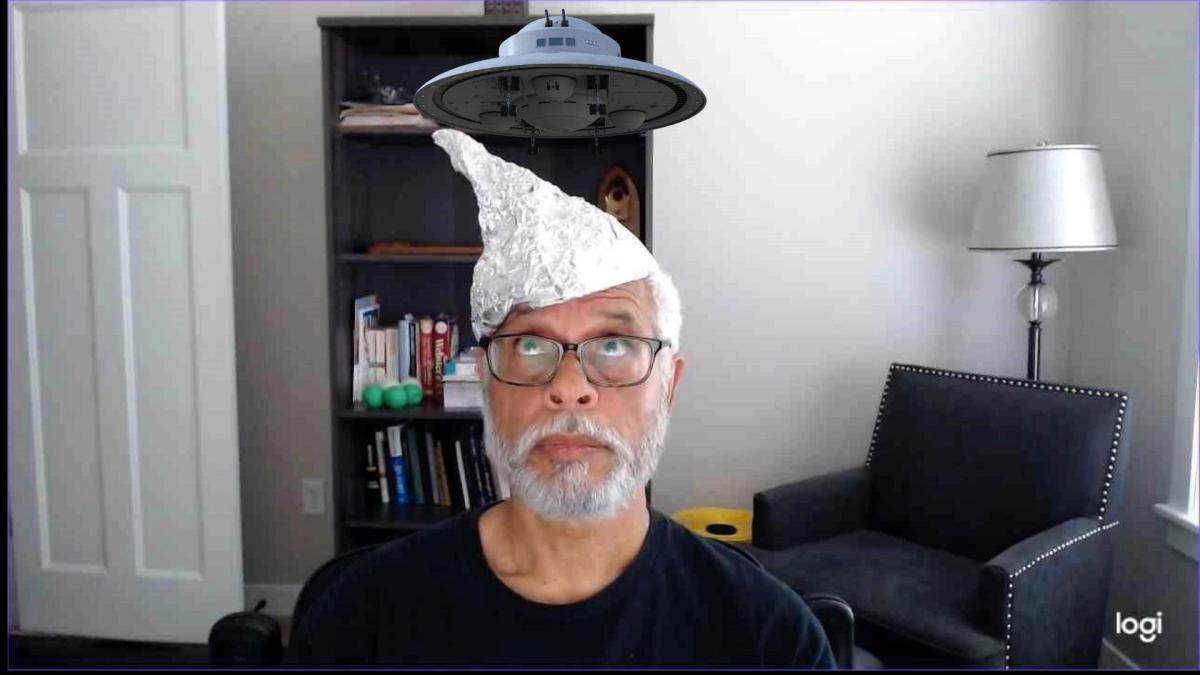
Yesterday I offered to make dinner, but Sena made a counteroffer I couldn’t refuse. She made a special dish of big meatballs (which she did not allow me to juggle) and potatoes. She makes an out-of-this-world sauce that she must have got from Extraterrestrials back in the early 1980s. The image from pixabay doesn’t do it justice, but we ate it too fast for me to get a snapshot.

I can’t remember the last time she made it; it has been years.

As a matter of full disclosure, while I did offer to make dinner, “making dinner” for me is sticking a frozen pizza in the oven. I might throw a light salad into the bargain, but the whole affair is a far cry from actually making the pizza dough and getting my hands dirty. That almost never happens unless the moon splits in two.

I will occasionally add a little extra provolone to a Jack’s Pizza, a brand which tends to be a little light on toppings. My favorites are the Screamin’ Sicilian and Lotzza Motzza. I don’t need to add anything because they’re already loaded. Sena goes around to all the grocery stores in town when they have reduced prices, but restrict you so you can buy only 2 at one store.

Also, I’ll prepare soup—if I can figure out how to open the can.

I can’t give away the recipe without incurring some form of special punishment which might involve sharp objects and a chase across the state. It includes a lot of butter, for which she used creamery butter sculpted in the shape of a Christmas tree. There are unspecified amounts of ketchup, brown sugar, and a variety of spices which are probably not native to this planet. She keeps them in a locked drawer from which loud growls erupt if I get too close.

Even if I knew the recipe, if I tried to make it, the dish would end up tasting a lot like pizza.

Viral Story Rabbit Holes on the Web

Sena told me about the viral story on the web entitled “A Woman Removes Painting Varnish and Uncovers Husband’s 50 Year Old Secret.” It’s dated December 27, 2022. The story is written in slide show format, which has a rabbit hole feel to it, especially after I try to verify the details.

You’ve probably seen this or a slightly different version of it. The basic stem is somebody finds out her spouse has a longstanding secret life that she learns of only after he dies, leaves her a painting which is apparently worthless but underneath a lot of paint or varnish lies a note or some other object which leads to the discovery that he led a secret life and left her a vast fortune. Sometimes the story changes even this detail.

I found other similar versions which differ mainly in small details, none of which I can verify—not even the identity of the author of the story. For example, who is Lindsey Charleston? I can’t find out, even though I can find the web site “History All Day” where supposedly this author is listed among others, who are also anonymous. No biographical data is discoverable about the writers.

The pictures in the story are taken from web sites offering free images, such as pixabay. I’ve used images from sites like that. One of them features a video which is a slide show, featuring a photo of a woman who looks shocked and the picture is marked as copyrighted and being from “YouTube PBS.” It appears to be from PBS Antiques Roadshow, and it’s just a slide, like all the rest of the images. There’s no actual video with this particular woman in a green blouse. One of the slides shows a picture of Fiona Bruce, the hostess of the BBC version of Antiques Roadshow. After this last picture, there’s an ad by Amazon. In fact, the slide show has several interrupting ad photos.

However, the YouTube PBS picture is linked to another version of this story which is a video and it’s dated February 3, 2021. It looks like there are many different versions of this video. The names of the people involved, even the nationalities, are all apparently different. Yet the thread of the story is similar to the one published 3 days ago. One striking similarity is the photo of Fiona Bruce! Moreover, the narrator reveals that the art work was featured on the British TV show, “Fake or Fortune,” a show hosted by Fiona Bruce.

And the narrator of this video sounds robotic, like one of those non-human digital recordings because occasionally the accent falls on the wrong syllables. Near the end of the video while it is still in progress, another video is superimposed showing a fisherman and 3 bear cubs, entitled “Fisherman noticed the three bear cubs sneaking up on him late, what happened next is breathtaking! This is a familiar type of advertisement lure I’ve noticed many times on the web.

There are many different versions of the story showing different characters who are of different nationalities, names, and the identities, like those of the authors of the stories, are all either unknown or impossibly difficult to track down—like going down a rabbit hole.

The stories are identified as “Viral Stories” which seems to be a web site advertised on the PBS video, but is probably not. I should say I found a web site with that name but it doesn’t list this story or its permutations.

OK, many of you probably already knew this, but I think these are cleverly disguised rabbit hole stories designed to lure the reader into advertisement traps. Many of them are tagged with the short word “Ad” somewhere on the photo link—but some are not.

Incidentally, the featured image for this post is an obvious plug for my book. I don’t have to use cute bear cubs to get you to buy it—do I?

Rag Time and Classical Music Fusion

The other night I heard something pretty interesting on the Music Choice channel. I was listening to the Light Classical stuff because, let’s face it, I’m a real lightweight when it comes to knowing anything about music, much less the classical genre.

It reminded me of a time long ago when my mother tried to teach me how to play our old upright piano. She always complained that it was out of tune, always promised that she would get it tuned and never did. It didn’t matter. I never learned a thing but the middle C note, which I poked with my right thumb.

And then I heard a selection that sounded like the composer was poking fun at classical music. The piece was titled “A Symphonic Nightmare: Desecration Rag No. 2.” Somebody said it was actually “An Operatic Nightmare: Desecration Rag No. 2.” I don’t know that it makes a difference what you call it. I thought it was comical and I had fun listening to it.

In order to confuse me further, I found listed on the Library of Congress a recording entitled, “An operatic nightmare.” And, I found a piece called Desecration (Rag-Humoreske). They all sound different, but all of the pieces are by a composer named Felix Arndt.

Further, Wikipedia says Arndt is best known for his composition “Nola,” which he wrote for his fiancée Nola Locke (later his wife.” It’s sometimes thought to be the first example of the novelty ragtime genre. Classical music does have a funny bone.

Snowball Juggling!

Yesterday after we shoveled our sidewalks and driveway (again!) we went for a walk. Yes, we finally lost our minds. In fact, the temperature was a balmy 14 degrees. We almost put on shorts.

It was a little breezy. The city plows had not been out. It was their day off. Because of that, there were plenty of chunks of snow, a few of which were about the size of—yep, you guessed it—juggling balls.

We couldn’t get them formed exactly round, like they did in that TV commercial for cold medicine. That’s where I got the harebrained idea to try juggling snowballs in the first place.

You don’t want to try juggling snowballs barehanded. I can’t stop you from trying, just saying that my hands did smart when I tried it.

Next time, I’ll make sure the snowballs are round.