Testament to Testiness on Liaison Psychiatry

The other day, I got an email message from the Academy of Consultation-Liaison Psychiatry (ACLP). It was from the Med-Psych Special Interest Group (SIG). It was an intriguing question about a paper somebody was looking for and having trouble getting it through the usual channels.

The paper was “The Liaison Psychiatrist as Busybody” by somebody named G.B. Murray and published in the Annals of Clinical Psychiatry in 1989. The person looking for the paper mentioned that there was a note from the editor that the paper was of a “controversial nature.”

I was immediately intrigued after doing a search of my own and finding out that the full note from the editor was as follows:

“Editor’s Note: We are aware of the controversial nature of this communication and invite responses from psychiatrists in practice as well in academic settings.”

Nothing is as exciting as holding something out to us and at the same time hiding it from us. Why was it unavailable through the usual channels? Nowadays “usual channels” means accessing the digital copy over the internet from the journal.

Anyway, soon enough somebody found a copy of what turned out to be Dr. George B. Murray’s presentation of the paper with the title “The Liaison Psychiatrist as Busybody” at the American Psychiatric Association (APA) meeting in 1983 in New York. It looked like it was copied from the Annals of Clinical Psychiatry journal where it was published in 1989.

The paper was one of four APA presentations (p. 76) in a symposium entitled “The Myth of Liaison Psychiatry.” The titles and presenters including Murray’s:

  1. Teaching Liaison Psychiatry as Medicine at Massachusetts General Hospital—Ned Cassem MD, Boston, MA
  2. The Liaison Psychiatrist as Busybody—George Murray MD, Boston, MA
  3. Liaison Psychiatry to the Internist—John Fetting, MD, Baltimore, MD
  4. The Hazards of “Liaison Psychiatry”—Michael G. Wise, MD, Baltimore, MD

Before I get to the paper itself, I should mention that it was my wife, Sena, who gets the credit for actually finding out that “G.B. Murray” was George B. Murray, a distinguished consultation psychiatrist at Massachusetts General Hospital.

I purposely omitted the word “liaison” from “consultation psychiatry” because he was said to have “loathed the word ‘liaison’.” This was according to the blogger (Fr Jack SJ MD) who posted an in-memoriam piece on his blog in 2013 shortly after Father George Bradshaw Murray died. He had been a Jesuit priest as well as a psychiatrist. Fr Jack SJ MD also noted that Murray ran the consult fellowship at Mass General, saying:

“George’s fellowship was unique.  He founded it in 1978 and directed it full-time until a few years ago.  By the time he retired he had trained 102 fellows mostly on his own.  His didactic methods would be frowned upon by politically-correct, mealy-mouthed, liberals of academe (bold face type by J. Amos).  His fellows thrived.  George turned us, in the words of Former Fellow Beatriz Currier, MD, “into the kind of psychiatrist I wanted to be but didn’t know how to become.”  We worked hard.  Many consults per day.  Vast amounts of reading for which he expected us to be prepared.  But he worked even harder for us.”

So, right about now, to quote one of my favorite Men in Black movies character, Agent J: “That grumpy guy’s story’s starting to come into focus a little bit here.”

I’m not going to dump big quotes from Murray’s presentation, but I can say that it’s understandable to me now why it has been described as controversial. He just sounds a little testy.

Getting back to the New York symposium, I noticed that the chairperson was Thomas P. Hackett, and the co-chair was Ned Cassem, both of Mass General, the latter also a Jesuit priest. I never met either of them, but they are legends. Hackett died in 1988 and Cassem died in 2015.

I’ve read what Hackett wrote about the difference between psychiatric consultation and psychiatric liaison:

“A distinction must be made between a consultation service and a consultation liaison service.  A consultation service is a rescue squad.  It responds to requests from other services for help with the diagnosis, treatment, or disposition of perplexing patients.  At worst, consultation work is nothing more than a brief foray into the territory of another service, usually ending with a note written in the chart outlining a plan of action.  The actual intervention is left to the consultee.  Like a volunteer firefighter, a consultant puts out the blaze and then returns home.  Like a volunteer fire brigade, a consultation service seldom has the time or manpower to set up fire prevention programs or to educate the citizenry about fireproofing.  A consultation service is the most common type of psychiatric-medical interface found in departments of psychiatry around the United States today.

A liaison service requires manpower, money, and motivation.  Sufficient personnel are necessary to allow the psychiatric consultant time to perform services other than simply interviewing troublesome patients in the area assigned.  He must be able to attend rounds, discuss patients individually with house officers, and hold teaching sessions for nurses. Liaison work is further distinguished from consultation activity in that patients are seen at the discretion of the psychiatric consultant as well as the referring physician.  Because the consultant attends social service rounds with the house officers, he is able to spot potential psychiatric problems.”—T. P. Hackett, MD.

Here’s the thing. This quote comes from Hackett’s chapter in the 1978 edition of the Massachusetts General Handbook of General Hospital Psychiatry. But I tended to gloss over what he wrote right below it:

“Once organized, a liaison service tends to expand. Most liaison services are appreciated and their contribution is recognized. Sometimes this brings tangible benefits such as space and salary from the departments being serviced. However, even under the best circumstances, the impact of a liaison effort seldom lingers after the effort is withdrawn. Lessons taught by the psychiatrist need constant reinforcement or they are forgotten by our medical colleagues. In a way, this is an advantage since it ensures a continuing need for our presence. Conversely, it disappoints the more pedagogical, because their students, while interested, fail to learn. I believe we must be philosophical. After all, our surgical colleagues do not insist that we learn to do laparotomies. They insist only that we be aware of the indications.”—T.P. Hackett, MD.

You get a clear sense of Hackett’s sense of humor as well as a practical appreciation of what can and maybe cannot be done when you try to apply liaison principles in a formal teaching approach.

So, what does Murray say about liaison psychiatry that seemed cloaked behind the term “controversial”? He starts off by admitting that his remarks will be “inflammatory” and makes no apology for it. He starts with three main statements:

  1. What all nonpsychiatric physicians appreciate, and what, in fact, works, is the medical model of consultation psychiatry.
  2. Liaison psychiatry is more myth than reality.
  3. The liaison psychiatrist is to a great extent a relatively high-status busybody.

It’s difficult to pick out excerpts from Murray’s presentation—so much of it is integral to the main message and entertaining as well that I hate to omit it. Here’s my pick anyway:

“There is a certain Olympian quality surrounding liaison psychiatrists. It is as if they will teach others the wonders of the labyrinthine biopsychosocial factors involved in patient care. The other Olympian feature centers on the so-called consultee-oriented consultation. In hearing discussions and reading the literature one can get a downwind whiff of antiphysician feeling. There are remarks made, for example, of the insensitivity of surgeons, of patient “harassment” and how little the attending physician understands this hysteric’s or sociopath’s inner dynamics. This attitude is snobbish, unhelpful, and in semistreet parlance, “chickendip.” It does not seem to bother liaison psychiatrists that there are no liaison cardiologists, liaison endocrinologists, and so forth—another clue to the vacuity of liaison psychiatry.”

He is testy and with good reason, if you define liaison in this way. His paper is uproarious. And there are lots of controversies in medicine. I’m still not sure why this one seemed hidden from public view.

I opened up the door by saying “…if you define liaison in this way.” There are other ways to convey useful information to “consultees.” For example, I had better luck talking in a casual way about what I could for a MICU medicine resident about how to help manage a very agitated delirious patient on a ventilator who was in restraints because of the fear of self-extubation (a common problem psychiatric consultants get called about).

We were sitting in the unit conference room and the unit pharmacist was present. I don’t remember if the attending was there. I started to describe what had been studied in the past, which was continuous intravenous infusions of haloperidol lactate (there are several studies which do not support the use of haloperidol for treating delirium). There was no way to administer oral sedatives. In fact, the patient was being given heavy doses of intravenous benzodiazepines and opioids.

I notice that the more details I shared about the intravenous haloperidol, the wider the pharmacist’s eyes got. Long story short, the MICU resident decided to try something other than psychiatric medication. Indirectly, you could say I was using a motivational interviewing technique to teach. But Murray would have described that as Olympian and in any case, I didn’t consciously do that. All I had were facts and I told the resident what they were. A matter-of-fact approach and tact can be part of a liaison approach, but that’s not what Murray was concerned about and probably not what he saw from most liaison psychiatrists.

And I had to work hard not to display testiness (much less loftiness), which I’m afraid I didn’t always do.

An Old Blog Post About My College Days in Texas

There’s something embarrassing yet fascinating about reading my old blog posts from years ago. The one I read yesterday is titled simply “I Remember HT Heroes.” I make connections between my undergraduate college days at Huston-Tillotson College (now Huston-Tillotson University (an HBCU in Austin, Texas) and my early career as a consultation psychiatrist at The University of Iowa Hospitals & Clinics (now rebranded to Iowa Health Care).

My first remark about getting mail from AARP reminds me that organization is sponsoring the Rolling Stones current tour, Hackney Diamonds. And the name of my specialty was changed from Psychosomatic Medicine to Consultation-Liaison Psychiatry in 2017.

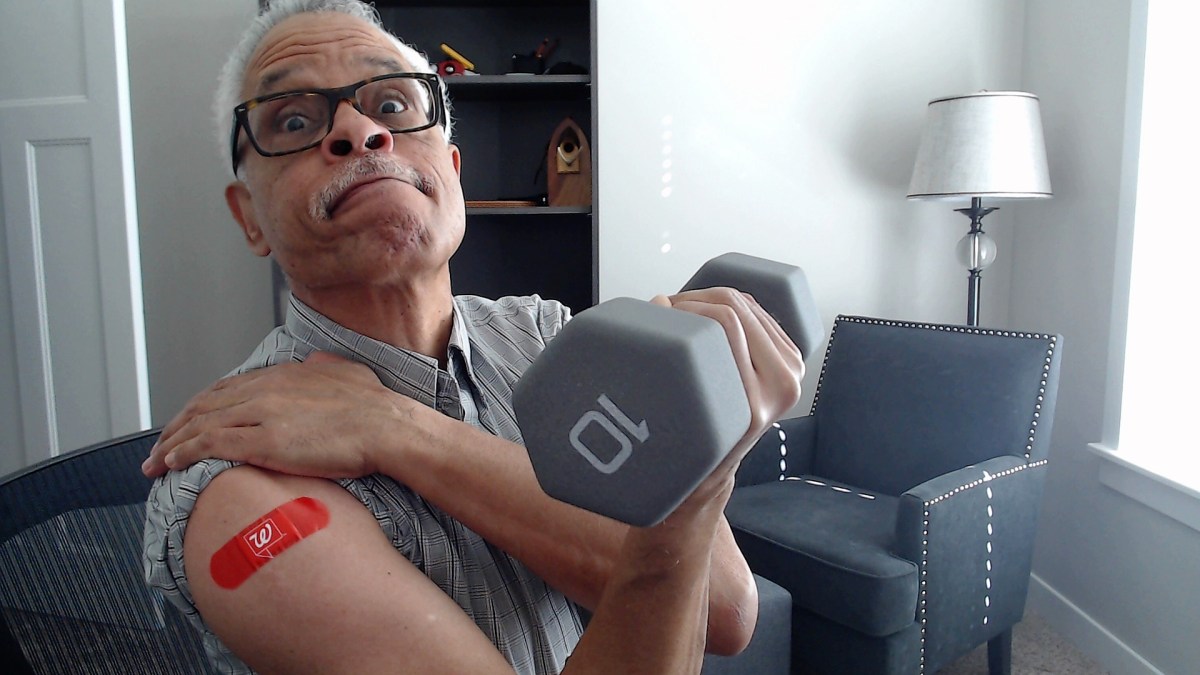
The photo of me attached to the original post reminds me of how I’ve gotten older—which also makes me hope that I’ve gotten wiser than how I sound in this essay. The pin in my lapel is the Leonard Tow Humanism in Medicine award I received in 2006.

I Remember HT Heroes

Getting membership solicitations in the mail from the American Association of Retired Persons (AARP) is a sure sign of aging, along with a growing tendency to reminisce. Reminiscence, especially about the seventies, may be a sign of encroaching senility.


Why would I reminisce about the seventies? Because I’m a baby boomer and because my ongoing efforts to educate my colleagues in surgery and internal medicine about Psychosomatic Medicine, (especially about how to anticipate and prevent delirium) makes me think about coming-of-age type experiences at Huston-Tillotson College (Huston Tillotson University since 2005) in Austin, Texas. Alas, I never took a degree there, choosing to transfer credit to Iowa State University toward my Bachelor’s, later earning my medical degree at The University of Iowa.


Alright, so I didn’t come of age at HT but I can see that a few of my most enduring habits of thought and my goals spring from those two years at this small, mostly African-American enrollment college on what used to be called Bluebonnet Hill. I learned about tenacity to principle and practice from a visiting professor in Sociology (from the University of Texas, I think) who paced back and forth across the Agard-Lovinggood auditorium stage in a lemon-yellow leisure suit as he ranted about the importance of bringing about change. He was a scholar yet decried the pursuit of the mere trappings of scholarship, exhorting us to work directly for change where it was needed most. He didn’t assign term papers, but sent me and another freshman to the Austin Police Department. The goal evidently was to make them nervous by our requests for the uniform police report, which our professor suspected might reveal a tendency to arrest blacks more frequently than whites (and yes, we called ourselves “black” then). He wasn’t satisfied with merely studying society’s institutions; he worked to change them for the better. Although I was probably just as nervous as the cops were, the lesson about the importance of applying principles of change directly to society eventually stuck. I remember it every time I encounter push-back from change-resistant hospital administrations.


I’m what they call a clinical track faculty member, which emphasizes my main role as a clinician-educator rather than a tenure track researcher. I chose that route not because I don’t value research. Ask anyone in my department about my enthusiasm for using evidence-based approaches in the practice of psychiatry. I have a passion for both science and humanistic approaches, which again I owe to HT, the former to Dr. James Means and the latter to Dr. Jenny Lind Porter. Dr. Means struggled to teach us mathematics, the language of science. He was a dyspeptic man, who once observed that he treated us better than we treated ourselves. Dr. Porter taught English Literature and writing. She also tried to teach me about Rosicrucian philosophy. I was too young and thick-headed. But it prepared the way for me to accept the importance of spirituality, when Marcia A. Murphy introduced me to her book, “Voices in the Rain: Meaning in Psychosis”, a harrowing account of her own struggle with schizophrenia and the meaning that her religious faith finally brought to it.


Passion was what Dr. Lamar Kirven (or Major Kirven because he was in the military) also modeled. He taught black history and he was excited about it. When he scrawled something on the blackboard, you couldn’t read it but you knew what he meant. And there was Dr. Hector Grant, chaplain and professor of religious studies, and champion of his native Jamaica then and now. He once said to me, “Not everyone can be a Baptist preacher”. My department chair’s echo is something about how I’ll never be a scientist. He’s right. I’m no longer the head of the Psychosomatic Medicine Division…but I am its heart.


I didn’t know it back in the seventies, but my teachers at HT would be my heroes. We need heroes like that in our medical schools, guiding the next generation of doctors. Hey, I’m doing the best I can, Dr. Porter.

Whirlpool Care Counts Laundry Program Cleans Up!

Sena and I just recently saw the TV commercial about the Whirlpool Care CountsTM Laundry Program, which has been providing washers and dryers for schools. It was launched to address school absenteeism, one cause of which is bullying of kids who don’t have clean clothes. They are also more likely to drop out of school.

It turns out this program has been going on since 2015. And there’s an Iowa connection. In 2017, Morris Elementary in Des Moines got a new washer and dryer (Des Moines Register, “Iowa teacher meets New Yorker on Instagram, and needy school gets a big lift” by Laura Rowley, published Oct 7, 2019, accessed 12/13/2023).

According to the Whirlpool’s website about it, there are over 150 programs in schools across 40 states.

The website even lists research studies demonstrating the link between a lack of clean clothes and school attendance rates.

We reminisced about what we did about this issue when we were in grade school. We don’t remember skipping school because of dirty clothes. We managed by washing them by hand, or in my family, using an old hand wringer as well. We hung clothes out to dry on the line in the back yard. Sena did that and also used a fan.

I was sometimes bullied, but it was related to being black rather than having old clothes. I didn’t change my outfit every day because I didn’t have enough clothes for that.

When I got old enough, I delivered the Des Moines Register. Talk about nickel and diming. The rates were pretty low compared to today, but I still had some customers who complained about the price. I walked my route to collect subscription fees. I was not a great salesman but I was a steady worker, delivering papers in any weather, even dragging them in a wagon through knee deep snow.

You could buy things with your money through the paper’s main office. The first thing I bought was an alarm clock with a glass face through which the clockwork was visible. I didn’t really need an alarm clock to get me out of bed to deliver papers. I was a light sleeper even then. I just thought the clock was cool.

I saved enough money (mostly in quarters) to buy my first bicycle. It cost about $20 at Ralph’s Bicycle & Hobby Shop in Mason City. It was used and I think it was a 24 inch. I did not do wheelies.

I don’t remember buying clothes.

I remember collecting from a young couple who were obviously newlyweds. They would often both come to the door wrapped in nothing but big bath towels. I wondered if they even had any clothes. Maybe they didn’t have any laundry facilities.

Anyway, I think the Whirlpool program is a great idea.

Partners in Juggling Crime Breaking the Internet Again!

We are breaking the internet again as partners in juggling crime. It turns out the 2-person 6 ball juggling pattern has 3 variations:

The 1, 2 Pass: Both partners make two right hand throws, then pass to the partner on the third throw. Always throw from the right side to your partner’s left.

The 1 Pass: You pass after every other throw.

Pass: You pass on every right-hand throw. You could call it pass, pass, fast!

The Pass variation is really difficult, although some jugglers make it look easy. We mainly look funny, but we’re just getting started!

We include a slow-motion clip for each variation.

Still Practicing the Shower Juggle!

I’m still practicing the shower juggle pattern. I’m comparing how I did in April with how I’m doing now. No doubt, my form is wonky and I still can do only 3-5 throws.

But I think juggling with the big plastic balls is easier when it comes to the shower. I can’t figure why, unless it’s the more uniform spherical shape and evenly distributed weight.

It’s definitely not my form.

Juggling Update!

Well, we’re using our new safety glasses retainers and they work out fine. We’re a little off the beam on the 2-person 6 ball pass juggle for some reason. Some days are diamonds, some days are stones, I guess.

Our mistakes are funny. We just make too many.

I’m still working on the shower juggle pattern. I might be making slow progress. It feels easier to do if I use the large plastic balls or the new smaller balls with a tough leather shell. They’re decorated with stars to give you confidence.

I think if they’re round and hold their shape better if they’re made of harder material, they might fly better.

I think it would also help if I threw them more accurately.

Now is the Time for Kauai Coffee and Beignets!

Remember that Beignet mix and rolling pin Sena got back in May? She got around to making them yesterday. The use by date was November 1, 1892! No, sorry, actually it was November 1, 2023.

The day started out pretty cold and it even snowed. Birds and squirrels acted like they never saw snow before.

Anyway, we also tried Kauai Coffee for the first time in our Keurig machine. The pods look really different, but they worked. The flavors are subtle but they go well with Beignets. We’re not sure why they looked more like fried green tomatoes when they were done.

Beignets are delicious. Have plenty of powdered sugar on hand!

The Weather Guy

We like to watch the Weather Channel. One of the meteorologists is very conservative in his forecasts. He’s always hedging:

“And here we see a radar signal that might be indicative of a tornado, not saying it definitely is a tornado, just saying it might be, and over here in this county next to a major or minor highway are what appear to be remnants of an atmospheric river although that’s according to the GPS Model mind you, and you always have to remember the European Model might say something different about what might happen, not what’s going to happen mind you, just that it possibly could transform into a manifestation of the Norse god Thor who could have a huge hammer, although that’s from mythology so you can’t rely on that definitely and if you do, let me remind you that I have a lawyer who might just give you a telephone call if you happen to make the mistake of depending on a meteorologist to forecast anything exact and reliable for goodness sake, like the occurrence of a named storm in your vicinity which might be in the Midwest, or the eastern seaboard, you just can’t know with any degree of certainty now that climate change has us in its indefinable grip as we say, so you want to be prepared for whatever might occur, which could include skies that are clear to partly cloudy to filled with UFOs as far as the eye can see but take it from me you didn’t hear that from me.”

Boy, meteorologists have a tough job.

The Geezer Remarks on Superfoods

Sena is big on eating healthy, which is a good thing. On the other hand, we don’t necessarily always like the same foods. And there’s the whole issue of what people call superfoods nowadays.

Funny, when I was a kid, I used to just refer to superfoods as “yuck!” There are variant spellings.

I read the Wikipedia entry on superfoods and it essentially says there is officially no such thing.

Take beets—please!

Sena’s big on Beets and Leeks. I’m not a big fan. I’ll eat them, of course. There’s nothing wrong with them that intravenous ipecac and a stomach transplant won’t fix. The drawback is the medical bill.

I don’t think we’ve ever had kale. Does that make the superfood list? I think it’s the same thing as mustard greens, okra, and other building materials similar to shingles.

I tried okra when I was a student at Huston-Tillotson University (then Huston-Tillotson College). I was offered this slightly slimy substance as part of a dinner at the home of my Religion and Philosophy professor and his family. It’s slimy because it contains mucilage, which is (correct me if I’m wrong but I’ll naturally ignore you) also the name of the glue we used in grade school to make valentine cards.

In fact, think of any food you dislike as intensely as any medication or tonic you had to take when you were a kid. That would be classified as a superfood. I had to take a tablespoon of mineral oil a day, which is a substance very much like mucilage.

I found out that millet is marketed as a superfood. That’s funny, because it’s also used as a filling for juggling balls. When you work up an appetite juggling, you can just bust open one of the balls and snack on a handful of bird seed, which is what millet really is.

Actually, superfoods come in handy in case you’re abducted by extraterrestrials. Whenever they look like they’re getting ready to jam some kind of implant up your nose, offer them a juggling ball. Just tell them to keep chewing through the leather shell until they get to that tasty millet center. This will give you time to write down the driving directions to the nearest barbecue joint for them (Jimmy Jack’s Rib Shack in Iowa City for example).

Anytime you need any more expert advice on superfoods, just let me know. I’m not available.

Happy 46th Wedding Anniversary!

It was 46 years ago today Sena and I were married at the Little Brown Church in the Vale in Nashua, Iowa. I was a skinny guy with a big afro. She was and is a beautiful bride.

We cut the wedding cake together. We fed each other big bites. It was the biggest event of our lives.

There were other big events. The trip to Vegas and marveled at the Bellagio fountains. The helicopter ride over the Niagara Falls. The view over New York City from the Empire State Building. That was my first senior discount ticket. Sena holding a little alligator in Miami. The Lincoln Book Tower in Washington, D.C. Festooned with the birds of Hawaii.

Wherever we went, whatever we did, we were always together. She’s always fearless. She’s gone with me wherever I went, even when I was wrong. I am often wrong—but I was right about marrying her.