Why Did the Killdeer Cross the Road?

We hit the Terry Trueblood trail yesterday and caught pictures of several birds including a hilarious family of killdeer herding babies around the parking lot. At first, we weren’t sure how many chicks there were because they were difficult to see in the grass.

Eventually we counted 3 chicks. It was a comical show as the parents, aided by other adult birds trying to be helpful, attempted to round up the youngsters.

Crossing and recrossing depended a lot on the traffic flow and other factors including us. We made them nervous following them around with a camera!

I think most drivers got the hint that we were out filming the killdeer in the parking lot as the adults tried to round up the stilt-legged chicks, who would scatter in different directions. Their only guidance were the calls of adult birds—which we couldn’t reconcile into anything sounding like “killdeer” despite what the books say.

Three Photos to Share for Mental Health Awareness Month

So, I have to hurry up and get these 3 photos posted for today because it’s getting pretty late. Recall the Iowa Healthiest State Initiative calendar along with my photos to share:

The images are important features of events in my life or my sense of humor.

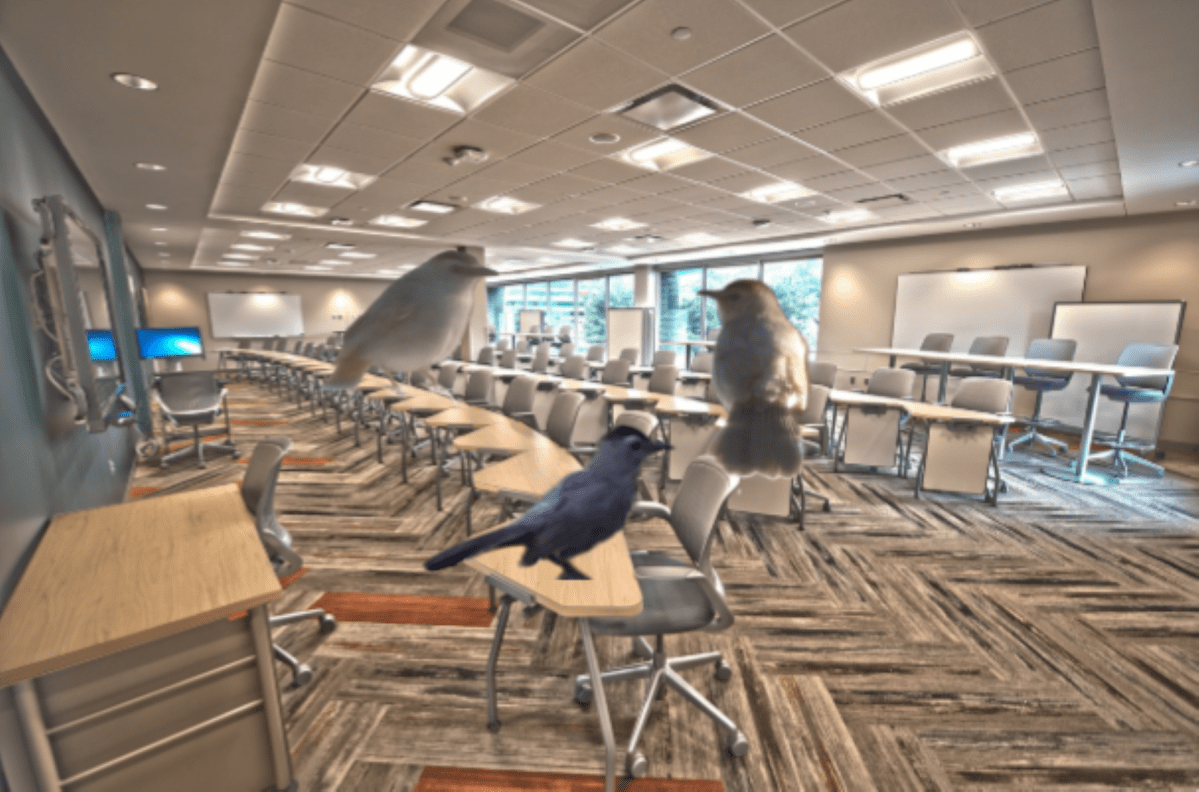
I’m a birdwatcher and many different species of birds visited the fountain. The fountain attracted bluebirds who splashed and even swam in it. That fountain was very heavy. We couldn’t leave it out all winter. In the fall I had to lift the bowls off and move them somewhere else. Moving them entailed lifting them onto bags of mulch so as to reduce the work of hefting them a small distance at a time. The birds were beautiful to watch.

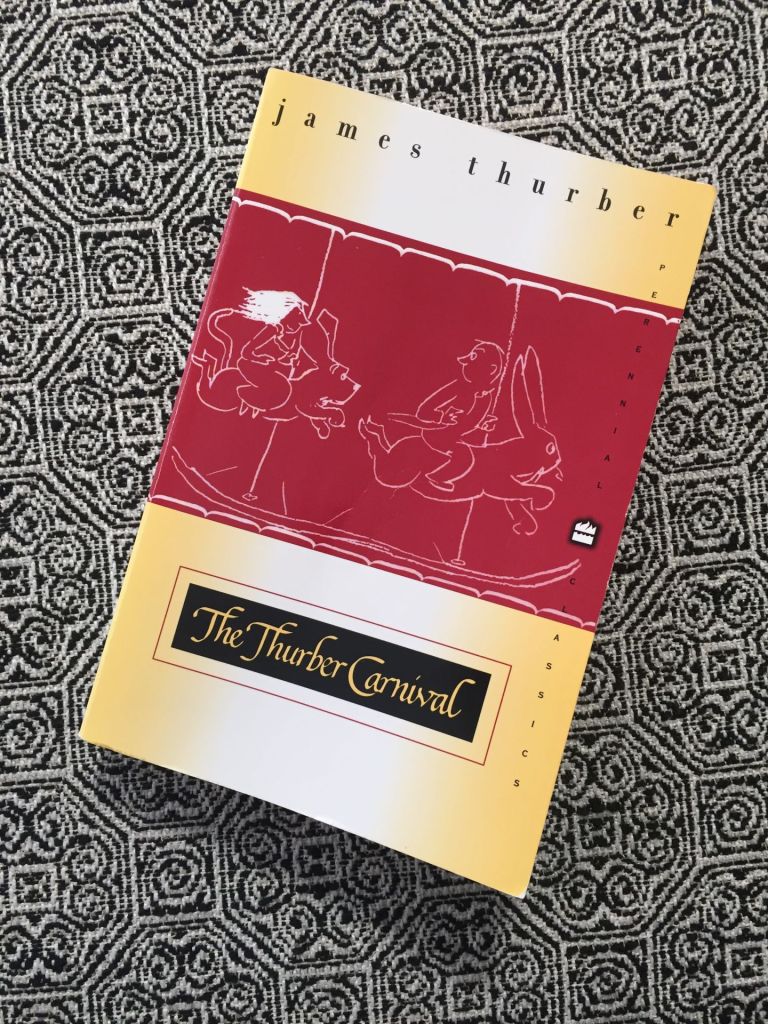
The letter was a class assignment our Mindfulness Based Stress Reduction (MBSR) teacher had us write at the beginning of the class. After we graduated, she mailed us those letters shortly thereafter. We were to write something connected with what we thought we had gained or what we thought might happen after taking the MBSR class. The book might seem out of place, and while I can’t talk much about Gordon Strayer, I did meet him and read his book (which is now long gone; probably lost in a move). I admired him. I don’t think he feared death.

The Chrysler Building reminds me of the Men in Black (MIB) 3 movie, and I included it because my sense of humor is very important to me. In the movie, Agent J and Jeffrey Price have this funny conversation about time travel back to an era that was not the greatest for black people. I know because I lived through it. Agent J is about to use the time travel device which involves jumping off a tall building (it’s a “time jump!”). Agent J is preparing to travel back in time to M.I.B.’s early days in 1969 to stop an alien from assassinating his friend Agent K and changing history. They have this short conversation:

Jeffrey Price: Do not lose that time device or you will be stuck in 1969! It wasn’t the best time for your people. I’m just saying. It’s like a lot cooler now.

Agent J: How will I know if it works?

Jeffrey Price: You’ll either know…or you won’t.

May is Mental Health Awareness Month!

This is May and it’s Mental Health Awareness Month. I just found out about something exciting and it’s the Iowa Healthiest State Initiative.

See the Calendar of Events and the Checklist.

Procrastinate on Getting the Covid Vaccine?

This post is sort of my thinking out loud about whether or not I should get the Covid vaccine ahead of this summer that was approved last year as being appropriate to get twice a year by the CDC—once in the fall along with the flu shot and once to protect against the Covid summer surge that some experts argue has been happening every summer since the pandemic onset.

The trouble is that the dominant subvariant is no longer the JN.1 or KP.3.11. The currently dominant circulating bug is LP.8.1 according to the CDC Nowcast chart.

And what confuses me is that one expert still recommends getting the September 2023 updated vaccine, but recommends getting the “bivalent booster.”

And a recent article from the University of Minnesota Center for Infectious Disease Research and Policy (CIDRAP) says that a preprint study (not yet peer-reviewed) says the current Covid vaccine was only 53% effective against hospitalization and 39% medically attended Covid-19. Most patients got the vaccine targeting the XBB.1.5 variant. I think that’s related somehow to the KP.2 variant. I have a vague memory of hearing about the XBB.1.5 during the CDC meeting in September 2023.

I’m a retired psychiatrist, not a retired virologist. The information available to the public seems confusing to me and I imagine I’m not the only one so affected.

The CDC is recommending the 2024-2025 Covid-19 vaccines, which target the JN.1 variant, which is now 0% of circulating variants on the list. But I’m not sure whether the current vaccines would be as protective against the different variants now dominant.

The CDC April indicators show downward trends for test positivity, ER visits, hospitalizations, and deaths.

On the other hand, an August 2024 article from Johns Hopkins warns that Covid-19 rates have consistently risen in July-August risen since 2020. The author says that it’s still unclear whether Covid-19 will continue to have dual seasonality. Other factors that affect this in addition to the emergence of more transmissible variants are human behavior, such as staying in air-conditioned spaces more and traveling.

My big question is should an old guy get the 2024-2025 Covid-19 vaccine or just wait and see, especially in light of the difficult political situation with HHS sounding like it might require new, placebo-controlled trials of some vaccines before “tweaking” them to target more current variants—which could take several months.

But it doesn’t look like there’s a plan to tweak the 2024-2025 Covid-19 vaccine in any case. I’m probably worrying too much, but I’m on the fence. I’m already too good at procrastinating.

Fart Around for Your Health!

How many farts can old fart fart if an old fart walks to fart? I’m sure you’ve heard that one by now after a recent news article suggested that farting while going for a walk on the street after dinner (or any meal) could make you healthier.

It’s not like the only reason is that you get rid of gas and increase intestinal motility to prevent constipation. Some medical experts say it can help control blood sugar.

But you have to fart walk within an hour of finishing a meal to control the glucose spike. You could call it the fart walk sweet spot. There are social implications, especially if the fart walk becomes a growing trend.

What the heck should you wear on fart walks? Windbreakers.

For some reason, Artificial Intelligence (AI) has a lot to say about flatulence, but I usually pass gas over it to move on to other websites to find what might be more reliable information than you get from AI.

While farting a couple dozen times a day can be normal, if you can’t leave your house because of your Frequency Of Odoriferous Farting Impulse (FOOFI), you might want get it checked out.

Eating a lot of fiber-rich foods can lead to digestive problems that can lead to excessive flatulence. Have you noticed that when you’re in a crowd, people tend to sprint away from you? When you’re in an elevator, do people push any button to get off, even if it’s in the basement, or even between floors?

By the way, did you hear about the guy who farted on an elevator? It was wrong on so many levels.

The food choice thing can be the downside of what often happens when you follow the advice of health care professionals who tell you to avoid carbs and eat more fruits and vegetable. This can happen to guys who hit middle age and start to get that big belly. I’m not sure that the diet change will help much, especially since new studies show that guys can produce more belly fat cells as they get older.

What do you call a large, hairy cryptid who eats too much beef jerky? Bigfart.

Certain diseases can be linked to farting, like irritable bowel syndrome, celiac disease, bowel obstruction, and constipation. Funny, I thought farting was supposed to prevent constipation.

What do you say to someone who has made a commitment to daily fart walks? Conflatulations!

How Do Tournament Cribbage Players Play So Fast?

I finally tracked down an American Cribbage Congress (ACC) game from 2017 in Reno, Nevada. It was an hour-long match between just two of the many competitors. They played 4 games in approximately one hour.

What amazed us was that they could play each game in about 15 minutes despite socializing with others, getting interrupted, chatting with others, and shuffling the cards between 5 to 10 times!

The video doesn’t have very high resolution and it was hard to see the cards. The cribbage board they began with evidently had very small peg holes and they finally had to get a replacement. They seemed to almost get in each other’s way tossing the cards they scored back and forth to each other and getting interrupted occasionally, inquiring about beverages and also by officials who asked them to keep track of their activity (probably scores) for some purpose or other, possibly statistics.

We were surprised to see how fast they were at pegging and counting hand and crib scores. The high number of times they shuffled didn’t seem to add much time to the games. We couldn’t hear any shuffling machines clanging in the background. We don’t know why one player had a toy eagle figurine on his side of the board.

We tried to play 4 games in an hour and couldn’t manage it except for the last one, which we did finish in 15 minutes (necessitating supplemental nasal cannula oxygen)—but the other 3 were about 20 minutes each on average. We changed our automatic shuffling routine by using it twice instead of once per deal and also let each other cut the deck after shuffling. The shuffler jammed a couple of times but was pretty reliable. We thought shuffling twice helped mix the cards a little better because we got more variation in the cards dealt. But so far, consistently playing a game in 15 minutes is beyond us.

Would we have been kicked out of the auditorium (which was fairly noisy), tarred and feathered, run out of town on a rail?

Possibly, but we’ll never know.

Cribbage for Turtles!

We’re still turtles when it comes to how long we take to play a cribbage game. And, I think I misjudged how randomization works with shuffling cards using a machine. I checked on line and various sources say, in general, whether you’re manually shuffling or using an automatic shuffling machine, adequate randomization of 52 cards would require shuffling seven times.

We experimented a little using a stopwatch. I can shuffle a deck in about 10 seconds using one table shuffle riffle and cuts. Sena probably takes about the same amount of time although she uses a different manual shuffling method (overhand, riffle). Rounding the numbers, shuffling 7 times would take about one minute and over 10 deals (one game), it would use up about 10 minutes or so.

The automatic shuffling machine takes about 5 seconds to shuffle a deck and doing that 7 times would take 35 seconds. Over 10 deals this would take up about 6 minutes. You can see it in action in our YouTube video, “Cribbage Meets Card Shuffler.”

We also ran the 24 face cards through the machine and it didn’t randomize them at all. Adding more cards didn’t improve it that much. It occasionally jams, but overall, it seems to do the job when you’re playing with a full deck—although I’m now skeptical that it does any better at randomizing cards than manual shuffling. And that probably accounts for the recommendation to shuffle seven times—by machine or manual methods.

This imposes an incentive for the tournament cribbage player to cut the time out of certain phases of the game. That’s because of the rule that you need to be able to play a cribbage game in 15 minutes. We wonder if experienced players might skimp on the shuffling phase.

For reference, the American Cribbage Congress (ACC) official rules about proper mixing of the cards (sec. 2.1) says:

2.1. Proper Mixing The pack must be mixed or shuffled at least three times (including mechanical card shufflers) with the cards face down or otherwise hidden from both players. The shuffler is not permitted to look at the bottom card after the last shuffle. If the shuffler should do so, the nonshuffler is to remind the shuffler of the prohibition and score a two-point penalty. The pack shall then be reshuffled by the offender.

What’s interesting about this is that it looks like the ACC allows automatic card shufflers, which made me wonder about whether mufflers are required. Ours makes a real racket. Note that a table riffle would work well to hide the numbers sides of the cards. It’s also clear you have to shuffle at least three times.

We’ve never been to a cribbage tournament so we don’t know how this works in actual practice. Let’s suppose that the strict 15-minute game time limit is the main rule and players shuffle three times. Then using a machine would take up only 3 minutes and manual shuffling would take up 5 minutes—if you’re not that concerned about randomization.  

Manual shuffling means a tournament player might have 10 minutes for actual game play, so there could be an incentive to use a machine. On the other hand, experienced cribbage tournament players probably play every phase of the game very fast.

We take about 20 minutes to play a game regardless of whether we shuffle manually or with a machine. That’s how turtles roll.

The Automatic Card Shuffler for Cribbage!

Today we used the automated card shuffler Sena ordered. I couldn’t find a company name or anything else from the box about where it’s made. We know it’s loud, but it does the job.

We’re not sure why it’s so noisy. It sounds like a bunch of pots and pans falling out of the cupboard during a tornado.

It was our first time using it and, while it felt like it was faster, it probably wasn’t according to my stopwatch. It took 22 minutes for us to play a cribbage game and manual shuffling took 25 minutes the other day (Big Time Bigfoot Cribbage Game). On the other hand, I think it randomizes the cards better than we do manually.

We kept starting to shuffle manually just because we’re so accustomed to doing it. It actually isn’t hard to set the cards into the feeder on top of the machine. In fact, you don’t have to be fussy about squaring up the deck before placing it in the shuffler. It’ll also shuffle two decks at once. It came with a charging cord so you don’t need batteries.

I don’t know if the American Cribbage Congress (ACC) allows automatic card shufflers in tournaments. I’ve never entered a tournament, but in photos the players are packed in cheek by jowl. And if you had one as noisy as ours for thousands of players, the din might be loud enough to set off alarms.

Coping with Old Farthood By Teaching Patience to Others

I get notices from the Iowa legislators about how great it is that I’m getting to be an old fart. An Iowa senator even reminded me: “Check your driver’s license to see if it’s time to renew!”

That’s one of the few things I’m up to “speed” on—see what I did there?

Other things remind me that I’m getting older. I walk slower. I can make several miles by walking out to the mall, walking up and down inside, and walking back. I made 5 miles yesterday.

Here’s the thing; I don’t powerwalk and, for the first time, I made a couple of stops along the way to rest. I’ve never done that before. Part of the reason is that, early this spring I had a bout of painful shin splints and calf cramps which took me a week to recover from. I wrote a very long blog post about that.

This time, before I set out for home, I was sitting inside and watching people outside. The bench I sat on faces the parking lot and a street runs along just outside of it. There’s a crosswalk visible from my bench.

As I gazed out at the parking lot, I saw one blue SUV with the two doors on the driver’s side wide open, making it impossible for anyone to park in the lane next to it. One elderly gentleman wearing a cap sat shotgun and appeared to be napping. A few minutes later, a woman with an unsteady gait made her way out to the car. She moved slowly and a few times I though she might topple over. She didn’t look very old, and she might have been younger than me, but not by much. She got in the back seat behind the napping man. The two side doors remained open.

A few minutes later, an old man with a wheeled walker came out of the mall and started to cross the street. He would push the walker forward a couple of inches at a time and then sort of drag his legs a couple of steps forward. He pushed the walker forward a couple of inches, and shuffled a couple of steps behind it; that’s the way he went. As I watched him, I wondered if I was going to have to hurry out there to help because I thought he might fall any second.

I actually took my eyes off him for a few minutes and when I looked back, I couldn’t see him in the crosswalk anymore. I figured he made it across, but then I noticed that the SUV was still sitting there and both driver’s side doors were still open. I peered around the crosswalk—and he was still scraping along, inching forward a few inches at a time. Drivers would have to either wait or back up and find another route.

He just kept creeping along. I think it took him all of 15 minutes just to get to the SUV, a distance that could have been measured linearly as not much more than 20 yards or so.

I remember wondering where and who the driver was. There were two seats left and I thought “No way is he the driver!” The driver must have still been in the mall somewhere.

As I sat there, the old man inched over to the SUV and finally made it. I almost could have taken a nap during the whole journey, but I’m not quite that old yet.

Then he opened the driver’s side back side door—and shoved his walker in the back seat! There was now only the driver’s seat open, and still no driver in sight.

And finally—the old guy got in the driver’s seat! He pulled up his trousers, started the SUV, backed carefully out of the parking lane and cruised smoothly out of the parking lot and away to who knows where, maybe a dance hall.

After I recovered from incredulity, I walked back home. I sat down to rest once before trying to across the street where, a month ago I had a sudden attack of calf cramps which nearly stopped me in the middle of the crossing. At that time, I had to hobble over to a bench and massage the cramps before heading the rest of the way home.

This time, as cars waited for me to get across, I could feel the cramps starting again but I slowed down instead of trying to trot across. I thought, “They’ll just have to wait.” No cramps this time.

Maybe that’s one of the reasons the state legislators send out cards and certificates to seniors. We help teach patience to others. You’re welcome.

Cribbage Drips Under Pressure

Today we played cribbage under pressure—time pressure that is. We tried it because we wondered about why, in tournament games, you always hear you should be able to play a game in 15 minutes. The American Cribbage Congress (ACC) has over 200 local grassroots cribbage clubs across North America. If you join one of them, you generally have to learn how to play a cribbage game in 15 minutes.

Most clubs have you play 9 other players during regular meetings, which typically last about two and a half to three hours.  I’m sure the practical time range is closer to somewhere between 15-20 minutes, but the driver to keep it shorter is that tournament organizers have to accommodate a large number of entrants. I’m not sure how much you can socialize during meetings. We had to cut the chit chat and focus on the cards.

We’re used to playing at a leisurely pace, chatting and dawdling. Usually, we take about 25 minutes to play a game—sometimes longer. But under time pressure, all phases of the game got more difficult to manage.

We kept getting stuck on certain phases of the game. We probably didn’t throw to the crib as well as we’d like because we felt so pressured to stay under the time limit. I’m sure we made counting and scoring mistakes in both the pegging and scoring phases.

We played 4 games and could play in 15 minutes and 36 seconds in only one of them. It seems like the average for us was somewhere in between 15 and 20 minutes. I used the stopwatch on my cell phone.

Oddly, the second time we tried to play faster led to the fastest time, which was just over 15 minutes as noted above. But each time we played, the longer times got; the first game was around 20 minutes, the next one after that was about 15 minutes; the next was a little over 16 and the next one after that was closer to 17 minutes.

I think fatigue from the pressure got to us. However, I wonder if we just practiced a little more, whether the jitteriness from the sense of pressure would ease because we’d eventually get better at scoring the less common hand and crib scores. Would an expert tell us that? By the way, do you know what the definition of an expert is? A retired drip under pressure.

I gave up on the idea of shuffling 2-3 times each hand and just did it once—which didn’t really seem to improve our times. We’re supposed to get our card shuffling machine tomorrow. I wonder if using that would speed things up or slow us down.

The other point to make is that we usually help each other score and count when we play cribbage. Well, that’s not what tournament players do. You sweat it out and if you make a mistake, your opponent can’t help you. And don’t get me started on the muggins rule. Talk about pressure.

Maybe the answer is to have a fresh deck of cards which don’t stick to each other from the snack foods you eat while playing cribbage just for fun. And don’t talk, joke, laugh, or shuffle too many times, and remember luck is part of the game. Skill can take you just so far. It’s kind of like life. Somebody called cribbage a “finicky game.” OK, so it was Barry Rigal, who’s famous for being a bridge player and edited the book Card Games for Dummies.

So, explain why cribbage players, who I’m guessing are among the most finicky people on the planet, can deal with the pressure of a card game with a lot of finicky rules but manage to play a cribbage game in 15 minutes?

If you’re a cribbage player, we’d love to hear your answers. No pressure.