Kalona Adventure

Man, it was hot yesterday—par for the course for this time of year. Sometimes it seems like we skip spring and just start with summer. It was in the 90’s and muggy.

So Sena and I decided to head to Kalona to do some outdoor shopping at the Maple Avenue Greenhouse. Sena is the gardener and I mostly stood by the cart to make sure the surface temperature maintained a steady first degree burn level.

Sena found the Jacob’s Ladder plants and I found the martins houses near the entrance to the greenhouse property. I looked up Jacob’s Ladder later and found out that the name comes from how the plant’s pinnate leaves grow up the stem like the steps on the Biblical ladder of Jacob’s dream.

Jacob’s Ladder

I also found out that Jacob’s Ladder prefers shady and cooler temperatures. Did I mention that the temperature was 90 degrees out in the sun?

We passed the Kalona Creamery on the way out to the greenhouse. After purchasing the Jacob’s Ladder plants, we suddenly got a craving for something cold and creamy.

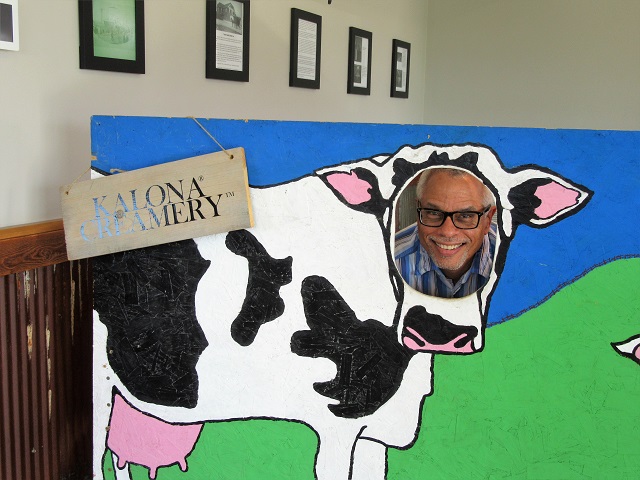
The Kalona Creamery was established in 2015 and does a pretty good business. It’s bigger than it looks from the outside. Don’t let the cow sculpture scare you. Kalona cows are what this extra sweet creamery is all about.

And in turn, cheese curds and fancy, hand-rolled butter (3rd place at the  2018 Iowa State Fair) is what humans are all about.

Hand-Rolled Butter…and curds.

And don’t forget the ice cream. I have a lot of imagination and cosmopolitan, discriminating tastes—so I got the “Plain ol’ Vanilla.” Sena got the Kalona Crunch—with pecans. You get a chocolate cow with any selection. It brought back memories of hand-churned ice cream in grade school. Man, that’s good.

Plain ol’ Vanilla

And the people were sure friendly in Kalona—even in 90 degree heat.

Hold on for the Kalona Adventure!

Walking the Terry Trueblood Trail in May

We took a walk on the Terry Trueblood Trail yesterday and saw quite a few birds even though it’s early in the season. We caught sight of Orchard Orioles and got a snapshot for the first time of a bird that can fool you into thinking it’s a robin.

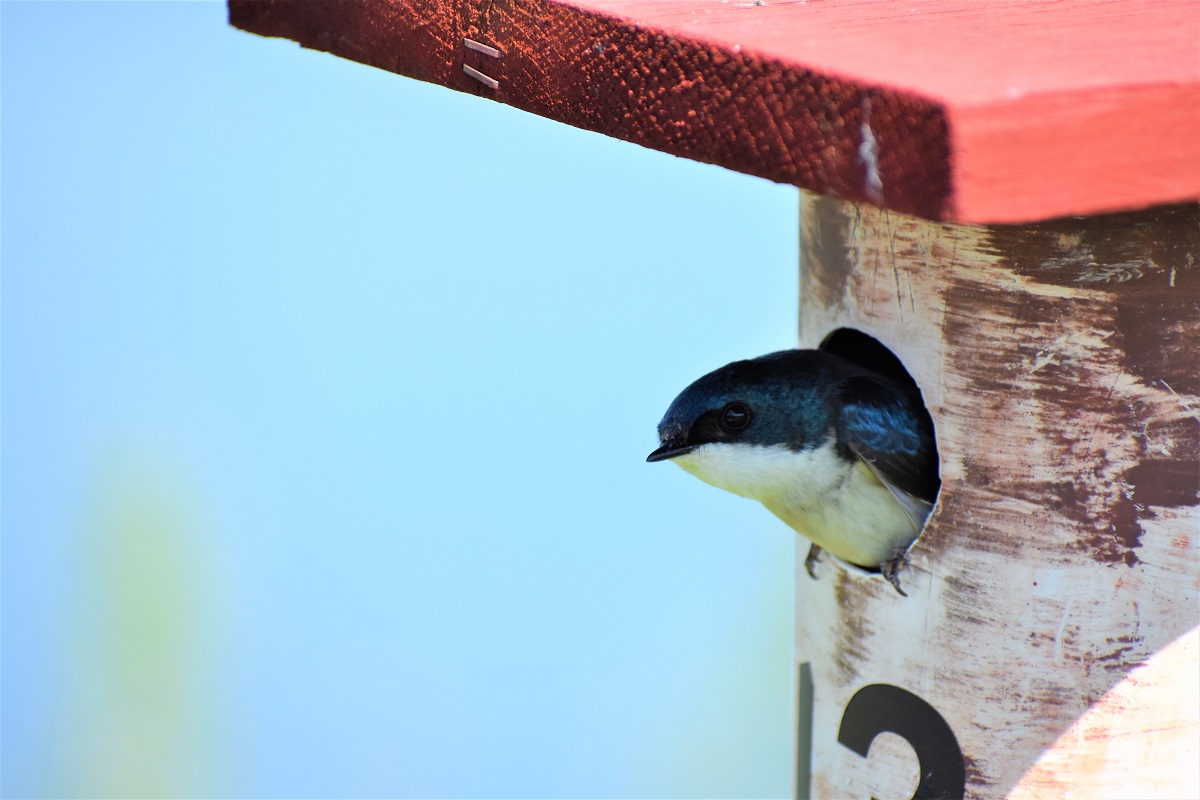
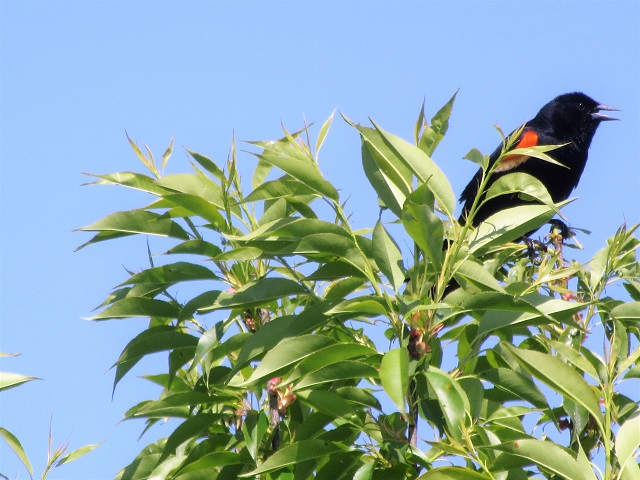
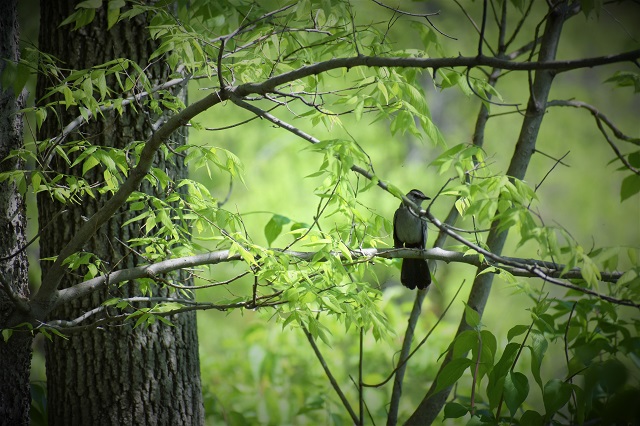
There are a lot of Tree Swallows nesting out there. It’s too soon for babies. Sena got a couple of great shots of a sassy Red-Winged Blackbird. I got my first good shot of a Gray Catbird.

Red-Wing Blackbird on the Terry Trueblood Trail
Gray Catbird

It’s very peaceful out there—except when the bugs fly up your nose.

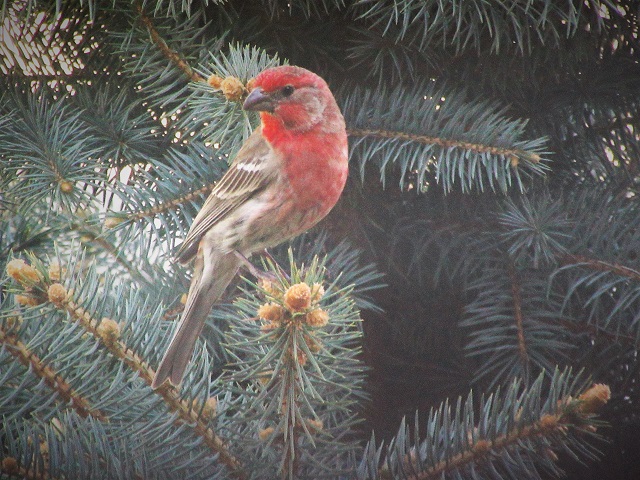
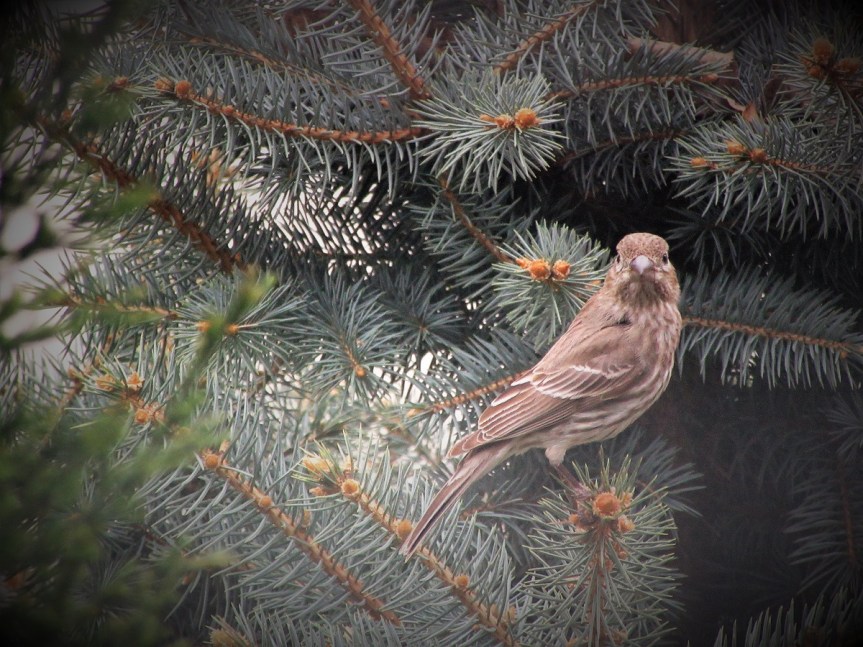
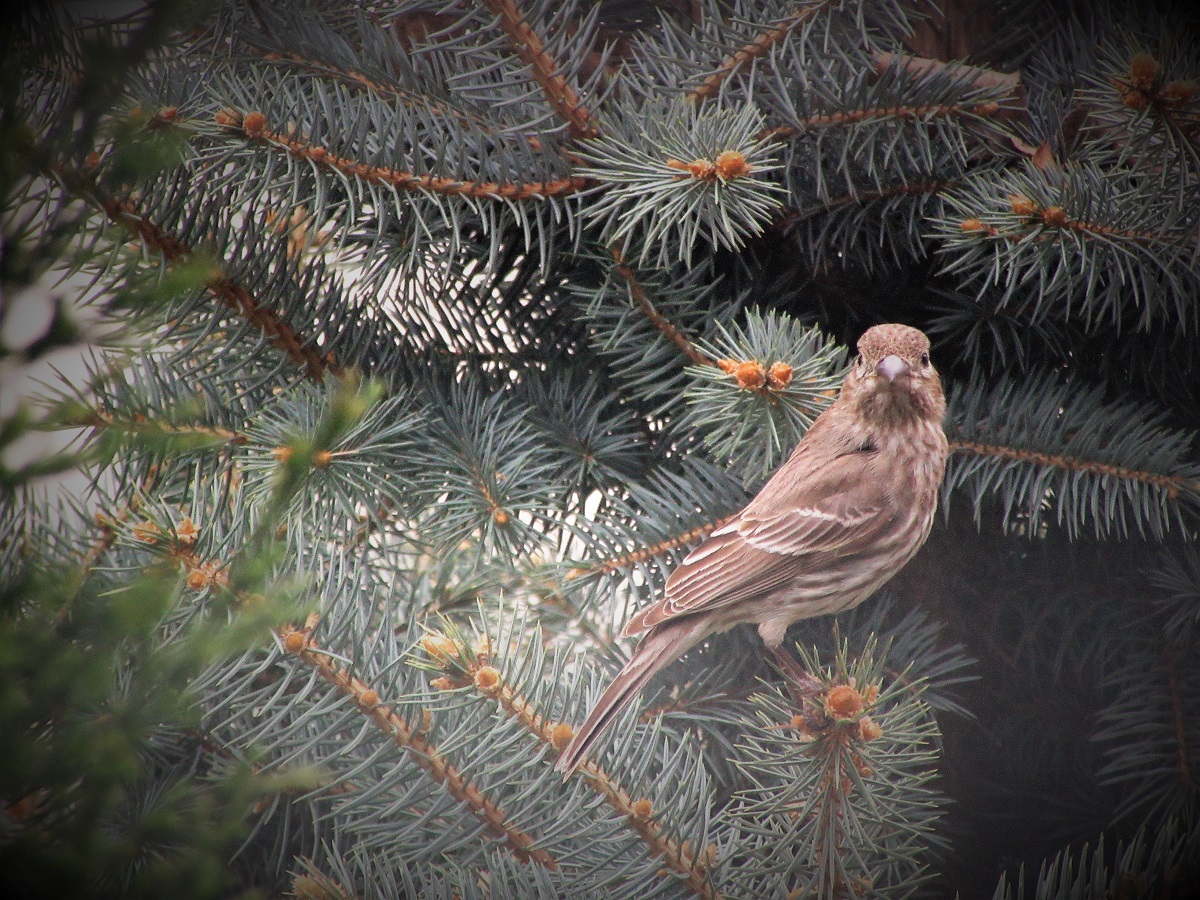
When we got home, we noticed the House Finches flitting around the juniper tree where the giant crow stole all their chicks the other day. It looks like they’re planning to rebuild. Foolhardy.

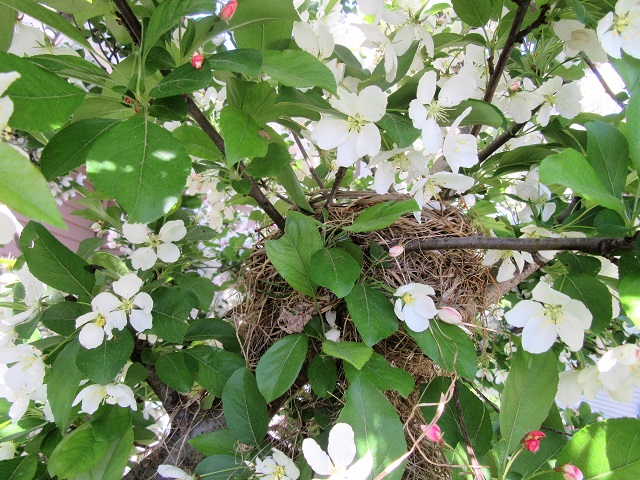
The robins may have abandoned their nest under the deck but they’ve built a regular Hoorah’s Nest in our front yard crabapple tree. It still needs a proper floor.

Terry Trueblood Trail video

Minority Diversity in Medicine

The featured image for this post is that of a Painted Lady butterfly, one beautiful member of a hugely diverse group of such creatures. It reminded me of the state of our physician supply, which is not so very diverse when it comes to inclusion of minorities.

Even though I’m moving into the final year of my phased retirement contract in July and I’m off service—I still check my office email several times every single day. It’s a hard habit to break after 23 years, not counting 4 years each of residency and medical school. So, I get a pang every time I see a news item in my inbox about the shortage of physicians, especially the shortage of minority physicians. The challenge to increase diversity of race and ethnicity in the supply of American doctors is a big one.

The Greenville News in South Carolina posted a long article about this issue on May 13, 2019 (“Despite efforts to boost their numbers, blacks account for just 6% of doctors in SC” by Liv Osby). Even though blacks make up 13% of the U.S. population, only about 6% of the doctors in Greenville, S.C. are black. Many members of minority groups do not recall seeing a doctor who looked like them while they were growing up. Minority role models for the goal of becoming physicians have always been few and far-between.

I recall being one of a handful of minority students entering the summer enrichment program in 1988 at the University of Iowa. The summer enrichment opportunity was intended to be one way to assist minority students excel in the basic sciences courses that we would be facing in the upcoming regular academic year.

I have always appreciated that boost but not all of my peers saw it that way. One young man said simply, “I’ll see you in the fall,” evidently meaning he would not be attending the summer enrichment program. It was clear from talking with him that he thought the program sent the wrong message to the majority students—that we were getting an unfair advantage. I’m pretty sure that the summer enrichment program ended many years ago, at least in part because of that negative perception.

This reminded me of my undergraduate experience at Huston-Tillotson (H-T) College (now H-T University) when the controversy about affirmative action was prominent. I recall only one black student who was planning to go to medical school and hoped to get into the University of Texas. In fact, even though the term is no longer used, the Greenville News story mentioned that Texas Tech last year eliminated race as a consideration for admission to its Health Sciences Center. This indicates ongoing discomfort about the perception of favoritism or special treatment being given to minorities.

I still see one of my summer enrichment program professors in the hospital hallways every so often. He even remembers my name. We exchange friendly greetings.

And I’m painfully aware that there may be only one other black psychiatrist in Iowa—and I think he’s also a baby boomer.

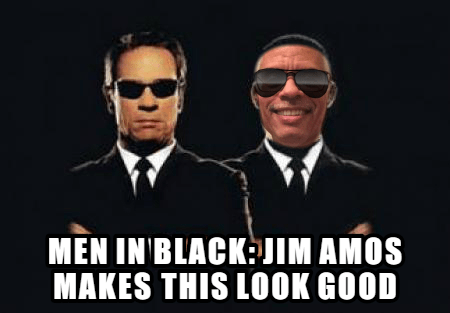
As I head for retirement, I remember a line from one of the final scenes in the movie Men in Black, “I haven’t been training a partner; I’ve been training a replacement.” I’m not sure if there will be someone to replace me.

Are we training enough replacements?

Spring, A Time for Optimism

This is the season for optimism and milestones: graduating medical students and residents, new faculty from the graduating resident class—including the milestone of getting the suspicious looking postcard notice in the mail reminding me that I’ll soon be eligible for open enrollment in Medicare.

No kidding, I got my first ever Medicare Open Enrollment postcard notice although, of course, it was not from any government agency as the Medicare Open Enrollment Inquiry Card indicated. This notice was obviously a lure from an anonymous marketer soliciting for one or more insurance companies, “SD Reply Center” in Rockwall, Texas.

Don’t get sucked in by this hustle. This has been going on for years. I found an on line news story from 2012 written by Bob LaMendola, with the Sun Sentinel in South Florida.

This is widely viewed as a scam, and the company targets seniors (yes, I am one of those). If you send back the card with all of your personal data on it which they request, outfits like SD Reply Center (SD stands for Senior Direct) will sell it to insurers who may knock on your door. Insurers themselves are forbidden by federal and state laws from sending these postcards or otherwise soliciting seniors unless we request them. While it’s not against the law for companies like SD Reply Center to solicit seniors, consumer advocates advise us not to mail our personal information to the sender of an anonymous postcard. While it may not be harmful, seniors are then in the difficult position of fending off eager insurance salespersons.

I will be shredding my postcard. But I will remain aware of Medicare open enrollment and pursue less worrisome avenues for more information about my coverage options. You have to keep your eyes peeled for trouble.

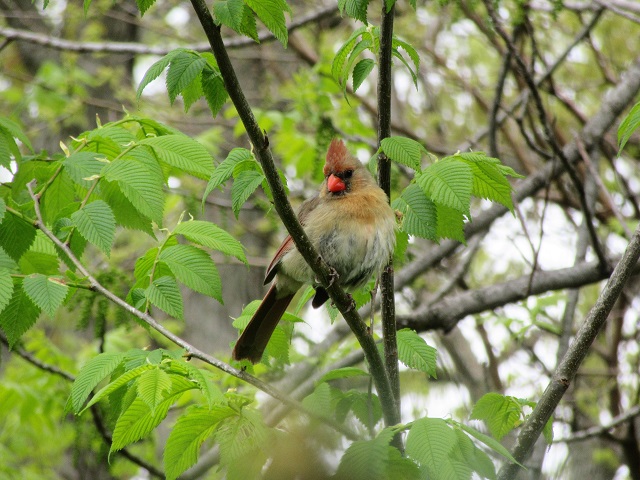
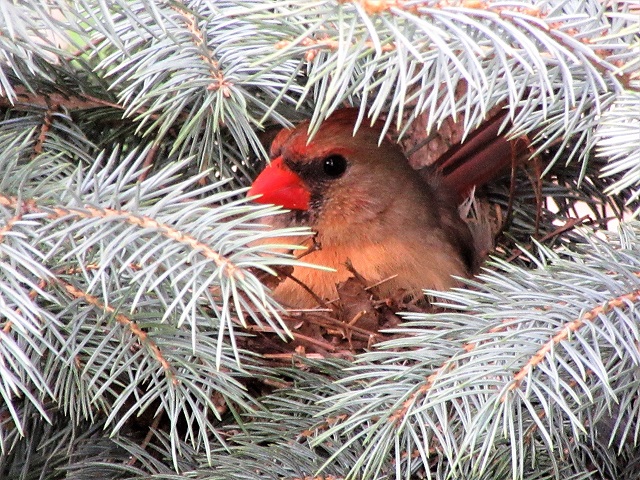
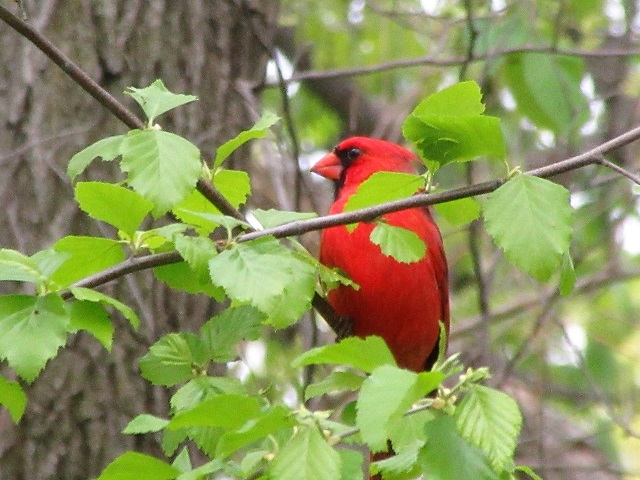
Speaking of trouble, our birds are in a lot of it. Right after the house finches lost their nestlings, the cardinals lost their only chick, probably to the same predatory crow that took the house finch babies. The cardinal and house finch parents are now gone.

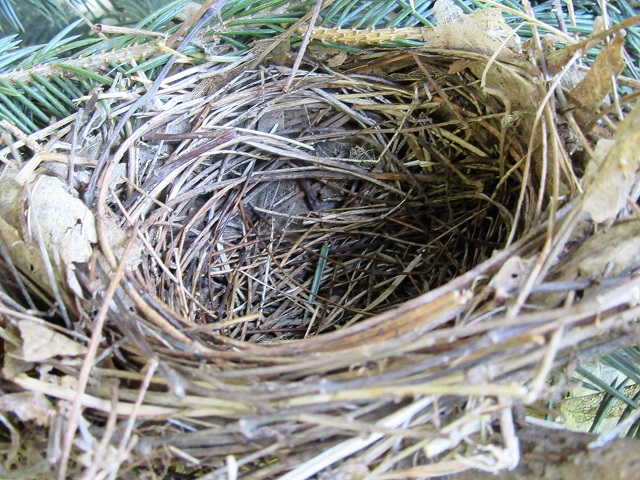
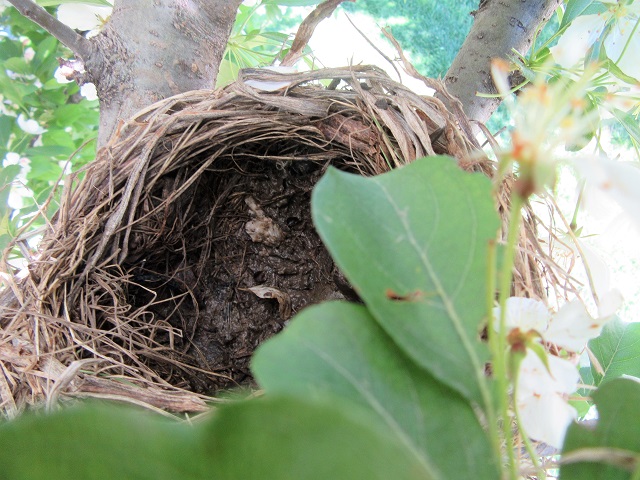
The cardinal nest is empty.

However, while the robins might have abandoned the under-the-deck nest (not clear, my wife says she saw one flying under our deck), they may have settled into our front yard crabapple tree. It’s thick with flowers right now and provides excellent cover for the brand new nest the floor of which still needs work (just like the nest under our deck needed for a while).

Spring is a time of optimism. Hope springs eternal in the human breast—and in the robin redbreast.

Saga of the Nestlings

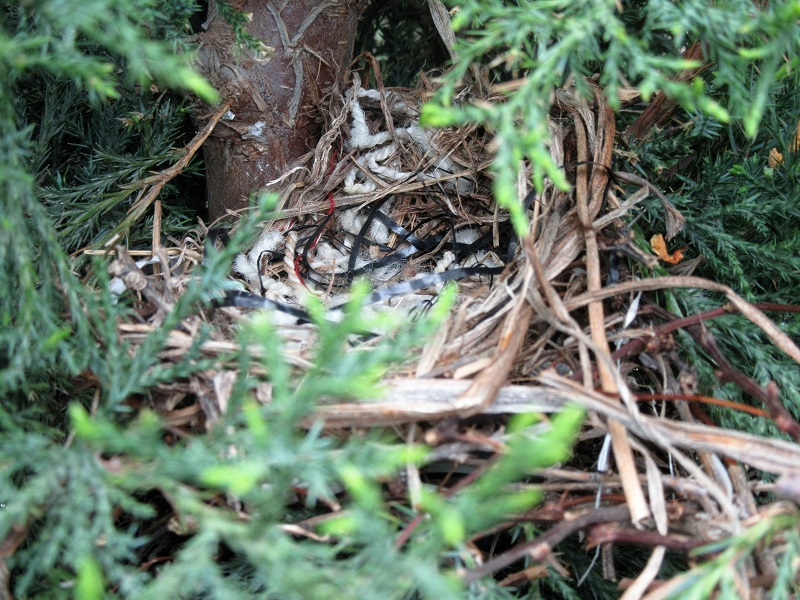
Recall that the house finch nestlings were taken by a marauding crow yesterday. The house finch parents were frantic and devastated for about an hour. Although the crow flew by a second time, it didn’t return. The reason why was clear today. The nest is still in the tree but it’s obviously a wreck. We think it has been abandoned.

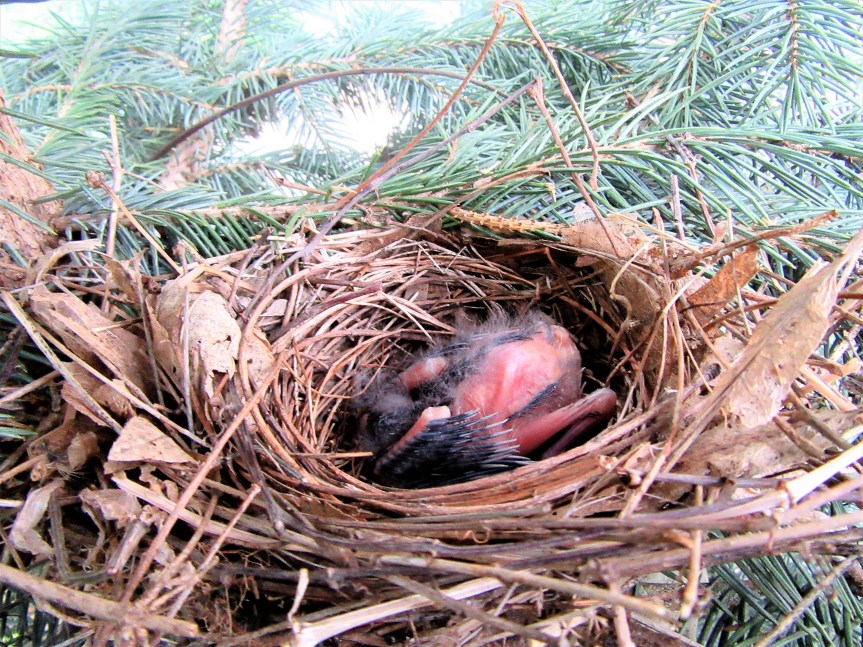
I checked on the cardinal nest and could find only one baby. He’s large and the younger, smaller brother is nowhere in sight.

Big fella

The robins have not laid any eggs in the nest under our deck and it’s likely they’ve abandoned it.

Survival of the fittest seems to be the lesson here. Instinct is the driver, but it was hard not to think of the house finch parents, (especially the female) as grieving the loss of all their chicks.

The cardinal parents seem very annoyed when I pop around with my camera. Why not? Life is hard enough, with bad weather, crappy nest-building materials, unsafe locations, and predatory crows.

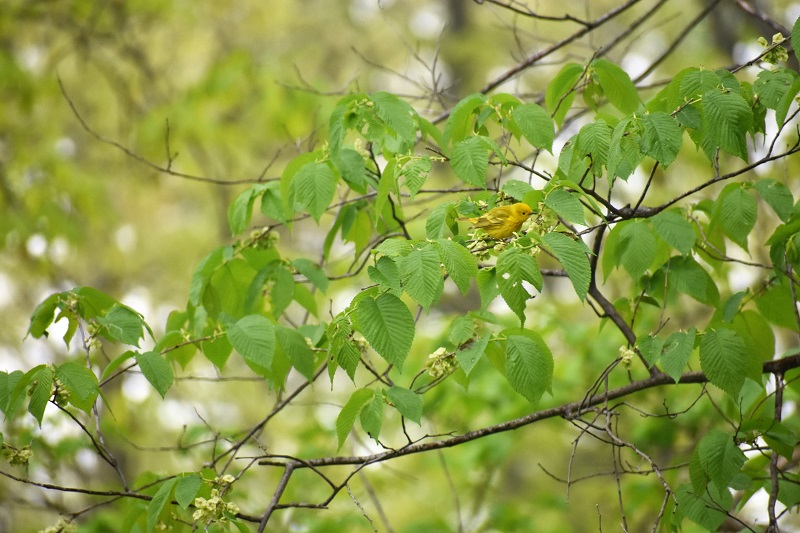
By the way, we saw a yellow warbler for the first time. I mistook it for a goldfinch at first. But then I saw the streaking on its belly and checked my field guide. Goldfinches have black wings and a black forehead patch. Yellow warbler males have orange streaks on their bellies. This one was probably picking bugs off the topmost tree leaves. It’s a male and making the most of its time on earth.

Yellow Warbler male

Marauding Crow Snatches Nestlings

I was sitting at my desk by the front window where we often watch the house finches come and go from their nest. It was just a couple of days ago that 3 baby house finches were squirming about in the nest.

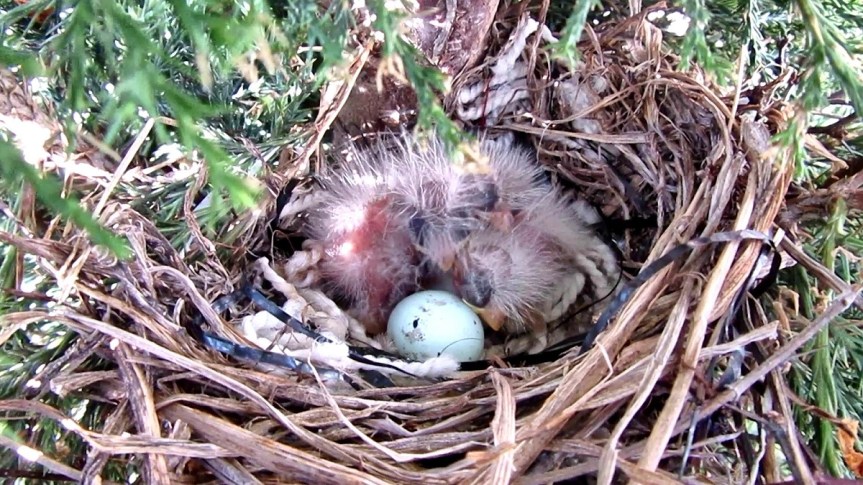
There are 3 house finch nestlings ( or I guess I should say there were)

I kept hearing a strange noise outside the window. It sounded like a large sheet blowing and flapping in the wind. I glanced a couple of times and didn’t see anything. About the 3rd time I heard it, I caught sight of a huge crow (maybe a raven?) flapping its wings, which was the sound I evidently heard.

I grabbed my camera and tried to open the blinds but I was too late to get a snapshot of the giant crow pounding the juniper tree with its wings, jabbing its beak into the tree and then thundering off with a mouthful of nestlings. I’m pretty sure it got all of them.

I was stunned. A couple of minutes later, the house finch mama was flitting in a panic around the tree and in the nest, apparently searching for the newborns. It was a frantic scene which went on for over half an hour at least. She flew off and flew back repeatedly to what I assumed was an empty nest. There might have been an egg left because the crow returned to fly over the tree. But it didn’t stop.

Frantic house finch mama

I now believe that’s what happened to the missing cardinal egg and cardinal baby. My wife says she has seen a large crow swooping around our property. I wonder if that’s what spooked the robins who have probably abandoned the nest under our deck.

I took a quick look around the web and found that crows will eat eggs and nestlings, but it’s said to be an uncommon occurrence. It definitely happened in front of me and in the blink of an eye.

I don’t know what the house finches will do now. Will they try again? I doubt it will be in the same tree. Many of the branches are bent, exposing the nest where the thief broke in.

I’ll keep you posted.

The Bird Saga

The bird saga continues and it has been a little rocky. The cardinals are having an up and down course with their young. They lost a chick. One egg was laid a bit late and so the two chicks remaining are vastly different in size.

Big brother and little brother

The house finches are hatching. So far there were two hatchlings we could see. Out of the five eggs it was hard to tell what happened to the other three. I could see only two; one of them was the brown egg.

My wife took a shine to one of the house finch nestlings. She calls it her “little alien.” Funny, I always thought I was her little alien. Both of the babies look like they have Mohawk haircuts.

The robins probably have abandoned their carefully built nest under our deck. It has been a few days now since the nest was completed and no eggs are in it.

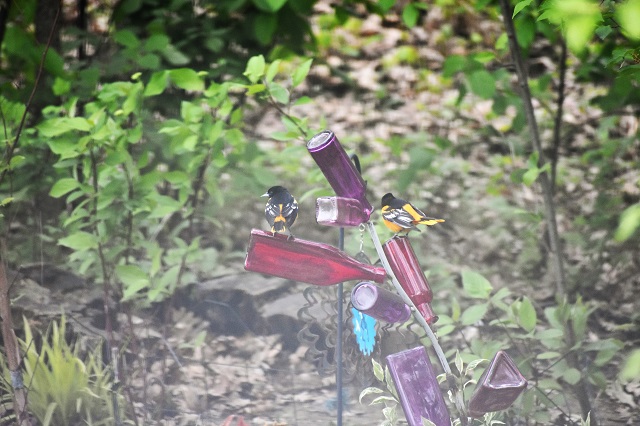
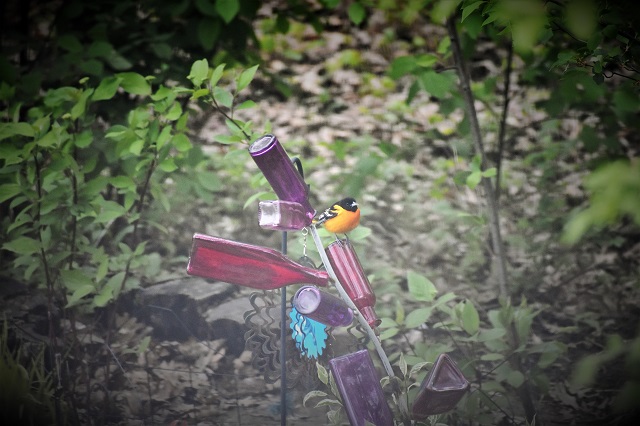
Now we’re starting to see Baltimore Orioles flitting around our garden. There were three of them (all males) and I could barely get snapshots of two. I doubt we’ll see nests. They build pretty high up in the trees.

Excellence in Clinical Coaching Award: Humble Thanks

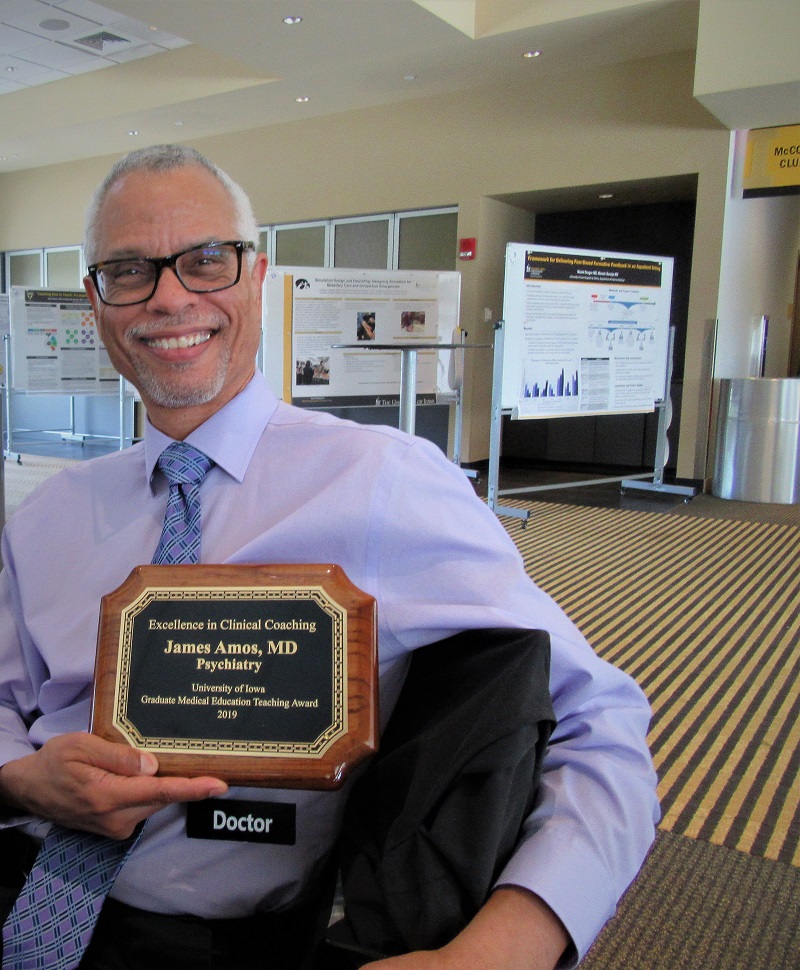
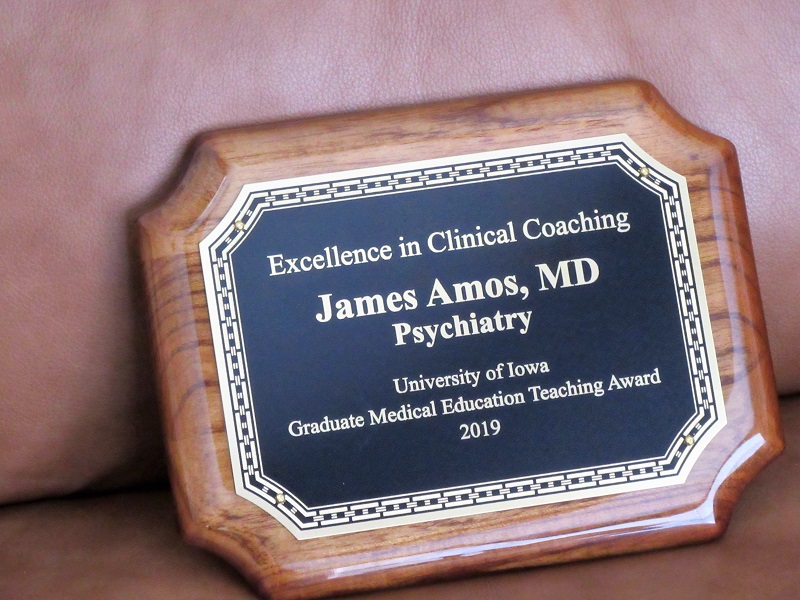
Today I want to thank everyone in my department for nominating me for the Excellence in Clinical Coaching Award . I accepted it during the Graduate Medical Education Leadership Symposium this afternoon.

For some reason, I almost wrote “Excellence in Clinical Clowning Award ” above. I guess maybe one of the reasons is that I was given an award (tongue in cheek) by the residents a few years ago when I made a pretty funny mistake giving a Grand Rounds presentation.

Much to my embarrassment, I somehow mixed up my slides so badly that many of them were out of order. I had to ad lib around that–a lot. Little wonder the residents whipped up the Improviser of the Year Award for outstanding improvisation during a Grand Rounds.

Improviser of the Year Award

Another honor I received about 8 years ago was a Feather in My Cap award after making the rank of Clinical Professor. The awardees had to come up with a favorite quote which guided them, and which was printed on the certificate. At the time, my favorite quote was:

“Vitality shows in not only the ability to persist but the ability to start over.”

F. Scott Gitzgerald
Another feather in my cap

I think I chose that because I have sort of reinvented myself over the years, including going to medical school later in adulthood, trying private practice in psychiatry, and most recently transitioning to retirement.

I’m also very fond of the Leonard Tow Humanism in Medicine Award about twelve years ago.

These days, other quotes are more important to me, like the one by Stephen Covey,

“Leadership is a choice, not a position.”

Stephen Covey

The comments praising today’s honorees, written in the the program by trainees and department colleagues, were heart warming for everyone. They brought back memories for all of us, I’m sure.

I struck up a conversation with an attendee about comparing coaches and mentors. I mentioned that in a previous post, “Spring,” on May 4, 2019. Many people tend to conflate the two roles, although I still favor the view that coaches tend to have shorter relationships that are more focused on skill building while mentors have longer term relationship more focused on career building.

However, both mentors and coaches serve as role models, something all teachers do. I have a short coaching video below for a skill I have often role-modeled for trainees–sitting with patients and listening to them for understanding.

In honor of Excellence in Clinical Coaching–and Clowning.

I’m also a big fan of a sense of humor on the Consultation-Liaison Psychiatry service, as anyone knows who has worked with me. My work-related anecdotes get more colorful, less accurate, and longer the older I get. I know when to cut them short, though–the trainees snore loudly. My hearing is still pretty good. I briefly considered getting a coach’s whistle—but thought better of it.

Let’s Promote Living Well to 100

Living Well

I get a big kick of this video every time I see it. It’s a YouTube about people who are 100 years old who are funny, wise, and talented. It’s included on the SSM Health St. Mary’s Hospital YouTube channel. St. Mary’s Hospital is in Madison, Wisconsin. I worked as a psychiatrist there very briefly a long time ago.

However, the other thing this video brings to mind is something sad. I see patients half my age (nowhere near 100) almost every day in the hospital who are delirious, sometimes for prolonged periods of time. According to the medical literature, they will be at risk for developing dementia and not infrequently do. In fact, research tends to show that for every day someone spends delirious, the risk for developing dementia goes up 35%. That makes delirium a life-limiting condition which can happen to anyone at any age.

I got delirious after a routine colonoscopy, a procedure to screen for colon cancer and other pre-cancerous tumors that used to be routinely recommended for those who reach 50. It was the worst 50th birthday present a guy could ever get.

I was delirious probably because I got sedated with a combination of Versed and Demerol. The worst part of the condition probably lasted only a couple of hours at most following the procedure. But I was sure wiped out the rest of the day.

I would have a tough time picking out the worst part of the whole process, the bowel prep (guzzling a big jug of GoLytely which should be called GoHeavily) or enduring the post-procedure delirium. It was probably the latter.

I don’t remember much. My wife tells me that I kept repeating something about not taking NSAIDs. I think there was something about that in the informed consent and education materials that got sort of stuck in one of my neurons. I kept sliding down in bed while I was in the recovery room, which I was in for a little while longer than is usually expected.

Preventing delirium is a vital job for health care professionals everywhere. We can’t prevent each and every case, but there are definitely things we can do to mitigate the problem. One of the most important goals is to try to minimize or avoid the use of certain offending drugs such as anticholinergic and sedative-hypnotic agents.

It’s also good to remember that the population at highest risk for getting delirious is the elderly and those who already may have cognitive impairment.

Preventing delirium, based on current literature, means first implementing non-pharmacologic multicomponent interventions. These may require a large cadre of volunteers. The best example is the Hospital Elder Life Program (HELP) at Yale, which is copyrighted by Dr. Sharon Inouye. Six of the most important features to address:

–Normalizing electrolytes such as sodium and keeping patients well-hydrated

–Mobilizing patients as much as possible, including getting immobilizing devices such as foley catheters removed as early as you can

–Making sure sensory aids such as eyeglasses and hearing aids are available

–Ensuring that medications are monitored so as to minimize exposure to drugs that are anticholinergic or sedating.

Anyway, working on preventing delirium and minimizing its impact is an ongoing challenge. Keep the goal in mind: We want as many people as possible to live well to 100.

The Groundhog Effect

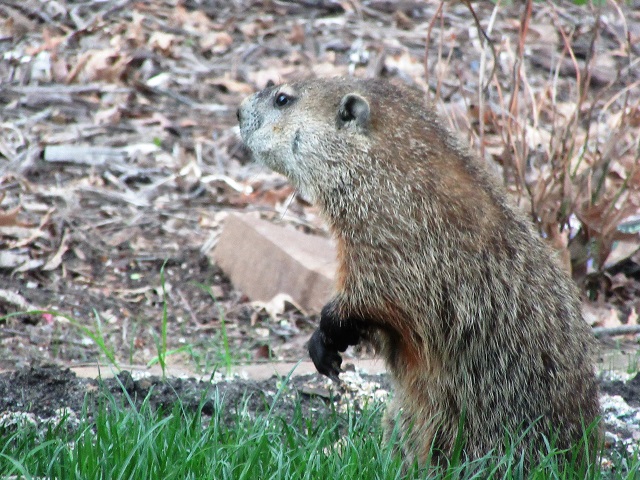
Last year, we noticed a groundhog waking up and bulldozing our back yard, even though snow was forecast that day. It’s pretty good at just putting its head down and pushing through almost anything in its path including leaves, sticks, small rocks, flowers, and so on.

Their single-minded digging has helped uncover bones and pottery of old civilizations and aided medical researchers study a lot of things including the role of viral hepatitis in liver cancer.

I can compare them to those who bury themselves in the single-minded study of medicine in the transformative path to medical practice. I can recall my medical school classmates and their clicker pens taking notes in class. They weren’t called “gunners” for nothing. Call it the Groundhog Effect.

Even if you weren’t a gunner, you had to apply yourself just like a groundhog to your studies. It could lead to another characteristic common among these creatures. They tend to be loners.

The analogy is far from perfect, of course. Groundhogs aren’t lonely. People can be, which is why medical students and residents are often advised to always remember H.A.L.T.

H.A.L.T. refers to trying to avoid letting oneself get too hungry, angry, lonely, or tired. It’s probably a warning about incipient burnout, a problem that affects at least half of physicians and which is the hot topic these days.

I’m always a little puzzled that so many physician wellness programs and meetings seem to devote a lot of time trying to teach doctors how to improve their resilience. It’s as though we’re somehow to blame for getting burned out.
I’m not saying learning things like mindfulness are not important for promoting physician wellness. I have my own daily mindfulness practice and it is certainly helpful.

It would also be nice to spend more time addressing the systems issues contributing to physician burnout, such as very full clinic schedules, overly complicated electronic health records requiring hours of data input that create the need for “pajama time,” which is bringing your job home with you, board certification busywork, managed care rules that marginalize physicians, and so on.

This is a continuation of the hassle factors that can lead to physicians just learning to put their heads down and dig through the mess—sort of like the groundhog, and often in isolation from each other.

Transformative processes can also occur at the end of a physician’s career. I’ve spent a long time learning to be a physician and now that I’m in phased retirement, I’m finding out how hard that can be. It would be helpful to know that others are passing through this stage as well, and that I’m not alone.

Could it be that one way to counter the Groundhog Effect is to come together and share this retirement experience? There will always be those who work well into their nineties and that’s great. Statistically, though, most of us will retire in our mid-sixties.

The graying out of the psychiatrist population is contributing to the shortage, to be sure. But we could still be useful to the next generation of doctors acting as role models for how to navigate the other transformative process—reflecting on the task of becoming somebody other than a physician. I think it would be easier if several doctors did this.

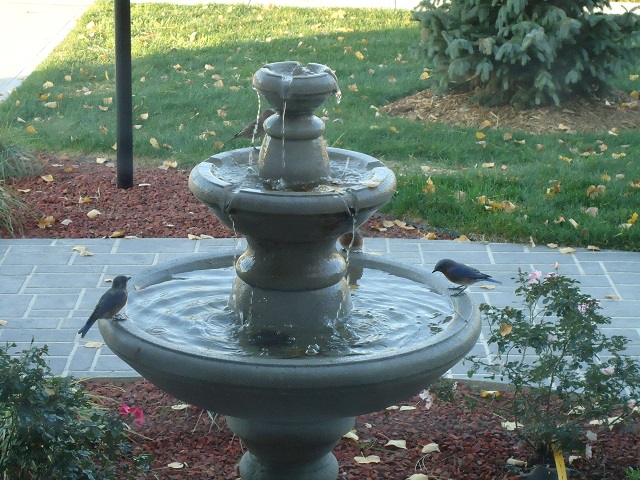
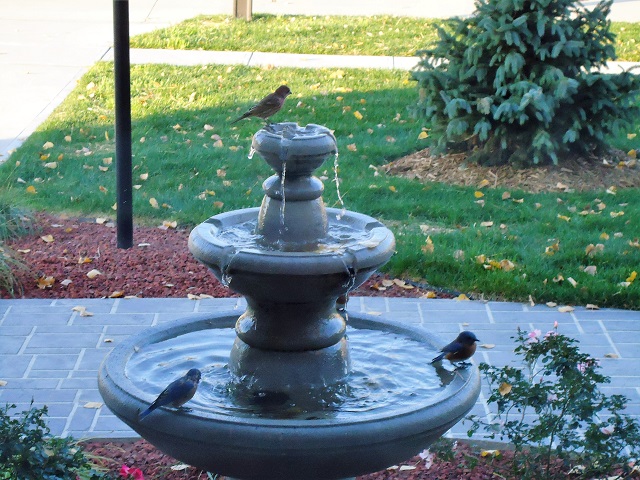
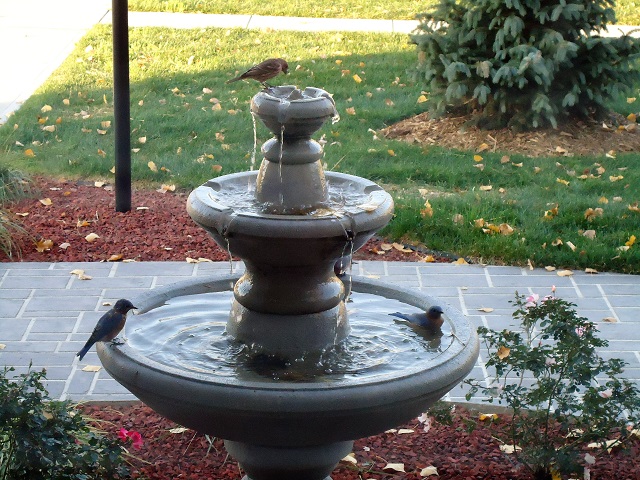
Animals do this. I saw this several years ago when we owned a house with a fountain, which was frequented by more than a couple of species of birds, including Bluebirds. They gradually arrived but were at first tentative about immediately diving in. One would perch on the rim. Another would come along and do the same, maybe drink a little water while watching the other.

Eventually, one would dip its tail feathers in just for a moment. Pretty soon, they would make like ducks.

I guess you could call it the Bathing Bluebird Effect.