About That Artificial Intelligence…

I’ve got a couple of things to get off my chest about Artificial Intelligence (AI). By now, everyone knows about AI telling people to put hot glue on pizza and whatnot. Sena and I talked to a guy at an electronics store who had nothing but good things to say about AI. I mentioned the hot glue thing and pizza and it didn’t faze him.

I noticed the Psychiatric Times article, “AI in Psychiatry: Things Are Moving Fast.” They mention the tendency for AI to hallucinate and expressed appropriate reservations about its limitations.

And then I found something very interesting about AI and Cribbage. How much does AI know about the game? Turns out not much. Any questions? Don’t expect AI to answer them accurately.

FDA VRBPAC Meeting: Vaccine Targeting Lineage JN.1 for Fall 2024

I didn’t get a chance to watch the June 5th FDA advisory committee meeting on the new vaccine formulation for Covid-19 for this fall. There is a nice summary on the Minnesota CIDRAP (Center for Infectious Disease Research & Policy).

The committee unanimously upvoted the selection of the JN.1 lineage strain (which includes JN.1, KP.2 etc) for Covid vaccines this fall in the U.S.

As usual, Director Dr. Jerry Weir’s slides (summary slides 22-26) provide excellent background and clear discussion.

FDA VRBPAC Meeting on Covid Vaccine for Fall of 2024

The voting question for today’s FDA VRBPAC Meeting on the Covid Vaccine strain for this fall is:

“For the 2024-2025 Formula of COVID-19 vaccines in the U.S., does the
committee recommend a monovalent JN.1-lineage vaccine composition?
Please vote “Yes” or “No” or “Abstain.”

The FDA Selection of the 2024-2025 Formula for COVID-19 vaccines briefing document has a thorough review on the issue.

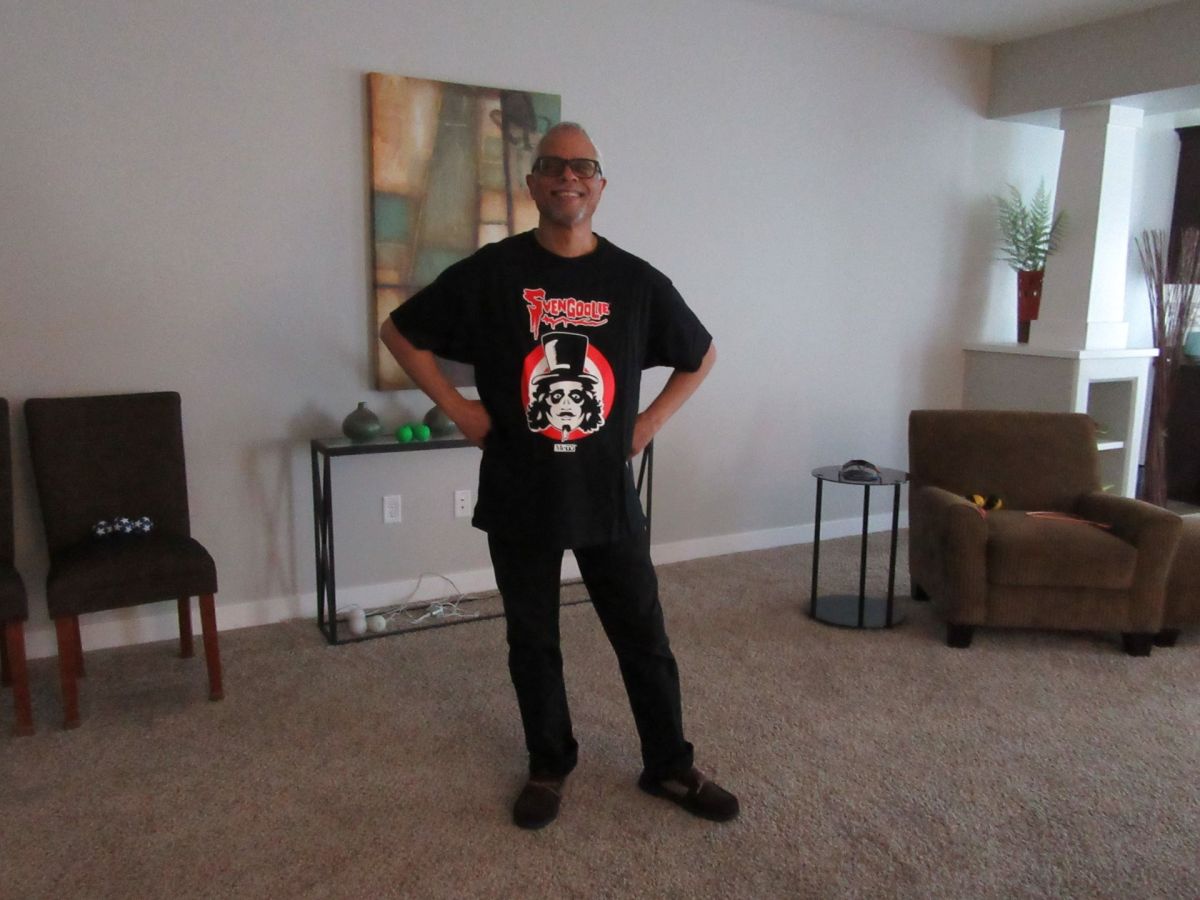
Svengoolie Movie: The Tingler!”

We saw the 1959 movie “The Tingler” starring Vincent Price on the Svengoolie show last Saturday. Price plays a prison pathologist, Dr. Warren Chapin, who’s trying to scientifically study a parasitic creature called the tingler (tingles up and down your spine means you’re scared right out of your mind!).

It sits on your spine and feeds on fear by clamping down on it, eventually breaking it unless you scream. Then it’ll just let go. However, if you’re mute, scared speechless, or it grabs you by the throat—you’re done. So, the tingler lives on fear, although if you express fear vocally by screaming, you escape it.

OK, so I’m going to spoil the opening scene, which shows a prisoner being dragged to the electric chair, screaming all the way until the executioner throws the switch. When Dr. Chapin does an autopsy, he finds the prisoner’s spine is cracked. He says it wasn’t caused by the electrocution, but by the tingler.

Huh? But the prisoner screamed bloody murder (murder was why he got the death penalty by the way) hardly stopping to take a breath. Shouldn’t that have weakened or killed the tingler? You can find examples of inconsistencies like this in any cheesy movie, but where’s the fun in that?

One web article says the tingler creature was modeled after the velvet worm, which looks pretty creepy. In reality, the velvet worm is harmless to humans, but is a predator of many invertebrates. Just keep telling yourself, “I’m a vertebrate.”

You can watch the full movie on the Internet Archive. The most interesting part of it for me was the use of what was called “acid,” (meaning the hallucinogen LSD) by Dr. Chapin. He wanted to experience and record the actual experience of being scared by the tingler, just to see what it’s like apparently. He mainlines himself with a fairly stiff dose of LSD although I can’t remember how much.

Incidentally, an article in JAMA notes, “Doses of 20μg/kg of body weight are known to have been taken without a lethal outcome.” (Materson BJ, Barrett-Connor E. LSD “Mainlining”: A New Hazard to Health. JAMA. 1967;200(12):1126–1127. doi:10.1001/jama.1967.03120250160025). I don’t know how much Dr. Chapin weighs.

This was about the same time as a lot of people in the U.S. were experimenting with the hallucinogen in various ways, including mainlining it. There are web references to psychiatrists using LSD recreationally (this was when it was legal). Bad trips were and still are common, although there is a growing body of clinical studies that involve using the psychedelics as adjuncts in psychotherapy. It’s not for everybody, although tinglers might have a different opinion.

Anyway, Dr. Chapin has a bad trip, gets really scared of hallucinations and screams. Web articles say that killed his tingler, but I didn’t see it flop out of his mouth.

There you have it. Another really cheesy and fun Svengoolie movie. I’m a vertebrate.

Thoughts on Down Time Activities for Land Survey Technicians

I was just thinking about the old-time land survey crews. When I was getting on the job training as a survey technician, the typical land survey crews were at least 2-3 persons. One rodman, one instrument man, and a crew chief who organized the job, which could be property or construction jobs.

Nowadays, you get by sometimes with one man doing the jobs using a theodolite that measures angles and distances. You don’t always need a physical measuring tape; you can use something they call “total stations.”

It’s cheaper for engineering companies to use one man survey outfits. On the other hand, one disadvantage is the lack of mentoring for learners who want to become land surveyors or civil engineers.

Mentoring from surveyors on the survey back in the day not only taught me such skills as how to throw and wrap a surveyor’s steel tape—it also taught me how to work well with others as a team. Of course, this was transferrable to working on the psychiatry consultation-liaison service in a big hospital as well.

It’s well known that playing cards in the truck while waiting for the rain to stop was an essential skill. I don’t know how they manage downtime nowadays. We didn’t play cards on the consultation service during downtime, partly because we didn’t have much downtime.

Anyway, as I mentioned in a recent post, we played Hearts in the truck on rain days. I always sat in the middle. At the time, I was a terrible card player in general. It was a cutthroat game and I had trouble remembering which cards had been played.

When you consider that the strong suit of engineers and surveyors is math ability, you’d think that survey crews would have figured out a way to play Cribbage during downtime. You can have a Cribbage game with 3 or 4 people although I’ve never played it that way. If there are 3 players, it can still be cutthroat.

The one problem I can see is that, the guy sitting in the middle would have to set the board on his lap. You’d almost need a special, custom-made board which would have a space for placing the cards to keep track of what’s been played. I think that might have made things easier for me.

The other drawback to one man survey crews is that pretty much the only card game you can play is solitaire.

Reminder: FDA VRBPAC Meeting June 5, 2024 on Covid Vaccines for Fall 2024

There will be an FDA VRBPAC meeting on June 5, 2024, 8:30 a.m.-4:30 p.m. ET to discuss Covid vaccines for this fall.

Consultation-Liaison Psychiatry as a Supraspecialty

I just rediscovered this old blog post below from 2010 in my files. The literature citations are dated, of course. I just wanted to reminisce about how I used to think through issues in consultation-liaison psychiatry. The post is old enough to contain the former term for the field-Psychosomatic Medicine.

“At the annual Academy of Psychosomatic Medicine (APM) meeting this year held on Marco Island, Florida, I heard Dr. Theodore Stern call Psychosomatic Medicine (PM) a “supraspecialty”. Usually it’s described as a subspecialty.  I couldn’t find the word in Webster’s although “supra” comes from the Latin for “above, beyond, earlier”. One of the definitions is “transcending”.  I tried to Google “supraspecialty” and came up empty. So I guess it’s a neologism. The context was a workshop on how to enhance resident and medical student education on Psychosomatic Medicine services. Dr.  Stern coined the term while talking about the scope of practice of PM. As he went through the long list, it gradually dawned on me why “supraspecialty” as a title probably fits our profession. It’s mainly because it makes us, as psychiatrists, accountable for aspects of general and specialty medical and surgical care above and beyond that of Psychiatry alone.

As a member of this supraspecialty, we wrestle with some of the most intriguing questions about the core competencies of clinical care, interpersonal and communication skills, professionalism, medical knowledge, systems-based practice, and practice-based learning and improvement. These core competencies are a set of commandments, as it were, that teachers and learners are supposed to quantitatively assess in the service of producing competent doctors.  While acknowledging the importance of qualitative assessment of the core competencies, Dr. Stern had the courage to criticize the assumption that quantitative assessment is even practicable. A qualitative assessment would probably be more practical.

For example, how would one assess a trainee’s ability to digest, critically evaluate, communicate about, and integrate into local practice systems the small but growing knowledge about psychopharmacologic prevention of delirium? I am a bit surprised at the general enthusiasm among PM practitioners about pretreating patients with antipsychotics in an effort to prevent postoperative delirium. One of the more recent examples of a very small set of studies is the randomized controlled study by Larsen et al which showed that using Olanzapine prevented delirium in elderly joint-replacement patients[1].  The caveat that everyone seems to ignore is that the patients who got Olanzapine endured longer and more severe episodes of delirium.  Dr. Sharon Inouye (who designed the Confusion Assessment Method or CAM for diagnosing delirium) has quoted George Washington Carver, “There is no shortcut to achievement”, cautioning against oversimplifying non-pharmacologic approaches to preventing delirium[2].  By extension, I’m suspicious of any recommendation that would reduce an intervention for preventing a syndrome as complex in etiology and pathophysiology as delirium to the administration of a single dose of a psychiatric drug either pre-op or post-op or both.  Given the complexity of this issue, is there a quantifiable assessment method for core competencies that suffices? What I’d really like to see is how a trainee thought through the complex issues involved.

One other issue that would influence our ability to assess core competencies is the recent appearance of evidence which seems to show that selective serotonin reuptake inhibitors (SSRIs) when given with beta-blockers may increase mortality in heart failure patients[3]. The bulk of the research evidence in the last couple of decades impels psychiatrists and cardiologists alike to have a low threshold for prescribing SSRIs to patients with heart disease in order to prevent depression. Again, in this context, is there a suitable quantifiable assessment for gauging whether or not a trainee has mastered the core competencies adequately? I would rather hear or read a trainee’s reflections on how to decide for oneself what the safest course of action would be under particular circumstances, and then how to convey that to our colleagues in Cardiology.

And is there a reliably quantifiable way to assess how a PM consultant (trainee or not) evaluates and recommends treatment for an ICU patient who develops catatonia postoperatively in the context of abrupt withdrawal of previously prescribed benzodiazepine, in the face of recent evidence that Lorazepam is an independent predictor of delirium in the ICU[4, 5]?

These situations tax the medical and psychiatric knowledge, treatment and communication skills and wisdom of master and learner alike. Is it possible to mark a check box on a rating scale to assess performance? And would that give us and our patients the ability to tell whether a doctor has the wherewithal to discern what kind of disease the patient has and what kind of patient has the disease, to do the thing right and to do the right thing?

 All of these examples make me wonder whether or not quantifiable assessment of every core competency in the supraspecialty of PM is realistic or even desirable.

1.            Larsen, K.A., et al., Administration of olanzapine to prevent postoperative delirium in elderly joint-replacement patients: a randomized, controlled trial. Psychosomatics, 2010. 51(5): p. 409-18.

2.            Inouye, S.K., et al., NO SHORTCUTS FOR DELIRIUM PREVENTION. Journal of the American Geriatrics Society, 2010. 58(5): p. 998-999.

3.            Veien, K.T., et al., High mortality among heart failure patients treated with antidepressants. Int J Cardiol, 2010.

4.            Brown, M. and S. Freeman, Clonazepam withdrawal-induced catatonia. Psychosomatics, 2009. 50(3): p. 289-92.

5.            Pandharipande, P., et al., Lorazepam is an independent risk factor for transitioning to delirium in intensive care unit patients. Anesthesiology, 2006. 104(1): p. 21-6.”

Rounding At Iowa: Smoking and Vaping

I just want to give a shout out to University of Iowa Health Care and the Rounding@Iowa podcast for an outstanding presentation on the hazards of smoking tobacco, vaping, and dabbing.

The program originally aired on May 14, 2024 and the guests included two ICU doctors who are pulmonologists I’ve worked with as a psychiatric consultant. They are very dedicated.

There was a third guest and he is a patient who vaped and suffered disastrous consequences leading to lung transplant surgery. His insights are invaluable.

Breathing is good; not breathing is bad.

Another Look at the C-L Psychiatry Pecha Kucha

Back in 2018, one of my emergency room staff physicians asked me to do a Pecha Kucha on what a consultation-liaison psychiatrist does. If you know what a pecha kucha is, you can understand why it was challenging for me to put it together and present it.

Although you may have seen the video I made of the pecha kucha 5 years ago on this blog, I think it’s OK to present it here again.

Briefly, PechaKucha is Japanese for “chitchat.” It’s a presentation format using 20 slides displayed for 20 seconds each. It took a while to rehearse to get it right.

I think it’s also worth emphasizing because most of the ideas in it are still relevant to consultation-liaison psychiatry. See what you think.

Submitted My Two Cents on Centers for Medicare and Medicaid Services Proposal to Minimize the Importance of the Delirium Diagnosis Code

I found out that the Centers for Medicare and Medicaid Services (CMS) is planning to reclassify the diagnosis code for delirium, making it less serious than encephalopathy. Many clinicians are challenging it and organizations of consultation-liaison psychiatrists and the like, including me, don’t understand or agree with the plan.

Even though I’m a retired C-L psychiatrist, I put my two cents in as a comment. I told them what I used to tell others who were either my colleagues or my trainees—that delirium is a medical emergency. I support classifying delirium as a major complication or comorbidity (MCC).

Since CMS asked for supporting documents, I included a pdf of Oldham’s article:

Oldham MA, Flanagan NM, Khan A, Boukrina O, Marcantonio ER. Responding to Ten Common Delirium Misconceptions With Best Evidence: An Educational Review for Clinicians. J Neuropsychiatry Clin Neurosci. 2018 Winter;30(1):51-57. doi: 10.1176/appi.neuropsych.17030065. Epub 2017 Sep 6. PMID: 28876970.

As the authors say, “Delirium always has a physiological cause.”