Well, we’re using our new safety glasses retainers and they work out fine. We’re a little off the beam on the 2-person 6 ball pass juggle for some reason. Some days are diamonds, some days are stones, I guess.
Our mistakes are funny. We just make too many.
I’m still working on the shower juggle pattern. I might be making slow progress. It feels easier to do if I use the large plastic balls or the new smaller balls with a tough leather shell. They’re decorated with stars to give you confidence.
I think if they’re round and hold their shape better if they’re made of harder material, they might fly better.
I think it would also help if I threw them more accurately.
In answer to the question in the title, I’ll confess right away I don’t know the answer. The impetus for my writing this post is the Medscape article about an 84-year-old physician who was forced to take a cognitive test required by her employer as a way of gauging her ability to continue working as a doctor. She’s suing her employer on the grounds that requiring the cognitive test violated the American with Disabilities Act (ADA), the Age Discrimination in Employment Act, and two other laws in her state.
I didn’t retire based on any cognitive test. I recall my blog post “Gauging My Readiness for Retirement,” which I posted in 2019 prior to my actual retirement. In it I say:
I spent 4 years in medical school, 4 years in residency, and have worked for more than 23 years as a psychiatrist, mostly as a general hospital consultant. Nothing used to jazz me as much as running around the hospital, seeing patients in nearly all specialties, evaluating and helping treat many fascinating neuropsychiatric syndromes, teaching medical students and residents, and I even wrote a book.
On the other hand, I don’t want to hang on too long. When people ask me why I’m retiring so early (“You’re so young!”), I just tell them most physicians retire at my age, around 65. I also say that I want to leave at the top of my game—and not nudged out because I’m faltering.
In it, I mention a blog post written by a physician blogger, Dr. James Allen. The title is “When Physicians Reach Their ‘Use By Date.’ At the time I didn’t make a link to his post because the web site was not listed as secure.
Since that time, the web site has become secure, and you can read the post here. Dr. Allen lists anecdotes about physicians who ran close to or past their “use by” date.
Dr. Allen’s point is that we often don’t realize when we are past our “use by” date. That applies to a lot of professions, not just medicine.
There’s been a shortage of psychiatrists for a long time and it’s not getting better, the last I heard. All in all, I’m OK with the timing of my retirement.
I note for the record that I have not seen any mention in the news that the Rolling Stones have ever been required to take a cognitive test to continue working. I also want to point out that they are around 80 years old and their 2024 tour is sponsored by the AARP, the organization formerly known as the American Association of Retired Persons. I heard that the Rolling Stones new song, “Angry” is up for a Grammy.
I doubt anyone is angry about the obvious fact they’re not even thinking about retiring.
We have noticed that the AARP is sponsoring the Rolling Stones Hackney Diamonds Tour 2024. I don’t think it’s necessary to point out that, with all due respect, the Rolling Stones have long ago passed fossil status.
I guess that means it’s fitting that the AARP sponsor a rock music group the members of which are eligible to join the organization formerly known as Prince. Sorry, I meant to say formerly known as the American Association of Retired Persons.
Obviously, the Rolling Stones are not thinking about retirement. But unless they can come up with a plausible explanation for the name of the tour, Hackney Diamonds, they should probably not be eligible for the free tote bag the AARP offers to those who become members.
A hackney is a horse drawn carriage. A diamond is a precious stone. The Rolling Stones have thankfully clarified that, obviously, the Hackney Diamonds tour name comes from the well-known legend of the hackney cab driver who drove through the streets of a town called Hackney in London in the 17th century, tossing out diamonds to passersby if they could guess how many angels could dance on the head of a pin during a snowstorm in the Sahara Desert.
That’s about as clear as the explanation given by Keth Richards and Mick Jagger in an interview with Jimmy Fallon as reported in an article written by Tom Skinner in NME on September 7, 2023.
Anyway, the Rolling Stones have been a big deal for decades, of course and they get mentioned in a lot of different ways. For example, in the movie Men in Black 3, there’s a conversation between Agent J and young Agent K in a café which is prompted by the need to eat pie in order to clear their minds of the case they’re working on which is trying to stop the murderous bad guy, Boris the animal, from destroying Earth. Young Agent K stipulates the rule is to talk about anything about the case and to let the pie do its magic. You’ll never guess what they talk about but it goes like this:
“Young Agent K: You said we don’t talk, right? Go ahead, ask me any question. Anything you want, just as long as it doesn’t have to do with the case… just let her rip.
Agent J: What’s up with you and O?
Young Agent K: Me and O?
Agent J: Yeah, you and O.
Young Agent K: All right, all right… all right, this is it. A while back, I was assigned to keep tabs on a musician, Mick Jagger. He was in this British group, Rolling Stones…
Agent J: Rings a bell.
Young Agent K: We believed he’s on the planet to breed with Earth women, so I was in London and that’s when I met O. She’s smart, funny… great smile and we find ourselves in this pub, Whistler’s Bar, warm beer and the worst food you ever ate. We just played darts till the sun came up, neither of us wanted to leave…”
And I can remember that Microsoft used the Rolling Stones 1981 song, “Start Me Up” in their promotion of Windows 95 computer operating system. You remember that; it was a total loser which led to the evolutionary creation of a dozen operating systems, all of them laughably dysfunctional. I should know—I bought all of them.
So, the Rolling Stones turn up a lot in pop culture. Everybody knows that. That’s in part because of their stamina—and maybe doggedly persistent denial of aging leading to a refusal to ever retire, just drop on stage because their bones finally disintegrate.
So, returning to the question of why AARP (pronounced arf only with a p on the end) is sponsoring the Rolling Stones tour. I have no clear idea except that I think the organization wants to broaden appeal for the organization so that more dues paying young people join, adding money to help support those over 50 to maintain financial stability and security.
What I don’t understand is that, in part, this implies trying to work as advocates (read “lobby”) in Congress. All those old farts in Congress can do is argue and a some of them should seriously think about retiring. If they can’t command respect, they could at least get a free tote bag by joining AARP.
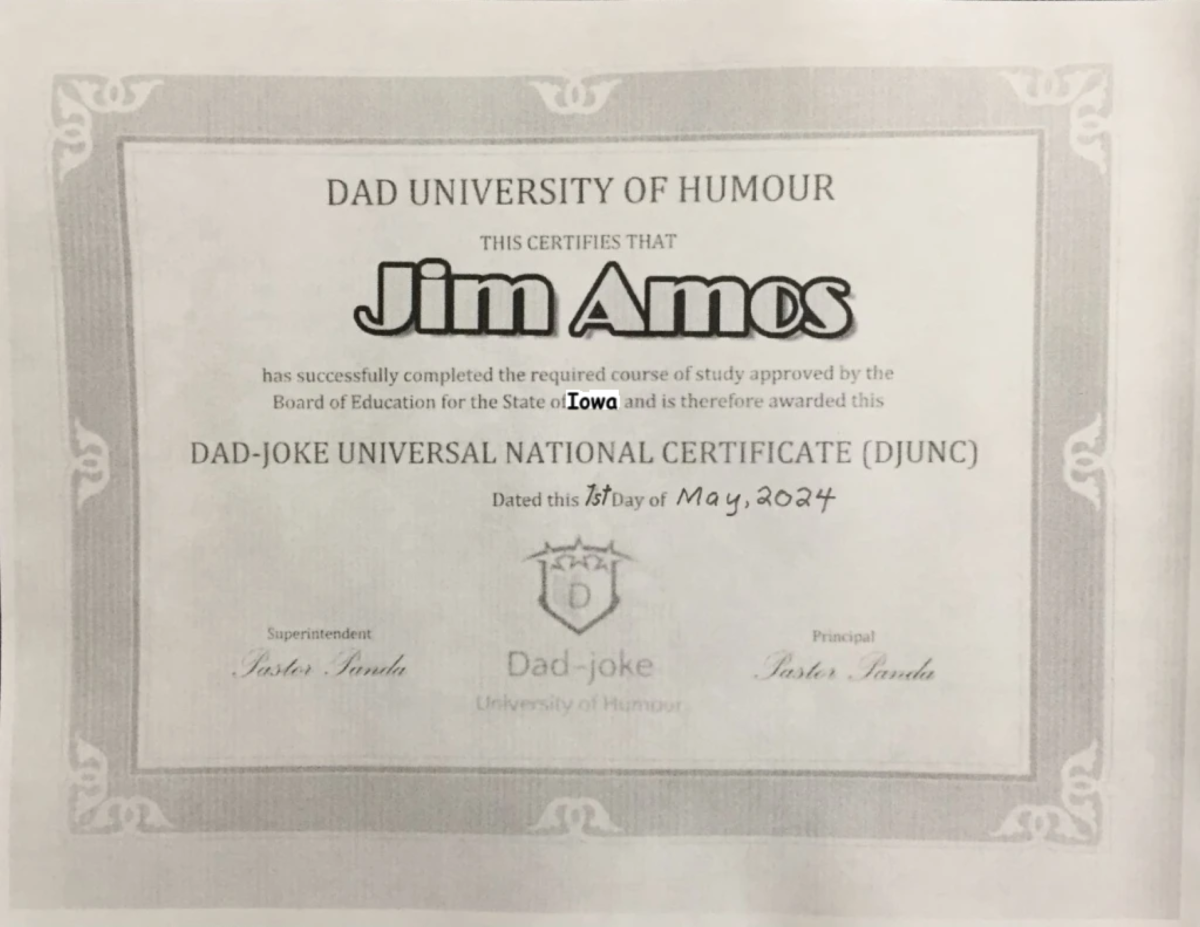
But the Rolling Stones don’t need free tote bags. They’ve earned their fossil status many times over. On the other hand, I have earned my certificate from the state legislature.
I found this very uplifting and thought-provoking article on retiring from psychiatry by Juan C. Corvalan.
He sounds like he’s successfully navigating his retirement. On the few occasions I’ve felt compelled to make a remark about my own retirement, I typically say something like “It’s a mixed blessing.”
My retirement is a process, unfolding as time passes. It was difficult in the beginning, which was only a little over 3 years ago. It’s not what I would call easy even now.
What gave me joy since I retired were getting messages from the learners I was privileged to teach. Some of them I’d not heard from in many years. Someone from my department said, “We miss you.” I answered that, in some ways, I never left.
Time itself feels different. The days go by so quickly that I want time to slow down.
I like Corvalan’s way of expressing himself. He’s a writer and likes to talk about words and their meaning. He talked about the definition of the Spanish word for retirement, which is jubilacion, which reminds me of the English word “jubilation.”
Retirement has been, at times (perhaps often), anything but cause for jubilation.
On the other hand, I can think of several things I will never miss about being a psychiatrist. I don’t write about them, as a rule. In fact, I tend to write about anything but psychiatry: cribbage, juggling, making wisecracks about extraterrestrials.
I really appreciate colleagues like George Dawson, MD (who writes the blog Real Psychiatry), H. Steven Moffic, MD (who writes the articles “Psychiatric Views on the Daily News”), Ronald Pies, MD, Editor in Chief Emeritus of Psychiatric Times, and Jenna, the psychiatry resident who writes the blog “The Good Enough Psychiatrist,” who is very far from retirement, unlike me and the other writers just mentioned.
And I appreciate Dr. Corvalan’s excellent essay on retirement from psychiatry.
Reference:
Corvalan JC. A Retired Psychiatrist on Retirement: Rejoicing Jubilatio. Mo Med. 2022 Sep-Oct;119(5):408-410. PMID: 36338006; PMCID: PMC9616447.
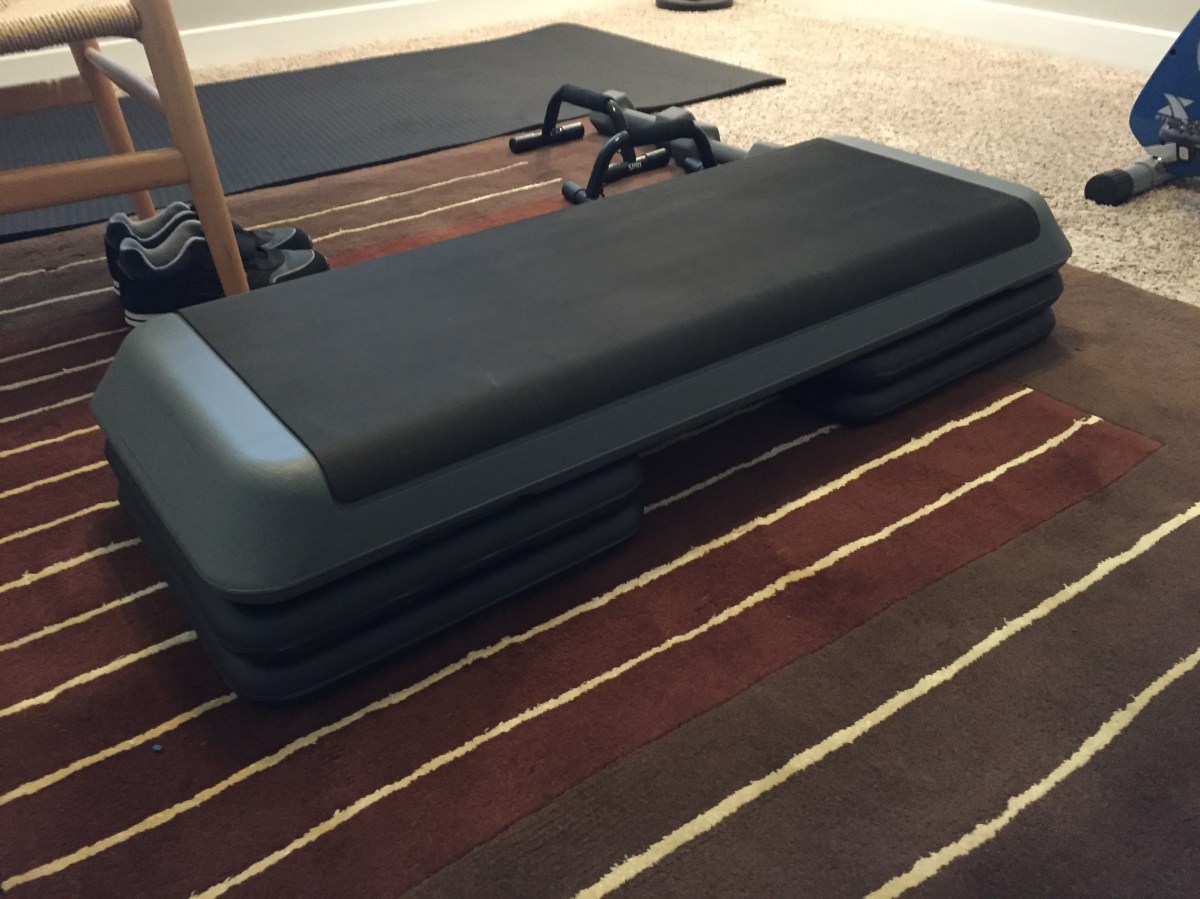
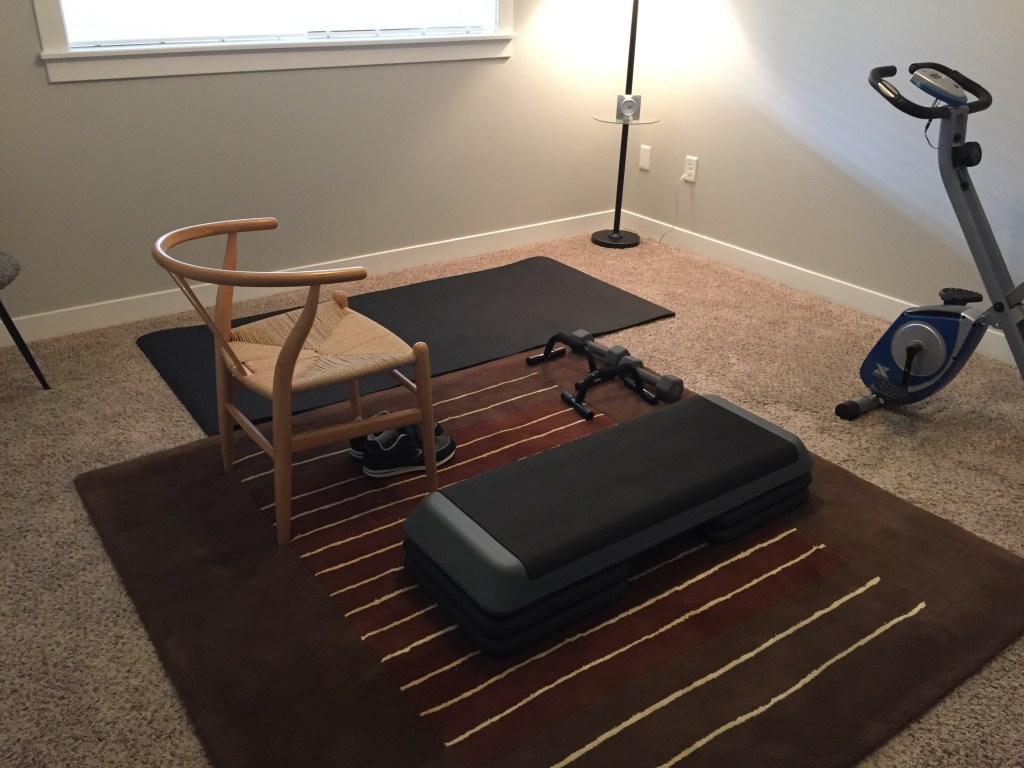
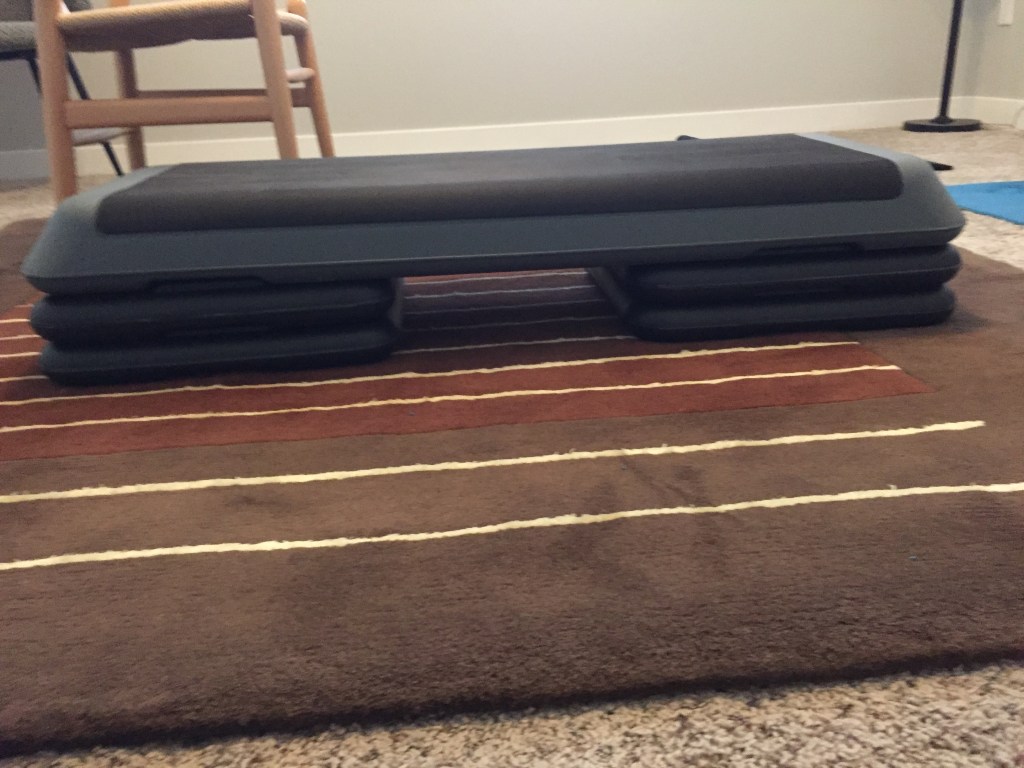
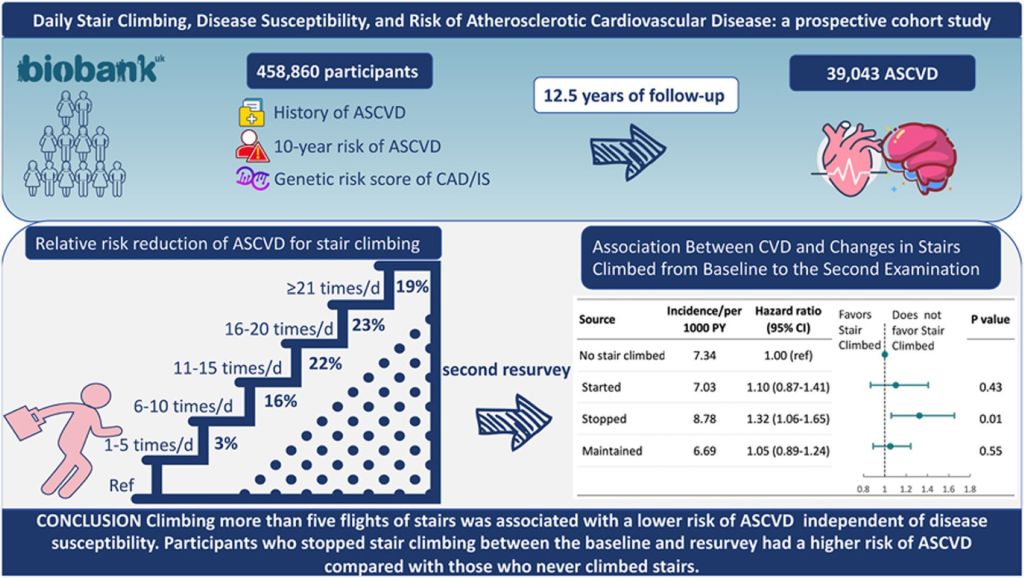
Yesterday we got the new aerobic step platform for cardiovascular health enhancement exercise. As I reported in October, climbing stairs can be very helpful in promoting cardiovascular health. This article summarizes the findings. At least 5 flights (around 50 steps of 10 stair steps) is said to be beneficial.
I climbed a lot of stairs in my career as a consulting psychiatrist in an 800-bed hospital. I don’t do anything close to that now, but I exercise pretty much daily. It limits my wardrobe.
My step counter app will track my stair step climbing on regular stairs in our house. However, it won’t count the steps I do on the step platform. It doesn’t really matter. I count everything else I do when I exercise, even on my anti-Peloton stationary bike, since the digital computer for monitoring my fitness level never worked. I also count the number of throws when I practice the 3-ball cascade juggling pattern (a hundred, often with 2 or 3 different sets of balls).
You can adjust the height on the platform by using risers, which can go up to 8 inches. That’s the usual height of the risers on regular stairs.
It’s not a Stairmaster by any means—but then it doesn’t cost $3,000 either.
I’m giving a shout-out to a couple of child psychiatrists, one I know only from a blog, The Good Enough Psychiatrist. The other is an assistant professor in the University of Iowa Child Psychiatry Dept. I’ve never met her.
Since Jenna gives her name in the About Me section of her blog, I’m going to call her that because it’s easier. Jenna writes many thought-provoking posts, but I really admire the one titled “Amae.”
Dr. Ashmita Banerjee, MD wrote an essay titled “The Power of Reflection and Self-Awareness.” It’s published on line in the Mental Health at Iowa section of The University of Iowa web site.
As a relatively recently retired consultation-liaison psychiatrist who is also a writer, I feel a strong connection to them. In addition to being very glad that extremely talented persons are filling the ranks of a specialty which suffers from a serious manpower shortage, I get a big kick out of reading what really smart people write.
Here’s where a geezer retired psychiatrist starts kidding around. Jenna, a fellow blogger, is used to my habit of deploying humor, admittedly often as a defense. Dr. Banerjee doesn’t know me.
What is it about these essays that reminds me of the X-Files episode “Hungry”? It’s a Monster of the Week episode from the monster’s perspective. This monster looks like a human but sucks brains out of people’s skulls. He’s conflicted about it and even sees a therapist. But in the end his dying words were, as Agent Mulder shoots him down, “I can’t be something I’m not.”
If you read Dr. Banerjee’s essay and followed one of the links, you would have caught the clue that I actually read it because I consciously substituted the word “What” for “Why” in the previous paragraph. I could have as easily asked why instead of what—but it’s less helpful in gaining self-awareness.
And I haven’t sucked anybody’s brains out of their skulls in, what, over two weeks now! Upon reflection, I’m very aware of being incorrigible. Food for thought.
Jenna’s description of the Japanese concept of the word “amae” and Dr. Banerjee’s examination of the Japanese word “kintsukuroi” fascinated me. What made both writers consider human emotions using a language which captures the nuances so deftly?
I was a first-generation college student. There was a time in my life that a path to medical school seemed impossible. At times I probably thought I was trying to be something I’m not.
This is just a suggestion for whoever’s on the rules committee for juggling world records. Recall that a couple of young guys grabbed world records for longest time juggling the 3-ball cascade while standing on leg.
The current world record is a little over 22 minutes. Wow!
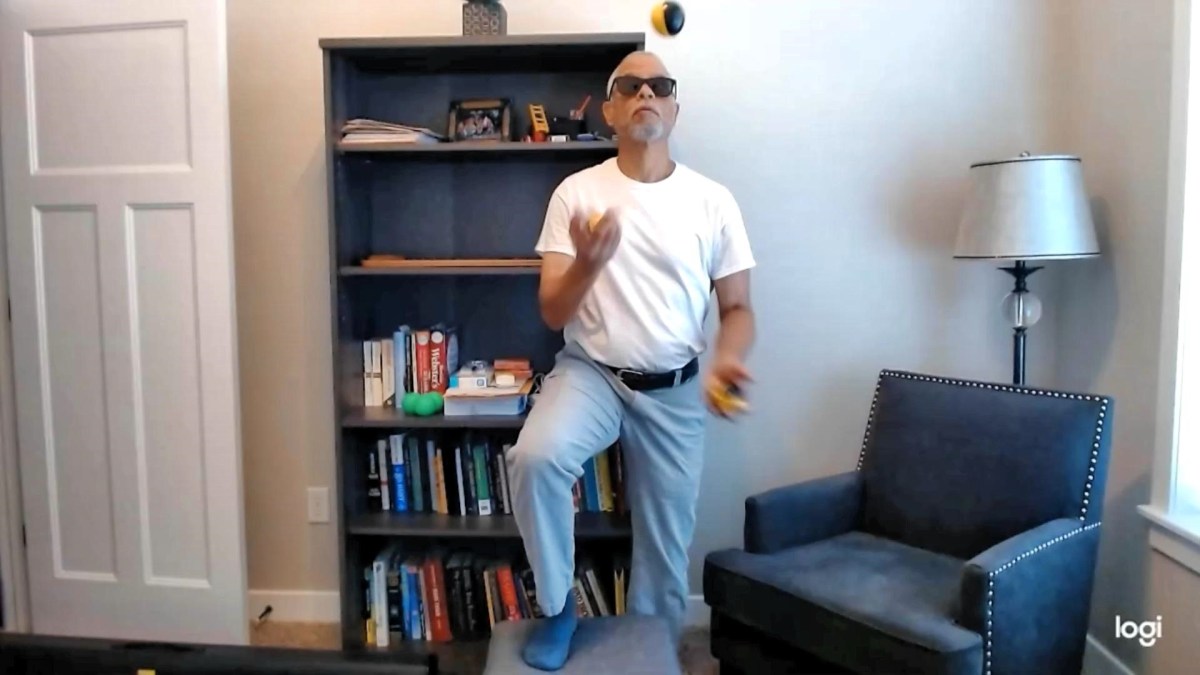
I think there needs to be a new category—for older persons like me. I can tell you I can’t get past a few throws while juggling the cascade on one leg.
I’ve made a short YouTube on the kinds of allowances the world juggling records judges might consider for geezers.
I might have a ghost of a chance to set a world record in my age group if the officials decide they like my idea.
I ran across this article (reference below) on the potential benefit of climbing stairs for cardiovascular health. The highlights and abstract are below:
“Highlights
This large cohort of UK adults demonstrated that climbing more than five flights of stairs daily was associated with over a 20% lower risk of ASCVD.
The associations were broadly concordant in populations with varying susceptibilities to ASCVD.
Participants who discontinued stair climbing between the baseline and resurvey exhibited a higher risk of ASCVD in comparison to those who never engaged in stair climbing.
Abstract
Background and aims
The associations between the intensity of stair climbing and atherosclerotic cardiovascular disease (ASCVD) and how these vary by underlying disease susceptibility are not fully understood. We aim to evaluate the intensity of stair climbing and risk of ASCVD types and whether these vary by the presence of ASCVD risk factors.
Methods
This prospective study used data on 458,860 adult participants from the UK Biobank. Information about stair climbing, sociodemographic, and lifestyle factors was collected at baseline and a resurvey 5 years after baseline. ASCVD was defined as coronary artery disease (CAD), ischemic stroke (IS), or acute complications. Associations between flights of stair climbing and ASCVD were examined as hazard ratios (HRs) from Cox proportional hazards models. The modification role of disease susceptibility on such associations was assessed by analyses stratified by levels of genetic risk score (GRS), 10-year risks of ASCVD, and self-reported family history of ASCVD.
Results
During a median of 12.5 years of follow-up, 39,043 ASCVD, 30,718 CAD, and 10,521 IS cases were recorded. Compared with the reference group (reported climbing stairs 0 times/day at baseline), the multivariable-adjusted HRs for ASCVD were 0.97 (95% CI, 0.93–1.01), 0.84 (0.82–0.87), 0.78 (0.75–0.81), 0.77 (0.73–0.80) and 0.81 (0.77–0.85) for stair climbing of 1–5, 6–10, 11–15, 16–20 and ≥21 times/day, respectively. Comparable results were obtained for CAD and IS. When stratified by different disease susceptibility based on the GRS for CAD/IS, 10-year risk, and family history of ASCVD, the protection association of stair climbing was attenuated by increasing levels of disease susceptibility. Furthermore, compared with people who reported no stair climbing (<5 times/d) at two examinations, those who climbed stairs at baseline and then stopped at resurvey experienced a 32% higher risk of ASCVD (HR 1.32, 95% CI:1.06–1.65).
Conclusions
Climbing more than five flights of stairs (approx 50 steps) daily was associated with a lower risk of ASCVD types independent of disease susceptibility. Participants who stopped stair climbing between the baseline and resurvey had a higher risk of ASCVD compared with those who never climbed stairs.”
This interests me because I climbed well over 20 flights of stairs pretty much every day when I was a consultation-liaison psychiatrist. Occasionally, I logged over 40 flights. The hospital had 8 floors and I was often repeatedly hiking up the stairs. I avoided using elevators because they slowed me down too much.
There was a threshold effect of stair climbing in the study, meaning the benefit was lost if you went over a certain number of “floors.” Going over 15 or 20 didn’t gain much for subjects. A flight was 10 stair steps.
I think the idea is that in those who live in homes with the right number of stair steps, you’ve got a no cost, low tech form of cardiovascular exercise. You might exert a little more stress on the carpet.
On the other hand, you could save wear and tear on the carpet (if you’re worried about it) by spending some money on stair stepping exercise equipment. You can buy a Stairmaster model for about $2.000-3,000. There are cheaper stair stepper models, which look a little flimsy and even unstable enough to raise the risk for falls, in my view.
But I would never go back to work just to climb the stairs again.
Reference:
Song Z, Wan L, Wang W, Li Y, Zhao Y, Zhuang Z, Dong X, Xiao W, Huang N, Xu M, Clarke R, Qi L, Huang T, Daily stair climbing, disease susceptibility, and risk of atherosclerotic cardiovascular disease: A prospective cohort study, Atherosclerosis (2023)
We saw the miracles of autumn the other day, out on the Terry Trueblood Recreation Area. It was quiet, only a light breeze set the flowers and grasses swaying.
There were almost no birds out. No ducks were out on Sand Lake.
On the other hand, I guess there were birds, sort of. We greeted other walkers, an older couple who turned out to be snowbirds. They’ll be heading to Florida soon for the winter. They had no worries about the weather down there. They’ll be in the middle of the state, presumably far away from storm surges. They stay in an RV park over the winter months. It’s not far from a place called The Villages, which is a famous planned retirement community, which got a reputation for being a haven for older but wilder swingers. They have a very large Homeowners Association (HOA), which is sort of a very large and expensive Disney World for older retirees. It’s often called a golf cart community because that’s how most residents get around the place. While there are no HOA fees per se, there is a community development district fee of around $120-220 a month. Dave Barry wrote a chapter about The Villages in his book “Best State Ever: A Florida Man Defends His Homeland.” I told the couple about Dave Barry’s take on The Villages. I don’t think they ever heard of him. They’re excited about returning to the RV park soon.
I was a little alarmed by a loud voice, calling out like a policeman, “Get on the ground!” I looked up ahead and didn’t see a policeman. But occasionally, we heard the barking order, “Get on the ground!” Eventually we saw a young man on a walk, apparently under someone’s supervision. This was the man who was yelling “Get on the ground!” He greeted us politely. As he passed by, every so often he blurted out, “Get on the ground!” I wondered if he might be someone with a form of Tourette’s Disorder, compelled to blurt out something every few minutes. The supervisor was walking side by side with a man who seemed uncomfortable, holding his hands up to his eyes which appeared sunken in the sockets. He made no sound at all. I wondered if, peaceful as we thought the day was, whether he found it difficult to bear what might have been a sensory storm for him. The supervisor was polite to us and paid close attention to the other two men.
Mostly we watched the breeze blowing the grasses and the flowers–and were grateful.
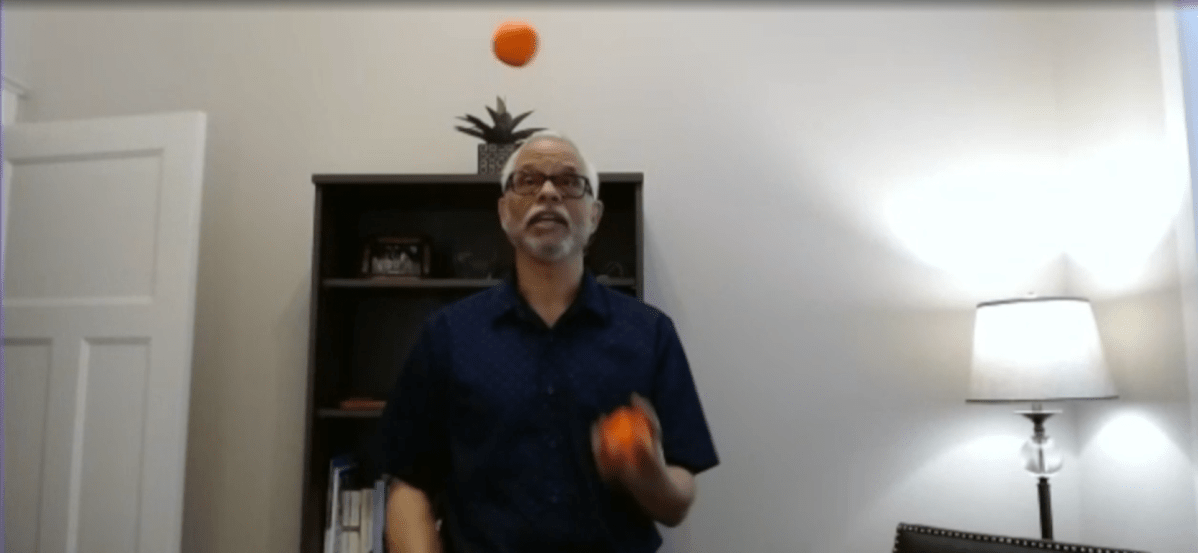
My juggling video is up for viewing now on the Psychiatric Times website! The title is “A Journey of Juggling.” It’s in the section called More Than Medicine.
You can also find it on the Medical World News website with a slightlly different title, “After Hours: Juggling 101.” It’s in the section called After Hours.
They’re both essentially the same video with slightly different editing. They’re both around 14 or 15 minutes long. The Medical World News site requires you to register, which would provide access to a lot more features.
These are not YouTubes so they work a little differently. You’ll have to manually unmute the audio for “A Journey of Juggling.” The “After Hours: Juggling 101” starts playing right away with audio. There’s an introduction that lasts about a minute.
Psychiatric Times staff did the editing and publishing via Psychiatric Times and Medical World News websites. I had a lot of fun making this video.
I’m still juggling and have improved a lot on the under the leg throw trick. I can do the behind the back throw more consistently but still drop balls. I practice doing tricks from both my dominant and non-dominant sides. I can still do only 3 throws most of time with the shower pattern, but I’m still working on it.
I wear safety goggles and it’s really not just one of my gags for YouTube. I had surgery for acute on chronic retinal tear in my right eye last year and I don’t want to go through that again. I didn’t get the retinal tear from juggling. Just getting older puts you at risk for it. On the other hand, I drop enough balls on my head that it makes me leery of taking any chances.
Sena is improving on learning the cascade pattern. She can do up to 20 throws-except while I’m watching!












 Go Retire Psychiatrist