Mall Walker

Our hotel is about a 20 minute walk from the shopping mall. Both ways it’s about a 2.5 mile walk. I’ve been over there a few times and I think I’m becoming a mall walker.

The other day at the mall, an older lady approached me and asked me if I’d help open her water bottle, which I was glad to do. It was too tight for her to twist open. She told me a couple of times how she’d traveled to Iceland recently.

On one of my visits to the mall, I sat down in front of a clothing store. Most mannikins have full heads, but at this one, they had only half a head. The top half was gone. I don’t know what it means for a clothing store to have half-head mannikins.

Maybe they’re trying to say, “Hey, if you have half a brain, you’ll shop at our store.”

When Do We Get Out of the Woods?

We were out walking the Terry Trueblood Trail the other day. It’s always good to get out of the hotel where we’re staying until our house is built. I get this cooped up feeling and it feels great to escape.

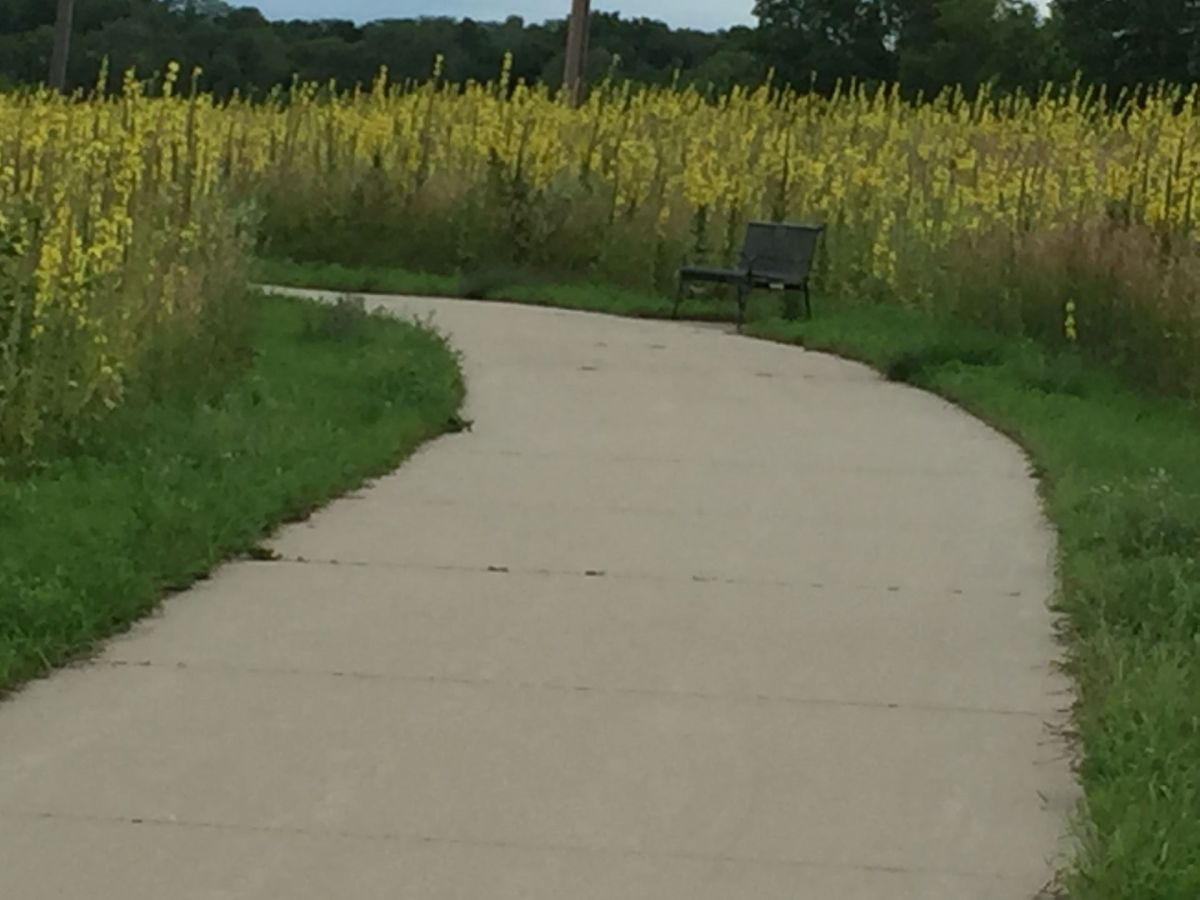
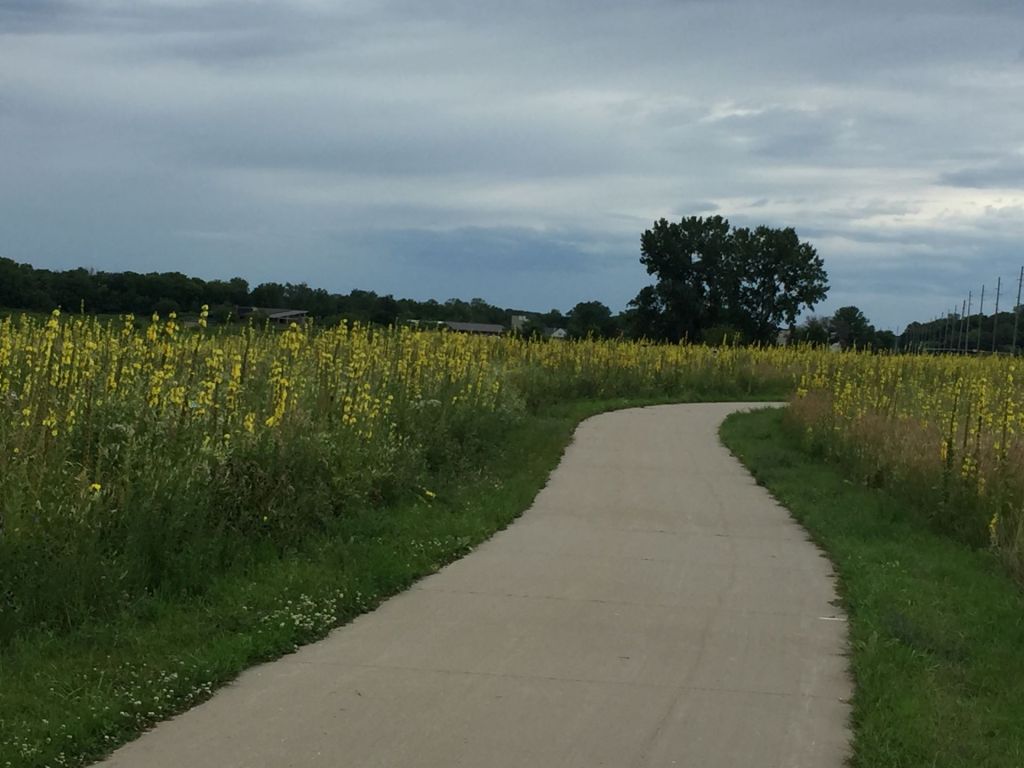
While we were on the trail, we saw this huge field of giant, golden prairie plants that looked familiar. It lined both sides of the walking trail. It was giant mullein. We saw it for the first time a couple of years ago while walking the trail.

Anyway, when you got perspective on it, it gave a sense of coming out of the dark, coming out of the woods.

It reminded me of that scene in Wizard of Oz when Dorothy and the guys emerge from the dark woods into the light. There’s this great little song in the scene that I finally discovered is called “Optimistic Voices.” I found this blog post about it posted back in 2015 by a writer named Marti Wukelic. The blog is called Is There Life After Retirement?

It captured how I felt that day, surrounded by giant mullein. I know that sounds ironic because we were in a sense in the woods of a field of giant prairie plants.

But giant mullein is a sunny color. On both sides of the trail, it rose high above our heads. It was like a giant, golden hallway to heaven and we were stepping into the sun.

Remember The Calling

I recommend Dr. George Dawson’s recent posts on seeing the practice of medicine as a calling and his passing a big milestone with 2 million reads on his blog.

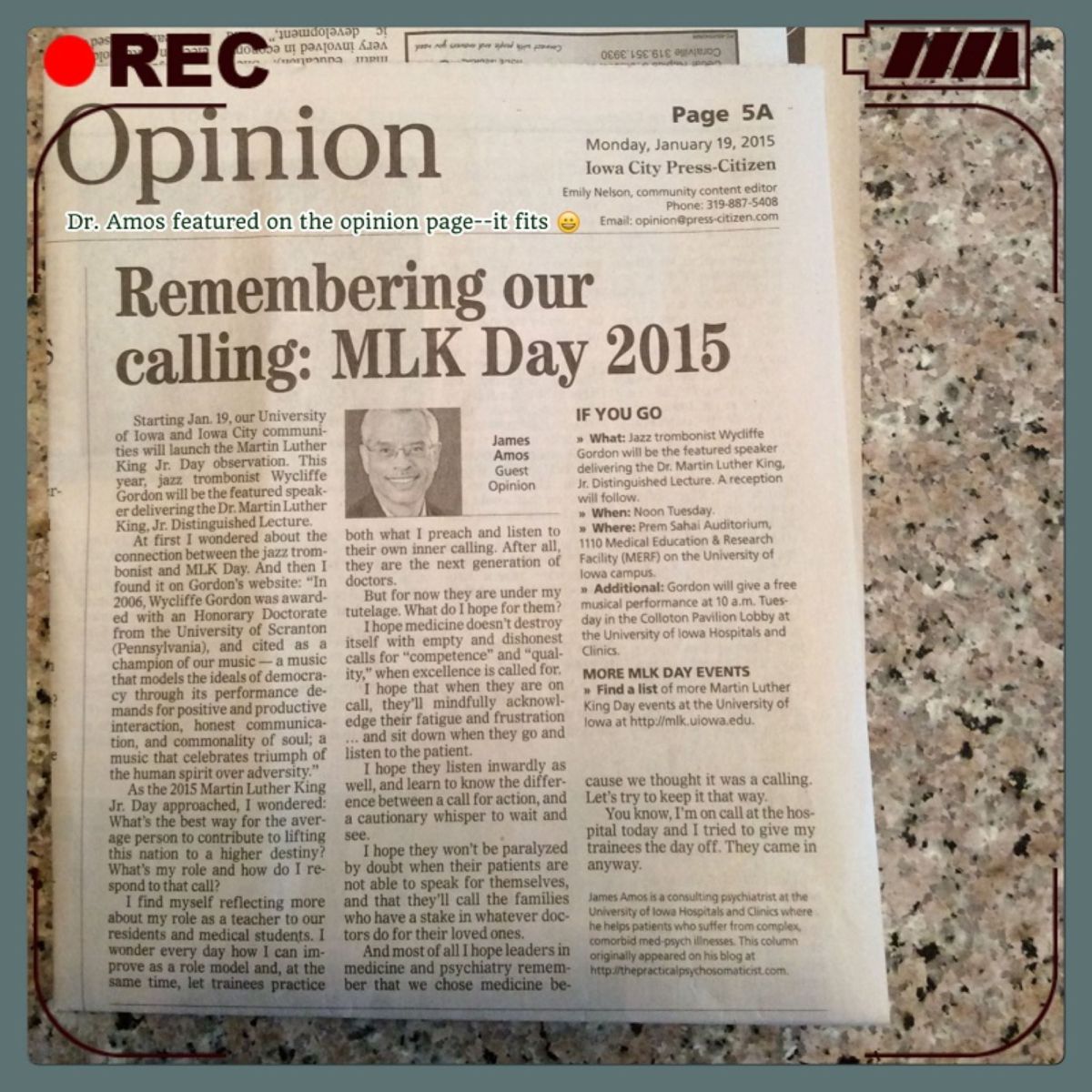
I wrote a post entitled “Remembering Our Calling: MLK Day 2015.” It was republished in a local newspaper, the Iowa City Press-Citizen on January 19, 2015. And I reposted it in 2019 on this blog.

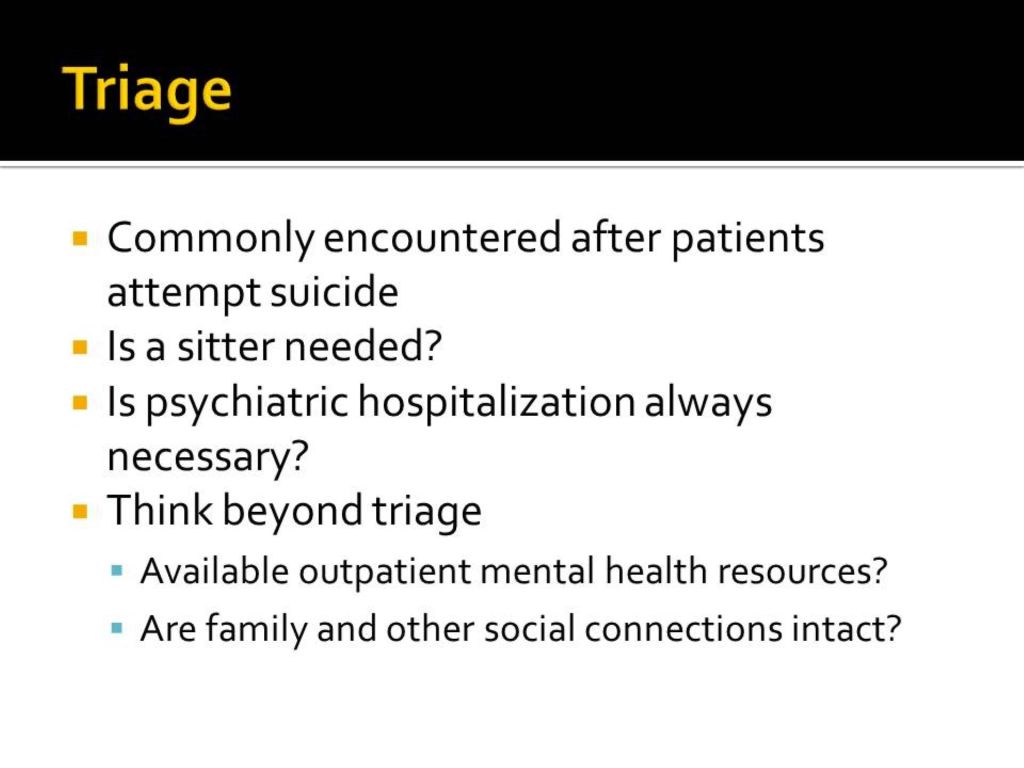
The trainees I taught also taught each other about psychiatry and medicine when they rotated on the consultation-liaison service at the hospital. We put them into the format of short presentations. I called mine the Dirty Dozen. The trainees and I also presented the Clinical Problems in Clinical Psychiatry (CPCP).

There were many of those meetings, which were necessarily short and to the point because the service was busy. We got called from all over the hospital. We answered those calls and learned something new every time.

I posted a lot of the trainees’ presentations in my previous blog, The Practical C-L Psychiatrist, which was replaced by this present blog. I haven’t posted the presentations partly because I wanted to give the younger teachers their due by naming them as they did on their title slides. But I would want to ask their permission first. They are long gone and far flung. Many are leaders now and have been for many years. I still have their slides. I’m very proud of their work. When they were called, they always showed up.

So, you’ll just have to put up with my work and my cornball jokes.  

Jim Updates His Workout and Adds a Step Counter!

Since we added the step platform, I’ve been wondering how to count steps when I use it because for some reason my smartphone step counter won’t count steps when I try to use it on the platform.

Sena got a handy step counter and it works! It works if you have it in your pocket or wear it on neck with a lanyard.

I usually practice juggling patterns as a warm up to exercising. I’m still working on the shower pattern. Progress is slow.

My exercise routine takes a half hour. Following that I sit for mindfulness meditation for 30 minutes. We are still using our anti-Peloton exercise bike. I do one leg stands for a minute on each leg. I still do floor yoga, body weight squats, planks, and dumbbells. I still count my own steps on the platform: 50 steps alternating right and left leg four times (200 steps). The counter number varies between 170-200 or so.

As a review, a recently published study found that climbing 5 flights of stairs (approximately 50 steps) was associated with a lower risk of ASCVD types independent of disease susceptibility (Song et al, see reference below). There was a threshold effect of stair climbing in the study, meaning the benefit was lost if you went over a certain number of “floors.” Going over 15 or 20 didn’t gain much for subjects. A flight was 10 stair steps.

Step up!

Reference:

Song Z, Wan L, Wang W, Li Y, Zhao Y, Zhuang Z, Dong X, Xiao W, Huang N, Xu M, Clarke R, Qi L, Huang T, Daily stair climbing, disease susceptibility, and risk of atherosclerotic cardiovascular disease: A prospective cohort study, Atherosclerosis (2023)

The Iowa State University African and African American Studies Research Guide

In keeping with Iowa History Month 2024, you can have a look at the Iowa State University website “African and African American Studies Research Guide.”

Iowa State University happens to be my alma mater, or in a way, one of them. I took my Bachelor’s degree there and later graduated from The University of Iowa College of Medicine.

There is a wealth of information worth browsing on the ISU website devoted to the history of black people in Iowa. In fact, I found out a few of those connections were to Huston-Tillotson University (HT-U, an HBCU) in Austin, Texas, where I spent several semesters in the 1970s before later transferring to ISU.

The connections between HT-U and Iowa go way back into the history of that school. It started as Tillotson College in 1875, which is where some of the ISU black students also later worked as faculty. The list includes notable scholars:

Ada M. Deblanc-Yerwood: After graduation from ISU, she became head of Home Economics at Tillotson College. She was also co-founder of the George Washington Carver Museum in Austin, Texas. She also had an interesting perspective on retirement. She didn’t, and pursued other positions. Her answer to why she didn’t retire: “Old is a state of mind. When you do nothing, you become nothing. The need to be productive—give life to something—doesn’t automatically stop at age 65 or 70.”

Dr. Samuel P. Massie, Jr.: Dr. Massie went to ISU in 1941 to pursue a Ph.D. in Chemistry. He had to hitchhike to campus because there was no housing for Black students within 3 miles. Dr. Henry Gilman at ISU assigned him to work full time as a research assistant on a special assignment connected to the Manhattan Project (the top-secret effort to build an atomic bomb). President Lyndon B. Johnson appointed him to a Chemistry professorship at the U.S. Naval Academy. He distinguished himself as a scientist in many HBCUs (Fisk, Howard University, North Carolina College, and others) and elsewhere despite the racism that tried to hinder him. In 1981, ISU gave him the highest award—the Distinguished Achievement Citation.

Dr. Frederick Douglass Patterson: He was a brilliant student and he attended Samuel Huston College (see history of Huston-Tillotson College at link above). He also attended ISU, graduating with a DVM in 1923. In his book, Chronicles of Faith, he wrote: “In the veterinary program, I did not feel odd being a part of the group of students working in the veterinary clinic although I was the only black person there. The absence of animosity encouraged me to see veterinary medicine as a field in which I could practice without being hampered by the racial stereotypes and obstacles that would confront me as a medical doctor, for example. I found the teachers of Iowa State helpful whenever I approached them. Educationally, it was a fine experience.” He received the Presidential Medal of Freedom from President Ronald Reagan in 1987. He was President of Tuskegee Institute and transformed it into a university. He also founded the United Negro College Fund.

The United Negro College Fund was part of the reason I was able to attend Huston-Tillotson University. And it’s connected to the history of Iowa.

CDC ACIP Meeting on the RSV Vaccine and Some Dad Jokes

We watched the section of the CDC ACIP meeting about RSV vaccines on February 29, 2024. There was a lot of discussion on the safety of the vaccine. It looks like it will still have a requirement that you have a shared clinical decision-making meeting with your physician. I think that still implies you’d need a prescription. However, there are only a handful of states which would require a prescription from your doctor. Iowa is one of them.

That made the comment by one of the committee participants thought provoking. I believe she got the RSV vaccine from a pharmacist, who asked no questions. There was no shared clinical decision-making discussion with that pharmacist.

But there was a discussion during the meeting with a pharmacist who was in the room. She made it clear that pharmacists had plenty of training (“20 hours” along with additional learning) and could handle the shared clinical decision-making piece with patients.

Sena and I have had all of our vaccines including the Covid-19 shots administered by pharmacy techs. I hardly know what the pharmacists look like because they are a blur, managing the drive-up window and all other customers. It’s clear that a large proportion of vaccines are available at most pharmacies and the techs give the shots. They are pleasant and happy to apply the Band-Aid.

You can’t even telephone the pharmacy and talk to a live person. Sometimes you’ll get a recording which replies to most of your questions with “Sorry, I didn’t get that. Did you say you want a vaccine or a cheeseburger with fries?” Scheduling vaccine appointments are generally done on line. Scheduling a visit with the pharmacist is probably not easier than scheduling one with your doctor, who might confuse you with “the colonoscopy” in room 5.

I’ve looked at the health care professional section on the CDC website pertaining to the age and medical conditions necessary to qualify for getting the RSV vaccine. I’m pretty sure I’m in the right age category, although I stopped keeping track after the evolution of asparagus. I don’t have any chronic medical conditions, unless you count dad jokes. I exercise, juggle, take only a multivitamin a day, meditate, and regularly leap tall buildings in a single bound. I’m pretty sure I don’t need the RSV vaccine, but what do I know? I’m a retired psychiatrist.

It looks like the risk of getting Guillain-Barre Syndrome (pronounced “GBS”) is not zero and may or may not be associated with the RSV vaccine. It’s pretty clear that 2 of the 3 major manufacturers of the vaccine who attended the meeting were pretty sensitive to any hints their product might have anything to do with GBS and might challenge you to a no holds barred thumb wrestling match if you say otherwise.

We think there’s a long way to go before everybody’s clear on who gets the RSV vaccine and when, and also where. But you can’t get it at the pharmacy drive up window.

Old Doctors vs Young Doctors

I ran across a recently published web article that originated from the Wall Street Journal (WSJ), to which I don’t have access because I’m not a subscriber. The title is “Do Younger or Older Doctors Get Better Results?” and it’s in the form of an essay by Pete Ryan.

It’s been picked up by over 130 news outlets and is actually based on an open access study published in the British Medical Journal (BMJ) in 2017, (BMJ 2017;357:j1797): Tsugawa Y, Newhouse J P, Zaslavsky A M, Blumenthal D M, Jena A B. Physician age and outcomes in elderly patients in hospital in the US: observational study BMJ 2017; 357:j1797 doi:10.1136/bmj. j1797.

I had a quick look at the rapid response comments. A couple resonated with me. One was from a retired person:

“I did not see specific patient age statistics vs physician age groupings. Wouldn’t older patients, whose risk of dying soon was higher, want to see their own older doctors? Lots of uncontrolled variables in this study… I also agree with one of the other comments that a patient who knew the end of their life was near would seek care from an older physician that would tend to be more empathetic with a patient of their own age.”

Another was from an emergency room physician, Dr. Cloyd B. Gatrell, who entered the comment on June 8, 2017. Part of it echoed my sentiments exactly:

“The authors’ own statements call their conclusion into question: “Our findings might just as likely reflect cohort effects rather than declining clinical performance associated with greater age….”

I suspect most of the web articles spawned by the study didn’t really talk about the study itself. They probably were mainly about your attitude if the doctor who entered the exam room had gray hair or not.

The study involved internal medicine hospitalists and measured mortality rates comparing physicians were in different age ranges from less than 40 years to over 60.

It got me wondering if you could do a similar study of younger and older psychiatrists. Maybe something like it has been done. I’m not sure what an appropriate outcome measure might be. If you focus on bad outcomes, completed suicides are probably too rare and can involve psychiatrists of any age. The quote that comes to mind:

“There are two kinds of psychiatrists—those who have had a patient die by suicide, and those who will.”

Robert Simon, MD, forensic psychiatrist

I doubt they would fall into any particular age category more often than any other.

Anyway, on the subject of physicians who are getting older and required to retire at a specific age, recent news revealed that Scripps Clinical Medical Group agreed to pay almost $7 million to physicians to settle an age and disability discrimination charge filed with the U.S. Equal Opportunity Commission over a policy requiring them to retire at age 75.

And this reminds me of an article in Hektoen International A Journal of Medical Humanities: Jean Astruc, the “compleat physician.” He was a doctor in the Age of Enlightenment and was a geriatrician. An excerpt from the article:

Jean Astruc had a special interest in geriatrics and in 1762 gave a series of lectures that were taken down by one of his students. He described how in old age the skin becomes thick and hard, the hair and teeth fall out, there becomes need for glasses, respiration becomes labored, urine escapes, there is insomnia, and people forget what they have done during the day but remember every detail of what they have done in the distant past. He recommended diet, some wine to help the circulation, exercise, long sleep, and “a life from bed to table and back to bed.”

I think there is a contradiction in Astruc’s recommendations.

I retired voluntarily a little over 3 years ago. It just so happens that one of the reasons was the Maintenance of Certification (MOC) program, which the BMJ study authors mentioned in the first paragraph of the introduction:

“Interest in how quality of care evolves over a physician’s career has revived in recent years, with debates over how best to structure programs for continuing medical education, including recent controversy in the US regarding maintenance of certification programs.”

That reminds me that I got an email a few days ago from Jeffrey M. Lyness, MD, the new President and CEO of the American Board of Psychiatry and Neurology (ABPN) in January of 2023, replacing Larry Faulkner, MD. It was a letter explaining how I could recertify. I decided not to renew several years ago and I’m not thinking of coming out of retirement. I have always been an opponent of the MOC.

Maybe he sent me the letter because he found the Clinical Chart Review Module on delirium that a resident and I made in 2018. As of January 24, 2024 you can still find the module on the web site just by typing in the word “delirium” in the search field. It could be the only document about delirium on the ABPN web site, although that’s difficult to believe.

On the other hand, it’s one of two modules that are labeled as approved although valid through December 31, 2023. Maybe it’s headed for retirement.

CDC Reports Respiratory Virus Activity Elevated or Increasing

The CDC on January 12, 2024 reported that respiratory virus activity is elevated or increasing across the country. The summary:

“Summary

Seasonal influenza and COVID-19 activity remain elevated in most parts of the country; however, the rapid increases seen over the past several weeks appear to be slowing. The U.S. continues to experience elevated RSV activity, particularly among young children. Hospital bed occupancy for all patients, including within intensive care units, remains stable nationally. However, some jurisdictions are reporting strain on hospitals locally, driven, in part, by recent increases in respiratory illness.

Influenza

Multiple indicators of influenza activity including test positivity, emergency department visits, and hospitalizations are elevated. Additional information about the recent increases in influenza activity can be found at: Weekly U.S. Influenza Surveillance Report | CDC.

COVID-19

Despite test positivity (percentage of tests conducted that were positive), emergency department visits, and hospitalizations remaining elevated nationally, the rates have stabilized, or in some instances decreased, after multiple weeks of continual increase. Emergency department visits for COVID-19 are highest among infants and older adults but are also elevated for young children. Despite the high levels of infection measured using wastewater viral activity and test positivity data, at this time, COVID-19 infections are causing severe disease less frequently than earlier in the pandemic.

RSV

RSV activity remains elevated nationally in all regions, though decreases have been observed in some areas. Hospitalization rates remain elevated in young children and continue to increase among older adults.

Vaccination

National vaccination coverage for COVID-19, influenza, and RSV vaccines remains low for children and adults. Vaccines are available and can help protect people from the most serious health effects of fall and winter viruses.”

Rearranging My Books

The other day, I finally rearranged my bookshelf. I’ve put it off for a long time. While I was doing it, I remembered where I spend the most time in my thoughts. I don’t have a very broad library, which probably illustrates where my mind wanders. It has changed very little over the years. Retirement affected it some, but not a great deal. After I rearranged the books, it was not just better organized. It made me think about the past, the present, and the future.

I have a lot of books by Malcolm Gladwell for some reason. The Tipping Point was published around the time when all of my immediate family members died for one reason for another. They died within a few years of each other. It was a difficult time. I remember hoping I would just get through it. I did.

I’m still a fan of Stephen Covey. The 7 Habits Manual for the Signature Program marks a time when I was contemplating leaving my position at The University for a position in private practice. It didn’t work out, and it’s just as well.

Of course, there are many books about consultation psychiatry, including the one I wrote with my former Dept. of Psychiatry Chair, Robert Robinson. Every once in a while, I search the web to find out what former colleagues and trainees are doing now. I can’t find a few, which makes me wonder. A couple have died. I’m a little less eager to look around each time I find out about those. Finding obituaries is a sad thing—and it makes me a little nervous about my own mortality. One or two have apparently simply dropped off the face of the earth.

I read some books for fun. I’m a fan of humorists, which is no surprise. The most recent is The Little Prince. That book and others like it inspire me.

I like books that make me laugh and give me hope. It’s difficult to sustain hope in humanity, if you read much of the news, which I tend to avoid.

I feel better when we go out for walks. Recently we did that about a week ago when there were a couple of warm days. On one day, we saw a couple of bald eagles and northern shovelers (the latter of which we’ve never seen before), at Terry Trueblood Recreation Area.

On another warm day we saw a couple Harvest Preserve staff members preparing to hang a big Christmas wreath on the side of a barn on the property that faces Scott Boulevard. They’d got some evergreen branches from an “overgrown Christmas tree farm.” It had a big red bow. They were going to decorate it further and hang it. We hoped it would be finished by the time we returned that day, but it wasn’t done.

When we returned a day later, it was very cold but the wreath was on the barn wall and it was festooned with gorgeous decorative balls. It was worth waiting for.

Video music credit:

Canon and Variation by Twin Musicom is licensed under a Creative Commons Attribution 4.0 license. https://creativecommons.org/licenses/by/4.0/

Artist: http://www.twinmusicom.org/

Juggling Update!

Well, we’re using our new safety glasses retainers and they work out fine. We’re a little off the beam on the 2-person 6 ball pass juggle for some reason. Some days are diamonds, some days are stones, I guess.

Our mistakes are funny. We just make too many.

I’m still working on the shower juggle pattern. I might be making slow progress. It feels easier to do if I use the large plastic balls or the new smaller balls with a tough leather shell. They’re decorated with stars to give you confidence.

I think if they’re round and hold their shape better if they’re made of harder material, they might fly better.

I think it would also help if I threw them more accurately.