Hearing an Old Song

I have to admit that I’ve been mis-hearing some of the lyrics of one of my favorite songs, “Lean on Me” for the past fifty-odd years since Bill Withers wrote it. It stayed on the top of the charts for more than 3 weeks back in 1972. That was a special time in my life; and not an easy one.

Back then, you couldn’t just look up song lyrics or anything else for that matter on the world wide web. It didn’t exist yet. I’ve always been prone to mondegreens and I finally found out that I was hearing something different in the verse:

“Please swallow your pride

if I have things (faith?) you need to borrow

For no one can fill

those of your needs

That you won’t let show”

Just to let you know, I found lyrics in one YouTube that substituted the word “faith” for “things”. Think about that one. I don’t know how to settle it, so if anybody knows which word is right, please comment. Anyway, it’s a little embarrassing and revelatory that I heard “…if I have pain…”  instead of “…if I have things (or faith)…” And I never really heard “…That you won’t let show.”

Yet I lived it.

Years later, after I’d finished college, medical school, residency in psychiatry, and had taught residents and medical students at the University of Iowa for a number of years, one of my colleagues, Scott, a brilliant psychologist and writer, stopped by my office one day. This was years ago.

His name is Scott and he suggested that it would be nice to get together sometime soon to catch up. I deferred and I remembered he replied while looking off down the hallway, “I’m 70.”  I wonder if he meant he didn’t know how much more time he had left.

Scott and I had taken similar paths in the middle of our careers at Iowa. I wanted to try private practice and left for Madison, Wisconsin. Scott got the same idea and left for a position in Hershey, Pennsylvania. We both regretted it and soon after returned to Iowa. I swallowed my pride and came back because I loved teaching. I think he returned for the same reason. We were both grateful that the UIHC Psychiatry Dept. Chair, Bob Robinson, welcomed both us of back.

I touched base with Scott a little while ago. We’re both retired. I was trying to find out how to contact Bob about messages I was getting from the publisher of our consult psychiatry handbook. Neither Scott or I could find out what was going on with Bob, who retired several years ago and moved back East. It turned out he had died. Sometimes we all have sorrow.

Scott is my friend, and I leaned on him a long time ago. I’m unsure if I let it show. I’m 70 and I’m grateful to him.

On that note, I’m finding out that I can’t walk all the way to the mall and back anymore. On the other hand, I can walk about half that distance. It’s about a mile and a half out to the Clear Creek Trail and back. There’s a lot of uphill and downhill stretches along the way. I can manage that.

And Sena bought me a couple of pairs of new shoes that I’m breaking in that will probably be easier on my feet and my calves. They’re Skecher slip-ons, not to be confused with the no hands slip-ins. I’m used to slip-ons. I tried one pair out today, in fact. Before I left, I took a few pictures of Sena’s new garden. As usual, she’s planting new flowers. The dogwood tree looks great. She’s even excited about the wild phlox. I can’t keep track of everything else out there. She makes the beauty out there.

And I lean on her for that.

Coping with Old Farthood By Teaching Patience to Others

I get notices from the Iowa legislators about how great it is that I’m getting to be an old fart. An Iowa senator even reminded me: “Check your driver’s license to see if it’s time to renew!”

That’s one of the few things I’m up to “speed” on—see what I did there?

Other things remind me that I’m getting older. I walk slower. I can make several miles by walking out to the mall, walking up and down inside, and walking back. I made 5 miles yesterday.

Here’s the thing; I don’t powerwalk and, for the first time, I made a couple of stops along the way to rest. I’ve never done that before. Part of the reason is that, early this spring I had a bout of painful shin splints and calf cramps which took me a week to recover from. I wrote a very long blog post about that.

This time, before I set out for home, I was sitting inside and watching people outside. The bench I sat on faces the parking lot and a street runs along just outside of it. There’s a crosswalk visible from my bench.

As I gazed out at the parking lot, I saw one blue SUV with the two doors on the driver’s side wide open, making it impossible for anyone to park in the lane next to it. One elderly gentleman wearing a cap sat shotgun and appeared to be napping. A few minutes later, a woman with an unsteady gait made her way out to the car. She moved slowly and a few times I though she might topple over. She didn’t look very old, and she might have been younger than me, but not by much. She got in the back seat behind the napping man. The two side doors remained open.

A few minutes later, an old man with a wheeled walker came out of the mall and started to cross the street. He would push the walker forward a couple of inches at a time and then sort of drag his legs a couple of steps forward. He pushed the walker forward a couple of inches, and shuffled a couple of steps behind it; that’s the way he went. As I watched him, I wondered if I was going to have to hurry out there to help because I thought he might fall any second.

I actually took my eyes off him for a few minutes and when I looked back, I couldn’t see him in the crosswalk anymore. I figured he made it across, but then I noticed that the SUV was still sitting there and both driver’s side doors were still open. I peered around the crosswalk—and he was still scraping along, inching forward a few inches at a time. Drivers would have to either wait or back up and find another route.

He just kept creeping along. I think it took him all of 15 minutes just to get to the SUV, a distance that could have been measured linearly as not much more than 20 yards or so.

I remember wondering where and who the driver was. There were two seats left and I thought “No way is he the driver!” The driver must have still been in the mall somewhere.

As I sat there, the old man inched over to the SUV and finally made it. I almost could have taken a nap during the whole journey, but I’m not quite that old yet.

Then he opened the driver’s side back side door—and shoved his walker in the back seat! There was now only the driver’s seat open, and still no driver in sight.

And finally—the old guy got in the driver’s seat! He pulled up his trousers, started the SUV, backed carefully out of the parking lane and cruised smoothly out of the parking lot and away to who knows where, maybe a dance hall.

After I recovered from incredulity, I walked back home. I sat down to rest once before trying to across the street where, a month ago I had a sudden attack of calf cramps which nearly stopped me in the middle of the crossing. At that time, I had to hobble over to a bench and massage the cramps before heading the rest of the way home.

This time, as cars waited for me to get across, I could feel the cramps starting again but I slowed down instead of trying to trot across. I thought, “They’ll just have to wait.” No cramps this time.

Maybe that’s one of the reasons the state legislators send out cards and certificates to seniors. We help teach patience to others. You’re welcome.

Certification of Old Fart Status by Iowa House of Representatives

Well, thank you very much, State Representative Adam Zabner, for recognizing me as an old fart as you prefer to call it, which is fine with me.

I received a similar honor several years ago, from State Representative Dave Jacoby, who was much more prolix in his remarks on my certificate.

A long time ago, I kept a blog when I was a consulting psychiatrist in the University of Iowa Health Care Dept of Psychiatry. I used to mention occasionally that someday those who recognized my greatness would raise a statue of playdoh to me in the Quad.

Funny thing is I don’t know if the Quad even exists anymore. I supposed the statue could be raised (and perhaps later razed when people finally catch on) somewhere else, in a place much more prominent given my eminence, possibly at the state house in Des Moines or outside Pagliai’s Pizza here in Iowa City at least.

I’ll admit frankly, age does bring with it some of the usual markers: deepening wrinkles, receding hairline, fading memory and the like. There are some advantages, such as the tendency to joke and tell little stories of the distant past (chariot races and so on). This helps to bore younger persons enough for them to move out of line at the ice cream shop so that I can move up.

And I still exercise vigorously, lifting the salt and pepper shakers, crossing and uncrossing my legs on the ottoman, walking back and forth between the chair and the fridge, and power napping.

Seriously, I’m still juggling, which I took up about two and a half years ago. I exercise but not too much. A while ago I had an issue with my quads getting so big they were flopping over my knees so I had to cut back a little.

I don’t know that I’ll get many more certificates of senility from the Iowa House of Representatives. That makes it even more important for somebody to get to work with all possible speed on my playdoh statue.

The Zamboni Effect

I was walking around the mall today doing ordinary old guy things: watching the Zamboni machine resurface the ice rink, which I’ve never seen before, by the way. The surface was pretty dull before the Zamboni team started. There were two kids in the seat, one young lady driving and the other young man pointing out spots she missed. They went around and around getting the thin layer of water on the whole rink while eager skaters waited to get out there. They rejuvenated the rink, got it shining like crystal and skaters spun, twirled, and had a great time. It was the Zamboni Effect.

After that, I got up and did my usual thing, looked at books in Barnes & Noble, got a bite to eat, wondered why the mall security guy was walking by the bench so often where I was sitting. After his third pass, I got up and did my best to look like a solid citizen who is aware that loitering might look sinister to some mall security guys.

And when I wandered back to the tables next to the ice rink, I sat down again because the mall security guy was nowhere in sight. While I was just zoning out watching people pass by, one of them stopped and made a funny face at me. For a half-second, he didn’t register in my memory and then he called me by name. I suddenly recognized him as a former resident in the Medical-Psychiatry training program at University of Iowa Health Care (UIHC). It was Ravneet, one of the best trainees I have ever had the pleasure to work with.

It was kind of a shock. He had left for a great position with a health care organization out in Arizona many years ago and is very successful. He and his wife and daughter were on vacation and were walking through the mall. His son is also a high-level performer in science but he was not with them today. Ravneet takes time out every so often to travel like that. I’m sure it helps rejuvenate him—kind of like how the Zamboni machine rejuvenates the ice rink–the Zamboni Effect.

We exchanged pleasantries, he took a selfie with me, and I forgot to ask him to send me a copy, probably because I was so flabbergasted at running into him at the mall. It really brightened my day. Again—the Zamboni Effect. I really felt rejuvenated.

Every now and then, we all need the Zamboni Effect. Maybe it could even help the mall security guy.

Reading My Old Book in a New Light

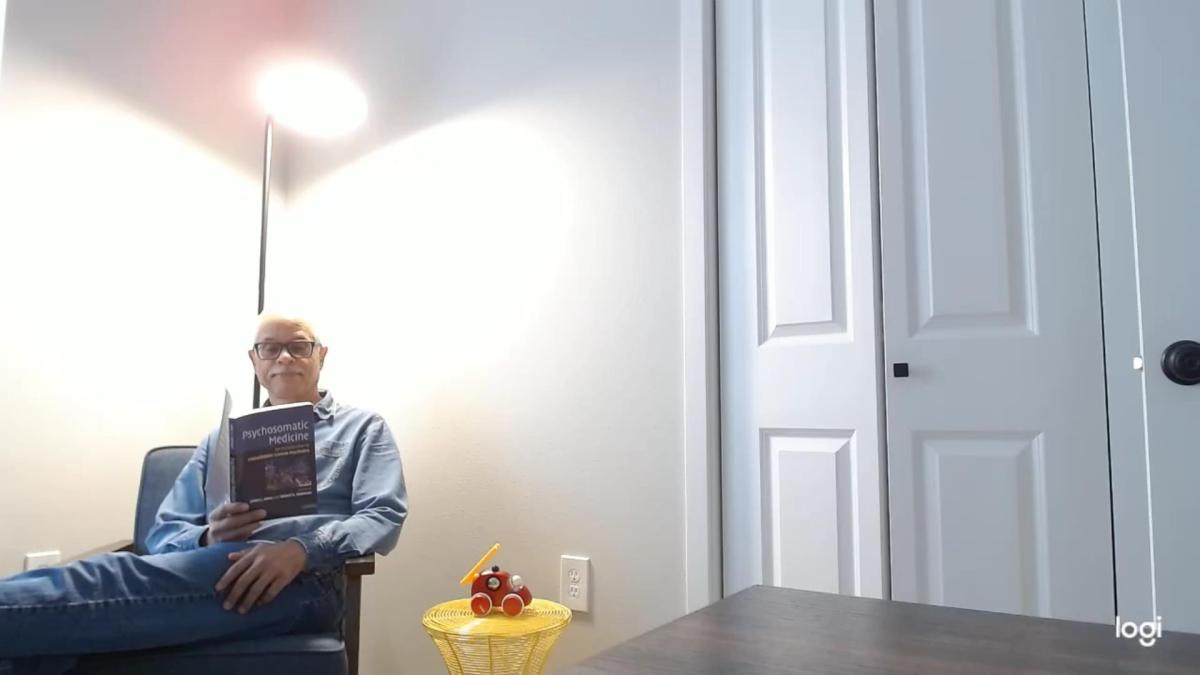
Sena bought me a wonderful new lamp to read by and it improves on the ceiling fan light I wrote about the other day (And Then a Light Bulb Went Off).”

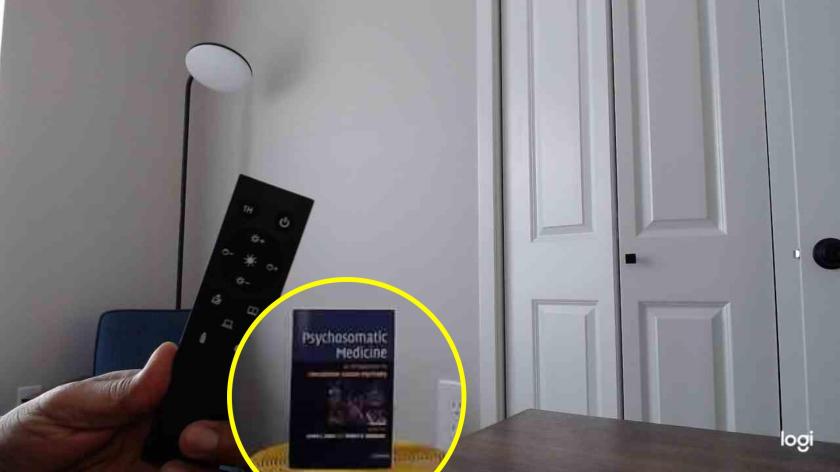
The new lamp even has a nifty remote control with which you can choose the ambient feel. There are several selections, one of which is called “breastfeed mode,” a new one on me. There’s a light for that?

The lamp arrived at about the same time I got a notice from my publisher for my one and only book, “Psychosomatic Medicine: An Introduction to Consultation-Liaison Psychiatry,” that people are still buying—after 14 years! My co-editor was my former psychiatry department chair, Dr. Robert G. Robinson. As far as I know, Bob has dropped off the face of the earth. I hope he’s well.

Consultation-Liaison Psychiatry is probably about the same as I left it when I retired 4 years ago. I walked all over the hospital trying to help my colleagues in medicine provide the best possible care for their patients. I put in several miles and stair steps a day. I saw myself as a fireman of sorts, putting out fires all over the hospital. I got a gift of a toy fire engine from a psychiatrist blogger in New York a long time ago.

Now I walk several miles on the Clear Creek Trail, like I did yesterday and the day before that. I have shin splints today, which tells me something—probably overdid it.

So, I’m taking a break from walking and reading an old book in a new light.

The Incredible Shrinking Headshrinker

Last week we saw the 1957 movie “The Incredible Shrinking Man” on the Svengoolie show on the MeTV channel. We’ve never seen it before and it actually got pretty good reviews back in the day. The main character, Scott Carey, was played by Grant Williams. You can watch the movie for free on the Internet Archive.

According to some interpretations, the story uses the metaphor of diminishing size to highlight the diminishing role of masculinity in American society in the 1950s or human notions in general about one’s self-worth in society.

It got me thinking about how the challenges of adjusting to retirement as a process has been (and still is to some degree) for me. I started out with gradual reduction of my work schedule in the form of a phased retirement contract. It was difficult.

I was reminded of how difficult it was to slow down, especially as a teacher of residents and other health care trainees, when I was going through some old papers after the recent move to our new house. They included teaching awards I’d received over the years.

I was struck by how small my self-perceived role in psychiatry and medicine has gradually become in the last few years. I’ve been shrinking, similar to Scott Carey. In fact, I’m a shrinking headshrinker.

I don’t want to spend too much time ruminating about what retirement means to me. I think it’s a very common response to perceive the world gets smaller when you retire.

It doesn’t help much to intellectualize about shrinking in this way. Scott Carey eventually accepted his diminishing stature, even to the point of disappearance. Grief about this kind of loss is normal, although I’m realizing that grief might never completely disappear.

Alcohol is Bad for Old Guys

I took a quick peek at the study published recently in the Journal of the American Medical Association (JAMA) that a few news agencies are reporting on which says alcohol in moderation is bad for older persons. So much for moderation.

Actually, the full abstract is:

Ortolá R, Sotos-Prieto M, García-Esquinas E, Galán I, Rodríguez-Artalejo F. Alcohol Consumption Patterns and Mortality Among Older Adults With Health-Related or Socioeconomic Risk Factors. JAMA Netw Open. 2024;7(8):e2424495. doi:10.1001/jamanetworkopen.2024.24495

“Conclusions and Relevance: In this cohort study of older drinkers from the UK, even low-risk drinking was associated with higher mortality among older adults with health-related or socioeconomic risk factors. The attenuation of mortality observed for wine preference and drinking only during meals requires further investigation, as it may mostly reflect the effect of healthier lifestyles, slower alcohol absorption, or nonalcoholic components of beverages.”

Conclusions: “This cohort study among older drinkers from the UK did not find evidence of a beneficial association between low-risk alcohol consumption and mortality; however, we observed a detrimental association of even low-risk drinking in individuals with socioeconomic or health-related risk factors, especially for cancer deaths. The attenuation of the excess mortality associated with alcohol among individuals who preferred to drink wine or drink only during meals requires further investigation to elucidate the factors that may explain it. Finally, these results have important public health implications because they identify inequalities in the detrimental health outcomes associated with alcohol that should be addressed to reduce the high burden of disease of alcohol use.”

The news stories play a little fast and loose with the headlines, which tend to gloss over the effect of health-related and socioeconomic risk factors. But, there’s no doubt in my mind that most people could do without alcohol.

Personally, I would have a couple of 12-ounce bottles of beers while watching football games or listening to the Big Mo Blues Show on KCCK Blues and Jazz Radio station on Friday nights. I hardly drank at all in terms of the grams per day metric.

But I’ve not imbibed since we got so busy selling our old house and camping out in a hotel while waiting for our new house to be built. Not surprisingly, I don’t miss it. When I was a young guy, I drank more and even smoked cigarettes. That was a long time ago.

In fact, when I look back on those days, I remember the factors that tended to limit my use of those substances. Take cigarettes—to the landfill if you don’t mind. I was what you would call a “sometimey smoker” because after a few days I suffered a sore throat, blunted taste for food, stuffy nose, lower appetite (bad for a baseline skinny guy) and fatigue. I just couldn’t stick with smoking long enough to make it a habit.

I’m going to pick on wine a little because the article alludes to the idea that it might have some health benefit. When I was a kid, I once had a lot too much wine which led to a longstanding inability to even stand the smell of it for years. I still never drink wine.

There are many things that can be habit forming. I’m beginning to wonder if watching Men in Black movies might be one of my weaknesses. I don’t watch any other movies as often as I do the MIB trilogy films. I’ve watched them dozens of times and I don’t have a good explanation for it. I think they’re funny and I can always use a good laugh.

Agent K: After neuralyzing Officer James Edwards, he and Agent K are finishing a meal in a café while K is delivering the punchline to a joke, “Honey, this one’s eating my popcorn! Get it?” Agent K laughs uproariously.

Officer James Edwards: Looking dazed from the recent neuralyzer blast, asks “Who are you?”

Agent K: “You see, James, you are a nice young man, but you—need to lay off the sauce.”

The quote is probably not word for word. I didn’t look it up on the web. It’s just as I remember from seeing the movie so often. And that’s partly because, for the most part, I lay off the sauce.

What About Bob?

The homeless guy camped next to the busy street just outside of our hotel is still here. I’m going to call him Bob because it’s awkward to keep calling him “the homeless guy.” I haven’t met Bob yet, but Sena got him some water. She had to give it to the hotel resident who so far is the only one who has been able to communicate with him.

Sena and I talked about what might be done for Bob. She noticed that his face was sunburned bad enough to cause the skin to peel off. Could a case be made for his being a danger to himself?

Of course, you could guess this issue would come up because I’m a retired psychiatrist. As an aside, I found an article published in the Daily Iowan early this year. The author interviewed several residents of a homeless camp who were displaced after a fire and subsequently the owners of the land closed the camp.

The homeless people at the camp were articulate and open to interview. Some of them were clearly choosing to be homeless and able to state how and why they did.

Bob might not be articulate enough to do that. He spends most of his time lying on the pavement with his blanket over him. It’s sometimes hard to tell if he’s out there until he moves. When he’s up, he usually stands up and waves his arms back and forth or sits on the grass. Occasionally, he moves in ways suggesting he’s acting out some kind of conversation with an invisible person.

A police officer stopped by, spoke briefly with Bob, and left. A woman stopped by and tried to help him clean up his room, so to speak. She picked up some of his trash and put it in a bag. She tried to get him to help, but he didn’t seem to understand.

What about Bob? Is he a danger to himself or others? Is he incapable of taking care of his basic self-care needs? Sooner or later, this would come up because the mental health laws would come into play. There are many homeless people out there living under bridges and camps. We’ve seen them when we go out for walks. Not all of them are definable as mentally ill.

There is guidance on the web about how to pursue a court-ordered psychiatric evaluation. I’m a retired psychiatrist and often was involved in those circumstances.

One way it works is that two people who are acquainted with the person go to the courthouse and complete paperwork to have someone ordered by a judge to be taken to the hospital for a mental health evaluation. If the judge signs an order, then typically the police would pick the person up and take them to the local emergency room. There aren’t vans with mental health professionals roaming the city looking for potential patients.

A psychiatrist performs a comprehensive mental health evaluation and later presents the report and testifies at a scheduled hearing. Attorneys are involved and give testimony for and against civil commitment. The patient also can speak. If the patient is court-ordered to inpatient treatment, that treatment is provided in the hospital usually. Periodic reports must be submitted to the court. Some people who are the objects of these interventions get better. Others don’t.

What’s missing here? You must at least know his real name to file for legal hold order. Although Sena says she saw Bob take out a cell phone, it’s not clear he knows how to use it or whether it even works. The only people who interact with him are those who are driving by and who show sympathy by buying food and water and other items for him. He usually tosses the empty water bottles in the parking lot where he sleeps. The police evidently didn’t think he needed an intervention from their perspective.

We don’t even know his real name. I haven’t tried to talk to him. I’ve never seen him act in a threatening way to anyone. Bob takes up one parking space and keeps his belongings within it. He usually lies under a blanket, often for several hours at a time. Bob doesn’t panhandle and I doubt he’s capable of that.

Am I Bob’s keeper?

Thoughts About Psychedelic Assisted Psychotherapy

I read the Psychiatric Times article “FDA Issues CRL to Lykos for MDMA-Assisted Therapy.” The short story is that the FDA essentially told the drug company Lykos that their study of the efficacy of MDMA-assisted treatment of PTSD needs more work.

I tried to wade through the on-line documents of the FDA’s meeting on June 4, 2024. There are hundreds of pages and I didn’t go through every page of the transcript. The minutes were succinct and much easier to digest.

I’m going to simply admit that I’m biased against using psychedelics in psychiatry for personal and professional reasons. I’m not a research scientist. I’m a retired consultation-liaison psychiatrist. I saw many patients with a variety of psychiatric diagnoses including PTSD and substance use disorders. I’m not opposed to clinical research in this area, but I’m aware of the difficulty of conducting it.

In that regard, I want to also admit that I’m very susceptible to being influenced by a former colleague’s remarks about the quality of the research in question in the Lykos study. Dr. Jess G. Fiedorowicz, MD, PhD formerly was formerly on staff at University of Iowa Health Care. He’s now the Chief of Mental Health at The Ottawa Hospital where he’s also Professor and Senior Research Chair in Adult Psychiatry, Department of Psychiatry, University of Ottawa, Ontario. His remarks in the transcript are typical for his erudition and expertise as a clinician scientist.

It’s difficult to wade through the pages of the FDA transcript and I couldn’t digest all of it, by any means. But if you’re interested in reading both sides of this issue, it’s a good place to get the best idea of the committee members’ thinking about it. The minutes are much easier to read and provide a succinct summary.

I realize the Psychiatric Times article editor doesn’t agree with the FDA recommendations for further study of psychedelic-assisted psychotherapy for PTSD. It may or may not influence the University of Iowa’s study of psilocybin. In my opinion, the FDA did the right thing.

Big Mo Pod Show Theme “Limitation Brings Innovation”

Last Friday night, the Big Mo Blues Show was recorded. I found the podcast, which had the theme “Limitation Brings Innovation.” The idea behind that was that sometimes when musicians lack the resources to, say, put together a big band sound, they often innovate to create a sound that’s new and surprisingly fresh and rivals the production of bigger and better funded orchestras.

Along those lines, Big Mo played Seasick Steve’s song “Backbone Slip.” It’s a rocker. On the other hand, my favorite from him is “You Can’t Teach an Old Dog New Tricks.” Seasick Steve did a live version of it about 13 years ago. He played a homemade guitar made of a broomstick and a couple of hub caps.

I guess you call that limitation leading to innovation. It could be the anthem for old retired guys.