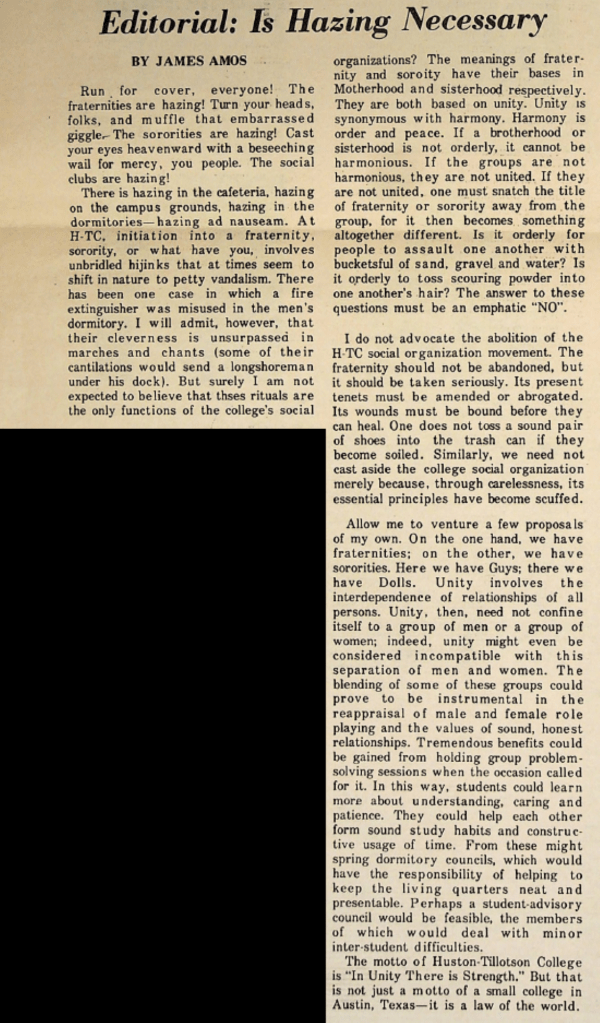
It turns out I was a news reporter for the Huston-Tillotson College Ramshorn Journal after all! I wrote a few of them, including an editorial about Greek fraternity hazing in 1975. I’m including it in this post below. It has an apparent typo in it (“Motherhood” should be brotherhood).
It’s typical for fired up freshman writing. I see lots of youthful idealism, energy, and a drive for change. How did I forget so much of what I was over the last 50 years?
I wrote “Is Hazing Necessary” (the question mark is missing) because I saw it going on in my freshman year. I can’t remember whether the fraternity members gave me flak about it or not. But I guess I can’t say it didn’t happen just because I can’t remember it.
Hazing still happens, as I found out when I did a quick web search today. I still don’t know why. Even The University of Iowa had an incident in November of 2024.
I don’t know how I lost such an important part of my past. And I don’t know what led me to recover it. I do know that if Sena hadn’t pursued the search after I was ready to forget it, I wouldn’t have these fragments of my personal history now. And I’m grateful to Huston-Tillotson Downs-Jones University Library for their help.
Ramshorn Journal Oct.1975 (page 4) Click the image; Click the little icon circle with i; hover over the image and click the plus sign to enlarge.
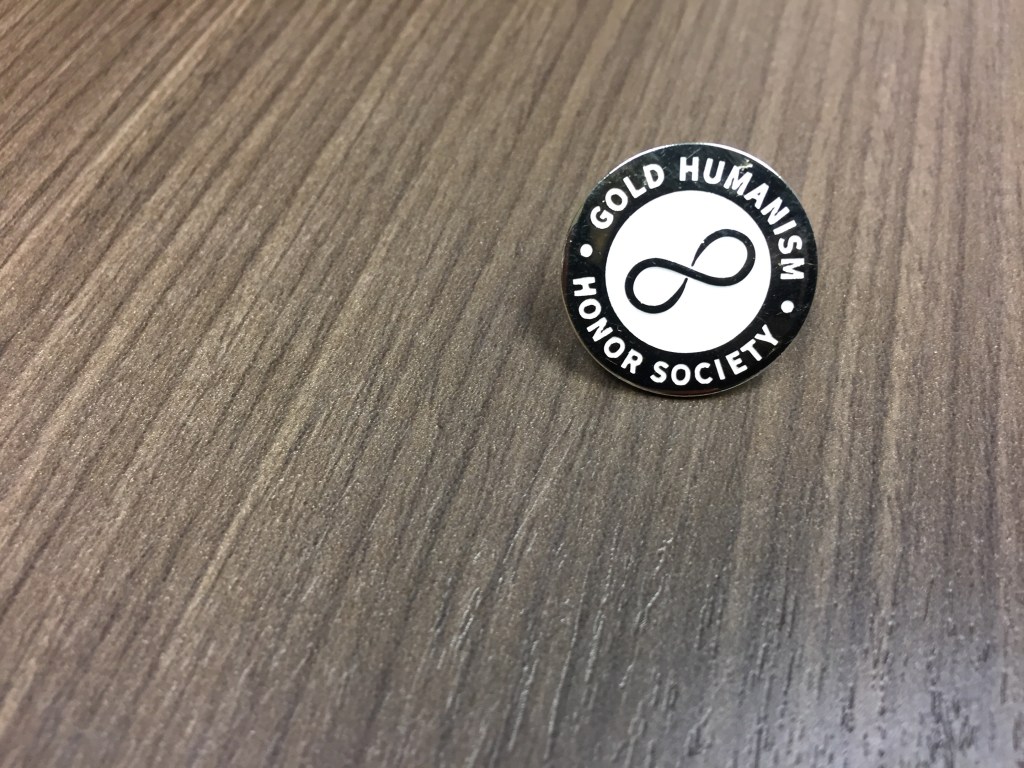
I just found out that Leonard Tow died on August 10, 2025. In humility, I express my gratitude and respect for his creation of the Tow Foundation, a big part of that being the Humanism in Medicine Award, of which I am one of the many recipients over the years. I hope this great tradition goes on forever, a reminder to doctors, patients, and families of the great rewards and greater responsibilities in medicine.
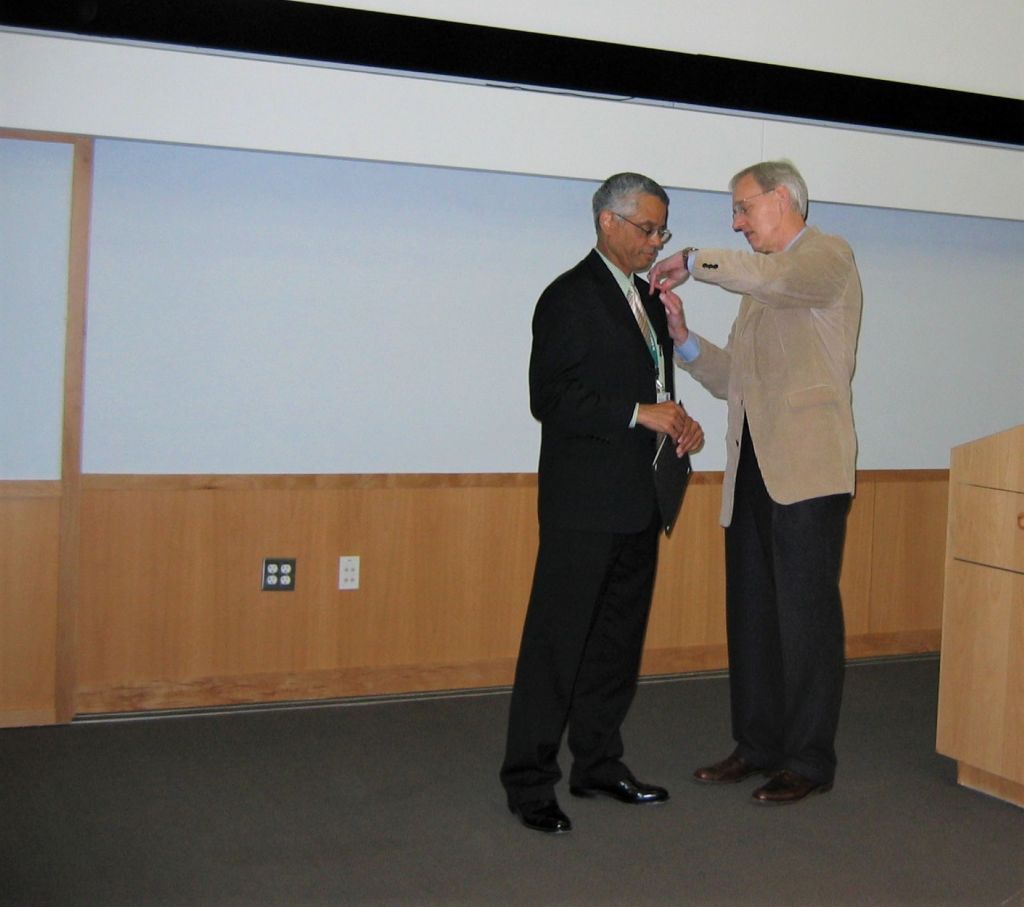
I thank Dr. Jeanne M. Lackamp, now Chair of the Department of Psychiatry, Psychiatrist in Chief for University Hospitals and Director of the University Hospital Behavioral Health Institute for nominating me and Dr. Jerold Woodhead, Professor Emeritus in Pediatrics at University of Iowa Health Care for placing the pin in my lapel. That was in 2007.
Leonard Tow established the Humanism in Medicine award to foster the development of humanistic doctors. They exemplify compassion and respect for others, humility and empathy.
That is how I will remember Leonard Tow.
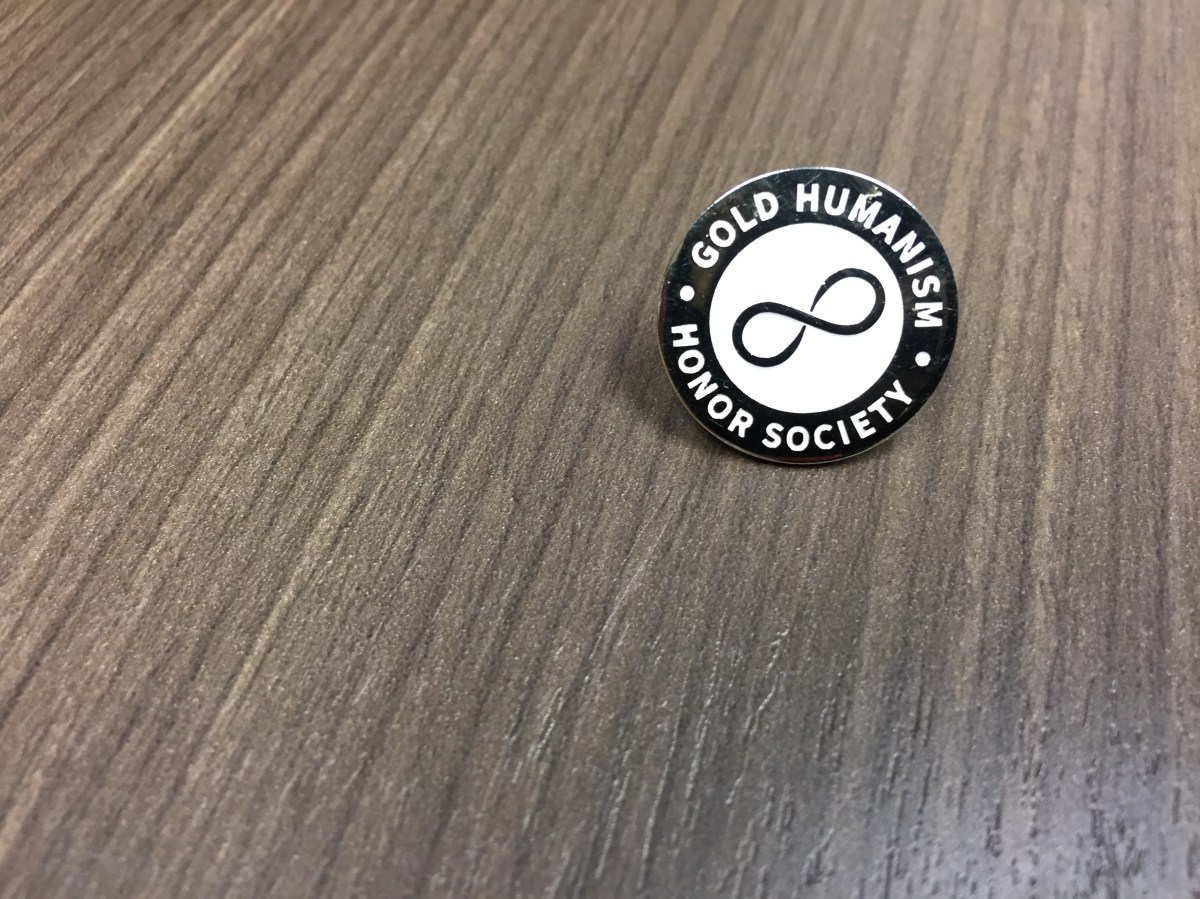
On my lapel; in my heartLeonard Tow Humanism in Medicine lapel pinGetting the pin
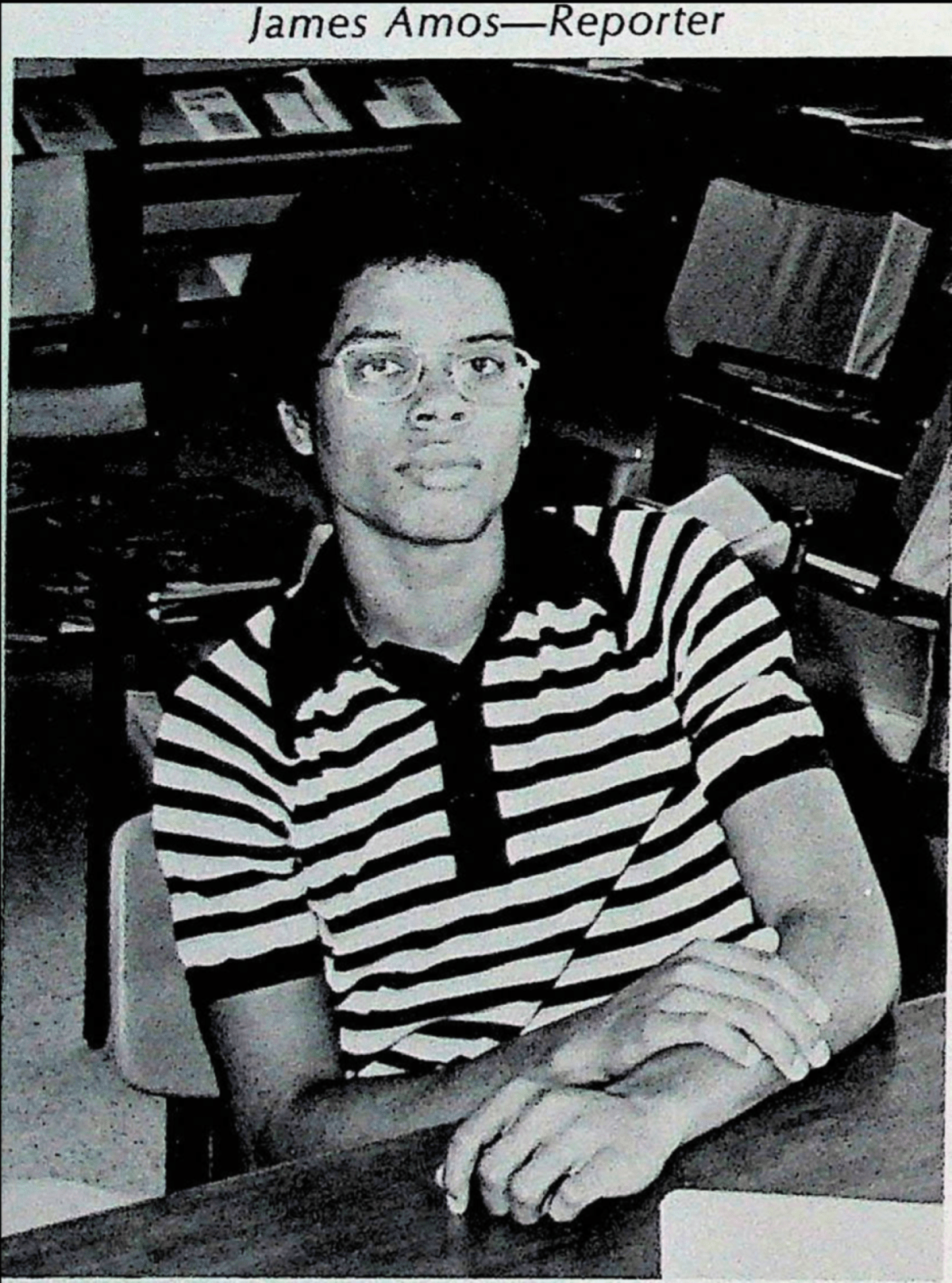
I found a photo of me in the Downs-Jones Library files at Huston-Tillotson University (formerly Huston-Tillotson College) today. It’s the featured image for this post. I was going down memory lane looking at old pictures of former classmates and teachers at H-TU and—there I was. It’s a photo of me in 1975, and it looks like I’m sitting in the Downs-Jones Library on campus posing for the picture. I don’t remember sitting for it. I had hair then and afros were in style.
I was a little worried about copyright issues just downloading or printing the image until I finally noticed the icons for doing both on the web page. I guess they wouldn’t be there if it were prohibited.
What’s also funny is that the caption above my picture says “James Amos—Reporter.” This meant that I was contributing to the college newspaper, The Ramshorn Journal. Funny thing is, I couldn’t remember writing anything for it.
I tried to find copies of the Ramshorn Journal for 1975, but there were only records for issues published in the early to mid-1960s. I guess I’ll never know what I wrote, if anything.
I’m surprised there would be any photos of me at all since I didn’t graduate from H-TU but transferred to Iowa State University and graduated from there in 1985.
I clipped out my photo from a few others. The group included the sponsor of the Ramshorn Journal, the editor, and the typist. That makes it looks I was a part of the staff. I’ll be darned if I remember doing anything for it. If I had written anything, I would think I’d have kept copies. But I have no documents proving it. I don’t have copies of the Ramshorn either. I’m a writer by inclination and habit so this is a mystery.
As I looked through yearbooks, I couldn’t find anyone I could ask about it either. That makes sense because it was 50 years ago. On the other hand, if there are digitized issues of the Ramshorn Journal from the 1960s, there might be some later issues kept somewhere in the library. Maybe there’s something with my byline on it.
If I get curious enough about it, I might ask somebody at the Downs-Jones Library if they could check on it.
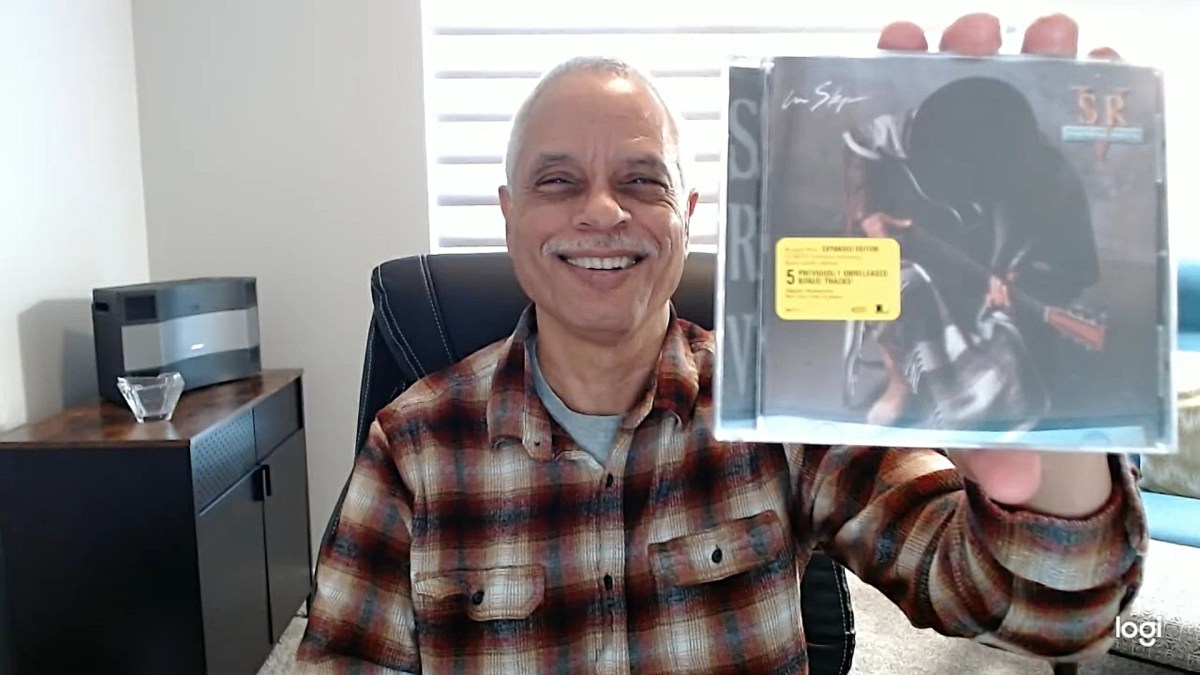
I got off my schedule last week on listening to the Big Mo blues show, but as it turns out, he was gone last Friday. I heard last night’s blues show and heard Stevie Ray Vaughn’s Riviera Paradise.
So, of course that was not on the list of songs for the pod show today, but Big Mo did mention that Riviera Paradise and the name of the collection, which was In Step was related to Stevie Ray Vaughn’s having been successful at staying sober from substance use disorder for a year. The name In Step was evidently related to his going through a 12-step program to achieve sobriety. I learned about Stevie Ray Vaughn early in my residency (if I recall correctly) from a University of Iowa psychiatrist who is now the chair of the psychiatry department.
The name of today’s pod show was “The Yellow Butane Curse” which is about superstition. I’m not sure if this means that blues music enthusiasts are prone to being superstitious, but Big Mo did admit to believing that yellow butane lighters were unlucky for him.
This is probably going to seem like a disconnected transition but I missed last week’s pod show (“He plays what can’t be written down” see below), which was not the usual format of song talk but an interview with a successful local musician, Merrill Miller. I don’t know anything about him except what I learned in the podcast. I got a kick out of listening to a couple of musicians just more or less shooting the breeze about living the musician’s life.
Merrill mentioned playing in places like Strawberry Point, Iowa. I don’t have a musical connection to Strawberry Point, and I never went anywhere there that was connected with music like Merrill did. In fact, the only reason I was in Strawberry Point was because I was part of a survey crew staking Highway 13 between there and Elkader to straighten out some of the many curves in the road. We didn’t have much time to listen to music.
One piece of Iowa history they talked about was the issue of black musicians not being able to find a place to stay in this area because of racism. They had to find somebody they knew who would put them up while they were in town for a gig. Funny where a rambling, relaxed conversation will sometimes lead you.
I had few connections to music while I was growing up. My mother tried to teach my little brother and I how to play piano. It was an old out of tune piano. I managed to learn where the “middle C note” was—and that’s about all I recall about it. I took guitar lessons and got pretty good at making buzzing notes with it. Man, I could make that guitar buzz, although my teacher got a good laugh out of it—and couldn’t get me to break the habit. I could blow into a harmonica (what real musicians like Merrill and Big Mo call a harp), but I couldn’t kidnap any notes out of it. I tried picking notes on a banjo for a short while, had a second stab at the guitar, and got not much more than callouses on my fingers before moving on to non-music making careers.
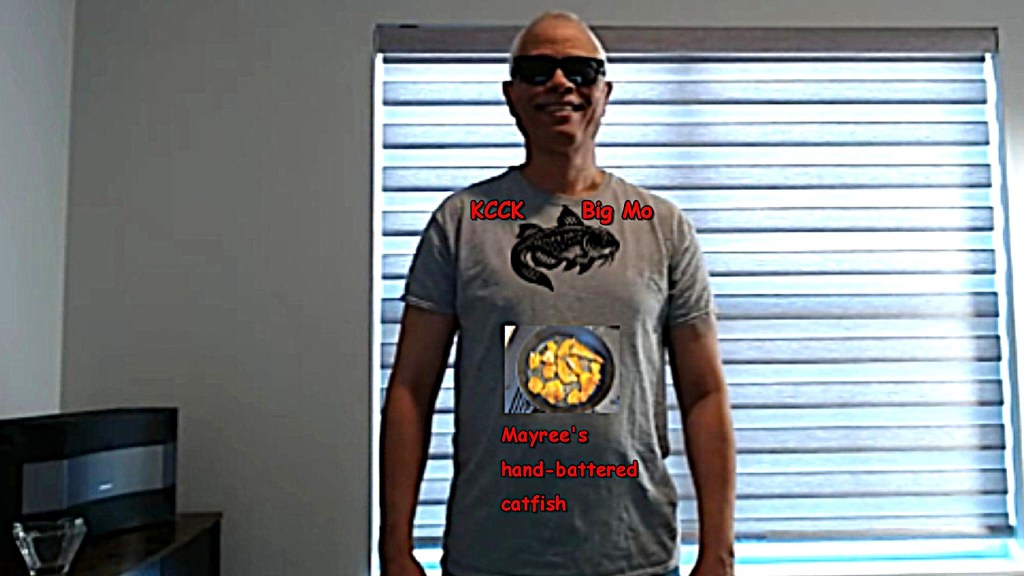
You can be glad about that. Now about that suggestion that I have for a tee shirt design about my favorite faux sponsor created by Big Mo, Mayree of the legendary Mayree’s hand battered catfish; it’s better because it’s battered. I wonder if there’s any movement on that.
After a short break during the Thanksgiving holiday your hosts are back at it again with another episode! This week features the usual mix of blues eras you’ve come to expect along with a few Californian artists, tune in to see which ones! Songs featured in the episode: Solomon Hicks – “Further On Up The … Continue reading
While yesterday’s post on Dr. Melvin P. Sikes was mainly about my personal impressions of him as a teacher, there are a couple of web resources which gives a little more texture about him apart from my imperfect memory and limited experience.
One of them is a formal course outline and evaluations he and another teacher wrote in 1975, which was the year I first encountered him when I was a freshman at Huston-Tillotson College at that time. I know it seems like a tough read, but I was pretty impressed by what teachers said about him in the evaluation part of the document entitled “Report on Teaching in Multi-Cultural/Multi-Ethnic Schools (1974-75).”
The pdf document is 39 pages long, but I suggest focusing on the student teacher evaluations of his course. That starts on page 19. They all praise it, without exception. Many note that he didn’t really just lecture. One of the evaluators called him “supercalifragalisticexpialadoches!” Not sure if that’s spelled just right (it’s on p.33 so you can check it yourselves), but the point is well made—he was viewed as an extraordinarily gifted teacher.
Dr. Sikes’ comments start on pp.35-39 (Attachment D, entitled “Teaching in Multi-Cultural/Multi-Ethnic Schools; EDP F382 -Summer 1975l Professor Melvin Sikes) and I think that’s also worth reading. It’s short and without lofty, academic terminology.
The reading list caught my eye. I looked for Ralph Ellison’s novel “Invisible Man” which had been published in 1952, but it wasn’t on the list. That book has special meaning for me personally, because when I encountered Dr. Sikes in 1975, I was a freshman at one of the Historically Black Colleges and Universities (HBCUs), Huston-Tillotson College as it was then known. I was born and raised in Iowa and had never been in the southern United States. I sort of identified with the unnamed protagonist because the first section of the book deals with his experience at a southern black college.
It was a culture shock. I never saw anyone like Bledsoe. In fact, I never personally met the president of H-TC (now Huston-Tillotson University as of 2005), who was Dr. John Q. Taylor King, Sr. at the time. My main connection was Dr. Hector Grant, who recruited me while he was visiting Mason City, Iowa in connection with support from a local church. I still don’t know what happened to Dr. Grant. It’s like he dropped off the face of the earth.
Anway, I wanted to share another item I pulled off the web about Dr. Sikes. It’s a newspaper article about him published in the West Texas Times issue published May 4,1977. It’s in the collection of the Texas Tech University on line, with the link to the main front page story “Judge Orders Officials to Clean Up the Jail,” interestingly enough. It automatically downloads a pdf of the newspaper issue to your computer when you click the link. I’m just going to try to summarize it and pull some quotes.
The title of the story about Dr. Sikes is down the page, “UT’s Dr. Sikes Helps Students Know Themselves and Others.” The story begins with an anecdote about an interaction Dr. Sikes had with a teacher. It involved a black student coming to her with a complaint that a white student had hit him and he used bad language in describing it. The teacher was going to discipline the kid about his bad language, which Dr. Sikes questioned.
Sikes thought the teacher should have first gotten more information about what the student actually experienced in the encounter. The implication was that if she had listened first, she might not have jumped down his throat about his bad language.
The author of the news article writes that, according to Sikes, “I want my students to be more flexible, to understand that people are first people,” the professor likes to say. “I want them to grow out of looking at a color of a skin and making determinations, good, bad, or indifferent.” He goes on to say,
“I don’t even want them to look at blacks and say, ‘these are great people.’ I just want them to look at blacks and say ‘these are people.’
Quotes from Sikes:
“Before you can deal with another in a meaningful kind of way, you have to find some meaning and purpose in your own life—which means defining yourself….”
About teaching:
“Yes, I was lucky, I was taught by my parents, to some degree. But then I had teachers who taught this to me… And much of whatever I am… is the result of teachers and their concern—black teachers, white teachers.”
About our differences:
“If we’re all the same, we can’t make unique contributions because the contributions would be the same.”
The author of the story points out that Dr. Sikes often took student teachers to Huston-Tillotson College to see predominantly black students. The author also writes that Dr. Sikes mentions something about politics which rings a bell.
“He [Dr. Sikes] talks about the politicalization of education, and says that educating has been taken away from the educator and usurped by the politician.”
On teaching the teachers:
Dr. Sikes says: “People don’t realize how important you are and you don’t realize how important you are. You’re molding and shaping human lives, millions of lives, who will become, depending upon how you mold and help shape or help them become.”
“Now the doctor deals with his patient for a short length of time, and the patient dies and he buries his mistake, or he lives and he’s all right. But we can’t bury our mistakes. They walk around and haunt us and other people…sometimes their living is death. But people never realize that it’s teachers—we are the ones who have power.”
And finally, about Mel Sikes himself, one of his students says,
“Sikes is intense, loquacious and supremely personal. He immediately grabs you and talks on a person-to-person wavelength. He tells his students a lot about himself, his struggles as a black and as a radically caring person. He says he would die if it would help all people relate better. And he would.”
There was a lot more to Melvin Sikes than a lemon-yellow leisure suit.
I noticed the headlines about the DEI flap at The University of Iowa, the one with the official apparently spilling the beans about University of Iowa’s DEI program not going away despite being illegal while maybe being unaware of being filmed. I’m not going to retell the story.
However, it does remind me of a time back in the 1970s in the days of affirmative action when I was a freshman student at Huston-Tillotson College (now Huston-Tillotson University) in Austin, Texas.
I learned about tenacity to principle and practice from a visiting African American professor in educational psychology from the University of Texas. It was 1975. Dr. Melvin P. Sikes paced back and forth across the Agard-Lovinggood auditorium stage in a lemon-yellow leisure suit as he talked about the importance of bringing about change in society.
He was a scholar yet decried the pursuit of the mere trappings of scholarship, exhorting us to work directly for change where it was needed most. He didn’t assign term papers, but sent me and another freshman to the Austin Police Department. The goal evidently was to make them nervous by our requests for the Uniform Crime Report, which Dr. Sikes suspected might reveal a tendency to arrest blacks more frequently than whites. He wasn’t satisfied with merely studying society’s institutions; he worked to change them for the better. Although we were probably just as nervous as the police were, this real-life lesson about the importance of applying principles of change directly to society was awkward.
Nothing like confronting social issues head on, right?
We would have preferred a term paper. We sat in the police station looking at the Uniform Crime Report, which was the only resource we could get. I think we were there a couple of hours; it felt a lot longer than that. The officer who got us the paperwork was polite, but a little stiff and wasn’t really open to anything like an interview or anything close to that. I can’t remember what we came up with as a write-up for what felt like a fiasco. I’m pretty sure we didn’t bring about anything even close to change. It was a humbling experience. Maybe that was the point but I’ll never know.
Dr. Melvin P. Sikes was a member of the Tuskegee Airmen although he didn’t see combat. He was the dean of two historically black colleges, a clinical psychologist, and a University of Texas professor. He died in 2012 after a long and successful career as a psychologist, teacher, and author.
I found a podcast about him which was sponsored by the Hogg Foundation for Mental Health and which aired February 15, 2024. It’s an hour long, but there are segments of interviews of him in 1972 that I consider fascinating. A couple of times he says something which I wish the interviewer had allowed him to expand on. The gist of it is that we need to have a system of education which allows people to speak from the standpoint of pride rather than rhetoric. I think what he might have meant is that it would be wonderful if we felt secure and confident in ourselves to express our minds sincerely. The word “rhetoric” makes me think of talk that is persuasive, even impressive, but maybe insincere. I think it still fits today.
I want to give a shout out to Dr. George Dawson for his post today “The Autocratic Approach to Homelessness” in reference to President Trump’s most recent executive order, “Ending Crime and Disorder on America’s Streets.” As a retired psychiatrist, I look back and remember seeing the problem of the homeless mentally ill a lot. You can read my take on it from last summer’s posts:
I just noticed something about one of my YouTube videos that I made sort of as a combination gag and educational piece about pseudobulbar affect. It needed a couple of updates—one of which is minor and which I should have noticed 10 years ago when I made it.
It’s a pseudo-rap performance (badly done, I have to agree although it was fun to make), but it’s one of my most watched productions; it has 18,000 views.
One minor update is about the word “Dex” in the so-called lyrics of this raggedy rap song (see the description by clicking on the Watch on YouTube banner in the lower left-hand corner). It stands for dextromethorphan, one of the ingredients along with quinidine in Nuedexta, the medication for pseudobulbar affect. Dextromethorphan has been known to cause dissociation when it’s abused (for example, in cough syrup).
The most important update is about Dr. Robert G. Robinson, who I joked about in the piece. He passed away December 25, 2024. He was the chair of The University of Iowa Dept. of Psychiatry from 1999-2011. He was a great teacher, mentor, and researcher. He published hundreds of research papers and books on neuropsychiatric diseases like post-stroke depression and pseudobulbar affect. He lectured around the world and was widely regarded as a brilliant leader in his field.
Early in my career in the department, I left twice to try my hand in private practice psychiatry. Both times Dr. Robinson welcomed me back—warmly. He was my co-editor of our book, Psychosomatic Medicine: An Introduction to Consultation-Liaison Psychiatry, published in 2010.
All who worked with Dr. Robinson will never forget him.
Here’s something fun, try to explain what the phrase “in the pocket” means. The song selections in the pod show led up to a short discussion of what it means—which I didn’t get at all. I don’t think it matters for the ordinary listeners, although former music teachers like Big Mo obviously know what the term means. He taught music for years, has performed, and uses the lingo to explain what “in the pocket” is all about. It’s way over my head, but then I don’t need to know anything about it to enjoy music.
I tried to look up the meaning of the terms “in the pocket” on the web. I took a quick look at a website called Sage Audio. The title is “What is In-the-Pocket for Music?” I couldn’t find the author’s name because I didn’t see a byline. It’s very long and technical and seems geared for sound engineers. One sentence by the writer caught my attention under the heading “What is In-the-Pocket for Music in Detail”:
“It isn’t uncommon to hear a music term and wonder what it means exactly. Becoming well versed in music means understanding its discourse, which can certainly be easier said than done.”
Here’s how far out in left field I am. Depending on how I read that, I’d almost recast the last part of that sentence: “…which can certainly be easier done than said.” I realize the sense of it is that becoming adept in making music means understanding the lingo. I just don’t understand the lingo, which makes me wonder if musicians have some kind of inner body sense for timing in music as it’s performed which may not readily translate to language for the layperson.
I was like a lot of other students in junior high music class. We were pretty good at whispering or half-mumbling the songs we were supposed learn to sing out loud. That really annoyed the music teacher. I don’t know if Big Mo can relate to that or not. We were supposed to learn the song “Sloop John B.” I’m not sure if we were doing the Beach Boys version or the original “The John B. Sails.”
It hardly mattered. We sounded like we ate up all the corn and held it in our mouths while mumbling. We just stuck our hands in our pockets, moaned the words, and were never in the groove. I don’t think a metronome helped. In fact, I’m not sure there was a metronome.
I have to mention that I probably was too young to know that the song by Little Ed and the Blues Imperials, “Walking the Dog,” was about a kind of dance. I never danced although most of the dancing kids on American Bandstand had the same answer to Dick Clark’s question on what they liked about the song—it was always “the beat.” I guess they knew that meant the number was “in the pocket.”
Yesterday I noticed a hummingbird hovering about the flower pots on our porch. I hurried to get my point and shoot camera and shot video, through a window as usual and it was getting a little late in the evening too, so light was low.
Can I blame the bird for always looking like a blur—or not? Anyway, the video looks similar to others I’ve managed to capture in years past, except this one was the closest I’ve ever gotten to one. I tried messing with the clip using my video editing software, but I ended up believing it best to leave it mostly unmessed around with.
On the other hand, the one I got about 6 years ago was pretty fair for an amateur backyard birder. Same camera, same software although I was closer to the birds and I’m pretty sure I was sitting outside and very patient. They were very interested in our little feeder.
I think the hummingbirds we’ve seen are ruby-throated species partly because that’s the most common in Iowa. Typically, I think it’s just the males who have ruby-colored throats; our visitor didn’t.
I guess the usual way to attract hummingbirds is with a feeder but other people say there are other reasons hummingbirds visit us. More common to the indigenous peoples, they may be thought of as the spirits of those who recently died and are visiting those they were close to.
I don’t remember the movie “The Curious Case of Benjamin Button” so well but I’ve glanced briefly at web articles which connect it with hummingbirds, which has something to do with their ability to fly backwards or in a figure 8, maybe connecting that with reverse aging or infinity. Other symbolic connections are with joy, healing, and partnership. There are so many connections they seem to blur together—sort of like the bird itself as it hovers and flits from flower to flower.
I think this hummingbird just really liked Sena’s flowers.





 Go Retire Psychiatrist