After a short break during the Thanksgiving holiday your hosts are back at it again with another episode! This week features the usual mix of blues eras you’ve come to expect along with a few Californian artists, tune in to see which ones! Songs featured in the episode: Solomon Hicks – “Further On Up The … Continue reading
I just want to mention that I heard Big Mo do an extended version of his comedy bit on Mayree’s hand-battered catfish last night too. I never know when he’s going to do the long version of it and I nearly always regret not having some way to record it. It’s kooky and complicated with twists and turns like a long hairy dog story with punchlines scattered like land mines all over it.
Anyway, the pod show was pretty interesting. I think the Beth Hart song “Can’t Let Go” could be about more than a busted relationship, a frequent subject of a lot of blues songs. There’s a lot of baggage that we can’t let go of in life. The other notable feature of that song is Sonny Landreth cutting all the way loose with guitar licks spinning out beyond every nearby galaxy.
What was strange during last night’s blues show was I could have sworn I heard the lyrics of “Stand by Me” but it’s not on the list of songs. Songs sometimes don’t get on the list. Anyway, it reminded me of the Playing for Change version that starts with Roger Ridley and goes around the world, released 16 years ago.
I always find Dr. Moffic’s articles in Psychiatric Times thought-provoking and his latest essay, “Enhancement Psychiatry” is fascinating, especially the part about Artificial Intelligence (AI). I liked the link to the video of Dr. John Luo’s take on AI in psychiatry. That was fascinating.
I have my own concerns about AI and dabbled with “talking” to it a couple of times. I still try to avoid it when I’m searching the web but it seems to creep in no matter how hard I try. I can’t unsee it now.
I think of AI enhancing psychiatry in terms of whether it can cut down on hassles like “pajama time” like taking our work home with us to finish clinic notes and the like. When AI is packaged as a scribe only, I’m a little more comfortable with that although I would get nervous if it listened to a conversation between me and a patient.
That’s because AI gets a lot of things wrong as a scribe. In that sense, it’s a lot like other software I’ve used as an aid to creating clinic notes. I made fun of it a couple of years ago in a blog post “The Dragon Breathes Fire Again.”
I get even more nervous when I read the news stories about AI making delusions and blithely blurting misinformation. It can lie, cheat, and hustle you although a lot of it is discovered in digital experimental environments called “sandboxes” which we hope can keep the mayhem contained.
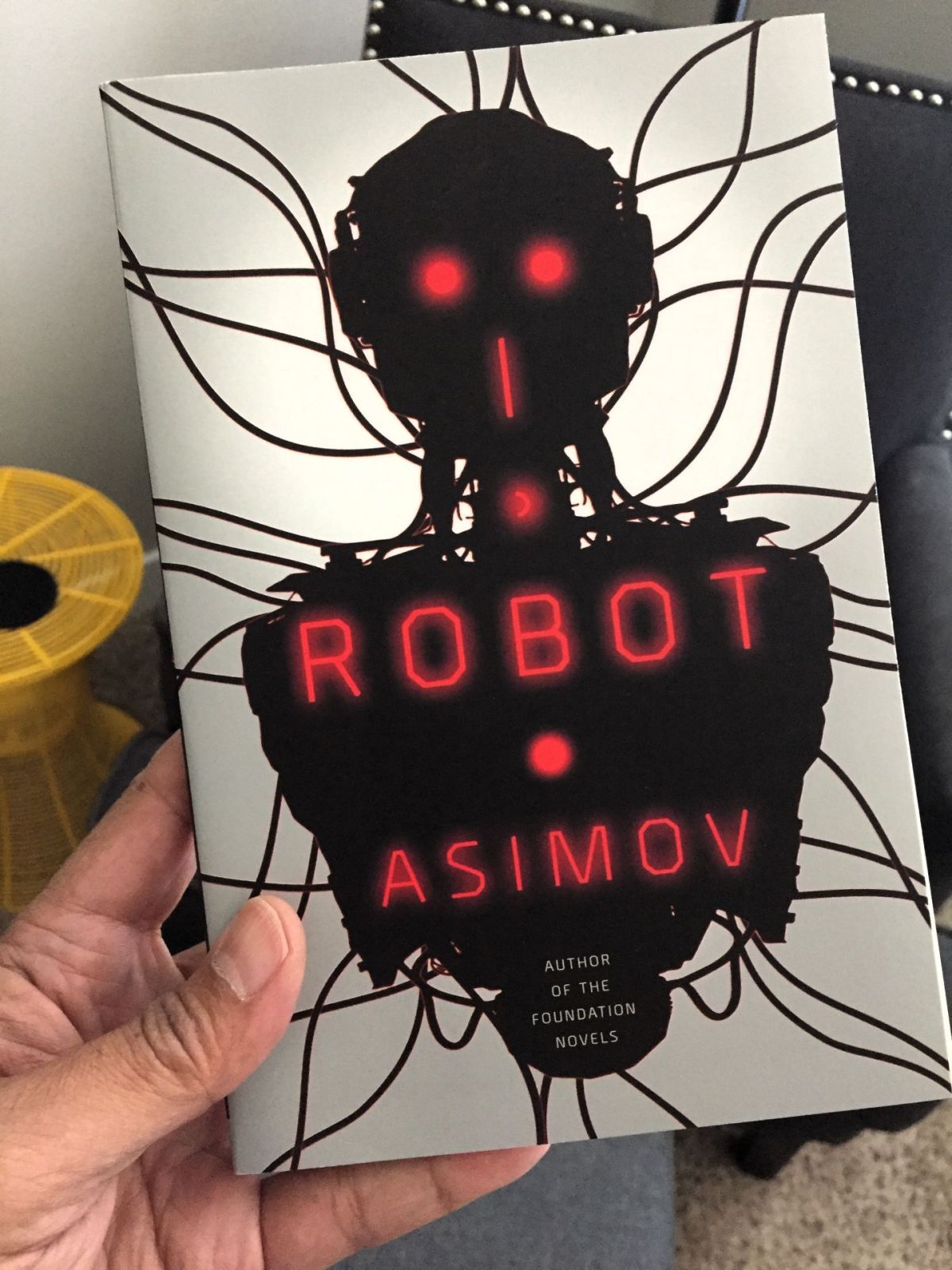
That made me very eager to learn a little more about Yoshua Bengio’s LawZero and his plan to create the AI Scientist to counter what seems to be a developing career criminal type of AI in the wild west of computer wizardry. The LawZero thing was an idea by Isaac Asimov who wrote the book, “I, Robot,” which inspired the film of the same title in 2004.
However, as I read it, I had an emotional reaction akin to suspicion. Bengio sounds almost too good to be true. A broader web search turned up a 2009 essay by a guy I’ve never heard of named Peter W. Singer. It’s titled “Isaac Asimov’s Laws of Robotics Are Wrong.” I tried to pin down who he is by searching the web and the AI helper was noticeably absent. I couldn’t find out much about him that explained the level of energy in what he wrote.
Singer’s essay was published on the Brookings Institution website and I couldn’t really tell what political side of the fence that organization is on—not that I’m planning to take sides. His aim was to debunk the Laws of Robotics and I got about the same feeling from his essay as I got from Bengio’s.
Maybe I need a little more education about this whole AI enhancement issue. I wonder whether Bengio and Singer could hold a public debate about it? Maybe they would need a kind of sandbox for the event?
What I sometimes don’t like about the X-Files episodes were the esoteric titles. One of them was “Tithonus.” I watched it again last night. It’s about a police photographer named Fellig who claimed to be about 150 years old because he cheated death sometime during the days of Yellow Fever in the U.S. in the 18th through the 20th centuries. He was in a hospital sick from Yellow Fever but didn’t look at Death, which was some kind of entity taking those who were dying from Yellow Fever. Death took his nurse instead because she looked at him.
Ever since then, he’s been trying to catch a glimpse of Death mainly by following people around who he somehow knew were about to die. I think the idea was that if he caught up with Death and stared at it, then he could finally die, because by this time he’s so tired of living that he’s attempted suicide several times. He often acts like he’s in a hurry to catch a glimpse of Death.
The main way Fellig knows who is about to die is because they look black and white instead of in living color. Agent Scully is working with another investigator who believes Fellig is a serial killer. Fellig looks at Scully and she’s monochromatic (black and white) which means she’s about to die. So, he tries to stick close to her so he can get a look at Death. The other investigator shoots Fellig and the bullet also hits Scully. Fellig tells her to close her eyes and he finally gets his chance to look at Death and dies. Scully survives.
So, that preamble leads me to talk about the title “Tithonus” a little. Tithonus in Greek mythology was this rich mortal with whom Eos, the goddess of dawn, fell in love. She made him immortal but forgot to give him eternal youth so he gradually because a shriveled up, demented old fart. This led to some pretty intense arguments between them:
Tithonus: So, here I am, senile because you neglected to give me eternal youth when you gave me immortality. This is just like the time you made me a Braunschweiger sandwich, but instead of using my favorite spread, Miracle Whip, you used mayonnaise!
Eos: How does that even make sense? I try my best! You should use your walker more often; then you wouldn’t trip and fall so much.
Tithonus: Excuses! And you hide my Geritol!
So, Eos turned him into a cricket to interrupt his constant babbling.
Anyway, occasionally I think about my mortality because I’m not getting any younger. I’m more forgetful. I can’t walk as far as I used to. I can still juggle, but I’m beginning to accept the fact that I may never be able to do the shower pattern or the off the head trick. Sena and I still play cribbage, but I’m starting to notice that I make certain mistakes in counting that I didn’t make in the past. I can’t stay up as late as I once did.
On the other hand, I can get along without certain things like TV, mainly because I notice I enjoy reading more. I ignore the news a lot more than I formerly did. I would rather listen to music or watch the birds. I admire Sena’s garden from our back windows, where I can watch the dawn arise.
As the month of May Mental Health Awareness draws to a close, I reflect a little on the Make It OK calendar items that are salient for me: 3 things I’ve done that I’m most proud of and 3 reasons I’m hopeful for the future. I’ll keep it short.
One thing I’m most proud of is being the first one in my family to go to college. The biggest accomplishment was going to medical school at The University of Iowa in 1988. That was also the year Michael Jackson’s pop hit “Man in the Mirror” was released. That’s sort of how I felt about what I was doing that year—making a big change.
The more I reflect on this the more I realize the other thing I’m most proud of was getting a degree from Iowa State University in 1985. That paved the way for the path to becoming a doctor.
This process seems to work backwards because probably the first thing I’m proudest of is making a change even earlier in my life to land a job with a Mason City, Iowa consulting engineer firm, Wallace Holland, Kastler Schmitz & Co. That came before college and they’re all like stepping stones on the path of achievement. I think I started at the minimum wage back then, which was about $2.00/hr. I was an emancipated minor and couldn’t afford an apartment so I lived at the YMCA. It was a cramped sleeping room with no kitchen, a communal bathroom/shower, and a snack vending machine from which I got a worm infested candy bar. There were strict rules about what you could keep in your room—which somehow didn’t prevent one guy from building a motorcycle in his. Now this is getting too long.
In order to move on expeditiously with the mental health awareness calendar items, I’m going to cheat on the 3 reasons I’m hopeful for the future because they involve what is most important to a teacher. That’s what I was. I was so proud of the many medical students and residents I had the honor to teach. There were a lot more than 3 reasons to be hopeful for the future. I used to take group pictures of them and me at the end of each rotation through the consultation psychiatry service. We got a kick out of that because the only way I could do it was by using my old iPad that had a fun remote way to trigger the snapshot. I leaned the iPad up against something on a table. We all gathered as a group at the other end of the room. We posed, I raised my hand and counted to three, then closed my hand into a fist. That was our cue to smile. The shutter clicked.
Every time we did that, I was proud. Wherever they are, I hope they know how proud I am of them.
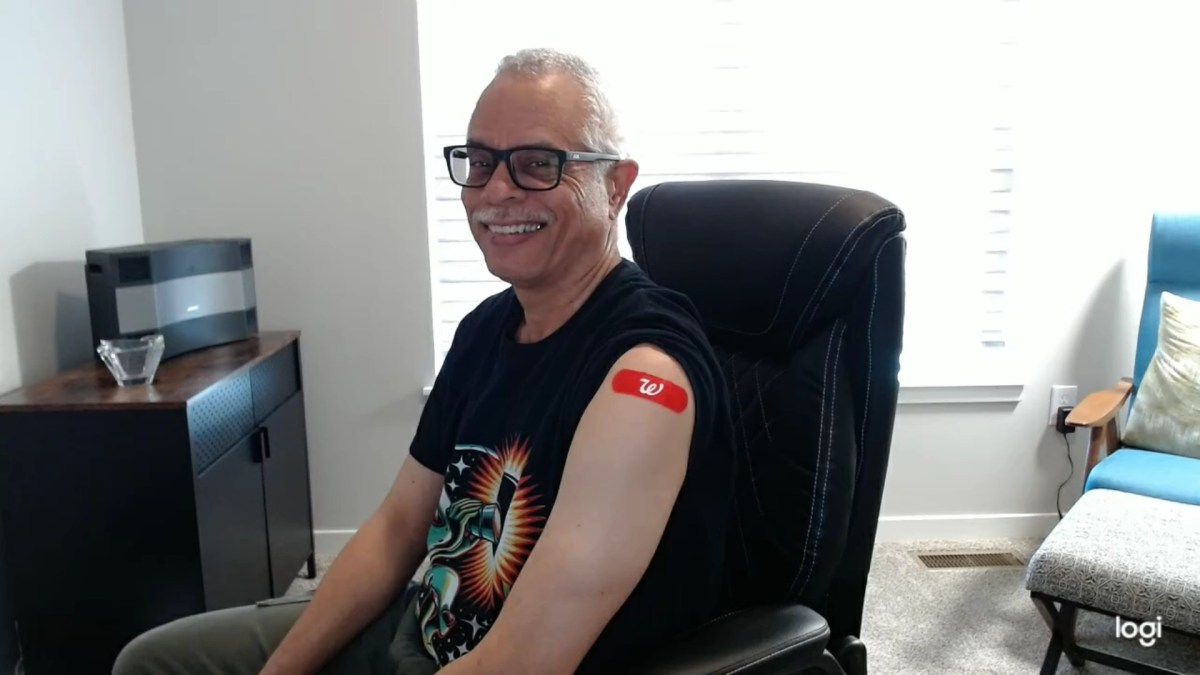
After giving the Covid-19 summer booster a lot of thought, I got it today. What the heck. I’m an old guy and the experts all agree that the summer surge is real, including the current leaders of the FDA Center for Biologics Evaluation and Research (Vinay Prasad, M.D., M.P.H and Martin A. Makary, M.D., M.P.H.).
I read their article “An Evidence-Based Approach to Covid-19 Vaccination” published in the New England Journal of Medicine on May 20, 2025. It sounds like they’re going to require placebo-controlled trials for new vaccines for almost everybody except those over age 65 and high risk because they’re not recommending it for certain other groups such as healthy children.
I didn’t think it was worth the wait for the upcoming CDC ACIP meeting on June 22, 2025 in order to decide whether or not to get the summer vaccine. It’s the same one I got last fall and the same one the FDA advisory committee decided at this month’s meeting would be appropriate going forward (the JN.1 lineage).
It wasn’t like there was a long wait time to get the vaccine today. There wasn’t a line. I scheduled it but I didn’t have to because I got right in.
It’s true that vaccine uptake has been low. However, I think on balance they’ve been proven to be safe and effective so I’m not sure that placebo-controlled trials are warranted. I guess we’ll just have to agree to disagree.
Reference:
An Evidence-Based Approach to Covid-19 Vaccination
I just read Dr. George Dawson’s excellent blog post on supportive psychotherapy (“Supportive Psychotherapy—The Clinical Language of Psychiatry.” If you’re looking for an erudite and humanistic explanation of supportive psychotherapy, I think you’re unlikely to find anything superior to Dr. Dawson’s essay.
Now, about my take on “supportive” psychotherapy—there’s a reason why the word supportive is wrapped in quotes. It’s because I have a sort of tongue in cheek anecdote about it based on my experience with a staff neurologist in the hospital. It was long enough ago that I’m not sure what level of training I was in exactly. I was either a senior medical student or a resident doing a rotation on an inpatient neurology unit.
Dr. X was staffing the neurology inpatient service and I happened to overhear a brief conversation he had with the psychiatry consultants about what approach to adopt with a patient who he believed had a gait problem due to a psychological conflict. He wanted a psychological approach, preferring something on the psychodynamic side. I remember the psychiatric consultant said flatly, “We’re pretty biological.” I can’t remember what their recommendation was, but he disagreed. Later in the day, Dr. X gathered all of the trainees and we rounded on the patient in his hospital room.
We all crowded into the room with the patient, who had a severe problem walking due to what seemed to be unexplained hemiparesis. This is where the “supportive” element of Dr. X’s approach to psychological treatment came in.
Whether due to a deformity or past injury (I can’t recall which), Dr. X walked with a pronounced limp. He asked the patient if he would be willing to try walking vigorously with him across his room. Dr. X promised to assist him up and made it very clear that, despite his own limp, he was going to walk with the patient as normally as possible, together using both their legs.
The patient was very hesitant. Dr. X offered a lot of reassurance and encouragement—and then hoisted him up out of bed and marched with him across the room, ensuring that the only way this could happen was if he used both legs. The scene was comical, Dr. X limping but strongly moving in one direction while hauling the patient along with him.
The patient did it—twice and with increasing speed while obviously using both legs, never collapsing to the floor while Dr. X effusively praised him. He looked embarrassed and also seemed genuinely grateful for this miraculous cure. I was impressed.
I’m calling this a form of supportive psychotherapy partly in jest, but also to make a point about what support can mean, both literally and figuratively speaking, under certain circumstances according to how differently trained health care professionals might define psychiatric help.
Later in my career as a psychiatric consultant in the general hospital, I often found that many medical generalists and specialists preferred patients with these kinds of afflictions be transferred to psychiatric wards.
I don’t recall Dr. X ever suggesting that.
The personal identities of both doctor and patient were de-identified.
I ran across something quotable in Ray Bradbury’s novel, “Something Wicked This Way Comes.” It’s another one of his books I’ve never read but which I’m reading now.
“God, how we get our fingers in each other’s clay.” In the novel, it’s about how two friends influence each other.
On the one hand, it’s a seemingly trivial observation about human nature. On the other, it also seems profound because it’s so pervasive. You could reformulate it in any number of ways, e.g., “We’re always getting into each other’s business.”
The response is just as trivial. Mind your own business. Get out of my hair. I wonder how that song “My Way,” done famously by Frank Sinatra, could ever make sense when the reality is that we’re always either getting in each other’s way—or less often, always trying to integrate our approaches to create something better in our lives.
It’s kind of like what a former presidential campaign advisor (Wikipedia and other sources say it was James Carville) said, “It’s the economy, stupid.”
I learned a new slang word from Houston White, the guy who makes that specialty coffee in Minneapolis I blogged about yesterday: Brown Sugar Banana (I’m not a fan, but I admire him just the same). The word is “dope.” That used to be an insult or an illicit drug when I was growing up. Now it means “very good.”
I guess writing, at least for me, is dope.
The further I get in time away from the day I retired from practicing consultation psychiatry, the more I reflect about how I became a psychiatrist. I’m a first-generation doctor in my family, so what follows is one way to write about it.
What has helped me get through life was this writing habit along with a sense of humor. When I was little, I wrote short stories for my mother. I was the “number one son” in the words of my father, which meant only that I was the first born. My younger brother came second only in order of birth. He was the track star. I was the paperboy. Our parents separated early on. Sena and I have been married for 47 years.
I have been writing my whole life. I used a very old typewriter. I wrote poetry for a while, eons ago. Like many aspiring writers, I tried to sell them to publishers. The only publisher I remember ever responding sent me a hand-scrawled note on a small sheet of paper. He told this really short, nearly incoherent story about his son, who had apparently died shortly before. His son had a “tough road.” It wasn’t clear exactly how he died, but I remember wondering whether it was suicide. It was very sad.
In the 1970s, while I was a student at one of the Historically Black Colleges and Universities (Huston-Tillotson College, now a university) in Austin, Texas, I submitted a poem to the school’s annual contest and for entry into the college’s collection, called Habari Gabani (which means “what’s going on” in Swahili). It was rejected. Years later, I finally was able to track down a digital copy of Habari Gani.
Habari Gani from Huston-Tillotson College
Eventually, thank goodness for everyone’s sake, I gave up writing poetry. It was as bad as Vogon poetry. You’ll have to read Douglas Adam’s book “A Hitchhiker’s Guide to the Galaxy,” for background on that. The Vogons were extraterrestrials who destroyed Earth in order to build an intergalactic bypass for a hyperspace expressway. Vogon poetry is frightfully bad; it’s the waterboarding torture of literature.
I wrote a short Halloween story for my hometown newspaper contest once. It got honorable mention, but I can’t recall what it was about, thank goodness.
I wrote a feature story in a journalism class taught by a nice old guy who made a long speech to the class about the unfortunate tendency for young writers to use flowery, polysyllabic words in their prose. He made it clear that journalists shouldn’t write like that. Although I didn’t consciously do the opposite to annoy him, I did it anyway. I even tossed the word “Brobdingnagian” in it, which might have referred to some high bluffs somewhere in Iowa. Despite being infested with Vogonisms, my teacher tolerated it, sparing my feelings. I must have passed the course although how I did it remains a mystery.
I wrote and co-edited a book with the chairman of the University of Iowa Healthcare Dept of Psychiatry, Dr. Robert G. Robinson, MD. It was “Psychosomatic Medicine: An Introduction to Consultation-Liaison Psychiatry”. There were several contributors. Many of them were my colleagues. It was published in 2010, and prior to that, I’d written an unpublished manual that I wrote for the residents.
Handbooks of CL PsychiatryHandbook of Psychosomatic Medicine
There wasn’t any humor in either book, because they were supposed to be evidence of scholarly productivity from a clinical track academic psychiatrist. But I used humor and non-scientific verbiage in my lectures, albeit sparingly. I remember one visiting scientist remarked after one of my Grand Rounds presentations, “You are so—poetic” and I detected a faint disparaging note in his tone…probably a reaction to a latent Vogonism. It’s not impossible to monkey-wrench those into a PowerPoint slide or two.
I used to write a former blog called The Practical Psychosomaticist, later changed to The Practical CL Psychiatrist when The Academy of Psychosomatic Medicine changed their name back to The Academy of Consult-Liaison Psychiatry back in 2017. I wrote The Practical CL Psychiatrist for a little over 7 years. I stopped, but then missed blogging so much I went back to it in 2019 after only 8 months. I guess I was in withdrawal from writing.
I have to admit that I’ve been mis-hearing some of the lyrics of one of my favorite songs, “Lean on Me” for the past fifty-odd years since Bill Withers wrote it. It stayed on the top of the charts for more than 3 weeks back in 1972. That was a special time in my life; and not an easy one.
Back then, you couldn’t just look up song lyrics or anything else for that matter on the world wide web. It didn’t exist yet. I’ve always been prone to mondegreens and I finally found out that I was hearing something different in the verse:
“Please swallow your pride
if I have things (faith?) you need to borrow
For no one can fill
those of your needs
That you won’t let show”
Just to let you know, I found lyrics in one YouTube that substituted the word “faith” for “things”. Think about that one. I don’t know how to settle it, so if anybody knows which word is right, please comment. Anyway, it’s a little embarrassing and revelatory that I heard “…if I have pain…” instead of “…if I have things (or faith)…” And I never really heard “…That you won’t let show.”
Yet I lived it.
Years later, after I’d finished college, medical school, residency in psychiatry, and had taught residents and medical students at the University of Iowa for a number of years, one of my colleagues, Scott, a brilliant psychologist and writer, stopped by my office one day. This was years ago.
His name is Scott and he suggested that it would be nice to get together sometime soon to catch up. I deferred and I remembered he replied while looking off down the hallway, “I’m 70.” I wonder if he meant he didn’t know how much more time he had left.
Scott and I had taken similar paths in the middle of our careers at Iowa. I wanted to try private practice and left for Madison, Wisconsin. Scott got the same idea and left for a position in Hershey, Pennsylvania. We both regretted it and soon after returned to Iowa. I swallowed my pride and came back because I loved teaching. I think he returned for the same reason. We were both grateful that the UIHC Psychiatry Dept. Chair, Bob Robinson, welcomed both us of back.
Jim’s teaching awardsBooks by Scott and Jim
I touched base with Scott a little while ago. We’re both retired. I was trying to find out how to contact Bob about messages I was getting from the publisher of our consult psychiatry handbook. Neither Scott or I could find out what was going on with Bob, who retired several years ago and moved back East. It turned out he had died. Sometimes we all have sorrow.
Scott is my friend, and I leaned on him a long time ago. I’m unsure if I let it show. I’m 70 and I’m grateful to him.
On that note, I’m finding out that I can’t walk all the way to the mall and back anymore. On the other hand, I can walk about half that distance. It’s about a mile and a half out to the Clear Creek Trail and back. There’s a lot of uphill and downhill stretches along the way. I can manage that.
And Sena bought me a couple of pairs of new shoes that I’m breaking in that will probably be easier on my feet and my calves. They’re Skecher slip-ons, not to be confused with the no hands slip-ins. I’m used to slip-ons. I tried one pair out today, in fact. Before I left, I took a few pictures of Sena’s new garden. As usual, she’s planting new flowers. The dogwood tree looks great. She’s even excited about the wild phlox. I can’t keep track of everything else out there. She makes the beauty out there.
And I lean on her for that.
dogwood treewild phloxeven more flowersflowersmore flowersnew shoes1new shoes2
This is an update to my post from lasts night on Ray Bradbury’s short story, “I See You Never.” My wife, Sena, happened to mention the naturalization process in the U.S. today.
In fact, we both saw the televised naturalization ceremony at the Iowa State Fair of 2024. During that ceremony, 47 children became citizens. In fact, the U.S. Citizenship and Immigration Services has held a celebratory naturalization ceremony at the Iowa State Fair for at least the last ten years.
There was just such a ceremony last month of 69 immigrants at the University of Northern Iowa.
I had a quick peek at the U.S. citizenship and civics test questions and I’m pretty sure I would have a lot of trouble passing it. I’d probably get shipped back to Mars—which Ray Bradbury wrote a lot about.
The naturalization process isn’t easy. Under federal law, you have to live here in the U.S. at least five years as a lawful permanent resident to be eligible for naturalization, three years if you’re the spouse of a U.S. citizen. You have to learn the language. Many other countries have a similar naturalization process.
There’s no exact number of the USCIS naturalization ceremonies per year, but 818,500 took part in 2024.
Many of those who go through the naturalization process think it’s unfair for others to bypass it by getting into the country by other means.
So, I guess that’s the other side of the short story—the one Ray Bradbury probably didn’t write.






 Go Retire Psychiatrist