Back in 2018, one of my emergency room staff physicians asked me to do a Pecha Kucha on what a consultation-liaison psychiatrist does. If you know what a pecha kucha is, you can understand why it was challenging for me to put it together and present it.
Although you may have seen the video I made of the pecha kucha 5 years ago on this blog, I think it’s OK to present it here again.
Briefly, PechaKucha is Japanese for “chitchat.” It’s a presentation format using 20 slides displayed for 20 seconds each. It took a while to rehearse to get it right.
I think it’s also worth emphasizing because most of the ideas in it are still relevant to consultation-liaison psychiatry. See what you think.
Hey, because May is Mental Health Month, this is another one of my Dirty Dozen lectures. It’s on Interpersonal Psychotherapy.
It’s in WordPress shortcode. A few pointers: click in the lower right hand corner of the slide if you want to view the slides full size. Use the directional arrows on your keyboard to click through the slides. You can also just use the arrow handles on the slides if you don’t want to see them full size. If you see weblinks, right click the links to open them in a new tab.
This slideshow could not be started. Try refreshing the page or viewing it in another browser.
Dirty Dozen on Interpersonal Psychotherapyby Jim Amos, MD
Definition of IPT
–Time-limited, dynamically informed therapy.
–Goals are to relieve symptoms and improve interpersonal functioning and social support.
–Focuses specifically on interpersonal relationships to bring about change.
Applications for IPT
–Major Depression
–Postpartum and peripartum Depression
–Dysthymia
Essential Characteristics of IPT
–Focuses specifically on interpersonal relationships as a point of intervention.
–Time-limited when used as an acute treatment (12-16 sessions).
–Interventions used do not directly address the transference relationship.
Premises of IPT
–Interpersonal distress closely associated with psychological symptoms.
–Helping people improve communications in relationships or change their expectations about those relationships relieves symptoms.
–Helping people build or improve social support network improves ability to cope with crises that precipitated distress.
IPT Contrasted with CBT & Psychoanalytic Approaches
–CBT focus is on cognitions.
–Psychoanalytic focus is on understanding contributions of early life experiences.
–IPT focus is on improving interpersonal communications in the present.
Theoretical Framework of IPT
–Attachment Theory
–People are driven instinctively to form attachments to get and give care.
–Hallmark of good mental health is ability to form flexible attachments.
Theoretical Framework of IPT cont.
–Communication Theory
–Securely attached persons able to communicate needs effectively.
–Insecurely attached persons communicate in an indirect, ambivalent way that may elicit neutrality or hostility.
Problem Areas of Focus for IPT; Conducting IPT
–Grief
–Interpersonal Disputes
–Role Transitions
–More important than technique is the focus on extratherapeutic interpersonal relationships and fostering of productive therapeutic alliance.
Conducting IPT
–Opening Phase: diagnose, frame the treatment, relieve symptoms.
–Middle Phase: develop strategies for problem areas: identify situations which elicit feelings, validate feelings, explore and role play options, summarize sessions.
–Conclusion and Maintenance Phases: reinforce independence.
Conducting IPT cont.
–Communication Analysis and Interpersonal Incidents (accurately describe in detail).
–Use of both content and process affect (what happened outside and inside).
–Observe transference but don’t comment on or interpret it.
IPT References and Links
–Core Competencies in Psychotherapy. The Art and Science of Brief Psychotherapies: A Practitioner’s Guide, eds. Dewan, Steenberg, Greenberg. APPI 2004
–Stuart, S. (2012). “Interpersonal psychotherapy for postpartum depression.” Clin Psychol Psychother 19(2): 134-140.
In keeping with May being Mental Health Month, here’s another slide set on psychotherapy. This one is on the basics of Cognitive Behavioral Therapy. Once again, it’s in WordPress shortcode. A few pointers: click in the lower right hand corner of the slide if you want to view the slides full size. Use the directional arrows on your keyboard to click through the slides. You can also just use the arrow handles on the slides if you don’t want to see them full size.
This slideshow could not be started. Try refreshing the page or viewing it in another browser.
Dirty Dozen on Cognitive Behavioral Therapy by Jim Amos MD
Origins of CBT
–Psychoanalytic theory dominant in 1960s
–A. Beck, the creator of CBT, was trained as a psychoanalyst
–Conducted experiments in late 1950s and early 1960s intended to support psychoanalytic constructs-found the opposite to be true
CBT Definitions & Assumptions
–Focused therapy based on model that psychological disorders involve dysfunctional or unhelpful thinking
–We often feel what we think and behave accordingly
–Assumes that modifying dysfunctional thinking improves or resolves symptoms
–Modifying dysfunctional beliefs that underlie dysfunctional thinking produces more sustainable change
Overview
–Pragmatic, action-oriented treatment approach
–Initially developed for depression and anxiety
–Empirically validated brief psychotherapy shown effective in over 350 outcome studies
–Effective in treatment of many medical and psychiatric conditions
Examples of Automatic Thoughts
–I should be doing better in life
–I’ve let him/her down
–I can’t handle it
–I feel like giving up
–Something bad is sure to happen
–I’ll never be able to get this done
Examples of Maladaptive Schemas
–I must be perfect to be accepted
–I’m a fake
–I’m unlovable
–I must always be in control
–Other people will take advantage of me I’m stupid
Key Behavioral Concepts
–Depressive behavior can be modified with behavioral techniques
–Exposure therapy and related methods can be effective interventions for anxiety disorders
–Behavioral interventions can be useful for helping patients improve coping, social, and problem-solving skills
Principles of CBT
–Overall goal is to help achieve remission of disorder by solving problems and relieving symptoms.
–Achieved through collaborative empiricism
–Approach which teaches patients to view reality more clearly by examining their distorted cognitions
–Correcting faulty ideas leads to improvement in mood and function
–CBT is educative in nature; it teaches patients to be their own therapists. CBT is goal oriented.
CBT Methods
–Socratic questioning
–Stimulate curiosity to engage in learning, less didacticIdentifying cognitive errors
–Thought change record
–Guided discovery-series of inductive questions to reveal unhelpful thought patterns
–Examining the evidence
–Generating rational alternatives
–Role play and rehearsal
Behavioral Methods Used in CBT
–Activity and pleasant event scheduling
–Graded task assignments
–Exposure and response prevention
–Relaxation training
–Breathing training
–Coping cards;example: suicide safety plans
References
–Dewan, M. J., MD,, B. N. Steenbarger, PhD,, et al., Eds. (2004). The Art and Science of Brief Psychotherapies: A Practitioner’s Guide. Core Competencies in Psychotherapy. Washington, DC, American Psychiatric Publishing, Inc.
–Garland, A., R. Fox, et al. (2002). “Overcoming reduced activity and avoidance: a Five Areas approach.” Advances in Psychiatric Treatment 8(6): 453-462.
–Temple, S., PhD, and S. Stuart, MD (2010). Psychotherapy for the hospitalized medically ill patient. Psychosomatic Medicine: An Introduction to Consultation-Liaison Psychiatry. J. J. Amos, M.D., and R. G. Robinson, M.D. New York, Cambridge University Press: 242-248.
References cont.
–Whitfield, G. and C. Williams (2003). “The evidence base for cognitive–behavioural therapy in depression: delivery in busy clinical settings.” Advances in Psychiatric Treatment 9(1): 21-30.
–Williams, C. and A. Garland (2002). “A cognitive–behavioural therapy assessment model for use in everyday clinical practice.” Advances in Psychiatric Treatment 8(3): 172-179.
–Williams, C. and A. Garland (2002). “Identifying and challenging unhelpful thinking.” Advances in Psychiatric Treatment 8(5): 377-386.
In observance of May being Mental Health Month, this is one of my Dirty Dozen lectures. It’s on the elements that are shared among some of the important psychotherapy methods.
It’s in WordPress shortcode. A few pointers: click in the lower right hand corner of the slide if you want to view the slides full size. Use the directional arrows on your keyboard to click through the slides. You can also just use the arrow handles on the slides if you don’t want to see them full size.
This slideshow could not be started. Try refreshing the page or viewing it in another browser.
Dirty Dozen on Common Elements of Psychotherapy by Jim Amos, MD
What is Psychotherapy?
-Change facilitation
-Self awareness development
-Doesn’t necessarily have to occur in formal therapy encounters
-Can happen between patients and a wide range of professionals
Patient Variables and Relationship Factors
-Ability to relate, psychological mindedness
-Therapeutic alliance
-Readiness to change
-Respect, listening for understanding
Placebo, Hope, and Expectancy Effects
-Power of providing a “treatment experience”
-An emotionally charged relationship in which therapy instills hope for change
-A particular set of procedures that enhance belief in the therapist’s competency
-A therapeutic explanation of the problems that fits the patient’s belief system
Motivational Interviewing
-Intended to raise patient’s awareness of ambivalence between opposing thoughts and behaviors
-Accepts the “yes, but” responses without confrontation
-Emphasizes validation, reflection, reframing
-Source: Miller, W. R. and S. Rollnick (1991). Motivational interviewing : preparing people to change addictive behavior. New York, Guilford Press.
Motivational Interviewing cont. Stages of Readiness to Change
-Precontemplation
-Contemplation
-Preparation
-Action
-Maintenance
-Termination
Cognitive Behavioral Therapy (CBT)
-Foci of treatment are internally based cognitions and challenging, unhelpful or harmful thoughts and behaviors.
-Time limited
Interpersonal Therapy (IPT)
-Focus on interpersonal communications with others
-Focus on helping improve communication and social support in the present
-Time limited
Psychodynamic Psychotherapy
-Focus of treatment is on understanding contributions of early life experiences to psychological functioning and unhelpful or harmful behaviors
-Can be lengthy or open-ended
Essential Operations of Psychodynamic Psychotherapy
-Accepting: Therapist affirms the patient’s past and present subjective experience
-Understanding: Therapist appreciates both the conscious and unconscious contributions to the patient’s emotional problems
-Explaining: Therapist expresses, through interpretations, his or her understanding to the patient
Integrating Therapies
-Skillfully staged combinations of approaches may be more successful than one used alone
-Cognitive behavioral or interpersonal approaches first for more immediate symptom relief
-Psychodynamic approaches first for increasing self-awareness and exploring the need for change
References
-Dewan, M. J., MD,, B. N. Steenbarger, PhD,, et al., Eds. (2004). The Art and Science of Brief Psychotherapies: A Practitioner’s Guide. Core Competencies in Psychotherapy. Washington, DC, American Psychiatric Publishing, Inc.
-Miller, W. R. and S. Rollnick (1991). Motivational interviewing : preparing people to change addictive behavior. New York, Guilford Press.
I want to gas; I mean talk about copyright as it relates to consultation psychiatry or telling dad jokes. By the way, those aren’t the same.
I used to teach medical students and residents how to do certain quick bedside cognitive tests for delirium and dementia. Over the years the instructions about how to administer them (and the restrictions over using them at all) have changed slightly. The major point to make is that they have been copyrighted, which usually means you have to pay to play.
One of them, the Mini Cog, despite being copyrighted, does not require you to pay for the privilege of using it. The video below shows part of it. I didn’t do a comedy bit about the short term recall of 3 objects. The video also flickers when I show the delirium order set; just pause it to stop the flickering.
There used to be a cognitive assessment called the Sweet 16, which started off being non-copyrighted, but then became copyrighted. At first the Sweet 16 mysteriously just disappeared from the internet. You can now download it from the internet, but it’s clearly marked as copyrighted.
The reason the Sweet 16 became unavailable is because a company called Psychological Assessments Resource (PAR) acquired the copyright and then started enforcing it. I found out about this when I could not obtain the PAR version of a cognitive assessment very similar to the Sweet 16 called the Mini Mental State Exam (MMSE) unless I forked over at least $100.
I then started teaching trainees how to use the Montreal Cognitive Assessment (MoCA) because it was free to use without any strings attached. Then it also was copyrighted although you can use it under certain conditions.
Moving right along to telling dad jokes, I found out that dad jokes (and indeed, any joke) can be copyrighted, at least in theory. In fact, it’s hard to enforce the copyright on jokes, even when you can prove originality. Here’s an example of a dad joke I think I made up:
What do you get when you cross marijuana with a Mexican jumping bean? A grasshopper.
Note: this joke may become more important now that the DEA, according to news agencies, plans to reclassify marijuana from Schedule I to III in the near future.
Sena thought it was funny (the joke, not the DEA), which probably means it’s not, technically, a dad joke. That’s according to the authority about dad jokes, Dad-joke University of Humour, (DUH). I’m far from a joke teller at all, as Sena (and anyone else who knows me) would assert. On the other hand, I did graduate from DUH and have a diploma to prove it. You can now give me money.
Furthermore, I also investigated whether something called anti-jokes can be copyrighted. According to the internet, the answer seems to be no. Here’s my attempt of the anti-joke:
Knock, knock.
Who’s there?
The doorbell salesman.
See what I did there? In case you didn’t know, experts say that Knock-Knock jokes are among the hardest to copyright for reasons I suggest you look up later. If you also frame the Knock-Knock joke as an anti-joke (stay with me here), the literalness and mundanity of the so-called punch line makes it virtually impossible to copyright. And, like the dad joke, it’s usually not funny—although there can be exceptions.
Just for the sake of incompleteness, I’ll mention the concept of copyleft, which is not the same as open-source. Although this is usually applicable to computer software, you could broaden it to include dad jokes—I think. Copyleft could mean you can use or modify a dad joke (or anti-joke), spread it freely at parties and whatnot as long as it’s bound by some condition. This includes paying me (no personal checks, please).
What pet do inventors have a love-hate relationship with? A copycat.
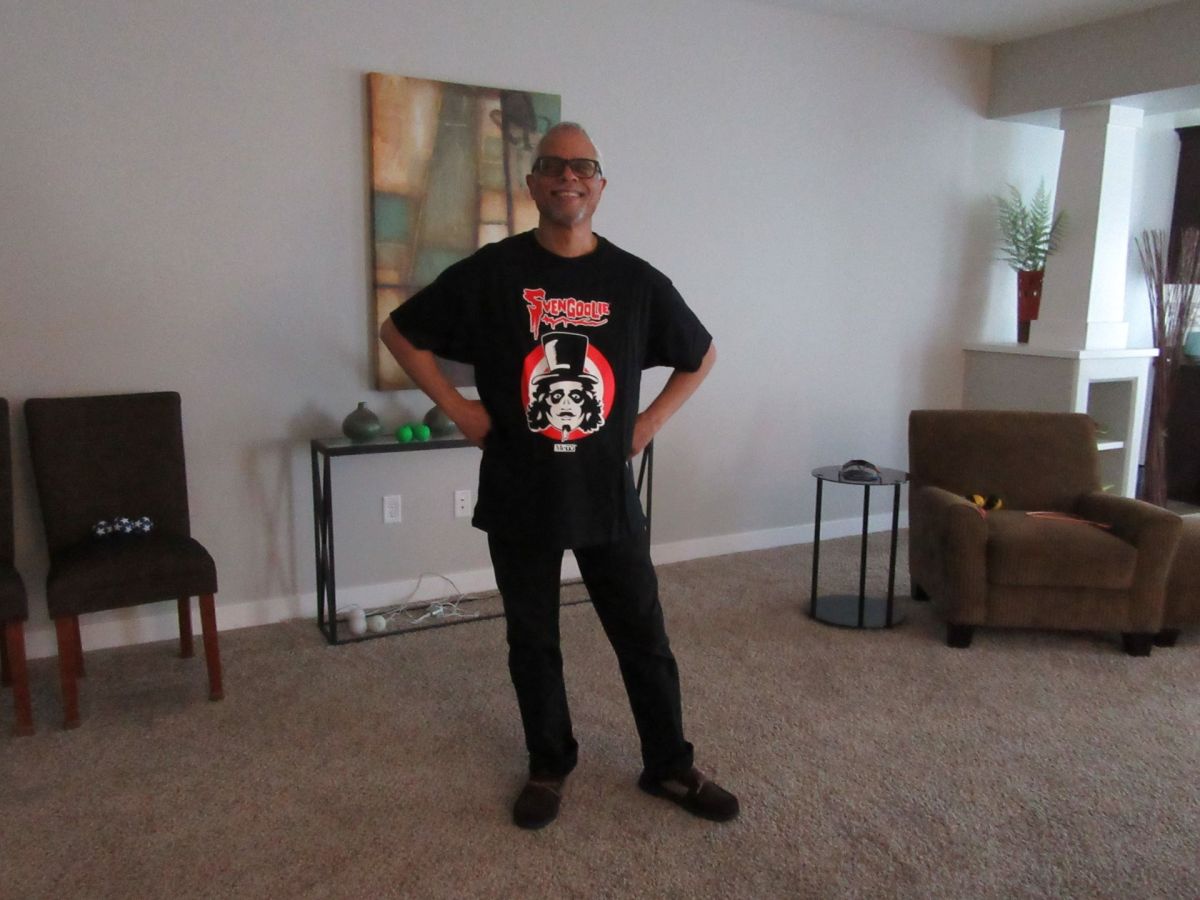
Last Saturday we watched the movie Trilogy of Terror on the Svengoolie show. Well, we tried anyway. There were a lot of interruptions from severe weather warnings. We didn’t mind them because you ignore them at your peril. It’s hard to forget the 2020 derecho in Iowa, which affected a lot of Iowans, including us.
Trilogy of Terror had some psychiatric aspects to it that reminded me how Hollywood frequently gets it wrong when portraying them in films—but sometimes hits the nail on the head.
Although we missed parts of the first and second parts of the movie, it wasn’t difficult to figure out the psychological angle. Both “Julie” and “Millicent and Therese” made me think of antisocial personality disorder (ASPD). The male college graduate student was a pretty good example of a predatory guy lacking any conscience and feeling no remorse for his bad behavior against his apparently meek and defenseless teacher, Julie.
But then the tables were turned and it was Julie who was actually the convincing, coldly calculating and remorseless psychopathic serial killer. She kept a scrapbook of the newspaper stories about her many victims.
One of my colleagues wrote the book about ASPD. Dr. Donald Black, MD, is the author of Bad Boys, Bad Men: Confronting Antisocial Personality Disorder (Sociopathy). In it he recounts the story of serial killer John Gacy. He was diagnosed with ASPD at the University of Iowa. He collected a great deal of data about antisocial men and also acknowledges that women can be diagnosed with ASPD. He has also co-edited and published the Textbook of Antisocial Personality Disorder.
The “Millicent and Therese” part of the movie displayed how a woman can be diagnosed with ASPD. This was the character Therese—who was also Millicent, a very strait-laced alter personality, which makes this also a case of what you could call dissociative identity disorder (DID), which may be related to severe trauma. This used to be called multiple personality disorder. What was interesting about this part of the movie was that both identities were being managed somehow by a family physician, not a psychiatrist—which is not at all plausible.
The last part of Trilogy of Terror is “Amelia,” in which Amelia buys a Zuni fetish doll (named “He Who Kills”) which she intends to give to her boyfriend. However, she’s in a hostile, dependent relationship with her mother who controls her and interferes with every aspect of her life. Of course, the doll comes to life and tries to kill her.
The struggle between Amelia and the doll makes me think about her internal struggle with angry and probably murderous feelings about her controlling mother. Amelia finally internalizes the doll’s rage (actually her own) when he emerges from the oven where she shoved him in an apparently futile attempt to burn him to a crisp. What it looks like is that she inhaled the smoke, finally owning her own rage by internalizing the doll’s smoky remains. This transforms her into a vengeful killer (now grinning with the sharp teeth of the doll) who calls her mother to invite her over to her apartment with the obvious plan to cut her to pieces with a large knife.
This is probably not a movie for kids or sensitive adults, which Svengoolie acknowledges several times during the show. This is why I like the segment with Kerwyn, the dad joke telling chicken with teeth who is voiced by Rich Koz, who also plays Svengoolie. Usually during that segment he tells a series of jokes, repeating the lines a couple of times, seemingly in an effort to teach you how to tell dad jokes. There’s also a Kerwyn joke of the week event, in which he tells a joke submitted by a fan. The joke video takes a few seconds to load, so be patient.
When I was a consultation-liaison psychiatrist I taught trainees in different ways. One of them was what I called the Dirty Dozen slide sets. They were on various basic topics that are important for psychistrists to know. I tried to put the most important points on only a dozen powerpoint slides.
After I started blogging about C-L Psychiatry around 13 years ago, the WordPress blogging platform started offering a way to post slide presentations using what is called shortcode. Presumably, you didn’t really have to know anything about coding language but the instructions weren’t very helpful.
I think I started trying to make slides using shortcode shortly after it was first introduced around 2013. I had to contact WordPress support because I couldn’t learn shortcode. A lot of bloggers had the same problem.
I think my main reason for getting interested in shortcode was so I could cut down on how many powerpoint slides I had to convert to images, which can take up a lot of space on a blog site after a while.
Anyway, in the past few days I tried to pick up the shortcode but couldn’t get the hang of it again. I finally found a WordPress help forum in which I found a blogger’s solution. She made it so clear.
Anyway, the Dirty Dozen on Delirium is below. A few pointers: click in the lower right hand corner of the slide if you want to view the slides full size. Use the directional arrows on your keyboard to click through the slides. You can also just use the arrow handles on the slides if you don’t want to see them full size. . When you click the URLs on the delirium websites, right click and open them in a new tab.
This slideshow could not be started. Try refreshing the page or viewing it in another browser.
Dirty Dozen on Delirium by Jim Amos, MD
-What is Delirium?
-Acute brain injury, by definition a medical emergency; mimics many primary psychiatric disorders: affect, behavior, and cognition typically fluctuate
-Systems causes: multiple room changes, absence of clock and calendar, sensory aids, family members, use of physical & chemical restraints
What is Delirium, cont.
-Hospital cultural reasons: assumption delirium is: primary psychiatric problem per se and that it’s the duty of mainly one medical subspecialty (Psychiatry) to manage; nursing management problem; unavoidable consequence of severe medical illness
-Clinical Features of Delirium
-Disorders of consciousness: hyperalert to obtunded
-Disorder of affect, behavior, cognition
-Disorder of perception: hallucinations, often visual
-Predisposing Risk Factors
-Age 65 or older
-Cognitive impairment
-Severe illness
-Dehydration
-20% prevalence in general hospital
-Range up to 80% prevalence in ICU
-Outcomes
-Increases length of stay, admit to long term care, mortality
-Post-discharge decline in ADLs & cognitive function
-Etiology
-Underlying medical cause(s)
-General medical conditions
-Medications
-Substance intoxication and withdrawal
-Delirium Screening (one example)
-The Confusion Assessment Method (CAM) developed by S.K. Inouye, rated in
around 5 minutes
-Acute change in mental status/fluctuating course and inattention; either disorganized thinking or altered level of consciousness
-Preventing Delirium
-Frequent reorientation
-Encourage normal sleep-wake cycle
-Encourage mobility
-eyeglasses, hearing aid available
-avoid anticholinergic, sedative-hypnotic drugs
-prevent organic drivers: hypoxia, infection
-Treatment of Delirium
-First treat underlying medical causes
-Avoid benzodiazepines unless alcohol withdrawal is the cause
-Avoid other drugs that cause delirium
On April 9, 2024, the University of Iowa educational podcast, Rounding@Iowa presented a discussion about the study of the use of psilocybin in the treatment of psychiatric and addiction disorders. You can access the podcast below. The title is “Psilocybin Benefits and Risks.” The format involves an interview by Dr. Gerard Clancy, MD, Senior Associate Dean for External Affairs, Professor of Psychiatry and Emergency Medicine with distinguished University of Iowa faculty and clinician researchers.
In this presentation, the guest interviewees are Dr. Michael Flaum, MD, Professor Emeritus in Psychiatry, University of Iowa Carver College of Medicine, and Dr. Peggy Nopoulos, MD, Chair and Department Executive Officer for the University of Iowa Department of Psychiatry, Professor of Neurology, Pediatrics, and Psychiatry, University of Iowa Carver College of Medicine.
All three of these highly respected and accomplished faculty taught me when I was a trainee in the psychiatry department and afterward were esteemed colleagues.
Join Dr. Clancy, Dr. Appenheimer & Dr. Barker as they discuss prevention, diagnosis and treatment of various tick-borne illnesses. CME Credit Available: https://uiowa.cloud-cme.com/course/courseoverview?eid=82296 Host: Gerard Clancy, MD Senior Associate Dean for External Affairs Professor of Psychiatry and Emergency Medicine University of Iowa Carver College of Medicine Guests: Ben Appenheimer, MD Clinical Associate Professor of Internal Medicine-Infectious Diseases Assistant Director, Infectious Diseases Fellowship Program Associate Clinical Director, Infectious Diseases Co-Medical Director, TelePrEP, University of Iowa Health Care University of Iowa Carver College of Medicine Jason Barker, MD Associate Professor of Internal Medicine-Infectious Diseases University of Iowa Carver College of Medicine Financial Disclosures: Dr. Gerard Clancy, his guests, and Rounding@IOWA planning committee members have disclosed no relevant financial relationships. Nurse: The University of Iowa Roy J. and Lucille A. Carver College of Medicine designates this activity for a maximum of 1.0 ANCC contact hour. Pharmacist and Pharmacy Tech: The University of Iowa Roy J. and Lucille A. Carver College of Medicine designates this knowledge-based activity for a maximum of 1.0 ACPE contact hours. Credit will be uploaded to the NABP CPE Monitor within 60 days after the activity completion. Pharmacists must provide their NABP ID and DOB (MMDD) to receive credit. JA0000310-0000-26-038-H01 Physician: The University of Iowa Roy J. and Lucille A. Carver College of Medicine designates this enduring material for a maximum of 1.0 AMA PRA Category 1 CreditTM. Physicians should claim only the credit commensurate with the extent of their participation in the activity. Other Health Care Providers: A certificate of completion will be available after successful completion of the course. (It is the responsibility of licensees to determine if this continuing education activity meets the requirements of their professional licensure board.)
The link icon adjacent to the title of the podcast takes you to the podcast website. The link to the article in Iowa Magazine about the psilocybin research at University of Iowa Health Care tells you more about Dr. Peggy Nopoulos and her role as principal investigator in the study.
There is also a link to the National Library of Medicine Clinical Trials web site where you can find out more details about the study design. You’ll notice a banner message which says: “The U.S. government does not review or approve the safety and science of all studies listed on the website” along with another link to a disclaimer with more details.










 Go Retire Psychiatrist