Educating Iowa: A University of Exploration (1847-1897) Uncovering Hawkeye History Part 1

I am thrilled to post this episode of the Uncovering Hawkeye History series out of order. It’s because Sena and I missed Part 1 but noticed that the YouTube video recording of it was posted. The volume is pretty soft, so crank it like you mean it. I plan to post something tomorrow about Part 3, The Next Chapter: Blazing New Trails.

The presenters gave stunning presentations and I’m delighted to let them tell their stories in the video below.

Sara Sanders, PhD, Dean of College of Arts and Sciences. She is all about making the most out of combining both the classical and the practical aspects of a college education.

Liz Crooks, Director of the Pentacrest Museum of Natural History. She loves museums, and told a great history about a character at the museum named Rusty the Giant Sloth (no relation to the third presenter, Dr. Rusty Barcelo). Rusty is made of Styrofoam and other materials. He is a giant sloth and the web page gives you a great idea about who he is. Remember, he’s made of artificial materials, so don’t expect too much. According to her LinkedIn profile, she is:

Experienced administrator with a demonstrated history of working in museums and higher education. Skilled in Nonprofit Organizations, Archival Research, Program Evaluation, Museum Education, and Historical Research. Strong professional skills with a Master’s Degree focused in Museum Studies from Western Illinois University.

Dr. Rusty Barceló held various positions at the University of Iowa from 1975 to 1996 including Assistant Provost and Assistant Dean with the Office of the Provost. Rusty has made a ton of other achievements in many other places in the country. Rusty is named for a scholarship to assist disadvantaged students at the University of Minnesota. Rusty was once the only Chicana student at The University of Iowa, and now is one of America’s most highly respected authorities on diversity and equity in higher education.

Next in The Series: The Next Chapter: Blazing New Trails (1998-2047)

The next and final presentation in The University of Iowa Hawkeye History series is entitled The Next Chapter: Blazing New Trails (1998-2047). I believe you can still register here.

It will be a Zoom presentation from 4:30-6:00 PM tomorrow, February 22, 2022. As in the previous presentations, the guide will be university archivist, David McCartney and will feature the following presenters:

Rod Lehnertz (02MBA), senior vice president for finance and operations

Lynette Marshall, UI Center for Advancement president and CEO

Peter Matthes (00BA, 14MBA), senior advisor to the president and vice president for external relations

Interesting highlights can be previewed below:

Milestones in University of Iowa History

Starting Over

Three Leading Professors on the future of The University of Iowa

Hope you can make it!

Managing Difficult Conversations Without a Neuralyzer

I think I was the last lone ranger Chief Resident in Psychiatry, meaning doing the job solo. After that, there were always at least two senior residents managing that. One of the things I did was to give lectures on various topics that were not strictly related to how to work on the wards and clinics, but how to communicate with other professionals and with patients.

The other big task was fielding outside telephone calls from doctors in other hospitals trying to transfer patients to The University of Iowa Hospital psychiatric units. That’s right, that was a resident’s duty. I had some pretty difficult conversations. I couldn’t just accept every referral.

The hospital didn’t issue neuralyzers, so it was impossible to make difficult conversations go away.

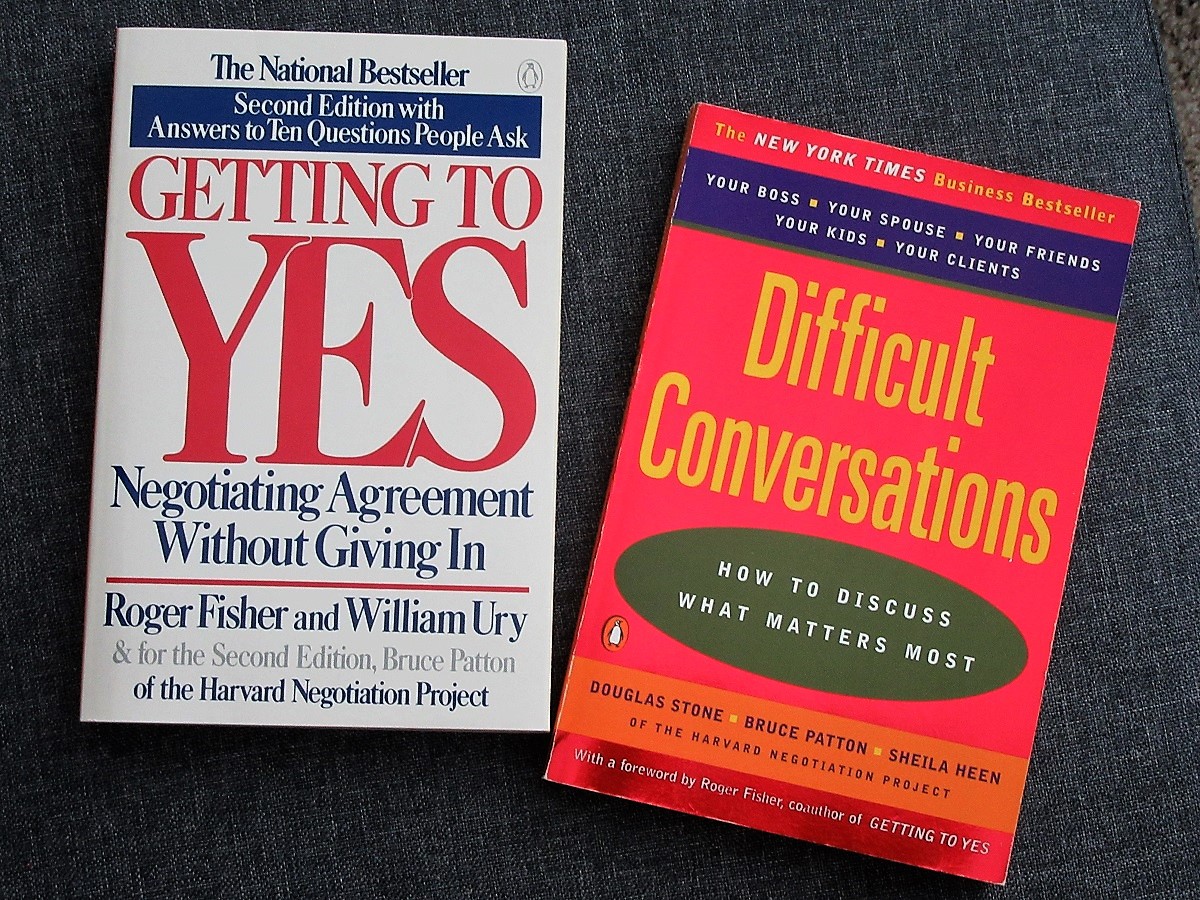
I used a couple of books as guides: “Getting to Yes” by Fisher and Ury, and Difficult Conversations by Stone, Patton, and Heen. I should seriously have reread those books during my entire career and even now. Nobody’s perfect. I encountered racism from patients, so I was no stranger to a variety of difficult conversations in many different situations.

Anyhow those two books are on the short list at the University of Iowa Conflict Management web page. There’s a ton of resources there available for learning about how to manage conflict and recognize what implicit bias is and what it is not.

Implicit bias gets a lot of press. I think it can tend to set people on edge before and during seminars on equity, diversity, and inclusion. Not everybody is a racist. But our brains are wired for implicit biases. I think we all need to get busy, and I mean everybody, including me. A good place to start is understanding implicit bias.

Wandering Thoughts on Talents and Traits in “To Kill a Mockingbird”

I’ve been reading To Kill a Mockingbird and thinking over something a character named Miss Maudie said in Chapter 10: “People in their right minds never take pride in their talents.” It seems to run counter to popular opinion. Why wouldn’t you take pride in your talents?

I got a lot of hits on my google search for this quote, by the way.

Miss Maudie’s statement was soon after Atticus shot a rabid dog with a marksman’s skill. Jem and Scout had been grousing about how they couldn’t find anything to be proud of in their old man. Atticus had never told his children about his skill as a marksman. He gave his kids guns but declined to teach them how to shoot.

I try to make sense of Miss Maudie’s comment by thinking about marksmanship as a skill, which is often distinguished from a talent, usually because the latter is thought to be a trait you’re born with. On the other hand, it’s hard to think of modesty (which is what keeps you from bragging or “taking pride”) as a talent. Some might say it’s more like a character trait.

Can you can develop a talent by practice? Can you improve your modesty by working at it and how would you do that, deadlifting your inner barbells? I tend to think you either have it or you don’t. And why does it take being in your right mind to refuse to take pride in or brag about your talent?

I often hear athletes (think Super Bowl) bragging non-stop about their talents. But I stop well short of admiring them for doing it. It’s annoying, but often preferable to the half-time show. Why do they grab their crotches?

Maybe it doesn’t make sense to brag about a talent you’re born with. I’m not sure if modesty is also something you’re born with. Babies seem very immodest, especially when they’re pooping, based on my extensive research of TV commercials and anecdotes.

On the other hand, a talent is also often said to be something which can be honed to perfection. In fact, Miss Maudie said that Atticus’s skill with a gun was a gift from God, a talent—which he perfected by practice. This might contradict the definition of talent as a thing you’re just born with. She goes on to say that Atticus thought this particular gift from God gave him an unfair advantage, so he gave it up. It would be unseemly to take pride in such a thing, and why would it even occur to someone with a talent to minimize it? The religious reference “pride goeth before a fall” is obvious, but religion doesn’t always seem to play a big role.

Maybe both talent and traits like modesty can be honed as well. What if they’re sort of like lifting just one of your eyebrows to make you look haughtily bemused? You can cultivate it, or at least some people say you can. There’s even a WikiHow for it. But it seems like you have to find your dominant eyebrow, which means there’s something inborn that makes it easier.

Can you develop modesty as though it’s a skill, assuming that it’s also a trait which is malleable? Is there a modesty cortex? Then, you could say some people have a talent for modesty. And how about those splinter talents or skills (like suddenly playing the piano like a virtuoso) which can appear abruptly after brain injuries? Can modesty be like that, a nascent itch in the body waiting to be scratched? That kind of makes you want to drop a piano on the guy at the cocktail party who brags about his golf game, doesn’t it?

I suppose some would take pride in being modest, although it sounds paradoxical—until I remember all the people I’ve seen who can feign desirable traits.

So, is there a Gold’s Gym for character traits where we can go and develop talents like modesty, patience, respect, kindness, and mercy?

Not exactly, but we can give ourselves a kick start by checking out some resources that aren’t that hard to find. Those would be different from what you can pick up from “To Kill a Mockingbird,” although it’s obvious that’s how I got steered to this topic in the first place. Remind me again, why is this book be taken off required reading lists?

Thoughts on Near-Death Experiences

There is a very interesting Medscape article on Near Death Experiences (NDEs), “Young Doctor Explores Near-Death Experiences – Medscape – Jan 13, 2022.” The story was written by Stephanie Lavaud. It was a transcript of an interview with a general practitioner from, Francois Lallier, MD, PhD, from Reims University Hospital in France. He conducted a retrospective study on NDEs for his general medicine dissertation. He discussed the results in his book, Le mystere des experiences de mort imminente (translation: The Mystery of Near-Death Experiences).

It has so far collected several interesting comments. I submitted a couple.

One of them was about a teacher and colleague of mine, Dr. Russell Noyes, Jr, MD, Professor Emeritus University of Iowa. He published several articles about NDE related to traumatic accidents, mainly in the 1970s. Lallier used the Greyson Near-Death Experience Scale for his study, and this scale was based on the work of Noyes and others.

He also participated in a Iowa Public Radio Show in 2018. Dr. Noyes collected over 200 personal accounts of NDEs but declined to publish them. I don’t recall that Dr. Noyes ever discussed his interest in this area with me.

My other comment was a correction to a mistake in my first comment, in which I said no patient I saw in my career as a consult-liaison psychiatrist ever reported a Near-Death Experience to me. I remembered one later. It occurred decades ago but I had forgotten about it. I included the patient’s NDE self-report in a grand rounds presentation, which was not mainly about NDEs.

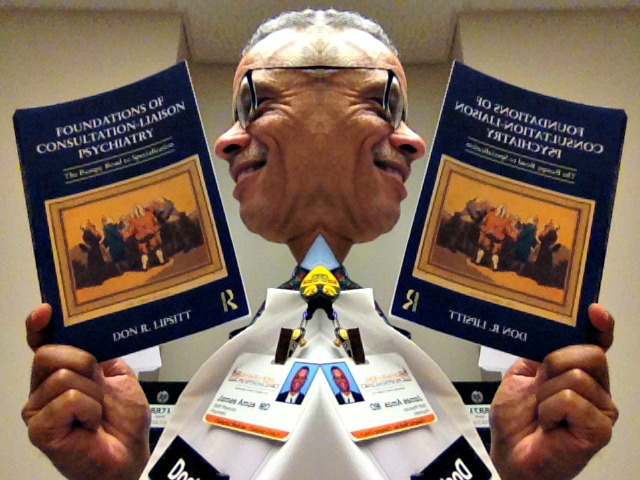
As a consultation-liaison psychiatrist, I saw many patients with severe medical illness and I can recall only one patient who described an experience of NDE. Delirium was a common syndrome in most of the patients I saw, especially those in the intensive care units.

I think it’s possible that some of the cases of NDE might be attributable to delirium. Vivid and compelling hallucinations and delusions are common symptoms of delirium. The catatonic variant of delirium, which can be caused by severe benzodiazepine withdrawal and other psychiatric disorders can lead to the rare Cotard’s syndrome, marked by the nihilistic delusion that one is dead or even paradoxically immortal, has lost one’s body, is rotting internally or is without limbs and other body parts. The line between NDEs and neuropsychiatric disease can sometimes be thin. However, I don’t categorically dismiss NDEs as mental illness.

Dr. Noyes was very familiar with delirium. He was one of my first teachers in the practice of consultation-liaison psychiatry. He taught me and countless other trainees and early career psychiatrists about anxiety, somatoform disorders, and delirium. He knew the difference between neuropsychiatric illness and NDEs.

In the National Public Radio interview, he explained that after consulting with an attorney who cautioned about the possibility of lawsuits related to breach of confidentiality (obtaining releases of information consents after so much time had passed would have been next to impossible), he decided against publishing his collection of personal accounts of NDEs.

The Medscape article author pointed out that many doctors usually take little interest in the issue of NDEs with patients. Lallier said this is because it’s not normally a part of medical school curriculum. On the other hand, one doctor pointed out in the comment section that he had been conducting NDE research for a decade and had published a series of articles in a peer-reviewed journal. Dr. John Hagan III reported that the articles were included in a medical textbook for physicians in 2017, The Science of Near-Death Experiences, copyrighted by the Missouri State Medical Association (MSMA). Dr. Hagan added that the MSMA passed a resolution which was sent to the national US medical organizations asking that all medical school curricula include education on NDEs.

Even the titles of the books I mention in this post are interesting: The Mystery of Near-Death Experiences and The Science of Near-Death Experiences. The mystery vs the science—or the mystery and the science? They seem almost analogous to bookends, or maybe the Janus head, which is fun to speculate about.

The Janus head used to be the logo for the Academy of Consultation-Liaison Psychiatry (ACLP). It was replaced by some nondescript design for reasons I don’t understand. It reminds me of waves, which could lead to seasickness.

Janus was a god in Roman mythology and is typically represented as having two heads, each facing opposite directions. Janus was the god of doors, gateways, and transitions. He held a key in one hand to open gates and a staff in the other to guide travelers. He is said to represent the middle ground between the abstract and the concrete, between life and death—and perhaps between mystery and science.

Next Episode of Uncovering Hawkeye History Today

Get ready for the next episode of The University of Iowa’s virtual event of Uncovering Hawkeye History this evening from 4:30-6:00 PM. The title for this one is “Endless Innovation: An R1 Research Institution (1948–1997).” According to the official announcement, “This event series is designed to highlight notable elements of UI’s 175-year history and includes readings you can do in advance, notable guest speakers during each class, and the opportunity to ask questions each week.” You can register here.

Today’s zoom class again features university archivist David McCarty and 3 of the UI’s most talented innovators:

Bruce Gantz: 68BS, 74MD, 80MS, 80R), otolaryngology professor, the world’s first doctor to perform a robot-assisted cochlear implant surgery

Kevin Washburn: N. William Hines dean, College of Law

Ed Wasserman: experiential psychology professor

Sena and I plan to join the event this evening. I’m looking forward to hearing from Ed Wasserman, who has been studying the origins of innovation for decades. He studies pigeons to find out what really goes on in the ability of humans to come up with new ideas. Wasserman thinks it may have more to do with simple processes like trial and error then eureka type flashes of genius. In other words, we’re a lot like pigeons.

For some reason, this reminds me of an essay by James Thurber, “There’s an Owl in My Room.” It’s published in a book entitled The Thurber Carnival. The essay is all about Thurber’s impatience with a poem about pigeons written by Gertrude Stein. He thought it made pigeons way too complicated. I realized that I had never read the poem, so I went hunting for it on the web. I found a lot of comments about how ridiculous many people think “pigeons on the grass” is:

“Pigeons on the grass, alas. Pigeons on the grass, alas. Short longer grass short longer, longer shorter yellow grass. Pigeons, large pigeons on the shorter longer yellow grass, alas, pigeons on the grass.”—Gertrude Stein.

I had no trouble finding a short excerpt of Thurber’s scathing essay about it on the web.

Thurber’s closing sentence is “No other thing in the world falls so far short being able to do what it cannot do as a pigeon does. Of being unable to do what it can do, too, as far as that goes.”

You can see why some people might be offended by being compared to pigeons. On the other hand, he has written a book about the origin of the notion of creative genius, As If by Design: How Creative Behaviors Really Evolve (2021, Cambridge University Press).

I read an article on the web claiming that, scientifically speaking, there’s no difference between doves and pigeons. Sena and I have observed pigeons/doves with missing toes. That might indicate the trial and error of attempts to make nests with string, which gets wound around their feet, leading to auto-amputation. Some call it stringfoot, although it might just be bad judgment (see my YouTube description).

I can imagine what he might think about Ancient Aliens theories about how humans might come up with innovative inventions. Aliens seem to be particularly prone to crashing their space ships on our planet, making it easier for us to reverse engineer the working parts left strewn all over the ground. There’s something ironical about that. How can they be smart enough to manipulate our DNA and leave us clues about how to create inventions that advance our civilization when they can’t even stop falling out of the sky? On the other hand, maybe we just stole their technology right out from under their very small noses and slapped patents on them. So much for genius.

I’m sure Wasserman thought of all that.

Happy Valentine’s Day!

Happy Valentine’s Day! Boy, are you guys lucky! I woke up yesterday morning with the crazy idea of making a video of me singing “L-O-V-E.” You know, the one Nat King Cole made famous. What do you mean, “No, what are you talking about?”

No kidding, though; I even cleared my throat a couple of times just thinking about it, getting ready to burst into my full-throated, only slightly phlegmy 60ish voice. I let that go after my first cup of coffee, thank goodness. You don’t know how close you came. My singing would kill a cat from a hundred yards.

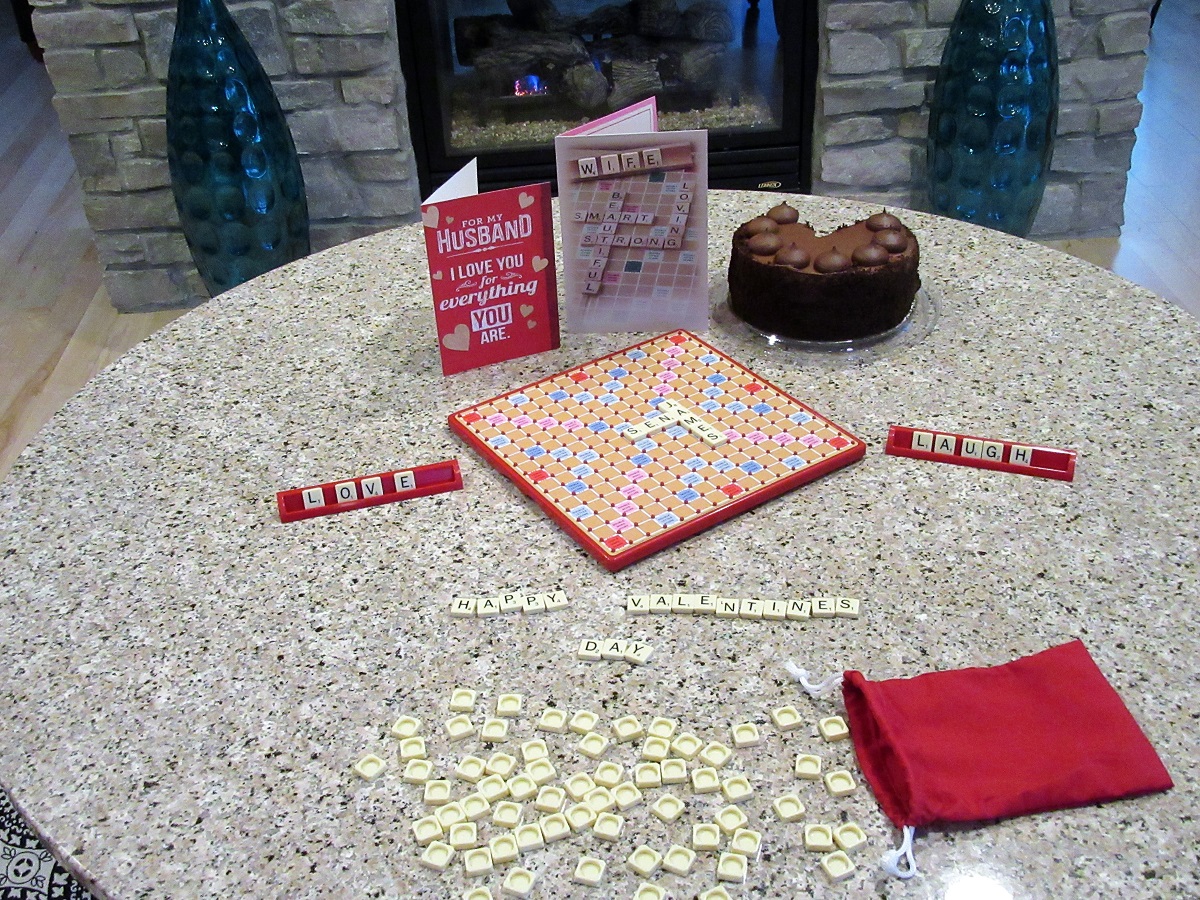
Anyway, Sena got a kick out of my Valentine’s Day card because it had a scrabble theme. The top line actually is made of 3-dimensional Scrabble tiles. I bought that card before I found the Tile Lock Scrabble game.

By the way, I’m zero for 3 games so far. We really need a Scrabble dictionary. Sena plays the video scrabble game a lot and she played the word “Qi” twice (at right angles to each other) in our second game, claiming it’s a real word. I didn’t argue and without a dictionary, I couldn’t challenge it. But she didn’t know what it meant. “I’ve been meaning to look that up,” she says.

It turns out Qi is a variant spelling of CHI (pronounced like the first syllable of cheapo, a variant of cheapskate, as in a guy who spends the least amount of money possible on a Valentine’s Day gift for his wife). Qi is defined as the energy or life force in everything and it’s the basis of most of Chinese medicine and philosophy. It’s also the single most commonly used word in Scrabble tournaments.

We made this deal a while ago. If we buy a cribbage board in the shape of the state of Iowa with a road map and names of major cities, etc. on it, then I would agree to play Scrabble. We got the Scrabble game first. A deal’s a deal, even if it’s backwards. Sena ordered the Iowa State Map cribbage board yesterday. She wins most of the cribbage games, too. Here’s how she counts her scores: “15 for 2, a run of 3 for 19 (laugh it up you people, these are the jokes; hint, you have to know what scores are impossible in cribbage), and a flush for a total of 29; hey, I win again!”

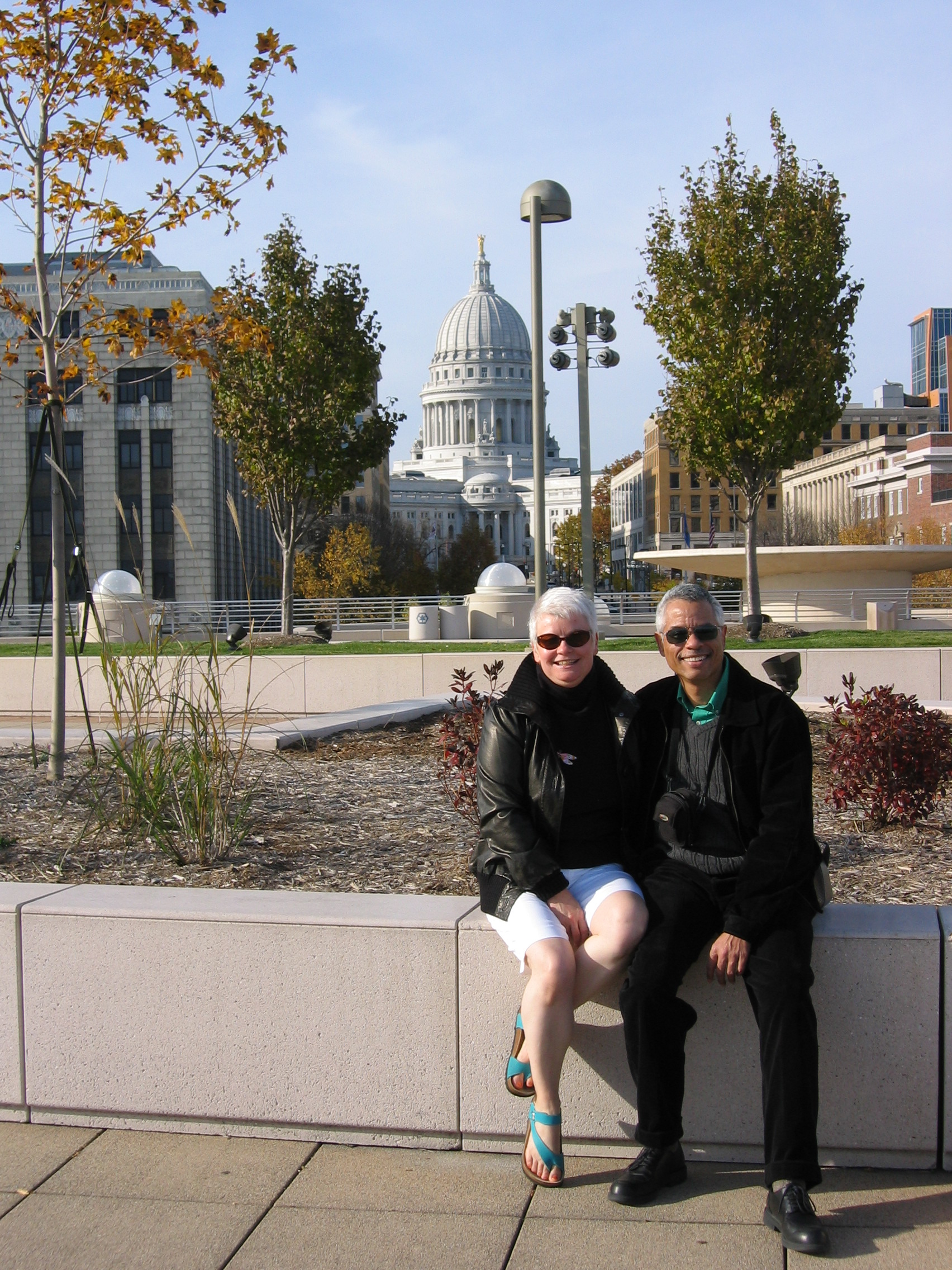
You guys need to thank for me another thing. At first, Sena allowed me to use just one snapshot of us in this post. It’s of us at Niagara Falls in front of the helicopter we took a ride on to get a fantastic view of the falls. But we got to looking at a ton of pictures. We laughed a lot. We chose more pictures.

Have a great Valentine’s Day!

Our Impressions of University of Iowa Free Webinar Yesterday: The Stories That Define Us”

We were overall delighted with yesterday’s presentation, University of Iowa Free Webinar: “Breaking Barriers: Arts, Athletics, and Medicine (1898-1947).” It’s one in a series of 4 virtual seminars with two more scheduled this month, which you can register for at this link.

February 15: Endless Innovation: An R1 Research Institution (1948–1997)

February 22: The Next Chapter: Blazing New Trails (1998–2047)

The moderator was university archivist and storyteller, David McCartney.

Presenters include:

Yesterday’s presentation was recorded and will be uploaded to The University of Iowa Center for Advancement YouTube site at a later date.

McCartney did an excellent job as moderator, although got stumped from a question from a viewer about who was the first African American faculty member in the College of Medicine. He’s still working on tracking that down. It wasn’t me. I’m not that old and I am not risen from the dead, as far as I can tell; but to be absolutely clear, you should ask my wife, Sena. I was able to google who was the first African American graduate of the University of Iowa law school: Alexander Clark, Jr. McCartney thinks he might have been the first University of Iowa alumnus, although he couldn’t confirm that.

On the other hand, I could have been the first African American consulting psychiatrist (maybe the only African American psychiatrist ever) in the Department of Psychiatry at UIHC—but I can’t confirm that. Maybe McCartney could work on that, too.

 There are a few words about me in the department’s own history book, “Psychiatry at Iowa: The Shaping of a Discipline: A History of Service, Science, and Education by James Bass: Chapter 5, The New Path of George Winokur, 1971-1990:

“If in Iowa’s Department of Psychiatry there is an essential example of the consultation-liaison psychiatrist, it would be Dr. James Amos. A true in-the-trenches clinician and teacher, Amos’s potential was first spotted by George Winokur and then cultivated by Winokur’s successor, Bob Robinson. Robinson initially sought a research gene in Amos, but, as Amos would be the first to state, clinical work—not research—would be Amos’s true calling. With Russell Noyes, before Noyes’ retirement in 2002, Amos ran the UIHC psychiatry consultation service and then continued on, heroically serving an 811-bed hospital. In 2010 he would edit a book with Robinson entitled Psychosomatic Medicine: An Introduction to Consultation-Liaison Psychiatry.” (Bass, J. (2019). Psychiatry at Iowa: A History of Service, Science, and Education. Iowa City, Iowa, The University of Iowa Department of Psychiatry).”

And in Chapter 6 (Robert G. Robinson and the Widening of Basic Science, 1990-2011), Bass mentions my name in the context of being one of the first clinical track faculty (as distinguished from research track) in the department. In some ways, breaking ground as a clinical track faculty was probably harder than being the only African American faculty member in the department.

I had questions for Lan Samantha Chang and for Dr. Patricia Winokur (who co-staffed the UIHC Medical-Psychiatry Unit with me more years ago than I want to count.

I asked Dr. Chang what role did James Alan McPherson play in the Iowa Writers Workshop. She was finishing her presentation and had not mentioned him, so I thought I’d better bring him up. She had very warm memories of him being her teacher, the first African American to win a Pulitzer Prize for fiction, and a long-time faculty member at the Workshop.

She didn’t mention whether McPherson had ever been a director of the Workshop, though she went through the list of directors from 1897 to when she assumed leadership in 2006. You can read this on the Workshop’s History web page. I have so far read two sources (with Wikipedia repeating the Ploughshares article item) on the web indicating McPherson had been acting director between 2005-2007 after the death of Frank Conroy. One source for this was on Black Past published in 2016 shortly after his death, and the other was a Ploughshares article published in 2008. I sent an email request for clarification to the organizers of the zoom webinar to pass along to Lan Samantha Chang.

I asked Dr. Winokur about George Winokur’s contribution to the science of psychiatric medicine. Dr. George Winokur was her father and he was the Chair of the UIHC Psychiatry Department while I was there. She mentioned his focus on research in schizophrenia and other accomplishments. I’ll quote the last paragraph from Bass’s history on the George Winokur era:

“Winokur, in terms of research, was a prototype of the new empirical psychiatrist. Though his own research was primarily in the clinical realm, he was guided by the new neurobiological paradigm (perhaps in an overbalanced way) that was solidifying psychiatry with comparative quickness. New techniques in imaging and revelations of the possibilities in genetic study and neuropsychopharmacology lay ahead. George Winokur had helped the University of Iowa’s Department of Psychiatry—and American psychiatry as a whole—turn a corner away from subjectivity and irregularity of Freudian-based therapies. And once that corner had been turned there was no going back.”

George Winokur was the department chair at University of Iowa Hospitals and Clinics from 1971 to 1990 and had a unique and memorable style. George also had a rough sense of humor. He had a rolling, gravelly laugh. He had strict guidelines for how residents should behave, only slightly tongue-in-cheek. They were written in the form of 10 commandments. Who knows, maybe there are stone tablets somewhere:

Winokur’s 10 Commandments

  1. Thou shalt not sleep with any UI Psychiatry Hospital patient unless it be thy spouse.
  2. Thou shalt not accept recompense for patient care in this center outside thy salary.
  3. Thou shalt be on time for conferences and meetings.
  4. Thou shalt act toward the staff attending with courtesy.
  5. Thou shalt write progress notes even if no progress has been made.
  6. Thou shalt be prompt and on time with thy letters, admissions and discharge notes.
  7. Thou shalt not moonlight without permission under threat of excommunication.
  8. Data is thy God. No graven images will be accepted in its place.
  9. Thou shalt speak thy mind.
  10. Thou shalt comport thyself with modesty, not omniscience.

Quinn Early has a lot of energy and puts it to good use. His documentary of the sacrifices of African American sports pioneers, including “On the Shoulders of Giants” (Frank Kinney Holbrook) is impressive.

There was a good discussion of the importance of the book “Invisible Hawkeyes: African Americans at the University of Iowa during the Long Civil Rights Era”, edited by former UI faculty, Lena and Michael Hill.

Sena and I thought yesterday’s presentation was excellent. We plan to attend the two upcoming webinars as well. We encourage others to join.

Links to Ozymandias

Sena and I took a walk down Scott Boulevard today. The weather was practically balmy, compared to how cold it has been. Forty degrees above zero compared to 9 degrees below feels miraculous.

We walked past the Harvest Preserve entry. Across the street is what we’ve just learned is an old building that is known as the “Haunted Barn” (photo taken in August 2021).

We passed the 20-foot-tall, 110-ton Sitting Man sculpture, now on the west side of Scott Boulevard after it was moved from the east side of the road in July, 2020.

Today was the first time we trekked past the Sitting Man to Rochester Avenue and beyond. If we hadn’t, we would not have noticed a fascinating, blindingly white abstract sculpture mounted on a concrete block which we initially believed was on the Harvest Preserve property at the northwest corner of the intersection. Sena said it looked like a person, noting the head, arms, and body. I didn’t notice that.

After we got back home, I couldn’t find out anything about it on the web, no matter how much I connected the search terms to Harvest Preserve, the Sitting Man and so on. I found only one item with a photo and it was an announcement about a tour on Harvest Preserve in 2018. The impression is that the sculpture is on the property.

I sent an email inquiry to Executive Director of the Harvest Preserve Foundation, Inc., Julie Decker, whose email address is available on the website.

Ms. Decker informed me that the sculpture is technically not on Harvest Preserve property. She knew the sculpture is entitled “Family,” and the artist’s name was Eugene Anderson, who died in 2008. That’s all she knew.

It turns out that what little she knew led to an astonishing story that was even deeper and more engaging than we imagined. You can read the obituary of the Iowa City artist Eugene Anderson on legacy dot com. The highlights are that he started his career in architecture, was the University of Iowa Hospital and Clinics (UIHC) architect for 25 years, and then began creating original art work to display in the hospital to comfort patients. He later became a full-time sculptor, and was on the board of directors for “Arts Iowa City.”

I was a medical student, resident, faculty member and a consulting psychiatrist at UIHC, a career starting in 1988 and ending with my retirement in June of 2020. It’s possible I saw some of Anderson’s work while I was galloping around the hospital.

In 1994 he created the “Family Group” series of sculpture which have been displayed at Chait Galleries in Iowa City, Des Moines Art Center, and the Brunnier Art Museum in Ames, Iowa. The piece we saw might have been one of those. Unfortunately, I couldn’t find anything on the web about the series.

And what is more intriguing, Anderson also traveled extensively, even to Egypt where he cruised on the Nile and took a sunrise balloon ride over the pyramids.

How is it possible that so little of Eugene Anderson’s life and work are not better known? Come to think of it, I guess time can erase the memory of our accomplishments.

This little story reminded me of the poem “Ozymandias” by Percy Bysshe Shelley. I’ve forgotten all of my college freshman English Literature but a web search indicates that Ozymandias was based on Ramesses II, a king of ancient Egypt. Ozymandias was a great ruler of a vast empire. His sculptor built a huge monument in the desert and gave it the oft-quoted inscription, “Look on my works, ye Mighty, and despair!”

Ozymandias

Percy Bysshe Shelley-1792-1822

I met a traveller from an antique land
Who said: “Two vast and trunkless legs of stone
Stand in the desert . . . Near them, on the sand,
Half sunk, a shattered visage lies, whose frown,
And wrinkled lip, and sneer of cold command,
Tell that its sculptor well those passions read
Which yet survive, stamped on these lifeless things,
The hand that mocked them, and the heart that fed:
And on the pedestal these words appear:
‘My name is Ozymandias, king of kings:
Look on my works, ye Mighty, and despair!’
Nothing beside remains. Round the decay
Of that colossal wreck, boundless and bare
The lone and level sands stretch far away.”

Today we searched for links on the web to find out more about a mysterious sculpture. We found links of a different kind, links to a stranger and to the near and the ancient past. Anderson’s sculpture, “Family,” is still standing, tall, clean, and bright for all to see.