University of Iowa Writing Programs Get High Ranking from U.S. News & World Report

The University of Iowa ranks No. 9 across all universities in the country for its power in the writing disciplines., according to the 2024 U.S. News & World Report.

The school is well known for its writing programs of which the The Writers Workshop is the best known.

The University of Iowa also gives medical students a leg up on writing in its Writing and Humanities Program, which offers courses such as writing and medicine and editorial writing.

This reminds me of a couple of things, one of which was the University of Iowa medical school note service. Many medical schools have note services so that not all students have to write their own lecture notes. It’s ironic in a way that one of the best known public medical schools didn’t encourage all the medical students to labor over their own class notes. I volunteered once to write notes for the class. It was hard work.

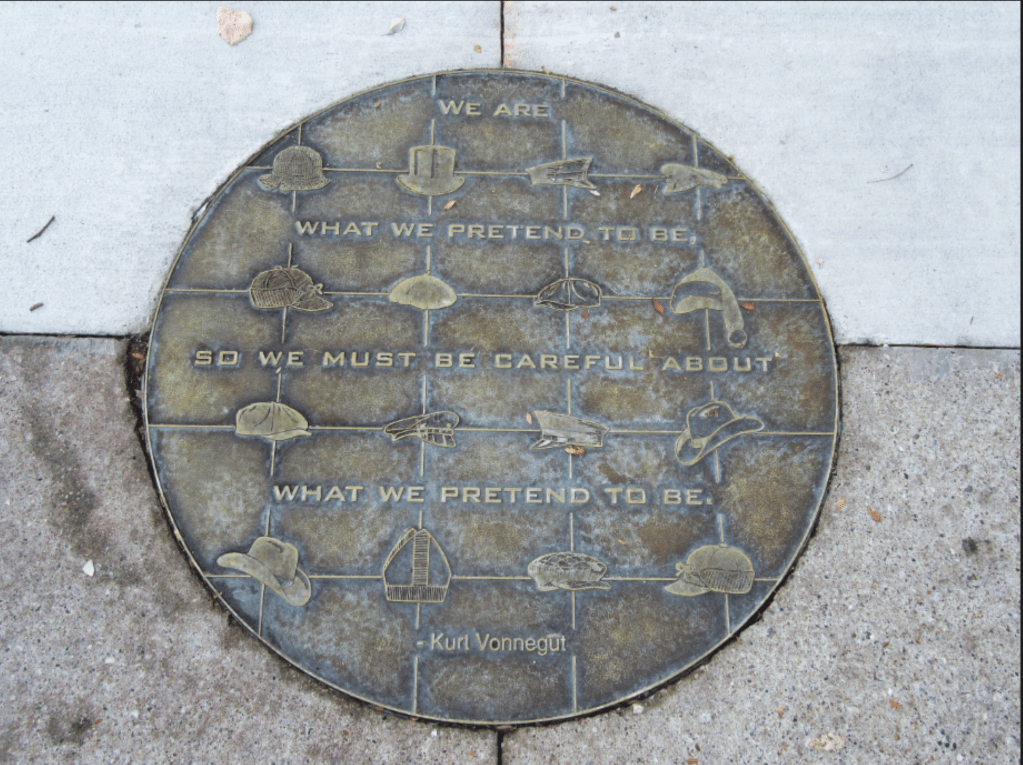
The other thing writing education at the University of Iowa reminds me of is the Iowa Avenue Literary Walk. There are several plaques along Iowa Avenue which honor famous authors who had Iowa connections, often through the Iowa Writers Workshop. My favorite is one by Kurt Vonnegut, a former teacher at the workshop.

Can Artificial Intelligence Learn from My Book?

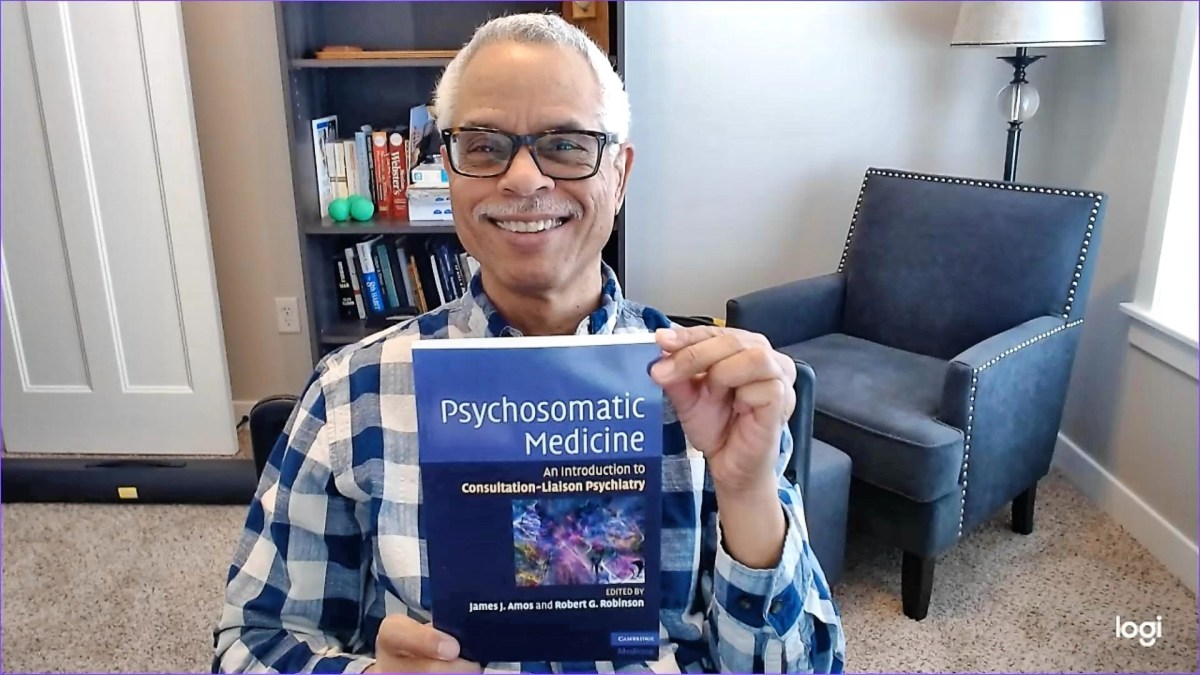
Recently the publisher of a book co-edited by me and my former psychiatry chair Dr. Robert G. Robinson asked me to sign off on a proposal to involve Artificial Intelligence (AI) in using the work.

The book, “Psychosomatic Medicine: An Introduction to Consultation-Liaison Psychiatry,” is 14 years old now, but is still a practical tool for learners, at least in my opinion.

Interestingly, it looks like the publisher is also trying to contact Dr. Robinson about the proposal through me. I wonder if that means they’re having as much trouble finding him as I have.

I’ve made it clear that I have misgivings about AI, as I’ve indicated in at least one blog post about Google’s AI, which used to be called, Bard which I think has been renamed Gemini. I think AI is prone to spreading misinformation, which has been called “hallucinations” by some writers.

The publisher makes it clear that this proposal regarding AI involvement in our book is an “opt in” choice. I gather that means if I don’t opt in, they’ll continue to bug me about it until I do.

That’s unlikely to happen.

Thoughts on the Homeless Mentally Ill

The homeless man who lives on the sidewalk outside our hotel reminds me of a couple of things. One is Dr. Gerard Clancy, MD who is University of Iowa Health Care Professor of Psychiatry, Professor of Emergency Medicine, and Senior Associate Dean of External Affairs.

I remember Gerry, who was in the department of psychiatry when I was a resident. I saw his picture in the newspaper and hearing about him riding a bicycle around Iowa City doing a sort of outreach to the homeless mentally ill.

I found an archived article mentioning him published in 1995 in the Daily Iowan. The story starts on the bottom of the front page, entitled “I.C. opens new doors for area’s mentally ill.” It continues on page 9A.

The story mentions Dr. Clancy and what was called then the Clinical Outreach Services and the Emergency Housing Program (EHP). The challenges then sound a lot like what they are now: long waiting lists for psychiatric evaluation and treatment, a lack of funding for the treatment of mental illness, and a lack of preventive care. The most common mental illnesses in the homeless mentally ill are chronic schizophrenia, schizoaffective disorder, and bipolar disorder. The idea of reaching out to them “on their own turf” as Clancy was quoted, was to help them feel more comfortable talking about their mental illness.

The housing situation for this population of those struggling with mental illness was dismal then and it’s still dismal.

The homeless guy I’ve been calling Bob lives on the sidewalk next to a busy street. It’s just my opinion that he’s mentally ill based on my observations of his behavior. I’ve never tried to talk to him. However, Bob gets visits from people who obviously have differing views about the way he lives.

Some of them do talk to him and, although I can’t hear their conversations, the actions tell me important things. Some bring him what I call “care packages,” often food, water, and other items. They may start by acting kind, although may get impatient with him. Others try to clean up his sidewalk, and may criticize him. The police occasionally visit and have so far not taken him into custody.

It looks like things have not changed much since 1995 regarding the homeless mentally ill based on what I write here about my observations. In fact, it’s easy to find current news stories that say things are getting worse.

At the beginning of this post, I said I found a couple of things. The other thing was a very thorough teaching presentation about the current state of formal outreach to this population. It’s available on the web as a power point presentation by another University of Iowa faculty, Dr. Victoria Tann, MD, entitled “Assertive Community Treatment 101.”

Dr. Tann is currently an IMPACT Team psychiatrist. It’s an excellent source of background on the history of this effort at outreach to the homeless mentally ill. It also summarizes what’s happening with the program now.

Bird Watching Stories Are Like Fishing Tales

We finally got a couple of videos of a goldfinch! It has been years since I’ve been able to catch a brilliant male goldenrod and it happened last week on the Clear Creek Trail.

In fact, we saw a few birds with the usual idiosyncratic behavior. Goldfinch are rocket fast and hate getting caught on camera.

On the other hand, robins seem to be aware of when they’re being watched and ham it up.

Catbirds also seem to know when they’re being observed and flit away just as I’m getting the camera focused. The one I caught seemed to moon me with its rusty-feathered rump as it took off.

Cardinals also show off and can sit for several minutes preening while you get decent footage.

Birdwatching is a lot like fishing. When you tell others about the whoppers you lost at the lake, it’s a lot like birders telling you about the rarely seen, mysterious birds everyone but experts almost always never see.

And I swear I saw a blue bunting while we were out that day. It flew right in front of me. You should have been there. I haven’t seen a blue bunting in decades!

I almost got the shot.

Historic Rock Island Line Depot in Iowa City

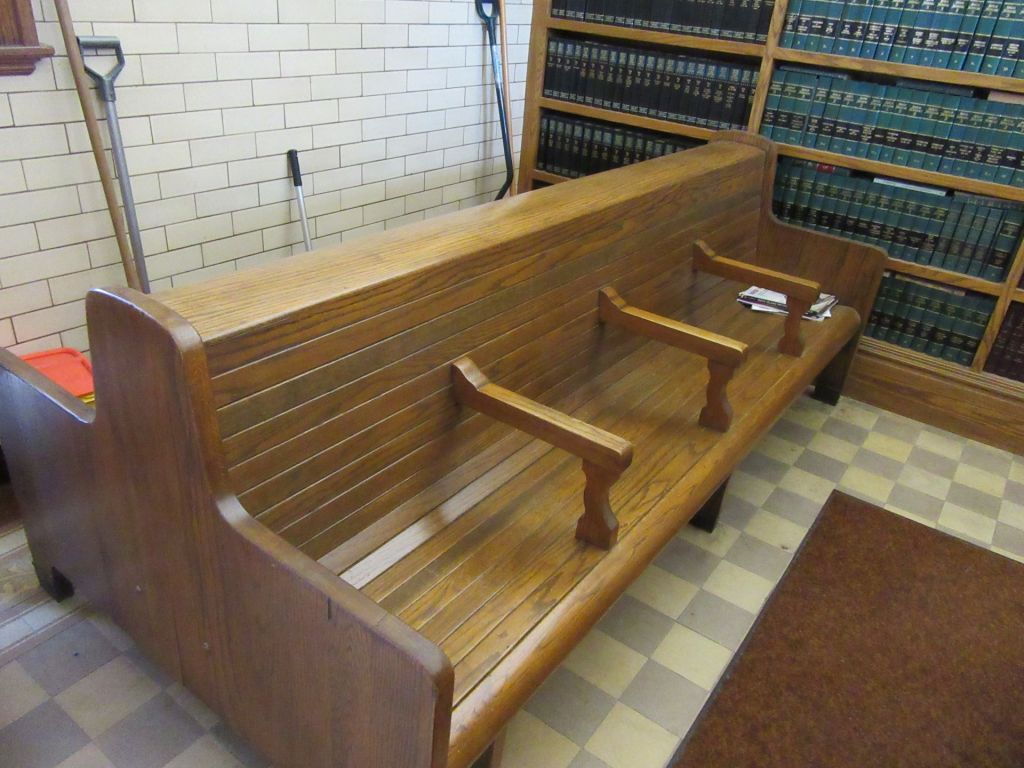
Last week while on our way to the Stanley Museum of Art, we saw the Rock Island depot at 115 Wright St in Iowa City. We’ve lived here 36 years and never visited this historic landmark before. It has interesting architecture and there is even a passenger bench inside. It was built in 1898 and was converted to law offices in the early 1980s. There used to be a waiting room which was removed when it was remodeled. You can see it in the featured image.

The depot has a rich history which you can read here.

Be sure to see the YouTube presentation by local historian Irving Weber.

You’ll notice that Mr. Weber opens his talk about the Rock Island depot by singing a line from a popular song about it: “Rock Island Line is a mighty fine line…”

When we looked on the web for the song, we couldn’t find a rendition with that exact line. Every version we listened to was slightly different but that line was always “Rock Island Line is a mighty good road…” There is an original version recorded in 1934 by John Lomax. We like the one by Lead Belly.

Iowa City Sculptors Showcase 2024

Right on time, the Iowa City Sculptors Showcase is out in the parks. The featured pieces all have a plate on the showcase pad with a QR Code you can scan to learn more about the works. They’ll be up for two years.

Tim Adams: “Exuberance” at Mercer Park, Bradford Dr; “Poppy” at Scott Park on Scott Blvd

Hilde DeBruyne: “Gaia” and “Life Leaf” at Terry Trueblood Recreation Area, McCollister Blvd

V. Skip Willits: “Writing Figure” at Iowa River Trail; “Flight of Butterflies” at Riverfront Crossings Park

Kristin Garnant: “Mechanics of Grace” at Riverfront Crossings Park

Johnathan Goupell: “Pillars [1]” at Riverfront Crossings Park

Back to the Stanley Museum of Art

We went for a return visit to the Stanley Museum of Art the other day. It’s been a couple of years. There were a couple of head sculptures outside in the front of the building. They were in honor of one of my former medical school teachers, Dr. Richard Kerber. And the Keith Haring exhibit is excellent. He visited Horn Elementary School in 1989.

What About Bob?

The homeless guy camped next to the busy street just outside of our hotel is still here. I’m going to call him Bob because it’s awkward to keep calling him “the homeless guy.” I haven’t met Bob yet, but Sena got him some water. She had to give it to the hotel resident who so far is the only one who has been able to communicate with him.

Sena and I talked about what might be done for Bob. She noticed that his face was sunburned bad enough to cause the skin to peel off. Could a case be made for his being a danger to himself?

Of course, you could guess this issue would come up because I’m a retired psychiatrist. As an aside, I found an article published in the Daily Iowan early this year. The author interviewed several residents of a homeless camp who were displaced after a fire and subsequently the owners of the land closed the camp.

The homeless people at the camp were articulate and open to interview. Some of them were clearly choosing to be homeless and able to state how and why they did.

Bob might not be articulate enough to do that. He spends most of his time lying on the pavement with his blanket over him. It’s sometimes hard to tell if he’s out there until he moves. When he’s up, he usually stands up and waves his arms back and forth or sits on the grass. Occasionally, he moves in ways suggesting he’s acting out some kind of conversation with an invisible person.

A police officer stopped by, spoke briefly with Bob, and left. A woman stopped by and tried to help him clean up his room, so to speak. She picked up some of his trash and put it in a bag. She tried to get him to help, but he didn’t seem to understand.

What about Bob? Is he a danger to himself or others? Is he incapable of taking care of his basic self-care needs? Sooner or later, this would come up because the mental health laws would come into play. There are many homeless people out there living under bridges and camps. We’ve seen them when we go out for walks. Not all of them are definable as mentally ill.

There is guidance on the web about how to pursue a court-ordered psychiatric evaluation. I’m a retired psychiatrist and often was involved in those circumstances.

One way it works is that two people who are acquainted with the person go to the courthouse and complete paperwork to have someone ordered by a judge to be taken to the hospital for a mental health evaluation. If the judge signs an order, then typically the police would pick the person up and take them to the local emergency room. There aren’t vans with mental health professionals roaming the city looking for potential patients.

A psychiatrist performs a comprehensive mental health evaluation and later presents the report and testifies at a scheduled hearing. Attorneys are involved and give testimony for and against civil commitment. The patient also can speak. If the patient is court-ordered to inpatient treatment, that treatment is provided in the hospital usually. Periodic reports must be submitted to the court. Some people who are the objects of these interventions get better. Others don’t.

What’s missing here? You must at least know his real name to file for legal hold order. Although Sena says she saw Bob take out a cell phone, it’s not clear he knows how to use it or whether it even works. The only people who interact with him are those who are driving by and who show sympathy by buying food and water and other items for him. He usually tosses the empty water bottles in the parking lot where he sleeps. The police evidently didn’t think he needed an intervention from their perspective.

We don’t even know his real name. I haven’t tried to talk to him. I’ve never seen him act in a threatening way to anyone. Bob takes up one parking space and keeps his belongings within it. He usually lies under a blanket, often for several hours at a time. Bob doesn’t panhandle and I doubt he’s capable of that.

Am I Bob’s keeper?

Thoughts About Psychedelic Assisted Psychotherapy

I read the Psychiatric Times article “FDA Issues CRL to Lykos for MDMA-Assisted Therapy.” The short story is that the FDA essentially told the drug company Lykos that their study of the efficacy of MDMA-assisted treatment of PTSD needs more work.

I tried to wade through the on-line documents of the FDA’s meeting on June 4, 2024. There are hundreds of pages and I didn’t go through every page of the transcript. The minutes were succinct and much easier to digest.

I’m going to simply admit that I’m biased against using psychedelics in psychiatry for personal and professional reasons. I’m not a research scientist. I’m a retired consultation-liaison psychiatrist. I saw many patients with a variety of psychiatric diagnoses including PTSD and substance use disorders. I’m not opposed to clinical research in this area, but I’m aware of the difficulty of conducting it.

In that regard, I want to also admit that I’m very susceptible to being influenced by a former colleague’s remarks about the quality of the research in question in the Lykos study. Dr. Jess G. Fiedorowicz, MD, PhD formerly was formerly on staff at University of Iowa Health Care. He’s now the Chief of Mental Health at The Ottawa Hospital where he’s also Professor and Senior Research Chair in Adult Psychiatry, Department of Psychiatry, University of Ottawa, Ontario. His remarks in the transcript are typical for his erudition and expertise as a clinician scientist.

It’s difficult to wade through the pages of the FDA transcript and I couldn’t digest all of it, by any means. But if you’re interested in reading both sides of this issue, it’s a good place to get the best idea of the committee members’ thinking about it. The minutes are much easier to read and provide a succinct summary.

I realize the Psychiatric Times article editor doesn’t agree with the FDA recommendations for further study of psychedelic-assisted psychotherapy for PTSD. It may or may not influence the University of Iowa’s study of psilocybin. In my opinion, the FDA did the right thing.