Thoughts on Comebacks

I watched the first half of the Colts vs 49ers game last night and I thought Philip Rivers didn’t look half bad for a 44-year-old guy who’s been out of the game for five years. Did you know he has 10 kids? OK, now that I’ve got that out of my system and that would be, what—the 44th time you’ve heard that since he took the field?

So what the Colts lost? His big family was up in the stands going crazy, cheering him on.

I read an article this morning which had Steve Young saying he could make a comeback at his age—which is 64. I couldn’t believe it. The same story mentions that George Blanda played for the Oakland Raiders when he was 48 back in 1975.

It got me wondering whether I could make a comeback as a general hospital consulting psychiatrist. Could I gallop up 6-8 floors of University of Iowa Health Care? You bet your bottom dollar—I couldn’t.

It’s hard to retire. Every once in a while, I miss hiking up and down the hospital with my camp stool, deftly swinging it around and sitting with the patients and families, telling medical students and residents all kinds of lies (I mean “wise old adages and pearls of clinical wisdom”).

I get a kick out of just wondering what it would be like. I get a vision of myself with a big, golden glowing aura of greatness around my head—until I come to my senses. Hey, nobody’s going to pay me a quarter million dollars to run the consult service for the few months I’d be able to limp around the hospital, falling off my camp stool when my legs go numb or the chair breaks.

It’s not like I can just throw a football like it’s nothing after 5 years. I’d have to prove I still have enough clinical smarts to figure out how to introduce myself (Hi! I’m Philip Rivers and you need to go long!”).

The Maintenance of Certification Circus is still a thing and it’s worse. I’m not saying doctors don’t undertake the arduous task of essentially retraining to be what they once were—because that’s not good enough anymore.

Last night, the camera caught Phil more than once being just as hard on himself as he was with other members of the team who weren’t in the right spot at the right time. Most physicians are perfectionists and if you’ve been out of the game for a while and you try to squeeze back in, you could wind up mumbling to yourself, “They don’t make footballs like they used to!”

I didn’t stay up for the second half of football game. It wasn’t because of anything Philip did or didn’t do on the field.

I just can’t stay up that late nowadays.

CDC ACIP Meeting Today on Vaccines

There’s a CDC ACIP Meeting scheduled to start at 8:00 AM EST today (caught me off guard). The slides are here.

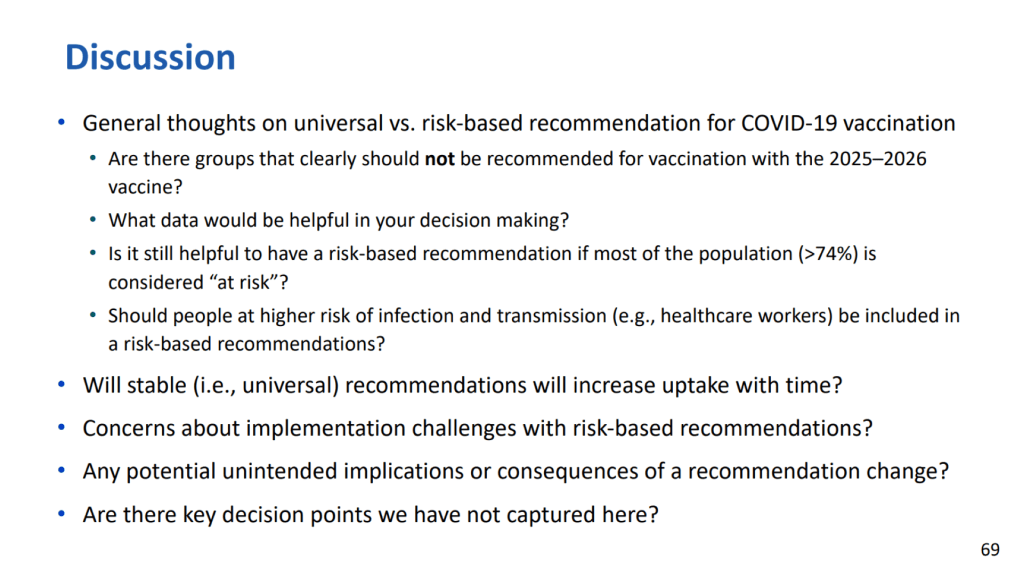
Noteworthy: Dr. Denise Jamieson, MD, MPH is chair of the CMV Working Group. She is Vice President for Medical Affairs and the Tyrone D. Artz Dean, Roy J. and Lucille A. Carver College of Medicine at University of Iowa. In the Q&A session following the Covid-19 vaccine presentation, Dr. Jamieson expressed a preference for a universal recommendation (citing implementation and uptake challenges, which other attendees mentioned as well) for the Covid-19 vaccine as opposed to a risk-based or permissive recommendation. See slide labeled “Discussion” below:

There was no vote scheduled for today’s meeting on the Covid-19 vaccine.

The presentation by Moderna on the new Covid-19 vaccine, mRNA-1283, was helpful. I gather there will be an FDA meeting about it in June.

SAINT Therapy for Treatment Resistant Depression at The University of Iowa

First of all, if you looked up Saint therapy for depression, you might have accidentally found information on Saint Dymphna, the Catholic patron saint of those living with mental illness.

Actually, SAINT stands for Stanford accelerated intelligent neuromodulation therapy. It’s a personalized protocol for using transcranial magnetic stimulation (TMS) to treat severe depression. The University of Iowa is the first academic center to offer it in the Midwest.

This is a big step forward from the days many years ago when we were starting use right unilateral electrode placement for applying electroconvulsive therapy (ECT) to treat depression because it was thought to lead to fewer cognitive problems post-treatment.

SAINT is a game changer according to Dr. Nicholas Trapp, MD, assistant professor of psychiatry, who describes it as a method to pinpoint the best location in each patient’s brain to target with TMS to treat major depressive disorder. The procedure is quick and recovery from depression can be sustained for months.

Kudos to The University of Iowa. And maybe thanks to Saint Dymphna.

How About Artificial Intelligence for Helping Reduce Delirium in the ICU?

I got the Winter 2025 Hopkins Brain Wise newsletter today and there was a fascinating article, “Using AI to Reduce Delirium in the ICU: Pilot Study will explore AI headset can help reduce delirium and delay post-delirium cognitive decline.”

The article has exciting news about what researchers are doing which will, hopefully, reduce the incidence of delirium in the intensive care unit (ICU). Another Hopkins researcher has published a study that has already used AI algorithms to detect early warning signs of delirium in the ICU;

Gong, Kirby D. M.S.E.1; Lu, Ryan B.S., M.D., Ph.D.2; Bergamaschi, Teya S. M.S.E., Ph.D.3; Sanyal, Akaash M.S.E.4; Guo, Joanna B.S.5; Kim, Han B. M.S.E.6; Nguyen, Hieu T. B.S., Ph.D.7; Greenstein, Joseph L. Ph.D.8; Winslow, Raimond L. Ph.D.9; Stevens, Robert D. M.D.10. Predicting Intensive Care Delirium with Machine Learning: Model Development and External Validation. Anesthesiology 138(3):p 299-311, March 2023. | DOI: 10.1097/ALN.0000000000004478

The list of references for the study of course include those by Dr. E. Wesley Ely, who delivered an internal medicine grand rounds about delirium at the University of Iowa in 2019.

Anybody who reads my blog knows I’ve been knocking AI for a while now. However, anybody who also knows that I’m a retired consultation-liaison psychiatrist knows how interested I am in preventing delirium in the hospital. I worked as a clinical track professor for many years at The University of Iowa Health Care in Iowa City.

It’s fortuitous that I found out about what Johns Hopkins research is doing on this topic because the director of the Johns Hopkins psychiatry department happens to be Dr. Jimmy Potash MD, MPH, who’s identified on the newsletter. He was the head of the psychiatry department at the University of Iowa from 2011-2017.

Besides all the name-dropping I’m doing here, I’m also admitting that I’ll probably soften my position against AI if the research described here does what the investigators and I hope for, which is to reduce delirium in the ICU.

Is Edinburgh Manor in Iowa Haunted?

I have no idea whether an old former county home in Jones County is one of the most haunted places in the Midwest or Iowa or the USA. And I wouldn’t be saying that if Sena and I had not watched a TV show called “Mysteries of the Abandoned” (broadcast on the Science Channel) which aired a 20-minute segment about Edinburgh Manor the other night.

Supposedly, Edinburgh Manor started off as a county poor farm back in the 1800s, which didn’t do well and then quickly declined into an asylum for the mentally ill. When a couple bought the old place after it closed sometime between 2010 and 2012, they started to report having paranormal experiences and it was then off to the races for the place to become a haunted attraction, for which you can buy tickets for day passes and overnight stays.

There’s a 10-minute video by a newspaper reporter who interviews the wife and which shows many video shots of the house. I can’t see any evidence that it’s on the National Register of Historic Places.

What this made me think of was the Johnson County Historic Poor Farm here in Iowa City, which is on the National Register of Historic Places. We’ve never visited the site, but you don’t pay admission and the tone and content of the information I found on the website is nothing like what’s all over the web about Edinburgh Manor. There are no ghosts tickling anybody at the Johnson County Historic Poor Farm.

There’s a lot of education out there about the history of county poor farms in general. In Johnson County, Chatham Oaks is a facility that houses patients with chronic mental illness and it used to be affiliated with the county home. It’s now privatized. The University of Iowa department of psychiatry used to round on the patients and that used to be part of the residents training program (including mine).

I found an hour-long video on the Iowa Culture YouTube site about the history of Iowa’s county poor farms. It was very enlightening. The presenter mentioned a few poor farms including the Johnson County site—but didn’t say anything about Edinburgh Manor.

Music Therapy in End of Life Care Podcast: Rounding@Iowa

I just wanted to make a quick shout-out to Dr. Gerry Clancy, MD and Music Therapist Katey Kooi about the great Rounding@Iowa podcast today. The discussion ran the gamut from how to employ music to help patients who suffer from acute pain, agitation due to delirium and dementia, all the way up to even a possible role for Artificial Intelligence in the hospital and hospice.

86: Cancer Rates in Iowa Rounding@IOWA

Iowa's cancer rates are among the highest in the country, and they are rising. In this episode of Rounding@Iowa, Dr. Gerry Clancy and guest experts Dr. Mary Charlton and Dr. Mark Burkard discuss the data, risk factors, and prevention strategies clinicians can use to make a difference. CME Credit Available:  https://uiowa.cloud-cme.com/course/courseoverview?P=0&EID=81274  Host: Gerard Clancy, MD Senior Associate Dean for External Affairs Professor of Psychiatry and Emergency Medicine University of Iowa Carver College of Medicine Guests: Mark E. Burkard, MD, PhD Professor of Internal Medicine-Hematology, Oncology, and Blood and Marrow Transplantation University of Iowa Carver College of Medicine Director, University of Iowa Health Care Holden Comprehensive Cancer Center Mary Charlton, PhD Professor of Epidemiology Director, Iowa Cancer Registry Iowa College of Public Health Financial Disclosures:  Dr. Clancy, Dr. Burkard, Dr. Charlton, and Rounding@IOWA planning committee members have disclosed no relevant financial relationships. Nurse: The University of Iowa Roy J. and Lucille A. Carver College of Medicine designates this activity for a maximum of 0.75 ANCC contact hour. Pharmacist and Pharmacy Tech: The University of Iowa Roy J. and Lucille A. Carver College of Medicine designates this knowledge-based activity for a maximum of 0.75 ACPE contact hours. Credit will be uploaded to the NABP CPE Monitor within 60 days after the activity completion. Pharmacists must provide their NABP ID and DOB (MMDD) to receive credit. UAN: JA0000310-0000-25-090-H99 Physician: The University of Iowa Roy J. and Lucille A. Carver College of Medicine designates this enduring material for a maximum of 0.75 AMA PRA Category 1 CreditTM. Physicians should claim only the credit commensurate with the extent of their participation in the activity. Other Health Care Providers: A certificate of completion will be available after successful completion of the course. (It is the responsibility of licensees to determine if this continuing education activity meets the requirements of their professional licensure board.) References/Resources:  Iowa Cancer Plan  
  1. 86: Cancer Rates in Iowa
  2. 85: Solutions for Rural Health Workforce Shortages
  3. 84: When to Suspect Atypical Recreational Substances
  4. 83: Hidradenitis Suppurativa
  5. 82: End-of-Life Doulas

Artificial Intelligence: The University of Iowa Chat From Old Cap

This is just a quick follow-up which will allow me to clarify a few things about Artificial Intelligence (AI) in medicine at the University of Iowa, compared with my take on it based on my impressions of the Rounding@Iowa presentation recently. Also, prior to my writing this post, Sena and I had a spirited conversation about how much we are annoyed by our inability to, in her words, “dislodge AI” from our internet searches.

First of all, I should say that my understanding of the word “ambient” as used by Dr. Misurac was flawed, probably because I assumed it meant a specific company name. I found out that it’s often used as a term to describe how AI listens in the background to a clinic interview between clinician and patient. This is to enable the clinician to sit with the patient so they can interact with each other more naturally in real time, face to face.

Further, in this article about AI at the University of Iowa, Dr. Misurac identified the companies involved by name as Evidently and Nabla.

The other thing I want to do in this post is to highlight the YouTube presentation “AI Impact on Healthcare | The University of Iowa Chat From the Old Cap.” I think this is a fascinating discussion led by leaders in patient care, research, and teaching as they relate to the influence of AI.

This also allows me to say how much I appreciated learning from Dr. Lauris Kaldjian during my time working as a psychiatric consultant in the general hospital at University of Iowa Health Care. I respect his judgment very much and I hope you’ll see why. You can read more about his thoughts in this edition of Iowa Magazine.

“There must be constant navigation and negotiation to determine if this is for the good of patients. And the good of patients will continue to depend on clinicians who can demonstrate virtues like compassion, honesty, courage, and practical wisdom, which are characteristics of persons, not computers.” ——Lauris Kaldjian, director of the Carver College of Medicine’s Program in Bioethics and Humanities

Fluoride in Your Precious Bodily Fluids

Yesterday, Sena and I talked about a recent news article indicating that a federal judge ordered the Environmental Protection Agency (EPA) to review the allowed level of fluoride in community water supplies. The acceptable level may not be low enough, in the opinion of the advocacy groups who discussed the issue with the judge, according to the author of the article.

A few other news items accented the role of politicians on this issue. This seems to come up every few years. One thing leads to another and I noticed a few other web stories about the divided opinions about fluoride in “your precious bodily fluids.” One of them is a comprehensive review published in 2015 outlining the complicated path of scientific research about this topic. There are passionate advocates on both sides of whether or not to allow fluoride in city water. The title of the paper is, “Debating Water Fluoridation Before Dr. Strangelove” (Carstairs C. Debating Water Fluoridation Before Dr. Strangelove. Am J Public Health. 2015 Aug;105(8):1559-69. doi: 10.2105/AJPH.2015.302660. Epub 2015 Jun 11. PMID: 26066938; PMCID: PMC4504307.)

This of course led to our realizing that we’ve never seen the film “Dr. Strangelove Or: How I Learned to Stop Worrying And Love the Bomb,” a satire on the Cold War. We watched the entire movie on the Internet Archive yesterday afternoon. The clip below shows one of the funniest scenes, a dialogue between General Jack Ripper and RAF officer Lionel Mandrake about water and fluoridation.

During my web search on the fluoridation topic, one thing I noticed about the Artificial Intelligence (AI) entry on the web was the first line of its summary of the film’s plot: “In the movie Dr. Strangelove, the character Dr. Cox suggests adding fluoride to drinking water to improve oral health.” Funny, I don’t remember a character named Dr. Cox in the film nor the recommendation about adding fluoride to drinking water to improve oral health. Peter Sellers played 3 characters, none of them named Cox.

I guess you can’t believe everything AI says, can you? That’s called “hallucinating” when it comes to debating the trustworthiness of AI. I’m not sure what you call it when politicians say things you can’t immediately check the veracity of.

Anyway, one Iowa expert who regularly gets tapped by reporters about it is Dr. Steven Levy, a professor of preventive and community dentistry at the University of Iowa. He’s the leader of the Iowa Fluoride Study, which has been going on over the last several years. In short, Dr. Levy says fluoride in water supplies is safe and effective for preventing tooth decay in as long as the level is adjusted within safe margins.

On the other hand, others say fluoride can be hazardous and could cause neurodevelopmental disorders.

I learned that, even in Iowa there’s disagreement about the health merits vs risks of fluoridated water. Decisions about whether or not city water supplies are fluoridated are generally left to the local communities. Hawaii is the only state in the union which mandates a statewide ban on fluoride. About 90 per cent of Iowa’s cities fluoridate the water. Tama, Iowa stopped fluoridating the water in 2021. Then after a brief period of public education about it, Tama restarted fluoridating its water only six months later.

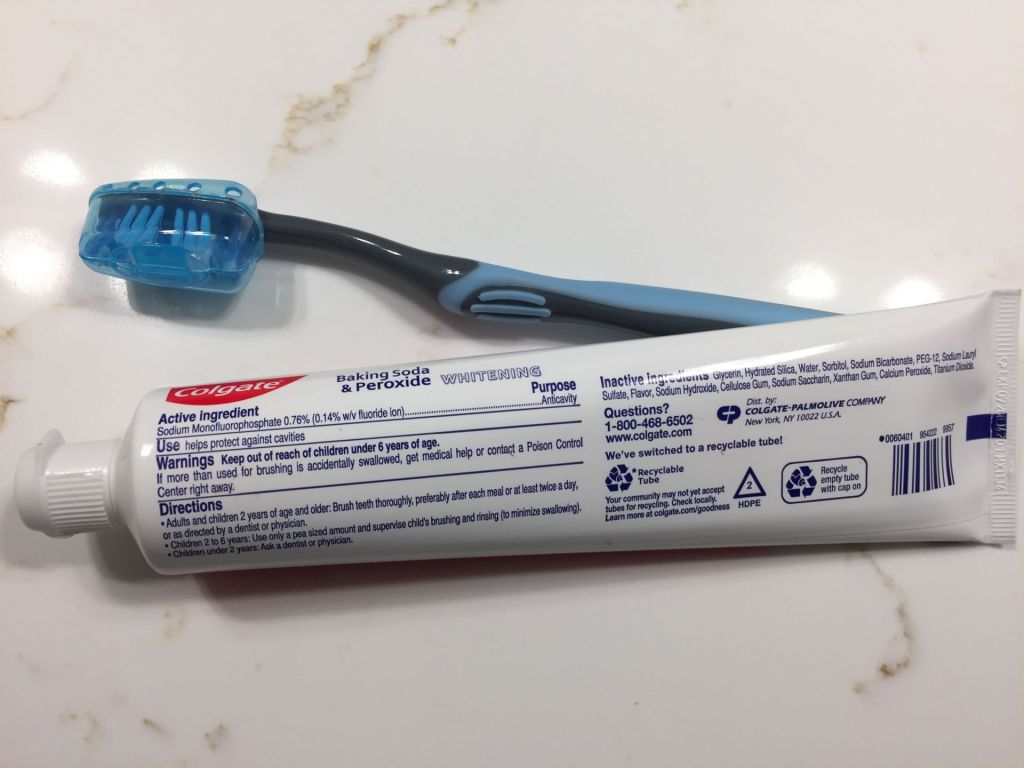
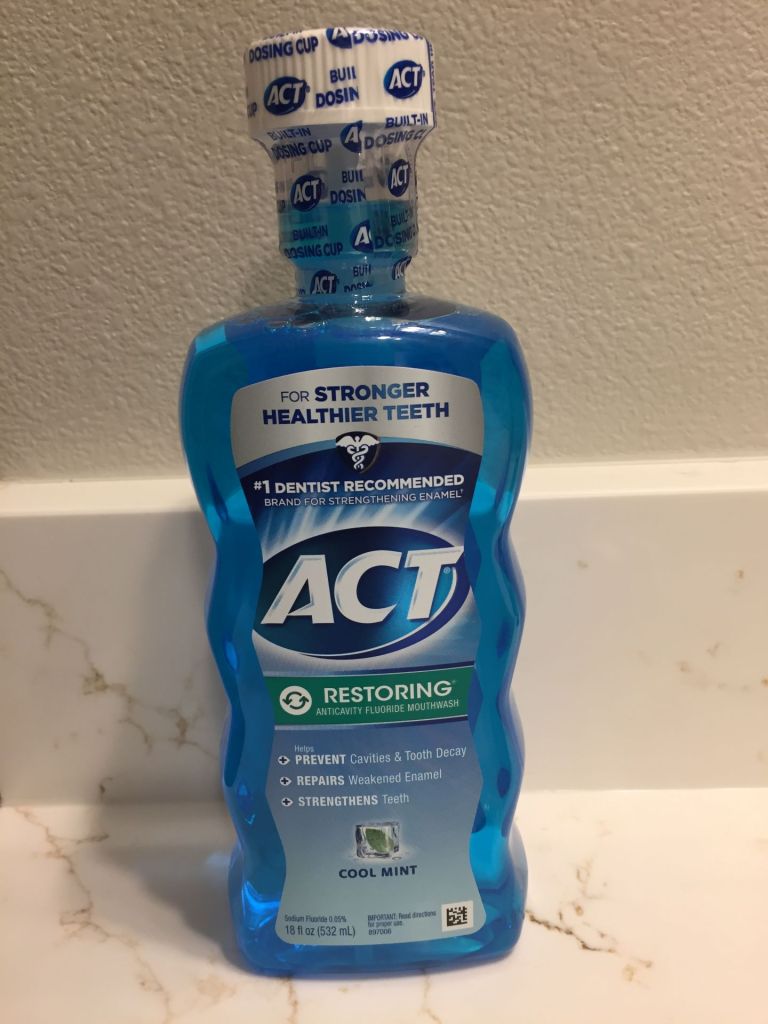
We use a fluoridated dentifrice and oral rinse every day. We drink fluoridated water, which we offer to the extraterrestrials who occasionally abduct us, but they politely decline because of concern about their precious bodily fluids.

University of Iowa Psychiatrists Publish Huntington Disease Study Results

I ran across a fascinating story about a study on Huntington’s disease published by members of the University of Iowa Health Care. The study examined how the Huntington’s disease gene might enhance brain development and function early in life prior to the onset of the devastating disease. It was published in The Annals of Neurology:

I also found an abstract for a paper about Woody Guthrie, a famous American musician and activist who was very creative in his early life, but sadly succumbed to the ravages of Huntington’s disease when he was 55 years old. I couldn’t access the full article without paying for it but the abstract was intriguing because I wondered whether the author suspected something similar to the premise of the study:

Ringman JM. The Huntington disease of woody guthrie: another man done gone. Cogn Behav Neurol. 2007 Dec;20(4):238-43. doi: 10.1097/WNN.0b013e31815cfee4. PMID: 18091075. Abstract: Woody Guthrie was an American songwriter, musician, writer, and political activist who died with Huntington disease (HD) in 1967 at age 55. His relatively brief creative life was incredibly productive with countless songs and a tremendous volume of letters to his name. His personal life was similarly driven with Woody having had 3 wives and at least 9 children and an insatiable appetite for traveling the United States. In this essay, I explore Guthrie’s art in relation to the development of the overt behavioral changes and chorea that characterized his illness. Woody’s most productive time artistically was in the 5 years immediately preceding the onset of overt symptoms of HD. I hypothesize that subclinical HD may have been an important driving force behind Woody Guthrie’s creativity.

If anybody knows, please comment.

Woody Guthrie was certainly an important figure in the American history of activism as well as music.

Usually, I would share the music of some of the artists I mention on this blog. On the other hand, one of the co-authors of the University of Iowa paper mentioned above is Doug Langbehn, my former colleague, who’s an accomplished musician and statistician. So instead, I thought I’d share the talent of Doug and his band.

U.S. News & World Report Ranks Iowa City Hospital in 9 Specialties

The University of Iowa Stead Family Childrens Hospital in Iowa City has ranked in 9 pediatric specialties, including pediatric behavioral health by U.S. News & World Report!