Next Episode of Uncovering Hawkeye History Today

Get ready for the next episode of The University of Iowa’s virtual event of Uncovering Hawkeye History this evening from 4:30-6:00 PM. The title for this one is “Endless Innovation: An R1 Research Institution (1948–1997).” According to the official announcement, “This event series is designed to highlight notable elements of UI’s 175-year history and includes readings you can do in advance, notable guest speakers during each class, and the opportunity to ask questions each week.” You can register here.

Today’s zoom class again features university archivist David McCarty and 3 of the UI’s most talented innovators:

Bruce Gantz: 68BS, 74MD, 80MS, 80R), otolaryngology professor, the world’s first doctor to perform a robot-assisted cochlear implant surgery

Kevin Washburn: N. William Hines dean, College of Law

Ed Wasserman: experiential psychology professor

Sena and I plan to join the event this evening. I’m looking forward to hearing from Ed Wasserman, who has been studying the origins of innovation for decades. He studies pigeons to find out what really goes on in the ability of humans to come up with new ideas. Wasserman thinks it may have more to do with simple processes like trial and error then eureka type flashes of genius. In other words, we’re a lot like pigeons.

For some reason, this reminds me of an essay by James Thurber, “There’s an Owl in My Room.” It’s published in a book entitled The Thurber Carnival. The essay is all about Thurber’s impatience with a poem about pigeons written by Gertrude Stein. He thought it made pigeons way too complicated. I realized that I had never read the poem, so I went hunting for it on the web. I found a lot of comments about how ridiculous many people think “pigeons on the grass” is:

“Pigeons on the grass, alas. Pigeons on the grass, alas. Short longer grass short longer, longer shorter yellow grass. Pigeons, large pigeons on the shorter longer yellow grass, alas, pigeons on the grass.”—Gertrude Stein.

I had no trouble finding a short excerpt of Thurber’s scathing essay about it on the web.

Thurber’s closing sentence is “No other thing in the world falls so far short being able to do what it cannot do as a pigeon does. Of being unable to do what it can do, too, as far as that goes.”

You can see why some people might be offended by being compared to pigeons. On the other hand, he has written a book about the origin of the notion of creative genius, As If by Design: How Creative Behaviors Really Evolve (2021, Cambridge University Press).

I read an article on the web claiming that, scientifically speaking, there’s no difference between doves and pigeons. Sena and I have observed pigeons/doves with missing toes. That might indicate the trial and error of attempts to make nests with string, which gets wound around their feet, leading to auto-amputation. Some call it stringfoot, although it might just be bad judgment (see my YouTube description).

I can imagine what he might think about Ancient Aliens theories about how humans might come up with innovative inventions. Aliens seem to be particularly prone to crashing their space ships on our planet, making it easier for us to reverse engineer the working parts left strewn all over the ground. There’s something ironical about that. How can they be smart enough to manipulate our DNA and leave us clues about how to create inventions that advance our civilization when they can’t even stop falling out of the sky? On the other hand, maybe we just stole their technology right out from under their very small noses and slapped patents on them. So much for genius.

I’m sure Wasserman thought of all that.
Happy Valentine’s Day!

Happy Valentine’s Day! Boy, are you guys lucky! I woke up yesterday morning with the crazy idea of making a video of me singing “L-O-V-E.” You know, the one Nat King Cole made famous. What do you mean, “No, what are you talking about?”

No kidding, though; I even cleared my throat a couple of times just thinking about it, getting ready to burst into my full-throated, only slightly phlegmy 60ish voice. I let that go after my first cup of coffee, thank goodness. You don’t know how close you came. My singing would kill a cat from a hundred yards.

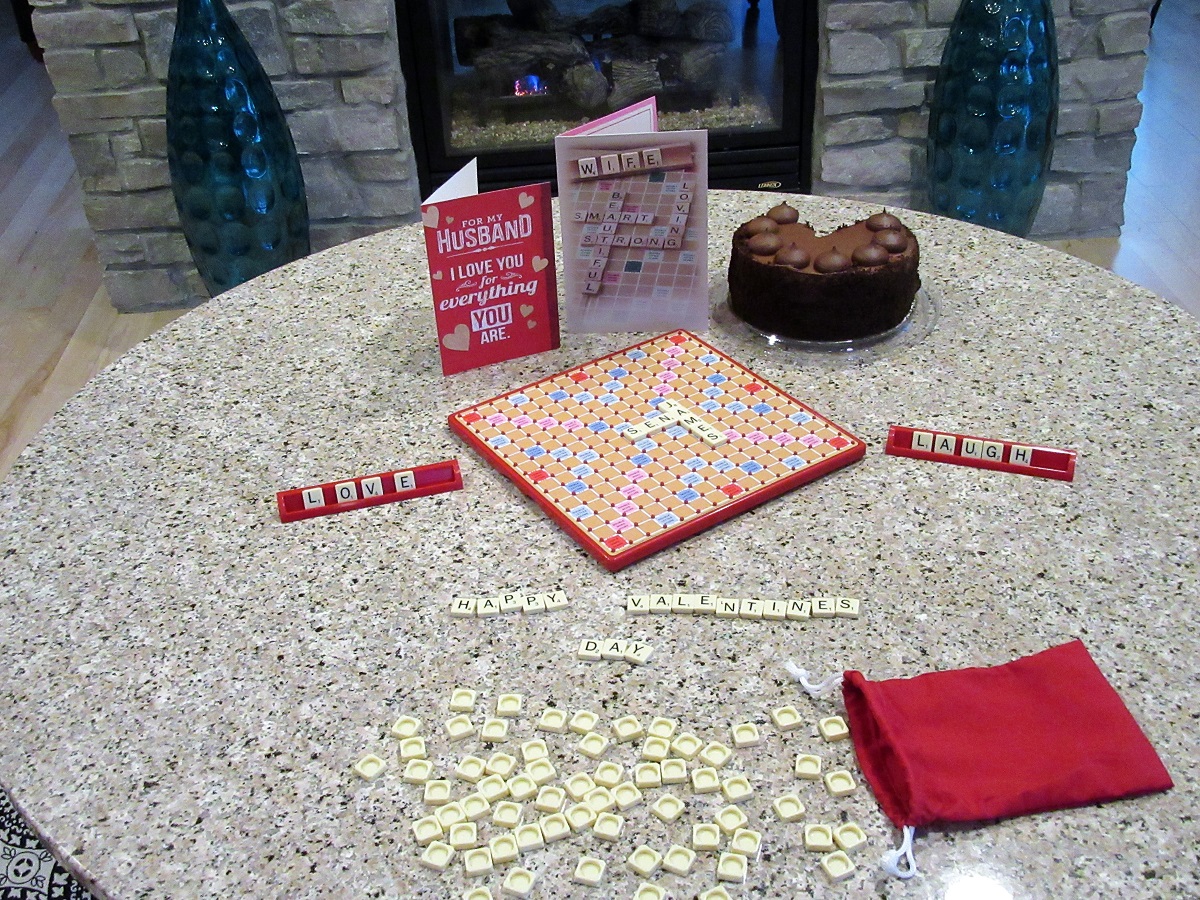
Anyway, Sena got a kick out of my Valentine’s Day card because it had a scrabble theme. The top line actually is made of 3-dimensional Scrabble tiles. I bought that card before I found the Tile Lock Scrabble game.

By the way, I’m zero for 3 games so far. We really need a Scrabble dictionary. Sena plays the video scrabble game a lot and she played the word “Qi” twice (at right angles to each other) in our second game, claiming it’s a real word. I didn’t argue and without a dictionary, I couldn’t challenge it. But she didn’t know what it meant. “I’ve been meaning to look that up,” she says.

It turns out Qi is a variant spelling of CHI (pronounced like the first syllable of cheapo, a variant of cheapskate, as in a guy who spends the least amount of money possible on a Valentine’s Day gift for his wife). Qi is defined as the energy or life force in everything and it’s the basis of most of Chinese medicine and philosophy. It’s also the single most commonly used word in Scrabble tournaments.

We made this deal a while ago. If we buy a cribbage board in the shape of the state of Iowa with a road map and names of major cities, etc. on it, then I would agree to play Scrabble. We got the Scrabble game first. A deal’s a deal, even if it’s backwards. Sena ordered the Iowa State Map cribbage board yesterday. She wins most of the cribbage games, too. Here’s how she counts her scores: “15 for 2, a run of 3 for 19 (laugh it up you people, these are the jokes; hint, you have to know what scores are impossible in cribbage), and a flush for a total of 29; hey, I win again!”

You guys need to thank for me another thing. At first, Sena allowed me to use just one snapshot of us in this post. It’s of us at Niagara Falls in front of the helicopter we took a ride on to get a fantastic view of the falls. But we got to looking at a ton of pictures. We laughed a lot. We chose more pictures.

Have a great Valentine’s Day!

Zinus Bed in a Box Assembly Notes: Bring on the Liniment

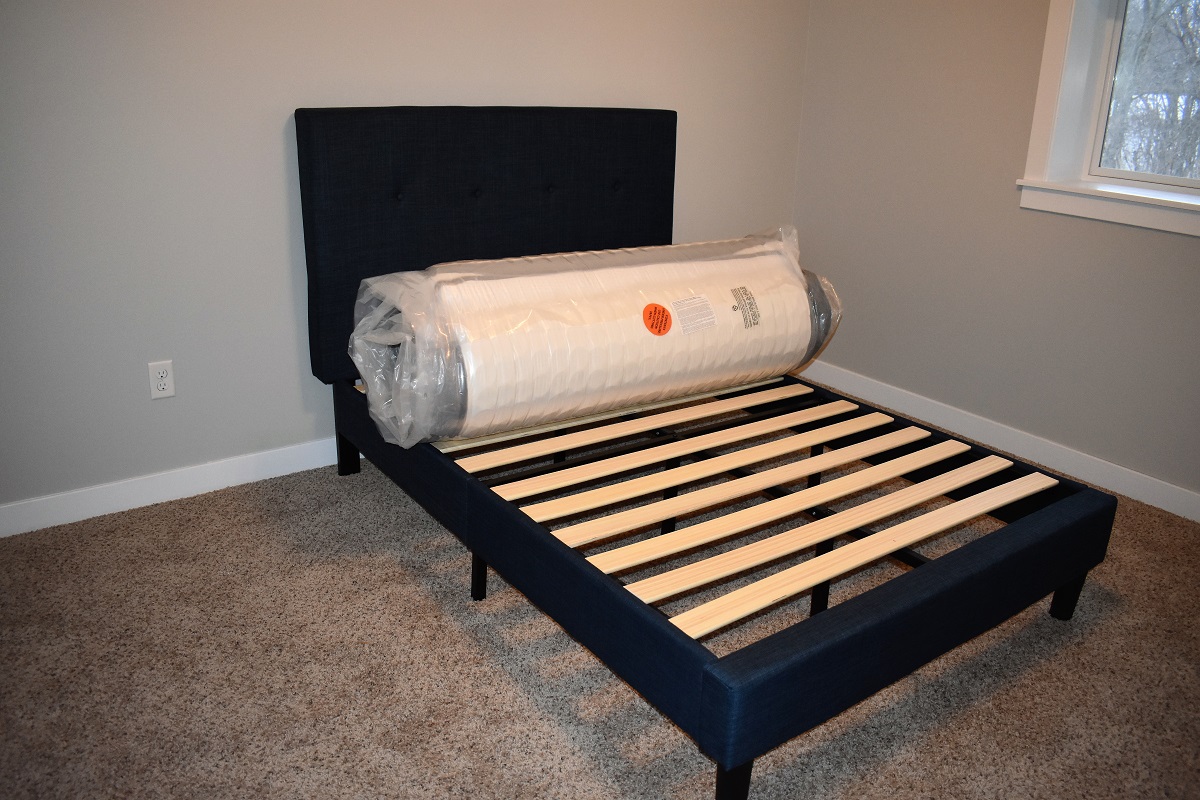
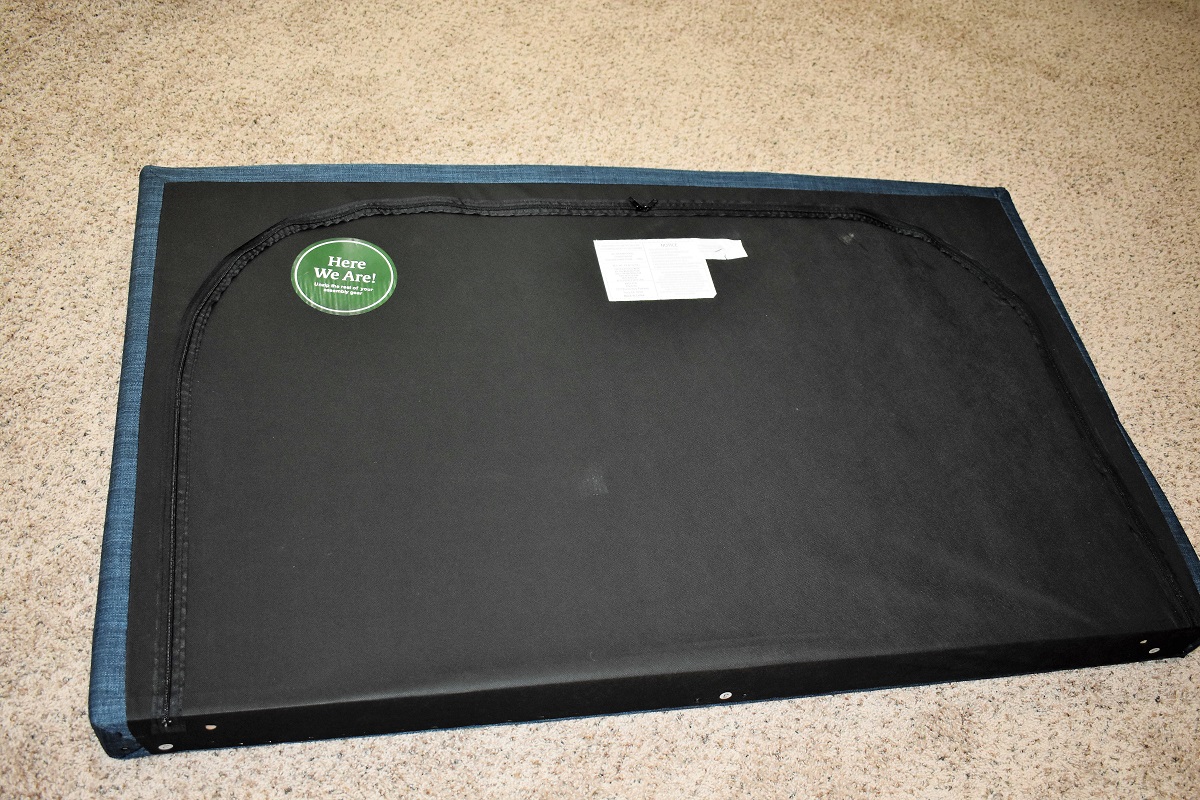
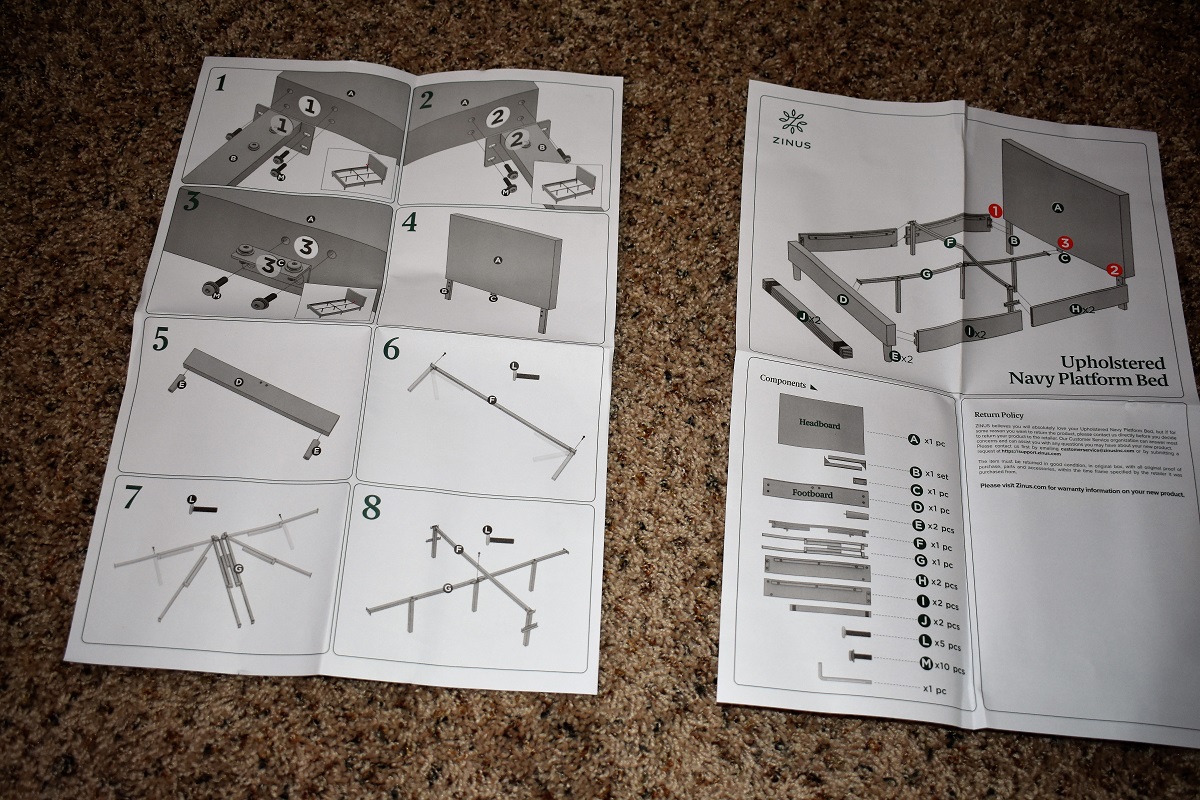
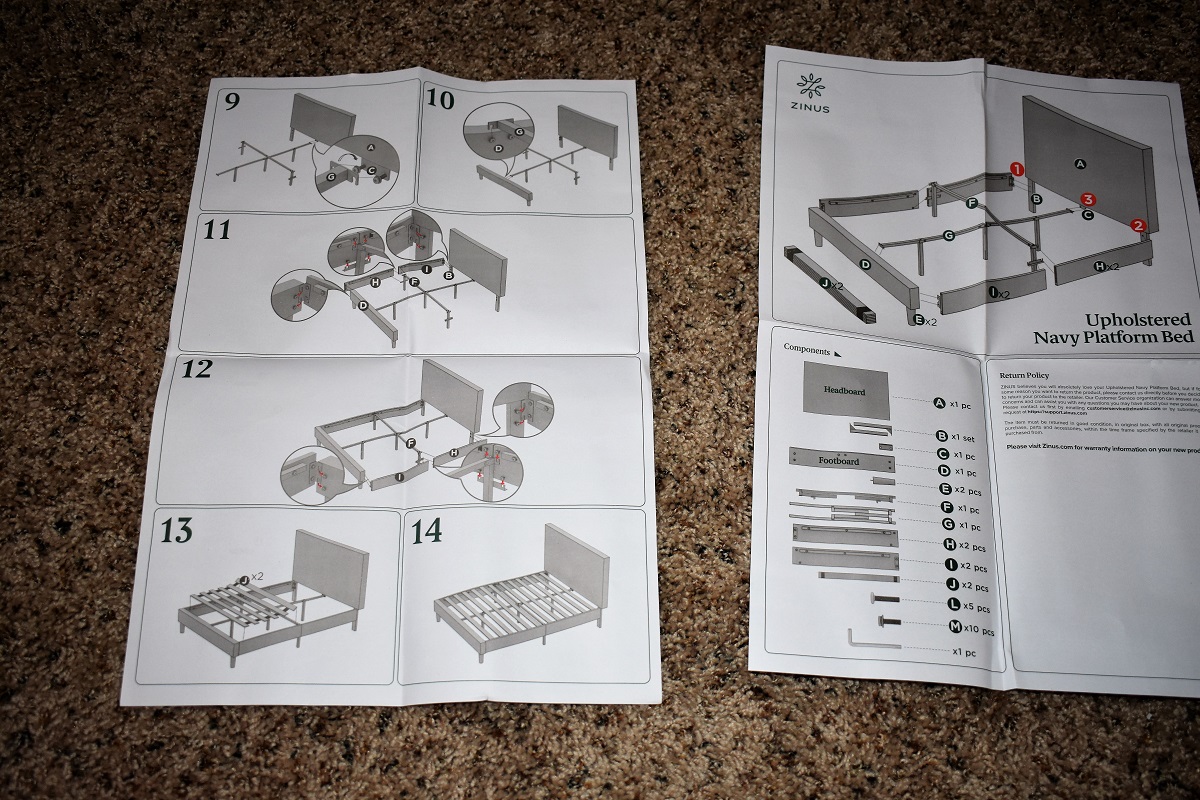
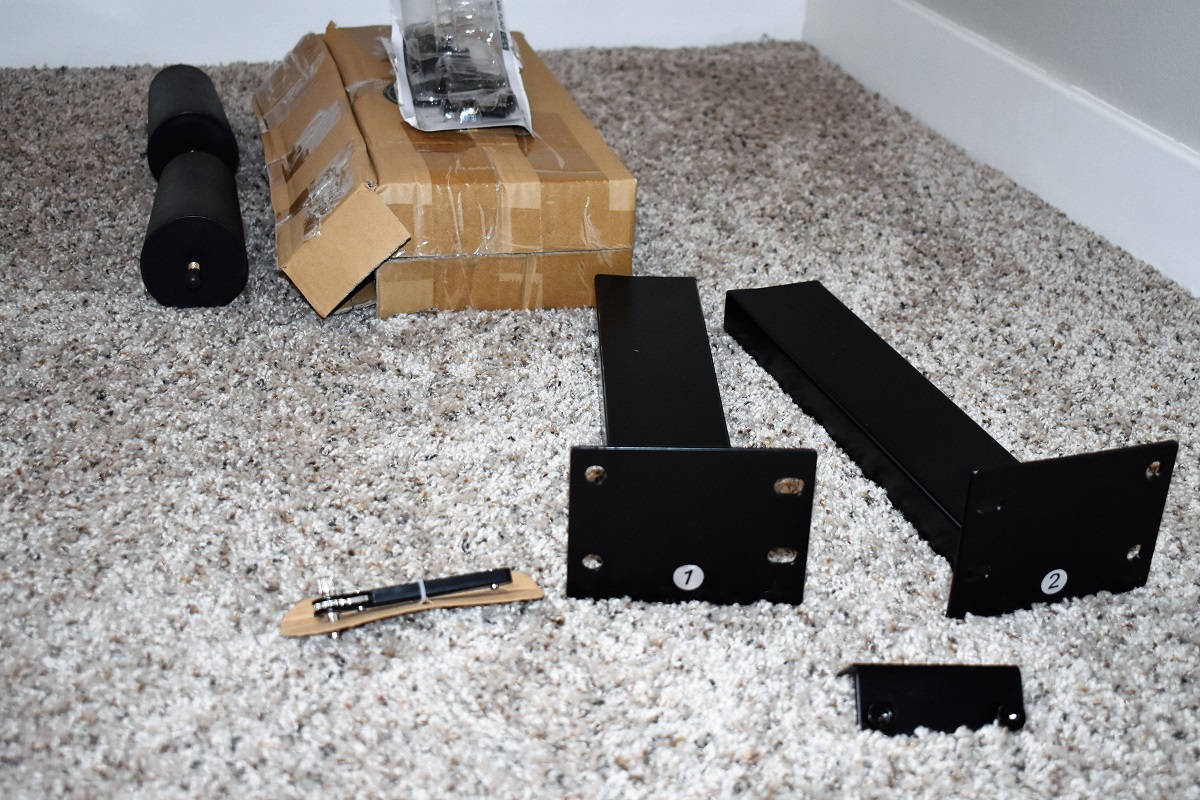
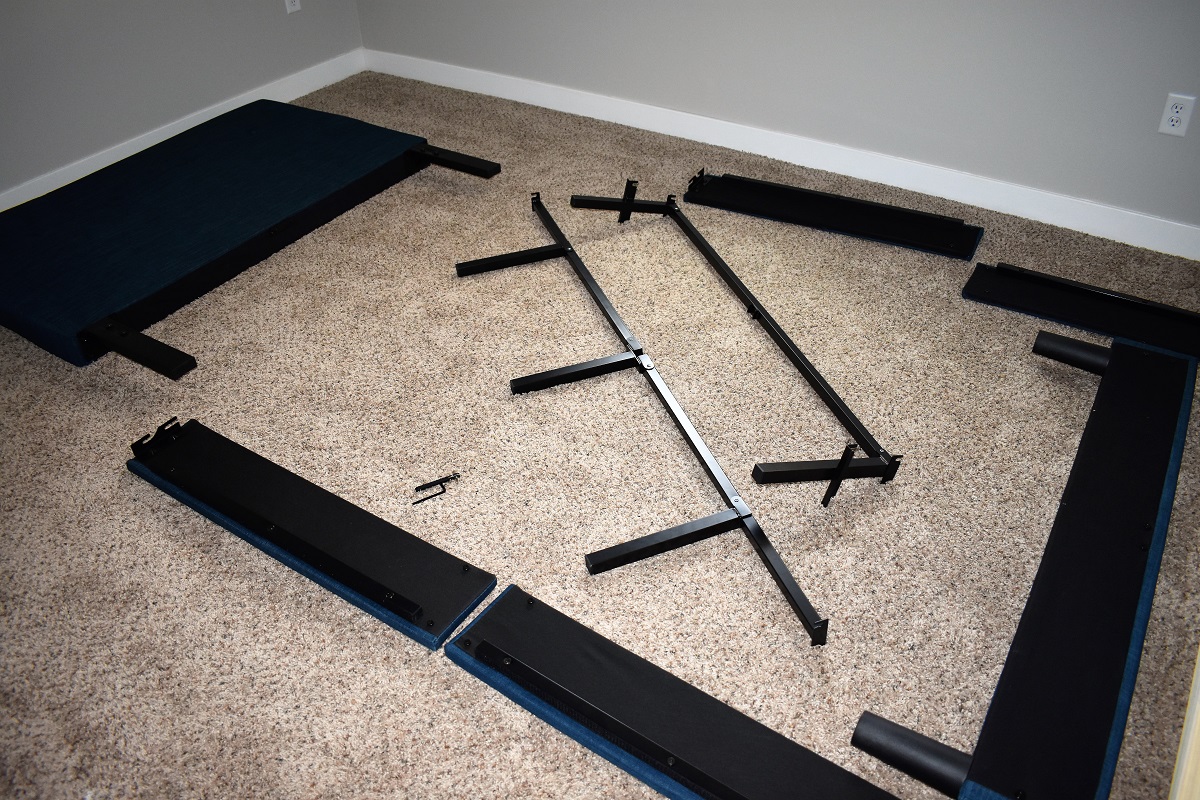
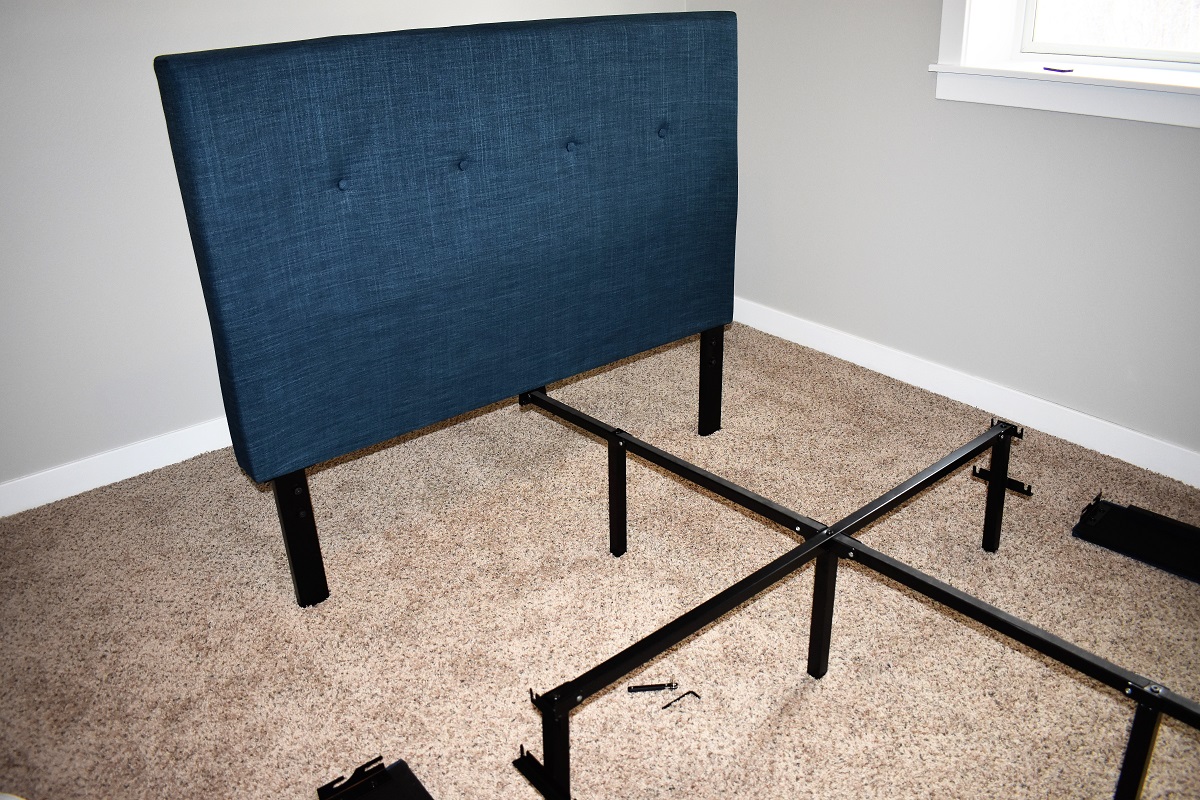
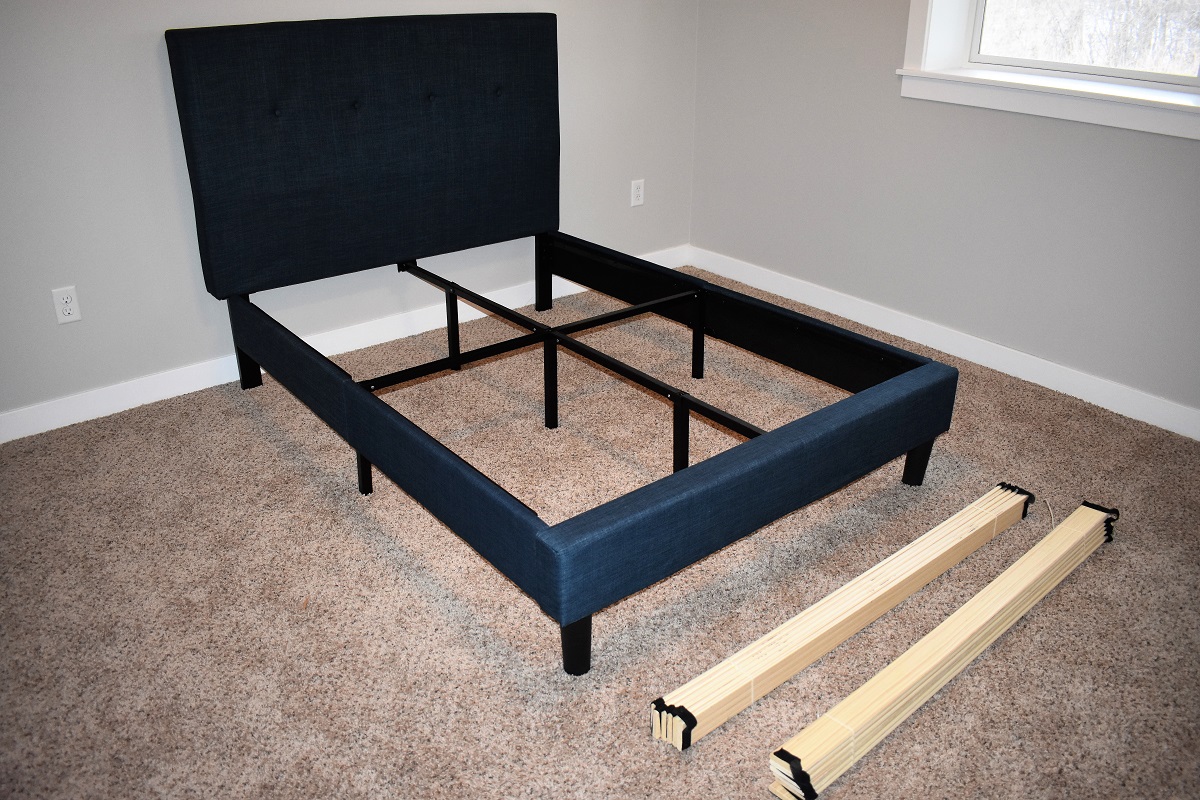
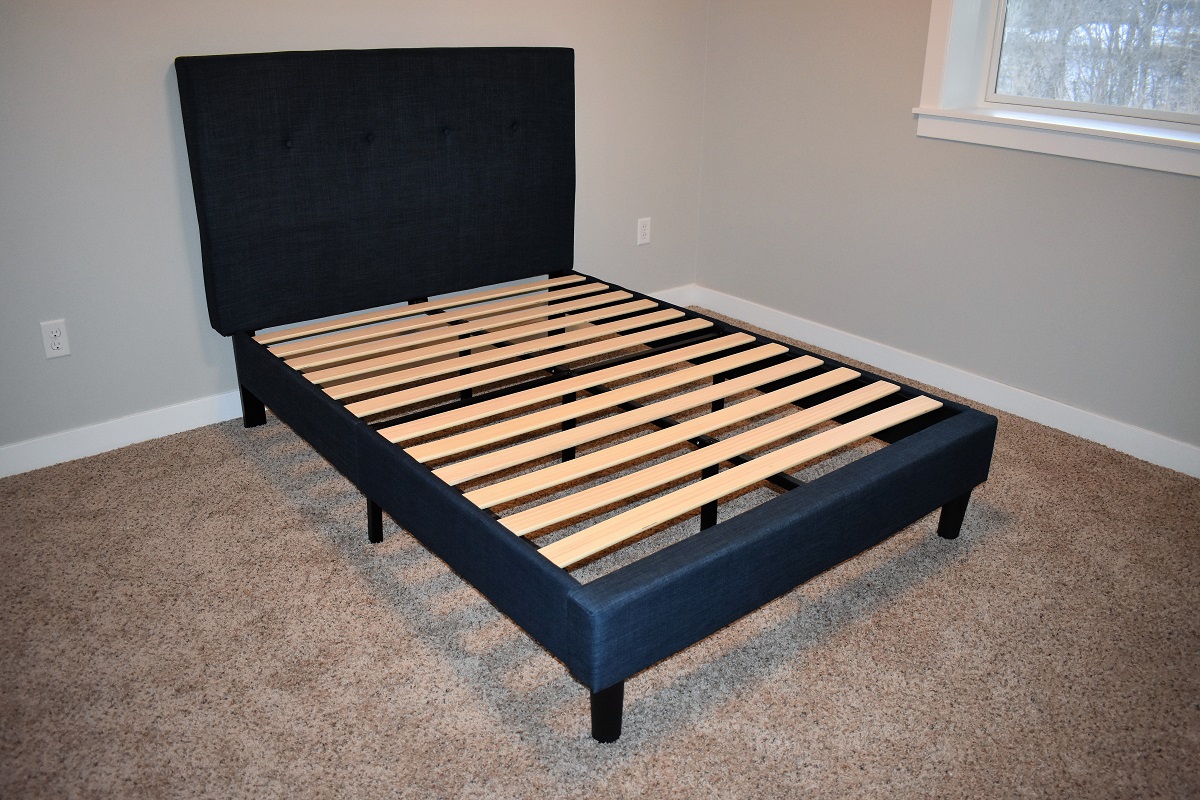
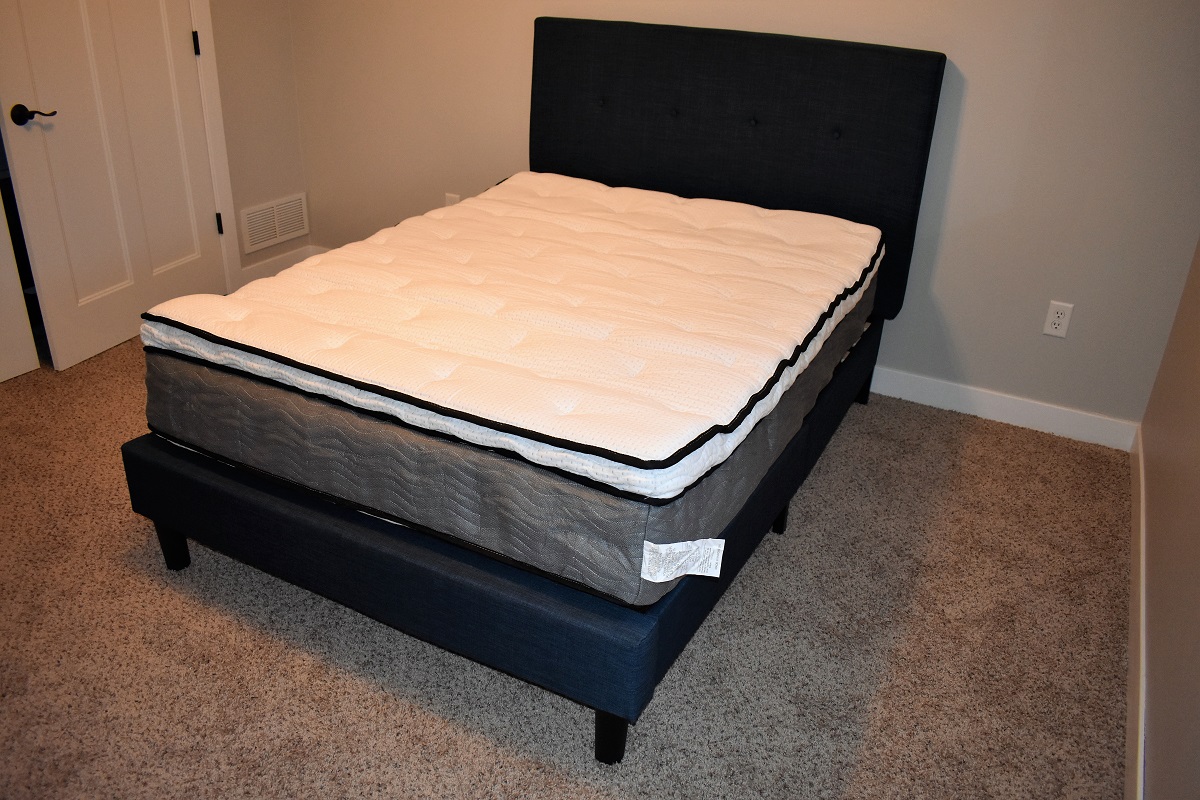
Well, we spent all day Friday the 11th assembling the Zinus Omkaram 48-inch Upholstered Navy Platform Bed, Full. We also ordered the Zinus Support Plus 14-inch Hybrid Mattress, Full to go with the bed. I posted a short slide show in my post Friday. I made the YouTube video yesterday.

The mattress reinflated up to 12 inches overnight after opening it on the bed. We’re not sure if it will reinflate to 14 inches. You’re supposed to let it reinflate over 72 hours.

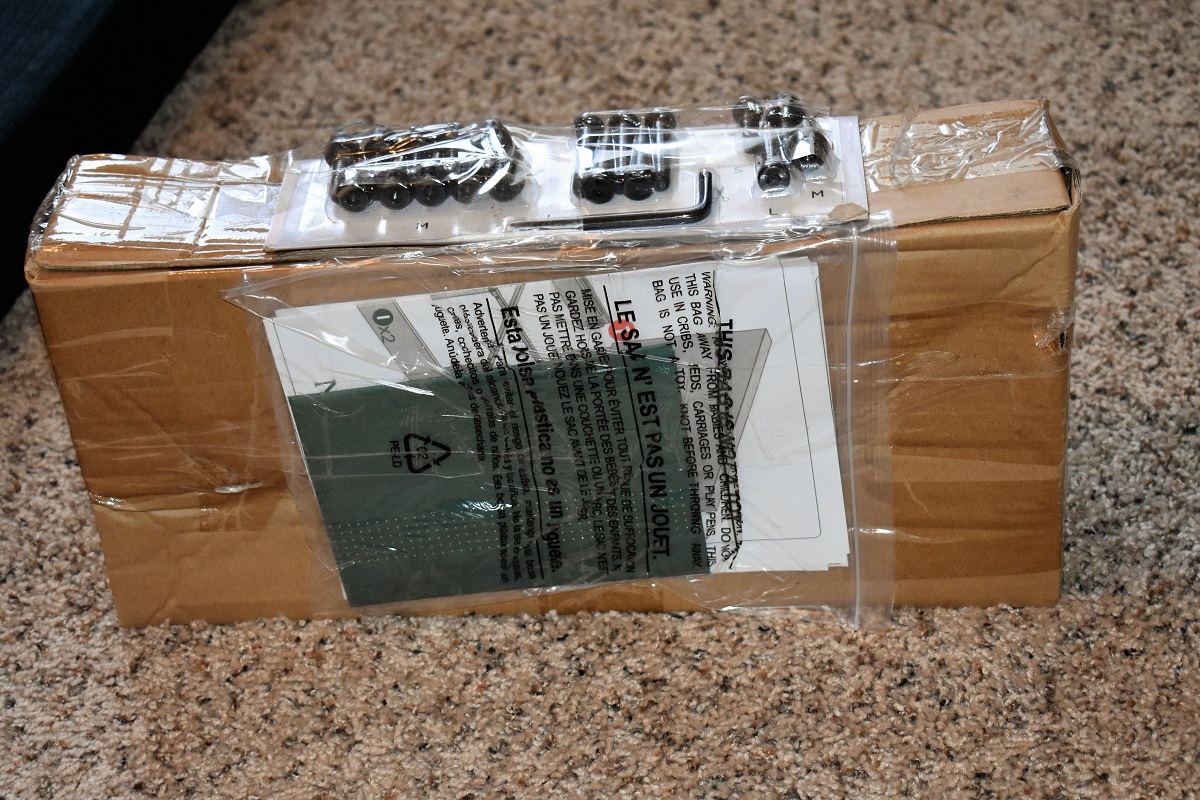
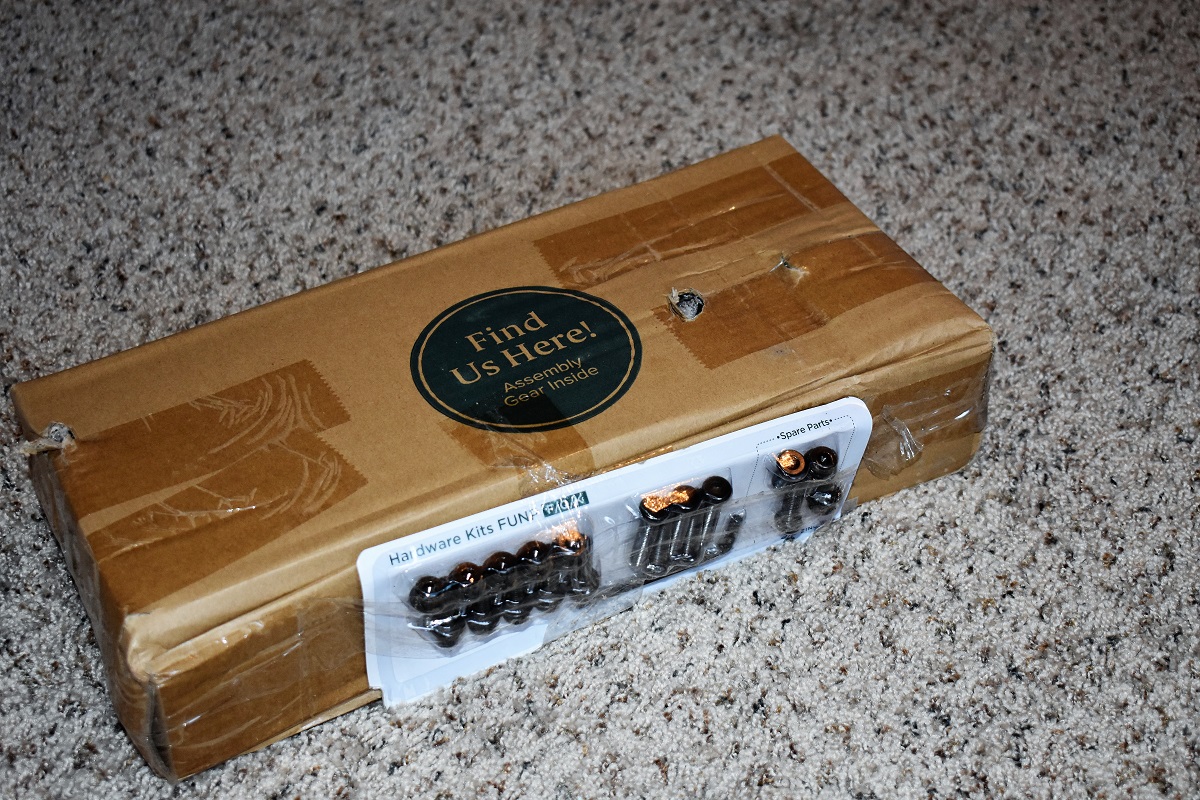
Zinus provided all parts and tools, although in our case, one of the side rails had a Velcro piece that was factory-installed upside down. I had a smaller size allen wrench on hand, which was lucky. I just flipped it over.

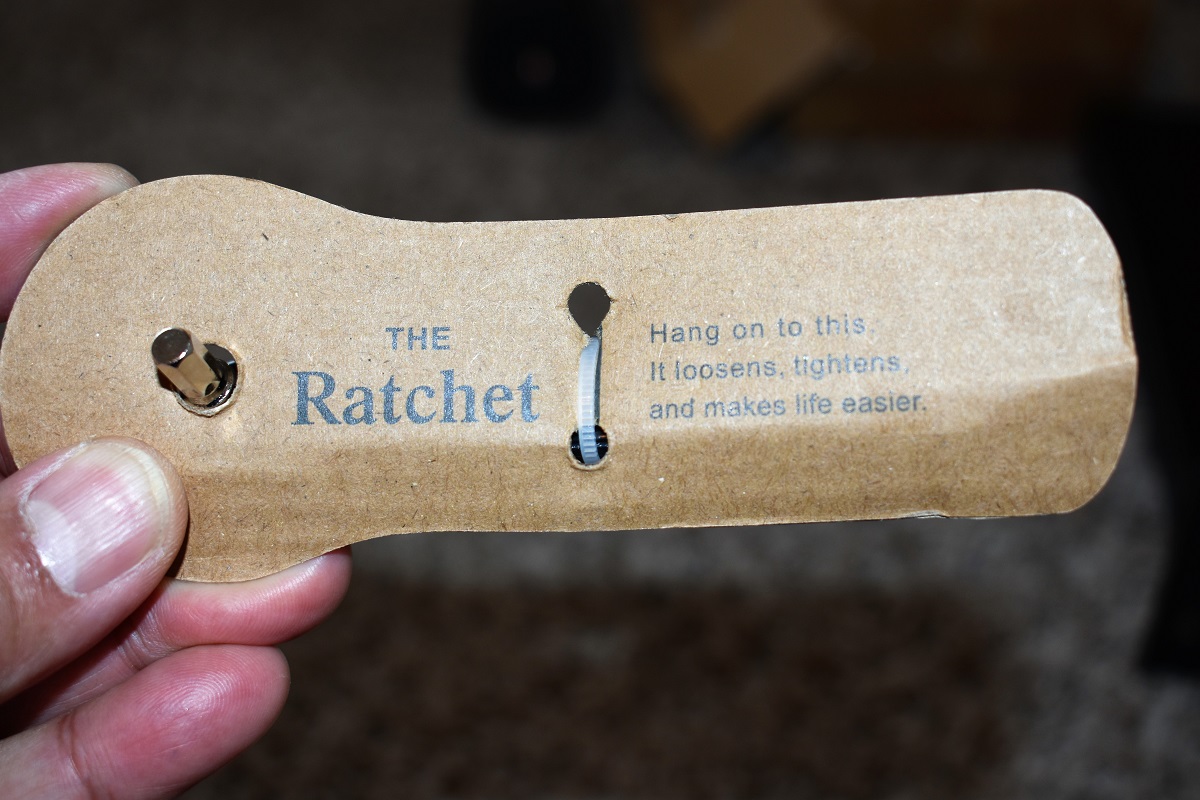
The included small ratchet wrench was useful, although it had a little play in it. It’s a good idea to hand tighten the screws first, and wait until you’ve got all parts assembled before tightening them down. There’s not much give to get the side rails and slats assembled.

Sena saw one reviewer’s claim that he got the thing assembled in a half hour. We don’t believe it. The job took us all day, although to be fair, we stopped for things like breaks, hauling the mattress inside because FedEx just propped it against our garage, lunch, trips to the emergency room, physical therapy, rehab, kidnap by aliens wanting directions to the best rib joint, rescue by Men In Black, subjected to a big-ass neuralyzer, etc. We were sore when it was all done. All things considered, it went OK.

You might be wondering about the meaning of Omkaram. I don’t know what Omkaram means and googling it isn’t much help. Could it actually be a TV serial, a spiritual show that guides you in astrology? Is it a girl’s name in Sanskrit? Does the name mean you’re compassionate, friendly, spiritual, humanitarian, and—a workaholic?

Does that make any sense when it comes to platform beds? Right off hand, I don’t think so, but it probably doesn’t hurt to be a workaholic when it comes to assembling platform beds.

All I Want is a “Big-Ass Neuralyzer”

OK, we gave up on the wedge concept for eliminating or even mitigating the snoring problem. We bought an “extra bed” for those nights when sawing logs gets above the decibel level gets above pain level. We didn’t have to spend thousands of dollars because we got a DIY project. We figure it’ll be far better than trying to get by with the air mattress.

We ordered a Zinus platform bed and mattress and assembled it yesterday. We don’t believe the one reviewer who claimed he finished it in a half hour. It took us all day and I would just as soon forget at least certain parts of that ordeal, including the reason for it. So, the next thing I’m ordering is a “big-ass neuralyzer” from Walmart.

I’ve included a slide show below, and I’m considering a YouTube production about it as well. It was literally a bed in a box—boxes actually; the mattress was sent separate from the platform bed.

Zinus sent the tools—all but one smaller size allen wrench than the 3/16 inch included. It’s a good thing I’ve got a couple of sets. One of the side rails came with the part with the Velcro that holds the wood slats upside down. If you’re interested, have a 5/32 inch on hand, just in case. Sena noticed it first. Lucky all I had to do was flip it around.

Zinus sent a cute little ratchet allen wrench. It’s about as long as your middle finger. It slips a little so snugging the screw finger tight is a good idea before trying the ratchet. Sometimes it’s better to use the regular allen wrench.

If you’re thinking about getting something like this, it might be a good idea to wait before you tighten everything down. There are some pretty skinny tolerances between the side rails and the slats were kind of a tight fit, too.

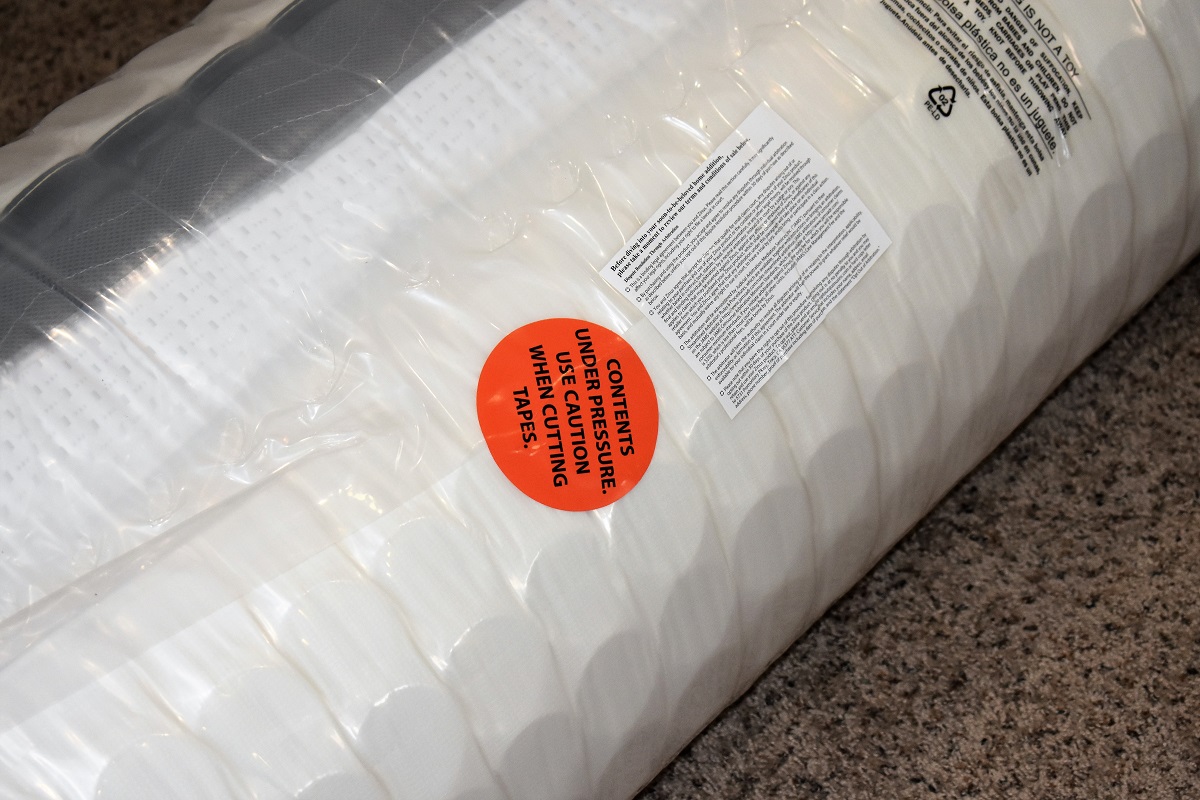
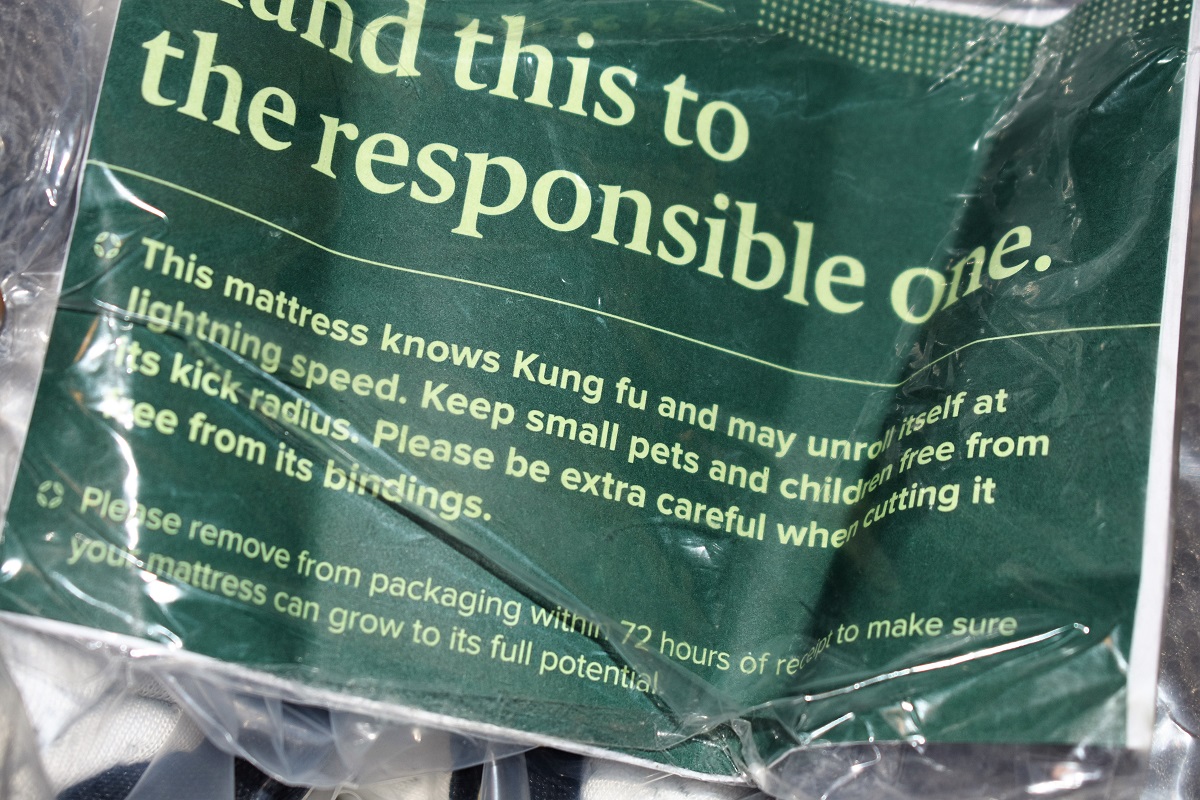
The mattress came with a warning:

“This mattress knows Kung fu and may unroll itself at lightning speed. Keep small pets and children free from its kick radius. Please be extra careful when cutting it free from its bindings.”

No problem. I got my nosebleed stopped in just minutes. Remember, never tip your head back, pinch your nose, and be patient.

It looks like it’ll be more comfortable than the air mattress. We’re not thrilled about separate beds. The next home improvement project will be working on the laundry.

Unboxing Tile Lock Scrabble

I just wanted to alert you about the unboxing of the Tile Lock Scrabble game (Hasbro). Sena and I used to play scrabble back in the day, but for the past few years, I’ve been reluctant because the typical board can usually be positioned only so one player can see it right side up. The opponent has to view it upside down-usually Sena, who always says she can read the tiles just fine that way. And the tiles slip all over the place if you move the board.

We used to have a scrabble board that sat on sort of a post on which the board rotated, which made it easier for both players to view right side up. I wonder if that got lost in a move between houses. I have not been able to find one like that lately.

We have a couple of old Scrabble video games on CD and she plays those. It’s easy to forget the rules on some video games because the computer makes moves and scores automatically. I sometimes play cribbage video games that way although the most recent one I got actually has a mode that lets you score your own hand, crib, and pegging. I notice I don’t play cribbage as well with Sena after I’ve played the video cribbage game.

I finally found this Tile Lock Scrabble game at Barnes & Noble the other day. It’s an early Valentine’s Day gift. I telephoned Sena from the store and spilled the beans in order to avoid having to return it if she didn’t like it. Just like a guy.

I couldn’t figure out how to get the box open. That’s how I am. I nearly crushed it before I figured out I could use one finger to flip one end out (you can see the dent in one of the pictures). That’s why I included the slide show below.

You can also see the cool feature, which are the tile locks. Little retainers at the 4 corners of each square hold them in place so they don’t slide off. The rules are included in the box. You can also find the rules at the scrabble web site.

Wait’ll she sees the card

Update: Sena wins the first game on the tile lock scrabble, 291 to 266!

Our Impressions of University of Iowa Free Webinar Yesterday: The Stories That Define Us”

We were overall delighted with yesterday’s presentation, University of Iowa Free Webinar: “Breaking Barriers: Arts, Athletics, and Medicine (1898-1947).” It’s one in a series of 4 virtual seminars with two more scheduled this month, which you can register for at this link.

February 15: Endless Innovation: An R1 Research Institution (1948–1997)

February 22: The Next Chapter: Blazing New Trails (1998–2047)

The moderator was university archivist and storyteller, David McCartney.

Presenters include:

Yesterday’s presentation was recorded and will be uploaded to The University of Iowa Center for Advancement YouTube site at a later date.

McCartney did an excellent job as moderator, although got stumped from a question from a viewer about who was the first African American faculty member in the College of Medicine. He’s still working on tracking that down. It wasn’t me. I’m not that old and I am not risen from the dead, as far as I can tell; but to be absolutely clear, you should ask my wife, Sena. I was able to google who was the first African American graduate of the University of Iowa law school: Alexander Clark, Jr. McCartney thinks he might have been the first University of Iowa alumnus, although he couldn’t confirm that.
On the other hand, I could have been the first African American consulting psychiatrist (maybe the only African American psychiatrist ever) in the Department of Psychiatry at UIHC—but I can’t confirm that. Maybe McCartney could work on that, too.
 There are a few words about me in the department’s own history book, “Psychiatry at Iowa: The Shaping of a Discipline: A History of Service, Science, and Education by James Bass: Chapter 5, The New Path of George Winokur, 1971-1990:

“If in Iowa’s Department of Psychiatry there is an essential example of the consultation-liaison psychiatrist, it would be Dr. James Amos. A true in-the-trenches clinician and teacher, Amos’s potential was first spotted by George Winokur and then cultivated by Winokur’s successor, Bob Robinson. Robinson initially sought a research gene in Amos, but, as Amos would be the first to state, clinical work—not research—would be Amos’s true calling. With Russell Noyes, before Noyes’ retirement in 2002, Amos ran the UIHC psychiatry consultation service and then continued on, heroically serving an 811-bed hospital. In 2010 he would edit a book with Robinson entitled Psychosomatic Medicine: An Introduction to Consultation-Liaison Psychiatry.” (Bass, J. (2019). Psychiatry at Iowa: A History of Service, Science, and Education. Iowa City, Iowa, The University of Iowa Department of Psychiatry).”

And in Chapter 6 (Robert G. Robinson and the Widening of Basic Science, 1990-2011), Bass mentions my name in the context of being one of the first clinical track faculty (as distinguished from research track) in the department. In some ways, breaking ground as a clinical track faculty was probably harder than being the only African American faculty member in the department.

I had questions for Lan Samantha Chang and for Dr. Patricia Winokur (who co-staffed the UIHC Medical-Psychiatry Unit with me more years ago than I want to count.

I asked Dr. Chang what role did James Alan McPherson play in the Iowa Writers Workshop. She was finishing her presentation and had not mentioned him, so I thought I’d better bring him up. She had very warm memories of him being her teacher, the first African American to win a Pulitzer Prize for fiction, and a long-time faculty member at the Workshop.

She didn’t mention whether McPherson had ever been a director of the Workshop, though she went through the list of directors from 1897 to when she assumed leadership in 2006. You can read this on the Workshop’s History web page. I have so far read two sources (with Wikipedia repeating the Ploughshares article item) on the web indicating McPherson had been acting director between 2005-2007 after the death of Frank Conroy. One source for this was on Black Past published in 2016 shortly after his death, and the other was a Ploughshares article published in 2008. I sent an email request for clarification to the organizers of the zoom webinar to pass along to Lan Samantha Chang.

I asked Dr. Winokur about George Winokur’s contribution to the science of psychiatric medicine. Dr. George Winokur was her father and he was the Chair of the UIHC Psychiatry Department while I was there. She mentioned his focus on research in schizophrenia and other accomplishments. I’ll quote the last paragraph from Bass’s history on the George Winokur era:

“Winokur, in terms of research, was a prototype of the new empirical psychiatrist. Though his own research was primarily in the clinical realm, he was guided by the new neurobiological paradigm (perhaps in an overbalanced way) that was solidifying psychiatry with comparative quickness. New techniques in imaging and revelations of the possibilities in genetic study and neuropsychopharmacology lay ahead. George Winokur had helped the University of Iowa’s Department of Psychiatry—and American psychiatry as a whole—turn a corner away from subjectivity and irregularity of Freudian-based therapies. And once that corner had been turned there was no going back.”

George Winokur was the department chair at University of Iowa Hospitals and Clinics from 1971 to 1990 and had a unique and memorable style. George also had a rough sense of humor. He had a rolling, gravelly laugh. He had strict guidelines for how residents should behave, only slightly tongue-in-cheek. They were written in the form of 10 commandments. Who knows, maybe there are stone tablets somewhere:

Winokur’s 10 Commandments

  1. Thou shalt not sleep with any UI Psychiatry Hospital patient unless it be thy spouse.
  2. Thou shalt not accept recompense for patient care in this center outside thy salary.
  3. Thou shalt be on time for conferences and meetings.
  4. Thou shalt act toward the staff attending with courtesy.
  5. Thou shalt write progress notes even if no progress has been made.
  6. Thou shalt be prompt and on time with thy letters, admissions and discharge notes.
  7. Thou shalt not moonlight without permission under threat of excommunication.
  8. Data is thy God. No graven images will be accepted in its place.
  9. Thou shalt speak thy mind.
  10. Thou shalt comport thyself with modesty, not omniscience.

Quinn Early has a lot of energy and puts it to good use. His documentary of the sacrifices of African American sports pioneers, including “On the Shoulders of Giants” (Frank Kinney Holbrook) is impressive.

There was a good discussion of the importance of the book “Invisible Hawkeyes: African Americans at the University of Iowa during the Long Civil Rights Era”, edited by former UI faculty, Lena and Michael Hill.

Sena and I thought yesterday’s presentation was excellent. We plan to attend the two upcoming webinars as well. We encourage others to join.

Thoughts So Far on “To Kill a Mockingbird”

I am just getting started reading “To Kill a Mockingbird” by Harper Lee. As I said in a previous post, I can’t remember ever reading it, but I saw the movie (or most of it). I have seen news reports that some schoolteachers are opposed to keeping the title on required reading lists.

I just finished the 3rd chapter, the one that contains an oft quoted line from Atticus:

“You never really understand a person until you consider things from his point of view…until you climb into his skin and walk around in it.”

 I found dozens of hits on the web about this quote. There are likely a lot more. I don’t have to explain it to anyone, least of all to schoolteachers.

I can see my bookshelf from my chair where I’m reading Lee’s novel. I see my copy of a book by James Thurber, “The Thurber Carnival.” I occasionally re-read a story in it entitled “Bateman Comes Home.” I think it’s hilarious. There’s a short message ahead of the main text:

“Written after reading several recent novels about the deep south and confusing them a little—as the novelists themselves do—with “Tobacco Road” and “God’s Little Acre.”

And then I searched the web and found a web site, The Library dot org, and on a web page entitled Kids Booklists, there was the message, “If you liked ‘To Kill a Mockingbird’,” you might also enjoy…” Beneath it was a list of books, including “God’s Little Acre” by Erskine Caldwell.  

I noticed the resemblance. I’ll keep you posted.

Return to the Sun Room

We have a sun room again. We moved into this house a little over a year and half ago. It has taken a little time to get it comfy. For the last couple of weeks, I’ve been sitting in there on Friday nights listening to the KCCK Jazz Radio ‘da Friday Blues show hosted by John Heim, aka Big Mo. I used to do that regularly but we’ve not lived in a house with a sun room for several years. The Big Mo blues show has been a favorite of mine for a long time.

I suppose I could have listened to it in another room in the other homes we’ve lived in. But it wouldn’t have felt right. I connect sun rooms with ‘da Friday Blues on KCCK 88.3.

It’s hard to believe Big Mo is still doing the show. He suffered an accidental neck injury a few years ago that left him paralyzed from the neck down. He was hospitalized at the University of Iowa and went to rehab from there. He still sounds great. He retired from teaching in 2004. He hasn’t retired from having a good time and helping others enjoy music and life. There’s a lesson in that for us all.

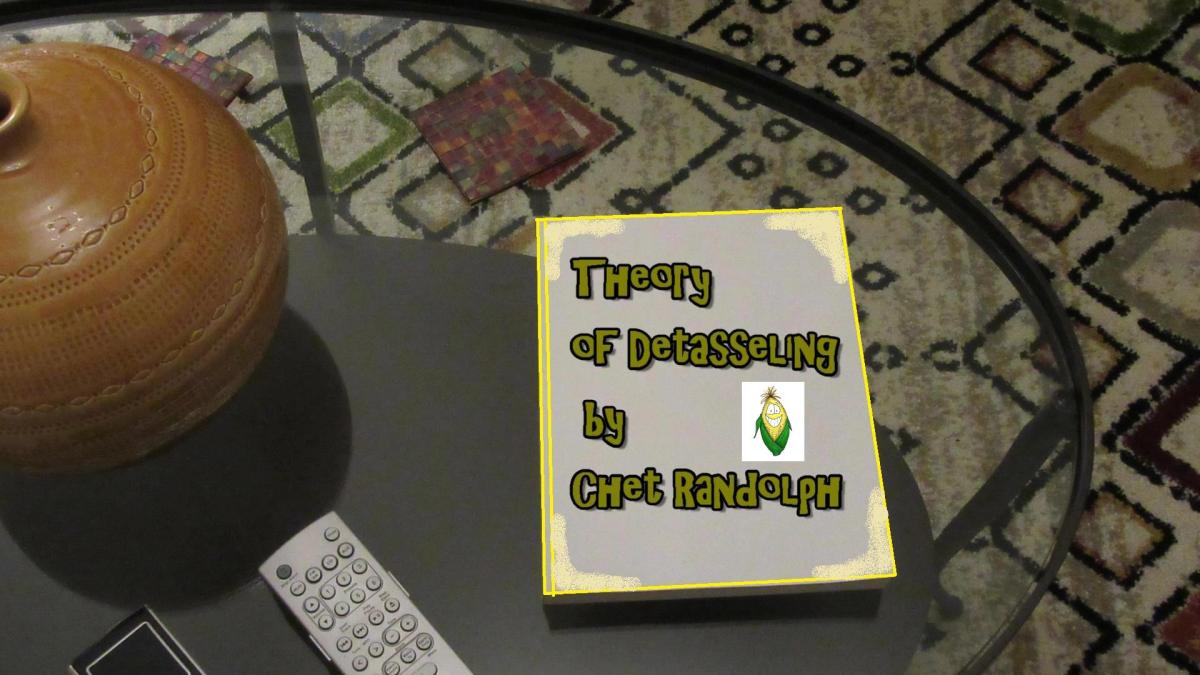
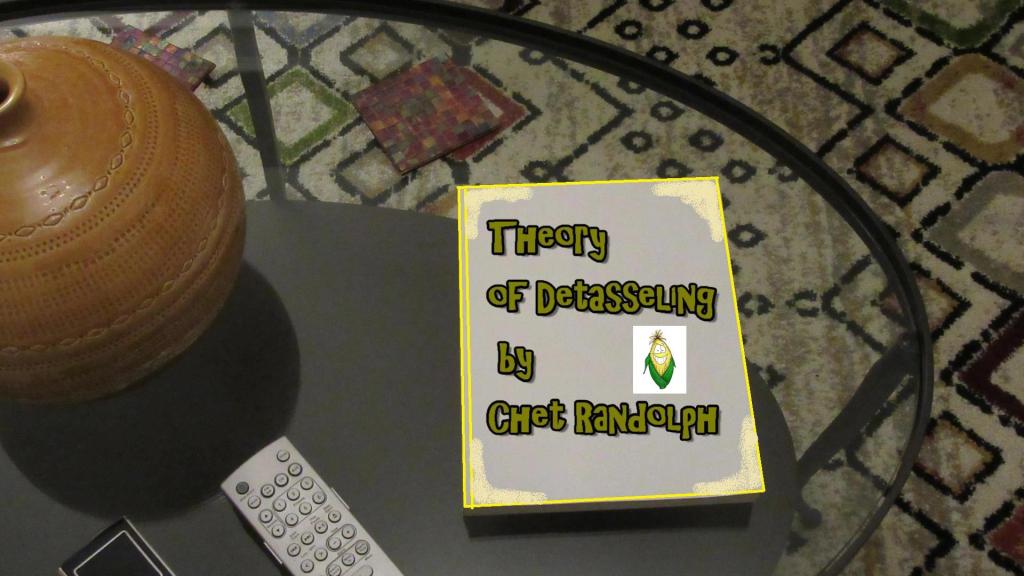
Anyway, we have a great sun room again. We have a nice coffee table in there, with the mandatory coffee table book. Chet Randolph really didn’t write that book, Theory of Detasseling—but he could have.

coffee table book

 Here’s a tune from tonight’s show that fits the season.

An Old Dog’s Approach to Replacing Electrical Outlets and Other Thoughts

Since retirement, I’ve been very gradually casting about for another identity now that I’ve given up my professional identity. It doesn’t come naturally. I’m definitely not a handyman, although I’ve been learning a few skills.

For some reason, a large number of our electrical outlets didn’t hold power cords tightly enough. They were either cheap or worn out or both. Appliances would stop running because the electrical plugs fell out of the outlets.

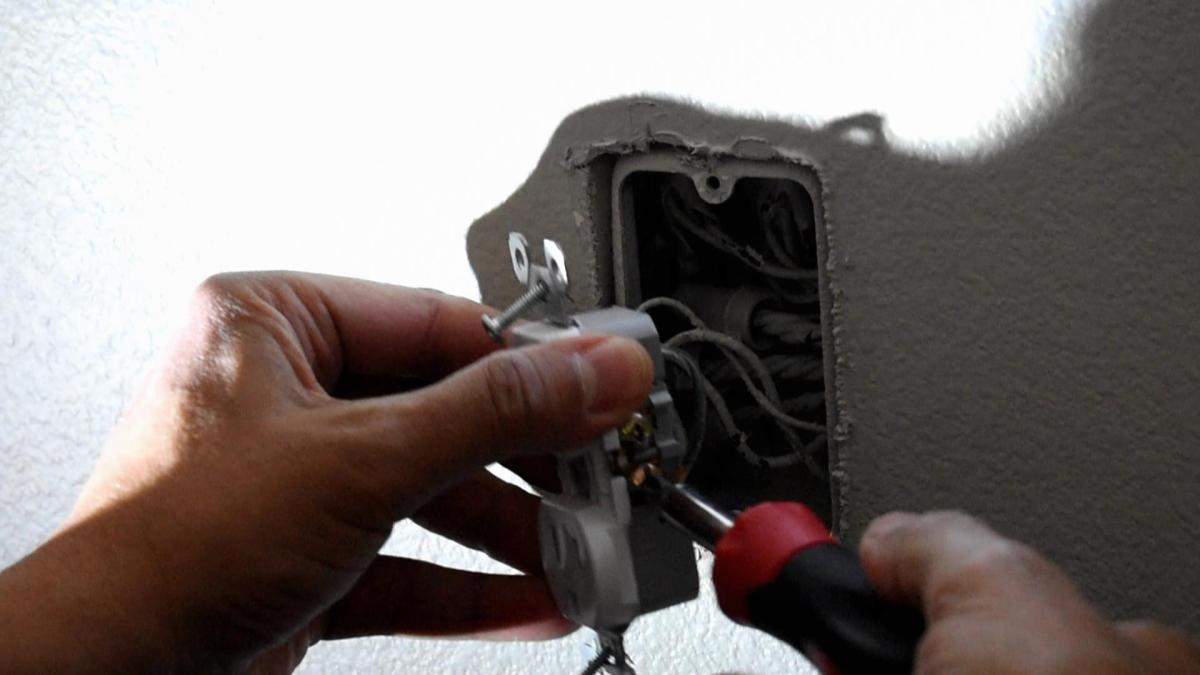
That led to Sena picking up an 85 gross of various replacement outlets, which led to losing one of my best excuses for not getting the vacuuming done. Since then, I’ve replaced a large number of outlets (see “instructional” video below). Toggle switch replacements are another item high on the list of vital electrical equipment to replace, mainly because they also get loose with age.

Funny how that doesn’t work for me. I get tighter in my joints as I age, which makes it very hard for me to sit cross-legged on the floor while replacing outlets. Standing up is even harder. That excuse doesn’t work either.

I’m pretty keen on checking outlets and the like for power before I start messing around changing them. I use a UL approved voltage tester for that—an electric can opener. Don’t let that get around. I always shut the power off at the circuit breaker to be safe.

Another skill comes to mine. Yesterday I had to install a soundbar on our TV for the first time. After Sena returned that one for a refund because it didn’t seem to improve on the TV’s audio, I installed a sound bar and subwoofer made by a different company.

I had a heck of a time getting it to work. It came with enough cords to hook it up, either by optical cable or something called HDMI ARC cable. Apparently, ARC stands for Audio Return Channel. I still don’t yet know why that makes it different from a regular HDMI cable.

What should have been a 10 to 15-minute hookup ended up taking most of an hour because neither cable worked. It was mysterious. I even hooked up both of them. The sound bar was soundless. In disgust, I yanked out the HDMI ARC—and abruptly the sound bar was loudly functional. Just prior to that I think I had moved the power plug from a power strip to a wall outlet. I figured the power strip might have just got old.

On the other hand, I had switched the sound bar plug and a CD player plug on the power strip which had been working fine and the sound bar still didn’t work. It was either aliens or luck. Sometimes it’s better to be lucky than good. I’m thinking about trying that HDMI cable again.

I have changed only in very small ways over the last 19 months (837,755 minutes; 50,265,308 seconds) since retirement. Some people say you can’t teach an old dog new tricks. I wonder if some people are just being ironic.

Retiree Musings

I’ve just discovered a web site that calculates the time that has passed since an event occurred. So, it calculated that I’ve been retired for 19 months—or 580 days, or 13,909 hours and so on. But I’m not counting.

What has been happening since then? I’ve had the usual problems with letting go of my professional identity, still having them in fact. I’ve posted a quote from another retired psychiatrist, H. Steven Moffic, MD.:

Plan for retirement, even if you don’t plan to retire. This means sound financial planning, developing other interests, and nurturing your relationships with significant others. Retire, even if you are not retired. Take enough time off periodically, and completely, with no connections to work, so that you can feel emotionally free from concerns about patients and practice. Of course, there is no reason to retire if you really love your work and relationships just as they are.

H. Steven Moffic, MD

There was also an article entitled “When Should Psychiatrists Retire?” written by Dinah Miller, MD. It was published in Clinical Psychiatry News January 2022 issue, Vol.50, No. 1 as well as Medscape on November 17, 2021. There is no consensus on the answer to the question, although there are several opinions by the commenters.

There are a lot of articles out there about what it’s like to lose your professional identity and the potential consequences of that. One thing I’m learning is that, while I may not be fully reconciled with losing my identity as a consult-liaison psychiatrist, I’m gradually starting to have more fun just being a clown sometimes, which pre-dated my becoming a doctor.
Maybe I just need to grow up, but my interests are everyday stuff I tend to make fun of.

Like dryer balls. Now, I don’t want to offend anybody who believes that dryer balls are effective at drying clothes quicker and the like—but the jury is still out on that claim.

In fact, there are many articles on the web, both pro and con about dryer balls. One of them is by somebody who did what sounds like an exhaustive study (just with his own laundry; you won’t find it published in any journal). He swears by them. Then there was the article which pretty much debunked dryer balls. It mentioned an “in-depth experiment” by an 8th grader in 2013 proving that they don’t reduce dryer time. My wife, Sena, says they don’t work. One ball got snagged in a fitted sheet pocket.
What I don’t get is why dryer balls look so much like the spiky massage balls (hint, it’s the green ball; the dryer balls also have holes in them). I think everybody just takes for granted that massage balls work. Sena says it works. She also has what she calls a massager which looks vaguely like a headless alien doing the downward dog yoga thing.

But what I find puzzling is why I can’t find any mention on line of clamshell eyeglass cases which have a steel trap-like spring-loaded hinge. You don’t want to get your fingers caught in them. They should have a safety protocol for use—so of course I came up with one.