We’ve had this chicken wishbone on our kitchen counter for 3 days and we decided that was long enough to let it dry out. We’ve done this wishbone tug-of-war before and I won. Sena wanted a rematch and make it official.
It’s legal to do the wishbone pull contest with a chicken furcula (the anatomically technical name, which is Latin for “nasty little chicken bone”). And you don’t have to do it on Thanksgiving. You can look it up in the official Chicken Wishbone Rule Book in Washington, D.C.:
Article 7, number 349, sub-paragraph 88, line 42, mayo on the side:
“It is legal to use a chicken wishbone to make a wish, and you don’t have to do it on Thanksgiving.”
Now that it’s settled to everyone’s satisfaction, can we move on? We set this up so there would be no confusion about the rules and what’s disallowed (nothing).
The wishbone should be dry after a few days, or whenever you get tired of looking at that ugly forked bone on your kitchen counter.
According to tradition, if you and your opponent hold the opposite ends of the wishbone, make a wish, pull the opponent off his feet, place him in a half nelson (not a full nelson because remember, one hand is holding your end of the wishbone), roll strategically out the back door and into the rear yard, find some deer poop and liberally smear it on your opponent’s face (according to official Washington, D.C. code requirements), switch to a step over toe hold (it is forbidden to clench the wishbone between your teeth during this maneuver, subject to penalty points), and immediately knee him in the groin while chewing off his ear, starting at the top, (points off for chomping from the bottom), and win by coming away with the longest fragment, as determined by congressional hearing, and if you’re not in a nursing home by the time it’s concluded, you’re declared the winner and your wish may or may not be granted, depending on whether you blab about it at any time before you die.
There are a few tricks to know. If you hold your side of the wishbone toward the middle and let your opponent do all of the pulling, you’re more likely to end up with the longest fragment.
When both of you know that, wishbone pulling contests can turn into marathons. The longest one on record was 50 years, according to the biggest liar on the face of the earth, who shall remain nameless for the time being.
Today, in honor of Debunking Day, which is held on March 11 annually (starting in 2005) I thought I’d introduce a new word. It’s Para-Debunking and you won’t find it in the dictionary, at least not in our brand-new hardcover Merriam-Webster’s Collegiate Dictionary, Eleventh Edition. It was just delivered yesterday. We needed at least one physical dictionary for when we play Scrabble. We’re also waiting for an official Scrabble Dictionary, also on order. The heft of a real dictionary feels really good, by the way.
Anyway, the definition of “debunk” is “to expose the sham or falseness of” something.
Before I give you my definition of para-debunking, I should say that it’s a spinoff of the word “paranormal.” I know it doesn’t really make sense, but hang on, I’m getting to that.
You’ll never guess how I even found out it was Debunking Day today. Sena found out yesterday that a radio DJ was planning to observe the holiday by looking up something on MythBusters, another TV show we used to watch a lot.
That led to Sena finding a couple of X-Files episodes (a big-time paranormal TV show in the not-so-distant past): Sunshine Days and The Rain King.
If you can pick any topic to find debunkers always ranting about, the paranormal would be one of them. I’m not out to actually debunk it, so you can put your guns down. But the two X-Files episodes made me think of maybe something more important than just garden variety debunking.
Sunshine Days, an episode in the 9th season, originally aired in 2002, with Agents Doggett, Reyes, and Scully investigating two murders at a house that is off and on tricked out as the Brady Bunch house. This is the accidental result of the staggering psychokinetic powers of the homeowner, Anthony, whose psychic talents were studied when he was a child by a parapsychologist, Dr. Rietz. Anthony developed an attachment to Dr. Rietz and created doubles of the Brady Bunch (gaaahhhh!) because his family life was bad.
The agents take Anthony to FBI headquarters in Washington, D.C. and convince Assistant Director Skinner and a scientist that Anthony’s powers could change the world. But as Anthony demonstrates his powers by levitating things, including Skinner, the strain of it makes him deathly sick. Skinner is no lightweight.
As he lay dying in the hospital, Dr. Rietz realizes that Anthony loves him like a father and that relationship is more important than using him for his paranormal powers to change the world since it would kill him. Paranormal power is not debunked, but the real power is the power of love. That’s para-debunking, which doesn’t have a holiday but should.
The other X-Files episode is The Rain King, which aired in the 6th season in 1999 and features Agents Mulder and Scully investigating a guy named Daryl in Kansas, who claims he can make it rain whenever he wants, thereby controlling the awful drought that has plagued the area for months. I think it’s important that this is set in Kansas. As usual, Mulder believes that somebody is making it rain, but maybe not Daryl. Scully is skeptical as usual and tries to debunk the whole thing.
It turns out that the local weatherman, Holman, is responsible for the crazy weather because he’s been in love for decades with Sheila (who had been engaged to Daryl but he was not down with the plan). But Holman just can’t work up the nerve to tell her. He even creates a tornado that tosses a cow through Mulder’s hotel room ceiling. Holman finally convinces Sheila that he really loves her, which brings back the sunshine. The moral of the story is that we should be nice to each other because you never know when somebody will direct their paranormal ability at the skies and clobber us with flying cattle.
Just kidding. The idea is the same as it was for the Sunshine Days episode. It’s more important to feel our feelings and share them with others as long as that doesn’t involve hurling livestock at each other.
Get the idea? The paranormal is not debunked, but para-debunked in favor of focusing on the important stuff humans can achieve on earth without paranormal involvement. Maybe we can treasure what we already are capable of doing.
OK, let’s vote. Who wants to add Para-Debunking Day to our long list of holidays?
I’ve been looking at my About Me page and see that it needs revising. I’m way past the stage of being in phased retirement and I’m pretty sure I can’t do without this blog—or at least some way to keep writing. I notice I said that I was not sure how long I’d keep blogging.
I recently updated my YouTube trailer. It’s my first attempt at an elevator pitch in years. It’s a 48 second video, probably the shortest video I’ve ever done. According to some experts, it’s 3 seconds too long. If you want to read the long version, it’s on this blog, “Elevator Pitch for a Very Slow Elevator.”
Anyway, I’ve been retired from psychiatry since June 30, 2020 (there was a minor clerical glitch in the exact date). My wife, Sena and I have gotten all of our Covid-19 vaccines—until they come up with more. We have made Iowa City our home for over thirty years.
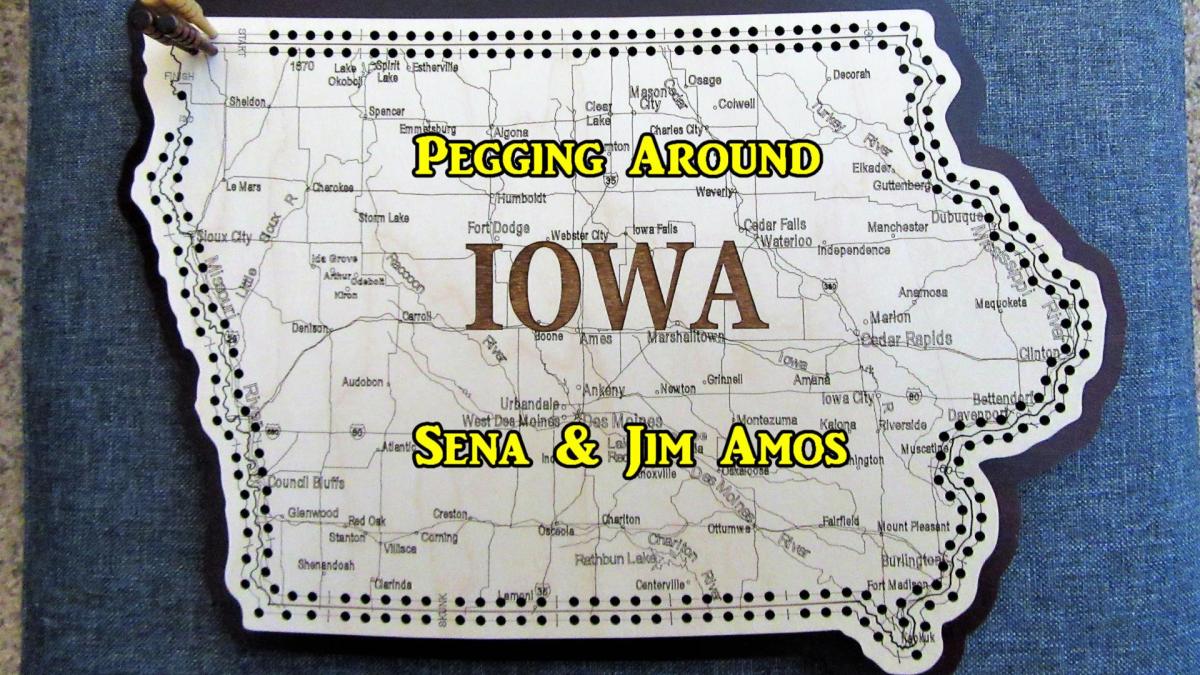
We play cribbage. One of the most fun cribbage games we played was the game on the Iowa state map board. That was a blast. The video of it was over 10 times longer than most YouTube videos I make. That’s because the main reason for the game was to talk up Iowa. You really ought to visit, maybe even move here. You can get used to snow. I keep reading articles on the web telling me I’ve got to stop shoveling at my age. I’ll think it over.
We also like going for walks. One of our favorite places to walk is on the Terry Trueblood Trail. Sometimes you can see Bald Eagles out there.
I have not yet mentioned Consultation-Liaison Psychiatry, even once. That’s a big difference from the old About Me page. It was the first thing I mentioned then, because it was just about the most important role I had in life.
It took a long time before I began to question that once I retired—about a year or so. It was a lot like being a firefighter. In fact, my pager was the bell, and I even had a firefighter’s helmet, a gift from a family medicine resident who rotated through the psychiatry consult service. I didn’t wear it when I interviewed patients. It would have alarmed them.
I also carried around a little camp stool. It was because there were never enough chairs in patient rooms to accommodate me, the trainees, and visiting family. Often, I sent a medical student to find me a chair from out in the hall—until I got the stool. I slung it over my shoulder and away I went. I was sort of like the guy on that old Have Gun—Will Travel (paladin) TV show (a 1950s-1960s relic with a gunslinger called Paladin). Have Stool—Will Travel. A surgeon, who also doubled as a palliative care medicine consultant, gave me the little chair as a gift. I passed it on to a resident who took it with good grace.
I miss work a lot less now than I did when I left. I think I must have loved my work. Maybe I loved it too much, because leaving it was hard. There are different kinds of love. I love writing. I love long walks and watching the birds. And most of all I love Sena.
Love
I’m gradually replacing work with something else I love, which is writing. Mindfulness meditation and exercise also help. And let’s not forget, I change electrical outlets. I think I’ve changed just about every outlet (and many toggle switches) in the house. They ought to do away with those bargain bin plugs. Just because they’re cheap doesn’t mean they’re any good.
I’m not sure yet how I’ll edit the About Me page. Maybe I’ll just call the first one Chapter One and this one Chapter Two.
Sena and I got the Iowa map cribbage board and pegged around the state. It was a great way for us to relearn what’s great about Iowa. There is a ton of fun things to do in Iowa.
The 2022 RAGBRAI route, scheduled for July 23-30 will run from Sargeant Bluff to Lansing. It’s the oldest and largest recreational touring bicycle ride in the world, according to the RAGBRAI website. RAGBRAI stands for Register’s Annual Great Bicycle Ride Across Iowa. It’s the largest, longest, and oldest recreational bicycle touring event in the world.
It was started by Des Moines Register reporters John Karras and Donald Kaul. The 7-day trip goes from the Missouri River to the Mississippi River with many stops along the way.
One of them is Mason City, where John Dillinger robbed the First National Bank in the 1930s.
Lake Okoboji in northwestern Iowa is well known for a lot of reasons. It’s a great place to boat and fish, but if you’re an X-Files fan, you’ll recognize that it was the setting for the episode “Conduit,” in which a young woman was kidnapped by aliens although Fox Mulder was unable to prove it happened. The show misspelled the place as “Okobogee,” a mistake that was easy for any Iowan to detect. It was actually shot in British Columbia.
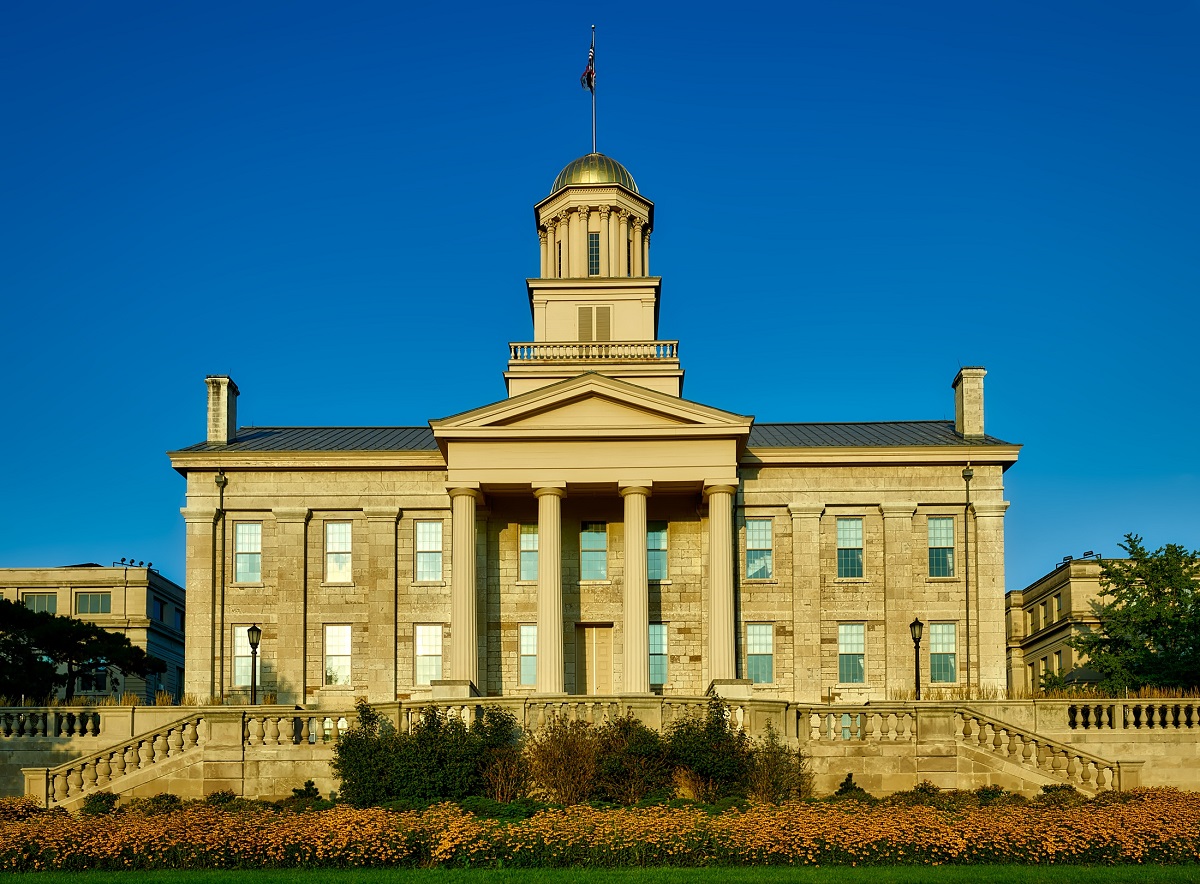
Of course, Iowa City is the home of the Hawkeyes, The University of Iowa, and the Iowa Writers’ Workshop. The African American Museum is in Cedar Rapids.
Clear Lake, as some of you might recall, is where the Surf Ballroom is. Buddy Holly, Ritchie Valens, and J.P. “The Big Bopper” Richardson, after performing there were killed when their plane crashed shortly after taking off from the nearby Mason City Municipal Airport in 1959.
Riverside is the site of the Star Trek Museum and the future birthplace of Captain James T. Kirk in 2233. There’s an annual Trek Fest festival. William Shatner played a hoax on Riverside in 2004 when he visited with a film crew, claiming that they were going to make a science fiction movie there.
Dubuque is the oldest city in Iowa. One of the places to see is the National Mississippi River Museum and Aquarium.
Although it’s not on the cribbage board Iowa map, about a half hour west of Dubuque is Dyersville, where the movie Field of Dreams was shot. The New York Yankees and the Chicago White Sox played there in 2021.
The Pella Tulip Time Festival runs in early May.
You can see Albert, the largest bull in the world, in Audubon. The solid concrete sculpture weighs 45 tons. That’s a lot of bull (obligatory rim shot here).
The Iowa State Fair is in Des Moines, the capital of Iowa. Iowa State University is in Ames. I’m part Cyclone and part Hawkeye because I got my bachelor’s degree at ISU and my medical degree at UI.
Although Nashua is not on the Iowa cribbage board, it’s in our hearts. We were reminded of our wedding at The Little Brown Church there 44 years ago. Come to Iowa and make memories of your own.
I just got my new computer a couple of days ago, the Dell XPS 8950. I posted about this some time ago. Of course, It came with Windows 11 installed. I’m still trying to get used to it. It has a voice recognition feature that puzzles me. I can dictate in Word and probably other Microsoft applications. However, it seemed to work whether I used a microphone or not. That was puzzling until I relearned by trial and error that my webcam audio connects when my desk stand USB microphone is not plugged in.
I dictated this entire post on the Microsoft Word application containing the dictation feature. I write all my posts in Word before copying and pasting it into my blog, So, this was just an extra step. However, it made the work of creating the post a lot harder.
I’m pretty sure this feature was on my last computer and the Word application that came with it. I just can’t recall it. I know I never used it.
However, it still works the same way as another voice recognition system I have used before-and that’s, of course, Dragon Naturally Speaking. I left a few examples of how this usually works in this blog post just for fun. I have italicized them, but that was probably unnecessary.
I use dragon a lot. When I was working as a. The guy in the dental hospital.
I left that last sentence just exactly the way it was when I finished dictating it, just to make a point.
The point is obvious. You can get a lot of comical errors from using voice recognition software. And I noticed a lot of times that I could type a lot faster than I could dictate.
I used to use a disclaimer, like a lot of other doctors did, after I finished my dictations, similar to the one below:
“This note was created by speech recognition. Minor errors in transcription may be present. Please call if questions.”
This won’t provide immunity to malpractice. But mistakes were so. Problem. In voice recognition software that it seemed necessary to make apologetic–sounding excuse for them.
The voice recognition Feature in the. Microsoft Word app. Has the same problem. You’d better not hesitate more than a microsecond in between words. It’ll put periods everywhere you do that. It will also create capital letters for words that don’t require that. Who are?
That last quotation mark? Who are? Was supposed to be.
OK, OK, it was supposed to give me a new line because I said, “new line,” but it’s a lot faster to just type than to dictate. Notice that the italicized portions of this post are becoming more prevalent. Move on. I said “new line” please:
I don’t think these hiccups are specific to Windows 11 or Microsoft or the Dell XPS 8950.
In fact, I’m pretty happy with my new computer. It does weigh 30 pounds (I did not say 40 pounds, but for some reason the dictation dragon asked me if I said that).
But it’s a lot quieter, except when it’s breathing fire.
A couple of nights ago Sena was looking at some old X-Files episodes on the web. It was on the Dailymotion site. For some reason, we could see them without login registration. I think it’s usually required. We watched the full length, The Unnatural episode two nights in a row without ads. It was an inconsistent experience. We saw it in both HD and non-HD modes and got slammed by ads at times and other times couldn’t access the show at all unless you logged in.
The weird thing was that all the subtitles and captions, and even the scenes were shown in mirror image. It turns out this mirror issue is not uncommon. I googled it and others have noticed it on YouTube as well as Dailymotion. You can flip the video out of mirror mode—often for the price of software being peddled for that purpose. The most common reason I saw given for the videos being mirrored was to avoid copyright strikes.
OK, so other than that, a lot of the old X-Files shows were available and Sena watched a little of the brutal episode “Home.” Sena can do a hilarious mimic of part of Mrs. Peacock snarling “I can tell you don’t have no children. Maybe one day you’ll learn… the pride… the love… when you know your boy will do anything for his mother.” Sena always ad libbed “the joy” to the “the pride, the love” phrase.
We used to watch the X-Files regularly, making popcorn downstairs in the kitchen and getting upstairs to watch it in bed just in time.
Anyway, we could watch the mirror version of “The Unnatural,” comfortably despite the backwards captions. This is one of our favorite episodes. There are many obvious references to racism and identity. I looked all over for a simplified plot summary, but found a lot of them have glaring mistakes, are too long, and wouldn’t fit with my simple-minded geezer interpretation. So, I’m going to cobble together something from reading a number of them. I’m not saying it’ll be straightforward.
I have to call it a Monster-of-The-Week (MOTW) episode because that’s what a lot of writers do. It refers to X-Files episodes that usually feature some paranormal creature or a criminal with a supernatural ability.
Here’s a tangent I can’t resist because we just watched Mountain Monsters Sunday night for the first time, and I think it was the first episode of the new season of this show which has been on for 8 seasons. It is surely a parody of several shows of the Bigfoot adventure type. It’s basically an ongoing MOTW series featuring a cast of characters who survive on sasquatch snacks and cryptid colas and stage uproarious, slapstick comedy searches for legendary creatures (some of which are apparently part of genuine local folklore) like Spear Finger, the Smoke Wolf, the Cherokee Death Cat, and a dozen others, some of which are unfortunately prone to violent attacks of diarrhea, which Wild Bill (arguably one of the funnies members of the cast) did a side-splitting impression of by hanging on to a couple of trees and sticking his butt way too far out in a stunningly hysterical pantomime of projectile Hershey squirts, all the while getting more and more bug-eyed, cursing a blue streak and brandishing a gun which looked like a kid’s toy you could find at Walmart. The camera angles are all too perfect. We laughed until we cried.
Anyway, getting back to The Unnatural, the show is basically the reminiscence of an ex-cop named Arthur Dales who was assigned to protect a black baseball player named Josh Exley from being killed by the Ku Klux Klan (KKK). Actually, Josh is an alien who shape-shifted into a black man because he loves the game of baseball. He can also sing the old Negro Spiritual “Come and Go with Me to That Land” on the team bus so well that it was recorded on YouTube and one commenter said he’d pay $100 for a full version of it.
The episode starts with Fox Mulder finding an old newspaper clipping about a baseball game in 1947 in Roswell, New Mexico, the site of so many UFO crashes that the local landfill could not keep up with all the debris local ranchers were trucking in from the fields. He finds a story which shows a picture of an Alien Bounty Hunter in it. This is an executioner who also shape shifts and knocks off other aliens who misbehave by threatening to expose the alien colonization project going on at the time.
The KKK is threatening the team of black players and the head of the gang is the Alien Bounty Hunter. He’s after Exley because he threatens to expose the project simply because he loves to smack home runs and, even though Exley thinks the game of baseball is meaningless, it’s perfect because you can chew tobacco and get knocked out by wild pitches—which leads to him getting beaned and bleeding green blood on the catcher’s mitt. He wakes up speaking alien but because he remembers he’s from Macon, Georgia, everybody thinks he’s OK. The catcher’s mitt is sent to the lab guy for analysis.
Officer Dales finds out Exley is an alien after he breaks into his room and sees him in his alien form. After Dales wakes up from fainting a half dozen times, Exley tells him that he’s an alien; he’s forbidden from intermingling with humans, and he masquerades as a black baseball player because he loves the game and to escape notice. The way Exley puts it, “They don’t like for us to mingle with your people. The philosophy is we stick to ourselves; you stick to yourselves—everybody’s happy.”
Where have you heard this before? It sounds like Jim Crow to me.
The Bounty Hunter, masquerading as Exley, kills the lab guy and Exley is now fingered as the murderer. Exley and Dales have a short talk while playing catch in the ball park in which Exley says it’s time for him to face the music and go back to his family. When Dales basically asks him why the human race can’t be his family, Exley takes either a surprisingly Green Supremacist attitude or just states the facts saying, “We may be able to look like y’all—but we ain’t y’all.”
In the end, the Alien Bounty Hunter executes Exley. But just before he kills Exley, he tells him to show his “true face” so he can die with dignity. Exley says simply, “This is my true face.”
And while he dies in Dales’ arms, despite Exley telling him to get away because his green blood is poison to humans, Dales sees that it’s red and says “It’s just blood.”
I don’t know exactly what this means and some have called it ambiguous. I speculate that this might have been the culmination of a transformative process and it reminds me of Atticus Finch telling Scout (in To Kill a Mockingbird), “You never really understand a person until you consider things from his point of view…until you climb into his skin and walk around in it.”
Well, we were out for a walk around Terry Trueblood Trail yesterday and a woman stopped us and excitedly asked, “Do you want to hear a joke about Covid?”
Believe it or not, we didn’t know anybody made jokes about Covid—but we said “Yeah, go ahead.” And then she said it was about dogs, and added that dogs don’t get Covid, as if to reassure us. In fact, it turns out that the CDC says you can’t catch Covid from pets, including dogs. It went like this:
The World Health Organization, or WHO, had feared the dogs could spread Coronavirus and ordered all dogs that were exposed to the virus be held in quarantine. After review, the WHO announced that dogs cannot contract Coronavirus. Dogs previously held in quarantine can now be released.
To be clear: WHO let the dogs out.
Sena and I immediately thought of the Men in Black II scene with Frank the talking Pug, who is actually an alien—and if you don’t like it you can kiss his furry little butt! I exclaimed, sort of singing (God help everyone within earshot) “Who let the dogs out!” I forgot the barking part, but we all had fun.
Incidentally, my mondegreen for the song “Who Let the Dogs Out” used to be “Who left the dog pound?” For the record, the word “mondegreen” means: a misunderstood or misinterpreted word or phrase resulting from a mishearing of the lyrics of a song. It often totally changes the meaning of a lyric, resulting in something ludicrously comical.
I think Dave Barry wrote about mondegreens in his book, “Dave Barry’s Book of Bad Songs,” a book I used to own but somehow lost in one of our many moves. I’m hoping he’ll find this blog post somehow and send me a free, autographed copy of the book.
If we’d had our new Polk Signa S2 sound bar when I first heard the line, I could have used the remote control Voice Adjust dialogue level to reproduce clearer, crisper dialogue.
For the record, I’ve never heard the full song “Who Let the Dogs Out,” which was performed by a “Bahamian junkanoo” band formed in 1977 and released in 2000. I had to look up “junkanoo” and it’s a Bahamian cultural celebration, a festival of music, dance, and dog pounds.
There are conflicting opinions about what the song means. Some say that it was about men calling women filthy names and women fighting back by shouting “Who let the dogs out?” On the other hand, I also read that the song won a Grammy.
When we got home, I googled Covid jokes and found a lot of them. One of the better hits was RJ Julia Booksellers, advertising a book entitled Coronavirus Humor. The author was just called “Mad Comedy,” which means several “top comics” contributed. It was published in April 2020 by Indy Pub.
The best part? There was a statement saying “A portion of the proceeds of this book benefit the hard-working ‘essential workers’ who are sacrificing so much to help us all during the 2020 epidemic.”
I think I was the last lone ranger Chief Resident in Psychiatry, meaning doing the job solo. After that, there were always at least two senior residents managing that. One of the things I did was to give lectures on various topics that were not strictly related to how to work on the wards and clinics, but how to communicate with other professionals and with patients.
The other big task was fielding outside telephone calls from doctors in other hospitals trying to transfer patients to The University of Iowa Hospital psychiatric units. That’s right, that was a resident’s duty. I had some pretty difficult conversations. I couldn’t just accept every referral.
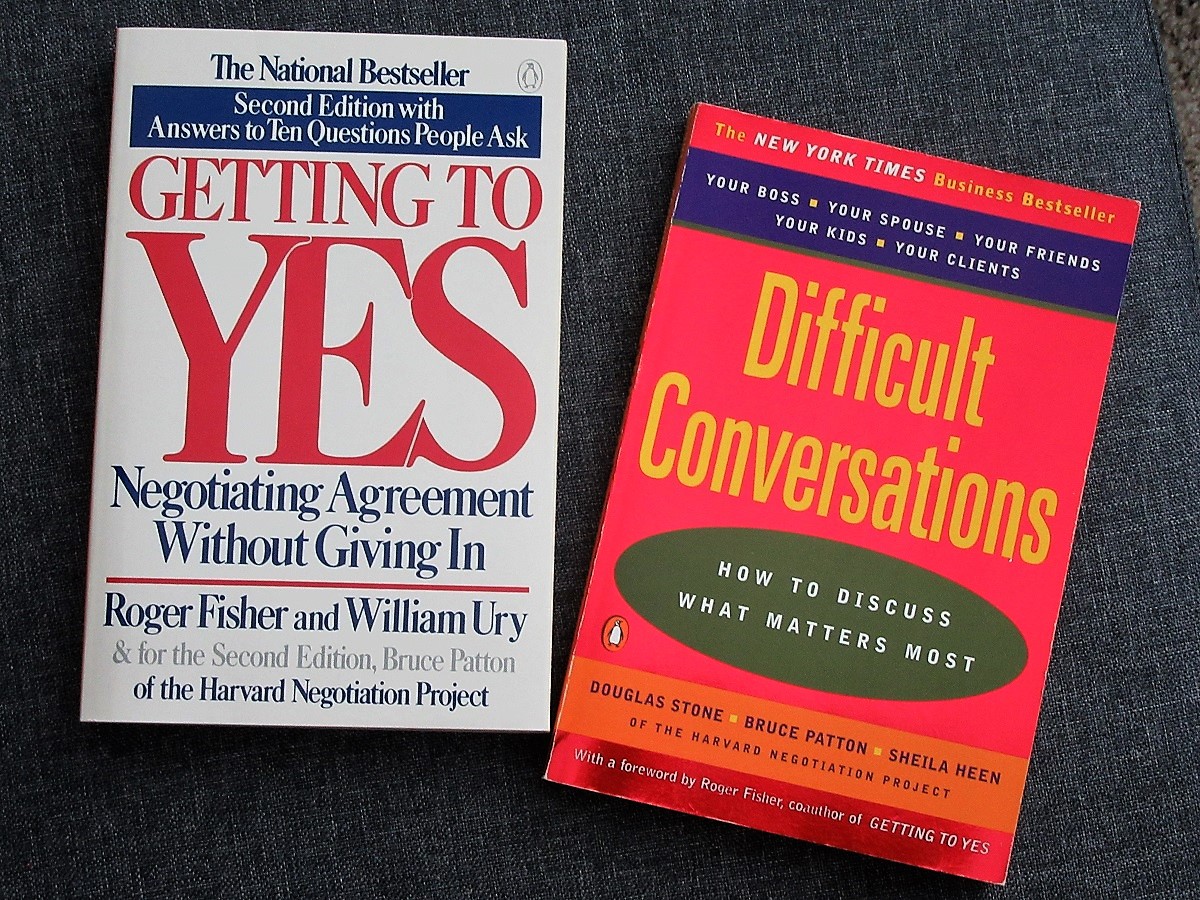
I used a couple of books as guides: “Getting to Yes” by Fisher and Ury, and Difficult Conversations by Stone, Patton, and Heen. I should seriously have reread those books during my entire career and even now. Nobody’s perfect. I encountered racism from patients, so I was no stranger to a variety of difficult conversations in many different situations.
Anyhow those two books are on the short list at the University of Iowa Conflict Management web page. There’s a ton of resources there available for learning about how to manage conflict and recognize what implicit bias is and what it is not.
Implicit bias gets a lot of press. I think it can tend to set people on edge before and during seminars on equity, diversity, and inclusion. Not everybody is a racist. But our brains are wired for implicit biases. I think we all need to get busy, and I mean everybody, including me. A good place to start is understanding implicit bias.
I’ve been reading To Kill a Mockingbird and thinking over something a character named Miss Maudie said in Chapter 10: “People in their right minds never take pride in their talents.” It seems to run counter to popular opinion. Why wouldn’t you take pride in your talents?
I got a lot of hits on my google search for this quote, by the way.
Miss Maudie’s statement was soon after Atticus shot a rabid dog with a marksman’s skill. Jem and Scout had been grousing about how they couldn’t find anything to be proud of in their old man. Atticus had never told his children about his skill as a marksman. He gave his kids guns but declined to teach them how to shoot.
I try to make sense of Miss Maudie’s comment by thinking about marksmanship as a skill, which is often distinguished from a talent, usually because the latter is thought to be a trait you’re born with. On the other hand, it’s hard to think of modesty (which is what keeps you from bragging or “taking pride”) as a talent. Some might say it’s more like a character trait.
Can you can develop a talent by practice? Can you improve your modesty by working at it and how would you do that, deadlifting your inner barbells? I tend to think you either have it or you don’t. And why does it take being in your right mind to refuse to take pride in or brag about your talent?
I often hear athletes (think Super Bowl) bragging non-stop about their talents. But I stop well short of admiring them for doing it. It’s annoying, but often preferable to the half-time show. Why do they grab their crotches?
Maybe it doesn’t make sense to brag about a talent you’re born with. I’m not sure if modesty is also something you’re born with. Babies seem very immodest, especially when they’re pooping, based on my extensive research of TV commercials and anecdotes.
On the other hand, a talent is also often said to be something which can be honed to perfection. In fact, Miss Maudie said that Atticus’s skill with a gun was a gift from God, a talent—which he perfected by practice. This might contradict the definition of talent as a thing you’re just born with. She goes on to say that Atticus thought this particular gift from God gave him an unfair advantage, so he gave it up. It would be unseemly to take pride in such a thing, and why would it even occur to someone with a talent to minimize it? The religious reference “pride goeth before a fall” is obvious, but religion doesn’t always seem to play a big role.
Maybe both talent and traits like modesty can be honed as well. What if they’re sort of like lifting just one of your eyebrows to make you look haughtily bemused? You can cultivate it, or at least some people say you can. There’s even a WikiHow for it. But it seems like you have to find your dominant eyebrow, which means there’s something inborn that makes it easier.
Can you develop modesty as though it’s a skill, assuming that it’s also a trait which is malleable? Is there a modesty cortex? Then, you could say some people have a talent for modesty. And how about those splinter talents or skills (like suddenly playing the piano like a virtuoso) which can appear abruptly after brain injuries? Can modesty be like that, a nascent itch in the body waiting to be scratched? That kind of makes you want to drop a piano on the guy at the cocktail party who brags about his golf game, doesn’t it?
I suppose some would take pride in being modest, although it sounds paradoxical—until I remember all the people I’ve seen who can feign desirable traits.
So, is there a Gold’s Gym for character traits where we can go and develop talents like modesty, patience, respect, kindness, and mercy?
Not exactly, but we can give ourselves a kick start by checking out some resources that aren’t that hard to find. Those would be different from what you can pick up from “To Kill a Mockingbird,” although it’s obvious that’s how I got steered to this topic in the first place. Remind me again, why is this book be taken off required reading lists?
Last night’s webinar on Uncovering Hawkeye History, “Endless Innovation: An R1 Research Institution (1948-1997) was fascinating for us.
Dr. Bruce Gantz kicked off the first presentation about his work in cochlear implant surgery. Business picked up for him as far as these procedures in the last year and a half partly because of the pandemic. We were stunned to learn that the demand was driven because so many people were wearing masks—which prevented the deaf from lip-reading.
Kevin Washburn was next up and highlighted the great performance of the UI Law school’s stunning list of 4 student-led law review journals. They rank extremely high in the country, up there in the company of Yale and Harvard. I’m off on a tangent here, but Washburn’s status as a citizen of the Chickasaw Nation (which is based in Oklahoma; there are no Chickasaw tribal members in Iowa despite there being a Chickasaw County, by the way) reminded me of a guy who was a year behind my class in medical school. His name is Orrenzo Snyder and he’s a urologist in Oklahoma. Orrenzo and several other fellow students founded the American Indian Student Association (AISA) in 1989, which was later renamed the Native American Student Association (NASA). The University of Iowa Pow Wow was established in 1990. The 26th Annual Pow Wow is scheduled for April 2, 2022. Give it up for Orrenzo!
Anyway, Washburn mentioned one of the many stars in the UI Boyd Law school: Willard (Sandy) Boyd (for whom the college is named) who became one of the youngest University of Iowa presidents to take office and did so during a rowdy time of student unrest—in 1969. He raised a lot of money for the institution and was an advocate of human rights. He was appointed first chair of the University of Iowa’s Human Rights Committee.
You can also discover other facts, such as in 1839 the Iowa Territorial Supreme Court ruled that Ralph, a slave brought into free territory, must be released from slavery, in 1846; Iowa was admitted to the Union as a “Free State;” and in 1868 In Clark v. Board of Directors the Iowa Supreme Court ruled that the Iowa Constitution guarantees the right to public education to all citizens. The plaintiff parent was Alexander Clark, Sr., who later graduated from the Iowa Law School (possibly the first African American to do so at UI). Justice Chester C. Cole wrote the opinion for the case.
University Archivist David McCartney also mentioned 1969 as a noteworthy year because that was the year of the Apollo 11 moon landing. There’s an Iowa connection to the Apollo 11 mission and that is State University of Iowa professor James A. van Allen in the Department of Physics, who warned of the danger to astronauts of the radiation belts encircling the earth (these were later renamed the Van Allen belts).
Ed Wasserman expounded on his scientific work with pigeons and humans, comparing them on how they use their brains to solve problems. Are we better than pigeons? Maybe. Wasserman also gave many examples of how trial and error led to some surprising advances and innovations: the Ponseti method for treating clubfoot, the butterfly stroke in swimming, and Field of Dreams. His point is that the 3 Cs: consequence, context, and coincidence, play the larger role in many great achievements.












 Go Retire Psychiatrist