I just have a few things to say about Sydney J. Harris, who was a journalist whose columns were syndicated to over 200 newspapers. I remember reading them in the Des Moines Register years ago.
I ran across one of his books for sale on Amazon. I’ve never read any of them, but I found one of them, “Winners and Losers” on sale “new” for $111 and change. I was astonished. I admire his diction and learning, but I would never pay that much money for one of his books. You can buy them for less than $5, even on Amazon. You can read “Winners and Losers” for free on the Internet Archive.
You can also find a lot of quotes from Sydney J. Harris on the web. I found a collection which I thought were admirable. Funny thing is, the more I read, the more I thought he was a product of his times. I thought I could detect a little male chauvinism (maybe more than a little). The more quotes I read, the more I noticed he almost always used the word “men” or “man” and rarely mentioned women, unless you count:
“The commonest fallacy among women is that simply having children makes them a mother—which is as absurd as believing that having a piano makes one a musician.”
In keeping with Iowa History Month 2024, you can have a look at the Iowa State University website “African and African American Studies Research Guide.”
Iowa State University happens to be my alma mater, or in a way, one of them. I took my Bachelor’s degree there and later graduated from The University of Iowa College of Medicine.
There is a wealth of information worth browsing on the ISU website devoted to the history of black people in Iowa. In fact, I found out a few of those connections were to Huston-Tillotson University (HT-U, an HBCU) in Austin, Texas, where I spent several semesters in the 1970s before later transferring to ISU.
The connections between HT-U and Iowa go way back into the history of that school. It started as Tillotson College in 1875, which is where some of the ISU black students also later worked as faculty. The list includes notable scholars:
Ada M. Deblanc-Yerwood: After graduation from ISU, she became head of Home Economics at Tillotson College. She was also co-founder of the George Washington Carver Museum in Austin, Texas. She also had an interesting perspective on retirement. She didn’t, and pursued other positions. Her answer to why she didn’t retire: “Old is a state of mind. When you do nothing, you become nothing. The need to be productive—give life to something—doesn’t automatically stop at age 65 or 70.”
Dr. Samuel P. Massie, Jr.: Dr. Massie went to ISU in 1941 to pursue a Ph.D. in Chemistry. He had to hitchhike to campus because there was no housing for Black students within 3 miles. Dr. Henry Gilman at ISU assigned him to work full time as a research assistant on a special assignment connected to the Manhattan Project (the top-secret effort to build an atomic bomb). President Lyndon B. Johnson appointed him to a Chemistry professorship at the U.S. Naval Academy. He distinguished himself as a scientist in many HBCUs (Fisk, Howard University, North Carolina College, and others) and elsewhere despite the racism that tried to hinder him. In 1981, ISU gave him the highest award—the Distinguished Achievement Citation.
Dr. Frederick Douglass Patterson: He was a brilliant student and he attended Samuel Huston College (see history of Huston-Tillotson College at link above). He also attended ISU, graduating with a DVM in 1923. In his book, Chronicles of Faith, he wrote: “In the veterinary program, I did not feel odd being a part of the group of students working in the veterinary clinic although I was the only black person there. The absence of animosity encouraged me to see veterinary medicine as a field in which I could practice without being hampered by the racial stereotypes and obstacles that would confront me as a medical doctor, for example. I found the teachers of Iowa State helpful whenever I approached them. Educationally, it was a fine experience.” He received the Presidential Medal of Freedom from President Ronald Reagan in 1987. He was President of Tuskegee Institute and transformed it into a university. He also founded the United Negro College Fund.
The United Negro College Fund was part of the reason I was able to attend Huston-Tillotson University. And it’s connected to the history of Iowa.
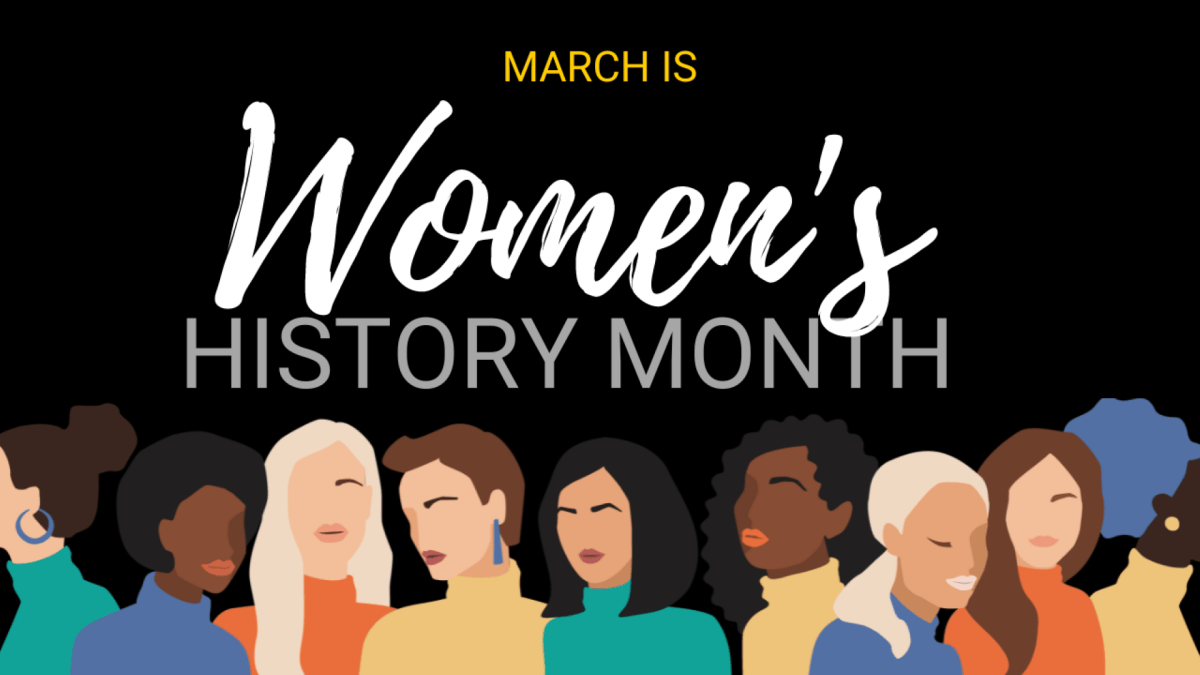
In light of March being Women in History Month (as well as Iowa History Month), I’d like to share some history stories about an African American librarian from Mason City, Iowa named Esther J. Walls. In 2020 during the Covid-19 pandemic, there was an essay about her, “Esther J. Walls: The Role of a Black Leader.” Her life story as a librarian, traveler, and educator is fascinating.
I looked through the list of women elected to the Iowa Women’s Hall of Fame and couldn’t find her name. However, I recognized Deborah Ann Turner’s name on the list. She was the first African American woman to be certified by the American Board of Obstetrics and Gynecology in gynecologic oncology. She was also from Mason City, Iowa. Her life story and list of accomplishments is also impressive.
I identify with both of them because they were born and raised in my hometown, Mason City, Iowa. Esther J. Walls was employed at the Mason City Public Library, my favorite haunt because my love of reading and writing began in early childhood.
An archived news item about Esther J. Walls entitled “A Mason City woman’s globe-trotting career” highlights her travels and her sense of humor.
A couple of days ago the temperature was in the mid-seventies, which is pretty balmy for February. We took the opportunity to get out for a walk on the Terry Trueblood Trail. It’s coincidental, but we did the same thing on the exact same date last February. It’s under the same condition for the most part—escaping from the bad news on the web. The difference was the temperature; it was only in the fifties last year.
The remarkable thing last February was that another trail walker claimed to have seen 16 bald eagles. I’ll have to say that we doubted it, at first. But shortly after that, we caught sight of half a dozen. There were also the quilted hearts we saw, connected to the “I Found a Quilted Heart” project, the goal of which is to make you happy.
This time, although we didn’t find any quilted hearts, we saw a young bald eagle in flight. It was a little hard to tell what it was at first. Bald eagles don’t look bald when they’re in the juvenile stage. I had to look it up. Juveniles look pretty mottled. I wondered if its parents were the bald eagle pair, which we saw at Trueblood in December of 2023. Probably not, given that nesting begins in January, incubation lasts over a month and the eaglets take their first flight over two months later, according to the Iowa Dept of Natural Resources. But it’s fun to think about.
This junior bald eagle looked a little clumsy, both in the air and near the water’s edge. It looked like it might have caught a little fish. It seemed like it was trying to learn how things work in the world and how it’s supposed to fit in.
Instinct takes care of most of that for a bald eagle. Humans have a lot of figuring out to do. We ran into somebody on the trail who told us a great deal about local history. Over time, a lot of things have changed in Iowa City. That goes for the world, too. Much of the time, the changes don’t always seem to make life better, at least according to older people who talk about them.
But the seasons come and go. Bald eagles lay eggs. Eaglets fledge. They don’t gaze up at the moon. Humans do look up at the moon, and occasionally fly there. It’s hard to know why.
There are plenty of earthly mysteries. We saw small black handprints on the Trueblood sidewalk, not far from the shelter. I can’t figure out why they would be there, and what’s more, I can’t find out anything on the internet that explains it. So much for the internet. I supposed I could take a chance and ask Artificial Intelligence (AI) about it, but I’m not confident it wouldn’t just make something up.
We also found a little badge on the ground. It was labeled National Museum USAF Junior Flight Crew. This time, when I checked the internet, I found out there is a lot of information about it on the internet—but none of it helped me understand why it would be on the ground along the Terry Trueblood Trail. You can find a very long article on the internet about how items from the National Museum USAF might not have been handled the way they should have been. You can buy one for about $20 or so on eBay, if you’re interested.
I think it’s more interesting to see how the junior bald eagles learn their way around the world. They earn their wings the old-fashioned way.
This is an update on a couple of Mason City, Iowa YWCA and YMCA renovation posts I wrote in May of 2022 (May 12 and May 25). I’m also going to compare the information about those with recent news about the building which is home to Pagliai’s Pizza.
Recall that the YMCA in Mason City was placed on the National Register of Historic Places in 2002. It was built in 1926. It was also converted into an affordable apartment housing resource. When I was a young man, I used to live in the dormitory. And if you must know, that was in the days of the Pony Express.
And the YWCA in Mason City was built in 1918, well before the YMCA. Yet it is still not on the historic register, which is puzzling. It sat empty for many years before a couple of artists (2 Artists) bought it in 2021. They are trying to renovate the building with some assistance from the city, and their own fund-raising campaign which includes a GoFundMe and other efforts. They plan to use it as a resource for artists, eventually to include studios, apartments, and art shows. The city has received a grant to convert part of the building into apartments.
The State Historical Society of Iowa told me that the YWCA has been deemed eligible twice for nomination (in 1991 and in 2003, which was a year after the YMCA was added to the list). Yet the YWCA has never been nominated. I ended up calling this a mystery in history. It’s true it was neglected for years and renovation is expensive. The nomination process is long and very involved.
A recent, brief local newspaper article indicates that the renovations are still underway, but there is still no mention of trying to get it added to the historic register.
How does that connect to the current news about the building that houses Pagliai’s Pizza? The owner wants to sell the building. However, the building has been there since the 1870s and the Iowa City Historic Preservation Commission has decided along with many others that it belongs on the city’s list of historic landmarks.
The building used to house a dance hall, a grocery store, and a bohemian restaurant. It has been home for Pagliai’s Pizza since 1957. It’s a local favorite; Sena and I have enjoyed pizza there on several occasions.
The owner has misgivings about designating the building a historic landmark as it might hurt its marketability. Nevertheless, the Iowa City Historic Preservation Commission legally decided to recommend it for landmarking. It will be voted on by the Iowa City Planning and Zoning Commission, although it’s not clear exactly when. The owner of the building is not the same person who runs the pizza place—he signed a lease through 2030 and beyond if possible.
My question is if Iowa City can insist on adding a building to the historic register (in a way overriding the owner), why has it never been done for the Mason City YWCA? There is at least as much culturally significant history linked to it as there is with the Iowa City property.
I’m not savvy enough about the intricacies of city planning to figure this one out. So, it remains a mystery in history to me.
Sena and I got to talking about Central Park in Mason City, Iowa. I remember my brother, mother and I taking a walk there occasionally. One time we saw a man who lost his legs and who got around using a small platform on wheels. Later in life, I wondered if he was a disabled war veteran.
That reminded us of the 1884 Memorial Civil War Statue in the center of the park. We looked it up and found it has a complicated history. In the late 1990s it was under repair for about 3 years in Cincinnati, Ohio. When it was finally returned, it was noticed that it had not been repaired correctly. The city decided to keep it anyway, partly because some people, including a Civil War re-enactment supporter, thought the flaws were relatively minor.
Anyway, there are relief busts of famous persons on the statue. We could identify Abraham Lincoln, Ulysses S. Grant, and a Civil War soldier. After a brief web search, we confirmed that the 4th relief bust was that of George Washington.
There are a couple of topics of interest here. One of them is the George Washington relief bust and the other is Civil War re-enactments.
The connection of the Civil War to George Washington is a little puzzling because he owned slaves. We’re aware he freed them upon his death. On the other hand, when we visited Washington D.C. in 2015, we took a tour of Mt. Vernon. It was a scenic boat trip out there. We took a picture at the dock with the dog of the guy who helped people on and off the boat. We also took pictures of the slave quarters. There were no re-enactment persons and we were told we were on our own when viewing those exhibits.
This also reminds me of the news item about a bill recently (on February 9, 2024)) introduced in the West Virginia legislature to remove the statue of former Senator Robert C. Byrd from the West Virginia State Capitol and replace it with 4 other statues: Abraham Lincoln, James Madison, Arthur I. Boreman, and George Washington. Nothing is mentioned in that news story about Senator Robert C. Byrd having been a leader in the Ku Klux Klan in the past, and filibustered against the Civil Rights Act of 1964. This is from a news story posted on the web in 2020 under a link titled “time to remove monuments to senator byrd.”
Again, I struggle a bit with suggesting that a statue of George Washington, a former slave owner, would be an appropriate substitute for that of Senator Byrd. And James Madison, despite saying that slavery was incompatible with Revolutionary principle, owned slaves and made profits on their sale. Arthur I. Boreman is described as not being an abolitionist but a unionist. However, in 1865 he signed a legislative act banning slavery in the state of West Virginia.
Maybe a nice set of abstract sculptures for the corners of the rotunda of the West Virginia State Capitol?
Turning to Civil War re-enactments, I’m ambivalent about them. I remember reading a couple of anecdotes about re-enactments in the book “Our Hidden Conversations” by Michele Norris.
One of them was about black woman re-enactor who played the role of a house slave. This was in Chapter 4, “Coins in the Couch.” The six-word Race Card (p.160) said “Why Do You “Play” A Slave?” Nicole is a slave interpreter. She makes sure that visitors to former plantation sites portray slavery accurately to tourists. She’s a public historian by training who works at the National Center for Civil and Human Rights in Atlanta. She teaches tourists about the reality of chattel slavery, including the sale of relatives to other plantations and the ingenuity of enslaved men in improving farm implements.
The next anecdote about re-enactment in the book is in Chapter 10, “So, You Want to Talk About Lynching?” The six-word Race Card (p. 386) said “Confederate re-enactor chose intimidation as spoils.” A black man and his biracial but white looking friend were at a barbecue in Texas. Two big white guys dressed in Confederate-era uniforms were passing by and one of them placed his rifle on his knee and tried to stare down the black man. The black man stared back and this went on long enough for his friend to get nervous enough to suggest they just leave. Finally, the other re-enactor pulled the sleeve of the intimidator and they were the ones who finally left. Despite this episode, the black guy “…made a choice to accept people as I receive them.”
Apparently, there are regular Civil War re-enactments in Mason City. It looks like the most recent was from Sept 8, 2023-Sept 10, 2023. It was The Battle of Chickamauga, TN. It was held in East Park, where I used to play as a kid. Iowa soldiers in the Civil War fought on the Union side. However, I found out the battle of Chickamauga was won by the Confederates, and it had the second highest number of casualties after the Battle of Gettysburg. There was a battle demonstration and the camps were open all weekend to talk to the re-enactors. And there were food vendors.
There is a newer Mason City Veterans Monument in Central Park. It was built in 2004. It has 12 handsome black granite stones with room for the names of 4,600 veterans. We have seen pictures of it on the web. There are no relief busts.
Sena found a great essay on leaving a legacy. It’s titled “Forget Me Not” written by Jonathan Clements and posted on the website HumbleDollar on February 17, 2024. I think it’s worth sharing.
The comments are still coming in. One commenter (Newsboy) wrote the one below:
“The late great author, Steven (sic) Covey, once suggested: “To live. To love. To learn. To leave a legacy – That’s what we all want.”
How appropriate it seems that a willingness to embrace the first three items on his list (live / love / learn) typically results in the “dearly departed” achieving some meaningful degree of the last one (leave a legacy).”
This reminded me that I shared Stephen Covey’s concepts with junior residents when I was the chief resident in psychiatry. He wrote many books, including The 7 Habits of Highly Effective People.
I took the 7 Habits of Highly Effective People Signature Program many years ago. All of us who attended got the course book and the Talking Stick. Back then Covey called it the Indian Talking Stick; I guess nowadays you’d call it the Indigenous People Talking Stick. The idea was to pass the stick around and you’d have to respect the person holding it and listen carefully while they have their say until they feel understood. Only then could the stick be passed on to someone else, once again to allow them to say their piece until they are understood. There could be no interruptions.
I wonder if the Talking Stick really works. I’ve never tried it. I guess that’s the problem.
I think Covey left a legacy. I doubt that was his main goal.
As I approach the end of the book “Our Hidden Conversations” by Michele Norris, I find myself doing what I often do when I feel uncomfortable emotionally. I start to deploy my sense of humor.
As a psychiatrist (now retired since 2020), I learned early in my residency training that humor can be thought of as a “mature” psychological defense.
Given the painful memories that the book evokes, I find that I self-edit my usual habit of turning pain into comedy. Maybe it’s not always mature.
On the other hand, there are times when facing what is nowadays called my “lived experience” about racism and identity in the era my wife and I grew up in, while not funny, can be peeked at most safely from the funny edge.
So, with that in mind I took a look at the web page of the National Association of Black Social Workers (NABSW) which summarizes the organization’s position on white adoption of black children. I first read about it in Ms. Norris’s book, in the chapter “Black babies cost less to adopt.”
I was surprised to see the actual document, which has been posted since 2013. Sections of the position paper titled “Transracial Adoption Statement (c) 1972” are underlined. It expresses clearly an opposition to placing black and transracial adoptees with white parents. I might have missed it, but I don’t see another position statement that modifies it.
There are 30 state chapters of the NABSW. Iowa is not listed.
There is no National Association for White Social Workers. There is a website for the National Association of Social Workers (NASW). When I typed in “National Association of Black Social Workers” in the search field on the NASW website, almost 800 results were returned. When I applied the filter for ethnicity and race, there were 5 results attesting to the NASW efforts in countering racism. I didn’t see any mention of the NABSW. Maybe I just missed it.
I lived for a brief time in an African American foster home eons ago. I can’t think of anything funny to write about it. Has there ever been an opportunity for cross talk between the NASW and the NABSW? I’m not judging anyone here. I’m just asking.
Moving right along, I have again searched the web using the term “African American psychiatrists in Iowa.” I’ve posted about this before, looking at it from the funny edge (this allows me to take a deep breath). I still find my former colleague, Dr. Donald Black, MD listed. The only thing black about him is his name. And my 2019 blog post is the 3rd link down from the top, preceded by two from Psychology Today.
Most of the mental health care providers from the Psychology Today lists are Nurse Practitioners who are black. One of them does not look black. She looks white. She’s a psychiatrist. I’ve worked with her in the past and don’t recall her ever identifying as black. But because I’m reading the race card stories in “Our Hidden Conversations,” and because I’ve been around a little while, I’ve learned that some black people can look white. You can’t always judge a book by its cover.
A good black psychiatrist is hard to find. In fact, a black psychiatrist of any quality is hard to find. However, in general, there are notable black psychiatrists in our history. One of them was Chester Middlebrook Pierce, MD. Among his many accomplishments, he was the founding president of the Black Psychiatrists of America in 1969, which was one year after the NABSW was established. Dr. Pierce was also the president of the American Board of Psychiatry and Neurology in 1978. I didn’t learn about him until today. How is that possible?
There is a website for the Black Psychiatrists of America and you can try the search field to look for a black psychiatrist there. I couldn’t find any listed in Iowa. Most of them seem to be in Texas. I had a little trouble applying the search filters.
Those are my thoughts for now about “Our Hidden Conversations” by Michele Norris. This is not a funny book.
I need to correct something I got wrong in my first post about Michele Norris’s Distinguished Lecture on January 23rd. While reading her book, “Our Hidden Conversations” I ran across this race card in the chapter “Black Babies Cost Less to Adopt:”
“Vote (for) Obama! He looks like me!”
That was the 8-year-old daughter said that. The person who sent in the card was her father, Dr. Val Sheffield and he was a medical student in Iowa at the time. Once you know that, you realize why he wondered whether he should have been “…happy or dismayed by this comment.”
Anyway, I’m a little over halfway through the book, “Our Hidden Conversations.”
The title of the chapter above, “Black Babies Cost Less to Adopt” is troubling and it has a lot to say about how it was common in the past to discount the cost of adopting black babies. Foster care of non-white kids was also a subject in the chapter. Identity conflicts are common and can lead to reminiscing about things like:
Recall that I had been checking to see if the Distinguished Education Lecture given by Dr. Russell Ledet, MD, PhD on January 17, 2024 during the MLK Celebration of Human Rights would be available for the general public. While somebody may be working on that, I managed to find Dr. Ledet’s YouTube, entitled “Bootless II.” I think it’s a great distillation of his major theme.