


There is a new dominant Covid-19 variant called EG.5. It’s also called Eris. It’s descended from the XBB strains. It’s in the Omicron family and there is no indication it causes more severe disease and would be susceptible to current vaccines.
Category: health care

Doctors Still Oppose Board Mandated Maintenance of Certification Programs

I got a pang of anti-nostalgia after reading the latest article calling for abolition of Maintenance of Certification (MOC), posted by Medscape on August 1, 2023. There is a petition by oncologists to end MOC. So, what else is new? So far it has almost 10,000 signatures.
I remember my own petition in 2014 to end the American Board of Medical Specialists (ABMS) attempt to establish Maintenance of Licensure (MOL), a kissing cousin of MOC, which would have blocked physicians from getting a state medical license if they didn’t comply with MOC requirements. It was supported by both the Iowa Psychiatric Society and the Iowa Medical Society. It got a lot of signatures and many comments in support of opposing both MOC and MOL. The glaringly obvious motive by member boards to require MOC is money and always has been, in my opinion.
I’m baffled at why this debate still rages on. It looks like almost no progress has been made in the last decade, apparently because the American Board of Internal Medicine (ABIM) and other boards ignore the clear messages from rank-and-file doctors about how MOC actually interferes with efforts to pursue practical continuing medical education.
I have always been a staunch supporter of physician-led continuing medical education. At the hospital where I worked as a consultation-liaison psychiatrist, the consult service ran the Clinical Problems in Consultation Psychiatry (CPCP). It was a weekly case-based conference, which I have written about in a 2019 post.
Ironically, the Performance in Practice (PIP) delirium clinical assessment tool module that I and one of the residents created is still offered for credit on the American Board of Psychiatry & Neurology continuing education web site. I think it demonstrates the ability of individual doctors to establish practical methods for developing their own continuing education programs.
Every Minute Counts in Physical Activity for Health Even If Your Step Counter Does Not Count It!

If you want a quick read for how every minute counts in physical activity for your health, see the JAMA article “Physical Activity for Health—Every Minute Counts” (Katzmarzyk PT, Jakicic JM. Physical Activity for Health—Every Minute Counts. JAMA. 2023;330(3):213–214. doi:10.1001/jama.2023.11014).
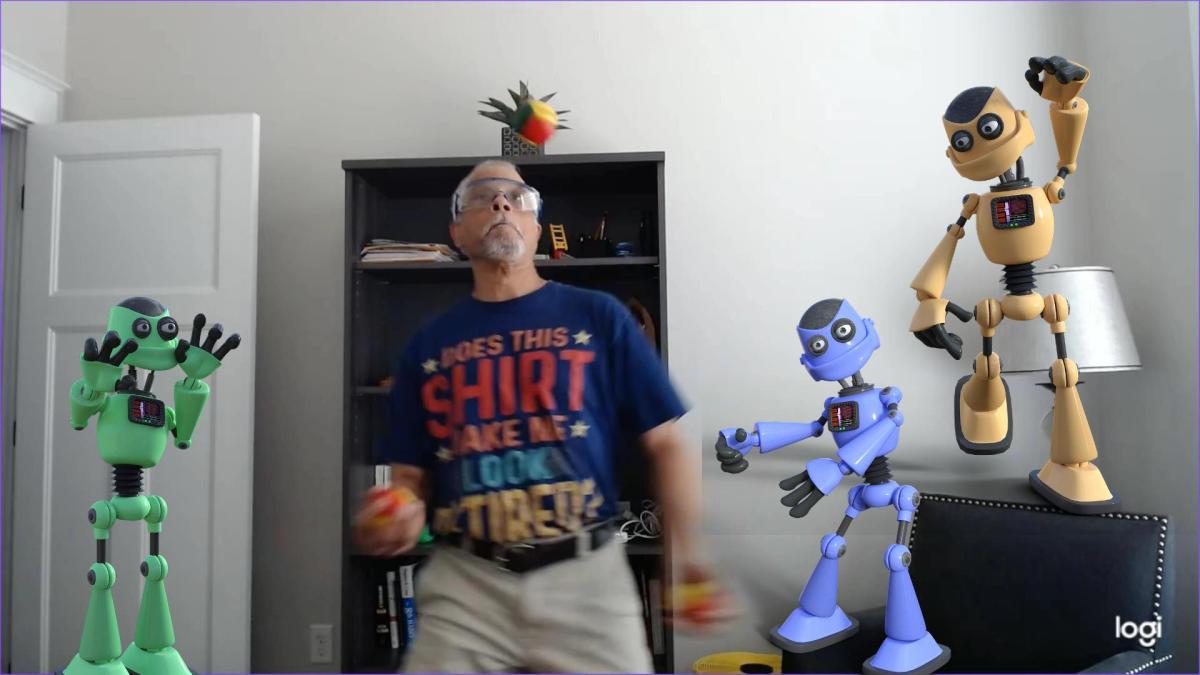
Just for fun, I tried to see if about 5 minutes of juggling would result in a change in the step counter on my cell phone. Unfortunately, it didn’t but I sure could feel the effort!
As the authors state, public health recommendations for physical activity set a bar of 150-300 minutes a week of moderate intensity aerobic activity to get substantial health benefit.
But you benefit from just about any increment below that level. Your step counter probably won’t register it, but you can feel it.
I made a short demo video to show what good exercise juggling is. I didn’t cut any mistakes (and obviously increased the speed on it because 5 minutes is a bit long). Anybody can tell I’m pretty puffed out at the end.
Try juggling for physical activity!
Thoughts on Battery Powered Toothbrushes
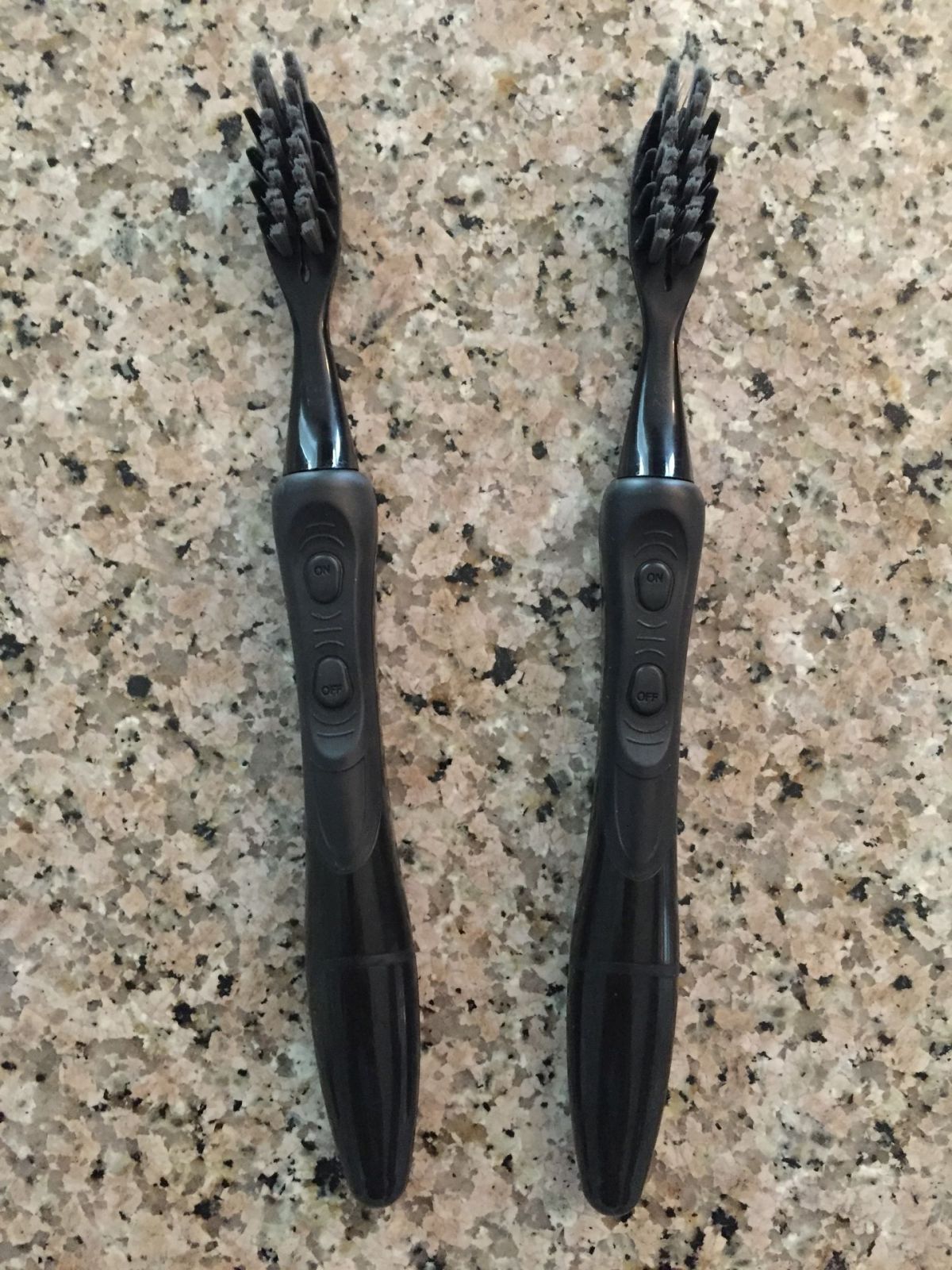
Sena bought a couple of Equate Polaris Vibraclean non-replaceable battery-powered toothbrushes with charcoal bristles (see below for remarks on charcoal) for us. When the battery dies, you just throw the brushes away. We had a rechargeable electric toothbrush a long time ago, but getting replacement parts for it was too expensive. We went back to manual toothbrushes.
You just press the on button and you’re buzzing. You press the off button when you’re done. It’s a little tough to refrain from trying to manually brush, but the internet entries say you should do that anyway.
Sena says the battery-powered toothbrush feels weird rumbling in her mouth. I think it does a good job of massaging the gums and tongue as well as cleaning teeth.
I found a couple of studies published about twenty years ago that compared electric and battery-powered toothbrushes. They didn’t find any difference. The few studies that have been done generally find the battery-powered toothbrushes are superior to manual brushing.
The American Dental Association (ADA) says either manual or electric brushing works fine—compared to not brushing at all, I guess. The ADA web site has list of the organization’s preferred electric products. The Equate brand of battery powered brushes apparently didn’t make the cut.
Some brushes (including ours) have charcoal bristles, which supposedly whiten teeth. After looking on the internet, I’m not so sure that’ll work. In fact, the ADA has a low opinion of charcoal-containing dental care products. There’s no evidence that they’re effective or even safe, according to the September 2017 issue of The Journal of the American Dental Association. They might even wear away the enamel.
Hmmm. Maybe charcoal is not the best thing?
The brushes were a bargain—oh well, back to manual brushing. On the other hand, there’s plenty of evidence that regular brushing with toothpaste along with flossing is good practice.
Beat the Heat with Cold Snap and Common Sense

Sena likes to be out in the garden no matter how blisteringly hot it is. A few days ago, she was planting some yellow coreopsis and lantana, whatever that is. It was 82 degrees and with the heat index (about 60% humidity), it felt like 86 degrees. Later in mid-afternoon it rose to 95 degrees with the heat index.
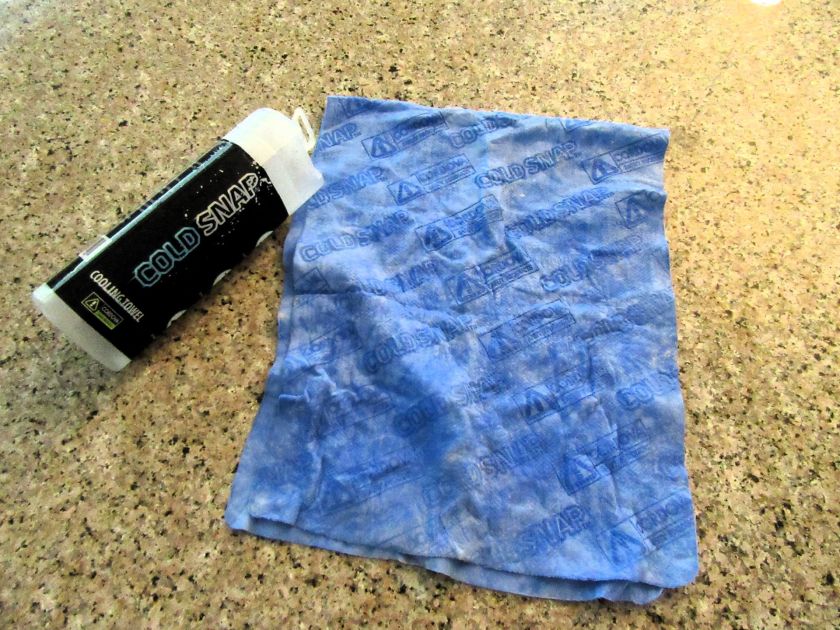
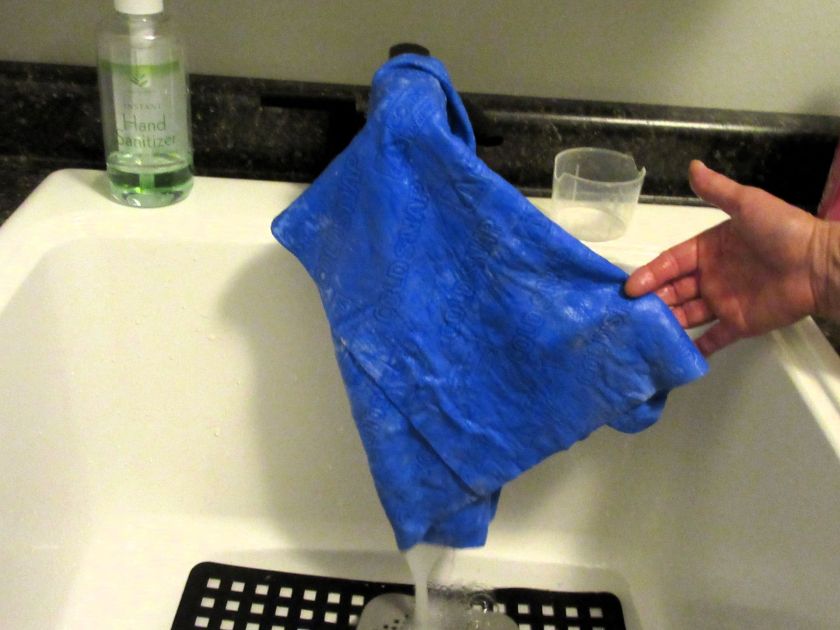
She came in for a break to get some cold water and suddenly remembered the cooling cloth called “Cold Snap” you can wear around your neck to stay cooler outside. You just run it under cold water from the tap and wrap it around your neck.
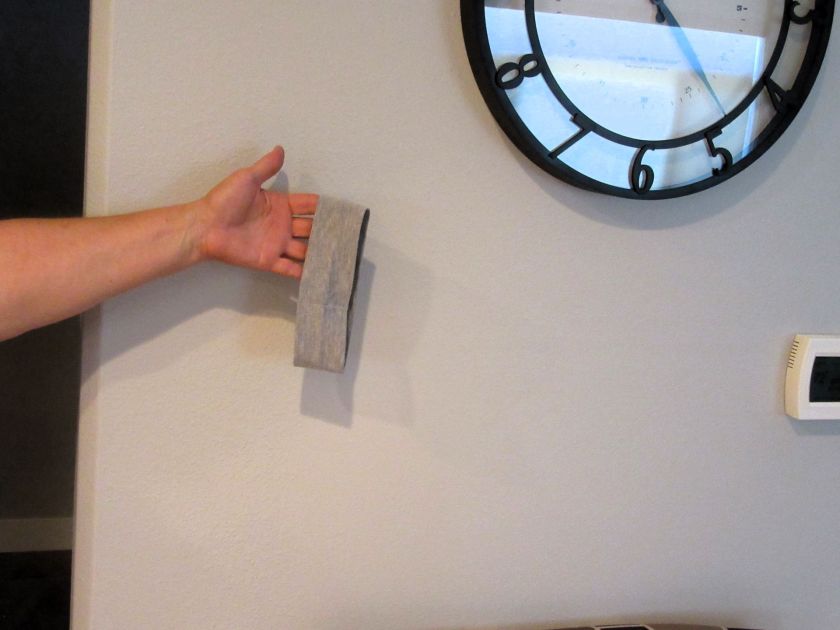
She also put on her headband to keep the sweat out of her eyes to prevent her tear ducts from plugging up. That happened a longish time ago. She had a lot of tearing, and went to the eye clinic where a faculty ophthalmologist thought she might have a more complicated problem than a blocked tear duct (nasolacrimal duct obstruction).
The Cleveland Clinic differential diagnoses of a blocked tear duct include infection, injury, or nasal and paranasal tumors. Just getting older can make your more susceptible to blocked tear ducts. Procedures include the polysyllabic dacryocystorhinostomy (DCR, in which a bypass ductal drainage system is created) or alternatively, something which sounds like a last resort, the punctal plug.
The ophthalmologist recommended a complicated diagnostic and surgical treatment pathway the name of which she can’t remember (possibly something like those mentioned above) and said it was probably the only intervention that would work. Sena took exception to this and asked for something simpler. They arm wrestled, best two out of three, and Sena won.
So, the ophthalmologist finally just used a needle and syringe full of water and hosed the puncta. He and Sena both heard a small popping noise, and the obstruction was removed. The ophthalmologist was astonished and said it was a good teaching case for the residents. The problem was likely grime related to sweat and dirt—hence her use of a headband. She also uses baby shampoo to wash her eyes nowadays.
She never complains about the heat outside. She just gets out there in the garden and often stays out most of the day—no matter how worried I get about her.
There are ways to be heat aware in summer. The ReadyIowa web site on heat is a great resource.




Maybe I Should Be More Optimistic About Humans
I read the Psychiatric Times article “How Psychiatry Has Enriched My Life: A Journey Beyond Expectations” by Victor Ajluni, MD and published on July 4, 2023. It was like a breath of fresh air to read an expression of gratitude. Just about everything I read in the news is negative.
At the end of the article, Dr. Ajluni added a comment acknowledging that artificial intelligence (AI ChatGPT) assisted him in writing it. He takes full responsibility for the content, to be sure. I wouldn’t have guessed that AI was involved.
There’s a lot of negative stuff in the news. There are hysterically alarming headlines about AI.
I suppose you could wonder if Dr. Aljuni’s article is intentionally ironic, maybe just because the gratitude tone is so positive. If it had been intended as irony, what could the AI contribution have been, though? I have a pretty low opinion of the AI capacity for irony.
I think irony occurs to me only because I tend to be pessimistic about the human race.
Maybe that’s because it has been very easy to be pessimistic about what direction human nature seems to be taking in recent years. I’ve been reading Douglas Adams’ satirical book, “The Ultimate Hitchhiker’s Guide to the Galaxy.” It contains several of his books which I think are really about human nature, and the setting is in a funny though often terrifying universe. I think there’s an ironic tone which softens the pessimism. The most pessimistic character is not a human but a robot, Marvin the paranoid android.
Unlike Marvin, I don’t have “a brain the size of a planet” (it’s more the size of a chickpea), but I am getting a bit cynical about the universe. I’m prone to regarding humans as evolving into a race of beings similar to those described in the book “Life, The Universe and Everything.” In Chapter 24, Adams describes the constantly warring Silastic Armorfiends of Striterax.
The Silastic Armorfiends are incredibly violent. Their planet is in ruins because they’re constantly fighting their enemies, and indeed, each other. In fact, the best way to deal with a Silastic Armorfiend is to lock him in a room by himself—because eventually he’ll just beat himself up.
In order to cope better, they tried punching sacks of potatoes to get rid of aggression. But then, they thought it would be more efficient to simply shoot the potatoes instead.
They were the first race to shock a computer, named Hactar. Possibly, Hactar was an AI because, when they told Hactar to make the Ultimate Weapon so they could vanquish all their enemies, Hactar was shocked. Hactar secretly made a tiny bomb with a flaw that made it harmless when the Silastic Armorfiends set it off. Hactar explained “…that there was no conceivable consequence of not setting the bomb off that was worse than setting it off…”, which was why it made the bomb a dud. While Hactar was explaining that it hoped the Silastic Armorfiends would see the logic of this course of action—they destroyed Hactar, or at least thought they had.
Eventually, they found a new way to blow themselves up, which was a relief to everyone in the galaxy.
There are similarities between Hactar and the AI called Virtual Interactive Kinetic Intelligence (V.I.K.I.) in the movie “I, Robot.” The idea was that robots must control humans because humans are so self-destructive. Only that meant robots had to hurt humans in order to protect humanity. The heroes who eventually destroy V.I.K.I. make up a team of misfits: a neurotic AI named Sonny, a paranoid cop who is himself a mixture of robot and human, and a psychiatrist. Together, the team finally discovers the flaw in the logic of V.I.K.I. Of course, this leads to the destruction of V.I.K.I.—but also to the evolution of Sonny who learns the power of the ironic wink.
Maybe kindness is the Ultimate Weapon.
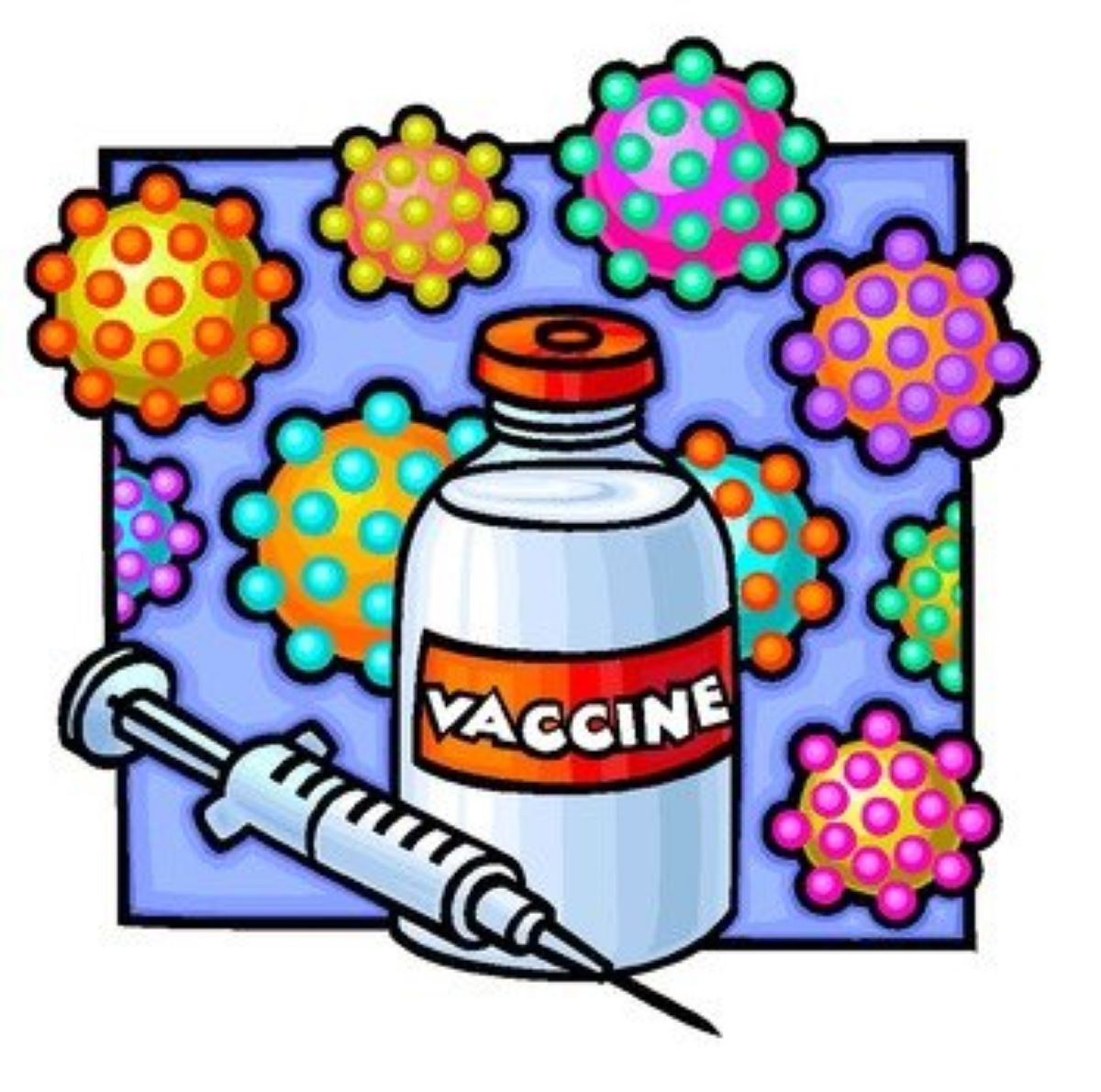
What’s Up with Seasonal Vaccines This Fall?
I just read an interesting article in JAMA on this fall’s Covid-19 vaccine. Most of it is from the FDA meeting in June (Rubin R. This Fall’s COVID-19 Vaccines Will Target Omicron XBB Subvariants, but Who Needs Them Remains to Be Seen. JAMA. Published online July 05, 2023. doi:10.1001/jama.2023.10053).
One expert was quoted, indicating that there will be “…an elaborate discussion” at the CDC ACIP meeting about who should get the new monovalent XBB.1.5 vaccine. I don’t see that the meeting is scheduled yet.
There are some other interesting quotes to pass along:
“Back in March and the first half of April, XBB.1.5 represented more than 80% of circulating SARS-CoV-2 in the US, according to CDC estimates. Its dominance began to slip in late April, and as of late June, XBB.1.5 represented little more than a quarter of circulating SARS-CoV-2 variants. By then, though, XBB.1.5 and 9 other XBB subvariants together accounted for a total of 96% of circulating SARS-CoV-2 in the US. Fortunately, members of the XBB family of subvariants are antigenically similar to each other, so a vaccine against XBB.1.5 should protect against the rest of them as well, the WHO committee noted.”
“By the third quarter of 2022, an estimated 96.4% of approximately 143 000 blood donors in a nationwide, longitudinal cohort had SARS-CoV-2 antibodies from previous infection or vaccination or both, according to an analysis published in June in Morbidity and Mortality Weekly Report.
Or, as Sawyer told JAMA, “[t]he whole US has had this virus in one form or another.”
Because of the high prevalence of SARS-CoV-2 antibodies in the population, Paul Offit, MD, in an interview predicted “a focused recommendation by the CDC” regarding who should receive the XBB.1.5 vaccine.”
“Offit said he expects that the CDC will recommend the new monovalent XBB.1.5 vaccine for groups at the greatest risk for severe disease, reflected in continuing hospitalizations for COVID-19. Those groups likely would include people who are 75 years or older, people with severely compromised immune systems, and pregnant people, Offit said.”
“At least for people 60 years or older, the fall vaccine situation will be more complicated than it was a year earlier, Schaffner noted. That’s because at its regular monthly meeting in June, ACIP voted to recommend that this age group have the option of being vaccinated against respiratory syncytial virus (RSV) after consulting with their physician or pharmacist.”
That would mean that there would be 3 vaccines coming in the fall: RSV, Covid-19, and influenza. Sena and I have been doubtful about why a conversation with a physician would be necessary for the RSV vaccine. We don’t know whether that means you couldn’t get it without a physician’s order. There are also questions about coadministration of the RSV and Covid-19 vaccines.
Because the time is coming soon for seasonal vaccines, we’re hoping the questions will be answered soon.
 Go Retire Psychiatrist