
Can Artificial Intelligence Learn from My Book?

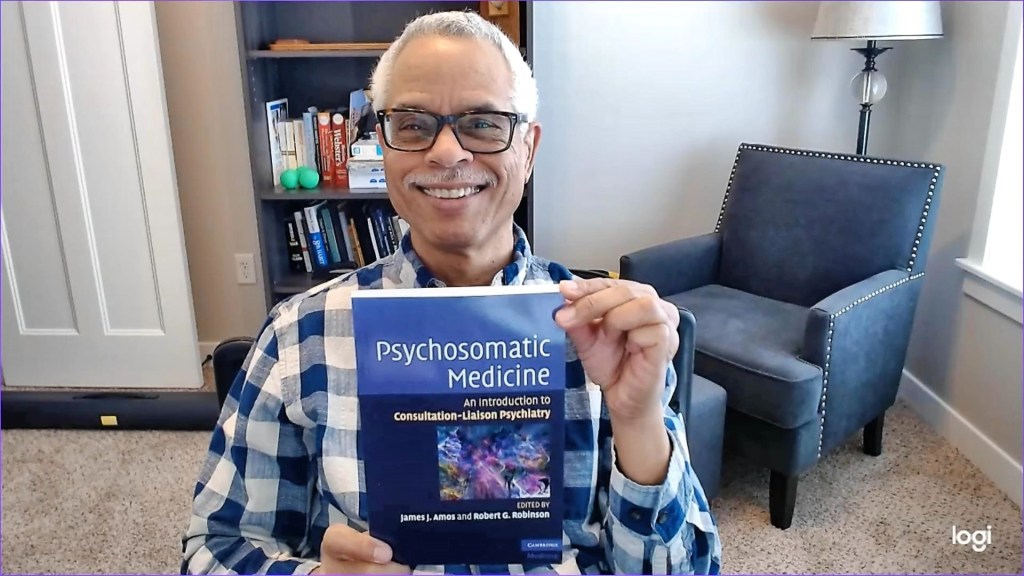
Recently the publisher of a book co-edited by me and my former psychiatry chair Dr. Robert G. Robinson asked me to sign off on a proposal to involve Artificial Intelligence (AI) in using the work.

The book, “Psychosomatic Medicine: An Introduction to Consultation-Liaison Psychiatry,” is 14 years old now, but is still a practical tool for learners, at least in my opinion.

Interestingly, it looks like the publisher is also trying to contact Dr. Robinson about the proposal through me. I wonder if that means they’re having as much trouble finding him as I have.

I’ve made it clear that I have misgivings about AI, as I’ve indicated in at least one blog post about Google’s AI, which used to be called, Bard which I think has been renamed Gemini. I think AI is prone to spreading misinformation, which has been called “hallucinations” by some writers.

The publisher makes it clear that this proposal regarding AI involvement in our book is an “opt in” choice. I gather that means if I don’t opt in, they’ll continue to bug me about it until I do.

That’s unlikely to happen.

The Hotel Gets Busy Handing Out Faux Cufflinks!

Several days ago, a large wedding guest caravan arrived at the hotel. Fascinating group. The line of people checking in could have stretched outside beyond the front door.

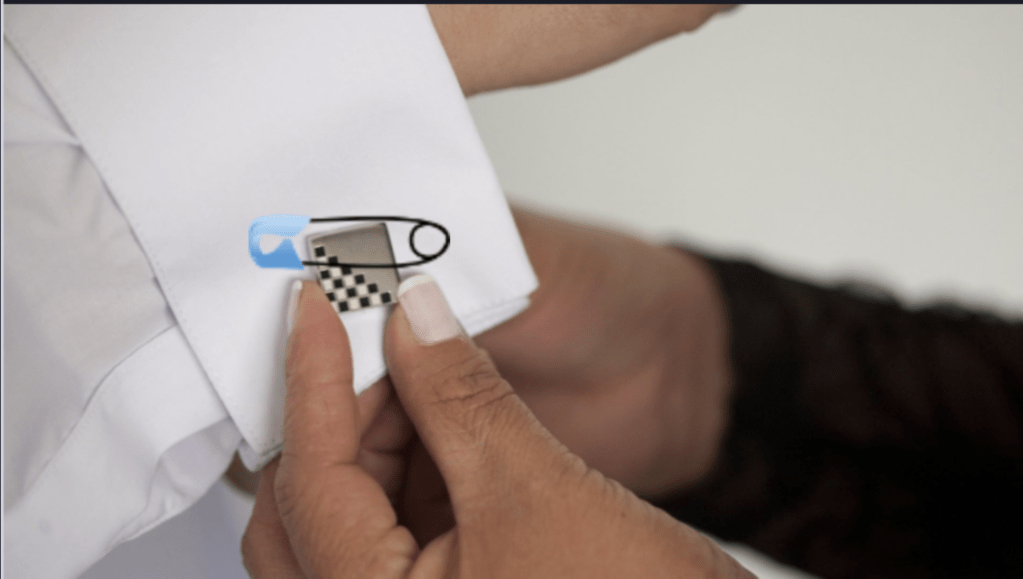
 There was this guy who was there for the wedding, but arrived without cufflinks. So, he asked the front desk to help him out. They gave him what might have fooled some people some of the time—big safety pins. They didn’t work out. A couple of women guests also got safety pins, for what I couldn’t guess.

He left and came back later with a Dillard’s shopping bag. He got some smart looking brand new cufflinks! I think the last time I wore cufflinks was in the 1970s in Austin, Texas. They came with a suit that the husband of my English Literature professor, Dr. Jenny Lind Porter, bought for me. They didn’t resemble safety pins.

The hotel staff were pretty busy because the place got hit by the CrowdStrike Outage. The inconveniences included a little more work with programming room keys. One guy asked for a room on the second floor, but it was booked up with extraterrestrials. I doubt they were with the wedding group. And they couldn’t fix the outage-so much for the advancements of those from other galaxies. They probably don’t even know what cufflinks are.

There was a couple of guys (also not with the wedding crowd) who were in town for a disc (what we would call frisbee) golf tournament. It was near the Clear Creek Trail. They were solid in the standings so far.

I don’t think first prize was a pair of cufflinks.

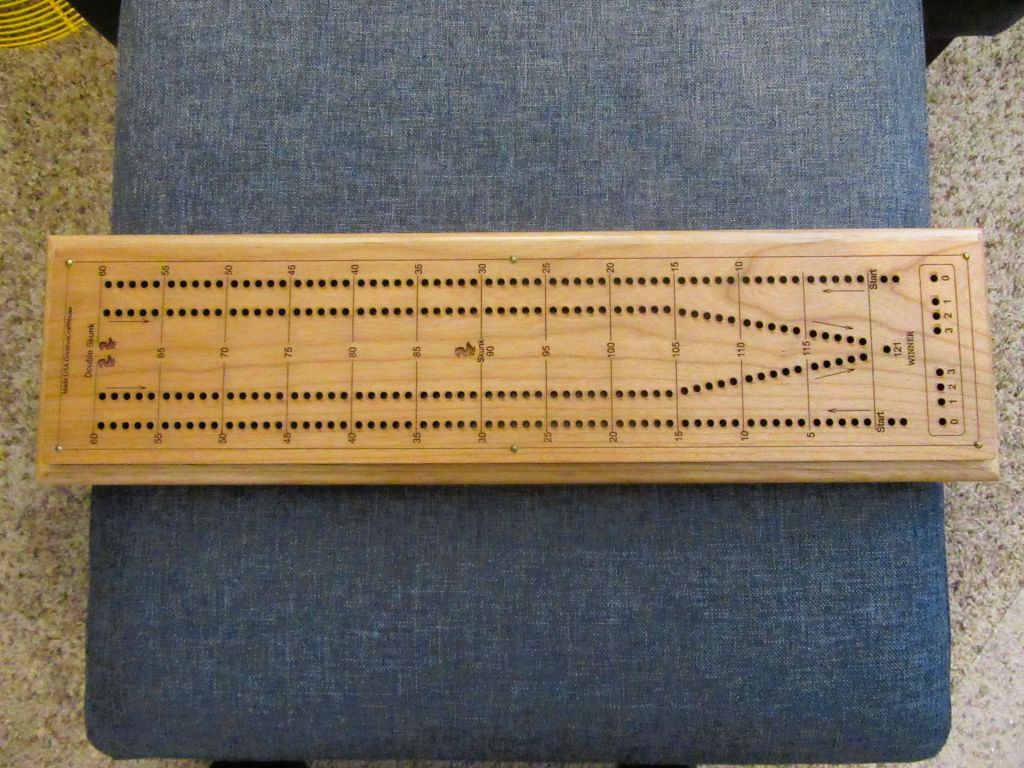
Learning to Use ClipChamp While Recording Cribbage Game on Cribbage Pro

I’m learning how to use the video editor ClipChamp, the free version on the new laptop. So, I muddled through a screen recording of playing what’s called the Daily Cribbage Scrimmage on Cribbage Pro, a feature-rich computer Cribbage game on which you can different skill levels of computer players from easy to impossible as well as online with other live players.

I’m used to using an old version of PowerDirector for my video editing. I would have to expend a fair amount of energy and a little more money to install it on the laptop. I can deal with the webcam on the laptop, but using ClipChamp takes some getting used to.

Thoughts On Laptop Computers

We bought a laptop computer. It has been years since I’ve used one. I forgot how exasperating a touchpad is. Luckily, we have a spare wireless mouse and a USB port. The laptop is slim and very light, like most laptops these days.

I remember the first “laptop” I had early in my career as a consulting psychiatrist. I think it weighed about 2-3 times what the modern ones weigh nowadays. I think I could have stopped a thief from taking it from me by whacking him over the head with it.

If I remember correctly, it had a slot for floppy discs and another for disc media. It developed a hardware problem which forced me to box it up and send it back to the manufacturer for repairs. I don’t remember how long I kept it after that.

The new laptops don’t have any internal optical drives built into them.

I read a tech article in which the author’s opinion about the gradual disappearance of internal optical drives and other physical media for laptops was probably the result of large companies finding out they could make more money by charging subscription fees for digital media.

Microsoft comes to mind.

About That Artificial Intelligence…

I’ve got a couple of things to get off my chest about Artificial Intelligence (AI). By now, everyone knows about AI telling people to put hot glue on pizza and whatnot. Sena and I talked to a guy at an electronics store who had nothing but good things to say about AI. I mentioned the hot glue thing and pizza and it didn’t faze him.

I noticed the Psychiatric Times article, “AI in Psychiatry: Things Are Moving Fast.” They mention the tendency for AI to hallucinate and expressed appropriate reservations about its limitations.

And then I found something very interesting about AI and Cribbage. How much does AI know about the game? Turns out not much. Any questions? Don’t expect AI to answer them accurately.

The SD Card Caper

I have an SD card (more commonly called just a “memory card”) for my camera and the other day I couldn’t download the videos to my computer using the SD card reader in the tower. The card reader is just a slot-shaped port in the tower, above the USB ports. SD stands for Secure Digital. It’s really secure when you can’t download any videos or pictures.

This had never happened before. Naturally I turned to the internet for guidance, which was my first mistake. I never saw so many web sites with confusing advice, some of which involve zip lines.

Most of the web sites assumed I could see the icon for the SD card on my computer screen, but I couldn’t. Several web site help sites (hah!) breezily suggested I rename the disc or update the driver, or contact the extraterrestrials who manufactured the item as if I wanted them to know where I am so they can abduct me again.

This suggested the problem was probably the SD card reader in my computer—The XPS 8950, my nearly new computer which has already had major parts replaced and which is now out of warranty.

Only a couple of websites were on the right track about the SD card reader itself. One expert said that if I blew in the slot (That’s right! Not as dumb as it sounds; dust can be a problem) and wiped the card with a Q-Tip, and it still didn’t work, I should try it in a different computer. If it worked, then the problem was probably the card reader. It turns out you can blow on the SD card reader or the SD card until you’re blue in the face if the card is not detected in the Device Manager or any Device. If the card is dead, you get a new card, “and let it go.” Those are the exact words from that expert. Do I also have to sit in the lotus position?

 Anyway, I did try the card in the SD card reader in my wife’s computer. It worked!

But if the SD card works in another device, the problem could be a dead SD card reader. What should you do?

Well, when a couple of fans went out in my tower when it was under warranty, a repair guy came over, took the tower apart and replaced the fans. My machine is out of warranty and I don’t want to go through the same hassle of negotiating with the manufacturer to work out a time compatible with the repair guy’s bowling league schedule to drive to our house from British Columbia.

On the other hand, could I replace the SD card reader in the tower itself? A long time ago, I replaced a fan in my computer, which reminds me; you should never install oscillating fans in a computer.

Here’s the thing—I found a web page that fits my situation exactly, right down to the make and model of the tower. It turns out that it’s probably not possible to replace the SD card reader in the tower without replacing the mother board, which you, as a home user, should not attempt unless you have been drinking heavily.

What I found out is that combination USB with SD card readers are available and all you have to do is stick the SD card in the reader slot on the unit and plug the USB into the port on the tower. The whole thing fits in the palm of your hand.

Now our toaster doesn’t work.

Press And Hold on The Keurig Coffee Maker

We got our new coffee maker. It’s a Keurig K-Supreme Plus, and it’s as fancy as the name sounds. It’s compact enough to save room for our other coffee maker, a Black & Decker, a model with a carafe and which you have to press and hold the “On” button to start the cleaning mode.

It has options for making your coffee stronger and hotter and you can save your choices.

You can save 3 favorites. You have to press and hold the “Favorite” button until you see the word “saved” in the little window.

I emphasize the “press and hold” because if you don’t strictly obey the rule, you can wind up thinking your brand new appliance is defective.

It does make the coffee hotter. But I think Sena will be looking into other options for cups which will keep the brew hotter for a longer time.

The Keurig coffee makers are normally pricey but Sena got a bargain. And there is nothing wrong with the press and hold maneuver when it comes to your wallet—as in hold it shut.

The Dragon Breathes Fire Again

Sena and I saw a news video about a technology called “DAX” which uses Artificial Intelligence (AI) the other day which promises to reduce or even eliminate pajama time for physicians trying to get their clinical note dictations done during the day instead of taking them home for several more hours of work.

The video was a demo of the technology, which looked like it recorded a clinical interview between the doctor and the news reporter. I didn’t see how exactly DAX was recording the interview without obvious audio equipment. Was it doing it through the smartphone speaker? This was very different from how I and many other clinicians dictated their notes using a headphone set at their desks in front of their desktop computers. It not only records but transcribes the interview.

Later, I discovered that DAX stands for Dragon Ambient Experience, made by Nuance which was acquired by Microsoft in 2022. I posted about Dragon products and their limitations last year. The product often produced hilarious mistakes during dictation which required careful editing. Sometimes more errors turned up after you completed it and these were visible in the patient’s medical record, which would then need to be corrected.

Several years ago, I remember talking to somebody from Dragon on the phone about the problems I was having. She was a little defensive when I told her I’d been having difficulty with Dragon for quite a while because it made so many mistakes.

A recent article on the web revealed that the errors continue with DAX. According to the article, “…it will make mistakes. Sometimes it might omit clinical facts; sometimes it may even hallucinate something.” I remember trying to communicate with the Google Bard AI, which seemed to do this pretty often. It made stuff up.

DAX is not cheap. The article reveals that one hospital pays $8,000-$10,000 per year per physician to use it. And skeptics worry that the system has too many bugs in it yet, which can lead to bias and inaccurate information which could negatively affect patient outcomes.

A recently published JAMA network article also urges caution in adoption of this sort of AI-assisted technology (Harris JE. An AI-Enhanced Electronic Health Record Could Boost Primary Care Productivity. JAMA. Published online August 07, 2023. doi:10.1001/jama.2023.14525).

In this case, I think it’s appropriate to say “I told you so.”

We Are All Still Learning to Play Pong

I noticed an article the other day about Monash University in Australia getting funding for further research into growing brain cells onto silicon chips and teaching them how to play cribbage.

Just kidding, the research is for teaching the modified brain cells tasks. They succeeded in teaching them goal-directed tasks like how to play the tennis-like game Pong last year. You remember Pong from the 1970s? Shame on you if you don’t. On the other hand, that means you probably didn’t frequent any beer taverns in your hometown while you were growing up—or that you’re just too young to remember.

The new research program is called Cortical Labs and has hundreds of thousands of dollars in funding. The head of the program, Dr. Razi, says it combines Artificial Intelligence (AI) and synthetic biology to make programmable biological computing platforms which will take over the world and bring back Pong!

It’s an ambitious project. The motto of Monash University is Ancora Imparo, which is Italian for “I am still learning.” It links humility and perseverance.

There’s a lot of suspicion out there about AI and projects like the Pong initiative in Australia. It could eventually grow into a vast industry run by robots who will run on a simple fuel called vegemite.

Shame on you if you don’t know what vegemite is!

Anyway, it reminds me that I recently finished reading Isaac Asimov’s book of science fiction short stories, “I, Robot.”

The last two stories in the book are intriguing. Both “Evidence” and “The Evitable Conflict” are generally about the conflict between humans and AI, which is a big controversy currently.

The robopsychologist, Dr. Susan Calvin, is very much on the side of AI (I’m going to use the term synonymously with robot) and thinks a robot politician would be preferable to a human one because of the requirement for the AI to adhere to the 3 Laws of Robotics, especially the first one which says AI can never harm a human or allow a human or through inaction allow a human to come to harm.

In the story “Evidence,” a politician named Stephen Byerley is suspected of being a robot by his opponent. The opponent tried to legally force Byerley to eat vegemite (joke alert!) to prove the accusation. This is based on the idea that robots can’t eat. This leads to the examination of the argument about who would make better politicians: robots or humans. Byerley at one point asks Dr. Calvin whether robots are really so different from men, mentally.

Calvin retorts, “Worlds different…, Robots are essentially decent.” She and Dr. Alfred Lanning and other characters are always cranky with each other. The stare savagely at one another and yank at mustaches so hard you wonder if the mustache eventually is ripped from the face. That doesn’t happen to Calvin; she doesn’t have a mustache.

At any rate, Calvin draws parallels between robots and humans that render them almost indistinguishable from each other. Human ethics, self-preservation drive, respect for authority including law make us very much like robots such that being a robot could imply being a very good human.

Wait a minute. Most humans behave very badly, right down to exchanging savage stares at each other.

The last story, “The Evitable Conflict” was difficult to follow, but the bottom line seemed to be that the Machine, a major AI that, because it is always learning, controls not just goods and services for the world, but the social fabric as well while keeping this a secret from humans so as not to upset them.

The end result is that the economy is sound, peace reigns, the vegemite supply is secure—and humans always win the annual Pong tournaments.