FDA Approves Antipsychotic with New Mechanism of Action for Treatment of Schizophrenia

I just noticed the FDA announcment of the approval of an antipsychotic with a new mechanism of action for the treatment of schizophrenia.

The drug is Cobenfy and it interacts with cholinergic rather than dopaminergic receptors. It has a number of side effects which are anticholinergic. This could lead to psychotic symptoms that consultation-liaison psychiatrists might get called to evaluate due to the anticholinergic delirium that could occur, which can mimic psychosis.

It’s easy to get alarmed about the Cobenfy side effects. I just remember all of the side effects of the one antipsychotic that has sometimes been the only effective treatment for patients with treatment resistant schizophrenia-clozapine.

Clozapine has been associated with agranulocytosis, seizures, bowel obstruction, prolonged cardiac conduction time leading to arrhythmias, liver toxicity and more. In fact, clinicians are required to enroll in a Risk Evaluation and Mitigation Strategy (REMS) program to prescribe it.

Patients who have schizophrenia and take clozapine are often admitted to general hospitals for treatment of medical problems which may or may not be directly related to clozapine itself. This requires close collaboration of internists and surgeons with consultation-liaison psychiatrists.

What do you do for patients who don’t respond to clozapine but are willing to take oral medication? There are augmenting strategies, some of which can be helpful although they could add to the side effect burden.

What do you do for a patient with treatment-resistant schizophrenia who refuses to take oral psychotropic medication? In some cases, it may be necessary to use injections of medications which also can have uncomfortable and even potentially life-threatening side effects. This difficult situation is complicated further by the lack of insight some patients have about their illness and the need for court orders to administer antipsychotics against their wishes.

I hope Cobenfy is a step forward for patients and their families.
The Incredible Shrinking Headshrinker

Last week we saw the 1957 movie “The Incredible Shrinking Man” on the Svengoolie show on the MeTV channel. We’ve never seen it before and it actually got pretty good reviews back in the day. The main character, Scott Carey, was played by Grant Williams. You can watch the movie for free on the Internet Archive.

According to some interpretations, the story uses the metaphor of diminishing size to highlight the diminishing role of masculinity in American society in the 1950s or human notions in general about one’s self-worth in society.

It got me thinking about how the challenges of adjusting to retirement as a process has been (and still is to some degree) for me. I started out with gradual reduction of my work schedule in the form of a phased retirement contract. It was difficult.

I was reminded of how difficult it was to slow down, especially as a teacher of residents and other health care trainees, when I was going through some old papers after the recent move to our new house. They included teaching awards I’d received over the years.

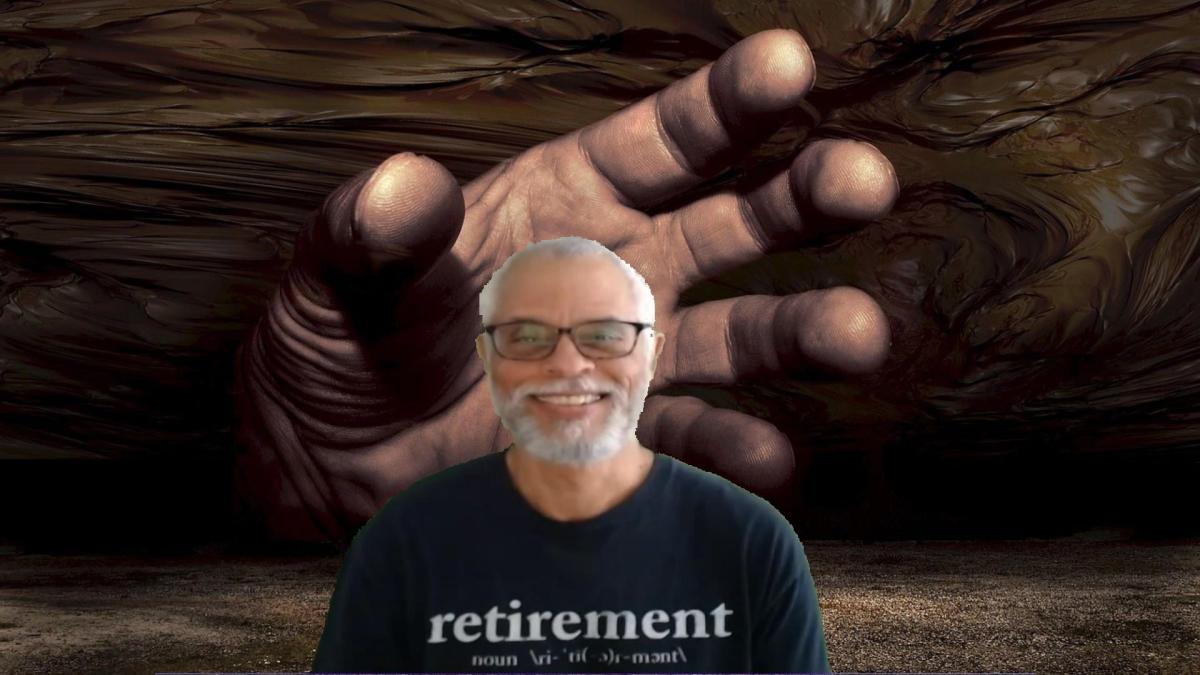
I was struck by how small my self-perceived role in psychiatry and medicine has gradually become in the last few years. I’ve been shrinking, similar to Scott Carey. In fact, I’m a shrinking headshrinker.

I don’t want to spend too much time ruminating about what retirement means to me. I think it’s a very common response to perceive the world gets smaller when you retire.

It doesn’t help much to intellectualize about shrinking in this way. Scott Carey eventually accepted his diminishing stature, even to the point of disappearance. Grief about this kind of loss is normal, although I’m realizing that grief might never completely disappear.

Can Artificial Intelligence Learn from My Book?

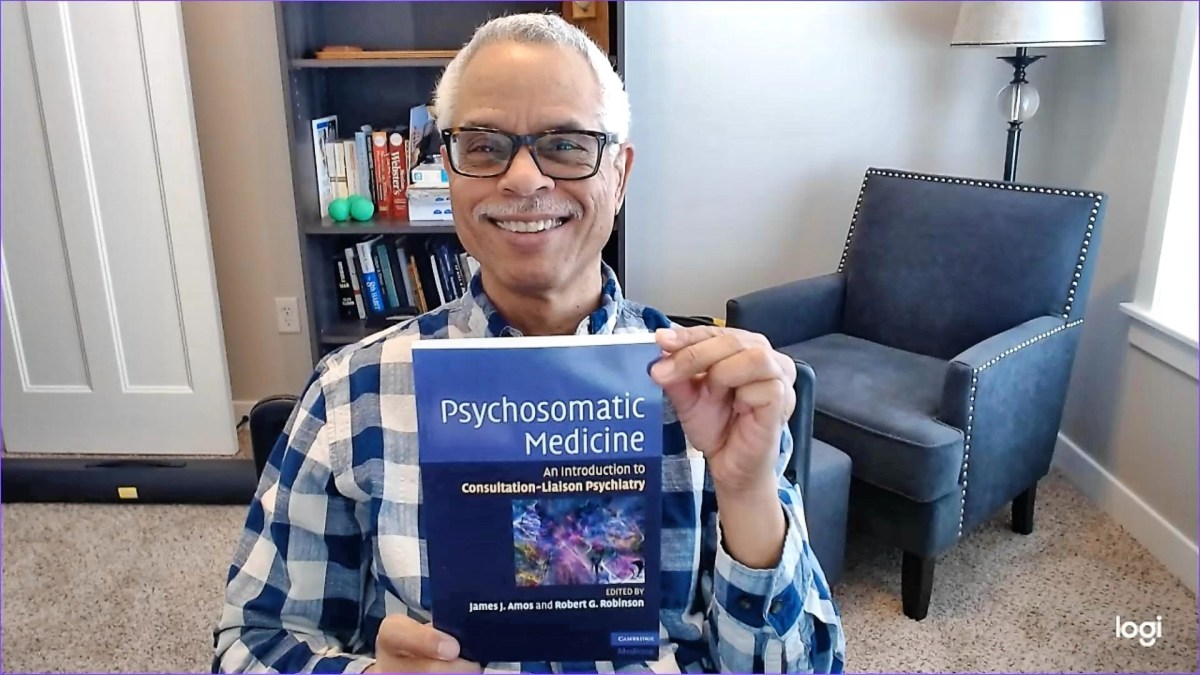
Recently the publisher of a book co-edited by me and my former psychiatry chair Dr. Robert G. Robinson asked me to sign off on a proposal to involve Artificial Intelligence (AI) in using the work.

The book, “Psychosomatic Medicine: An Introduction to Consultation-Liaison Psychiatry,” is 14 years old now, but is still a practical tool for learners, at least in my opinion.

Interestingly, it looks like the publisher is also trying to contact Dr. Robinson about the proposal through me. I wonder if that means they’re having as much trouble finding him as I have.

I’ve made it clear that I have misgivings about AI, as I’ve indicated in at least one blog post about Google’s AI, which used to be called, Bard which I think has been renamed Gemini. I think AI is prone to spreading misinformation, which has been called “hallucinations” by some writers.

The publisher makes it clear that this proposal regarding AI involvement in our book is an “opt in” choice. I gather that means if I don’t opt in, they’ll continue to bug me about it until I do.

That’s unlikely to happen.

What About Bob?

The homeless guy camped next to the busy street just outside of our hotel is still here. I’m going to call him Bob because it’s awkward to keep calling him “the homeless guy.” I haven’t met Bob yet, but Sena got him some water. She had to give it to the hotel resident who so far is the only one who has been able to communicate with him.

Sena and I talked about what might be done for Bob. She noticed that his face was sunburned bad enough to cause the skin to peel off. Could a case be made for his being a danger to himself?

Of course, you could guess this issue would come up because I’m a retired psychiatrist. As an aside, I found an article published in the Daily Iowan early this year. The author interviewed several residents of a homeless camp who were displaced after a fire and subsequently the owners of the land closed the camp.

The homeless people at the camp were articulate and open to interview. Some of them were clearly choosing to be homeless and able to state how and why they did.

Bob might not be articulate enough to do that. He spends most of his time lying on the pavement with his blanket over him. It’s sometimes hard to tell if he’s out there until he moves. When he’s up, he usually stands up and waves his arms back and forth or sits on the grass. Occasionally, he moves in ways suggesting he’s acting out some kind of conversation with an invisible person.

A police officer stopped by, spoke briefly with Bob, and left. A woman stopped by and tried to help him clean up his room, so to speak. She picked up some of his trash and put it in a bag. She tried to get him to help, but he didn’t seem to understand.

What about Bob? Is he a danger to himself or others? Is he incapable of taking care of his basic self-care needs? Sooner or later, this would come up because the mental health laws would come into play. There are many homeless people out there living under bridges and camps. We’ve seen them when we go out for walks. Not all of them are definable as mentally ill.

There is guidance on the web about how to pursue a court-ordered psychiatric evaluation. I’m a retired psychiatrist and often was involved in those circumstances.

One way it works is that two people who are acquainted with the person go to the courthouse and complete paperwork to have someone ordered by a judge to be taken to the hospital for a mental health evaluation. If the judge signs an order, then typically the police would pick the person up and take them to the local emergency room. There aren’t vans with mental health professionals roaming the city looking for potential patients.

A psychiatrist performs a comprehensive mental health evaluation and later presents the report and testifies at a scheduled hearing. Attorneys are involved and give testimony for and against civil commitment. The patient also can speak. If the patient is court-ordered to inpatient treatment, that treatment is provided in the hospital usually. Periodic reports must be submitted to the court. Some people who are the objects of these interventions get better. Others don’t.

What’s missing here? You must at least know his real name to file for legal hold order. Although Sena says she saw Bob take out a cell phone, it’s not clear he knows how to use it or whether it even works. The only people who interact with him are those who are driving by and who show sympathy by buying food and water and other items for him. He usually tosses the empty water bottles in the parking lot where he sleeps. The police evidently didn’t think he needed an intervention from their perspective.

We don’t even know his real name. I haven’t tried to talk to him. I’ve never seen him act in a threatening way to anyone. Bob takes up one parking space and keeps his belongings within it. He usually lies under a blanket, often for several hours at a time. Bob doesn’t panhandle and I doubt he’s capable of that.

Am I Bob’s keeper?

Thoughts About Psychedelic Assisted Psychotherapy

I read the Psychiatric Times article “FDA Issues CRL to Lykos for MDMA-Assisted Therapy.” The short story is that the FDA essentially told the drug company Lykos that their study of the efficacy of MDMA-assisted treatment of PTSD needs more work.

I tried to wade through the on-line documents of the FDA’s meeting on June 4, 2024. There are hundreds of pages and I didn’t go through every page of the transcript. The minutes were succinct and much easier to digest.

I’m going to simply admit that I’m biased against using psychedelics in psychiatry for personal and professional reasons. I’m not a research scientist. I’m a retired consultation-liaison psychiatrist. I saw many patients with a variety of psychiatric diagnoses including PTSD and substance use disorders. I’m not opposed to clinical research in this area, but I’m aware of the difficulty of conducting it.

In that regard, I want to also admit that I’m very susceptible to being influenced by a former colleague’s remarks about the quality of the research in question in the Lykos study. Dr. Jess G. Fiedorowicz, MD, PhD formerly was formerly on staff at University of Iowa Health Care. He’s now the Chief of Mental Health at The Ottawa Hospital where he’s also Professor and Senior Research Chair in Adult Psychiatry, Department of Psychiatry, University of Ottawa, Ontario. His remarks in the transcript are typical for his erudition and expertise as a clinician scientist.

It’s difficult to wade through the pages of the FDA transcript and I couldn’t digest all of it, by any means. But if you’re interested in reading both sides of this issue, it’s a good place to get the best idea of the committee members’ thinking about it. The minutes are much easier to read and provide a succinct summary.

I realize the Psychiatric Times article editor doesn’t agree with the FDA recommendations for further study of psychedelic-assisted psychotherapy for PTSD. It may or may not influence the University of Iowa’s study of psilocybin. In my opinion, the FDA did the right thing.

Verbal De-escalation: University of Colorado School of Medicine Video Series cont. Chapter 5

Simpson, Scott & Sakai, Joseph & Rylander, Melanie. (2019). A Free Online Video Series Teaching Verbal De-escalation for Agitated Patients. Academic Psychiatry. 44. 10.1007/s40596-019-01155-2.

Verbal De-escalation: University of Colorado School of Medicine Video Series cont. Chapter 4

Simpson, Scott & Sakai, Joseph & Rylander, Melanie. (2019). A Free Online Video Series Teaching Verbal De-escalation for Agitated Patients. Academic Psychiatry. 44. 10.1007/s40596-019-01155-2.

Verbal De-escalation: University of Colorado School of Medicine Video Series cont. Chapter 3

Simpson, Scott & Sakai, Joseph & Rylander, Melanie. (2019). A Free Online Video Series Teaching Verbal De-escalation for Agitated Patients. Academic Psychiatry. 44. 10.1007/s40596-019-01155-2.

Verbal De-escalation: University of Colorado School of Medicine Video Series cont. Chapter 2

This is Chapter 2 of the free verbal de-escalation video series. This one is “Basic elements of verbal de-escalation.”

Simpson, Scott & Sakai, Joseph & Rylander, Melanie. (2019). A Free Online Video Series Teaching Verbal De-escalation for Agitated Patients. Academic Psychiatry. 44. 10.1007/s40596-019-01155-2.

Verbal De-escalation Education Videos

I was looking at the Academy of Consultation-Liaison Psychiatry (ACLP) and discovered a free online video educational series on verbal de-escalation of agitated patients. It reminded me of my own early attempts to educate trainees about this very important topic (see my post “A Little Too Exuberant”).

The Simpson et al presentation includes 5 free online videos. The first one is below.

Simpson, Scott & Sakai, Joseph & Rylander, Melanie. (2019). A Free Online Video Series Teaching Verbal De-escalation for Agitated Patients. Academic Psychiatry. 44. 10.1007/s40596-019-01155-2.