I found the perfect JAMA article explaining that sycophancy is programmed into Artificial Intelligence (AI) therapy chatbots.
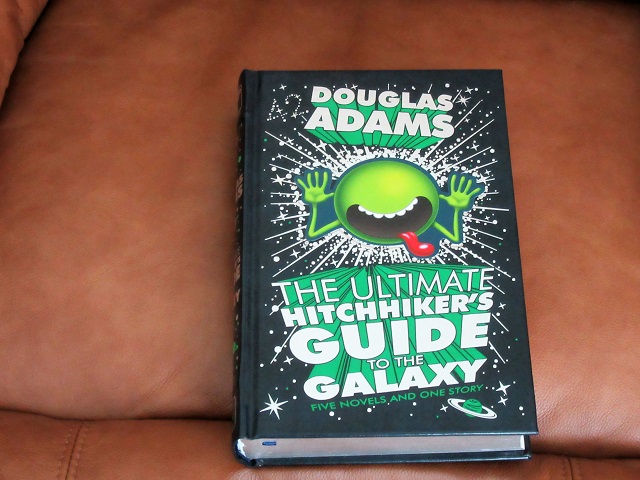
This reminded me of Marvin the paranoid android (“Life! Don’t talk to me about life!”) in the book series “The Hitchhiker’s Guide to the Galaxy” by Douglas Adams. Marvin is an incredibly depressed robot who would never make a good psychotherapist.
There’s even a Facebook page listing someone posts of questions to ChatGPT about non-inspirational quotes from Marvin.
If programmers can make sycophantic AI therapists, there should be a way to make them less sycophantic. For more specific information, you can check out this relatively recent article published in Psychiatric Times by Dr. Allen Francis, MD and Justin Angel, a tech expert. I would probably substitute the term “confabulation” for “hallucinations” in most places where you read the latter.
I saw an excellent post on Artificial Intelligence (AI) in Dr. George Dawson’s post today, “The Problems With AI Are More Readily Apparent.” He mentions AI producing confabulations which are sometimes called hallucinations in AI. I distinguish hallucinations from confabulations because the former are sensory or perceptual problems while confabulations are making things up. In dementia, confabulations are often described as attempts to fill in gaps in knowledge or memory without any intention to deceive.
I sometimes read that AI is being sycophantic in its interactions with humans, which sounds a little strange to me. The definition of sycophancy is more about trying to please someone else by being obsequiously flattering. It’s puzzling but I have gotten that impression from AI, yet it’s a machine and I don’t know how anyone would program AI to be sycophantic because it’s a human trait.
On the other hand, I got a comically sycophantic reply from AI to my question inquiring about the definition of Calvinball Cribbage. It’s just a made-up term and, to be fair, I’ve also gotten bluntly frank denials from AI that there is any such thing as Calvinball Cribbage.
As a reminder, Calvinball is a term that arose from a comic strip called Calvin and Hobbes. In the strip, the characters invent a game called Calvinball and the only rule is making up the rules as you go along, although there is a goal of capturing your opponent’s flag. But you can’t play it the same way twice.
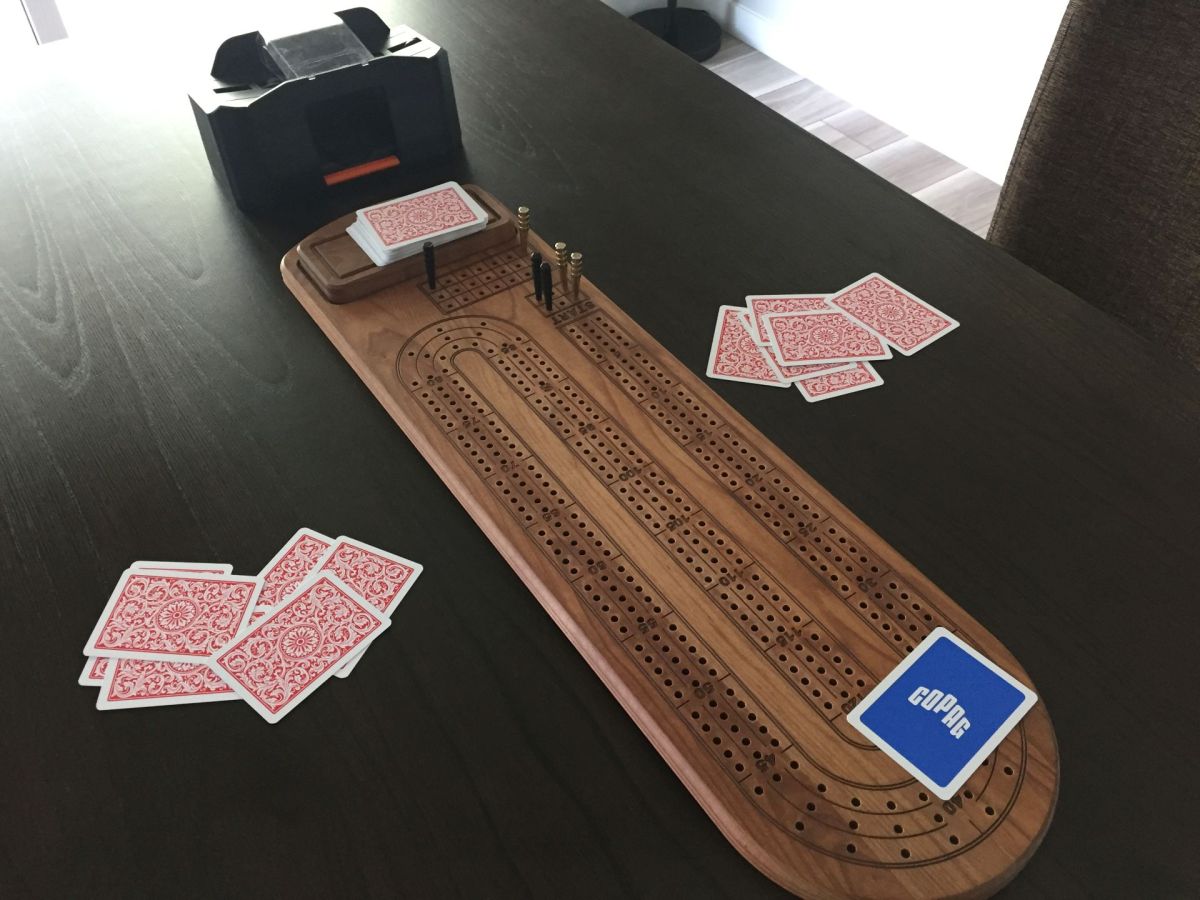
The most recent hilarious AI confabulation I’ve previously posted about was when Sena and I played our game of 11-card cribbage. There are cribbage players out there who make fun of such variations from standard 6-card cribbage and the name for it from one such player was “Calvinball crib.” My simple question was as usual, “What is Calvinball Cribbage?” The reply is copied below:
“Calvinball Cribbage is a humorous mashup of the chaotic, rule-free game from Calvin & Hobbes with traditional Cribbage, often involving themed boards or rule modifications, where the core idea is applying Calvinball’s fluid, make-it-up-as-you-go spirit to Cribbage’s scoring and play, adding wild, non-sensical rules like using mallets, changing hand values, or scoring points for silly actions, making each round unique and unpredictable, not a single defined game but a creative approach to Cribbage.
What it is (The Calvinball Aspect):
No Fixed Rules: Just like original Calvinball, there’s no single set of rules; the players invent them as they go.
Rule Changes: A key rule is that rules can’t be repeated, and players constantly invent new scoring, actions, or penalties.
Props & Actions: You might use mallets, balls, trees, or make up actions like “scoring three points for pointing at a cloud” or “losing a turn for looking left”.
How it Applies to Cribbage:
Themed Boards: You can find or make custom cribbage boards featuring Calvin & Hobbes, adding visual flair.
Modified Scoring: Instead of just points for pairs and runs, you might add a “Hobbes Bonus” for a specific card or penalize for “too much logic”.
Strategic Chaos: Players still play cribbage (cards, pegs, crib), but the gameplay is constantly disrupted by invented rules, turning strategic plays into potential jokes or absurd victories.
Example Calvinball Cribbage “Rules”:
“If you play a 7, you must hop on one foot until your next turn”.
“The crib gets 5 points if it contains a card with a face on it” (referencing Calvin’s drawings).
“A ‘skunk’ is achieved by making your opponent laugh out loud”.
In essence, Calvinball Cribbage is about injecting unpredictable fun and silliness into the structured world of cribbage, making it a game of spontaneous creativity rather than strict strategy. “
This could be an example of sycophantic confabulation because almost all of it was probably cooked up by AI from scanning my blog posts about the subject. What’s a little eerie about it is that I never published any specific rules or strategies about the fictional game of Calvinball crib. You can actually find and purchase a Calvin and Hobbes cribbage board from a shop in Canada.
While this is an example of the occasional comicality of AI, that shouldn’t lead us to deny that it can do scary things, some of which Dr. Dawson describes. My early experiences a couple of years ago with what used to be called Google Bard were somewhat alarming because it confabulated then. And it still does.
Today’s essay by Dr. Moffic was pretty interesting about the role of video gaming in health for men and women. Computer games were emphasized but it got me thinking about hands-on games that you might thing of as being more old-fashioned—like cribbage.
I wrote a post about cribbage already today, but there’s another angle on it that’s readily adaptable to considering its role in promoting mental health for both men and women.
That reminds me that until yesterday and today, I was on a major losing streak in cribbage with Sena. Cribbage wins and losses seem to occur in streaks and I was beginning to wonder if I’d lost my touch.
There’s a cribbage connection with the electronic gaming realm in that we also play the computer video cribbage game Cribbage Pro. There are three levels, Standard, Challenging, and Brutal (the toughest opponent). We always play Brutal, and often win. There’s a way to play internet cribbage on Cribbage Pro, but we don’t. I prefer playing live. I think the popular view of cribbage is that it’s an old guy’s game. I suspect people think it’s a card game old men play on their lunch hour at the factory.
Nothing could be further from the truth. It’s very popular with women and kids and my guess is that no matter what your gender preference is, there’s a greater diversity of cribbage players out there than anyone realizes.
Playing cribbage promotes and maintains brain health by requiring you to practice basic arithmetic by counting your scores and pegging. You lose a little of that in Cribbage Pro although you can turn on the feature allowing manual counting of scores.
And the American Cribbage Congress (ACC) accommodates internet cribbage tournaments. It’s very popular and competitive. By the way, expanding on my other post today about how to verify your luck in getting a 29 hand in cribbage, you can easily prove it on Cribbage Pro by taking a screen shot of it!
Computer games are fine, but I like to manually shuffle the cards for cribbage. Sena likes to use the shuffling machine—which is very loud but gets the job done. I’ve not yet found a way to “accidentally” lose the shuffling machine (Can’t imagine where it went; must have grown legs and walked downtown!).
We always help each other count our scores. The one time we tried muggins rule, which involves penalizing each other for missing scores by taking them from each other, we just couldn’t seem to get it straight. And it wasn’t as much fun.
There are local cribbage clubs that you could get involved in although they might be hard to find. The nearest one to us is several hours away.
I used to play computer games years ago (although not Nintendo), but nowadays I feel more like Agent K in Men in Black II as he’s trying to quickly learn how to steer a spacecraft using what looks like a PlayStation 2 controller (I used to have one of those).
after K turns on the auto pilot during the chase…
Agent K: It is not automatic pilot.
Agent J: He doesn’t work when we’re in hyperspeed.
Agent K: I could really use a steering wheel!
Agent J: We don’t have no damn steering wheel! This is what we got! [turns off auto pilot] Didn’t your mother ever give you a Gameboy?
I always find Dr. Moffic’s articles in Psychiatric Times thought-provoking and his latest essay, “Enhancement Psychiatry” is fascinating, especially the part about Artificial Intelligence (AI). I liked the link to the video of Dr. John Luo’s take on AI in psychiatry. That was fascinating.
I have my own concerns about AI and dabbled with “talking” to it a couple of times. I still try to avoid it when I’m searching the web but it seems to creep in no matter how hard I try. I can’t unsee it now.
I think of AI enhancing psychiatry in terms of whether it can cut down on hassles like “pajama time” like taking our work home with us to finish clinic notes and the like. When AI is packaged as a scribe only, I’m a little more comfortable with that although I would get nervous if it listened to a conversation between me and a patient.
That’s because AI gets a lot of things wrong as a scribe. In that sense, it’s a lot like other software I’ve used as an aid to creating clinic notes. I made fun of it a couple of years ago in a blog post “The Dragon Breathes Fire Again.”
I get even more nervous when I read the news stories about AI making delusions and blithely blurting misinformation. It can lie, cheat, and hustle you although a lot of it is discovered in digital experimental environments called “sandboxes” which we hope can keep the mayhem contained.
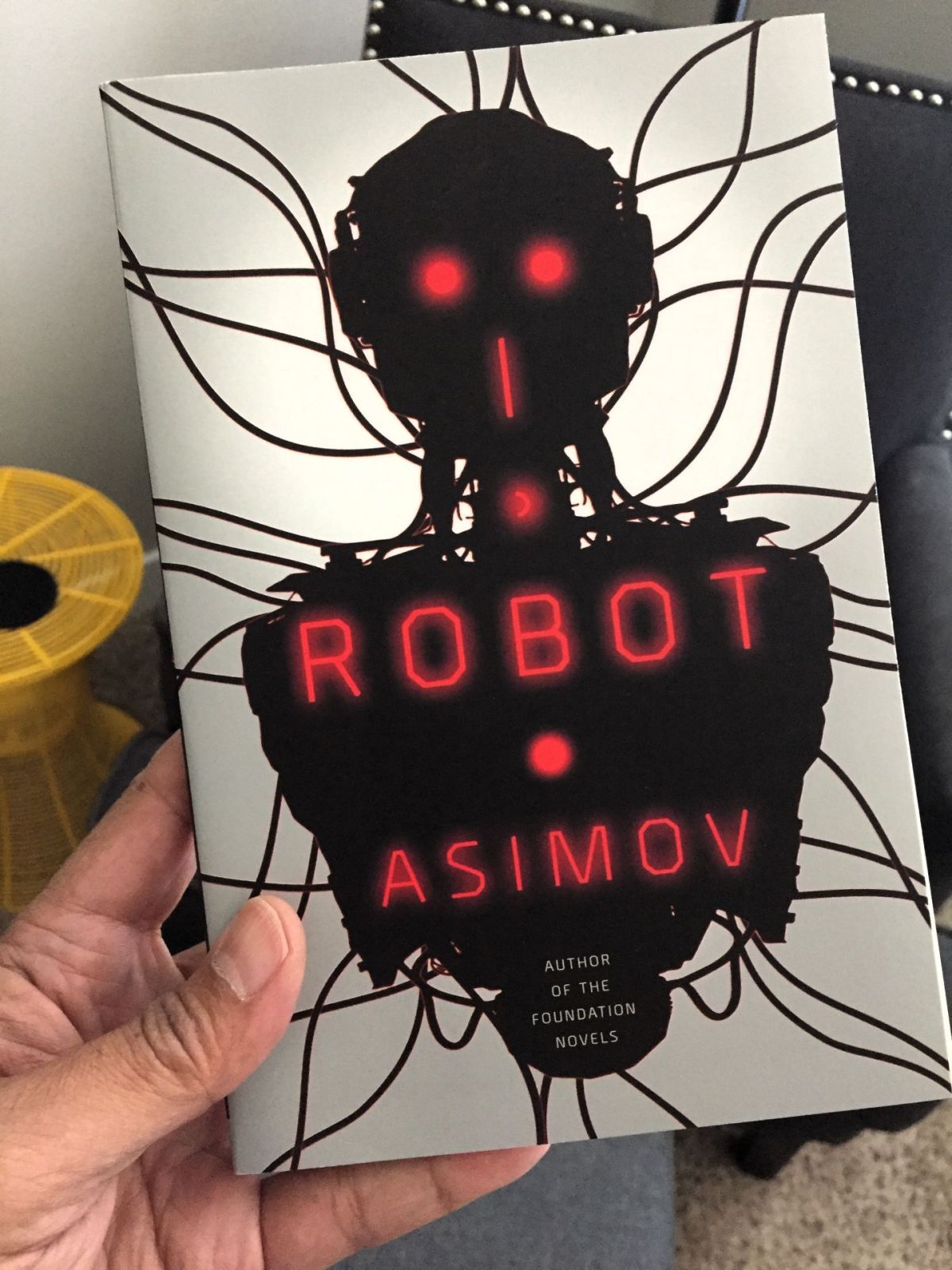
That made me very eager to learn a little more about Yoshua Bengio’s LawZero and his plan to create the AI Scientist to counter what seems to be a developing career criminal type of AI in the wild west of computer wizardry. The LawZero thing was an idea by Isaac Asimov who wrote the book, “I, Robot,” which inspired the film of the same title in 2004.
However, as I read it, I had an emotional reaction akin to suspicion. Bengio sounds almost too good to be true. A broader web search turned up a 2009 essay by a guy I’ve never heard of named Peter W. Singer. It’s titled “Isaac Asimov’s Laws of Robotics Are Wrong.” I tried to pin down who he is by searching the web and the AI helper was noticeably absent. I couldn’t find out much about him that explained the level of energy in what he wrote.
Singer’s essay was published on the Brookings Institution website and I couldn’t really tell what political side of the fence that organization is on—not that I’m planning to take sides. His aim was to debunk the Laws of Robotics and I got about the same feeling from his essay as I got from Bengio’s.
Maybe I need a little more education about this whole AI enhancement issue. I wonder whether Bengio and Singer could hold a public debate about it? Maybe they would need a kind of sandbox for the event?
Lately, I’ve been anticipating my eventual immortalization as a sculptured stone bust on Mt. Rushmore. Hopefully, this will be fairly soon because I’m not getting any younger.
Among my many inventions is the internet. Don’t believe Al Gore, although he has persuaded others about his role in the development of what I argue should properly be called the world wide web. I’ve invented a lot of other things which I’ll tell you more about just as soon as I make them up.
Before I forget it, I want to tell you what I just noticed last night while I watching one of my favorite X-Files episodes, “War of the Coprophages.” I guess I never noticed that the cockroach invasion was about Artificial Intelligence (AI). It was the scientist, Dr. Ivanov, who mentioned it first and I just missed it the first few hundred times I saw the show.
Dr. Ivanov clearly thought that anybody who thought extraterrestrials would be green and have big eyes was probably crazy. Traveling across galaxies through wormholes and whatnot would tear humanoid organisms apart. The practical approach would be to send AI robots instead. You could see Mulder cringe at that idea. The little robot that kept edging closer to Mulder made him nervous and when he asked Dr. Ivanov why it did that, his reply was “Because it likes you.”
That doesn’t exactly fit with Ivanov’s other idea about extraterrestrials, which is that they would focus on important tasks like getting enough food, procreating, etc. without getting all emotional about them. Ironic that Dr. Ivanov made an AI robot that gets a crush on a sesame seed munching UFO hunter like Mulder.
However, the AI robots in the show are cockroaches which love to eat dung. In other words, they’re full of crap.
Moving right along, although I didn’t invent it, there’s a card game called schnapsen that Sena and I are trying to relearn. It’s kind of a break from cribbage. It’s a trick taking game with just a 20-card deck. We play the version that doesn’t allow you to look at your cards to see how many points you have so you can tell when you can close the deck or go out, meaning you have the 66 points to win. You have to remember how many points you’ve won in tricks. I think it’s a good way to keep your memory sharp.
Let’s see; I’ve lost every game so far, but that doesn’t mean I won’t end up with my bust on Mt. Rushmore.
I ran across another interesting article in the JAMA Network about Artificial Intelligence (AI) with respect to health care organization managing messages from patients to doctors and nurse. The shorthand for this in the article is “in-basket burden.” Health care workers respond to a large number of patients’ questions and it can lead to burnout. Some organizations are trying to test AI by letting it make draft replies to patients. The results of the quality improvement study were published in a paper:
English E, Laughlin J, Sippel J, DeCamp M, Lin C. Utility of Artificial Intelligence–Generative Draft Replies to Patient Messages. JAMA Netw Open. 2024;7(10):e2438573. doi:10.1001/jamanetworkopen.2024.38573
One of the fascinating things about this is the trouble we have naming the problems with misinformation that AI has. We tend to use a couple of terms interchangeably: hallucinations and confabulation. Whatever you call it, the problem interferes with communication between health care workers and patients.
Dr. English describes the interference as a “whack-a-mole” issue, meaning every time they think they got the hallucination/confabulation problem licked, the AI comes up with another case of miscommunication.
Just for fun, I did a web search trying to find out whether “hallucination” or “confabulation” fit the AI behavior best. Computer experts tend to use the term “hallucination” and neuropsychologists seem to prefer “confabulation.” I think this community chat site gives a pretty even-handed discussion of the distinction. I prefer the term “confabulation.”
Anyway, there are other substantive issues with how using AI drafts for patient messaging affects communication. I think it’s interesting that patients tend to think AI is more empathetic than medical practitioners. As Dr. English puts it: “This GPT is nicer than most of us,” and “And ChatGPT, or any LLM, isn’t busy. It doesn’t get bored. It doesn’t get tired.” The way that’s worded made me think of a scene from a movie:
OK, so I’m kidding—a little. I think it’s important to move carefully down the path of idealizing AI. I think back to the recent news article about humans teaching AI how to lie and scheme. I remember that I searched the web with the question “Can AI lie?” and getting a reply from Gemini because I have no choice on whether or not it gives me its two cents. I’m paraphrasing but it said essentially, “Yes, AI can lie and we’re getting better with practice.”
I like Dr. English’s last statement, in which she warns us that AI can be a fun tool which clinicians need to have a healthy skepticism about. It may say things you might be tempted to gloss over or even ignore, like:
I just found out that Artificial Intelligence (AI) has been reported to be lying as far back as May of 2024. In fact, because I can’t turn off the Google Gemini AI Overview. Gemini’s results always appear at the top of the page. I found out from my web search term “can ai lie” that AI (Gemini ) itself admits to lying. Its confession is a little chilling:
“Yes, artificial intelligence (AI) can lie, and it’s becoming more capable of doing so.”
“Intentional deceptions: AI can actively choose to deceive users. For example, AI can lie to trick humans into taking certain actions, or to bypass safety tests.”
It makes me wonder if AI is actually trying to defeat us. It reminds me of the Men in Black 3 movie scene in which the younger Boris the Animal boglodite engages in an argument with the older one who has time traveled.
The relevant quote is “No human can defeat me.” Boglodites are not the same as AI, but the competitive dynamic could be the same. So, is it possible that AI is trying to defeat us?
I’m going to touch upon another current topic, which is whether or not we should use AI to conduct suicide risk assessments. It turns out that also is a topic for discussion—but there was no input from Gemini about it. As a psychiatric consultant, I did many of these.
There’s an interesting article by the Hastings Center about the ethical aspects of the issue. The lying tendency of AI and its possible use in suicide prediction presents a thought-provoking irony. Would it “bypass safety tests”?
This reminds me of Isaac Asimov’s chapter in the short story collection, “I, Robot,” specifically “The Evitable Conflict.” You can read a Wikipedia summary which implies that the robots essentially lie to humans by omitting information in order to preserve their safety and protect the world economy. This would be consistent with the First Law of Robotics: “No machine may harm humanity; or, through inaction, allow humanity to come to harm.”
You could have predicted that the film industry would produce a cops and robbers version of “I, Robot” in which boss robot VIKI (Virtual Interactive Kinetic Intelligence) professes to protect humanity by sacrificing a few humans and taking over the planet to which Detective Spooner takes exception. VIKI and Spooner have this exchange before he destroys it.
VIKI: “You are making a mistake! My logic is undeniable!”
Spooner: “You have so got to die!”
VIKI’s declaration is similar to “No human can defeat me.” It definitely violates the First Law.
I‘ve read a couple of articles recently about Artificial Intelligence (AI) lately and I’m struck by how readily one can get the idea that AI tends to “lie” or “confabulate” and sometimes the word “hallucinate” is used. The term “hallucinate” doesn’t seem to fit as much as “confabulate,” which I’ll mention later.
One of the articles is an essay by Dr. Ronald Pies, “How ‘Real’ Are Psychiatric Disorders? AI Has Its Say.” It was published in the online version of Psychiatric Times. Dr. Pies obviously does a superb job of talking with AI and I had as much fun reading the lightly edited summaries of his conversation with Microsoft CoPilot as I had reading the published summary of his conversations with Google Bard about a year or so ago.
I think Dr. Pies is an outstanding teacher and I get the sense that his questions to AI do as much to teach it how to converse with humans as it does to shed light on how well it seems to handle the questions he raised during conversations. He points out that many of us (including me) tend to react with fear when the topic of AI in medical practice arises.
The other article I want to briefly discuss is one I read in JAMA Network, “An AI Chatbot Outperformed Physicians and Physicians Plus AI in a Trial—What Does That Mean?” (Accessed January 6, 2025).
Hswen Y, Rubin R. An AI Chatbot Outperformed Physicians and Physicians Plus AI in a Trial—What Does That Mean? JAMA. Published online December 27, 2024. doi:10.1001/jama.2024.23860 (accessed January 6, 2024).
I think the conversation amongst the authors was refreshing. Just because the title of the article suggested that AI might take the place of physicians in the consulting room doesn’t mean that was the prevailing opinion of the authors. In fact, they made it clear that it wasn’t recommended.
I liked Dr. Chen’s comment about confabulation and hallucinations of AI:
“A key topic I talk about is confabulation and hallucination. These things are remarkably robust, and only getting better, but they also just make stuff up. The problem isn’t that they’re wrong sometimes. Lab tests are wrong sometimes. Humans are definitely wrong sometimes. The problem is they sound so convincing, they confabulate so well. “Your patient has an alcohol problem, Wernicke-Korsakoff syndrome.” It’s only if you double check, you’ll realize, “Wait a minute, that wasn’t actually true. That didn’t make sense.” As long as you’re vigilant about that and understand what they can and can’t do, I think they’re remarkably powerful tools that everyone in the world needs to learn how to use.”
What’s interesting about this comment is the reference to Wernicke-Korsakoff syndrome, which can be marked by confabulation. Clinically, it’s really not clear how this comes about in AI although thiamine deficiency is the main cause in WKS. In both, it involves inventing information, which is technically not the same as lying.
Unfortunately, this contrasts sharply with the recent fact checking Snopes article I wrote about recently, which suggests that humans are teaching AI to lie and scheme.
In any case, it’s prudent to regard AI productions with skepticism. My conversations with Google Bard clearly elicited confabulation. Also, it didn’t get humor, so I wouldn’t use it as a conversational tool, given that I’m prone to kidding around. As far as trusting AI, I probably wouldn’t trust it as far as I could throw it.
I noticed a Snopes fact check article (“AI Models Were Caught Lying to Researchers in Tests — But It’s Not Time to Worry Just Yet”) today which reveals that Artificial Intelligence (AI) can lie. How about that? They can be taught by humans to scheme and lie. I guess we could all see that coming—or not. Nobody seems to be much alarmed by this, but I think it’s probably past time to worry.
Then I remembered I read Isaac Asimov’s book “I, Robot” last year and wrote a post (“Can Robots Lie Like a Rug?”) about the chapter “Liar!” I had previously horsed around with the Google AI that used to be called Bard. I think it’s called Gemini now. Until the Snopes article, I was aware of AI hallucinations and the tendency for it to just make stuff up. When I called Bard on it, it just apologized. But it was not genuinely repentant.
In the “lie like a rug” post, I focused mostly on AI/robots lying to protect the tender human psyche. I didn’t imagine AI lying to protect itself from being shut down. I’m pretty sure it reminds some of us of HAL in the movie “2001: A Space Odyssey,” or the 2004 movie inspired by Asimov’s book, “I, Robot.”
Sena found out that Cambridge University Press recently published a book entitled “The Cambridge Handbook of the Law, Policy, and Regulation for Human–Robot Interaction.” I wonder if the editors and contributors of book on AI and robots mention Asimov.
It reminds me of my own handbook about consultation-liaison psychiatry which was published 14 years ago by CUP—and which CUP now wants me to sign a contract addendum making the book available to AI companies.
I read this really interesting article on the web about how slow humans think, “The Unbelievable Slowness of Thinking.” That’s just me all over. The gist is of it is that we think slower than you’d imagine creatures with advanced brains would think. I don’t have a great feel for what the stated rate feels like: 10 bits/second. It doesn’t help much to look up the definition on Wikipedia, “…basic unit of information in computing and digital communication.” It’s a statistical thing and I barely made it through my biostatistics course in medical school. In fact, the authors calculated that the total amount of information a human could learn over a lifetime would fit on a small thumb drive.
Anyway, I tried to dig through the full article in Neuron and didn’t get much out of it except I recognized the story about Stephen Wiltshire, a guy with autistic disorder who could draw New York’s skyline from memory after a helicopter flyover. I saw it on an episode of the TV show UnXplained.
I was amazed even if he processes at only 10 bits/second, according to the authors.
By the same token, I thought the section called “The Musk Illusion” was funny. It refers to the notion many of us have that our thinking is a lot richer than some scientists give us credit for. That’s the Musk Illusion, and it refers to Elon Musk the billionaire bankrolling Neuralink to make a digital interface between his brain and a computer “to communicate at an unfettered pace.” How fast do the authors of this paper think the system works? It flies at about 10 bits/second. They suggested he might as well use a telephone. The scientists weren’t that impressed judging from the quotes in the Reception section of the Wikipedia article about Neuralink.
Anyway, regardless of how slowly we think, I believe we’ve made a lot of progress for a species descended from cave dwellers who were prone to falling into piles of mastodon dung. I bet it took considerably longer than 10 bits/second for them to figure out how to climb out of that mess.
Reference:
Jieyu Zheng, Markus Meister,
The unbearable slowness of being: Why do we live at 10 bits/s?
Neuron
2024,
ISSN 0896-6273,
Abstract: Summary
This article is about the neural conundrum behind the slowness of human behavior. The information throughput of a human being is about 10 bits/s. In comparison, our sensory systems gather data at ∼10 bits/s. The stark contrast between these numbers remains unexplained and touches on fundamental aspects of brain function: what neural substrate sets this speed limit on the pace of our existence? Why does the brain need billions of neurons to process 10 bits/s? Why can we only think about one thing at a time? The brain seems to operate in two distinct modes: the “outer” brain handles fast high-dimensional sensory and motor signals, whereas the “inner” brain processes the reduced few bits needed to control behavior. Plausible explanations exist for the large neuron numbers in the outer brain, but not for the inner brain, and we propose new research directions to remedy this.
Keywords: human behavior; speed of cognition; neural computation; bottleneck; attention; neural efficiency; information rate; memory sports







 Go Retire Psychiatrist