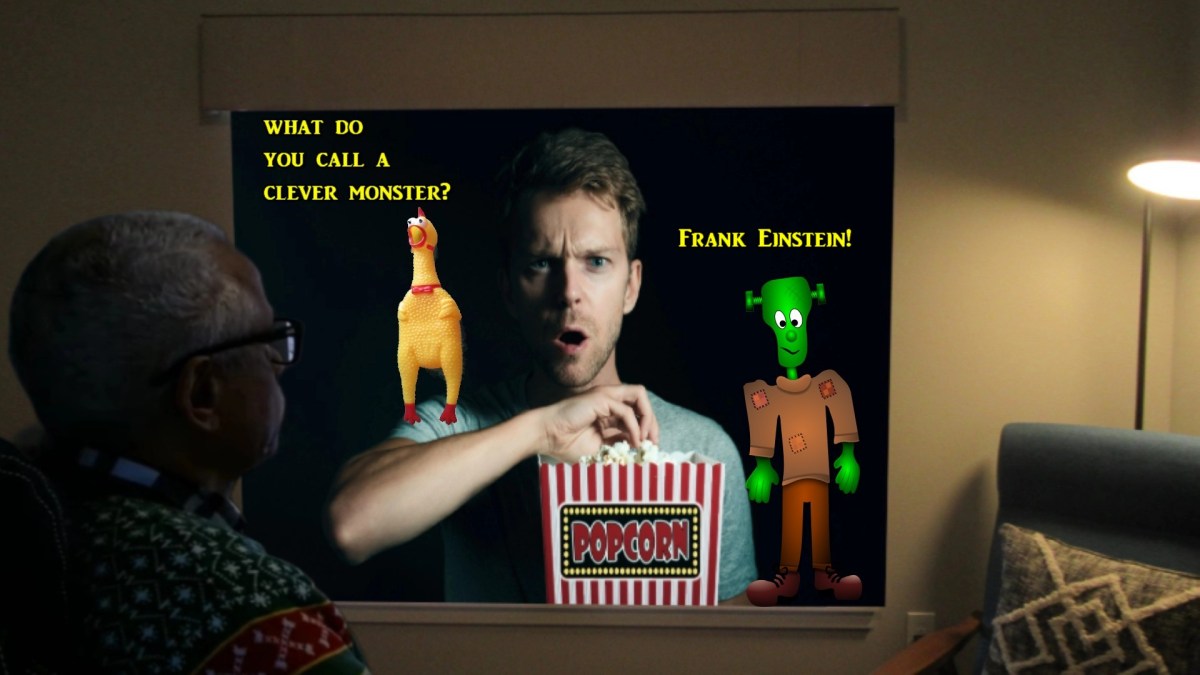
We saw the news story about the Florida Man who recently got busted by the cops in Ormond, Florida after he stole a BMW and when he was stopped for going 130 mph (about 5 mph over the local speed limit), he thanked the police for saving him from the extraterrestrials who evidently had teleported him into the BMW. Well, that explains everything!
This is just further evidence on top of what has already been thoroughly documented by Dave Barry in his 2016 documentary book, “Best State Ever; A Florida Man Defends His Homeland.”
Did you hear about the blackout in Florida?
People were stuck on the escalators for 4 hours.
I used to have a ton of Dave Barry books. I got hooked on his humor shortly after I graduated from Iowa State University back in the 1980s. I was in a post graduate program in Medical Technology in a Des Moines hospital and back then you could always find a newspaper on some tables in the cafeteria.
Over the years, I lost many of his books during moves. Sena would ask me something like “Do you really still want all these Dave Barry books?” I knew better than to say “These are very important examples of timeless prose exemplifying humor literature that will be excavated in the distant future by archaeologists who will preserve them in hermetically sealed glass bookcases so people can admire the covers.”
I just threw them out. Please don’t tell Dave.
Anyway, I have managed to preserve a photo of Florida Woman, taken in Miami many years ago. Let this be a lesson to you: never call your wife “Florida Woman” unless you want to live the rest of your life in a refrigerator packing box—although you can use duct tape to seal off those cracks to keep the wind and snow out.
Did you know there’s a song titled “Florida Man”? Believe it or not I heard it a couple of years ago on the Big Mo Blues Show on KCCK radio. It’s by Selwyn Birchwood who is from—that’s right, Tampa, Florida. The song was released by—you guessed it, Alligator Records.
And here’s Iowa Man:
Jim with 48 inch pusher plow shovel and new coverallsYou’re doing it wrong, man!Strong-and stupid!
I’ve been reading about artificial intelligence (AI) in general and its healthcare applications. I tried searching the web in general about it and got the message: “An AI Overview is not available for this search.”
I’m ambivalent about that message. There are a couple of web articles, one of which I read twice in its entirety, “Are we living in a golden age of stupidity?” The other, “AI, Health, and Health Care Today and Tomorrow: The JAMA Summit Report on Artificial Intelligence”was so long and diffuse I got impatient and tried to skip to the bottom line—but the article was a bottomless pit. The conflict-of-interest disclosures section was overwhelmingly massive. Was that part of the reason I felt like I had fallen down the rabbit hole?
I recently signed an addendum to my book contract for my consult psychiatry handbook (published in 2010, for heaven’s sake) which I hope will ultimately protect the work from AI plagiarism. I have no idea whether it can. I delayed signing it for months, probably because I didn’t want to have anything to do with AI at all. I couldn’t discuss the contract addendum with my co-editor Dr. Robert G. Robinson MD about the contract addendum because he died on December 25, 2024.
I found out today the book is old enough to find on the Internet Archive as of a couple of years ago. One notice about it says “Borrow Unavailable” and another notice says “Book available to patrons with print disabilities.”
All I know is that an “archivist” uploaded it. The introduction and first chapter “The consultation process” is available for free on line in pdf format. I didn’t know that until today either.
Way back in 2010 we didn’t use anything you could call AI when we wrote the chapters for the book. I didn’t even dictate my chapters because the only thing available to use would have been a voice dictation software called Dragon Naturally Speaking. It was notorious for transcribing my dictations for clinic notes and inserting so many errors in them that some clinicians added an addendum warning the reader that notes were transcribed using voice dictation software—implying the author was less than fully responsible for the contents. That was because the mistakes often appeared after we signed off on them as finished, which sent them to the patient’s medical record.
Sometimes I think that was the forerunner of the confabulations of modern-day AI, which are often called hallucinations.
Now AI is creating the clinic notes. It cuts down on the pajama time contributing to clinician burnout although it’s not always clear who’s ultimately responsible for quality control. Who’s in charge of regulatory oversight of AI? What are we talking about?
OK, so I tried watching the movie Young Frankenstein on the Internet Archive just now, but it’s a no go. The choices are watching it formatted in a different language or sitting through endless buffering. So, I’m choosing to watch it on the Svengoolie show when it’s scheduled tomorrow at 7:00 p.m. That means I’ll miss the Iowa Hawkeye vs Penn State football game, which comes on at 6:00 p.m.
I always find Dr. Moffic’s articles in Psychiatric Times thought-provoking and his latest essay, “Enhancement Psychiatry” is fascinating, especially the part about Artificial Intelligence (AI). I liked the link to the video of Dr. John Luo’s take on AI in psychiatry. That was fascinating.
I have my own concerns about AI and dabbled with “talking” to it a couple of times. I still try to avoid it when I’m searching the web but it seems to creep in no matter how hard I try. I can’t unsee it now.
I think of AI enhancing psychiatry in terms of whether it can cut down on hassles like “pajama time” like taking our work home with us to finish clinic notes and the like. When AI is packaged as a scribe only, I’m a little more comfortable with that although I would get nervous if it listened to a conversation between me and a patient.
That’s because AI gets a lot of things wrong as a scribe. In that sense, it’s a lot like other software I’ve used as an aid to creating clinic notes. I made fun of it a couple of years ago in a blog post “The Dragon Breathes Fire Again.”
I get even more nervous when I read the news stories about AI making delusions and blithely blurting misinformation. It can lie, cheat, and hustle you although a lot of it is discovered in digital experimental environments called “sandboxes” which we hope can keep the mayhem contained.
That made me very eager to learn a little more about Yoshua Bengio’s LawZero and his plan to create the AI Scientist to counter what seems to be a developing career criminal type of AI in the wild west of computer wizardry. The LawZero thing was an idea by Isaac Asimov who wrote the book, “I, Robot,” which inspired the film of the same title in 2004.
However, as I read it, I had an emotional reaction akin to suspicion. Bengio sounds almost too good to be true. A broader web search turned up a 2009 essay by a guy I’ve never heard of named Peter W. Singer. It’s titled “Isaac Asimov’s Laws of Robotics Are Wrong.” I tried to pin down who he is by searching the web and the AI helper was noticeably absent. I couldn’t find out much about him that explained the level of energy in what he wrote.
Singer’s essay was published on the Brookings Institution website and I couldn’t really tell what political side of the fence that organization is on—not that I’m planning to take sides. His aim was to debunk the Laws of Robotics and I got about the same feeling from his essay as I got from Bengio’s.
Maybe I need a little more education about this whole AI enhancement issue. I wonder whether Bengio and Singer could hold a public debate about it? Maybe they would need a kind of sandbox for the event?
I ran across something quotable in Ray Bradbury’s novel, “Something Wicked This Way Comes.” It’s another one of his books I’ve never read but which I’m reading now.
“God, how we get our fingers in each other’s clay.” In the novel, it’s about how two friends influence each other.
On the one hand, it’s a seemingly trivial observation about human nature. On the other, it also seems profound because it’s so pervasive. You could reformulate it in any number of ways, e.g., “We’re always getting into each other’s business.”
The response is just as trivial. Mind your own business. Get out of my hair. I wonder how that song “My Way,” done famously by Frank Sinatra, could ever make sense when the reality is that we’re always either getting in each other’s way—or less often, always trying to integrate our approaches to create something better in our lives.
It’s kind of like what a former presidential campaign advisor (Wikipedia and other sources say it was James Carville) said, “It’s the economy, stupid.”
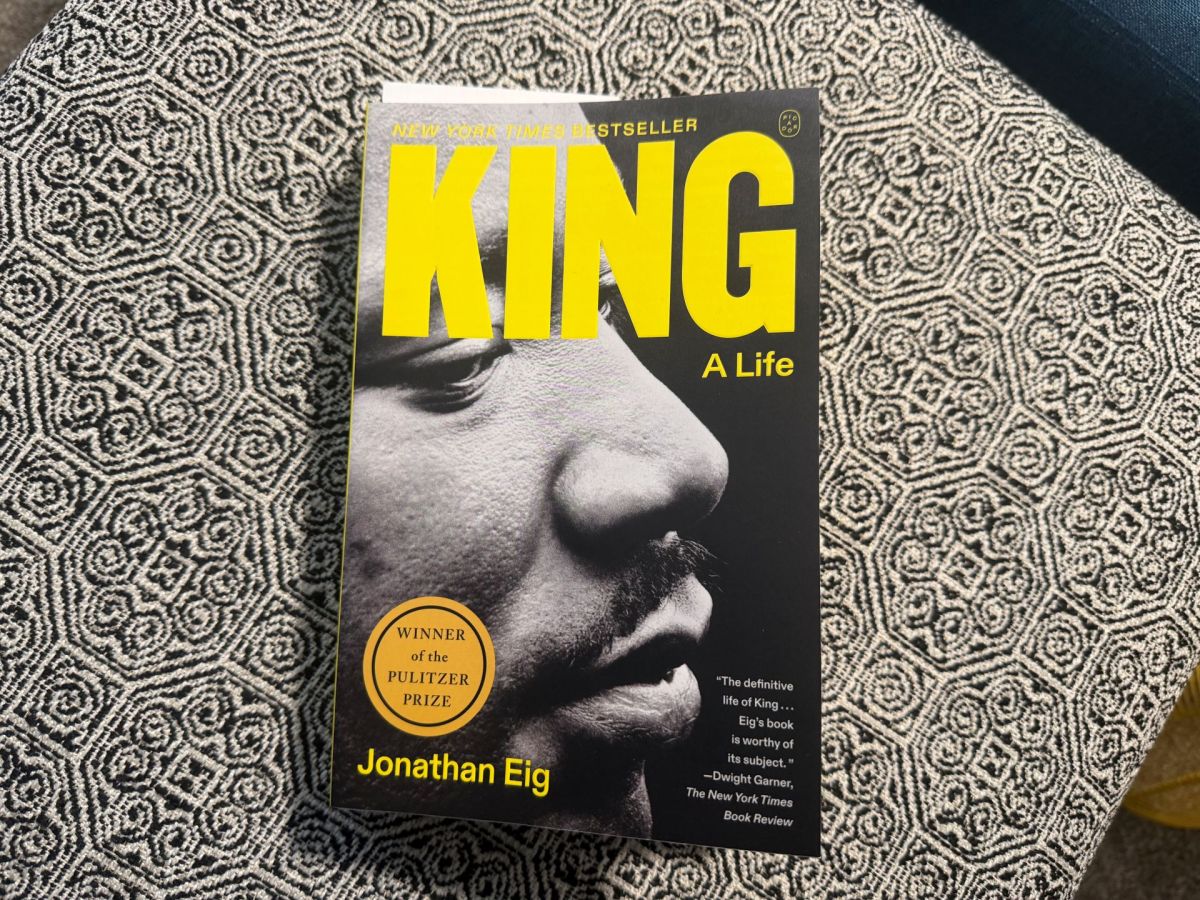
We got new Ray Bradbury’s books and I finally read “Fahrenheit 451,” which was published in 1953. It’s a fascinating book listing 451 ways to remember how to spell the word “Fahrenheit.” Actually, it’s a dystopian novel about society in the future which bans books which firemen burn because the government thinks it’s better for citizens to watch TV than to read.
I remember reading many of his science fiction works when I was a kid. But I never got around to reading “Fahrenheit 451.” My reaction to it was pretty much the same as I had to all of his other books—I found it difficult to put it down.
I started reading it last night. I got through Part 1 and it was late and stormy out so I decided to watch TV. Bad decision. I think the thunderstorm messed with the reception, pixelating and skipping audio along with the usual inane commercials. If I hear the joke one more time about why some snakes procreate only once a year followed by the punch line “That’s because they have e-reptile dysfunction” I’m going to throw my slipper at the screen.
Anyway, I shut the TV off and relaxed, believe it or not, to the thunder and lightening outside. That reminded me of “Fahrenheit 451” because in the novel, people have TV screens the size of the walls of their homes and they watch the same kind of garbage we do nowadays.
The main character, Guy Montag, is a fireman, which means in the dystopian future setting, he and fellow firemen burn any books people are caught hiding in their homes. Then the firemen burn the houses down. I guess that means people with books would have to doomscroll on their various other devices including the smartphones which won’t fit in any pocket of the clothes they wear.
Montag has a “eureka” moment when a 16-year-old girl named Clarisse teaches him there could be other ways to experience the world than by watching how women with swaying breasts in the Blue Chew commercials on the Weather Channel manage to make people really focus on the size of hailstones bombing Boobs Canyon in Utah.
Just like that, Montag reforms and does things that I probably shouldn’t tell you because that would be a major spoiler. Well, I guess I can give you a hint—they involve flame throwers. And have you ever wondered how your supervisor would look wearing a charcoal leisure suit?
We just got a couple of books by Ray Bradbury, and I’m pretty excited. Some of the stories I recognize, but there will be some, perhaps many, that will be new to me.
I learned a new slang word from Houston White, the guy who makes that specialty coffee in Minneapolis I blogged about yesterday: Brown Sugar Banana (I’m not a fan, but I admire him just the same). The word is “dope.” That used to be an insult or an illicit drug when I was growing up. Now it means “very good.”
I guess writing, at least for me, is dope.
The further I get in time away from the day I retired from practicing consultation psychiatry, the more I reflect about how I became a psychiatrist. I’m a first-generation doctor in my family, so what follows is one way to write about it.
What has helped me get through life was this writing habit along with a sense of humor. When I was little, I wrote short stories for my mother. I was the “number one son” in the words of my father, which meant only that I was the first born. My younger brother came second only in order of birth. He was the track star. I was the paperboy. Our parents separated early on. Sena and I have been married for 47 years.
I have been writing my whole life. I used a very old typewriter. I wrote poetry for a while, eons ago. Like many aspiring writers, I tried to sell them to publishers. The only publisher I remember ever responding sent me a hand-scrawled note on a small sheet of paper. He told this really short, nearly incoherent story about his son, who had apparently died shortly before. His son had a “tough road.” It wasn’t clear exactly how he died, but I remember wondering whether it was suicide. It was very sad.
In the 1970s, while I was a student at one of the Historically Black Colleges and Universities (Huston-Tillotson College, now a university) in Austin, Texas, I submitted a poem to the school’s annual contest and for entry into the college’s collection, called Habari Gabani (which means “what’s going on” in Swahili). It was rejected. Years later, I finally was able to track down a digital copy of Habari Gani.
Habari Gani from Huston-Tillotson College
Eventually, thank goodness for everyone’s sake, I gave up writing poetry. It was as bad as Vogon poetry. You’ll have to read Douglas Adam’s book “A Hitchhiker’s Guide to the Galaxy,” for background on that. The Vogons were extraterrestrials who destroyed Earth in order to build an intergalactic bypass for a hyperspace expressway. Vogon poetry is frightfully bad; it’s the waterboarding torture of literature.
I wrote a short Halloween story for my hometown newspaper contest once. It got honorable mention, but I can’t recall what it was about, thank goodness.
I wrote a feature story in a journalism class taught by a nice old guy who made a long speech to the class about the unfortunate tendency for young writers to use flowery, polysyllabic words in their prose. He made it clear that journalists shouldn’t write like that. Although I didn’t consciously do the opposite to annoy him, I did it anyway. I even tossed the word “Brobdingnagian” in it, which might have referred to some high bluffs somewhere in Iowa. Despite being infested with Vogonisms, my teacher tolerated it, sparing my feelings. I must have passed the course although how I did it remains a mystery.
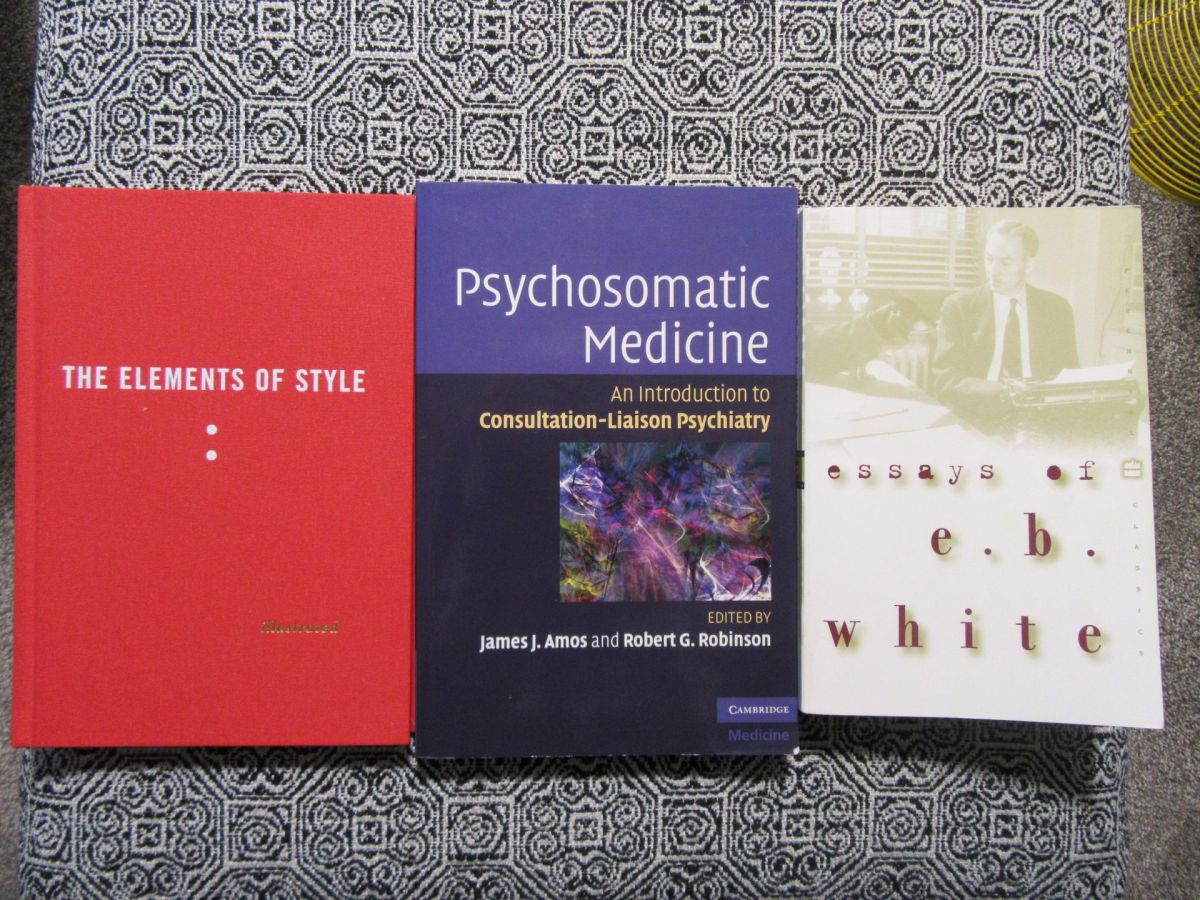
I wrote and co-edited a book with the chairman of the University of Iowa Healthcare Dept of Psychiatry, Dr. Robert G. Robinson, MD. It was “Psychosomatic Medicine: An Introduction to Consultation-Liaison Psychiatry”. There were several contributors. Many of them were my colleagues. It was published in 2010, and prior to that, I’d written an unpublished manual that I wrote for the residents.
Handbooks of CL PsychiatryHandbook of Psychosomatic Medicine
There wasn’t any humor in either book, because they were supposed to be evidence of scholarly productivity from a clinical track academic psychiatrist. But I used humor and non-scientific verbiage in my lectures, albeit sparingly. I remember one visiting scientist remarked after one of my Grand Rounds presentations, “You are so—poetic” and I detected a faint disparaging note in his tone…probably a reaction to a latent Vogonism. It’s not impossible to monkey-wrench those into a PowerPoint slide or two.
I used to write a former blog called The Practical Psychosomaticist, later changed to The Practical CL Psychiatrist when The Academy of Psychosomatic Medicine changed their name back to The Academy of Consult-Liaison Psychiatry back in 2017. I wrote The Practical CL Psychiatrist for a little over 7 years. I stopped, but then missed blogging so much I went back to it in 2019 after only 8 months. I guess I was in withdrawal from writing.
I have to admit that I’ve been mis-hearing some of the lyrics of one of my favorite songs, “Lean on Me” for the past fifty-odd years since Bill Withers wrote it. It stayed on the top of the charts for more than 3 weeks back in 1972. That was a special time in my life; and not an easy one.
Back then, you couldn’t just look up song lyrics or anything else for that matter on the world wide web. It didn’t exist yet. I’ve always been prone to mondegreens and I finally found out that I was hearing something different in the verse:
“Please swallow your pride
if I have things (faith?) you need to borrow
For no one can fill
those of your needs
That you won’t let show”
Just to let you know, I found lyrics in one YouTube that substituted the word “faith” for “things”. Think about that one. I don’t know how to settle it, so if anybody knows which word is right, please comment. Anyway, it’s a little embarrassing and revelatory that I heard “…if I have pain…” instead of “…if I have things (or faith)…” And I never really heard “…That you won’t let show.”
Yet I lived it.
Years later, after I’d finished college, medical school, residency in psychiatry, and had taught residents and medical students at the University of Iowa for a number of years, one of my colleagues, Scott, a brilliant psychologist and writer, stopped by my office one day. This was years ago.
His name is Scott and he suggested that it would be nice to get together sometime soon to catch up. I deferred and I remembered he replied while looking off down the hallway, “I’m 70.” I wonder if he meant he didn’t know how much more time he had left.
Scott and I had taken similar paths in the middle of our careers at Iowa. I wanted to try private practice and left for Madison, Wisconsin. Scott got the same idea and left for a position in Hershey, Pennsylvania. We both regretted it and soon after returned to Iowa. I swallowed my pride and came back because I loved teaching. I think he returned for the same reason. We were both grateful that the UIHC Psychiatry Dept. Chair, Bob Robinson, welcomed both us of back.
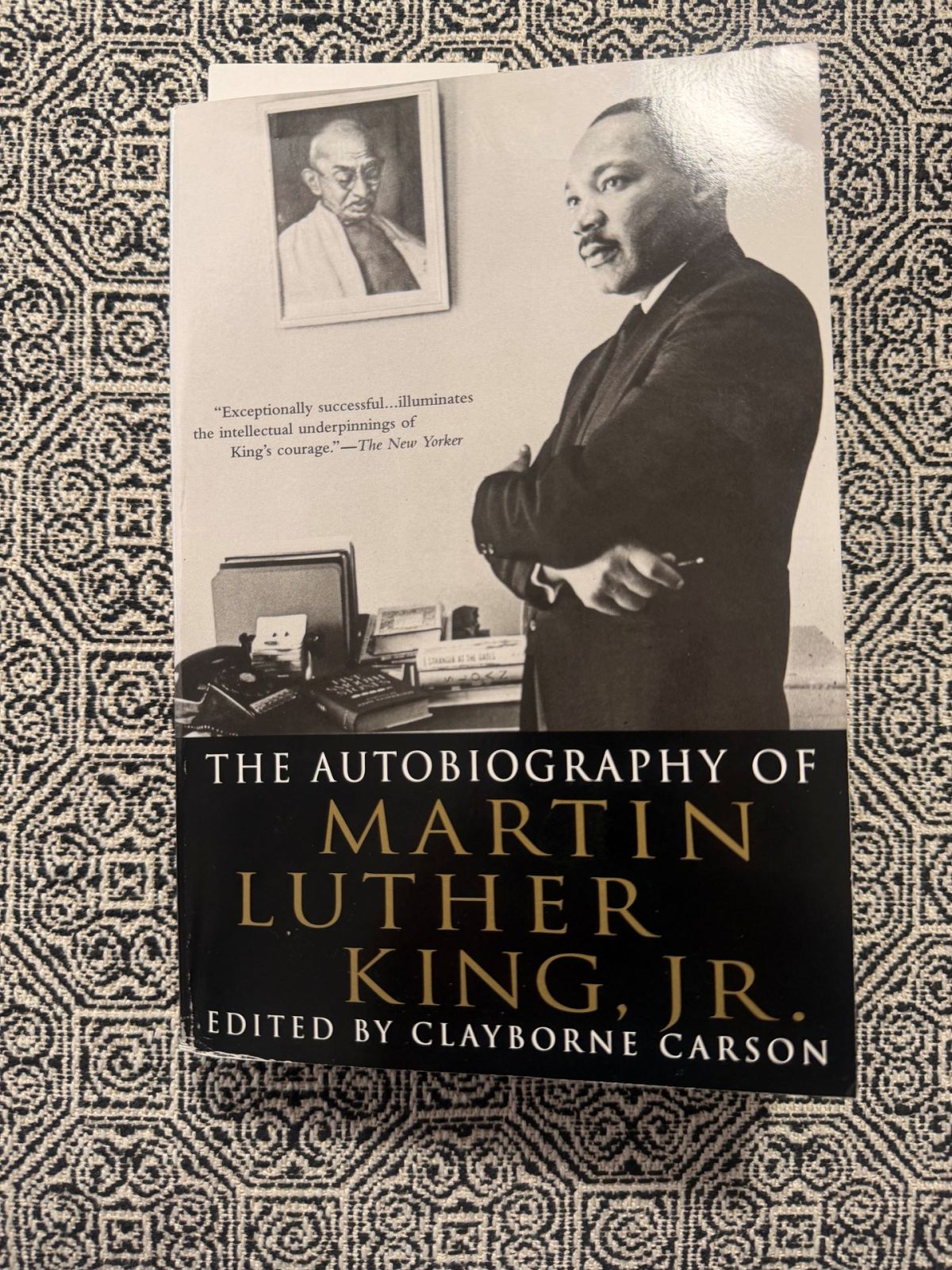
Jim’s teaching awardsBooks by Scott and Jim
I touched base with Scott a little while ago. We’re both retired. I was trying to find out how to contact Bob about messages I was getting from the publisher of our consult psychiatry handbook. Neither Scott or I could find out what was going on with Bob, who retired several years ago and moved back East. It turned out he had died. Sometimes we all have sorrow.
Scott is my friend, and I leaned on him a long time ago. I’m unsure if I let it show. I’m 70 and I’m grateful to him.
On that note, I’m finding out that I can’t walk all the way to the mall and back anymore. On the other hand, I can walk about half that distance. It’s about a mile and a half out to the Clear Creek Trail and back. There’s a lot of uphill and downhill stretches along the way. I can manage that.
And Sena bought me a couple of pairs of new shoes that I’m breaking in that will probably be easier on my feet and my calves. They’re Skecher slip-ons, not to be confused with the no hands slip-ins. I’m used to slip-ons. I tried one pair out today, in fact. Before I left, I took a few pictures of Sena’s new garden. As usual, she’s planting new flowers. The dogwood tree looks great. She’s even excited about the wild phlox. I can’t keep track of everything else out there. She makes the beauty out there.
And I lean on her for that.
dogwood treewild phloxeven more flowersflowersmore flowersnew shoes1new shoes2
This is an update to my post from lasts night on Ray Bradbury’s short story, “I See You Never.” My wife, Sena, happened to mention the naturalization process in the U.S. today.
In fact, we both saw the televised naturalization ceremony at the Iowa State Fair of 2024. During that ceremony, 47 children became citizens. In fact, the U.S. Citizenship and Immigration Services has held a celebratory naturalization ceremony at the Iowa State Fair for at least the last ten years.
There was just such a ceremony last month of 69 immigrants at the University of Northern Iowa.
I had a quick peek at the U.S. citizenship and civics test questions and I’m pretty sure I would have a lot of trouble passing it. I’d probably get shipped back to Mars—which Ray Bradbury wrote a lot about.
The naturalization process isn’t easy. Under federal law, you have to live here in the U.S. at least five years as a lawful permanent resident to be eligible for naturalization, three years if you’re the spouse of a U.S. citizen. You have to learn the language. Many other countries have a similar naturalization process.
There’s no exact number of the USCIS naturalization ceremonies per year, but 818,500 took part in 2024.
Many of those who go through the naturalization process think it’s unfair for others to bypass it by getting into the country by other means.
So, I guess that’s the other side of the short story—the one Ray Bradbury probably didn’t write.