What Questions Should We Ask on MLK Day?

I ran across this quote from Dr. Martin Luther King, Jr. in my notes:

“Human progress is neither automatic nor inevitable… Every step toward the goal of justice requires sacrifice, suffering, and struggle; the tireless exertions and passionate concern of dedicated individuals.”

― Martin Luther King Jr.

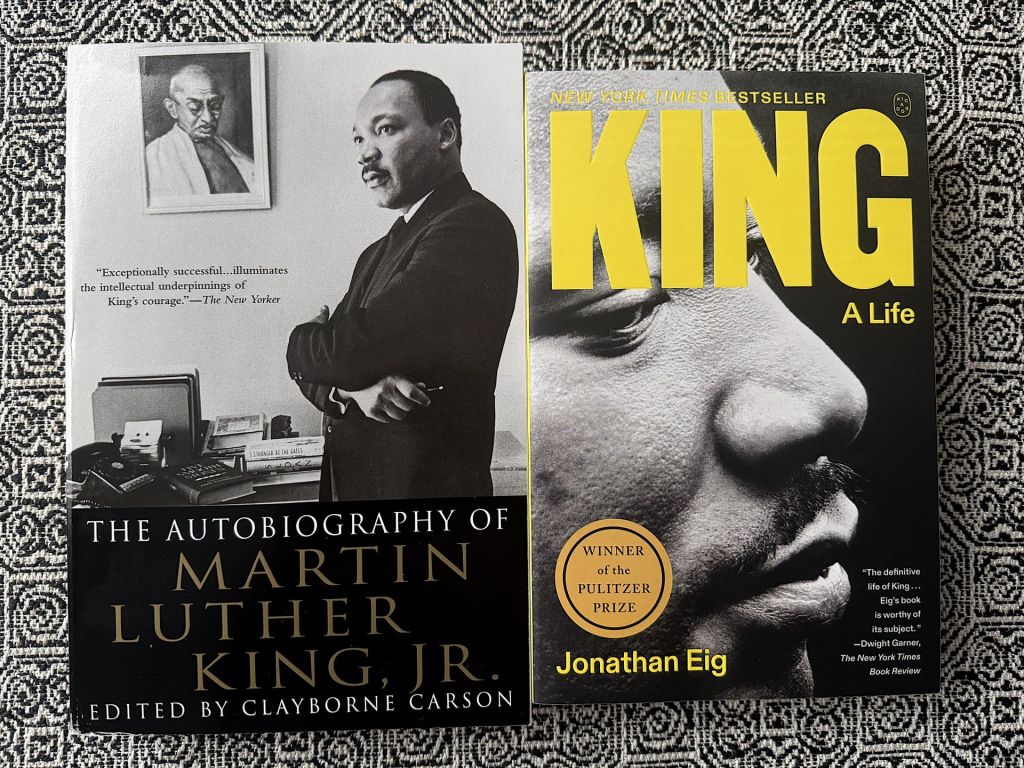
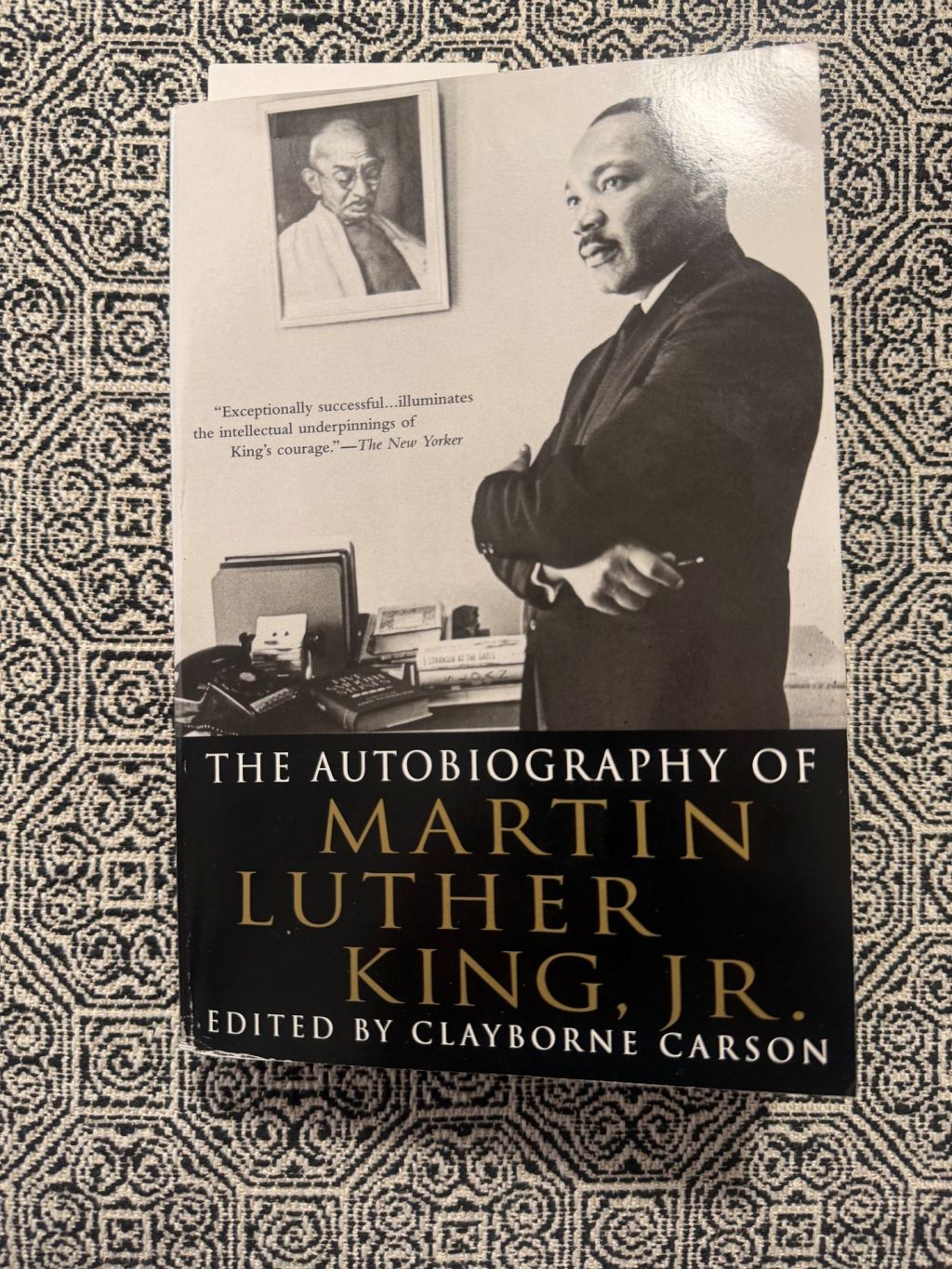
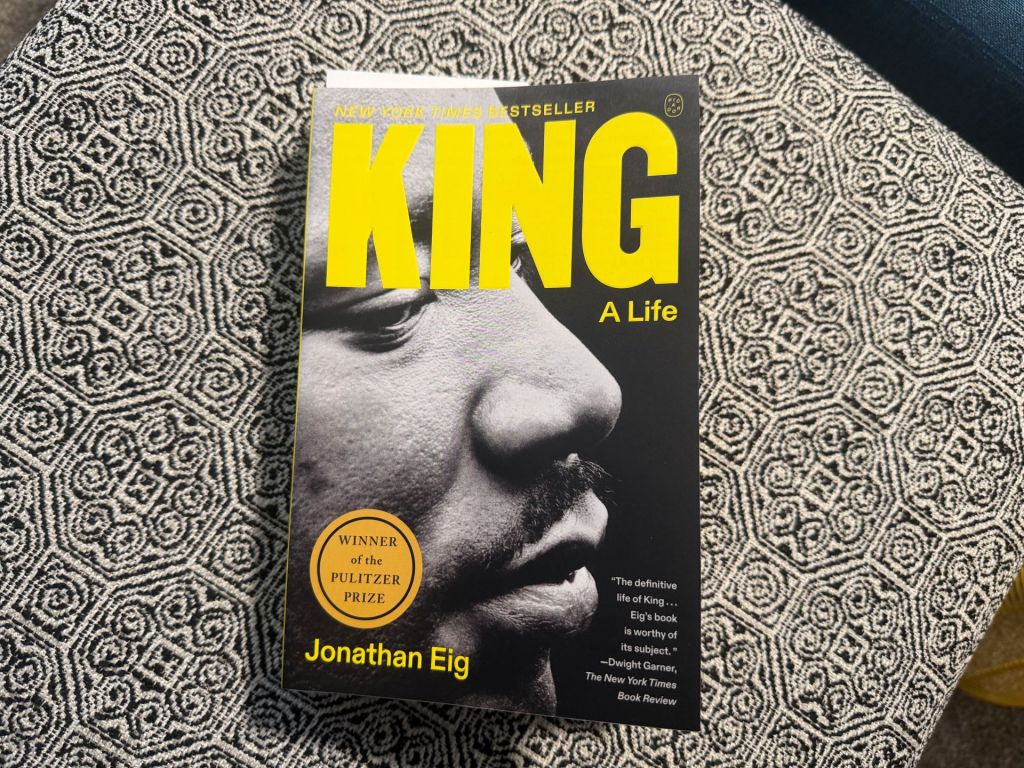
This week we’ll be getting the two biographies of Martin Luther King, Jr. One of them is a biography published a couple of years ago by Jonathan Eig, titled “King: A Life.” The other is an autobiography, “The Autobiography of Martin Luther King, Jr.”

This morning, I was focused on puzzling over Eig’s book, in which there is a focus of how depression affected Dr. King. Gradually, I found out more about his struggles with mental health than I ever knew, and people were aware of them many years before Eig.

Dr. King never shared his emotional problems with anyone while he was alive in order to avoid the stigma in those times. Initially I asked “Why?” type questions. Why does anyone dig into a person’s private health information? That’s called PHI for short and it’s not supposed to be readily available to just anybody. Health professionals know that.

And then I remembered something I learned gradually over the course of my career as a psychiatrist. It’s hard to frame useful answers to “Why?” questions. It’s often more helpful to ask “What?” questions, mainly because they lead to actionable replies about things we might need to change.

What did I do as a teacher before I retired from consultation-liaison psychiatry in order to train those who would improve on what I did?

I shared with my students what I thought would be most helpful to them in their careers going forward:

The shortage of psychiatrists in general, and of C-L psychiatrists specifically, still leads me to believe that George Henry was right when he said:

“Relegating this work entirely to specialists is futile for it is doubtful whether there will ever be a sufficient number of psychiatrists to respond to all the requests for consultations. There is, therefore, no alternative to educating other physicians in the elements of psychiatric methods.”– George W. Henry, MD, 1929 (Henry, G.W., SOME MODERN ASPECTS OF PSYCHIATRY IN GENERAL HOSPITAL PRACTICE. Am J Psychiatry, 1929. 86(3): p.481-499.)

There was so much in Henry’s paper published in 1929 that still sounds current today. I can paraphrase the high points:

  • Practice humility and patience
  • Avoid psychiatric jargon
  • Stick close to facts; don’t get bogged down in theories
  • Prevent harm to patients from unnecessary medical and surgical treatment, e.g. somatization
  • “The psychiatrist deals with a larger field of medical practice and he must consider all of the facts.”
  • The psychiatrist should “…make regular visits to the wards…continue the instruction and organize the psychiatric work of internes…attend staff conferences so that there might be a mutual exchange of medical experience”
  • Focus on “…the less obvious disorders which so frequently complicate general medical and surgical practice…” rather than chronic, severe mental illness

The advantages of an integrated C-L Psychiatrist service (here I mean integrating medicine and psychiatry; mind and body) are that it increases detection of all mental disorders although that requires increasing the manpower on the service because of the consequent higher volume demand in addition to other requests, including but not limited to unnecessary consultation requests.

Further, what still astonishes me is the study which found that among consultee top priorities was an understanding of the core question (Lavakumar, M. et al Parameters of Consultee Satisfaction With Inpatient Academic Psychiatric Consultation Services: A Multicenter Study. Psychosomatics (2015). The irony is that the consultees frequently do not frame specific questions (Zigun, J.R. The psychiatric consultation checklist: A structured form to improve the clarity of psychiatric consultation requests. General Hospital Psychiatry 12(1), 36-44; (1990).

Moreover, it is sometimes necessary to give consultees bad news. A consultant should be able to tell a colleague what he or she may not what to hear. This principle is applicable across many disciplines and contexts. And it is best delivered with civility.

A former president of the ACLP said:

“A consultation service is a rescue squad.  At worst, consultation work is nothing more than a brief foray into the territory of another service…the actual intervention is left to the consultee.  Like a volunteer firefighter, a consultant puts out the blaze and then returns home… (However), a liaison service requires manpower, money, and motivation.  Sufficient personnel are necessary to allow the psychiatric consultant time to perform services other than simply interviewing troublesome patients in the area assigned to him.”—Dr. Thomas Hackett.

I don’t think it’s too much to expect things to improve. Speaking of improvement, Stephen Covey called it “sharpening the saw,” one of the 7 habits of highly effective people. For this, The University of Iowa Hospitals and Clinics C-L Psychiatry has the Clinical Problems in Consultation Psychiatry or CPCP. This was started by Dr. Bill Yates in the 1990s, and it was originally called Problem-based Learning. “PBL…emphasis on the development of problem-solving skills, small group dynamics, and self-directed methods of education…most common types of problem categories identified for the conference were pharmacology of psychiatric and medical drugs (28%), mental status effects of medical illnesses (28%), consultation psychiatry process issues (20%), and diagnostic issues (13%) …PBL conference was ranked the highest of all the psychiatry resident educational formats.”

  • Yates, W. R. and T. T. Gerdes (1996). “Problem-based learning in consultation psychiatry.” Gen Hosp Psychiatry 18(3): 139-144.Yates, W. R. and T. T. Gerdes (1996). “Problem-based learning in consultation psychiatry.” Gen Hosp Psychiatry 18(3): 139-144.
    • Covey, S. R. (1990). The seven habits of highly effective people: restoring the character ethic. New York, Simon and Schuster.         

What did I do when burnout made me a less effective teacher? In 2012 I started getting feedback from colleagues and trainees indicating they noticed I was edgy, even angry, and it was time for a change.

After reflecting on the feedback from my colleagues and students, I enrolled in our university’s 8 week group Mindfulness-Based Stress Reduction (MBSR) program. Our teacher debunked myths about mindfulness, one of which is that it involves tuning out stress by relaxing. In reality, mindfulness actually entails tuning in to what hurts as well as what soothes.

Maybe we should ask what helped Dr. Martin Luther King, Jr. persevere in spite of the inner turmoil and external pressure.

Paranormal Productions: The Skunk Ape

Last night, I watched what I thought was a brand-new episode of Josh Gates’ series, Expedition X. It was titled “Beast of the Everglades” and it was about the skunk ape in the Florida everglades. Turns out the show originally aired in 2024, so I’m a little behind. You might want to watch it first before reading this post, because I’m going spill the lima beans about it.

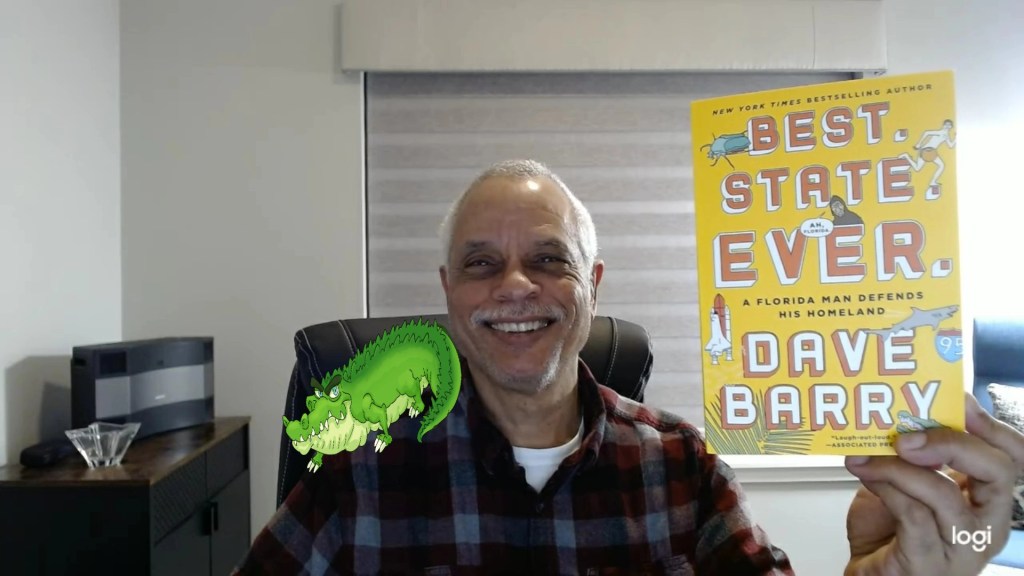
Expedition X is all about chasing cryptids and in this episode the quarry is the skunk ape in the Florida. The skunk ape is a Bigfoot which desperately needs deodorant because it stinks to high heaven. Right from the beginning of the show, I thought of Dave Barry’s book, Best State Ever. A Florida Man Defends His Homeland. It was published in 2016. I used to have nearly every nonfiction book he published up until several years ago.

The aptly named relevant chapter in Barry’s book is “The Skunk Ape.” The book and the TV show intersect in the guy who sort of invented the story of the skunk ape, Dave Shealy, because his video of the cryptid is shown on the show and is widely available on the internet. He has a bit part in the show. He and the co-star Heather Amaro talk about the skunk ape briefly and he does have a piercing gaze, just as Barry describes in his book. Barry’s photo of Shealy in the book shows him wearing a pair of high boots—and he wore the same boots on the show. He didn’t talk about using lima beans as bait to attract the skunk ape on the show but he told Dave Barry about having used the vegetable.

That reminds me of the highly evolved and fancy technology that the stars, Phil Torres and Heather Amaro used in the show. Phil used a really cool, high-tech slingshot to shoot scent balls infused with the stink of 3 different animals (skunk, wild boar, and bear) into the brush to attract the skunk ape. It’s a lot more impressive than tossing out lima beans.

They also used a very expensive looking drone with a camera and caught video of something which looked to them like it was hustling across the marshes on two legs. I thought it looked like it was on four legs, but what do I know about drone video footage?

On the show, Phil and Heather found a few stinky nests which they suspected or at least wondered whether the skunk ape built and sat in. One or two of them I think were in tree tops although the trees were not that tall. I wondered about the relatively small size of the nests, given that the large size of the skunk ape—about 7 feet tall and over 400 lbs. (so, about the size of a typical NFL lineman), if I remember correctly (if that matters). It looked like the nest was about the size of a baby’s car seat.

There were small skeletons in it and one of them Phil identified as a baby alligator gar. That’s a prehistoric-looking animal resembling an alligator. They can grow to massive size. The little one was probably a snack which the skunk ape munched on while watching reruns of My Favorite Martian on the little portable TV, which was on the fritz at the time Phil checked. There were no lima beans in the nest, which means the creature cleaned its plate, which was neatly stacked with others in the tiny dishwasher.

Primates will eat stuff like that, according to a local animal expert on the show. But he politely speculated that the animal bounding across the everglades in Shealy’s video moved more like a person than an ape.

Phil got a few hairs from the grass out in the swamp, which was tested for DNA. It came back human. But since humans and apes share more than 98% of their DNA, that means the skunk ape legend remains intact.

Glue Myself to My Biography

There’s a reason for why I so often tell Dad jokes. In keeping with my post from yesterday about Dr. Martin Luther King, Jr’s biographies:

I glued myself to my autobiography. You may not believe it, but that’s my story and I’m sticking to it.

We’ve ordered a couple of biographies about Dr. King. One of them is his autobiography and the other is Jonathan Eig’s book, “King: A Life.”

I’m getting to be too old to write my own autobiography—guess it’ll have to be done by autopen. Sorry about that one (no I’m not).

I’m a psychiatrist so I know when I’m using humor as a defense mechanism. A lot of good that does.

I’ve never seriously considered writing my autobiography. I could have it tattooed on my back—it would be my backstory.

Seriously—no, I guess that’s impossible. On the other hand, every year about MLK Day, I think about the blog I wrote that the Iowa City Press Citizen published in 2015 on January 19th. It’s becoming almost something like a tradition. I think I need to repost it annually around this time. The title is “Remembering our calling: MLK Day 2015.” 

“Faith is taking the first step, even when you don’t see the whole staircase.”

-Martin Luther King, Jr.

That quote is interesting because Jonathan Eig’s biography of MLK can be said to reveal more of the staircase, so to speak, at least from the standpoint of his flaws as well as his strengths. But I stray from the tradition:

As the 2015 Martin Luther King Jr. Day approached, I wondered: What’s the best way for the average person to contribute to lifting this nation to a higher destiny? What’s my role and how do I respond to that call?

I find myself reflecting more about my role as a teacher to our residents and medical students. I wonder every day how I can improve as a role model and, at the same time, let trainees practice both what I preach and listen to their own inner calling. After all, they are the next generation of doctors.

But for now, they are under my tutelage. What do I hope for them?

I hope medicine doesn’t destroy itself with empty and dishonest calls for “competence” and “quality,” when excellence is called for.

I hope that when they are on call, they’ll mindfully acknowledge their fatigue and frustration…and sit down when they go and listen to the patient.

I hope they listen inwardly as well, and learn to know the difference between a call for action, and a cautionary whisper to wait and see.

I hope they won’t be paralyzed by doubt when their patients are not able to speak for themselves, and that they’ll call the families who have a stake in whatever doctors do for their loved ones.

And most of all I hope leaders in medicine and psychiatry remember that we chose medicine because we thought it was a calling. Let’s try to keep it that way.

You know, I’m on call at the hospital today and I tried to give my trainees the day off. They came in anyway.

I used to joke that they would erect a playdoh statue of me in the Quad (Quadrangle Hall was there) on the University of Iowa campus someday. Unfortunately, the Quad was demolished in 2016, so I guess I can’t put that in my autobiography.

Since I retired in 2020, I keep meaning to write my memoirs, but I never get around to it. I guess that makes it my oughta biography.

A Few Thoughts About the New Biography of Dr. Martin Luther King, “King: A Life”

I just learned today about the new biography of Dr. Martin Luther King, Jr. written by Jonathan Eig. It was published a couple of years ago and I found a lot of YouTube interviews of him. I didn’t look through hardly any of them and saw only one in its entirety, which is below.

Like many people, I was surprised by what Eig found out about Dr. King’s life. It’s pertinent for the upcoming observation of the upcoming MLK holiday. It’s probably not going to be without some controversy. No doubt, some might find it a bit cringeworthy at times. It’s noteworthy that he consulted many who were personally acquainted with Dr. King.

During Eig’s presentation, I was uncomfortably aware of never having read any of the biographies of Dr. King that have already been published, including his autobiography. I was stunned to hear that there has not been a new biography published since the early 1980s.

It’s probably high time I read one.

Shoveling Through Retirement Thoughts

I was just musing on Philip Rivers. You know about him. I blogged recently about his coming out of retirement to play quarterback for the Indianapolis Colts. I guess you already know this, but he retired again.

Unlike Philip Rivers, I’ve not even considered coming out of retirement since I left my position at The University of Iowa Health Care (UIHC) over 5 years ago. I never looked back.

But that doesn’t mean I never think about looking back. I look back a lot and that’s mostly because I’m an old guy. I was a consulting psychiatrist in the general hospital.

Anyway, occasionally I search my name on the web and laugh at what comes up. I never went to Baylor College of Medicine, much less graduated from there.

I did a few things when I was a doctor. Not all of them were about work, but most of them were.

Those who know me know that I always hated Maintenance of Certification (MOC). I checked the American Board of Psychiatry & Neurology website and my MOC contribution to continuing education is still there. It’s a clinical module on Delirium, which a lot of doctors and other health care practitioners see every day in the hospital. Dr. Emily Morse worked on it as well. She’s still working at UIHC.

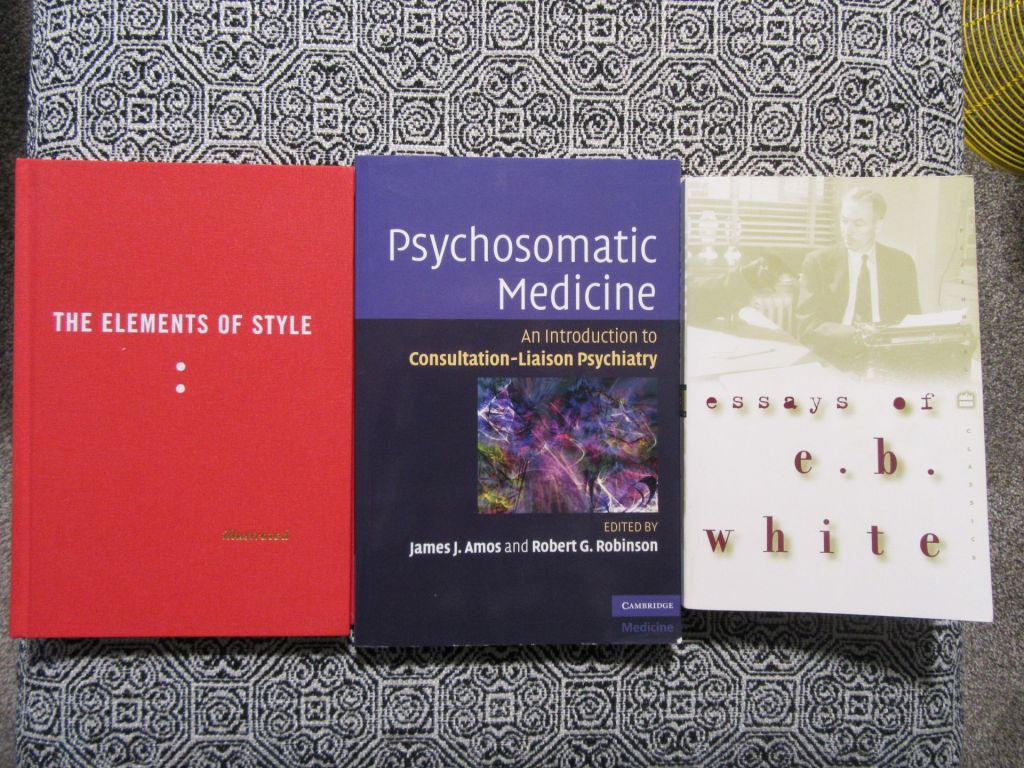
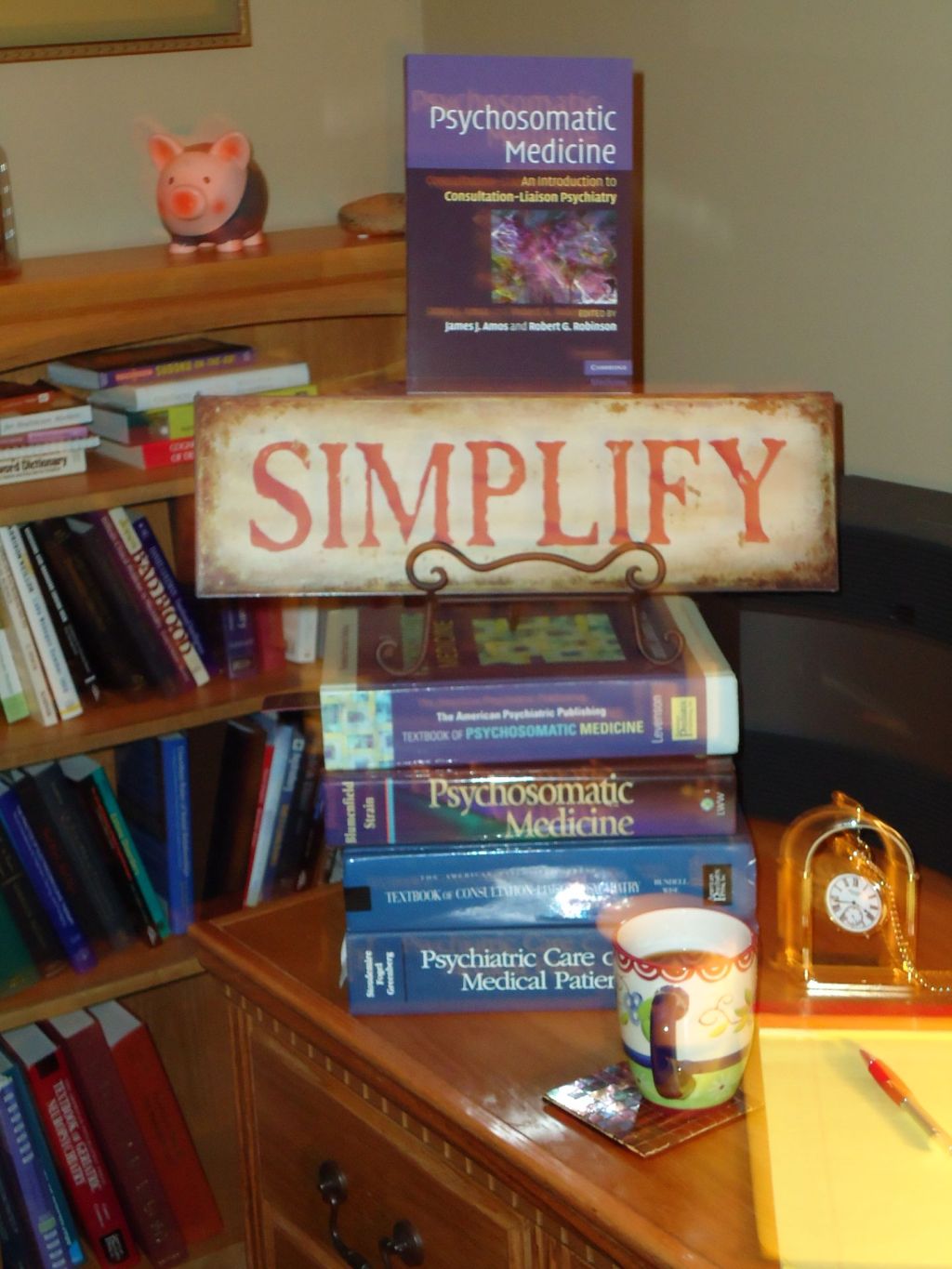
I co-edited a book about consultation-liaison psychiatry with my former chair of the Psychiatry Dept, Dr. Robert G. Robinson, may he rest in peace. It’s “Psychosomatic Medicine: An Introduction to Consultation-Liaison Psychiatry.” You can buy it on Amazon—please.

I wrote a case report on catatonia caused by withdrawal from lorazepam (a benzodiazepine), and it’s still available. It was first published in Annals of Psychiatry.

But one of the things I’m proudest of doing was writing a short article for the University of Iowa Library for Open Access Week.

In it, I tell a short anecdote about my lofty (OK, a better word is “greedy”) thoughts about how much money I could make shoveling snow. I was just a kid and I never made it outside to shovel anybody’s walk because I was too busy calculating my income. I wrote that way back when I had another blog, The Practical Psychosomaticist. The photo of me shows my Leonard Tow Humanism in Medicine pin fixed to my lapel—another thing I’m proud of. By the way “Tow” rhymes with “Wow.”

Libraries have always been my one of my favorite places to hang out. Anyway, I’ve got more time to do things like hang out in general. I think Philip Rivers will adjust.

Florida Man News!

We saw the news story about the Florida Man who recently got busted by the cops in Ormond, Florida after he stole a BMW and when he was stopped for going 130 mph (about 5 mph over the local speed limit), he thanked the police for saving him from the extraterrestrials who evidently had teleported him into the BMW. Well, that explains everything!

This is just further evidence on top of what has already been thoroughly documented by Dave Barry in his 2016 documentary book, “Best State Ever; A Florida Man Defends His Homeland.”

Did you hear about the blackout in Florida?

People were stuck on the escalators for 4 hours.

I used to have a ton of Dave Barry books. I got hooked on his humor shortly after I graduated from Iowa State University back in the 1980s. I was in a post graduate program in Medical Technology in a Des Moines hospital and back then you could always find a newspaper on some tables in the cafeteria.

Over the years, I lost many of his books during moves. Sena would ask me something like “Do you really still want all these Dave Barry books?” I knew better than to say “These are very important examples of timeless prose exemplifying humor literature that will be excavated in the distant future by archaeologists who will preserve them in hermetically sealed glass bookcases so people can admire the covers.”

I just threw them out. Please don’t tell Dave.

Anyway, I have managed to preserve a photo of Florida Woman, taken in Miami many years ago. Let this be a lesson to you: never call your wife “Florida Woman” unless you want to live the rest of your life in a refrigerator packing box—although you can use duct tape to seal off those cracks to keep the wind and snow out.

Did you know there’s a song titled “Florida Man”? Believe it or not I heard it a couple of years ago on the Big Mo Blues Show on KCCK radio. It’s by Selwyn Birchwood who is from—that’s right, Tampa, Florida. The song was released by—you guessed it, Alligator Records.

And here’s Iowa Man:

When it Comes to AI, What Are We Really Talking About?

I’ve been reading about artificial intelligence (AI) in general and its healthcare applications. I tried searching the web in general about it and got the message: “An AI Overview is not available for this search.”

I’m ambivalent about that message. There are a couple of web articles, one of which I read twice in its entirety, “Are we living in a golden age of stupidity?” The other, “AI, Health, and Health Care Today and Tomorrow: The JAMA Summit Report on Artificial Intelligence”was so long and diffuse I got impatient and tried to skip to the bottom line—but the article was a bottomless pit. The conflict-of-interest disclosures section was overwhelmingly massive. Was that part of the reason I felt like I had fallen down the rabbit hole?

I recently signed an addendum to my book contract for my consult psychiatry handbook (published in 2010, for heaven’s sake) which I hope will ultimately protect the work from AI plagiarism. I have no idea whether it can. I delayed signing it for months, probably because I didn’t want to have anything to do with AI at all. I couldn’t discuss the contract addendum with my co-editor Dr. Robert G. Robinson MD about the contract addendum because he died on December 25, 2024.

I found out today the book is old enough to find on the Internet Archive as of a couple of years ago. One notice about it says “Borrow Unavailable” and another notice says “Book available to patrons with print disabilities.”

All I know is that an “archivist” uploaded it. The introduction and first chapter “The consultation process” is available for free on line in pdf format. I didn’t know that until today either.

Way back in 2010 we didn’t use anything you could call AI when we wrote the chapters for the book. I didn’t even dictate my chapters because the only thing available to use would have been a voice dictation software called Dragon Naturally Speaking. It was notorious for transcribing my dictations for clinic notes and inserting so many errors in them that some clinicians added an addendum warning the reader that notes were transcribed using voice dictation software—implying the author was less than fully responsible for the contents. That was because the mistakes often appeared after we signed off on them as finished, which sent them to the patient’s medical record.

Sometimes I think that was the forerunner of the confabulations of modern-day AI, which are often called hallucinations.

Now AI is creating the clinic notes. It cuts down on the pajama time contributing to clinician burnout although it’s not always clear who’s ultimately responsible for quality control. Who’s in charge of regulatory oversight of AI? What are we talking about?

Tried Watching Young Frankenstein on Internet Archive but No Go

OK, so I tried watching the movie Young Frankenstein on the Internet Archive just now, but it’s a no go. The choices are watching it formatted in a different language or sitting through endless buffering. So, I’m choosing to watch it on the Svengoolie show when it’s scheduled tomorrow at 7:00 p.m. That means I’ll miss the Iowa Hawkeye vs Penn State football game, which comes on at 6:00 p.m.

So be it.

The Wild West Sandbox of AI Enhancement in Psychiatry!

I always find Dr. Moffic’s articles in Psychiatric Times thought-provoking and his latest essay, “Enhancement Psychiatry” is fascinating, especially the part about Artificial Intelligence (AI). I liked the link to the video of Dr. John Luo’s take on AI in psychiatry. That was fascinating.

I have my own concerns about AI and dabbled with “talking” to it a couple of times. I still try to avoid it when I’m searching the web but it seems to creep in no matter how hard I try. I can’t unsee it now.

I think of AI enhancing psychiatry in terms of whether it can cut down on hassles like “pajama time” like taking our work home with us to finish clinic notes and the like. When AI is packaged as a scribe only, I’m a little more comfortable with that although I would get nervous if it listened to a conversation between me and a patient.

That’s because AI gets a lot of things wrong as a scribe. In that sense, it’s a lot like other software I’ve used as an aid to creating clinic notes. I made fun of it a couple of years ago in a blog post “The Dragon Breathes Fire Again.”

I get even more nervous when I read the news stories about AI making delusions and blithely blurting misinformation. It can lie, cheat, and hustle you although a lot of it is discovered in digital experimental environments called “sandboxes” which we hope can keep the mayhem contained.

That made me very eager to learn a little more about Yoshua Bengio’s LawZero and his plan to create the AI Scientist to counter what seems to be a developing career criminal type of AI in the wild west of computer wizardry. The LawZero thing was an idea by Isaac Asimov who wrote the book, “I, Robot,” which inspired the film of the same title in 2004.

However, as I read it, I had an emotional reaction akin to suspicion. Bengio sounds almost too good to be true. A broader web search turned up a 2009 essay by a guy I’ve never heard of named Peter W. Singer. It’s titled “Isaac Asimov’s Laws of Robotics Are Wrong.” I tried to pin down who he is by searching the web and the AI helper was noticeably absent. I couldn’t find out much about him that explained the level of energy in what he wrote.

Singer’s essay was published on the Brookings Institution website and I couldn’t really tell what political side of the fence that organization is on—not that I’m planning to take sides. His aim was to debunk the Laws of Robotics and I got about the same feeling from his essay as I got from Bengio’s.

Maybe I need a little more education about this whole AI enhancement issue. I wonder whether Bengio and Singer could hold a public debate about it? Maybe they would need a kind of sandbox for the event?

It’s The Clay

I ran across something quotable in Ray Bradbury’s novel, “Something Wicked This Way Comes.” It’s another one of his books I’ve never read but which I’m reading now.

“God, how we get our fingers in each other’s clay.” In the novel, it’s about how two friends influence each other.

On the one hand, it’s a seemingly trivial observation about human nature. On the other, it also seems profound because it’s so pervasive. You could reformulate it in any number of ways, e.g., “We’re always getting into each other’s business.”

The response is just as trivial. Mind your own business. Get out of my hair. I wonder how that song “My Way,” done famously by Frank Sinatra, could ever make sense when the reality is that we’re always either getting in each other’s way—or less often, always trying to integrate our approaches to create something better in our lives.

It’s kind of like what a former presidential campaign advisor (Wikipedia and other sources say it was James Carville) said, “It’s the economy, stupid.”

Maybe it’s the clay, partner.