Press And Hold on The Keurig Coffee Maker

We got our new coffee maker. It’s a Keurig K-Supreme Plus, and it’s as fancy as the name sounds. It’s compact enough to save room for our other coffee maker, a Black & Decker, a model with a carafe and which you have to press and hold the “On” button to start the cleaning mode.

It has options for making your coffee stronger and hotter and you can save your choices.

You can save 3 favorites. You have to press and hold the “Favorite” button until you see the word “saved” in the little window.

I emphasize the “press and hold” because if you don’t strictly obey the rule, you can wind up thinking your brand new appliance is defective.

It does make the coffee hotter. But I think Sena will be looking into other options for cups which will keep the brew hotter for a longer time.

The Keurig coffee makers are normally pricey but Sena got a bargain. And there is nothing wrong with the press and hold maneuver when it comes to your wallet—as in hold it shut.

Again, Sena Returns Another New Coffee Maker!

Sena is returning yet another new coffee maker. It’s a Keurig K Supreme. The problem? The coffee doesn’t stay hot enough after brewing.

What’s the deal?

I think part of it is that we might need to get different coffee cups. On the other hand, we never seemed to notice our coffee cooling off too fast before-except with the current Black and Decker with a carafe that we’re trying to sort of replace with a K type pod coffee maker.

We used to have the original Keurig years ago. I don’t remember that there was ever a problem with the coffee not staying hot.

When I was a resident, I used to have a little Mr. Coffee I kept in my office for when I was on call. It got a lot of use. And it got really dirty. Well, you know, work… I never noticed a problem with the coffee temperature, though.

Why is the temperature of the coffee an issue now? Why are there coffee makers that allow you to set the temperature of the brew? There are 3 settings on some models, one of which Sena has just ordered.

That’s right. This is trial number 3. The MeCity coffee maker had a pod cartridge that made it difficult to remove the pod after brewing. If you don’t have fingernails, you pretty much have to use a tool to catch the pod edge to lift it out. Back to the store.

The Keurig K Supreme was discouraging because the coffee was tepid within a few sips after brewing. Back to the store.

Isn’t this way too much gassing about coffee makers?

I don’t trust customer reviews much. On the other hand, Sena saw one review where the hacked off guy wrote a one liner in all caps about one model of Keurig coffee maker: “WILL NOT WORK WITH ARC FAULT CIRCUIT INTERRUPTERS!” I think there was an expletive deleted in that one.

We actually had that problem in one of the homes we owned years ago. There was only one option—buy a new house (just kidding).

And a previous coffee maker we had got zapped during the derecho here a few years ago. The numbers on the clock faded and it started to gain time. It’s not like we needed to use the clock. I had retired and didn’t need to set it to brew in the morning any more. So, we got a new one.

That’s when all the trouble started. Does any manufacturer make a decent coffee maker nowadays?

Where will this saga end? I don’t think we’ll return the next Keurig model Sena ordered—unless it doesn’t work at all or blows up.

We might have to start thinking about the cups we use. I guess there are different opinions about ceramic vs glass vs whatever kind of cups. Some hold heat better than others, you shouldn’t fill a cup all the way to the top because your coffee could lose heat faster, mug thickness matters damn it! Extraterrestrials are messing with heat transfer physics, blah, blah.

Should we just switch to iced coffee?

Sena Returning New Coffee Maker Today Already!

Well, Sena’s returning the new Mecity coffee maker today. Go figure, we just got it. There’s really nothing wrong with how it works. It’s a little tough to remove the pod after the brewing is done. It would be nice to have a machine able to make a full mug of coffee, which would mean a capacity exceeding the 10 oz limit.

I don’t know. It might have something to do with the extraterrestrial swimming in her cup.

A New Coffee Maker!

Sena got a new coffee maker. It’s a Mecity single serve which uses coffee pods like a Keurig but doesn’t cost an arm and leg. I don’t know why it’s called “Mecity.” It gets good reviews.

She also got a good deal on 100 coffee pods. One of them is a mystery. It’s got a question mark on it so we won’t know what flavor it is until we load and brew it.

It’s a lot more compact than our other coffee maker. It’s easy to use. Fill it with water, load a pod and press a button for 6, 8, or 10 oz cup. You’re good to go in seconds.

We made hot chocolate with it and we notice it makes a hotter drink than our other pot.

If it blows up, we’ll let you know.

Do You Really Need to Replace That Ceiling Light?

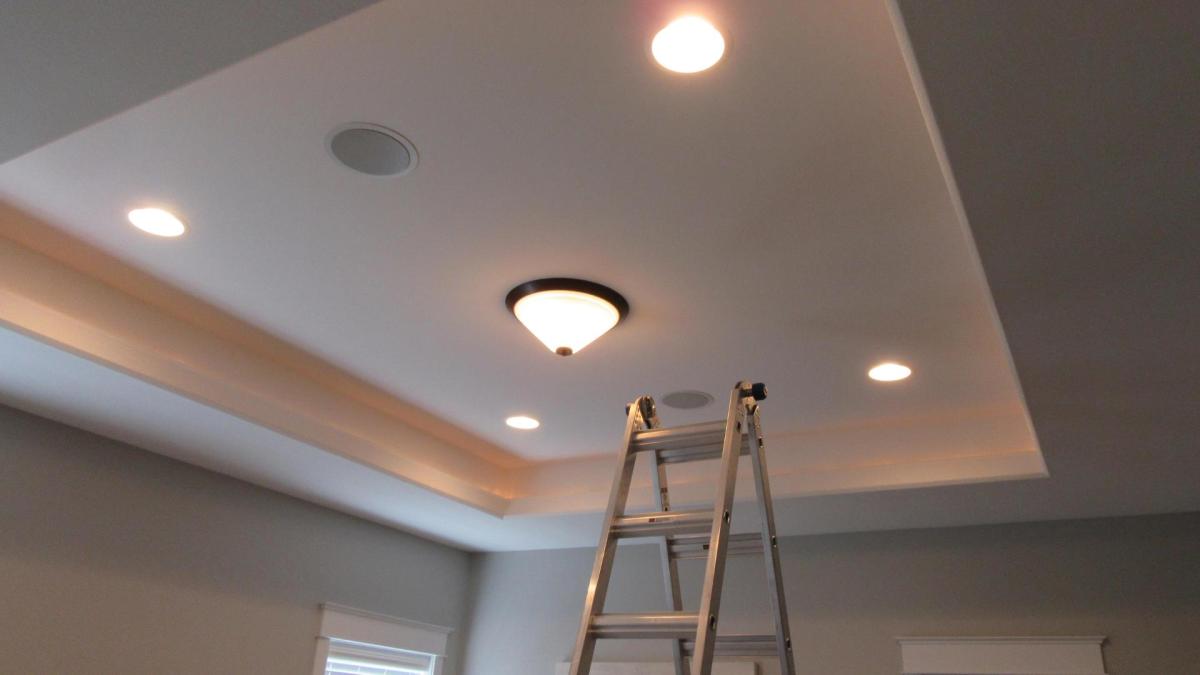
Sena and I just had a very challenging time installing a ceiling light to replace an old fan. I just want to point out that I would always rather hire a handyman to do this because I’m not real comfortable with electrical components. I can replace outlets and switches OK, but the ceiling fan…well, all I can say is we got the job done.

You always want to cut the power off at the circuit breaker before tackling a job like this, of course. And there are the usual problems with hooking up the right wires to each other between the ceiling light fixture (or whatever) and the electrical box in the ceiling.

The model of ceiling light we got had a fairly heavy base, which is the thing that has all the wires and the fluffy insulation and covers whatever mistakes you made in the electrical box. Just kidding.

This was a 2-person job for us and involved jockeying around on a tall ladder, taking turns hanging on to the heavy base while the other did the magic of making wiring connections. If the base had been lighter, we could have hooked up the ground wire in the ceiling with the ground wire in the fixture and just let it hang.

Sena found helpful YouTube videos about how to manage this installation. There were different perspectives on grounding, even on whether you need to do it given that some experts said the electrical box is already grounded so another grounding contact is unnecessary.

We grounded generously and even wrapped wire nuts with electrician’s tape.

Making the wire connections was hard enough, but we thought the most frustrating part was fishing for those two mounting screws through all that fluffy insulation on the base. I thought we’d never get that done.

If you ever have to do a thing like this, you might want to consider hiring the job out to someone who has a lot of experience with it.

Crank the volume on the video to hear my voice over comments.

Jim Learns About Induction Cooktops

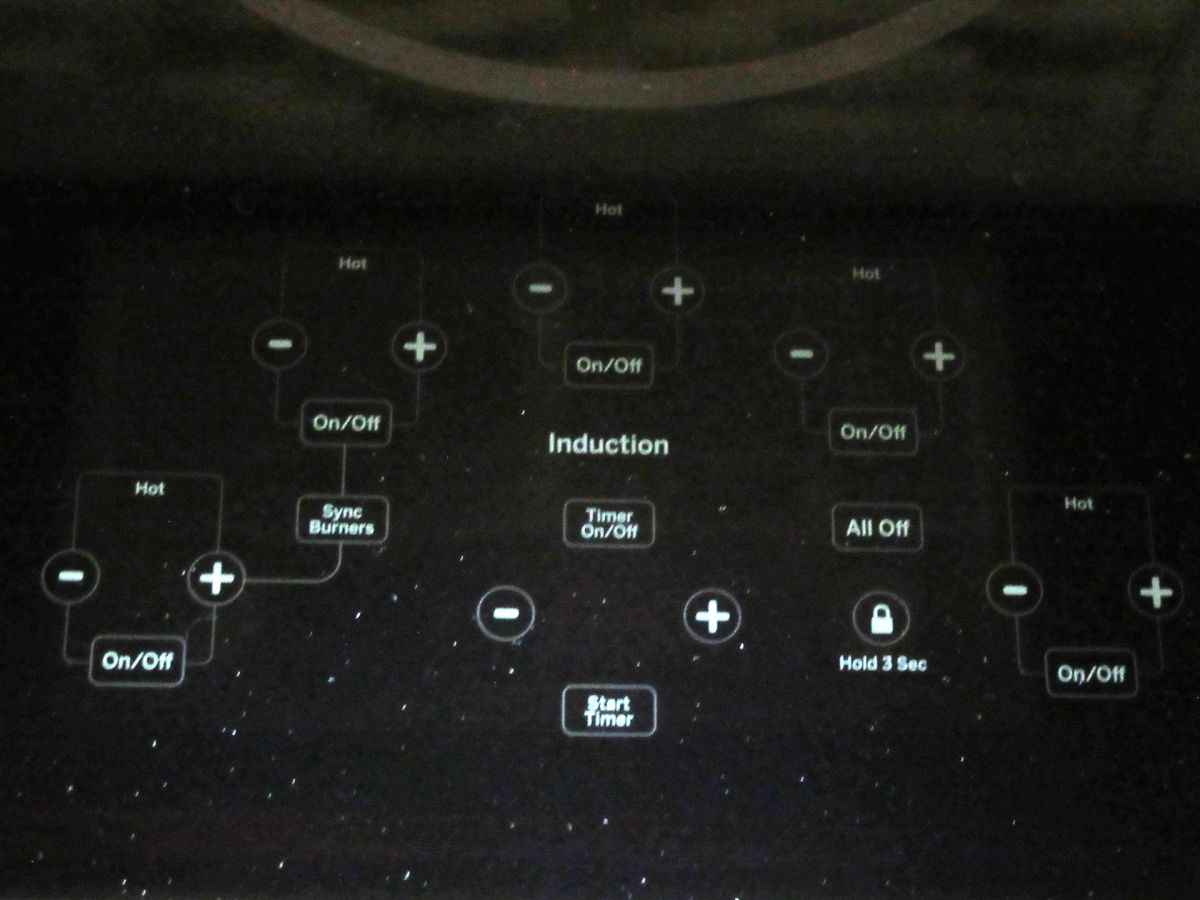
I’m learning about induction cooktops. I know I’m way late in the game. The house we bought a little over two and a half years ago came with an induction cooktop. It’s the first one we ever had; we always used gas or electric stoves.

The main topic here are the noises including clicking noises we heard when using the induction cooktop. I say “we” but I should say Sena because I am allergic to kitchens.

I had to search the internet about induction cooktops. I found out way more than I wanted to know about them. I guess I can summarize that in a few lines:

Induction cooktops:

  • They work using electricity, not gas. They generate energy from an electromagnetic field below the glass cooktop surface which transfers energy to the magnetic cookware, which causes them to heat up.
  • They’re more energy efficient than gas.
  • The electro magnetic field (EMF) they emit have not been shown to increase the risk for cancer.
  • Although some chefs say hard anodized cookware won’t work on induction cooktops, they will if the bottom of the cookware has a ferromagnetic surface (meaning it has iron in it).
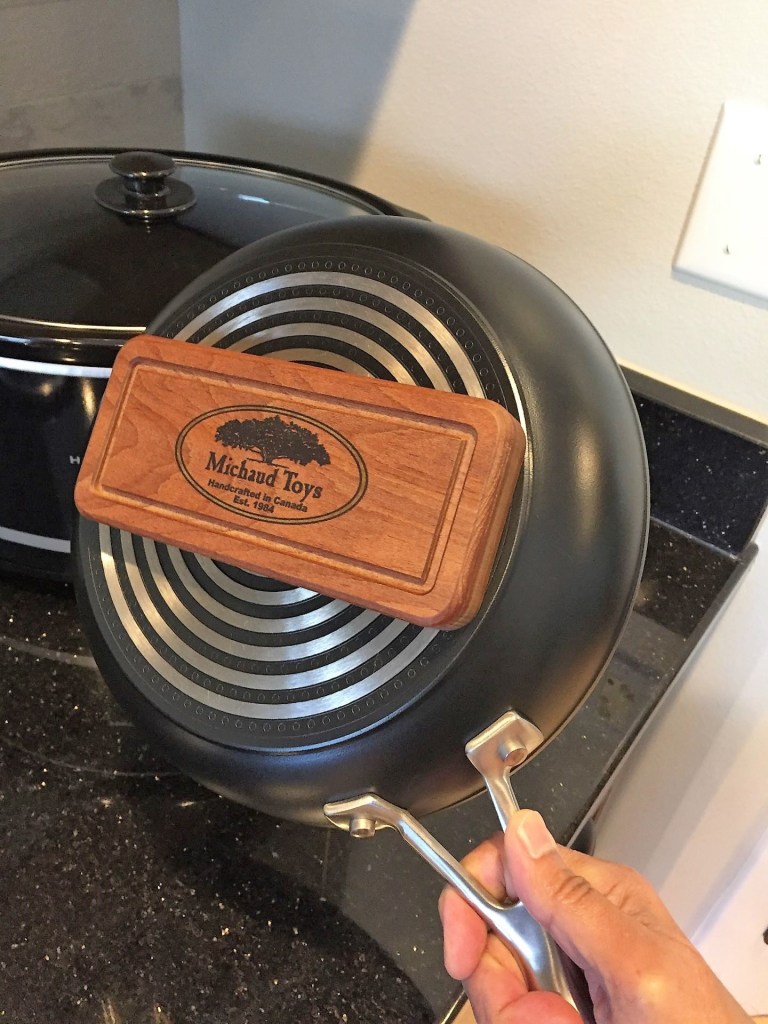
  • You can tell most of the time if a pan will work on induction cookware by holding a magnet up to the bottom of it and checking to see if the magnet sticks. If the magnet sticks, you’re good to go.

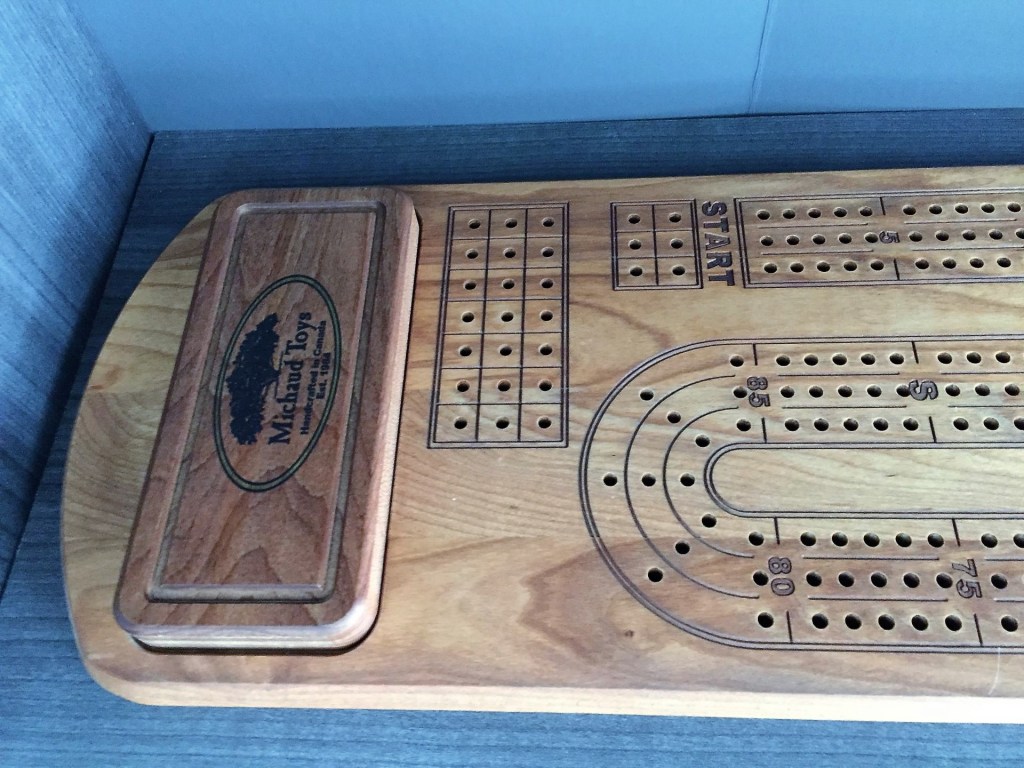
I finally checked that last point about magnetism by suddenly realizing that we had a magnet. It happens to be the magnetized lid for the space holding a deck of cards and pegs on our large cribbage board. It stuck to the bottom of one of our new KitchenAid hard anodized pans.

The old pans we had clicked a lot and there are reasons for the variety of noises you can hear. Most of the websites I noticed which describe this problem also have videos about which don’t have audio. Many of the websites say that some clicking is normal. Others will make an effort to identify the cause for the noises.

Our new cookware doesn’t make any noise at all. And they heat up very quickly. You don’t need to crank up the heat and can keep the power level pretty low.

The sound of screaming is probably from the extraterrestrial you’re trying to fry. Don’t do that.

Coffee Talk

We got a new coffee maker the other day and it’s a Black and Decker. That brand name threw me for a loop just by itself. I’m used to hearing about Black and Decker power tools. But believe it or not, I’m not sure I’ve ever heard of Black and Decker coffee makers.

I looked this up on the web. In fact, the Black and Decker company didn’t start marketing coffee makers until the 1980s, I think. It was called the Spacemaker Coffee Maker because it would fit under kitchen cabinets.

Sena tells me we had a Black and Decker coffee maker a long time ago, but I don’t remember it. Then we went with Hamilton Beach, then Mr. Coffee. We also had a Keurig, but the coffee pods were really expensive. This Black and Decker replaced an old Mr. Coffee. The clock didn’t work on it, a problem that I think got started after the derecho a couple of years ago.

Anyway, the Black and Decker is a 12-cup thermal programmable. The number of cups we get out of it is 8, and I think that happens with every coffee maker we ever had which bills itself as a 12-cup. I wonder how big they think most coffee cups are?

It has a smart-looking stainless steel thermal carafe and something with an interesting name, “VortexTM Showerhead.” It sounds like something out of a science fiction movie, but it’s a gadget that looks like a red showerhead that’s designed to provide even saturation of the coffee grounds for “optimal water flow for maximum flavor.”

It has a digital LCD clock, like most coffee makers have, but it’s not backlit. You can see the clock but you have to squint at it. You almost have to use a magnifying glass to see the word “STRONG” which appears when you press the button for strong coffee, which we like.

The user manual suggests (in bold face type) to fill the carafe with hot tap water and empty it before brewing. This is an extra step which is supposed to warm up the carafe and help keep coffee hot. It takes extra time and we don’t think it makes a bit of difference.

We’ve been drinking coffee a long time. It’s actually good for you. Some claim it can even reduce the risk of depression, but I would take this with a grain of salt. If you took that sentence literally, then coffee might not do much of anything for you. You can get too much caffeine, but other than that, it’s good for your health.

I guess you can use it to dye your gray hair, which is funny. You just brew some coffee, rub it into your hair, and right away your hair is much more alert.

The Secret of Patience

The secret of patience is to do something else in the meantime.

Croft M. Pentz

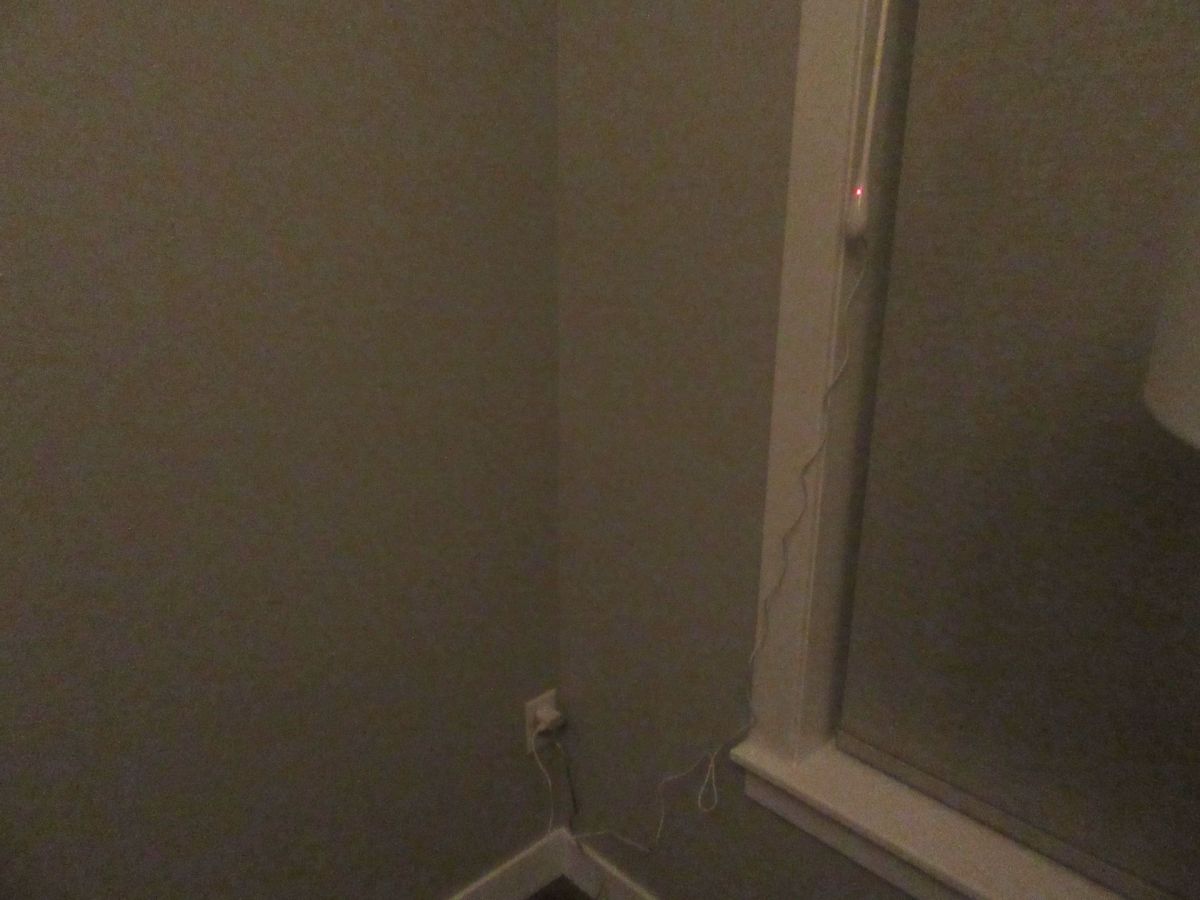
A few days ago, Sena noticed a noise in one of the sunroom window shade wand controls. She can hear noises I can’t hear, which is a good thing. She wondered if the wand battery needed recharging. We have 3 window shades like this and they came with a recharger that works the same way a cell phone recharger does. You plug the small end into the back of the wand which has control buttons for raising and lowering the shade. You plug the two-prong end into a regular electrical outlet.

We had never recharged them. The instructions said that when plugged into the charger the wand indicator light would shine red. When fully recharged, the light should turn green.

I waited one hour, then two hours. I checked the red light every few minutes or so. Finally, I quit looking and did other things. I replaced the refrigerator water filter. I purged the system. I emptied the ice bucket. I did a load of laundry. I vacuumed the carpet in the house. I exercised. I sat in mindfulness meditation. The light was still red. I checked it after 5 hours—still red. I finally just forgot about it.

About 6 hours later, I passed by the sunroom, glanced at the window and didn’t see the red light. I looked at the wand and couldn’t see the indicator light very well. I got the magnifying glass out and caught the light just right. It was green! Sena said the noise was gone.

I plugged in another window shade wand. The red light didn’t turn green until 8 hours later. I checked it several times. There was nothing to do but be patient.

I finally just did something else. I checked my blog site and was amazed to find a comment from a colleague, Dr. Ronald W. Pies, MD. He is according to a brief bio: professor emeritus of psychiatry and a lecturer on bioethics and humanities at SUNY Upstate Medical University in Syracuse, New York; a clinical professor of psychiatry at Tufts University School of Medicine in Boston, Massachusetts; and editor in chief emeritus of Psychiatric Times™ (2007-2010). He is the author of several books. A collection of his works can be found on Amazon.

I had written a short shout-out blog post about the article he and Dr. George Dawson, MD had written and published on September 26, 2022 in Psychiatric Times, “Antidepressants Do Not Work by Numbing Emotions.”

What was unusual about Dr. Pies’ comment was that it actually turned up in my spam box! If I had not patiently waited a second to read it carefully, I would have automatically trashed it. That was close.

And I would have missed the golden opportunity to tell him that I consider both him and George my friends.

About a half hour before the wand control light turned the green, our cable TV and internet went out. Wow. I had been watching a TV show rerun, probably for the 100th time, so it was no great loss. There was the usual message you get when the service is out: Please wait while this channel is being restored kind of thing. You can’t do anything but just be patient. It was getting late in the evening and I usually don’t do much on the computer then.

A little later, after Sena had gone to bed, I thought of writing this post. I didn’t want to clack on the keyboard and wake her up, so I did something I haven’t done in years. I got pen and paper out and did some long-hand writing. I had skimmed some articles on the internet before it crashed about how reading and writing on paper were better for your brain than doing those on a computer.

It felt good to write. As I did in the distant past, I scribbled in the margins, drew arrows above lines and carets to corrections and notes. It was a mess—a partly satisfying mess.

I say “partly” because it was also not quite right. I didn’t try to type it that night or even the next day. In fact, I couldn’t post anything the following morning to my blog because the internet was still out. The cable TV came back sometime during the night. Obviously, there had been a service outage.

But because the internet was still out, I called the cable company. This was another exercise in patience. I don’t know if every other cable company puts those automated telephone recordings in front of you before you can reach an actual person. They are nuts.

Cable Company Voice (CCV): Hello, please hold on while I check your account. OK, there, I found it. Am I speaking with the owner of the account or Bozo the Clown?

Me: Nobody here but us bozos.

CCV: Great, how can I help you, Bozo?

Me: Was there a power outage in my area?

CCV: OK, I see you’re having a problem with your internet connection. I can help you with that. Are you in front of your computer now or on the roof of your house dancing the merengue?

Me: In front of my computer.

CCV: Great! Please unplug your modem and wait 3 millenia; then plug it into your toaster. This will reset the incoming signal. When you have completed this step, say “Continue.”

Me: Continue.

CCV: That was a rather quick 3 millenia. Which would you prefer: Going through another dozen more trouble-shooting steps with me or speak to an agent?

Me: Speak to an agent.

I finally got to an agent whose mere presence on the line seemed to lead to an immediate, magical restoration of our internet connection. When I specifically asked her if there had been a service outage, she said that, indeed, an outage in our area had occurred. She then arranged for an account credit to ensure we would not be charged for service during the time of the outage. Patience.

This post does not look much like the hand-written one. But waiting a while to let the thing simmer probably didn’t hurt.

GFCI Outlet Torture

There’s this exercise machine commercial which has actors ask “Do you want some more?” This is the usual exhortation letting you know more pain and torture is needed if you really want to get in shape.

Well, replacing Ground Fault Circuit Interrupter (GFCI) outlets is one way you can get more torture—but only if you really want it.

I’ve replaced GFCI outlets before in our house, but yesterday I had to replace a few more. I got charley horses in places I didn’t know I had. It also took a lot more time. It took me several hours to replace just 3 of them.

You have to know something—I’m not a natural handyman. I’m also not really a trainable handyman. I’m terminally resistant to handyman stuff of any kind.

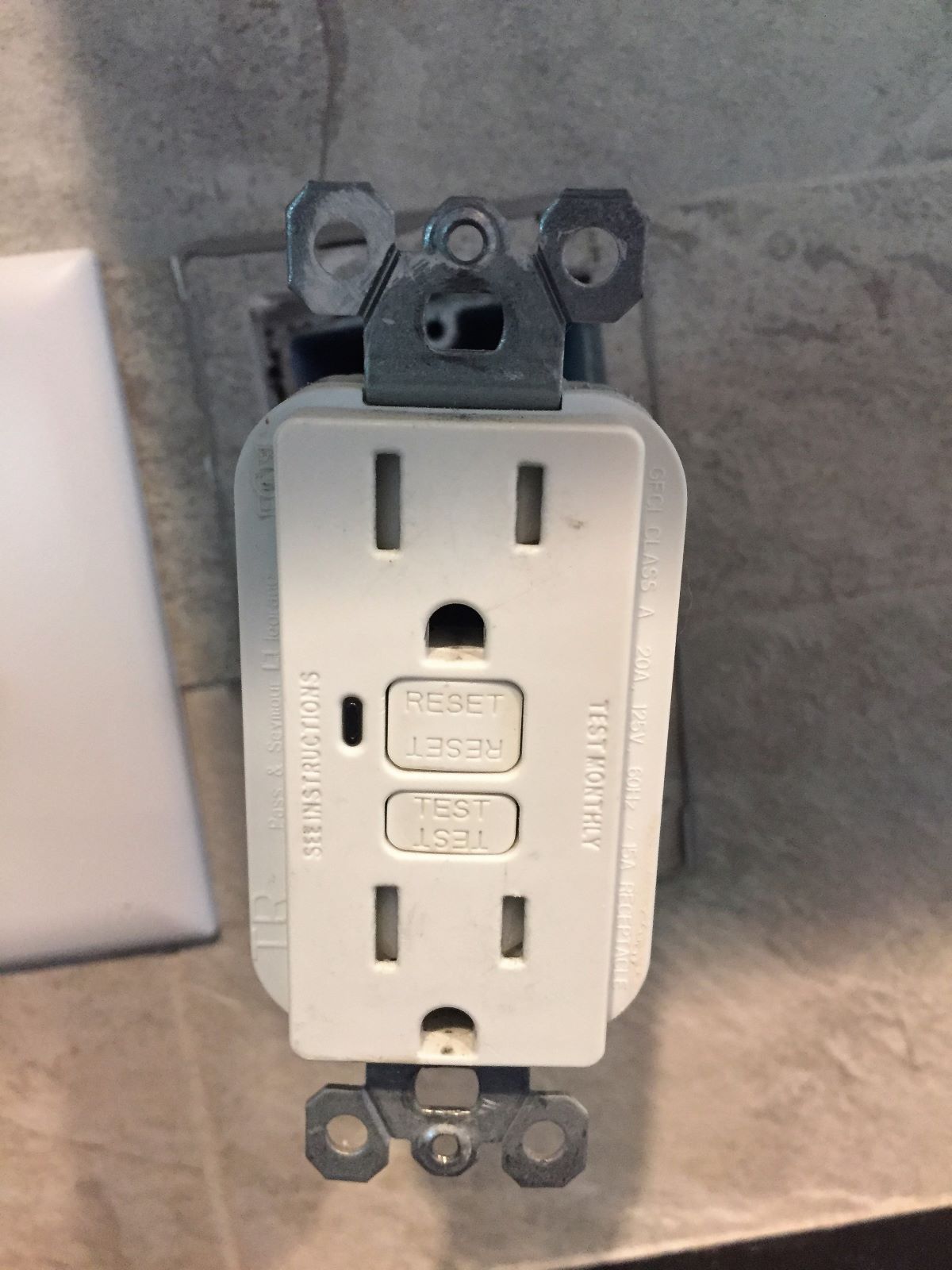
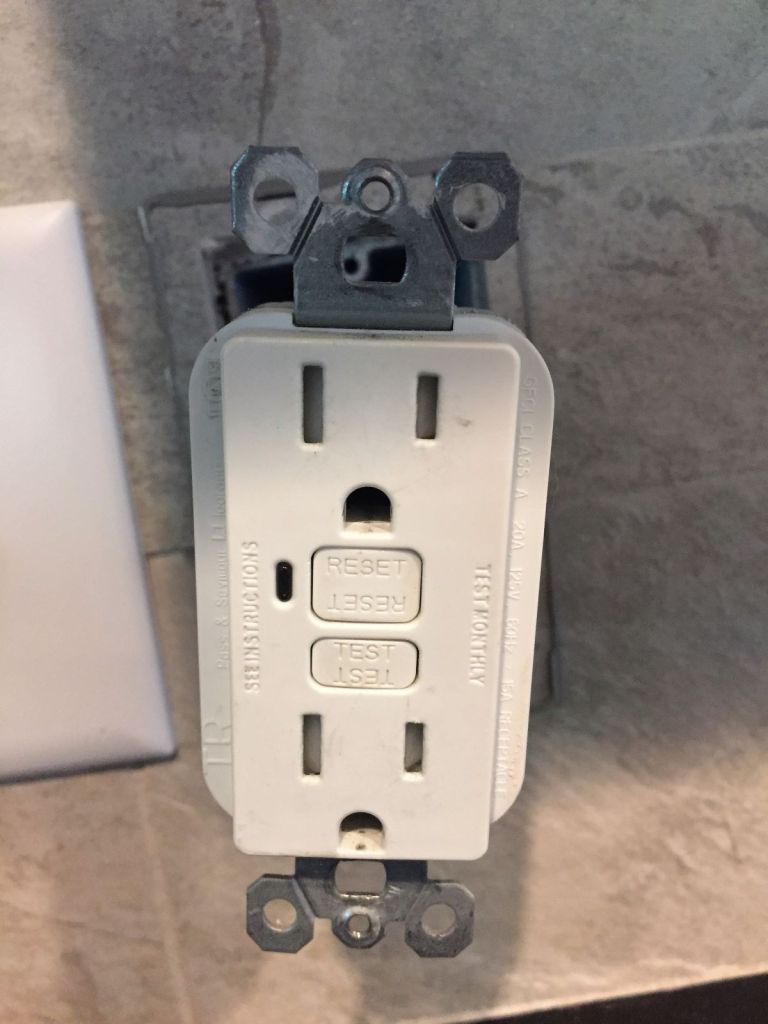
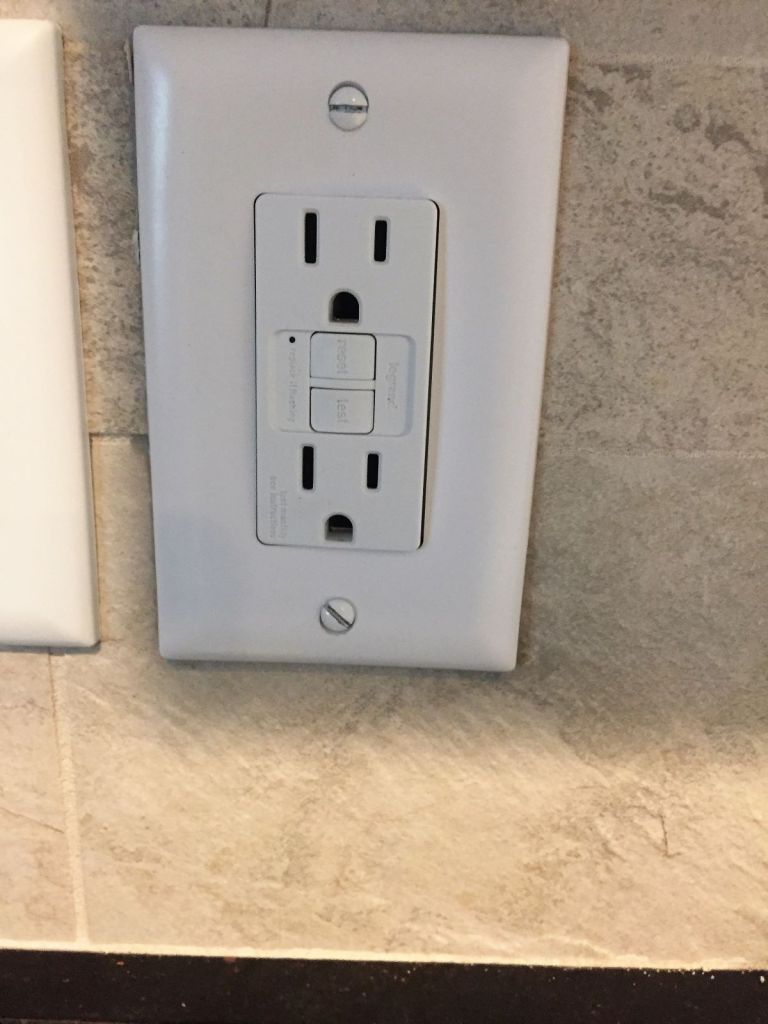
I didn’t find out the next fact I’m going to mention until after I installed the GFCIs, but since 2015, so-called Self-Test GFCIs are available—which is what Sena bought but didn’t know it. They automatically monitor the GFCI periodically. Ours self-test every 3 seconds, which sounds impressive, until you hear the rest of the story.

I found the International Association of Electrical Inspectors (IAEI) blog post which has an interesting post about Self-Test GFCIs. First, they describe why the Self-Test GFCI was made, which is that consumers rarely, if ever, tested them once a month as recommended to ensure they work.

New requirements now ensure that power denial to the GFCI and any downstream connected devices (which is what the term LOAD refers to on the GFCI outlet) when the GFCI wears out. But there’s a special exception for the self-test:

The general requirement in the event of a test failure during the auto monitoring also requires “power denial”. However, there is a special exception for two specific failure modes that allows an audible or visual indication as an alternative. These failure modes open the trip solenoid and open the solenoid driver component and make it impossible for the device to trip with these components open. The improved functionality of the GFCI resulting from the auto monitoring will provide enhanced protection for the consumer against electrical shock hazards.

The auto monitoring or self-test feature periodically tests the electronics from the sensing toroid to the trip solenoid driver and will pick up a failure of the majority of components in the GFCI.  It cannot, however, test the trip solenoid driver, the trip solenoid itself or the contacts to see if they are welded. Testing those components can only be done by actually making the GFCI trip. It is not practical to have GFCIs randomly tripping off during self-test cycles. So, the manual test button is still provided and it should still be used periodically as recommended. The presence of the self-test function is not allowed to affect the tripping of the device within the specified trip time requirements if an actual ground fault occurs.

OK, two things to notice here. One is that if you have the self-test model which has a visual indicator (the red test light). Our GFCI indicator light would flash for this. That means you can’t plug a big night light in it, which would block your view of the test light.

The other thing to note is that you still have to periodically manually check it—even if it automatically self-tests every 3 seconds. That’s because if the GFCI actually did self-test the real-life relevant components, your hair dryer, radio, lava light or whatever would stop working at awkward moments.

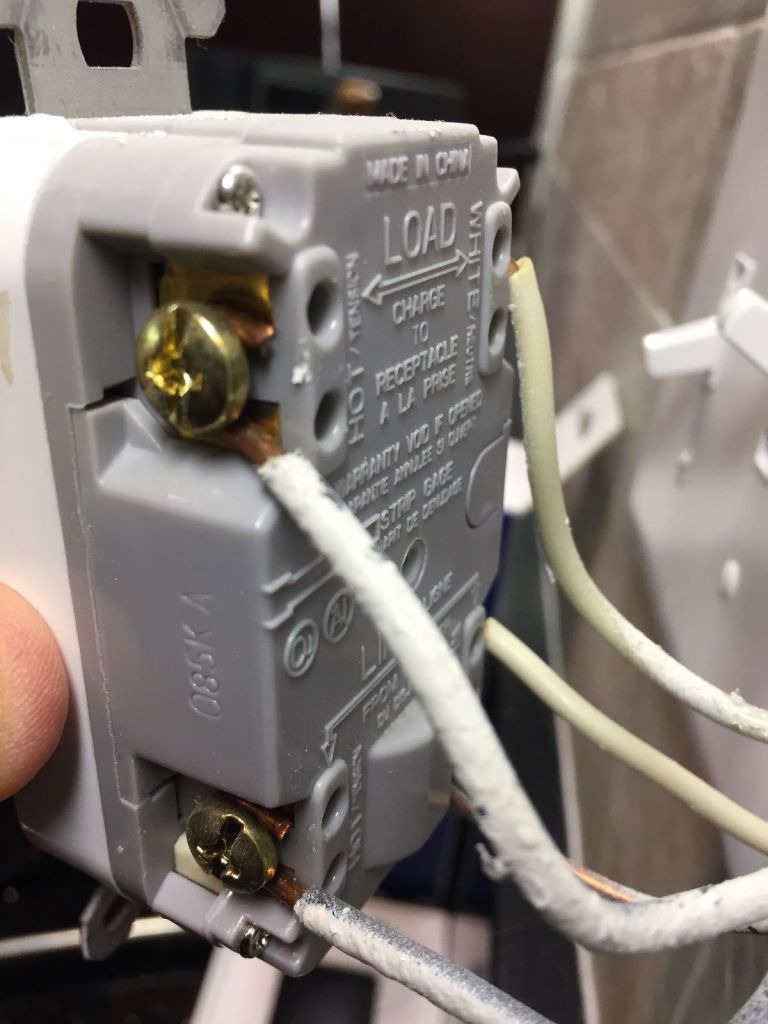
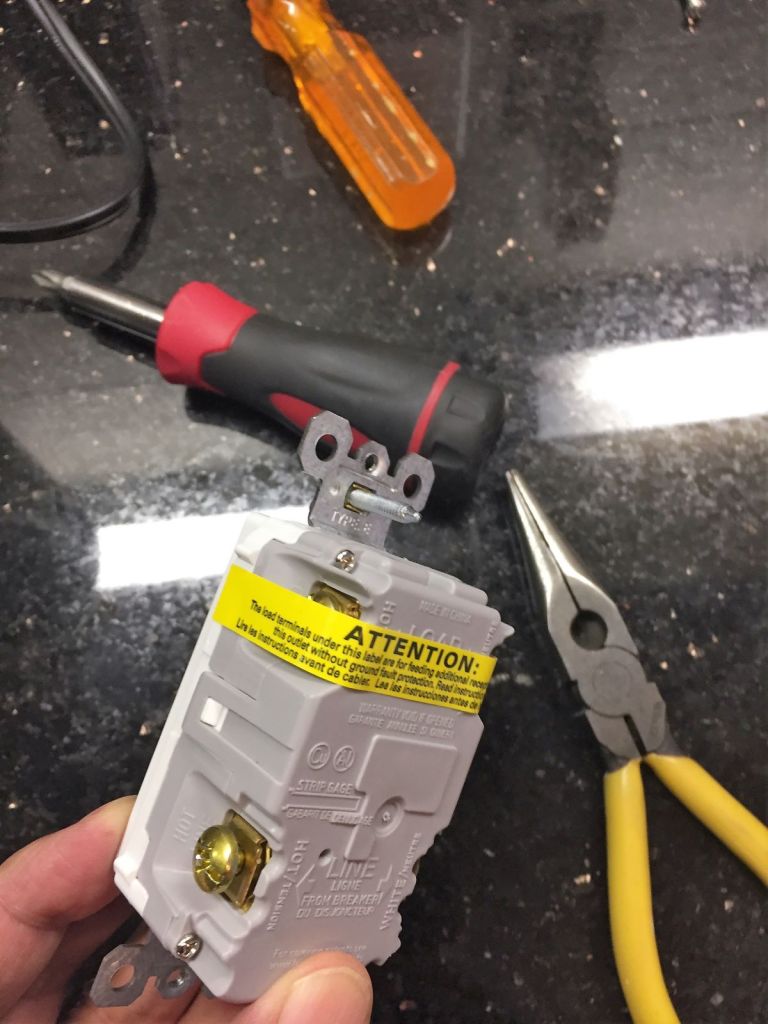
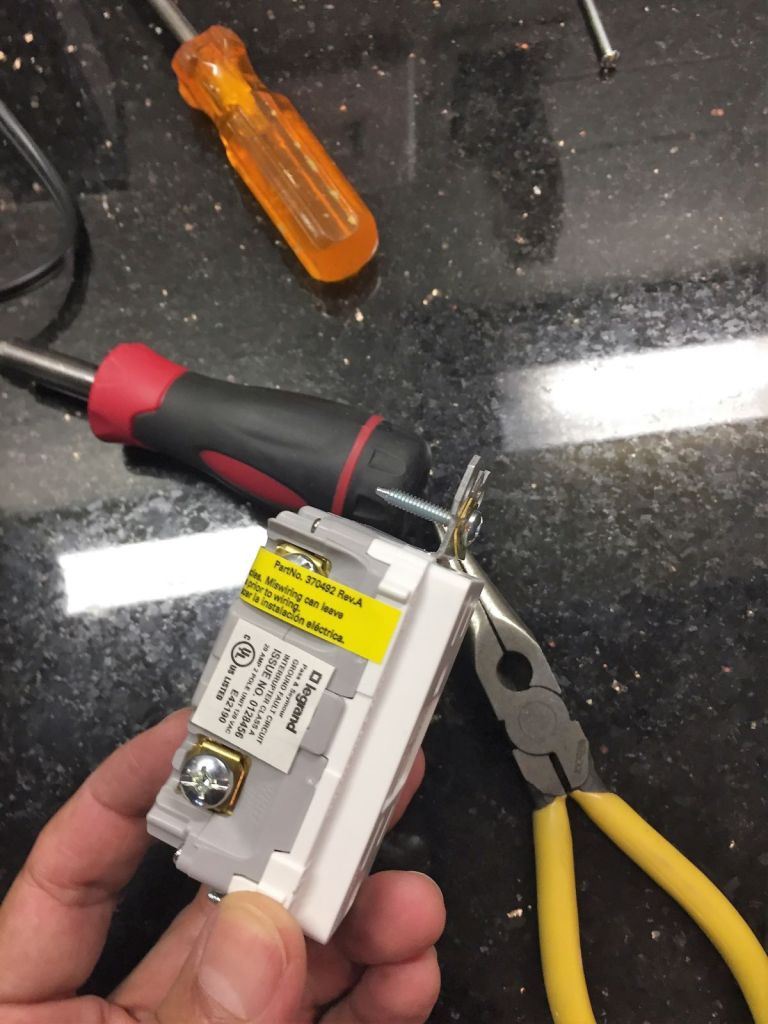
Anyway, I had a heck of a time getting the GFCI wires out from under the terminals. The procedure is not markedly different from changing an ordinary electrical outlet. You just have to make sure you get the right wires to the right terminals for LINE (in from the circuit breaker) and LOAD (out to the lava light). Changes in the design and explicit instructions are included with the product.

The hot wires are usually black (which go to the brass terminals), the white wires are usually white (which go to the silver terminals), and the ground wire is usually an orange unjacketed cooper wire. There can be as many as 4-6 wires.

Should an ordinary homeowner or an electrician replace a GFCI outlet? In fact, the included instruction sheet starts off with just this question, “Should you install it?” And yes, the word “you” is underlined. You only see it after you bought the product in the hardware store and open the package.

This does not bolster my confidence, which is already low to nonexistent.

The instructions say that you should make sure that you:

  • Understand basic wiring principles and techniques.
  • Can interpret wiring diagrams.
  • Have circuit wiring experience.
  • Are prepared to take a few minutes to test your work, making sure that you have wired the GFCI receptacle correctly.
  • Have updated your life insurance policy and your last will and testament (just kidding).

I’m not going to mention that the first 4 bullet points don’t count for ordinary consumers who are trying to save the cost of hiring an electrician to do the job for you. According to the Costimates website, this can range from $140-$310. The cost of an intensive care unit admission, funeral, etc., don’t appear anywhere on this site.

But the cost of a GFCI unit is about $20. Any questions?

I kept the instructions on the counter. I made sure I had enough lighting. We have under cabinet lighting on a separate circuit from the outlets. I shut off the relevant circuit breakers.

THESE ARE NOT INSTRUCTIONS. THIS ENTIRE POST IS AN ANECDOTE. YOU SHOULD FOLLOW THE INSTRUCTIONS INCLUDED IN THE PACKAGE OR HAVE A CUP OF COFFEE WHILE WATCHING THE ELECTRICIAN DO THE WORK (HAVE YOUR CHECKBOOK OR CREDIT CARD HANDY).

When I took the face plate off and pulled out the receptacle, I notice that most of the wires had a white coating, which a lot of wires seem to have. It’s uneven and it might be drywall spray? I can always tell which wires are white, black and ground. The ground wire is on the bottom of the receptacle, secured with a green terminal.

The hardest part was freeing the old copper posts from under the terminals and getting the news ones on. I twisted myself into a pretzel as I wrestled with the job. I was right next to the toggle switch for the overhead light and jumped every time I accidentally switched it off—which was several times.  I could have done without intermittent sudden flashes.

I followed the instructions closely, especially for testing my work. They worked. I started the job of replacing just 3 receptables about mid-morning. I finished at 2:00 PM. The average estimated time for this chore is about 15 minutes per GFCI outlet. I was sore in places I didn’t know I had.

But I saved hundreds of dollars doing it myself. Would I do it again?

Give me a little time to think it over. And remind me; how often should I manually test these things which automatically test themselves every 3 seconds?


Update on Attic Weirdness

This is an update on the attic, the hatch for which is in our garage ceiling. We haven’t heard any knocking noises lately.

Yesterday, the HVAC guys came to reattach the duct which somehow separated from the roof vent. They showed up at 7:00 a.m. and were pretty much done in 20 minutes. They charged close to $300, which Sena is still complaining about.

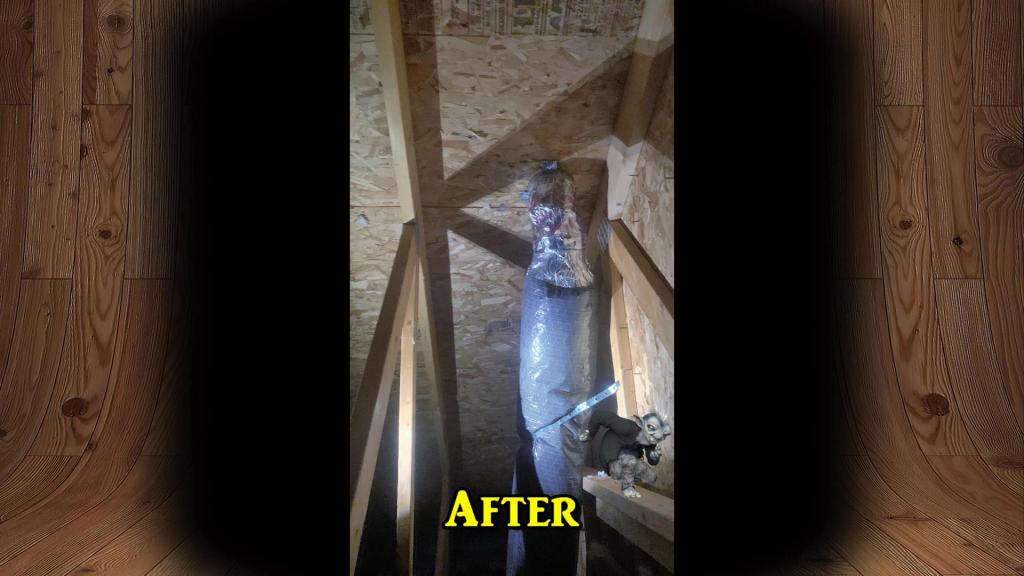
Now we’re wondering how the two repairmen fixed it without dragging another tall ladder into the attic. The picture suggests that reattaching the duct and the roof vent involved either levitation or aliens—possibly both.

The roof vent looks like it’s above the floor of the attic by about 12 feet. We couldn’t see exactly how it was done because we didn’t climb up the repairmen’s ladder. The view was limited by angle of the hatchway and the darkness.

I checked the before and after pictures (the after picture was taken by one of the repairmen) of the duct repair job. Sometimes paranormal images take a while to develop, a phenomenon well described by goofball UFO researchers high on intergalactic substances dropped by intoxicated aliens careening in out-of-control, souped up space ships blundering through one of the many wormhole vortices commonly located near fast food joints.

Sure enough, aliens were clearly involved in vandalizing the duct which they were too drunk to realize is not another wormhole but the connection between the kitchen exhaust hood and the roof vent. They looked dazed and confused.

After the repair, it sure looks like an alien was involved in climbing up the wall studs to reattach the high end of the duct. He’s obviously sneaking back down the wall. It looks like levitation is the key.

The big question is how would this creature know the city code covering proper ventilation duct installation? And another question is how did it get a job with the HVAC company?

The HVAC guys were astounded by how many nails were in the walls in the attic. They’re clearly visible. Somebody went wild with a nail gun. I’m not saying it’s aliens—but it’s aliens.

They also found a walkie talkie in the attic. We’ve never owned walkie talkies. I don’t know where it came from, but I’m guessing aliens were using them to phone home. Could that account for the knocking noises? Maybe they communicate by knocking through the walkie talkies, just to throw us off. I think they got the idea from Tony Orlando and Dawn: “Knock 3 times on the ceiling if you’re homesick….”

These and other questions await further analysis by goofball UFO experts. You’re welcome.