

In observance of May being Mental Health Month, this is one of my Dirty Dozen lectures. It’s on the elements that are shared among some of the important psychotherapy methods.
It’s in WordPress shortcode. A few pointers: click in the lower right hand corner of the slide if you want to view the slides full size. Use the directional arrows on your keyboard to click through the slides. You can also just use the arrow handles on the slides if you don’t want to see them full size.
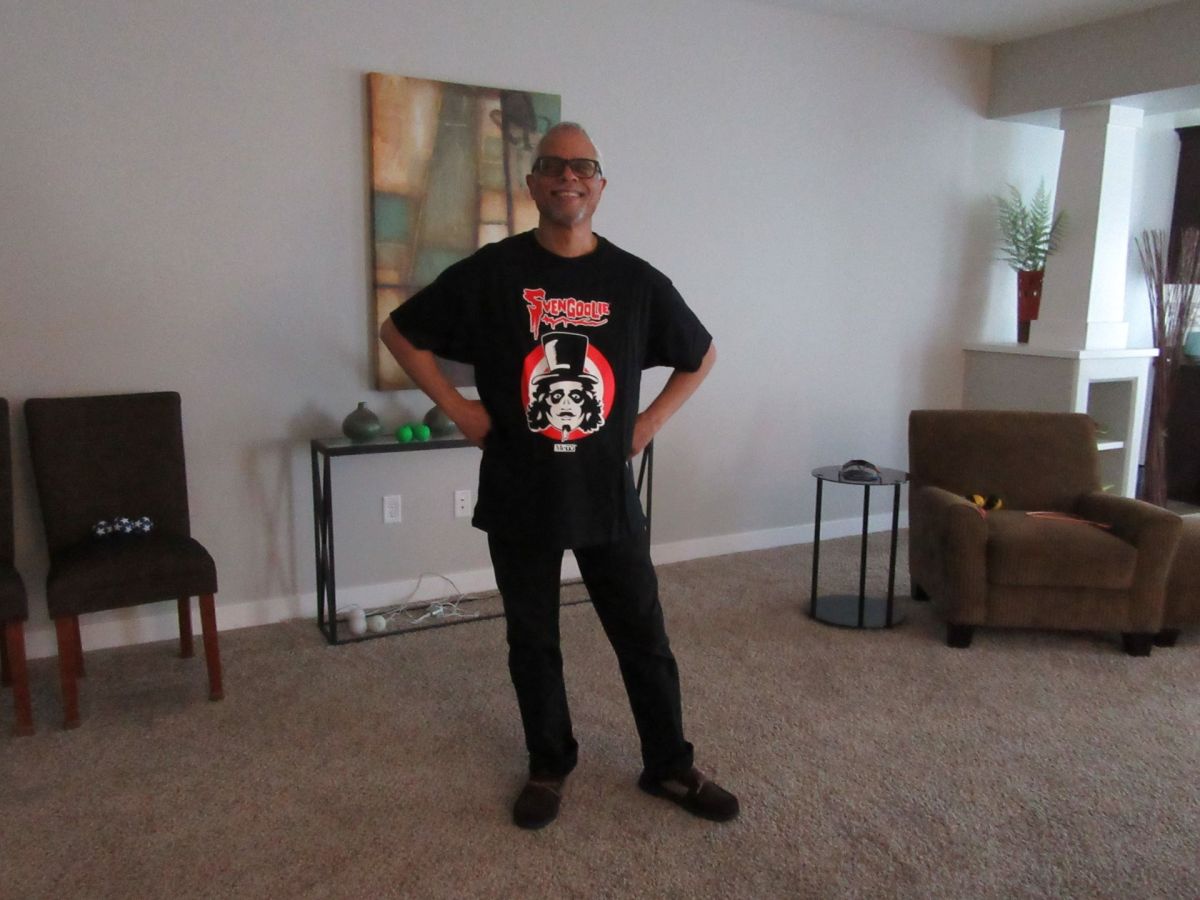
This slideshow could not be started. Try refreshing the page or viewing it in another browser. I got an update to the Big Mo Pod Show on Iowa’s only jazz and blues radio station KCCK 88.3 in Cedar Rapids (translator 106.9 in Iowa City). Last Friday on the Big Mo Blues Show, host John Heim (aka Big Mo) played a lot of tunes, which he gets quizzed about a day or so later on the Big Mo Pod Show. He gets quizzed about the name of that tune, the artist, and why he picked that tune for the show. He got them all except for one; he said “East Coast Blues” instead of “West Coast Blues” as the song by Blind Blake. He was almost perfect. I was listening that night, but the Seasick Steve number I missed. It’s misspelled on the KCCK website on May 5, 2024 as “Internet Coyboys,” but it’s “Internet Cowboys.” Maybe by the time you read this, it’ll be corrected. It’s all about spending too much time on the internet. We need to disconnect. I’m sort of a fan of Seasick Steve, ever since I heard him do “You Can’t Teach an Old Dog New Tricks.” It means something special to old dogs like me. We watched the Svengoolie movie, The Land That Time Forgot last Saturday night. Doug McClure stars as Bowen Tyler. He and others passengers of a ship are taken prisoner by the crew of a German U-Boat (World War I era) which torpedoed the ship. Officers of the torpedoed ship and Tyler overpower the U-Boat crew. They all end up on the island of Caprona somewhere in the South Atlantic. The island is crawling with thunder lizards of every kind including diplodocus. The dinosaurs are evolving alongside primitive humans who evolve by migrating north on the island “…instead of by natural selection” according to Wikipedia). Various humans both primitive and modern are casually slain and eaten and the rapidly evolving primitive humans pick off the moderns at random. Only one primitive doesn’t seem to evolve beyond being a goofy guy named Ahm, who has trouble operating a handsaw and who refers to himself in the third person: “Ahm out of breath!” “Ahm goin’ back down To Kansas soon Bring back the second cousin Little Johnny Coocheroo Ahm a man Spelled M-A-N Man Ohoh, ah-oh…” and so Ahm and so forth. Ahm is very loyal to the moderns, even after he supposedly evolves to the status of the Galoo, who hate the moderns and try to kill them at every opportunity. But Ahm saves Tyler from being snatched up by a pterodactyl—sacrificing his own life, yelling “Ahm a loser and Ahm not what Ahm appear to be,” waving his arms and legs helplessly in the pterodactyl’s bill as it flies off into the great blue yonder. I couldn’t remember what actor played the evil German who ultimately was responsible for getting the U-Boat destroyed at the end during a volcanic catastrophe. But he was the same guy who was the 4th actor to play the role of Doctor Who’s major archenemy, The Master. Svengoolie revealed that the actor’s name was Anthony Ainley and he played Major Dietz in The Land That Time Forgot. The reason I bring that up is not just because he looked vaguely familiar to me because I used to watch Doctor Who. I searched the web for his name and the first answer that appeared at the top of the page was the Artificial Intelligence, now called Gemini, (not Google Assistant as Gemini claims), the artist formerly known as Bard), which is crazy wrong: “Doug McClure, an actor known for his cowboy roles, plays one of Dr. Who’s greatest enemies in the 1974 film The Land That Time Forgot.” This is why you should be skeptical of almost everything AI says. How evolution is affected by migratory patterns is not well explicated in The Land That Time Forgot although it probably does play a role. When somebody invents a time machine, we could just go back and ask Darwin. I want to gas; I mean talk about copyright as it relates to consultation psychiatry or telling dad jokes. By the way, those aren’t the same. I used to teach medical students and residents how to do certain quick bedside cognitive tests for delirium and dementia. Over the years the instructions about how to administer them (and the restrictions over using them at all) have changed slightly. The major point to make is that they have been copyrighted, which usually means you have to pay to play. One of them, the Mini Cog, despite being copyrighted, does not require you to pay for the privilege of using it. The video below shows part of it. I didn’t do a comedy bit about the short term recall of 3 objects. The video also flickers when I show the delirium order set; just pause it to stop the flickering. There used to be a cognitive assessment called the Sweet 16, which started off being non-copyrighted, but then became copyrighted. At first the Sweet 16 mysteriously just disappeared from the internet. You can now download it from the internet, but it’s clearly marked as copyrighted. The reason the Sweet 16 became unavailable is because a company called Psychological Assessments Resource (PAR) acquired the copyright and then started enforcing it. I found out about this when I could not obtain the PAR version of a cognitive assessment very similar to the Sweet 16 called the Mini Mental State Exam (MMSE) unless I forked over at least $100. I then started teaching trainees how to use the Montreal Cognitive Assessment (MoCA) because it was free to use without any strings attached. Then it also was copyrighted although you can use it under certain conditions. Moving right along to telling dad jokes, I found out that dad jokes (and indeed, any joke) can be copyrighted, at least in theory. In fact, it’s hard to enforce the copyright on jokes, even when you can prove originality. Here’s an example of a dad joke I think I made up: What do you get when you cross marijuana with a Mexican jumping bean? A grasshopper. Note: this joke may become more important now that the DEA, according to news agencies, plans to reclassify marijuana from Schedule I to III in the near future. Sena thought it was funny (the joke, not the DEA), which probably means it’s not, technically, a dad joke. That’s according to the authority about dad jokes, Dad-joke University of Humour, (DUH). I’m far from a joke teller at all, as Sena (and anyone else who knows me) would assert. On the other hand, I did graduate from DUH and have a diploma to prove it. You can now give me money. Furthermore, I also investigated whether something called anti-jokes can be copyrighted. According to the internet, the answer seems to be no. Here’s my attempt of the anti-joke: Knock, knock. Who’s there? The doorbell salesman. See what I did there? In case you didn’t know, experts say that Knock-Knock jokes are among the hardest to copyright for reasons I suggest you look up later. If you also frame the Knock-Knock joke as an anti-joke (stay with me here), the literalness and mundanity of the so-called punch line makes it virtually impossible to copyright. And, like the dad joke, it’s usually not funny—although there can be exceptions. Just for the sake of incompleteness, I’ll mention the concept of copyleft, which is not the same as open-source. Although this is usually applicable to computer software, you could broaden it to include dad jokes—I think. Copyleft could mean you can use or modify a dad joke (or anti-joke), spread it freely at parties and whatnot as long as it’s bound by some condition. This includes paying me (no personal checks, please). What pet do inventors have a love-hate relationship with? A copycat. You’re welcome. Last Saturday we watched the movie Trilogy of Terror on the Svengoolie show. Well, we tried anyway. There were a lot of interruptions from severe weather warnings. We didn’t mind them because you ignore them at your peril. It’s hard to forget the 2020 derecho in Iowa, which affected a lot of Iowans, including us. Trilogy of Terror had some psychiatric aspects to it that reminded me how Hollywood frequently gets it wrong when portraying them in films—but sometimes hits the nail on the head. Although we missed parts of the first and second parts of the movie, it wasn’t difficult to figure out the psychological angle. Both “Julie” and “Millicent and Therese” made me think of antisocial personality disorder (ASPD). The male college graduate student was a pretty good example of a predatory guy lacking any conscience and feeling no remorse for his bad behavior against his apparently meek and defenseless teacher, Julie. But then the tables were turned and it was Julie who was actually the convincing, coldly calculating and remorseless psychopathic serial killer. She kept a scrapbook of the newspaper stories about her many victims. One of my colleagues wrote the book about ASPD. Dr. Donald Black, MD, is the author of Bad Boys, Bad Men: Confronting Antisocial Personality Disorder (Sociopathy). In it he recounts the story of serial killer John Gacy. He was diagnosed with ASPD at the University of Iowa. He collected a great deal of data about antisocial men and also acknowledges that women can be diagnosed with ASPD. He has also co-edited and published the Textbook of Antisocial Personality Disorder. The “Millicent and Therese” part of the movie displayed how a woman can be diagnosed with ASPD. This was the character Therese—who was also Millicent, a very strait-laced alter personality, which makes this also a case of what you could call dissociative identity disorder (DID), which may be related to severe trauma. This used to be called multiple personality disorder. What was interesting about this part of the movie was that both identities were being managed somehow by a family physician, not a psychiatrist—which is not at all plausible. The last part of Trilogy of Terror is “Amelia,” in which Amelia buys a Zuni fetish doll (named “He Who Kills”) which she intends to give to her boyfriend. However, she’s in a hostile, dependent relationship with her mother who controls her and interferes with every aspect of her life. Of course, the doll comes to life and tries to kill her. The struggle between Amelia and the doll makes me think about her internal struggle with angry and probably murderous feelings about her controlling mother. Amelia finally internalizes the doll’s rage (actually her own) when he emerges from the oven where she shoved him in an apparently futile attempt to burn him to a crisp. What it looks like is that she inhaled the smoke, finally owning her own rage by internalizing the doll’s smoky remains. This transforms her into a vengeful killer (now grinning with the sharp teeth of the doll) who calls her mother to invite her over to her apartment with the obvious plan to cut her to pieces with a large knife. This is probably not a movie for kids or sensitive adults, which Svengoolie acknowledges several times during the show. This is why I like the segment with Kerwyn, the dad joke telling chicken with teeth who is voiced by Rich Koz, who also plays Svengoolie. Usually during that segment he tells a series of jokes, repeating the lines a couple of times, seemingly in an effort to teach you how to tell dad jokes. There’s also a Kerwyn joke of the week event, in which he tells a joke submitted by a fan. The joke video takes a few seconds to load, so be patient.Big Mo Pod Show 006 on KCCK Radio Iowa!
Ahm a Fan of the Svengoolie Movie The Land That Time Forgot
Thoughts on Copyright Issues Related to Consultation Psychiatry and Dad Jokes

Svengoolie Movie Trilogy of Terror!










 Go Retire Psychiatrist