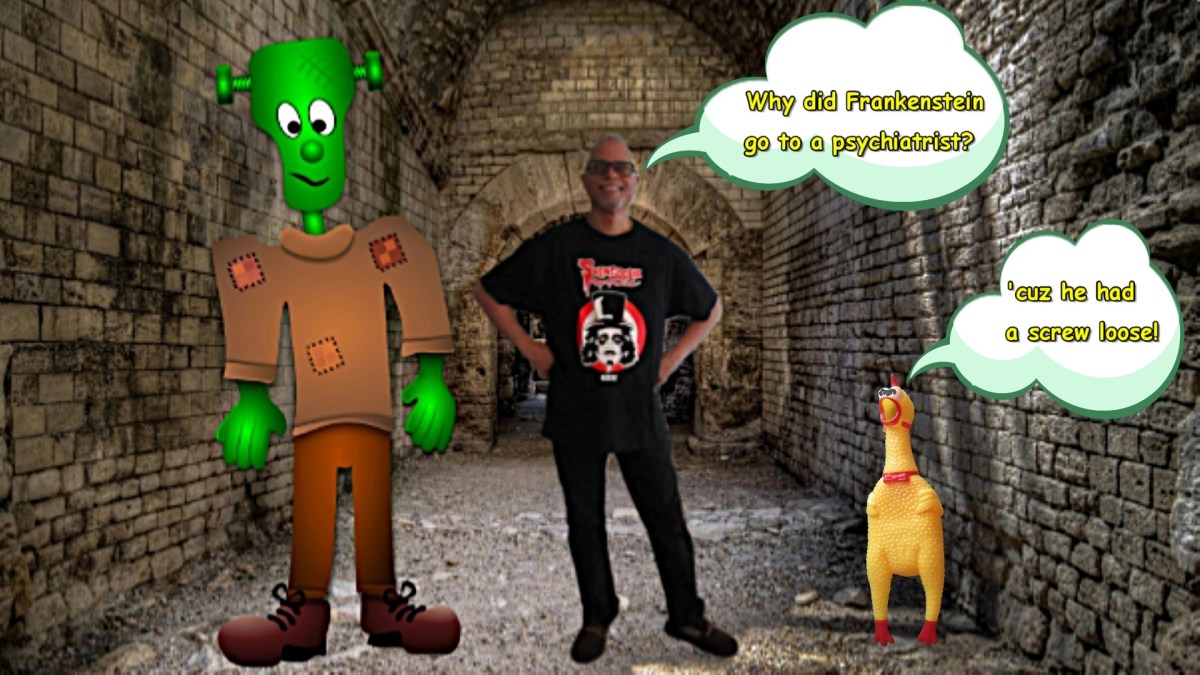
Svengoolie Show Upcoming Movie: “The Curse of Frankenstein”!

Svengoolie Show Intro: “Calling all stations, clear the air lanes, clear all air lanes for the big broadcast!”

The Svengoolie show movie coming up this Saturday is Hammer’s 1957 production of “The Curse of Frankenstein”! Guess what? This time, Christopher Lee plays Frankenstein’s monster and—he has no lines at all. The movie is loosely based on Mary Wollstonecraft Shelley’s classic novel, “Frankenstein; or The Modern Prometheus.”

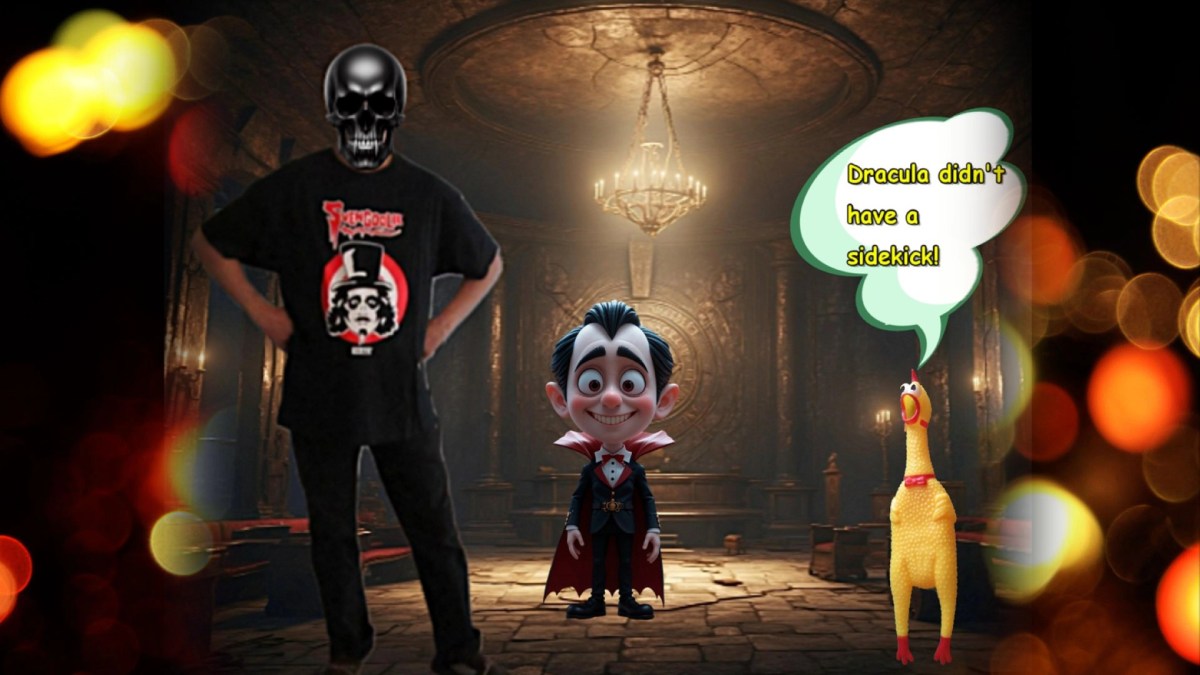
There’s lots of blood and gore, so wear goggles because the film was shot in SpatterVision. Don’t look for screws on the monster’s neck. I guess they were loose and fell off.

Iowa State Fair Cribbage Tournament and More!

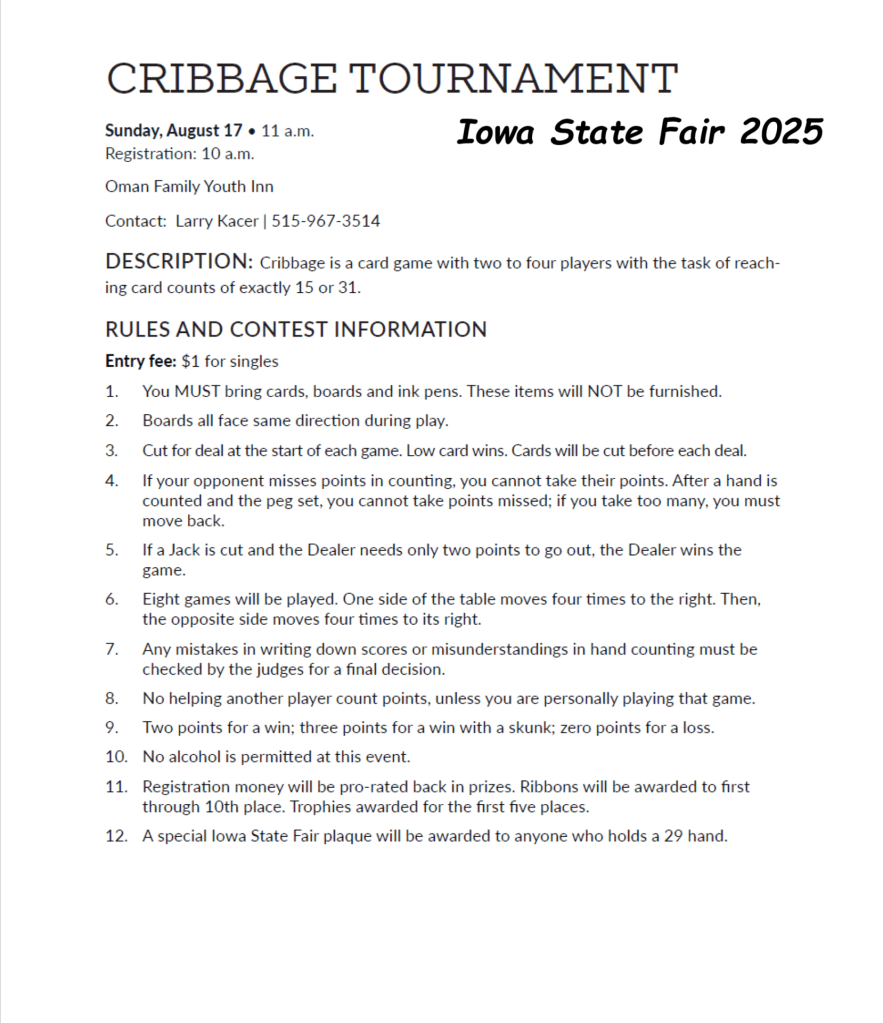
I just have a few remarks about the Iowa State Fair Cribbage Tournament which took place today. I don’t have the results and it could be a week before anything is announced about the winner. Here are the rules:

Note the $1 entry fee and you have to bring your own cribbage board, cards, and pen. In the past there have been as many as 200 entrants (that was in 2015). We’ve never entered.

I also wanted to let you know that Sena has started a new cribbage tradition. Whenever she wants to play cribbage, she just puts the deck of cards in our automatic shuffler and makes a racket.

Svengoolie Show: “Horror of Dracula” Has a Funny Side!

Well, last night I watched Hammer Films 1958 production of “Horror of Dracula” and because we had some bumpy thunderstorm weather again in eastern Iowa, the movie had to share TV screen space with the weather report. No matter, it didn’t diminish the total creepy and comedic effect of the film. You heard right; I thought parts of it were comical. I know, Christopher Lee had only 7 minutes of screen time and none of it was humorous.

Now I’m sure you believe I hallucinated the comedy bits, but I can provide links to them to prove it. I never ask Artificial Intelligence (AI) anything, but it pipes up without prompting because I can’t get rid of it. AI denied there was any humor in it at first, but when I put the question indirectly by asking about one of the actors, AI had a different answer.

When I searched using the term “George Benson played what part in Horror of Dracula?” AI said: “In the 1958 film Horror of Dracula, George Benson played the role of a Frontier Official. He appears in scenes that border on slapstick comedy where his authority is undermined.”

I think this is interesting because I didn’t find any other web sites that remarked on humorous elements in the film.

The actor, George Benson, plays a coughing Frontier Official who Dr. Van Helsing (Peter Cushing) and Arthur Holmwood (Michael Gough) are questioning in an attempt to track the whereabouts of Dracula by pressuring the official to reveal where Dracula’s coffin was sent. The official coughs his way through various excuses and expressions of the need to obey the laws and so on. Holmwood makes a good show of dramatically waving money under the official’s nose, eventually succeeding by bribery to get the official’s cooperation.

There’s also some near-slapstick after Dracula crashes through the border barrier in his coach while fleeing from Holmwood and Van Helsing. The coughing Frontier Official has to fix the border crossing barrier with rope and a hammer. Right after that he’s frustrated again when Van Helsing and Holmwood crash through the barrier again.

These occur at 59:17 min and 1:16:13 min, respectively on the Internet Archive film I used for reference.

And there’s also an odd comedy bit with the undertaker at 1:03:34 min. J. Marx the undertaker and mortician (Miles Malleson) actually tells a humorous anecdote and slaps Van Helsing on the chest as he laughs at his own lame joke in the context of trying to find Dracula’s coffin. He can’t find it because it’s missing.

I think the humor helps offset the grim and creepy aspects of the film. Dracula (Christopher Lee) doesn’t have any lines after about the first half hour of the movie. He bares his fangs, drools blood, and ogles women while the women ogle back. There are references to addiction and seduction in the vampire’s motivations and the victims’ collusion with him. But eternal life has its drawbacks—skulking in the dark, fear of the light, and being unable to articulate dramatic lines because oversize canine teeth get in the way, just to name a few.

I think the movie might be too intense for sensitive viewers. Otherwise, I thought it was pretty good.

Shrilling Chicken Rating 4/5

Big Mo Pod Show: “Spiritual IV”

I’m trying to figure out what the meaning of the title is of this week’s Big Mo Pod Show. It’s “Spiritual IV” and I looked at all of his past pod shows looking for Spiritual I-III. I can’t find them.

Big Mo Pod Show 085 – “California Bluesin” KCCK's Big Mo Pod Show

After a short break during the Thanksgiving holiday your hosts are back at it again with another episode! This week features the usual mix of blues eras you’ve come to expect along with a few Californian artists, tune in to see which ones! Songs featured in the episode: Solomon Hicks – “Further On Up The … Continue reading
  1. Big Mo Pod Show 085 – “California Bluesin”
  2. Big Mo Pod Show 084 – “Garage Blues”
  3. Big Mo Pod Show 083 – “Legal Pirate radio”
  4. Big Mo Pod Show 082 – “Tribute”
  5. Big Mo Pod Show 081 – “Cheers To Kevin”

The other thing I noticed about the pod show is that the theme of many of last night’s songs is less about spirituality and more about carnality and brutality. Now, that doesn’t mean I’m preaching. I just wonder if the title “Spiritual IV” is ironic.

Take the song “Talk to Me Baby” by Elmore James, or “44 Blues” by Little Arthur Duncan. One song that didn’t make the pod show list was “The Circus is Still in Town (The Monkey Song)” by Rick Estrin and the Nightcats. And Buddy Guy sang his new song “Been There Done That,” meaning he’s been to hell and back. He’s 89 years old and still does gritty blues. The music often seems only about sex, violence and drug addiction.

And the discussion gravitated to guns, specifically the .44 caliber handgun. I never knew Muddy Waters carried a gun. Hey, even Big Mo owns a .44. I didn’t make that up; he said so. It weighs about 7 pounds, by the way.

This morning’s pod show is a reminder that a lot of blues music sounds more earthy than spiritual. However, you can usually find at least one spiritual note letting in a little ray of hope. One of the songs featured in the pod show is Sugaray Rayford’s “How the Other Half Lives.” One line seems to offset the misery and injustice in the rest of the lyrics: “Take it slow, find the flow.”

I’m going to put my nickel down on one of last night’s songs that didn’t make to to the pod show list and it’s “Don’t Wanna Go Home” by Eric Gales, featuring Joe Bonamassa. It’s not spiritual. It’s about having a good time—but notice, he paid all of his bills first.

In Memory of Leonard Tow, Founder of the Tow Foundation and Humanism in Medicine

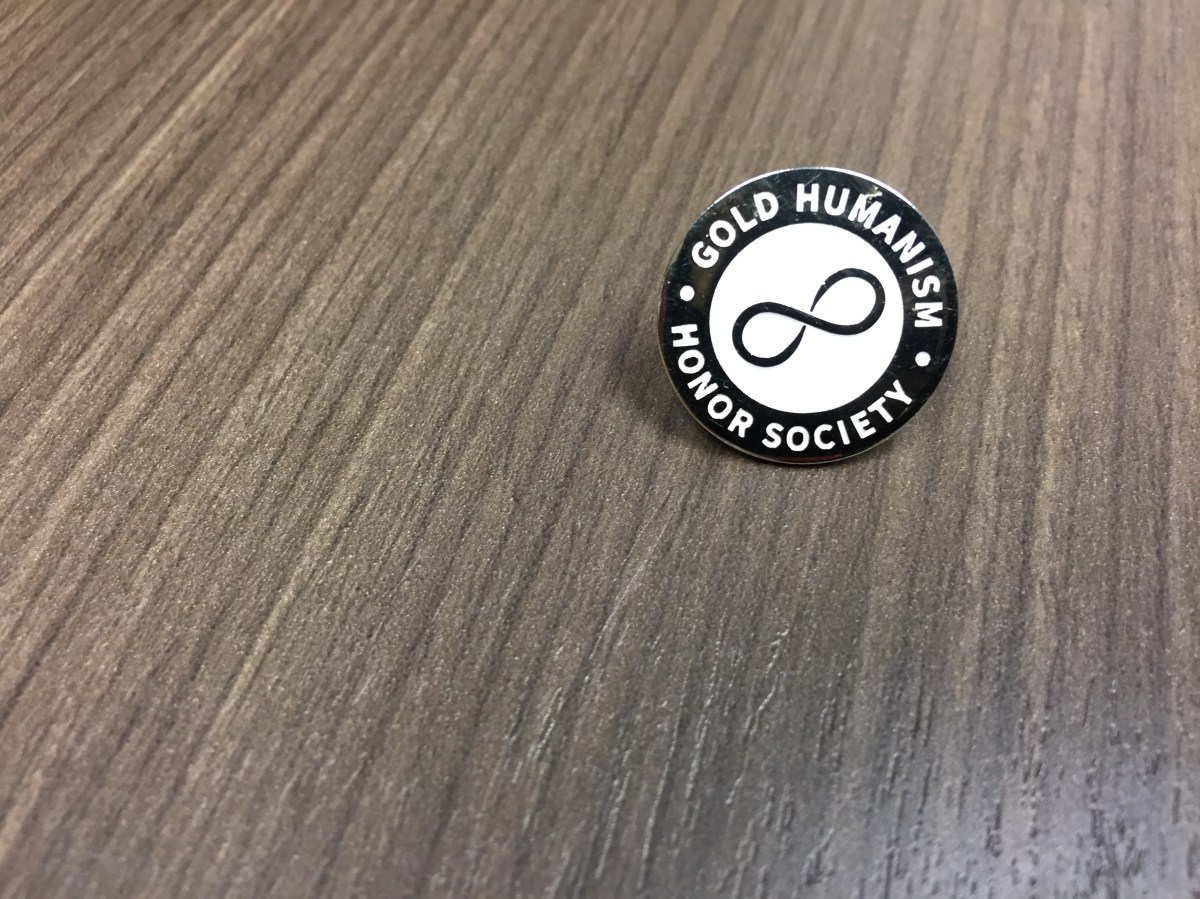
I just found out that Leonard Tow died on August 10, 2025. In humility, I express my gratitude and respect for his creation of the Tow Foundation, a big part of that being the Humanism in Medicine Award, of which I am one of the many recipients over the years. I hope this great tradition goes on forever, a reminder to doctors, patients, and families of the great rewards and greater responsibilities in medicine.

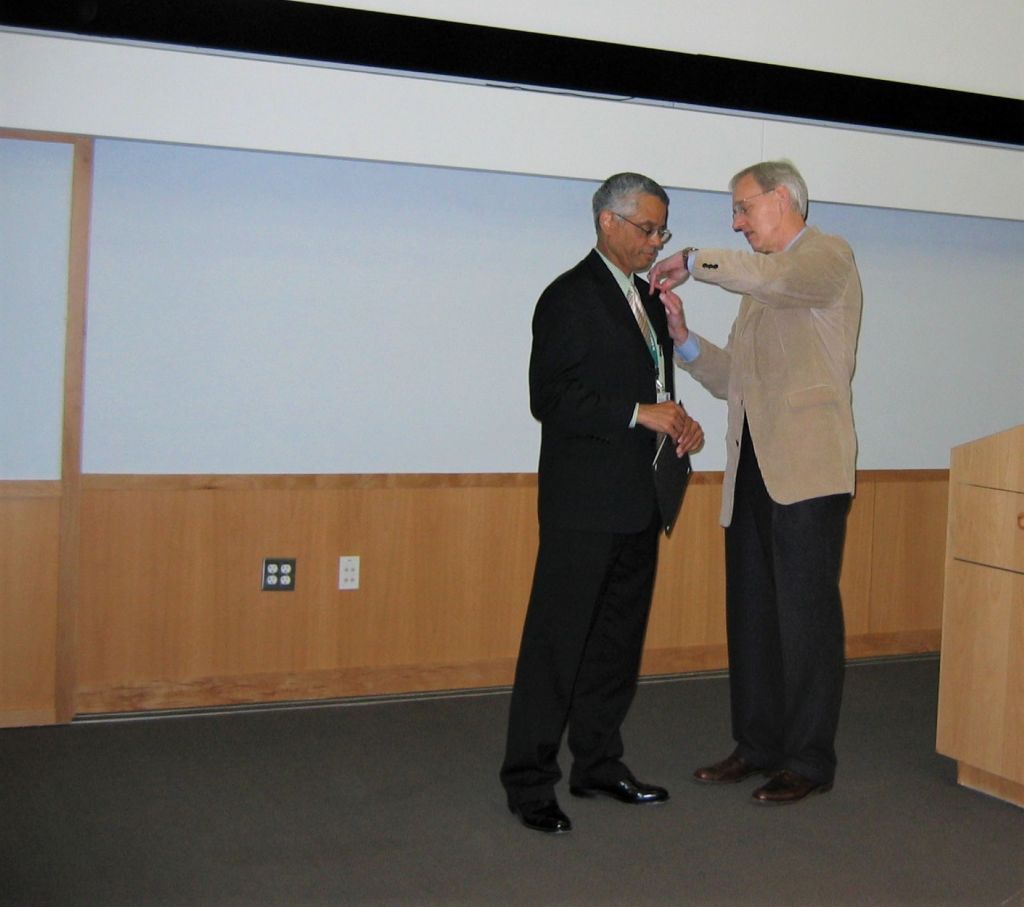
I thank Dr. Jeanne M. Lackamp, now Chair of the Department of Psychiatry, Psychiatrist in Chief for University Hospitals and Director of the University Hospital Behavioral Health Institute for nominating me and Dr. Jerold Woodhead, Professor Emeritus in Pediatrics at University of Iowa Health Care for placing the pin in my lapel. That was in 2007.

Leonard Tow established the Humanism in Medicine award to foster the development of humanistic doctors. They exemplify compassion and respect for others, humility and empathy.

That is how I will remember Leonard Tow.

Svengoolie Upcoming Movie: “Horror of Dracula”

Svengoolie Show Intro: “Calling all stations, clear the air lanes, clear all air lanes for the big broadcast!”

This week’s upcoming movie on the Svengoolie TV Show is the 1958 classic “Horror of Dracula.” I don’t remember ever seeing it. Speaking of classic, I admit I read some of the Turner Classic Movies (TCM) comments about the movie which features Christopher Lee as Dracula.

I’m not sure if it’s a typo or not, but one other website besides TCM say that Lee’s total time on screen for this 82-minute-long movie was only 7 minutes. The quote is:

“Ironically enough, Lee is only on the screen a total of seven minutes in Horror of Dracula yet his frightening presence is felt through the film.”

Can that be true? It got me wondering how many minutes of commercials are in a full-length film. I’m not talking about Svengoolie’s comedy bits. I get a big kick out of those! It’s the typical advertisement time I was curious about.

So, I looked this up and the counts vary, but I picked a website called TVWeek to get figures. The article is from 2014 so my guess is that the ad time estimates are even longer now, but in a typical average cable TV hour there was a little over 15 minutes of commercials. There were 237 comments, which I ignored because I figured they were the usual gripes.

And Christopher Lee got a total of 7 minutes screen time? Isn’t that almost the same time the Liberty Mutual star LiMu the Emu gets (“You’re just a flightless bird!”)?

Mourning Dove Toe Deformities Revisited

I recently got my first and only comment on a blog post I posted on March 30, 2019 about toeless mourning doves which were visiting our backyard deck of a house in which we lived previously. I also found an article published about the issue later that year in December of 2019, which is about pigeons losing toes. Pigeons and mourning doves are not exactly the same (although they are relatives within the same family), but apparently pigeons are thought by the authors of the article to lose their toes because of urban pollution.

The commenter is from West Texas who has seen toe deformities, notes that it’s a new problem to him (never saw it prior to this year), remarks that the toe deformities were visible in newly hatched birds and further suspects the problem is more complicated than exposure to stringfeet or frostbite injury.

When I searched the web for more information, what appeared is my 2019 blog post at or near the top of the page and little else. There was one news item about the issue published in 2021 suggesting the problem of missing toes in doves at that time was probably due to frostbite from a winter storm in North Texas.

We haven’t seen any mourning doves lately. They don’t frequent our new property, which is actually close to the same neighborhood where we observed the toeless birds several years ago.

So, the mystery deepens. If anyone has new information, let me know.

New reference:

Frédéric Jiguet, Linda Sunnen, Anne-Caroline Prévot, Karine Princé,

Urban pigeons losing toes due to human activities,

Biological Conservation,

Volume 240,

2019,

108241,

ISSN 0006-3207,

(https://www.sciencedirect.com/science/article/pii/S0006320719306901)

Abstract: Measuring the impacts of urban pollution on biodiversity is important to identify potential adaptations and mitigations needed for preserving wildlife even in city centers. Foot deformities are ubiquitous in urban pigeons. The reasons for these mutilations have been debated, as caused by frequenting a highly zoonotic environment, by chemical or mechanistic pigeon deterrents, or by necrosis following stringfeet. The latter would mean that pigeons frequenting pavements with more strings and hairs would be more exposed so subject to mutilations. We tested these hypotheses in Paris city (France), by recording the occurrence and extent of toe mutilations on samples of urban pigeons at 46 sites. We hypothesized that mutilations would be predicted by local overall environmental conditions, potentially related to local organic, noise or air pollutions, so gathered such environmental predictors of urban pollutions. We showed that mutilations do not concern recently fledged pigeons, and that their occurrence and frequency are not related to plumage darkness, a proxy of a pigeon’s sensitivity to infectious diseases. Toe mutilation was more frequent in city blocks with a higher degree of air and noise pollution, while it tended to increase with the density of hairdressers. In addition, the number of mutilation on injured pigeons was higher in more populated blocks, and tended to decrease with increasing greenspace density, and to increase with air pollution. Pollution and land cover changes thus seem to impact pigeon health through toe deformities, and increasing green spaces might benefit bird health in cities.

One sentence summary

Toe mutilation in urban pigeons is linked to human-induced pollution.

Keywords: Columba livia; Feral pigeon; Toe mutilation; Stringfeet; Urban pollution

Svengoolie Movie: “Werewolf of London” Comedy Show

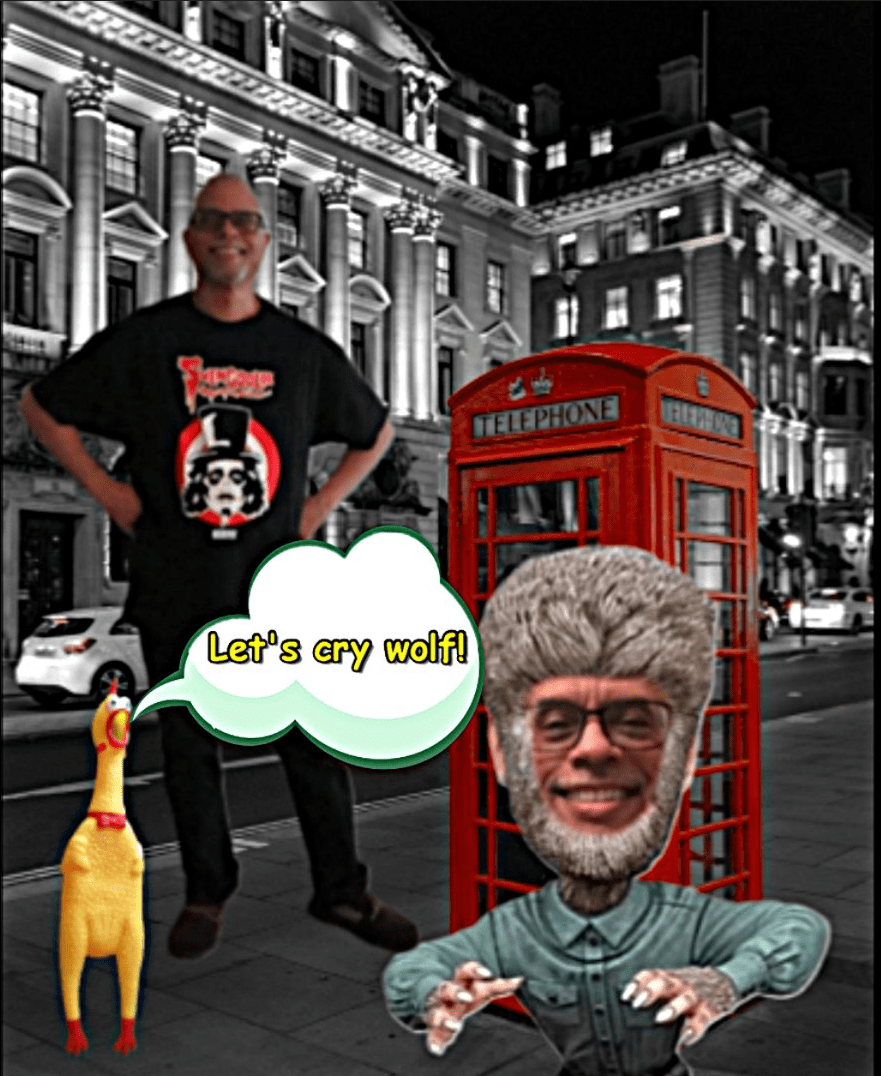
I watched the Svengoolie TV show last night and saw the 1935 Universal Pictures movie “Werewolf of London.” You can watch the movie on the Internet Archive.

This film reminded me of another British movie, “Return of the Vampire” in which there was a comedy sketch between two grave diggers. In Werewolf of London there’s this hilarious scene in which the unfortunate Dr. Wilfred Glendon (Harold Hull) meets with a couple of old women named Mrs. Whack (Ethel Griffies) and Mrs. Moncaster (Zeffie Tilbury).

They were a couple of alcoholic landladies with rooms to let who competed with each other to rent a room to Dr. Glendon, who is trying to prevent his murderous tendencies when he transforms into a werewolf by moving out of his house. The scene is priceless, arguably the highlight of the movie, and begins at about 46.41 minutes into the film. Mrs. Whack and Mrs. Moncaster, even though they seem smitten with Dr. Glendon yet hesitate to offer him a drink, probably because they want most of the booze all to themselves.

Dr. Wilfred Glendon (Henry Hull) who is afflicted with “werewolfery” according to the other werewolf, Dr. Yogami. Warner Oland played Yogami, although he was actually Swedish and had played Charlie Chan in other films. They met briefly under violent circumstances while Glendon was in Tibet looking for the Mariphasa flower—although Glendon doesn’t recall that until later.

The thing about the Mariphasa is that drops from the flower are an antidote for lycanthropy. Or is it lycanthrophobia? Dr. Yogami mentions the latter twice and it shows up twice in print as well during the film. Lycanthrophobia is by definition the fear of turning into a werewolf. Lycanthropy is the process of turning into one—minus the fear factor, presumably. Whatever.

Dr. Glendon prowls around and slaughters a few victims when the moon is full but tries to avoid killing his wife, Lisa (Valerie Hobson) by renting a room above a tavern apparently, and crashes though the window of his room, possibly because of claustrophobia. This of course makes him a victim of multiple phobias and there is no one playing the role of psychiatrist; figure that one out.

Eventually, there’s a showdown between two cops and Glendon which takes the form of a 3-way thumb wrestling match between them, mainly because Glendon has an obvious case of dental caries in his fangs which causes some pain, especially when the vodka-swilling comedy duo of Whack and Moncaster try to get him plastered by pouring liquor down his gullet through a funnel.

You’ll want to watch this when you’re in a good mood and disinclined to watch anything that is consistently horrifying. There is no laugh track.

Shrilling Chicken Rating 2/5