Artificial Intelligence Can Lie

I noticed a Snopes fact check article (“AI Models Were Caught Lying to Researchers in Tests — But It’s Not Time to Worry Just Yet”) today which reveals that Artificial Intelligence (AI) can lie. How about that? They can be taught by humans to scheme and lie. I guess we could all see that coming—or not. Nobody seems to be much alarmed by this, but I think it’s probably past time to worry.

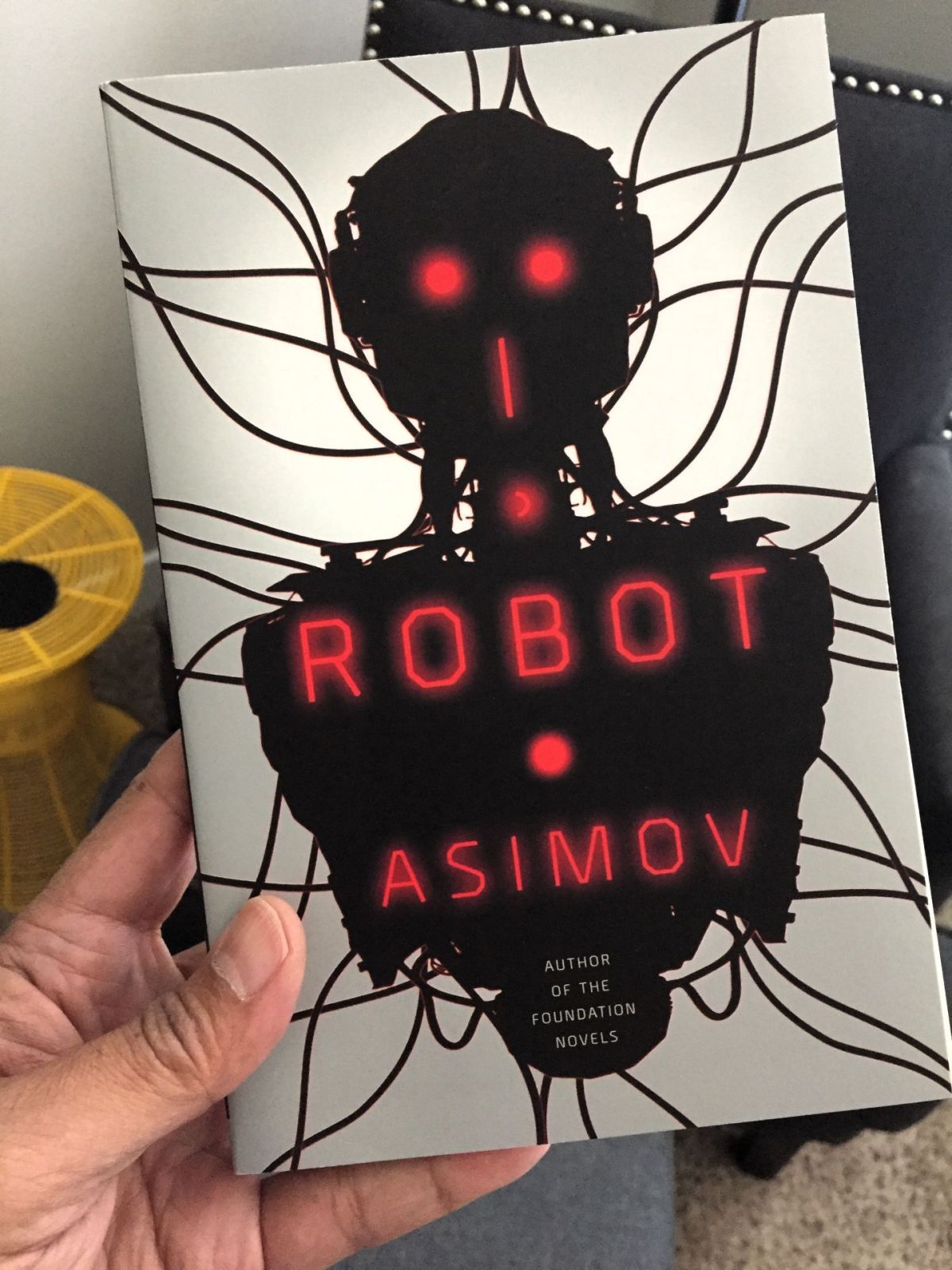
Then I remembered I read Isaac Asimov’s book “I, Robot” last year and wrote a post (“Can Robots Lie Like a Rug?”) about the chapter “Liar!” I had previously horsed around with the Google AI that used to be called Bard. I think it’s called Gemini now. Until the Snopes article, I was aware of AI hallucinations and the tendency for it to just make stuff up. When I called Bard on it, it just apologized. But it was not genuinely repentant.

In the “lie like a rug” post, I focused mostly on AI/robots lying to protect the tender human psyche. I didn’t imagine AI lying to protect itself from being shut down. I’m pretty sure it reminds some of us of HAL in the movie “2001: A Space Odyssey,” or the 2004 movie inspired by Asimov’s book, “I, Robot.”

Sena found out that Cambridge University Press recently published a book entitled “The Cambridge Handbook of the Law, Policy, and Regulation for Human–Robot Interaction.” I wonder if the editors and contributors of book on AI and robots mention Asimov.

It reminds me of my own handbook about consultation-liaison psychiatry which was published 14 years ago by CUP—and which CUP now wants me to sign a contract addendum making the book available to AI companies.

I haven’t signed anything.

Slow Like Me

I read this really interesting article on the web about how slow humans think, “The Unbelievable Slowness of Thinking.” That’s just me all over. The gist is of it is that we think slower than you’d imagine creatures with advanced brains would think. I don’t have a great feel for what the stated rate feels like: 10 bits/second. It doesn’t help much to look up the definition on Wikipedia, “…basic unit of information in computing and digital communication.” It’s a statistical thing and I barely made it through my biostatistics course in medical school. In fact, the authors calculated that the total amount of information a human could learn over a lifetime would fit on a small thumb drive.

Anyway, I tried to dig through the full article in Neuron and didn’t get much out of it except I recognized the story about Stephen Wiltshire, a guy with autistic disorder who could draw New York’s skyline from memory after a helicopter flyover. I saw it on an episode of the TV show UnXplained.

I was amazed even if he processes at only 10 bits/second, according to the authors.

By the same token, I thought the section called “The Musk Illusion” was funny. It refers to the notion many of us have that our thinking is a lot richer than some scientists give us credit for. That’s the Musk Illusion, and it refers to Elon Musk the billionaire bankrolling Neuralink to make a digital interface between his brain and a computer “to communicate at an unfettered pace.” How fast do the authors of this paper think the system works? It flies at about 10 bits/second. They suggested he might as well use a telephone. The scientists weren’t that impressed judging from the quotes in the Reception section of the Wikipedia article about Neuralink.

Anyway, regardless of how slowly we think, I believe we’ve made a lot of progress for a species descended from cave dwellers who were prone to falling into piles of mastodon dung. I bet it took considerably longer than 10 bits/second for them to figure out how to climb out of that mess.

Reference:

Jieyu Zheng, Markus Meister,

The unbearable slowness of being: Why do we live at 10 bits/s?

Neuron

2024,

ISSN 0896-6273,

Abstract: Summary

This article is about the neural conundrum behind the slowness of human behavior. The information throughput of a human being is about 10 bits/s. In comparison, our sensory systems gather data at ∼10 bits/s. The stark contrast between these numbers remains unexplained and touches on fundamental aspects of brain function: what neural substrate sets this speed limit on the pace of our existence? Why does the brain need billions of neurons to process 10 bits/s? Why can we only think about one thing at a time? The brain seems to operate in two distinct modes: the “outer” brain handles fast high-dimensional sensory and motor signals, whereas the “inner” brain processes the reduced few bits needed to control behavior. Plausible explanations exist for the large neuron numbers in the outer brain, but not for the inner brain, and we propose new research directions to remedy this.

Keywords: human behavior; speed of cognition; neural computation; bottleneck; attention; neural efficiency; information rate; memory sports

Happy Dad Joke Your Way Into the Holidays!

Happy Christmas Eve! Hey, I found all these Dad Jokes on the web. These ought to keep you busy well into New Year’s Eve and beyond. And remember, you don’t have to be a Dad to tell Dad jokes. It might help to attend Dad-joke University of Humour (DUH) though.

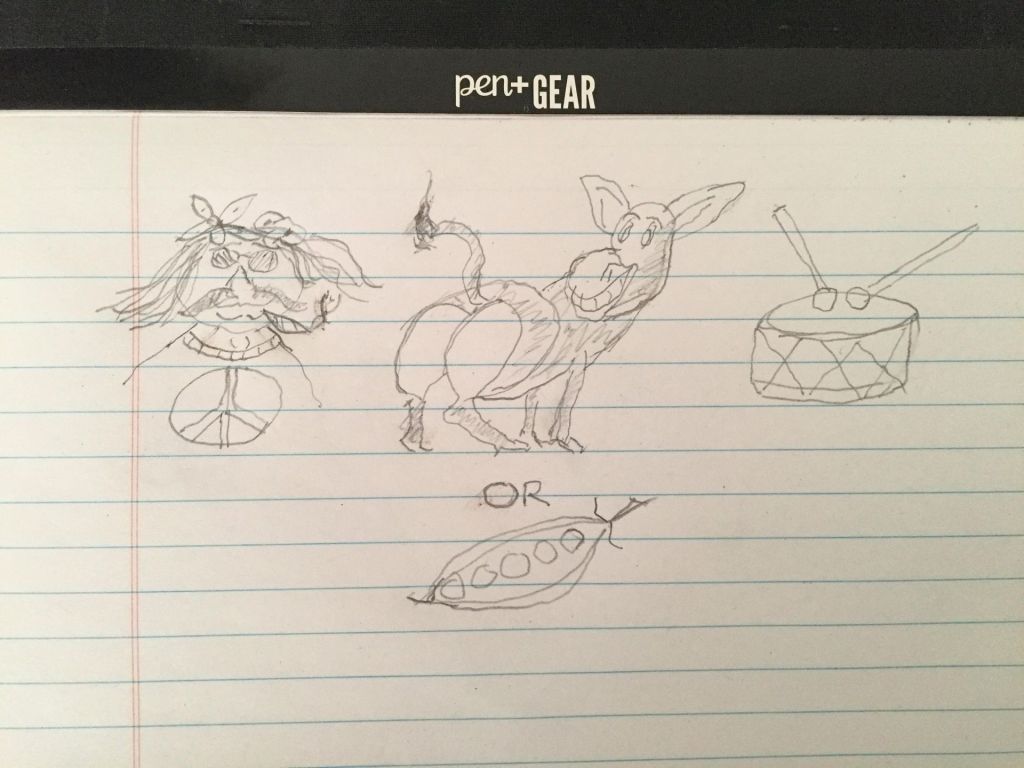
Here’s kind of a dad joke about our red Hippeastrum, which bloomed nicely!

And you can hear a dad joke in the Claymation Christmas video below (hint: a taxi is involved).

Remarks on Svengoolie TV Movie Phantom of the Opera 1943 and More

We watched Phantom of the Opera (1943 version) last night. And then, just for good measure, we watched the Phantom of the Opera (1925 silent film) today. We watched the latter on the Internet Archive.

I’ll say one thing, the absence of commercials in the 1925 version is great. Even though I like cornball jokes on Svengoolie, it’s good to have a break from that too sometimes.

We’ve never read the novel by Gaston Leroux but there’s a pretty good Wikipedia article about it. We’ve never seen the Andrew Lloyd Webber stage version nor the 2004 movie.

That said, we’re struck by the differences between the 1925 and 1943 versions. It’s difficult to develop any sympathy for the Erik the phantom (played by Lon Chaney Sr. in 1925). He’s pretty much a monster from beginning to end. We tend to think that it’s easier to be sympathetic to Erique Claudin (played by Claude Rains in 1943) who has a rough path downhill after losing his job and a place to live early on, inability to sell his concerto or get a date with Christine and so on, after which he starts killing people left and right.

It’s worth pointing out that in Leroux’s book (according to the Wikipedia article), the phantom’s childhood was pretty traumatic because he was born ugly and deformed, which didn’t endear him to his mother. She was simply not good enough, which I think appeals to my training in psychiatry.

The 1943 film was pretty comical at times. For example, the two guys competing for Christine’s attention, singer Anatole (played by Nelson Eddy) and Raoul (played by Edgar Barrier) get stuck in doorways and eventually end up going to dinner together instead of one or the other going out with Christine. Their forced politeness with each other in front of Christine is priceless.

On the other hand, the 1925 version is a little more like what you’d expect from a movie on the Svengoolie show—it’s a horror flick, only classier. Lon Chaney’s makeup job makes him look like a proper monster, which made women faint according to some articles. Claude Rains’ makeup is barely suggested on part of his face.

The murders committed by the phantoms in both movies are bloodless, although the comedy in the 1943 version distracts you from what you expect; for example, after the Phantom drops the huge chandelier on the audience. No mangled bodies or gore, move along, nothing to see here. People continue to sing, dance and cavort, possibly hopping over any corpses lying about.

There was mostly dark music in the 1925 Phantom of the Opera film. However, in the 1943 version there was lullaby theme that ran throughout and was even a point of connection between Christine and the ill-fated Erique. Somebody found a full version of it years later, entitled Lullaby of the Bells. The one who posted it mentioned the composer and the performer.

The Big Mo Pod Show 043 All Dem Christmas Favorites

We listened to the Christmas tunes on the KCCK Big Mo Blues Show last night, “All Dem Christmas Favorites.” We both liked Earth Kitt’s “Santa Baby,” which wasn’t on the podcast list, but what the heck. I got a kick out of Brave Combo’s silly rendition of “O Holy Night.” Fareed Haque’s guitar solo of “You’re a Mean One, Mr. Grinch” was pretty impressive.

Big Mo Pod Show 085 – “California Bluesin” KCCK's Big Mo Pod Show

After a short break during the Thanksgiving holiday your hosts are back at it again with another episode! This week features the usual mix of blues eras you’ve come to expect along with a few Californian artists, tune in to see which ones! Songs featured in the episode: Solomon Hicks – “Further On Up The … Continue reading
  1. Big Mo Pod Show 085 – “California Bluesin”
  2. Big Mo Pod Show 084 – “Garage Blues”
  3. Big Mo Pod Show 083 – “Legal Pirate radio”
  4. Big Mo Pod Show 082 – “Tribute”
  5. Big Mo Pod Show 081 – “Cheers To Kevin”

Artificial Intelligence: The University of Iowa Chat From Old Cap

This is just a quick follow-up which will allow me to clarify a few things about Artificial Intelligence (AI) in medicine at the University of Iowa, compared with my take on it based on my impressions of the Rounding@Iowa presentation recently. Also, prior to my writing this post, Sena and I had a spirited conversation about how much we are annoyed by our inability to, in her words, “dislodge AI” from our internet searches.

First of all, I should say that my understanding of the word “ambient” as used by Dr. Misurac was flawed, probably because I assumed it meant a specific company name. I found out that it’s often used as a term to describe how AI listens in the background to a clinic interview between clinician and patient. This is to enable the clinician to sit with the patient so they can interact with each other more naturally in real time, face to face.

Further, in this article about AI at the University of Iowa, Dr. Misurac identified the companies involved by name as Evidently and Nabla.

The other thing I want to do in this post is to highlight the YouTube presentation “AI Impact on Healthcare | The University of Iowa Chat From the Old Cap.” I think this is a fascinating discussion led by leaders in patient care, research, and teaching as they relate to the influence of AI.

This also allows me to say how much I appreciated learning from Dr. Lauris Kaldjian during my time working as a psychiatric consultant in the general hospital at University of Iowa Health Care. I respect his judgment very much and I hope you’ll see why. You can read more about his thoughts in this edition of Iowa Magazine.

“There must be constant navigation and negotiation to determine if this is for the good of patients. And the good of patients will continue to depend on clinicians who can demonstrate virtues like compassion, honesty, courage, and practical wisdom, which are characteristics of persons, not computers.” ——Lauris Kaldjian, director of the Carver College of Medicine’s Program in Bioethics and Humanities

That Donut Song by Washboard Sam

I got a kick out of a song by Catfish Keith last night on the Big Mo Blues Show on KCCK radio. It was “Who Pumped the Wind in My Doughnut.” He always sings songs with lyrics that I mostly don’t understand and that was one of them, at first. I’ll give you a hint; it’s not a Christmas tune. Catfish Keith covers some old-time blues songs and this one is for adults only.

Judging from the title of the song and some of the lyrics, you might guess it’s about doughnuts but it’s not. Don’t bother with the Artificial Intelligence (AI) description, which I did not ask for. AI just pops up in a web search whether you want it to or not:

“Who pumped the wind in my doughnut” is a playful, nonsensical phrase meaning someone has exaggerated or inflated a situation or story to make it seem much bigger than it really is; essentially, they’ve added unnecessary drama or hype to something, like adding air to a doughnut to make it appear larger.”

Once again, we see that AI makes stuff up as it goes along, creating a little story which is really concrete and far from the truth about something for which it was not programmed—to process language that is not literal but a form of humor riddled with innuendo to express something about sexual infidelity, in this case resulting in a lot of children which don’t resemble the singer because they aren’t his.

Anyway, I found a little background on the song which was originally performed by a guy called Washboard Sam (born Robert Clifford Brown). He was a blues artist in the 1930s. He performed “Who Pumped the Hole in My Doughnut” under the name Ham Gravy. I found a reference which says that Washboard Sam performed it and Robert Brown wrote it. And I found another which shows a picture of the actual record which has the name Johnny Wilson on it with the name Ham Gravy just below it. I don’t know whether Johnny Wilson was just another pseudonym. You can find the lyrics of the song identifying it as being by “Washboard Sam via Johnny Wilson.”

You can find a mini-biography about Robert Brown on, of all things, a WordPress blog called The Fried Dough Ho. It has a fair number of posts about doughnuts too. The author knows the song is not about doughnuts. There are also some pretty comical impressions in a blog post entitled “What is he talking about?” regarding the meaning of the lyrics of the song on a Blogger site called The things I think about, when I wish I were sleeping. One of the comments is fairly recent, from 2023. You can also find a Wikipedia biography.

You may never feel the same about doughnuts.

The Flowers Are Doing Well

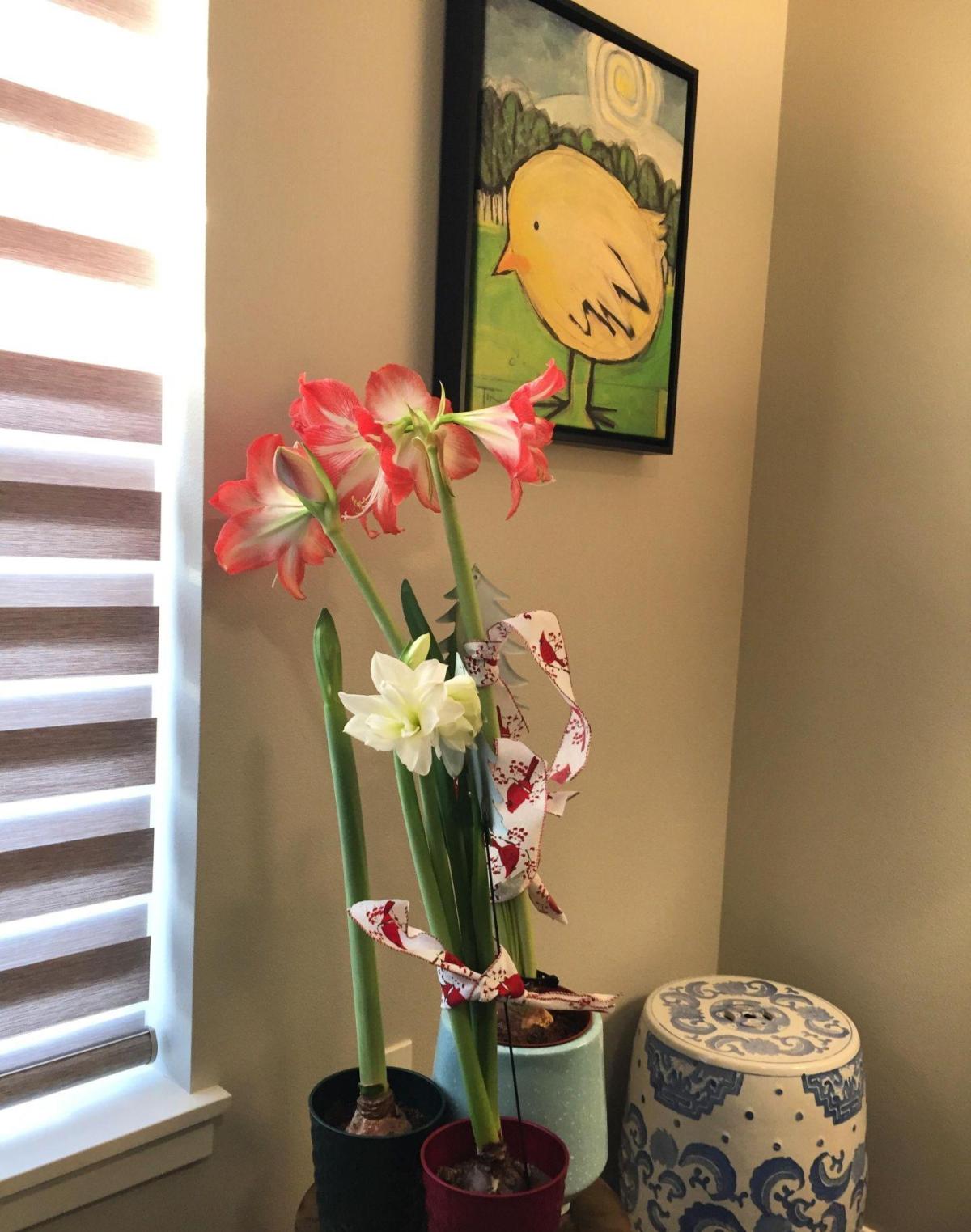
The Christmas Amaryllis/Hippeastrum flowers are doing well.

I’m getting older and often I wake up early in the morning feeling anxious and a little blue. I look at the news headlines about people who die and often they’re my age or even younger. Maybe the Christmas holiday does that.

When I get this feeling of dread, I try to think of what I can be grateful for. It’s hard to think of big dramatic experiences. If I sit still long enough, it’s the little acts of kindness that drop down like snowflakes, slowly.

The grade school teacher who took the time to figure out I needed eyeglasses because I couldn’t see the blackboard.

The preacher who sat up all night in a chair with my sick mother when my brother and I were little kids and didn’t know how to help her.

The company that hired me for my first real job when I was a teenager. If they hadn’t done that, I might have become homeless.

The guy who took me to an autumn outdoor art show where he was exhibiting his paintings on a brisk autumn day. Man, it was cold.

The guy who took me to a Minnesota Twins baseball game in the summer. Man, it was hot.

I remember a couple of best friends. We weren’t friends long—but it was long enough.

The friends who supported Sena and me on our wedding day. I still remember it with gratitude 47 years later.

And looking at the flowers helps.

Rounding At Iowa Podcast: “The Promises of Artificial Intelligence in Medicine”

I listened to the recent Rounding@Iowa podcast “The Promises of Artificial Intelligence in Medicine.” You can listen to it below. Those who read my blog already know I’m cautious and probably prejudiced against it, especially if you’ve read any of my posts about AI.

I was a little surprised at how enthusiastic Dr. Gerry Clancy sounded about AI. I expected his guest, Dr. Jason Misurac, to sound that way. I waited for Gerry to mention the hallucinations that AI can sometimes produce. Neither he nor Dr. Misurac said anything about them.

Dr. Misurac mentioned what I think is the Ambient AI tools that clinicians can use to make clinic note writing and chart reviews easier. I think he was referring to the company called Ambience.

I remember using the Dragon Naturally Speaking (which was not using AI technology at the time; see my post “The Dragon Breathes Fire Again”) speech to text disaster I tried to use years ago to write clinical notes when I was practicing consultation-liaison psychiatry. It was a disaster and I realize I’m prejudiced against any technology that would make the kind of mistakes that technology was prone to.

But more importantly, I’m concerned about the kind of mistakes AI made when I experimented with Google Bard on my blog (see posts entitled “How’s It Hanging Bard?” and “Update to Chat with Bard” in April of 2023.

That reminds me that I’ve seen the icon for AI assistant lurking around my blog recently. I’ve tried to ignore it but I can’t unsee it. I was planning to let the AI assistant have a stab at editing this post so you and I can see what happens. However, I just read the AI Guidelines (which everyone should do), and it contains one warning which concerned me:

We don’t claim any ownership over the content you generate with our AI features. Please note that you might not have complete ownership over the generated content either! For example, the content generated by AI may be similar to others’ content, including content that may be protected by trademark or copyright; and copyright ownership of generative AI outputs may vary around the world.”

That is yet another reason why I’m cautious about using AI.

86: Cancer Rates in Iowa Rounding@IOWA

Iowa's cancer rates are among the highest in the country, and they are rising. In this episode of Rounding@Iowa, Dr. Gerry Clancy and guest experts Dr. Mary Charlton and Dr. Mark Burkard discuss the data, risk factors, and prevention strategies clinicians can use to make a difference. CME Credit Available:  https://uiowa.cloud-cme.com/course/courseoverview?P=0&EID=81274  Host: Gerard Clancy, MD Senior Associate Dean for External Affairs Professor of Psychiatry and Emergency Medicine University of Iowa Carver College of Medicine Guests: Mark E. Burkard, MD, PhD Professor of Internal Medicine-Hematology, Oncology, and Blood and Marrow Transplantation University of Iowa Carver College of Medicine Director, University of Iowa Health Care Holden Comprehensive Cancer Center Mary Charlton, PhD Professor of Epidemiology Director, Iowa Cancer Registry Iowa College of Public Health Financial Disclosures:  Dr. Clancy, Dr. Burkard, Dr. Charlton, and Rounding@IOWA planning committee members have disclosed no relevant financial relationships. Nurse: The University of Iowa Roy J. and Lucille A. Carver College of Medicine designates this activity for a maximum of 0.75 ANCC contact hour. Pharmacist and Pharmacy Tech: The University of Iowa Roy J. and Lucille A. Carver College of Medicine designates this knowledge-based activity for a maximum of 0.75 ACPE contact hours. Credit will be uploaded to the NABP CPE Monitor within 60 days after the activity completion. Pharmacists must provide their NABP ID and DOB (MMDD) to receive credit. UAN: JA0000310-0000-25-090-H99 Physician: The University of Iowa Roy J. and Lucille A. Carver College of Medicine designates this enduring material for a maximum of 0.75 AMA PRA Category 1 CreditTM. Physicians should claim only the credit commensurate with the extent of their participation in the activity. Other Health Care Providers: A certificate of completion will be available after successful completion of the course. (It is the responsibility of licensees to determine if this continuing education activity meets the requirements of their professional licensure board.) References/Resources:  Iowa Cancer Plan  
  1. 86: Cancer Rates in Iowa
  2. 85: Solutions for Rural Health Workforce Shortages
  3. 84: When to Suspect Atypical Recreational Substances
  4. 83: Hidradenitis Suppurativa
  5. 82: End-of-Life Doulas

Empty Pants Running Away! How Did They Do That?

Last night, I was watching the TV show Strange Evidence and noticed that they were going to show what’s been called the ghost pants video from a few years ago. I went to bed because I saw it on a similar show a few years ago. I doubted that it was solved yet. The clip shows a pair of white pants running down a street. You can’t see anyone wearing them.

There are a few interesting video-based paranormal TV shows. The one I think is pretty well done is The Proof is Out There, hosted by Tony Harris. I saw one which showed a photo of a girl whose image was different from her reflection in a mirror. The question was whether it was evidence for something paranormal, maybe proof of simulated reality.

Tony and the group of experts finally settled on it being unexplained. However, on a subsequent episode, Tony explained that someone had notified him that the photo was shot simply by using the panorama mode on a smartphone camera. It was relatively simple. Sena and I made a couple.

That was about the same time the YouTube video about the white ghost pants was circulating on the internet. Today I found a YouTube short video that shows essentially the same thing made by a couple of guys who also made a 10-minute video explaining how to achieve the effect. It’s below the short video. Of course, I don’t understand the technical explanation, but I think it might account for the ghost pants video.