Amaryllis Progress and Other Notes

I have a few messages to pass on today. This is the last day of November and the Amaryllis plants are doing so well Sena had to brace the tallest one using a Christmas tree stake and a couple of zip ties. It’s over two feet tall!

I’m not sure what to make of almost a dozen comments on my post “What Happened to Miracle Whip?” Apparently, a lot of people feel the same way I do about the change in taste of the spread. So, maybe it’s not just that my taste buds are old and worn out.

Congratulations to the Iowa Hawkeye Football team last night! They won against Nebraska by a field goal in the last 3 seconds of the game. I had to chuckle over the apparent difficulty the kicker had in answering a reporter’s question, which was basically “How did you do it?” There are just some things you can’t describe in words. There’s even a news story about how thinking doesn’t always have to be tied to language.

Along those lines, there might be no words for what I expect to think of tonight’s 1958 horror film on Svengoolie, “The Crawling Eye.” This movie was called “The Trollenberg Terror” in the United Kingdom version. I can tell you that “Trollenberg” was the name of a fictitious mountain in Switzerland.

I’m not a fan of Jack the Ripper lore, but I like Josh Gates expedition shows, mainly for the tongue in cheek humor. The other night I saw one of them about an author, Sarah Bax Horton, who wrote “One-Armed Jack”). She thought Hyam Hyams was the most likely candidate (of about 200 or so) to be Jack the Ripper, the grisly slasher of Whitechapel back in 1888. He’s a list of previously identified possible suspects. I found a blogger’s 2010 post about him on his site “Saucy Jacky” and it turns out Hyams is one of his top suspects. Hyams was confined to a lunatic asylum in 1890 and maybe it’s coincidental, but the murders of prostitutes stopped after that. I’m not going to speculate about the nature of Hyams’ psychiatric illness.

There’s another Psychiatric Times article about the clozapine REMS (Risk Evaluation and Mitigation Strategies) program. I found a couple of articles on the web about the difficulties helping patients with treatment resistant schizophrenia which I think give a little more texture to the issue:

Farooq S, Choudry A, Cohen D, Naeem F, Ayub M. Barriers to using clozapine in treatment-resistant schizophrenia: systematic review. BJPsych Bull. 2019 Feb;43(1):8-16. doi: 10.1192/bjb.2018.67. Epub 2018 Sep 28. PMID: 30261942; PMCID: PMC6327301.

Haidary HA, Padhy RK. Clozapine. [Updated 2023 Nov 10]. In: StatPearls [Internet]. Treasure Island (FL): StatPearls Publishing; 2024 Jan-. Available from: https://www.ncbi.nlm.nih.gov/books/NBK535399/

The paper on the barrier to using clozapine by Farooq et al is very interesting and the summary of the barriers begins in the section “Barriers to the use of clozapine in TRS (treatment resistant schizophrenia). I think it gives a much-needed perspective on the complexity involved in managing the disorder.

So what do you think about Miracle Whip?

Svengoolie Hosts the Film “Abbott and Costello Meet Frankenstein”

Last night I watched “Abbott and Costello Meet Frankenstein” (released in 1948) for the first (and probably the last) time on Svengoolie. I thought I’d be able to watch it while wearing my new Svengoolie Holiday Sweater that Sena ordered for me, but it arrived too late in the evening for me to make the trip down the street to the mailbox pod. There are not enough street lights down there and who knows, the Wolfman could have jumped me. I got the sweater today and it looks great.

Sena watched a few minutes of the movie and gave up on it. I stuck it out all the way to the end in which you hear the voice of Vincent Price but don’t see him lighting up a smoke because he’s reprising the role of the Invisible Man.

Now for some comments about the movie, for which you can find information on Turner Classic Movies (TCM) and many other websites. I’ll admit, Costello playing the part of the hysterical Wilbur got too slap sticky for me. On the other hand, the bits between him and the Wolfman (played by Lon Chaney Jr, who also reprised the role of Larry Talbot) were pretty comical.

Frankly, what I really got a kick out of was Svengoolie’s recurring doodling riddle game, “Too Drawn Out” in which he rapidly sketches a few cartoons which, when you put them together in your mind translates to the name of a character in the film or a cornball joke about it.

Some people missed the Sven Squad in this show and in last week’s show. The Sven Squad includes Gwengoolie, Nostalgiaferatoo, and IMP (Ignatius, Malvolio, Prankenstein). Importantly (or not) I found out from a web search that the film is actually rerun annually (according to Svengoolie’s summary from the 2021 airing of the movie) because it’s the most requested film by fans. Since the Sven Squad was just put together last year, new scenes were not taped for this movie and the one last week, presumably also a rerun by the same assumption.

As an aside, my Svengoolie sweater has all the members of the Sven Squad on it, and it even includes Kerwyn.

At first, I mistakenly got the idea that Lon Chaney, Jr played Larry Talbot but refused to play the Wolfman because it involved slapstick humor. And somehow, I misread the Svengoolie summary about Glenn Strange playing “the Monster”—which of course meant the Frankenstein monster, not the Wolfman.

But I’m not the only one who’s ever thought that because other fans (I got this from the web) mentioned that Chaney didn’t like how the Wolfman was portrayed in clownish stunts in the film. I thought his sober portrayal of Larry Talbot contrasted sharply with Abbott and Costello’s constant screwball acting. Svengoolie pointed out a goof (which I missed) in the film where Dracula (played by Bela Lugosi) has his reflection clearly showing in a mirror. Nobody’s perfect. And that includes me trying to make up a drawing riddle:

Hey it’s supposed to be Svengoolie!

Clozapine REMS Program May Go Away

The Psychiatric Times published an article about the large majority of FDA committee members recently voting to dismiss the Risk Evaluation and Mitigation Strategy (REMS) for clozapine.

That reminded me of my short post about Cobenfy, a new drug for schizophrenia. It has side effects but none of which necessitate the need for a REMS program. If you do a web search for information on Cobenfy and REMS, you can ignore the Artificial Intelligence (AI) Gemini notification at the top of the Google Chrome search page saying that “Cobenfy…is subject to a REMS (Risk Evaluation and Mitigation Strategy) due to potential side effects like urinary retention.” That’s not true.

It was yet another AI hallucination triggered by my internet search. I didn’t ask Gemini to stick its nose in my search, but it did anyway. Apparently, I don’t have a choice in the matter.

Anyway, the FDA vote to get rid of REMS for clozapine also rang a bell for me of the incredibly difficult and tedious process that the clozapine REMS registration process caused in 2015 when it was first initiated. I spent lot of time on hold with the REMS center (I think it was in Arizona) trying to get registered. A few people in my department seemed to have little problem with it, but it was an ongoing headache for many of us.

Then after getting registered, I started getting notified of outpatients on clozapine getting added to my own REMS registry list. The problem is that I was a general hospital consultation-liaison psychiatrist only—I didn’t have time see outpatients.

I think I called REMS on more than one occasion to have outpatients removed from my REMS list. I suspect they were added because their psychiatrists in the community were not registering with REMS. And then in 2021, the FDA required everyone to register again. By then, I was already retired.

Other challenges were occasional misunderstandings between the psychiatric consultant and med-surg doctors about how to manage medically hospitalized patients who were taking clozapine, or brainstorming about how to fix medical problems caused by clozapine itself. Sometimes it was connected to things like lab monitoring for absolute neutrophil counts or restarting clozapine in a timely fashion after admission or following surgeries, or trying to discharge them to facilities which lacked the resources for adequate monitoring of clozapine.

Arguably, these are probably not absolute reasons for shutting down the REMS registry. They’re more like problems with how the program is run, such as “with a punitive and technocratic approach” as expressed by one FDA committee member.

Committee members also thought psychiatrists should be allowed to be doctors, managing both the medical and psychiatric aspects of patient care.

On the other hand, some might argue that those are reasons why consultation-liaison psychiatry and medical-psychiatry training programs exist.

I’m not sure whether the clozapine registry will go away. I hope that it can be streamlined and made less “punitive and technocratic.”

The Amaryllis Trio and Other News

The Amaryllis Trio in the living room are growing pretty fast, comparing them to a couple of weeks ago.

Other upcoming holiday news is that Sena ordered a Svengoolie holiday sweater for me. I’m not sure it qualifies as an ugly sweater. I hope it fits.

That reminds me that the upcoming Svengoolie film this Saturday is “Abbott and Costello Meet Frankenstein.” That’s another kind of trio. They also meet other monsters, including the Wolf Man and Dracula.

This movie, released in 1948, has also been shown on Turner Classic Movies (TCM). You don’t need to try to puzzle that one out. Go to the TCM web site and read what they say about the film. Hint: it’s definitely not satire.

We’ve never seen this one. Sena thought Abbott and Costello were a lot like the 3 Stooges, but I spoke up in support of the pair of comedians. The 3 Stooges were slapstick guys, but I often think of the Who’s on First routine by Abbott and Costello.

Thoughts Arising from the Film Dr. Phibes Rises Again

On Saturday night we watched the sequel to “The Abominable Dr. Phibes” movie, which is “Dr. Phibes Rises Again.” It was released in 1972. We also discovered that Turner Classic Movies (TCM) has shown the film. The TCM link has what I think is the best plot summary.

It makes us wonder what qualifies for classic status if TCM has this movie in its library. Incidentally, TCM also shows the other Svengoolie movie we saw recently, “Invaders from Mars.” I’m pretty sure I saw this on TV when I was a little kid. I have a vivid memory of the stocky green Martian stooges running stiff-legged through tunnels.

 Anyway, I couldn’t find a clear definition of what a classic is. I think it depends on the category, in this case for shlock movies. Even Roger Ebert was all over the map about it (about films in general, not schlock horror films).

Anyway, TCM seemed to echo what Svengoolie and company speculated about as far as the last names of a few of the characters (in the trivia section, although I’m not so sure about the reference to jazz trumpeters). Svengoolie also mentioned the connection. Four of them happened to have last names that a few famous musicians had:

Darius Biederbeck: I start with that one because the jazz musician Bix Beiderbecke (note the spelling difference) has an Iowa connection. He was born in Davenport, Iowa.

Harry Ambrose: There might be a connection to Benjamin Baruch Ambrose, known professionally as Ambrose, who was a violinist and bandleader.

Hackett: Bobby Hackett was a famous jazz trumpet and cornet player. Just an aside, I usually mistakenly come up with the name Buddy Hackett when I try to remember Bobby Hackett. That might still be an interesting connection because Buddy Hackett played Marcellus Washburn in “The Music Man” film adaptation in 1962. Of course, this also has an obvious Iowa Connection. I found a reference which says that Marcellus had a song and dance routine in the “The Music Man.” I’m from Mason City (River City in the musical) and I’ve never seen the play or the movie.

Lombardo: Guy Lombardo was a violinist and bandleader who had a jazz style.

What makes the connection important and whether it figures into whether the movie is a classic or not is beyond me. However, music is an important feature in “Dr. Phibes Rises Again” as it was in the first film, “The Abominable Dr. Phibes.” Phibes is frequently playing an organ and waving his arms around like a drunken bandleader.

And then there is the mechanical band. It’s probably not a real mechanical band, but actors who try to mimic the movements of robotic musicians. I found a comment about this in a web article in which the commenter thought he saw one of the robots moving a little too smoothly.

Humor is a feature in “Dr. Phibes Rises Again” as it was in the first film. The clownish and incompetent police officers, Inspector Trout and Superintendent Waverley reappear. This comedy relief may be an attempt to offset some of the more vividly horrifying murder scenes. Trout makes a jarring joke about one of the characters who was crushed in one of Phibes’ diabolical torture machine- “Baker had a bad night.”

This reminds me of what I appreciate about Svengoolie, who always warns the TV audience when grisly scenes that might be too intense are coming up. If you decide to see the film, you might want to skip the scorpion scene.

Another Congressional Hearing on UAPs and We Still Don’t Know Who Was Driving That Thing

I just sat through the two and a half hour long House Committee Oversight and Accountability hearing dramatically entitled: “Unidentified Anomalous Phenomena: Exposing the Truth.” The impression I got is that somebody still thinks we can’t handle the truth.

This is the second congressional hearing on UAPs I’ve seen. I have to admit, I thought of Agent K’s line to a low ranking MIB agent in the movie Men in Black 3. It’s in the scene in front of what’s obviously a flying saucer as Agent J is administering a neuralyzer blast to the unlucky human witnesses, who will of course forget what they just saw:

“Check the composition of the fuel units and run a scan on the surface deposits. I want to know who was driving that thing.” Me too.

I don’t think this meeting was much different than the one last July. There were 4 witnesses, one of whom was Luis Elizondo (“I believe what I believe in.”). There were quite a few “I don’t know” and “I’d be happy to answer that question in a closed session” type of answers.

Dr. Gold was the scientist who seemed to play a role similar to retired Commander David Fravor played last year, with an engaging, good humored, “stick to the facts” demeanor.

Nobody talked much about the closed session meetings the previous group had after last year’s meeting, except to point out that the “overclassification” of information about UAPs continues and we still don’t know “…who was driving that thing.”

Fluoride in Your Precious Bodily Fluids

Yesterday, Sena and I talked about a recent news article indicating that a federal judge ordered the Environmental Protection Agency (EPA) to review the allowed level of fluoride in community water supplies. The acceptable level may not be low enough, in the opinion of the advocacy groups who discussed the issue with the judge, according to the author of the article.

A few other news items accented the role of politicians on this issue. This seems to come up every few years. One thing leads to another and I noticed a few other web stories about the divided opinions about fluoride in “your precious bodily fluids.” One of them is a comprehensive review published in 2015 outlining the complicated path of scientific research about this topic. There are passionate advocates on both sides of whether or not to allow fluoride in city water. The title of the paper is, “Debating Water Fluoridation Before Dr. Strangelove” (Carstairs C. Debating Water Fluoridation Before Dr. Strangelove. Am J Public Health. 2015 Aug;105(8):1559-69. doi: 10.2105/AJPH.2015.302660. Epub 2015 Jun 11. PMID: 26066938; PMCID: PMC4504307.)

This of course led to our realizing that we’ve never seen the film “Dr. Strangelove Or: How I Learned to Stop Worrying And Love the Bomb,” a satire on the Cold War. We watched the entire movie on the Internet Archive yesterday afternoon. The clip below shows one of the funniest scenes, a dialogue between General Jack Ripper and RAF officer Lionel Mandrake about water and fluoridation.

During my web search on the fluoridation topic, one thing I noticed about the Artificial Intelligence (AI) entry on the web was the first line of its summary of the film’s plot: “In the movie Dr. Strangelove, the character Dr. Cox suggests adding fluoride to drinking water to improve oral health.” Funny, I don’t remember a character named Dr. Cox in the film nor the recommendation about adding fluoride to drinking water to improve oral health. Peter Sellers played 3 characters, none of them named Cox.

I guess you can’t believe everything AI says, can you? That’s called “hallucinating” when it comes to debating the trustworthiness of AI. I’m not sure what you call it when politicians say things you can’t immediately check the veracity of.

Anyway, one Iowa expert who regularly gets tapped by reporters about it is Dr. Steven Levy, a professor of preventive and community dentistry at the University of Iowa. He’s the leader of the Iowa Fluoride Study, which has been going on over the last several years. In short, Dr. Levy says fluoride in water supplies is safe and effective for preventing tooth decay in as long as the level is adjusted within safe margins.

On the other hand, others say fluoride can be hazardous and could cause neurodevelopmental disorders.

I learned that, even in Iowa there’s disagreement about the health merits vs risks of fluoridated water. Decisions about whether or not city water supplies are fluoridated are generally left to the local communities. Hawaii is the only state in the union which mandates a statewide ban on fluoride. About 90 per cent of Iowa’s cities fluoridate the water. Tama, Iowa stopped fluoridating the water in 2021. Then after a brief period of public education about it, Tama restarted fluoridating its water only six months later.

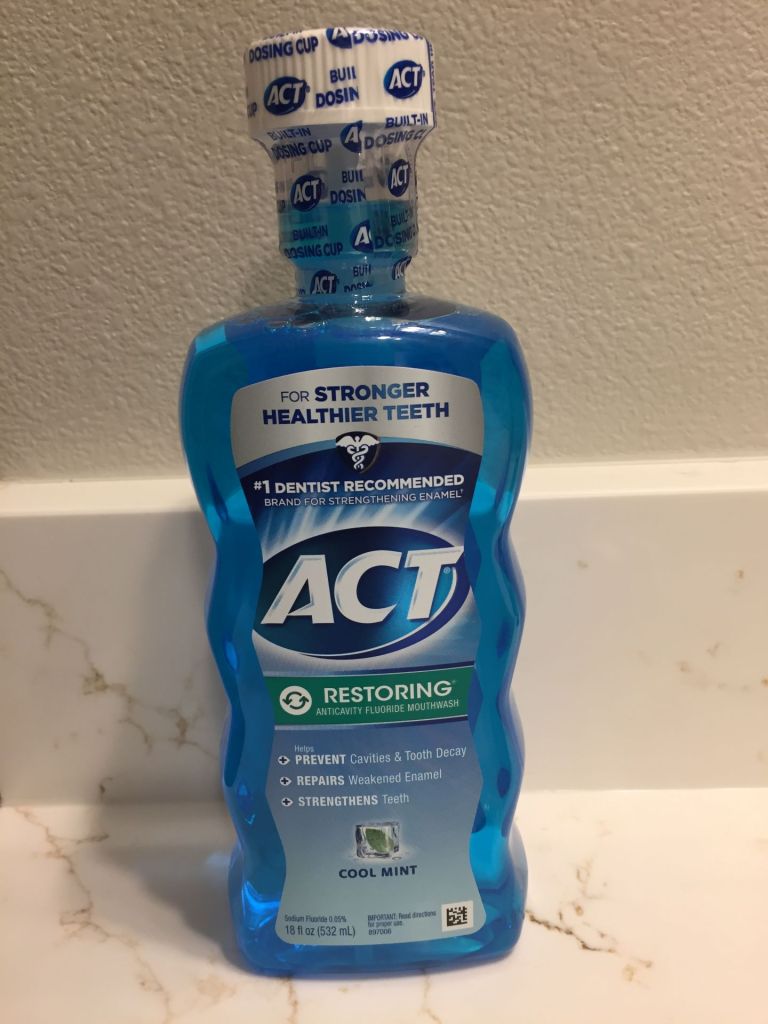
We use a fluoridated dentifrice and oral rinse every day. We drink fluoridated water, which we offer to the extraterrestrials who occasionally abduct us, but they politely decline because of concern about their precious bodily fluids.

Dr. Phibes Loves Brussels Sprouts

I watched the 1971 movie “The Abominable Dr. Phibes” last night on the Svengoolie show last night and I just have a few remarks. It starred Vincent Price as the ghoulish Dr. Phibes who was really cranky about doctors who he accused of botching the medical treatment of his wife who died in the hospital.

Supposedly, Dr. Phibes was killed in a fiery car crash on his way to the hospital to see her. Of course, he survived to take revenge on the doctors by killing them in a pattern that mimicked the deadly biblical plagues, which most people remember from another movie, “The 10 Commandments.”

I’ve never seen “The Abominable Dr. Phibes” and like most of the movies on Svengoolie, it was fodder for corny jokes, of which Svengoolie always has a big supply.

There was even a psychiatrist victim. The way Dr. Phibes knocked him off was to somehow get him invited to a costume party where he gives him a special whole head mask of a frog. It has a diabolical mechanism which slowly tightens around the psychiatrist’s neck, finally cutting his throat.

I guess you could say the psychiatrist croaked (see what I did there?).

OK, so frogs are consistent with one of the plagues foretold by Moses and is loosely based on the biblical scripture of Exodus.

On the other hand, there were several other murders of doctors which made you scratch your head about the biblical plague plot.

Dr. Phibes impaled one doctor by shooting a large brass statue of a unicorn at him from a block away. One of the humorous (dark humor, of course) parts of the movie were the inept police who were supposed to be protecting the doctors from Dr. Phibes. They tried to figure out how to unscrew the horn of the brass unicorn from the victim (clockwise or counterclockwise?). Although I’m anything but a biblical scholar, as I recall, there was no plague of brass unicorn statues impaling the Israelites.

One of the more bizarre plagues was juiced brussels sprouts followed by locusts which apparently think it’s a tasty sauce that leads to them chewing the face off a nurse.

Speaking of going faceless, toward the end of the film, Dr. Phibes reveals he has no face. This either means that his face was burned away in the car accident or that one of his favorite foods was brussels sprouts garnished with locusts.

It looks like you can watch The Abominable Dr. Phibes on the Internet Archive, which apparently survived being hacked a month ago.

Dirty Deepfakes

I saw an article about the unreliable ability of humans to detect digital deepfakes in audio and video productions (Mai KT, Bray S, Davies T, Griffin LD. Warning: Humans cannot reliably detect speech deepfakes. PLoS One. 2023 Aug 2;18(8):e0285333. doi: 10.1371/journal.pone.0285333. PMID: 37531336; PMCID: PMC10395974.).

I was a little surprised. I thought I was pretty good at detecting the weird cadence of Artificial Intelligence (AI) speech patterns, which I think I can distinguish pretty well. Maybe not.

And there are some experts who are concerned about AI’s ability to mimic written and spoken grammar—but it continues to make stuff up (called “hallucinations”). In fact, some research shows that AI can display great language skills but can’t form a true model of the world.

And the publisher of the book (“Psychosomatic Medicine: An Introduction to Consultation-Liaison Psychiatry”) that I and my co-editor, Dr. Robert G. Robinson, MD wrote 14 years ago is still sending me requests to sign a contract addendum that would allow the text to be used by AI organizations. I think I’m the only who gets the messages because they’re always sent to me and Bob—as though Bob lives with me or something.

Sometimes my publisher’s messages sound like they’re written by AI. Maybe I’m just paranoid.

Anyway, this reminds me of a blog post I wrote in 2011, “Going from Plan to Dirt,” which I re-posted last year under the title “Another Blast from the Past.” Currently, this post is slightly different although it still applies. I don’t think AI can distinguish plan from dirt and sometimes makes up dirt, simply put.

And if humans can’t distinguish the productions by AI from those of humans, where does that leave us?